Live April 20
Brett Siglin and Roman explain how Opportunity Zones beat 1031 exchanges on taxes, with $100 billion already deployed. They're pushing for new designations in Arizona's border towns and showed how their OZ Wizard 2.0 tool models deals, using a cobalt mine project as an example. Three live events start May 19.
Chapters
And in the last 7, 8 years since, since the OZ-1 initiative was announced, we've seen, you know, well over $100 billion, probably significantly more than that invested into OZs across the U.S. And I think it's a great alternative to the 1031 exchange for anyone with a, with a right capital gain. There's really nothing like it because you get the exclusion benefit after 10 years. And you get no depreciation recapture after 10 years. You also get deferral benefits, especially if you're investing in an OZ 2.0 structure next year. So it's a unique opportunity to invest in great deals that are located in zones. And this is the best time ever to lobby locally and at the state level to try and get, get the new OZs designated. They're going to be announced in a few months. So yes, involved from the outset, and we continue to advise clients, sponsors, investors, developers, you know, others, others playing in the space that, you know, there's ways to structure these to stack capital and to bring in right capital gains. And I think it's really going to launch big time in the next year.
No, we support that as well. And Brett actually got— was kind enough to invite us to the Arizona Commerce Authority session they had about a month ago or so. And myself, Roman, Laura, Catherine were all in attendance. We met up with Chris Lawford and it was— we were actually in the process of putting this presentation together. So I'm going to jump into that. I appreciate Brett any feedback you can provide to us after we get through this real quick. But I've prepared some notes that I'm going to read through as we go through the presentation describing how Titan Impact, how Opportunity Zones fit into the Titan Impact program. Like, this is where we preserve the wealth and do tax strategy. And so we have Smart Money Moves. On doing the next best thing with what you have, right? So up to this point, we've talked about building wealth through systems, through deals, through income streams, and also for purpose, for having a why, like we talked about yesterday. Now we're going to talk about something that separates the average investor from sophisticated ones, how they keep and protect and optimize their money because it's not just what you make, but it's also about what you keep. I don't know who the famous guy was that said that, but I've always related to that. Like, it's not about how much I had, it's about how much I got to keep from it, right? So we're going to talk about shifting from earning over to optimizing, why taxes are one of the biggest drains on building wealth, and then the strategies that matter as much as the income. Right? Because if you don't have a good plan, you're never going to have a good system. So, um, Opportunity Zones are literally— and Brett can correct me if I'm wrong— monopoly with real money and real property. Like, the way that it's structured is— and the way my simple brain broke it down was that they've been able to write the tax code so that it's literally the new rules to doing real estate like it's a Monopoly game.
And, you know, to complement that, Tommy, I would say it's like a Roth IRA on crack.
Correct. Yeah, there's a, there's a lot going on there. So as income grows, so does tax exposure. Many high earners find themselves working harder, making more, and yet losing a significant portion of their income to taxes. Right. Like as your income grows, um, your, your retained wealth kind of stays static, you know. So without a, without a strategy, success, uh, can act, um, uh, success can actually create new financial pressure. Like, I, I call it the glass ceiling. You hit the glass ceiling because if you scale, you're screwed. When I was a, when I was an emergency room nurse, I had to get two different contracts because I was a, I was a W-2 W-2 earner until I learned some stuff, and then I became a 1099 contractor. But I had one 1099 contract and a W-2 contract, and one, uh, one paycheck paid the taxes of the other. If I would have done both, if I would have done all that on overtime, I would have made less money per hour. And so I got to calculate that out as a, as a travel nurse. And, and, and so that's why it's important to understand your taxes, because you can lose money. Higher income does increase the tax burden most in most cases. And lack of planning reduces real returns, and tax strategy now becomes essential, not optional, right? And so this is where people like Brett, um, uh, people like Jimmy Atkinson, people like, um, um, who's the— who's, who's a CPA buddy you know, uh, Brett? I know there's a couple in the industry.
Yeah, uh, Gordon Goldie is a great one.
Yeah.
And then there's some folks at, uh, CliftonLarsonAllen.
Correct. Okay. Yeah, yeah. So, um, over to the mechanisms of Opportunity Zones. What are they? Um, you know, uh, basically this is, uh—
we're not seeing your screen if you're sharing a screen.
Oh God.
Oh, I thought it was just me. I was like, I'm not seeing anything.
Guess what? Y'all get to start over. We get to start over. I'll go fast for this time though. Okay, now we see you. Holy crap, like, y'all are some patient people just letting me rattle.
Okay, no, this is good.
All right, so smart money moves, and this is where we talk about how it— how at Titan Impact Group we've optimized the wealth strategy, and, and we're using opportunity zones to do it. So now let's see. There we go. All right. So up to this point, we've talked about building wealth through systems, through deals, through income streams, through purpose. And then, um, so now we're going to talk about something that separates the average investors from the sophisticated ones, how the sophisticated ones are able to keep, protect, and optimize their money. You know, you hear about Grant Cardone, buy a jet, don't ever buy a house to live in, buy a jet to write it off. It's just tax strategy, right? Like, Grant, I'm sure, lives in his jet. You know, that's great. Uh, but me personally want to sleep in a bed that's in a house, and so I'll figure out how to buy a house. Maybe I don't own it, but you know, something like that. But Uncle Grant's crazy like that. But anyway, uh, but, um, what happens is, is, is, is if you don't know how to keep, protect, and optimize your money Um, it's no longer about what you make, it's about what you get to keep. And I, I met— I mentioned that before because that's really what it's about. And I don't know who the famous guy is that said that, um, but, um, I sound like I'm repeating myself because I'm going to go back and edit out the first part where there was no, no pictures to look at. Um, so from here, uh, we understand that I'm going to show— we're going to talk today about shifting from earning to optimizing. Um, uh, and how taxes are the biggest drain in, in building wealth, and how strategy in, in, in creating, um, a tax plan is much more important than the income you produce. So, um, I want to jump down and mention, uh, Roman, uh, he's in here, but I, I— give me a thumbs up if you're still in class. Okay, he's, uh, uh, Roman is actually one of, uh, one of about 70, I think I heard there was 72 certified Opportunity Zone Advisors. Roman is one of the certified Opportunity Zone Advisors from the 1.0 program. Roman got certified through the David S. Silliman program, one of the only certifiable programs in the country to my knowledge. And Roman was a student of that program and has learned a lot about this. So he was a big help behind putting this presentation together. So But he's also an educator. He's in a school right now down in Yuma teaching the youth of tomorrow about how to grow. So that's his contribution back to society beyond what he does with Opportunity Zone advising. So, here on this slide, you can see as income grows, so does tax exposure, and many high earners find themselves working harder making more and, and then losing a significant portion of their income to taxes. Without a strategy, success can actually create new financial pressure. And so understanding how this— how to navigate this can become critical. Okay, like I said, when I was a nurse, I had to take, take two different contracts in two different— in two different ways so that I could maximize my, uh, income potential and reduce my tax exposure. So, um, higher income always equals to a higher tax burden. Lack of planning will reduce your real returns, and tax strategies now become essential instead of, of optional. So that's why we're going to talk about the tax strategy, uh, alignment. Okay, um, what, what— to kind of break down what opportunities are— tax strategy is not about avoiding taxes, it's about understanding the rules and playing by them. Okay, the tax code, Brett will agree, is, is, is a book about, about the size of a, a, uh, a Bible, and only, only a, a, a small section of that is about paying taxes, and the rest of it is how not to pay taxes, right? So two-thirds of the book is about how to get out of, uh, how to find your way around paying taxes. And it's through some of these government-created incentive programs that encourage certain types of investments, such as real estate developments and community growth. Investors who understand these incentives are able to align their investments accordingly, and this is where Opportunity Zones come in. Okay? Because we— what we do is we work within the system. That system incentivizes a type of behavior. And then what we do is we align that strategy with the policy.
Okay.
And so basically what's interesting, Tommy, is this is not a new thing either, right? I mean, government policy has been kind of driving decisions in tax strategy for decades with correct mortgages.
And I think one of the good advocates that's been doing that and when we spoke at the Arizona Commerce Authority was Mark Schultz, he was telling us that, you know, every time they're adding on more policies and kind of making amendments where, you know, you motivate the actual capital gain investors to come— want to come in and invest in those, you know, opportunity zones.
Yeah. I mean, and this is kind of where you guys— you guys caught me on the last one. We made it 5 slides, people. Like, you guys were really in tune with what I was saying. And then you're like, where's the visual? Like, where's the pretty pictures? Right here. Opportunity zones are designed and designated areas that identify an economic need for economic development and investment. Okay, they are created, they were created to encourage long-term investment opportunities in communities by offering a tax advantage to those investors who deploy capital into those areas. These programs are designed to benefit both the investor and the community. Okay, so government, this is where Roman really has stepped up in his position because within Titan Impact Group, Roman acts as the— in just about every single city and municipality across the country, every city and county typically has what is called an economic development council or an economic development leader. And that person's job is to try and figure out how to get money to the community, right? So Roman has acted in our, in our benefit as the economic development liaison. Yeah, liaison. He goes out and talks directly with all the community leaders. Right. So that's why it was imperative for him to be at the, at the Arizona Commerce Authority meeting. He was able to meet up with over, over at least 20, 25 different civic leaders that needed to learn about what we're doing. We're going to get into this a little bit more on the next slide, but government-designated investment areas become incentivized developments that, you know, provide the dual benefit of investor plus community, right? And so anytime you have that, you have the propensity for extensive amounts of growth and return. So this is how it kind of works. This is the public-private alignment flywheel, right? Opportunity Zones were created to solve a specific problem. Underinvestment in certain areas. Okay. Excuse me. And it's because of the way the rules are written, not because of people's opinions. By offering tax incentives, the government encourages capital to flow into these regions, creating jobs, infrastructure, and long-term economic growth. Investors who participate are rewarded for aligning with this objective. Now, there's already some sort of incentives that exist for investors. And one of those models or paths is called the 1031 exchange. And what Opportunity Zones did, and to Brett's point, this isn't something that's brand new, but this is something that is brand new to this, is that when they came forward with the Opportunity Zone program, they said we can only use capital gains. And this is what we call the capital markets. Right. Companies have millions to billions of dollars in investments. And what they do is say, for example, you have an investment company that sells a portfolio of real estate. They experience a capital gains event and they either have to pay that tax, which is— it's double digits, right, Brett? Like higher than 20%. Yeah.
Yeah. At least 25%.
Yeah, yeah. So at that point, they're gonna— if they sold a $100 million portfolio, they're gonna have a $20 million tax bill, right? If their $100 million portfolio profited or had a capital gains of $100 million. So typically what they would do is they would go and put that into another portfolio that just performs better, maybe even take on some debt, right, and expand it. That's how the small investor grows these big portfolios and does what's called tax deferment, right? And that tax deferment has come by way of the way that the tax code is written. 1031 says if you can invest into something bigger and better, then you get to. And that's, that's really simplifying it. I, I want to make it understandable that it's way more complex than that, but to oversimplify it, basically the 1031 exchange was a roll your profits until you die.
Kick the can down the road, as I say, right?
Kicking the can down the road.
And you know that it's important to focus on some of the key differences, right? Because that's the problem with the 1031 exchange is you have to keep doing it literally until you die. And with the OZ Fund investment, you know, it's a 10-year commitment. It's a long time, but you get through that 10 years, you're home free. You walk away with, you know, no tax on that appreciation over 10 years.
And right.
The no depreciation recapture. You know, the other nice thing, you don't have to have a qualified intermediary. There's a lot more flexibility with these deals than there are with 1031s.
Absolutely. And again, it's the rules, right? The way they wrote the rules. I like to— I like to tell people to go back and look at the 2012 JOBS Act, which was the jumpstart— jumpstart our Small Business, or, um, well, it was Jumpstart Our, um, Jumpstart Our Business. I don't know, it was the one that Obama did. That one to me was kind of the kickoff to it because what it did was it restructured the way that private equity could be raised. So the JOBS Act helped bring on the ability to raise capital like the big dogs, right? And again, it just changed the rules. But you're right.
Yeah, because that's about the time when you could do a 506(c). I think you made mention of that earlier, Tommy. Yeah, that really changed the way we can raise money in a private placement.
Yep, exactly. And by doing that, it just continued to expand into what we have today, which is, you know, when you do get a capital gains, you have to pay it immediately or roll it. Whereas we get to defer it in the Opportunity Zone program. When that 2.0 starts up, you can actually defer all the way out to 5 years out from your event. The ability for tax on future growth is that after that 10-year hold, this is the one that gets everybody. It's 100% tax-free growth on the investment. Okay. There's, there's more nuances to that which we get into when we go into like when we have our 3-day event, we're going to go really deep into how that actually works out, how you achieve that. But again, it— this isn't about short-term, long-term fo— you know, short-term or long-term focus. It's, it's— you got a 10-year window, and in that 10-year window, there's specific— there are specific milestones and triggers that happen. And as long as you're regulatory, you get the bonus that's up there, right? So, but the underlying purpose to it all, uh, most of the time on the 1031 it's getting like we said, kicked to the next family member. But in an opportunity zone strategy, it's literally after 10 years you get to cash out. It's like going past go on the game board of Monopoly.
So, you know, usually— go ahead.
Oh, sorry. And that's usually when you see all these capital gain investors on 1031s at the end of the year asking to bring them an investment property or something of that sort so they can just basically be able to deviate their, you know, their gains into— maybe it's not even well planned out, but or well evaluated, you know, but they'll get a property under the 1031 just to get out of it so that they don't have to be paying that tax. And it doesn't take you into good decisions in that period of time.
Yeah.
If you end up with a broken 1031, you end up having to pay the tax because you weren't able to find the property switch over to.
Yeah, you only have 180 days to identify, right? We don't have that restriction here.
Right.
But, but it's, it's, I'd say one of the biggest challenges, right, is trying to get those old school 1031 investors to consider this alternative. There's still a lot of people out there that just, for whatever reason, that they're not investing in QFs. But there's potentially hundreds of billions that could be tapping into this.
Right. And so you can see on this slide how it kind of progresses through the one year from day one to year 10. Um, you know, the idea here is that long-term holding, uh, and, and having, uh, patience ends up with a massive reward that aligns with legacy thinking. And that's what the 1031 people need to kind of be, be, uh, convinced of, is understanding that instead of waiting until they die for their family to enjoy it, they can be here on Earth while their family enjoys it. So because with the, with the way that opportunity zones work, a 30-year-old can become a multimillionaire before 50 if they play the capital gains right. So the Opportunity Zone Wizard— and this is what I want to introduce people to now— is the Opportunity Zone Wizard. This is created by Titan Impact Group and it's proprietary, but it's actually freeware. We don't, we don't, we don't keep this to ourselves. The OZ Wizard is a platform designed to simplify and explain opportunity zone strategies. It helps investors understand how these programs work, how deals are structured, and how tax strategies fit into a broader wealth plan. It acts as both an educational tool and a guide for navigating complex information. So this is over on GPT, on OpenAI. It's a ChatGPT model. And what it does is it's education-focused. It simplifies difficult topics. Complex questions and then supports some decision-making things that you can get into. What— what some of the other things that it does. OZ Wizard helps break down complex tax strategies and understandable components. It can assist in explaining timelines and structures and potential outcomes while allowing investors to make much more informed decisions. It is not a replacement for, for the professional advice. Of somebody like Brett or somebody like Jimmy, but it enhances the understanding and the clarity in the moment, right? So it provides that clarifying strategy opportunity and supports learning while enhancing investor confidence, you know. So you can see here that within, within this GPT, we'll do a little demonstration of it at the end, but you can see that What it provides is the OZY Wizard tool, like the light tool, you know, a tool like OZY Wizard is helpful when it comes to tax strategy, etc., but ultimately it requires professional guidance. So having people like Brett, who's an attorney or a CPA that's specific to OZY Wizard, dedicated to OZ tax planning, or even financial advisors that are looking for specific investment opportunities and good places to place, you know, place the capital. It's important that they are ensuring that investments are structured properly and in compliance with regulations. So the OZ Wizard is able to review stuff and provide the right questions so that you can go to the, you know, go to the professionals and get the answers you need instead of wasting money on, you know, spending an hour on the phone with somebody. And no offense, Brett, but, you know, if you have to ask 10 questions to come up with the right answer, like, you just spent, you know, a couple thousand dollars on Brett's dinner. So Um, the best thing to do is come to the—
that's not true. I'm a bargain. I wouldn't do that to anybody.
No, actually, Brett is amazing with what, uh, with what they're able to provide over at Fenimore. We're, uh, we're excited to— anyone that wants to get information on that, um, uh, with, with Fenimore is, uh, going to be— we'll pass that information right along. Brett's amazing, especially on anything happening out here. I like— when we talked, he did like 200 funds since 2018, right?
Yeah, that's right. Yeah, we've done just about 200 funds and we've done quite a few QOZBs. So it really runs the gamut.
Well, and that's an important part of the Titan Impact ecosystem. We have somewhat of a— with the OZ Wizard, it's provided us with a way to kind of tech stack and it represents the optimization layer of what we do. Opportunity Zone or OZ Wizard works along with our Titan 23 investment vehicle because now what we're able to do is we're able to create funds for our, our regular investors, if you will, and then create the opportunity instead of going after people with 1031s. We're just going to create our capital gains earnings and get them ready for a marketplace somewhere around 2028, 2029. So this is kind of the play within the Titan Impact Group is that it ensures that what is built is protected and optimized. So you can kind of see here we've got our Land Shark that does our deal flow. Titan 23 invests into that. Our investors are coming from our WealthWise Women community, and then we're capping it all off with the OZ Plan at the end of the big picture. So, uh, when you combine income, deals, investment structures, tax strategy all together, you begin to see how wealth is truly built. Each piece plays a role, and when they are aligned, they create a powerful system for growth and sustainability. So, um, this is what a sophisticated investor focuses on right here, right? It's systems thinking, alignment of strategies, and sustainable wealth building. So, um, by, uh, by now you, you should understand that, uh, tax strategy is not optional when you start, you know, building wealth. It has to be a critical component of wealth building. Uh, they, they actually have a, a program called family offices, and a family office is basically a board of directors that manages the wealth of a very wealthy family. And to make sure that they produce income from their money and to never have to pay a lot of taxes on it as they make it. Right. So Opportunity Zones represent one of several tools available to the investors we work with who are willing to learn and think long term. The goal is not the complexity, it's the clarity. So tax impact, return significance. OZ is one of the several tools we like to use, but one of the best we like to promote because clarity leads to better decisions. And that's why we've created like the OZ Wizard that we're going to demonstrate here in just a minute. So, uh, but before we do, um, I want to just mention that our next, uh, our next, um, webinar, the final one of our series, is, uh, where we'll be bringing everything together. We'll be talking about how individuals can participate in this ecosystem through the Seven Streams Investment Club and, um, how fractional investing creates access to real opportunities. So the, that webinar is going to be hosted by one of our lovely panels over here. Miss Amor, wave, give us a nice wave, say hello. Amor.
Hello.
Trevor Hicks are going to be presenting our final webinar in the 7-part series. So, and then it's all going to wrap up. On our virtual event, which is May 19th, 20th, and 21st. We'll be going live from Scottsdale, Club Scottsdale, where we're going to be talking on Titan 23, which is our private equity fund. It's our blue-collar fund, and we're investing in general real estate and operational businesses. So that investors can become those capital gains earners. We're teaching people how to get 7 streams of income on May 21st. But more than anything, the strategy, the lock it down stuff is going to happen right in the middle of everything on May 20th, where we're going to be talking about the strategies and tax plans, hopefully getting Chris from Caliber to come on. Maybe we can get Brett Siglin to come back and give us 30 minutes of law. And explaining some things about how we can do things with our IRA conversions and all that, all kinds of stuff. So with that, I am going to turn it over to Roman if he's available. You good? Are you going to— can you, can you speak to what's going on down there at the border for a minute?
Yeah. So at the moment, you know, we are actually working with the municipalities here as there's a new port of entry, which is going to drive a lot of, you know, import-export business. You know, at the end of the day, the city is growing. You know, we did see another and actually met a couple of people here at the Arizona Commerce where there's an actual cobalt mine that they're doing the refining of it, and it's considered and it's done in an opportunity zone. So there's a lot of factors right now, but the main thing that we're focusing on is Since the port of entry is expanding, it's already open, there's going to be a lot of businesses coming in as it alleviates the different ports from Long Beach and now Mexico and stuff. They're trying to build within the border to the neighboring towns. So that's kind of where we're at right now with them. They're actually— we're securing some land and we're trying to see if we can help out, do a corridor from the border, from what's the border town into the other middle part of the bigger town, which is Yuma. Yuma's the bigger, it's the county and it's the bigger town across from San Luis, from the border. So there's going to be a lot of opportunities opening up and actually opening up, and we're in conversations already with the 3 municipalities here that we're willing to work with them and hopefully be able to collaborate. And also at the same time, educate them because that's one of the main reasons why a lot of municipalities haven't been able to take advantage of this program. They're not fully aware of how you actually work this out. We even had some little, you know, things that we actually learned when we were there because of the history, you know, the history tax funds that they can get, you know, the bonuses. And this is something that a lot of people are not being able to be, you know, kind of taking advantage of. Other cities have in the past. It's helped them. And we're all kind of like they stated at the meeting, you got to work with the investors along with the municipalities. If you do want to bring in those investors that invest in money into those cities and grow them, this is probably one of the best avenues to take and be able to grow your business and also leave it for generational wealth because again, it is a long-term investment and we want them to be able, for those that are coming along, that are going to be able to, you know, kind of grow from this. The good thing about this too that I kind of see it is, you know, with the money staying within the whole municipalities and the whole nation, it's kind of helping bring the nation up and running. I think that's one of the most important key factors here.
Well, Roman, you know, I got to throw in one point though.
I mean, at this stage, right, like, because I've talked to a lot of people in Douglas and down in other border areas. And, you know, one of the problems is in 2018, there's a huge stretch along the border where there are no opportunity zones currently designated, like zero. Like, you go from Yuma, and then, I mean, I think you go like 150 miles and there's not like a single one, right? So, you know, there's a reason why nobody's talking about it, because none of them were designated. And this is the best time in history right now for the next 2 months to lobby at the county level to try and build some momentum. Because if you look at the map, I mean, it's staggering. There were a lot of rural areas designated in Arizona, but for whatever reason, maybe it was political, they were not designated down there.
It is. One of the things that I've been struggling a little bit in between having to actually collaborate and make something done. It is political in that aspect that there's been a lot of, in this case, city officials that are buying the land and they're the ones building it, and there's a lot of monopolized activities going on that's actually conflicting with having to grow the areas. When we and Tommy came in and we showed them that the area is about 95% of it from Yuma County to the border is actually considered an opportunity zone, But again, it hasn't been designated. Right. Even when we talked with the economic director the last time, they have assigned 3 new spots, which I already have, and we're gonna be talking about 'em because there's a huge opportunity just opened up actually on Monday. And hopefully we can get the ball rolling on that and see who we could talk to to bring in the money to be able to basically, you know, just, I don't know, resurface and kind of rezone those things that were kind of left behind. Yeah, yeah. Um, and that's what they're wanting to do, so it's a great opportunity.
I wanna— can I share my screen for just one minute? I wanna, I wanna be able to give people a visual of just how drastic this is, right?
Absolutely. Like right now, let me, uh, get that button.
Go ahead and click this, guys.
Go ahead and click share.
So this is the current OZ-designated map, right? So you see there's some really nice zones here in San Luis, some really great ones in and around Yuma, and then you go all this distance, you have to go all the way to Nogales. And, and then there's, there's, you know, downtown Nogales and surrounding area there, but like nothing in the surrounding region until almost— well, there's some in Sierra Vista, and then you have to go all the way to Tucson. But I mean, look at all this region here that doesn't have a Oz. And then you look at the 2.0 map and you see all these areas that are eligible, right? And so that's what's so fascinating.
And the funny thing is where you're pointing right there in Puerto Peñasco, which is, uh, they call it Rocky Point out here, um, uh, you know how they signed, uh, they sell this— I always butcher the, the word— the salad is When you desalinize the actual ocean water and—
Desalinate.
Desalinate, yeah. So they have a bill that they signed with Arizona and California that they're bringing the water from the Sea of Cortez, which is Rocky Point, the Puerto Peñasco spot. And there's a lot of investors that are coming into that Rocky Point because it is a very touristic area, which still hasn't fully grown to its potential.
Yeah, I'm sorry, uh, can you scroll up to the 60 right there, Brett?
Oh, up here?
Yeah, go ahead, Roman. I'm sorry.
Um, basically, I think what it's— one of the things that hasn't been able to flourish is because it's a very high— it's a town that produces a lot of— basically feeds— they call it they feed the world because of agriculture. And there's a lot of, uh, you know, the farmer part But they don't have, in this western part of the hemisphere, they don't have an actual slaughterhouse where they can be able to produce the cattle because usually the rules have changed a bit for the farmers where they bring in their cattle at a certain age and then they feed it here and it becomes USDA meat. So there is in that part of activity out here and there's a lot of production. So they're having to push it into other cities where they have it and there's just a lot of transition, but they need that here. There's a high need for that.
No question.
So the manufacturing part for the agriculture, for the produce, there isn't one in here. So there's already a lot of pointed opportunities in here that we can work on. And again, I have a very good relationship with the mayors here. A lot of them are childhood friends. We even went to school together. So they're more than open to be able to, you know, hear us out and bring the ideas, and then they will give us— or if we have to rezone and kind of, you know, work with them, they'll do it. You know, as long as we're bringing in investment opportunities, that's what they're looking for.
That's beautiful, man.
Thank you. Yeah, and that's kind of what we've been working toward. I appreciate you showing this map. These areas won't be designated though until after 2020, like November 2026, right?
Well, maybe sooner. It'll be sometime in the fall.
Yeah, yeah, it's going to be— we're going to have a live event where we're going to be launching an Opportunity Zone fund December— on December 4th, we're going to kick off an Opportunity Zone fund, probably a couple of them actually, during a live event at our Scottsdale summit. So we'll be sure to get you in that. We'd like to see if we can get Fenimore to, to be one of our, our sponsors, because again, we're going to have 250 high net worth individuals with tax strategy in mind and they're going to need to know the professionals to get with. As a matter of fact, we're going to be actually setting them up with an attorney if they buy our highest ticket position. We have a $50,000 partnership that actually gets them a year of, or basically a retainer of service for a year with an attorney. And Thenamore would be our, you know, vendor of choice on that.
All right.
So, but let me see real quick. Does— before I jump over to a demo, does anybody have any questions for Brett or Roman? I appreciate these gentlemen coming in and sharing their knowledge, their experience. They, they really add to how, how the OZ Wizard can be useful. So I want to make sure that when I jump over to displaying that, that you guys can understand that when you talk to these gentlemen and you're getting information from these gentlemen, that it's important to have the right, you know, right questions ready. Otherwise you could spend a lot of time and you know, trying to go down the yellow brick road, if you will. So, but anybody have any questions? Catherine?
I have a question.
So— oh, I'm sorry.
No, go ahead, honey.
So pretty much now isn't the time to try and buy a property in an Opportunity Zone. It is when it opens up bigger next year.
So buying a property in an opportunity zone isn't necessarily the play. The play is structuring an opportunity zone fund to then invest into buying the property, or buying a property management— property, uh, property management company that then buys the property. And so I want to introduce you to— I want to introduce you to the OZ Wizard. The OZ Wizard—
one caveat I want to add though you know, there is, there is an advantage to doing a deal now for some, right? Because of the cliff on December 31st, 2026, when those investors that are in a, you know, 1.0 fund have to pay the original tax, you have the option to pay the lesser of your contribution or the fair market value of your interest in the QOF. And if I'm invested in a fund that maybe hasn't gotten their, you know, deal off the ground and it's maybe just sitting in entitlement, there's a pretty good argument that I could take a big discount this year. So I mean, that would be a reason to do it, although we're already in May. You know, it's going to— it's the rest of the year is going to come by pretty quickly, but those who are in existing QFs do have a unique opportunity at the end of this tax year to take a big discount.
It's like a grandfathering kind of situation, rollover, right?
Got it.
Yeah. Yeah. But you still have to do improvements, right? I mean, you can't just buy an existing building and call it a day. You've got to—
you got to put in the 51%.
Yeah.
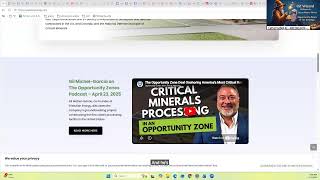
So here's what— here's what I want to introduce. I want to introduce OZ Wizard 2.0 GPT. This is a GPT designed on ChatGPT. You can find it by going to search the GPTs. When you go to search, when you go to the GPT, explore GPT store, you can actually type in there OZ Wizard 2.0 and it's going to come up right here. Okay. From this, what you're able to do is ask, uh, ask understanding questions, validating questions, uh, do some due diligence, etc. And what I did was, as an example— and it's not really an example because it's something that Roman actually mentioned while he was sitting there— was I said to research Opportunity Zone areas near San Luis and Yuma, Arizona. There's a cobalt mine in the area, and we're interested in developing an OZ fund for the employee housing and the infrastructure. Okay. And so based on a thought about that for 50 seconds, the knowledge base within the OZ Wizard, which for people that don't understand how a ChatGPT model works, I've— we've given this, myself and Roman, we gave this GPT all of the data from the One Big Beautiful Bill Act and from the Tax Cut and Jobs Act. And we've added back to it everything, every time we see something monthly that comes in, like new legislation or a new white paper on it comes up, we will go in and update the knowledge base within the OZ Wizard with all this information so that when you ask it questions, it's pulling that information from there. So one of the examples is right here. This is an article from the Arizona Commerce Authority to which we were at an event and knows this because we put— when we went to the event, we got information and we just put it in there. Now it's in there, right? So, and as information gets updated, we'll go back in. But what it discovered was that, that, that yes, there is a cobalt processing facility going in down there. It, it has a write-up on it right here. I'm hoping you guys can see the screen about how in that area the need for, for, for power is coming. And so as a matter of fact, that guy right there, Gil, is the guy that was on the podcast back in April. Talking about it. And so this is his facility. And so Roman and I met with this guy, talked to him quite a bit. And he's the co-founder of EV Illusion Energy. And what his goal is, is to grow that cobalt mining place pretty extensively. So, but let me get back to the wizard, what it's doing now is it's going to explain, uh, like the timing issue and why it's important for the first generation, like Brett was talking about, uh, to pay attention to the difference between the first generation and the second generation, or 1.0 and 2.0 is what we call it, right? So, um, and then it, it on this, it actually speaks to the designation tracks, like Brett was showing us on his map, it was identifying these tract numbers. So these tract numbers are coming from here, right? And so this, this GPT is very extensive as to what it will get information-wise. So some of the other things that it does, it provides a recommended structure for the fund, how you can— like Amor said, how do I buy the property? Well, you don't buy the property, you develop entities. At this point, we're going to develop entities, and one of them is going to be a qualified opportunity fund. Called the holding company. Then we're going to have a qualified opportunity zone business called the housing company, and then we're going to have another qualified opportunity zone business called the infrastructure company or the housing company infrastructure with infrastructure budget. Right. And then there's going to be the mine processor operating company, and that's separate by itself. That doesn't have to be involved with a qualified opportunity zone. Okay. And so Roman will attest to this. I tried to have the conversation with the guy about it, and Catherine Bell agree, it went like pushing like sand up an hourglass instead of letting it flow down. It was like trying to stuff it back up inside the other part. So I was very unsuccessful in trying to convince Gil that he needed to have multiple structures in order to do this. And he's like, no, I know what I'm doing. Okay, great. But if he would have had OZ Wizard, he would have been able to figure it out. So what we wanted to suggest to the guy was how we could benefit the employee housing situation that he's going to incur. Also building the infrastructure to get there because the roads, you know, pull the map up again, but it'll show that the roads in this area are nil. So getting people around is going to be tricky and we're going to have to have some money to put that, you know, put that together. And we can do that through Opportunity Zone, directly through Opportunity Zones by, ready for this, having a development company that gets paid to develop it, right? And Brett's down there shaking his head. I love it because that's how you do it, right?
Yeah, it's a really good point, Tommy. And those tracts that get designated, as they pointed out at the recent summit that we all attended at the ACA, is that there's got to be infrastructure, right? You've got to have, uh, electric grid, you've got to have roads, you've got to have access to water, or the chances of getting a designation are a lot slimmer.
Exactly. And so I think what—
I think, uh, sorry, Tommy, I think the reason why, uh, He's got knowledge of what he's gonna do with it, how he's gonna produce money. And like you said, you know, he raised money from family and friends, you know, but now he's out of it and he just wants to throw money at the problem without actually studying exactly what needed to be done overall.
Instead of just saying, let me grab money and let me, let me get this and then run a cobalt mining company there, okay? How are you going to bring workers and where are you going to live? I mean, Tacna is a little small little, I guess, call it outside of Yuma, it's not right in Yuma, it's out in the outskirts out in the desert. So he was just trying to get to a certain point. I'm not bashing the guy or anything like anything. I mean, I get it. I'm happy that LPDT advantage, and they want to do certain businesses, but you also got to be well informed and educated on the best decisions to make this, you know. That's the reason why you're doing this, you know. So take advantage of it, not just, uh, feel like you just need money in the situation or the problem in this case and produce more. So, um, unfortunately, you know, he's maybe too Your phone's breaking up, bro. Exit strategies. But, you know, we'll see if we can talk to him and probably, you know, be able to kind of convince him that the reason why we're doing this is to kind of build a whole structure for his company to be successful as well. And for those that are coming in with the investment money.
Yeah, your phone was breaking up. We only heard bits and pieces, but I'll I'll translate because I talk to you so much. I can tell you everything he said because even when he, even when he, when he tells you and it's broke up like that, he, he tells it 3 different ways. So, um, he, he's, uh, he's actually very familiar with the project down there. He knows the guy personally. They, they, they live in the same town. And, and so a lot of this is like good old boy situations where it's, it's the, the knowledge is obscure. Right? So that's why we built the Opportunity Zone Wizard, the OZ Wizard. We wrote the book OZ Wizard 2.0, um, and, and we came up with this little, little hack right here called the ozwizard.ai. And the ozwizard.ai is a, uh, a clone of me, um, that has all the information again from legislation and everything else. And so this program is run through Delphi. And if you hit the call button, you'll be able to have a back and forth conversation, a strategy session with me about the, the potential for you to get involved in Opportunity Zone development or Opportunity Zone fund management or Opportunity Zone investing. Because again, there's so many levels that people can come in at. It's not just the investor. Roman's right now talking about the landowner, Gil. He's, he's in Opportunity Zone because he owns the land already. The problem is we don't know what to do. He doesn't really know how to structure it, set it up, or do something with it. So it's going to require some education, and that's what, that's what we built these tools for. So, um, but this is an excellent example of, of why we've got the OZ Wizard Um, Gil's a great guy, um, and, and he's been on Jimmy Atkins' show talking about what he's got, pitching it. So, um, I believe that he's, that he's on his way and he's on a path. So we'll see how it turns out.
But, uh, aside from that, um, uh, Catherine Roman, everybody, I, I apologize, but I'm gonna have to bounce out.
We're done now. I appreciate everybody coming in. So, um, wanted to thank everybody for coming in today, but yeah, we're wrapping it up. Um, we're going to be, uh, on May 19th, 20th, and 21st, so we hope to see you over there, Brett. And, uh, we'll be, uh, we'll be sending out your info. Um, uh, when we put the video together for this, we'll make sure to tag, uh, and have a tag in there for with your phone number and contact info.
Okay, thank you so much. All right, everyone, see you guys.
Catherine, I appreciate you, uh, having this platform for us, and, uh, Hope everyone has a great day. Awesome.
Thank you, everyone.
Bye, everyone.
Bye.
Thank you.










