Tenant Screening Q&A: Real Fixes to Protect Cash-Flow & Community | Titan Impact Group
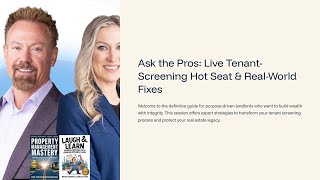
Catherine Bell, Ashley, and Michael from Ashton Property Management walk through 25 tenant screening questions for landlords. They cover income verification for self-employed workers, how to handle evictions and criminal records fairly, Section 8 tenants, and building scoring systems that protect your cash flow without breaking fair housing law.
Questions this video answers
Three times the rent (can accept lower like 2.5× but keep consistent).
Three to six months of bank statements.
Recommended retention: three years.
Respond within 48–72 hours.
A $65 million portfolio of properties.
Chapters
Okay, so welcome everyone. I am super excited to have the beautiful Ashley and Michael come on. And we're going to talk about one of the. The most important things you can do with buy and hold, which is 10 and screening tenants. This is the whole. With last time we talked about this, it was. What is it? An ounce of prevention is worth a pound of cure.
Absolutely.
This is the most important piece for us to really, really get a nail because in. You know that this impacts the ripple effect of everything moving forward for any of your tendencies of being a real estate investor. So this is the Q and A of the whole session. So anybody that has questions, we're live streaming. Go ahead and ask questions there anywhere. We'll get those. But what we're coming to the table today with is the most questions, I would say probably the most popular questions that you guys get asked a lot around this. Is that right?
That's correct. The top 25.
Yeah, top 25 that we get hit with all the time.
I love this. So before we get started, let's talk about. Because if people haven't seen the other webinars that we've done about this, let's just talk about, like, why we should be listening to you. Who are you? Why does this matter? And it's the whole, like, always ask my kids, is this a fact, an opinion or a feeling. So the fact that is that you guys are experts in this field. And so I'd love to talk about that in your whole experience and resume and all that, because it's quite impressive and from impressive from the standpoint of not only the longevity of what you guys have been doing and the. The huge portfolio, but you have. But more importantly, it's the longevity of your tenants. I really love those stories and why that's there. So if you could just share, you know, who you guys are and all that, as if nobody has, you know, heard from you yet. And then we'll jump into all the Q and A's. About the most important thing that you can do around investing in real estate.
Absolutely. Thank you so much, Katherine, for having us. We really appreciate it. Just a little bit of background about our. Where we came from and how we got into real estate in the first place. So they always say oftentimes things in your life that end up being just absolutely amazing come about because of something bad that happened. So this was sort of a accumulation of things. It started out where I got divorced and both Ashley and her brother Brandon moved in with me. I took on all the debt, took on the Maintenance payments and responsibility for the kids and everything. They were in high school at the time and heading into college and who knows what from there on. And so I had just started a software company and it was fairly young and I was freaking out a little bit, to be quite honest, and thinking that I needed multiple streams of revenue. Like Catherine is always talking about, you got to have multiple streams of revenue. And so a buddy of mine came to me and said that there was a rich dad, poor dad seminar next month. I got divorced in February and in March there was a Rich dad, poor dad seminar. I'm like, I'm in. Let's go figure this thing out. I always wanted to get into real estate and I want to see what it is all about and all the different streams of revenue. So I did that. I got super jazzed about it, started doing all the various different streams of revenue to see which ones really resonated with me. And from there things just sort of took off and I did everything wrong, of course, that you do when you start investing. I was the guy mowing the lawn, doing a lot of the repairs myself, that sort of thing. But it was working and we started growing, we started growing the portfolio significantly and we hit a point where I needed help with managing all of that and, you know, just taking it to the next level. The software company, company was taking off.
We get asked all the time and so we're going to go through these and go through them. If you guys have additional questions, definitely pop those in. One of the first ones that we get is can I deny a tenant based on credit score alone? So yes, assuming you apply the same scoring requirements to all of your applicants. Right. We're looking at not being singling anybody out. You don't want to be in a discrimination case. So when you're doing your scoring system, make sure your criteria is clear for everyone across the board. Make it the same, make it consistent.
Absolutely. Part of that system, another question we always get is how do I verify self employed or gig workers in terms of their employment?
Bank statements are great. Tax returns are great too. Three to six months worth of bank statements, that's fantastic. That'll give you enough information to make sure that things are consistent. So that way when you're doing your income verifications, you can make sure that things are pretty regularly. You can see a pattern whether it's good or bad. Right.
And verify the authenticity of those documents that you're reviewing. Digital is big these days and people like to be creative and we don't like them to be creative when it comes to them showing their employment history and that sort of data. So make sure it's real.
Yeah, we like to physically call, physically call the employers, you know, ask them as the information that you can ask them. And definitely, you know, tax returns, bank statements, those aren't going to lie because those are numbers.
Yep. Numbers don't lie.
Numbers don't lie. Another one. Can I require three times the rent in income? Yes. It's actually an industry standard, so it's one that's highly recommended. You can offer less. It could be two and a half times the rent amount. But keep in mind you're keeping this criteria for everyone. So it's not on a case by case basis. You're going to want to set that criteria early. That makes sense. Three times the rent is pretty standard and recommended, so you'll have some leeway there. But it's a great thing to start with.
Another question, do I have to accept tenants with Section 8 vouchers? And so it's interesting, the whole Section 8 system that's there, you'll have some people that love that and some people that don't love it and they've again, based on their experience, personal experiences with it. And so this is a question that we get all the time.
All the time. And you're always going to want to double check everything with your legal counsel.
Right.
Talk to your attorneys. You've got property attorneys. If you don't, they're awesome team members to have when it comes to helping with your property and managing it even. Right. And asking questions like what does your state require for specific listings or any type of rental applications or disclosures, things like that. Those are going to be huge. But in a lot of areas, it's actually illegal to deny someone based on their housing or source of income. Right. It's discriminatory. So federal fair housing laws require that you obviously don't discriminate. So places like Colorado, California, New York, that's going to be a big no, no. Check your state, check with your attorneys, see if that's something that you can even have in your listing description if you are going to put it in there. I would be careful about that before talking to legal counsel. For sure. But just double check, double check it. You want to make sure that you're not inadvertently discriminating against anyone by their source of income.
Absolutely. And as far as rejecting applicants, one of the things is what if they have an eviction on their record? That's something we get a lot.
Yes. So you are Allowed. But keep in mind, we want to make it the same for everyone. So if you're not allowing eviction, then, you know, Barb and Ken can't come DID before.
This is the Q and A session for that. But again, the thing to keep in mind is that the tenant screening processes, procedures, everything that we have in place works for both single family and multifamily. And so you can apply it and scale it as well. Well, exactly, exactly. So if you missed the webinar, these are the Cliff Notes from it. We'll go over this really quick and then we'll dive into the top 25 questions.
Yeah.
And really, to start right, with tenant screening, you're just going to want to make sure these are, these are the overview.
Right.
You want strategic listings, you want to make sure that they're fair housing compliant. You want to make sure that you're not singling out certain classes, that you're actually detailing out facts. Right. It's all about facts. Nothing opinionated. You're doing your pre qualification and pushing those people that are not fit for your property, whether it be, okay, you don't allow pets, they have a pet. Great. Then they're automatically pre selecting themselves out. And you're also pre selecting those in that are qualified for your property.
Absolutely.
On top of that building scoring system. So we harp on this so much, but it protects you like crazy when it comes to, to just how to screen properly. Taking any and all emotion out of it is key. It's just facts, it's just numbers. There's no emotion based to it. It makes it a scoring system. It makes it super, super, super easy and clear on who to select to rent property.
Yeah. And it keeps you out of trouble as well, because if you have emotion that's tied into it and you make decisions based on those emotions that will come back and buy you at some time. And so the scoring system that we've got in place, where it truly, no matter who the applicant is, they get a score based on their application, based on their qualifications, very specifically. And it will keep you out of trouble and it'll really get you the best tenant, which is what you want. Yep.
And overall, trust, but verify, verify.
Always. Always.
So in a recap, short recap, that's everything from the last webinar. We obviously went into a ton of detail on those, but now we're going to go through our 25 questions that we've compiled that we get asked all the time. And so we're going to go through these and go through Them. If you guys have additional questions, definitely pop those in. One of the first ones that we get is can I deny a tenant based on credit score alone? So yes, assuming you apply the same scoring requirements to all of your applicants. Right. We're looking at not being singling anybody out. You don't want to be in a discrimination case. So when you're doing your scoring system, make sure your criteria is clear for everyone across the board. Make it the same, make it consistent.
Absolutely. Part of that system. Another question we always get is how do I verify self employed or gig workers in terms of their employment?
Bank statements are great. Tax returns are great too. Three to six months for the bank statements. That's fantastic. That'll give you enough information to make sure that things are consistent. So that way when you're doing your income verifications, you can make sure that things are pretty regular, that you can see a pattern whether it's good or bad. Right.
And verify the authenticity of those documents that you're reviewing. Digital is big these days and like, people like to be creative and we don't like them to be creative when it comes to them showing their employment history and that sort of data. So make sure it's real.
Yeah, we like to physically call, physically call the employers, you know, ask them as the information that you can ask them. And definitely, you know, tax returns, bank statements, those aren't going to lie because those are numbers.
Yep. Numbers don't lie.
Numbers don't lie. Another one. Can I require three times the rent in income? Yes. It's actually an industry standard, so it's one that's highly recommended. You can offer less. It could be two and a half times the rent amount. But keep in mind you're keeping this criteria for everyone. So it's not on a case by case basis. You're going to want to set that criteria early. That makes sense. Three times the rent is pretty standard and recommended, so you'll have some leeway there. But it's a great thing to start with.
Another question, do I have to accept tenants with Section 8 vouchers? And so it's, it's interesting, the whole Section 8 system that's there. You'll have some people that love that and some people that don't love it and they've again, based on their experience, personal experiences with it. And so this is a question that we get all the time, all the time.
And you're always going to want to double check everything with your legal counsel.
Right.
Talk to your attorneys. You've got property attorneys if you don't, they're awesome team members to have. When it comes to helping with your property and managing it even. Right. And asking questions like, what does your state require for specific listings? Or any type of rental applications or disclosures, things like that, those are going to be huge. But in a lot of areas, it's actually illegal to deny someone based on their housing or source of income. Right. It's discriminatory. So federal fair housing laws require that you obviously don't discriminate. So places like Colorado, California, New York, that's going to be a big no, no. Check with your state, check with your attorneys, see if that's something that you can even have in your listing description if you are going to put it in there. I would be careful about that before talking to legal counsel. For sure. But just double check. Double check it. You want to make sure that you're not inadvertently discriminating against anyone by their source of income.
Absolutely. And as far as rejecting applicants, one of the things is, what if they have an eviction on the record? That's something we get a lot.
Yes. So you are allowed. But keep in mind, we want to make it the same for everyone. So if you're not allowing eviction, then, you know, Barb and Ken can't come in and you're like, oh, well, I'll accept you guys, because you guys are. You watch my favorite show. You can't do that.
Right.
So you got to make sure that your criteria is the same for everyone. So if you're not allowing evictions, then you're not allowing evictions, period. You know, you might have it where you don't allow evictions, but if they can provide that it was a false eviction, you know, and there's indication that they had it thrown out, then great. Or it might be a situation where, you know, keep in mind, when you're pulling those background checks, anything beyond seven years might not actually show up on their background.
Right, right.
So.
So in. We touched on this earlier, but in terms of following up on the information that you're given, one of the questions is, you know, what. What are we actually allowed to do in terms of following up with employers and previous landlords?
Yes. I love this one. So previous landlords are phenomenal to speak with because they have nothing left to hold back. They'll tell you everything that you want to know about your applicant. How they were, if they had unauthorized pets, if they were great. If they had lease violations, they'll tell you all of it. Because at this point, that person's either they're crying that they lost them or they're happy to see them go. It's one of the two.
It's very telling.
It is. And so just get on the phone with them, reach out to them. Likewise, you know, if an applicant puts in different information on their application and you do a background and you actually see some other information pop up, contact Bolt, find out who really was their last landlord and get that information because it's going to be critical for your tenant screening process. Make sure that it's thorough.
Kind of the corollary to that one is how do I know if a landlord reference is real or fake? I know you like this one because some of the key questions and ways that we go about this.
Yeah, if you do a reverse phone look up, definitely call it. You know, you can cross reference the addresses and verify that it's the same person. And then you can ask questions that are specific to that person's tenancy. If they've got authorization to give you that information and you know, they filled out an application with you and they've said, okay, you can contact any previous landlords about me, then you're already authorized to reach out to those other landlords and say, hey, you know, how long were they tenants? What rent did they pay? If there's inaccuracies, that could be an indicator. Another one we had that was actually a reference, but it was. Well, it wasn't a reference. They pretended to be the landlord and it was a friend. But as soon as we actually just got into a conversation, you found out really quick. And then they were like, oh, yeah, no, they just put me down as a ref friend and they switched it really quickly, accidentally put me down as a landlord. So just give them a call. Conversations go pretty far when you have them.
So what if they say that you can't contact a previous landlord? How do you handle that?
So usually when they fill out an application, there is a disclosure at the bottom of the applications that send. Say you have. I'm authorizing you, by filling out this application to rent your property. I'm authorizing you to do a background to find out information from my previous landlords. And so that is a. It's pretty standard on all of the statewide rental applications Amer USA has, Buildium has. There's some other ones as well, but that's going to be huge. Same thing if somebody's calling to verify or do a landlord verification on one of your current tenants, you're going to want to make sure. That they had, they gave them the authorization before you just start speaking. That disclosure is going to be pretty huge. But it's usually at the end of the rental applications, they all have to sign it before they can actually apply to a property.
And that's also part of the criteria. If they are not willing to sign that, that is a big red flag for sure. And again, your criteria is the same for everybody. And so everybody must fill this out, they must read this, must understand this and they must sign it. And if they're not willing to, then I'm sorry, go find someone else.
Yeah, yeah.
So you automatically disqualify them.
Yes.
It's that pre qualification process like where, you know, if you. We have to do background for anybody that's in the property, we want to know who's in there. And if you don't know who you're renting to, that's a pretty big, you know, you're just opening yourself up for a lot of liability. And in order to protect yourself, your asset and the property itself, you want to do that background check. You want to be thorough with your vetting.
Yeah, absolutely. Speaking of vetting. So the next question has to do with social media and it's really interesting on this one. You still, and Ashley will go in a little bit more as far as having to be fair and having to be equitable with everything you do in the same criteria for everything. But social media is amazing because people think it's like another life. Nobody's ever going to look at this except for all my friends and people that really love me and you know, and want to hang out with me. But it's amazing what they'll put on their social media, which is actually detrimental for their job or for getting a lease on a property. And it's fascinating that they don't make that connection, but you can, you can get a lot of information by just looking at their social that will give you verification or not in some cases. In terms of some of the information they've given you. Yep.
And just be careful with the protected class information there. Right. Federal fair housing laws, you don't want to discriminate by anything. But if you're also somebody's posting illegal drug use, that's probably a red flag. You know, that's something that's, that's a different story. So keep that in mind when you're, when you're doing those searches as well.
Yeah. So in terms of the application itself, the question in terms of what can be charged for the application fee, itself.
So really quick, you guys, what's showing up on the screen is the missed webinar one. If you have other questions.
So we have a whole list of questions.
I just want to make sure what.
They'Re supposed to be seeing on the monitor. Yeah.
Which.
Okay.
Which I can go through.
Keep going. I just want to make sure we weren't missing anything because this is good.
Everyone.
Actually, here's a better one. Yeah, let me get to a better one.
And everybody that wants this, you'll have this takeaway.
There you go.
This is absolutely downloadable takeaway that I would recommend. Rabbit. Store it, keep it, talk to your attorneys about it, whatever you want to do. But it's a phenomenal resource.
Yes. So you have all of these questions that we're walking through. You'll be able to download that and these charts for that matter.
Yep. And the next question is. Yeah. Can I charge an application fee? So. Yes. And it's usually suggested that you charge the same amount that it takes you to actually vet that person. Right. So the actual background check fee amount in Colorado, you can't charge beyond that. So there's not additional that you're charging beyond that. There's a cap in California as well. So check your state's. Every state's going to be different on what's allowed in terms of charging for your rental applications. But usually that is a pass through to the tenant. It's the actual charge for them to be able to process them and vet them to see if they're a great fit for your property.
So the next question, Ashley's already mentioned it quite a bit. The Fair Housing Act. And so what is actually required to stay compliant with the Fair Housing Act?
Yes. So I mean, fair housing, right. This is race, color, religion, source of income, sex, disability, familial status, the list goes on. It keeps adjusting as well. So part of what's detailed in this takeaway is all of the links to be able to go to these sites and find all of this information. So there are some tenants state information as well. That's pretty handy. But you're going to want to use objective scoring criteria like we've mentioned. Right. So you're going to want to have scoring information that isn't focusing on a class. You're looking at, okay, am I allowing evictions or not? What is my income requirement? How much, how many pay stubs do I require? Do I require a driver's license when they fill out an application? What in terms of rental history am I looking for? A year, two Years worth of rental history. Those are the kind of things that you're looking for if they do have a pet. That's absolutely a question. You know everyone's got an ESA animal. We joke now these days but you know, an ESA animal and a service animal are completely opposite. Surzan was not a pet. And so just being really clear on what you're allowing, what you're not knowing that when you have a property that is says no pets, that obviously if a service, somebody with a service animal applies, that's totally okay. That's not somebody that you can deny based on that service animal. So knowing those screening criterias is going to be pretty key just to make sure that you're staying compliant with everything.
So you're talking about all the screening criteria and we, we talk about that a lot. Again everything gets a score and question that we get is does it need to be explicitly written down for the criteria?
It's hard to make it up, right? I mean like, or they'll think you do, you do exactly have it in writing and you can even present it to somebody when like before they even apply to property say yeah, this is our scoring criteria. This is to see if it's a great fit, if it's going to work or not, if you've got the information. If you don't, you know there's another conversation there. But you can absolutely have that posted or give it to people before they apply so they understand what your scoring criteria is.
Another one is criminal records. So if somebody, one of the questions is do you have a criminal record and if they do, can you deny them based on that?
Yeah. So yes. And an attorney is going to have a way better answer than I will. But if it's a direct threat in terms of health or safety or to the property, then absolutely. That's usually an immediate no. So anything that's violent, I've seen the arson ones, burglary, things like that. Those are going to be some big ones to look out for. Definitely talk to legal counsel and they'll be able to fill you in on all the details. If you have specific situation cases where you're like I've gotten this application and I'm just not really sure. Great ones to talk to just to make sure that your situation on a case by case basis is accurate.
So another one is the verification for. We've already talked about self employed individuals who are applying but what about W2 employees and what's the verification process for that?
Pay stubs. Everybody loves pay stubs. You can still do bank statements.
And I would recommend bank statements and pay stubs, so that way you can verify them in case they get creative with, you know, their digital AI these.
Days, so chat, GPT and all that. But yeah, absolutely. Tax returns are great. Letters from the employers. There's some systems that, depending on if you're using a property management software or not, that they'll actually. You can send out directly to the employer, an employer verification system, and that employer can actually fill it out in like five seconds, send it back, and it automatically verifies a bunch of different points, which is great. But if you're not using that, give them a call, find out, or get a letter. Request a letter from them.
Yep. And what if you deny somebody? Do you have to give them a reason why they were denied?
Yes, you do. You do have to tell them, and you got to tell them within a certain window. So check your state. Every state's different, like I said. But you're absolutely supposed to tell them where you got your reports. Right. What they were denied for, and you're supposed to give that to them within a specified period of time. So that way they understand what they're being denied for and they have the ability to also come back and say, okay, no, that I'm going to dispute that.
Right.
So it's giving them that opportunity.
So this is. This is a great one. Can I use a gut feeling to date someone? This is a great one. Because again, it gets touches in that emotional piece. And you know, when you meet people, sometimes you will think, oh, they're an amazing person. I'd really like to go have a beer with them or something. And then you meet some people and you're like, something's off. And I'm not really sure what it is, but something's off. But can you use that to deny someone?
No. No. You gotta be consistent. Like I said, you can't just all of a sudden change your scoring system because somebody watches your favorite show, even though it's a good show. And I understand, but no, you can't do that. Keep it in writing, keep it documented, Keep it the same system for everybody. It's gonna protect you, it's gonna protect your asset, and it'll make your scoring so much easier and so much faster, too. So if you're wanting to fill a property quickly, you've got three applicants, all of a sudden, it breaks the applicants down from names into numbers and it goes, okay, 26, 22, 21. Well, it's pretty obvious 26 is higher than 21 and 22. Great. They won the right to rent the property. So just keep it to numbers, take the emotion out of it. It will make your life so much clearer and easier. And it protects you.
And it protects you. Yes, that's key. And as far as the screening software itself, can you talk a little bit about some of the different software that's available to be able to do the screening?
Yeah, so we get mixed comments here where there's first time landlords or there's even just landlords that have done this for a long time and they're like, you know, I want to use, I want to make sure that I'm using the proper rental application forms. I don't want a property management software yet. I'm not there. I want just a rental application that I can take that's electronic. I can print it if I want, whatever the case is. And so TransUnion smart move, has some great ones. AppFolio does have a little bit, I think with CoreLogic Rent Prep and Amer USA and building building, excuse me, Buildium is another one. Buildium does also have some property management software that they've built out but it's more smaller unit sizes and things. So they're a great one as well. But those are just some of them. Ameriusa was one of the ones actually that we started with. It was, they're still there, so that's pretty great. But there's a bunch out there and they'll screen for everything. They'll do the background, the credit, criminal, landlord verification, employment verification, references. There's a terrorist one now. They'll screen for everything. So and it's, it's super clear on what the price is, you know, what amount to pass through. So yeah, those are some great ones to check out.
Absolutely. And if somebody's interested in renting your place, they're willing to pay that fee to get it. And so again it's a pass through. So it's, it's good to do all of those checks. So one of the unique situations is if you have especially like kids moving out for the first time and they have no rental history, they are just coming out to get their first rental property. You often need co signers for that. And there's some other situations that may be similar to that. So how, how are co signers handled?
Same way. They're, they're just another applicant.
Right.
They're going to be the guarantors for that person. So if the, if your original applicant that filled out an application is applying and maybe their Income isn't as sufficient and that co signer is coming and saying, okay, no, if they default, I'm going to pick up all of this. So you're going to want to screen them the exact same way. You're going to want to take them through, do the employment, the income, all of that verification to make sure that they're stable and that's something that they can manage. If it does come to that, you're also going to want to make sure that they're on the lease. So not just the original applicant. Even if they're not living there, a cosigner guarantor is still, still guaranteeing that lease and all the terms in it. So you're definitely going to want to have them on the lease.
And that's the key part is this. If this something ever goes sideways, the fact that they are on the lease and like Ashley just said, subject to all the terms in the lease, then that covers you if something goes sideways.
Well, and something you guys said last time is to do the full background check on them too.
Yeah, absolutely. You have to. You have to.
Yep, yep, yeah.
So the next one again, pets are a big thing or animals in general. And so do you have, do you have to accept emotional support animals, ESAs?
So yes, if it's properly documented. Right. Talk to your attorneys here. This is where, case by case situations, obviously if somebody has an elephant ESA animal, this is a conversation to have. But absolutely, you can't charge if it's properly documented. Usually it's with a mental health provider letter from a mental health provider and that verifies that they need that animal. You can't ask questions on why they need that animal. But it is the verification that's needed to say, yes, this is legit, this is an ESA animal and you can't charge any pet fees or deposit when that verification is made. Absolutely, yeah. That's a big one.
As far as things you collect with the application, one of the things is, is it actually valid to accept and collect a photo ID from the applicant as well?
Yeah, yeah, absolutely. IDs are, are critical. Right. They help with that verification process of who you're talking to is who you're talking to. And they're all tying together. You're doing the background, which then in turn you're verifying that they say they are who they are. And so a photo ID definitely helps with verifying identity. And you just want to make sure you're not discriminating based on your citizenship. If somebody has a different citizenship, that's obviously protected class. You're not wanting to make a decision based on that.
Yes. As far as we touched on this a little bit with kids that are moving out for the first time and they have no rental history. But in general, can you have a. One of your criteria being that they have to have a rental history. Can you deny someone if they don't?
Yes, but let's see if people have been paying attention. If it's documented, if it's part of your scoring criteria, yes. If it's not, you know, you need to make sure you're very clear on all these case by case basis, which is why we're giving you this. And this is huge. So you can have these conversations ahead of time and say, okay, what do I really want in terms of my scoring sheet? Like, what does that look like? What does it need to look like? And these are some great, great questions. So, yes, as long as it's part of that criteria, you're golden.
And what if at this scoring system you have two people that score identical scores? How do you choose? I was thinking, you know, the old paper, rock scissors thing might work out, but not so much.
That's funny. I love that. I love that. So beyond the paper, rock, scissors, you can go with just your standard. Who applied first? Right. First come, first serve. That's an easy, no bias way to handle that situation right there. It's just who applied first and actually submitted the application, who didn't? Not just who contacted you first, but who actually submitted that application first.
And records, records are huge. How long do we have to keep the records available?
Recommended 3 years. You can obviously keep for longer than that. But three years is pretty fantastic. If you're a property manager or broker, those are going to be different, just so you know. But if you're not, either of those three years is fantastic. Just to make sure you're protected against fair housing.
And one of the questions, this is again, a sensitive one. It sounds totally innocuous and. And it is. It's really very. An innocent question, but can you ask about kids or how many people will live there? And so the answers no and yes. Yes.
No in that way. Right. We got to be careful about our language. The language that we use can get us in trouble when it comes to how you're talking with an applicant. So because you don't want somebody to think that they're being denied based on their familial status. Right. Or maybe it's because they have kids, you don't want that. So how you're going to want to ask that is, you know, how many occupants are living there. Occupants is not a class, it's how many people, how many bodies in particular are going to be in there. And you can use occupancy codes. Usually there's two people per bedroom plus one.
Right.
But every state's going to be, can be different. Same thing with counties. You're going to want to check counties. So an attorney is going to be pre vetted on all of that information based on your state. So be sure to check with them. But those are some great general guidelines and suggestions to just stay in is just ask about the occupants, how many, the number. Once again, it's numbers, it's not the people themselves.
Absolutely. And you want to make sure Everybody who's over 18. 18 or over gets the full application, gets all of the checks that are done on it. Because anybody who's 18 or over will actually officially be on the lease as a guarantor with that. So that is very important. And we've already, I think you already answered this earlier, but another question is how long do we have? Is there a requirement of the amount of time before we have to respond to the applicants?
So it's always good to respond within 48 to 72 hours. Right. Because several reasons. If you've got someone that's super interested in your property and you want to avoid longer holdover costs for your property, you want to get them through that screening process. So it's in your own advantage and in your best interest to make sure that you're pushing them through that screening process and getting it done as fast as possible. That being said, you want to make sure you're thorough and at the same point, if you don't, that person can already go and find another property and they might be very, very well qualified. So you're going to want to make sure that you're responding quickly. 48 to 72 hours is pretty standard, but that way they're not going, oh my gosh, this is, I'm getting a preview of what it's going to be like renting this place.
That's a big thing by the way, that indicator in that, that communication that tells a lot as far as how it's going to be to live there.
And we've been told many, many times. Holy moly. I had no idea this was a quick response. This was awesome. Thanks for responding. Super quick. Just a quick question. You know those, those really go a long way into building those long term tenant relationships that you're Going to want to have. Because you might have that tenant for 10 years. I mean, we've had some. Yeah, we've had tenants and now their kids are renting from us and it's so cool. And I mean, we can literally play what we like to call musical houses where they continue to rent from us through different stages of their life, but at different properties. Yeah, Based on the stages in their life, which is because you might have that tenant for 10 years. I mean, we've had some. Yeah, we is really cool.
And then refer more people to you.
And refer more people. Yeah, including their kids.
So you're gonna want to make sure that you're responding to them in a timely manner. And tenants. And now their kids are renting from us and it's so cool. And build that relationship from the get go in a positive way.
Yes, absolutely.
And I mean, we can literally play what we like to call musical houses where they continue to rent from us.
Through our last question. Can I approve a tenant but charge.
Different stages of their life but at different properties.
Yeah.
Based on the stages in their life.
Which is a higher deposit based on their credit score.
Oh, yes. Okay, really cool.
And then refer more people to you.
And refer more people. Yeah, including their kids.
So you're gonna want to make sure that you're responding to them in a timely manner and build that relationship from the get go in a positive way.
Yes, absolutely.
So, yes, it's got to be across the board. Right. Everything's got to be consistent. It's got to be written into your policy. So you can't just come up with a number.
You laugh, but this is real people.
Reverse engineer. I'm an engineer by background to our last question. Can I approve a tenant but charge a higher deposit based on their credit score?
Oh, yes. Okay. So yes, it's got to be across the board. Right. Everything's got to be consistent. It's got to be written into your policy. So you can't just come up with a number.
People like that. Well, here's the answer I want. So let's reverse engineer and get back to where.
Yeah. And you can't buy and base the deposits off of someone's familial status or their personal set, whatever the case. Right. So you're going to want to make sure it's part of your scoring system from the get go. It's clear. It's written in there and. Right. Consistency is key. You laugh, but this is real people.
Reverse engineer. I'm an engineer by background. People like that. Well, here's the answer I want. So let's reverse engineer and get back to where.
Yeah, and you can. Consistency is key.
Absolutely. That was our last question we had. As far as the slides themselves. You can download these and look at them. We talked about a little bit with this in terms of credit and income and the verification of that and when pay stubs don't exist. How do you deal with that situation? Pets and essays. These are on the, in the charts that you'll have access to. These are some of the tools that are available. We've already answered some of those questions, but these are the downloads you want to talk a little bit about the specific downloadable PDFs that are available for folks.
Yeah.
So courses too, Right.
Only of course.
Like here's the thing, I want people.
To get, be present to and anybody you know, has heard me talk enough. Like I've gone through this process. I started out doing buy and hold. I don't like tenants and toilets. Right. Like that's just, just my personality.
Right.
And having a company being able to manage it.
Absolutely.
Like that, I, I love that. So for sure, like that is, you know, something that again, the who that knows how to do the what.
Yeah.
Yes, but do I want to? No.
Right, yeah, exactly.
There's a couple things. Like you guys have the downloadable things, but more importantly you have a course that teaches people.
Yes.
And that's better for people like me. You're a who that knows how to manage all that. So I get the benefits of the passive streams of income but don't have to deal with the headaches.
Yeah, exactly.
Our mission is to kind of be here through this journey. Every landlord's different. They're going to be in a different spot potentially. They might have one, they might have 20 units, whatever the case. But it's our mission to be able to be here to. Okay, if you want the easy button, great. There's the management side if you are looking to do it yourself, but avoid those mistakes from the get go. I mean, I wish we had this information when we started. Truly been a lifesaver. So we're here for that. That's what the courses are for.
That's.
We will literally teach you top to bottom, day in and day out how we do what we do and you can replicate it. There's no question.
Okay, here's what I love about this because I just got to say this again. Another one with Catherine soapboxes is that if somebody's going to teach me something, one of my criteria for working with them and Getting coached, mentored, trained by them is are they making their money from doing the thing or are they making their money from doing a course based on theory?
Right, yes, yes.
That's why I love you guys. And what you do is because this is what you live and breathe every day, which makes a huge difference. It's not theory, it's reality, so.
Exactly. I mean, I've spent hundreds of thousands of dollars on mentoring and classes and training to learn how to do all aspects of real estate investing and property management. And the one thing you, I mean, you hit it on the head, that you really find out quickly is that people that focus on making their income by selling the courses, many of them don't actually do investing anymore, which is really kind of. You find that out later and you're like, wait a minute, you're teaching how to do investing and you're not even doing it? And so we are in it. We are absolutely in it. We've got the 65 million dollar portfolio of properties and we're always looking for additional things to add to the portfolio or things to 1031 exchange is a huge one, I'm a big fan of that. And move out into other things. And so it's, it's truly the experience, I think, is what you get and super important with whoever you listen to, whoever that might be. Yeah.
And we're sentimental to the, to the landlords starting out that don't know where to go. And like I said, I just, I resonate so much with that because in the beginning you're like, oh my gosh, this is great. And you kind of get like into it a little bit and then you're like, wait, what do I do? So how great is it to just skip that entirely and skip that overwhelm and go straight to, okay, I've got a performing asset and I can take this and grow my own legacy.
Yeah, absolutely. That's what it's about. And one of the things that we definitely want to do is pay it forward in Brandon's name, in the foundation's name, and, and be able to help people at multiple levels and multiple streams of revenue, just like Catherine's advocating and so many different ways to do it and so many different things that you can do for your family and for your legacy. And so this is just a piece of it that we'd like to at least see.
Yeah. And this isn't to dissuade people from doing it, this is to educate you. Because what if you do get into it and like you Two, you guys really, really love it. And this is where you thrive, right? Like it's tell people like go full cycle through every single one of the asset classes so you discover what you love, what you don't love and you know, and then build it from there. But give yourself permission with. I feel like your guys's training is like the bumpers on the bowling alley, right?
Yeah. It's funny, I love that analogy. But that's how I raise kids, by the way, bumpers on that. Seriously. That's what I told Ashley growing up is is I. My job as a parent is just bumpers, like bumper bowling. You can go down the lane however you want. I'm just going to keep you out of the gutter, right?
And you guys are going to help people keep people out of the gutter because they may love this, right? And if they don't, at least they don't go into the gutter. But they got all the way through it and then they, you know, go into something else. But the point is, is get on the court and try like play game, right? And like we talked about this before, like Monopoly, you may not like the rules, but here they are. Learn them. Play and win. That's it.
Play to win. Always. Always.
Yes. So yeah. So how can people get a hold of you if they want to download, if they want to learn about your course or what if they just, you know, want you to just do it for them?
Yeah, absolutely. So they can reach out to our website, Ashton propertymanagement.com this entire piece is going to be available so anybody can click on more information for the course. In particular, if they want information on where to get our book, those are on there. Same thing. If they want to get a reach out to us and talk to us on a one on one, we're available for that too. Like I said, we're here to meet landlords on where they are. Even if you're not in it yet and you're like, this is something I'm thinking about but I just want to have a conversation to start. We love those. So we're here to meet you where you're at.
Absolutely.
Okay, guys, this has been amazing. I love, love, love these. We have another one we're going to be doing with you guys, which I'm really excited about. That one is called We've done so.
Many that on maintenance. Maintenance.
Maintenance, yes. And we're going to be doing more because we talk a bit more about the courses and the multiple streams of income. So make sure you guys get registered for the next one. You can reach out to me if you don't receive any invitations on that.
But we're going to continue to do.
These because again, our whole thing is equipping you so that you can create seven streams of passive income minimum for your family to deal with when Life hits the five Ds. Death, Divorce.
And it will hit, especially when you don't expect it, it will hit.
Right?
Right.
But at least when you have your financial house in order, at least that piece is taken care of so you can, like, weather the emotional stuff around it. So. I always loved having you guys. This is amazing. You guys are incredible. I love who you are. I love your heart. And clearly your tenants do, too, because they keep coming back and have been with you forever. So that's awesome. Okay. So until next time, have an extraordinary day and thank you for being amazing and we will talk with you guys soon.
Awesome. Thank you so much. Thank you.
Okay, bye. Bye.
Bye.










