The Profit Minds Podcast with Dr. Steven Kirch and Catherine Bell
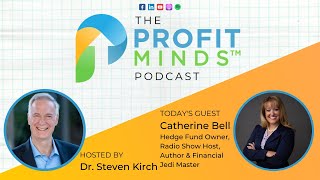
Podcast interview (Profit Minds) with Catherine Bell of Titan Impact Group. Bell shares her life story (born to a teenage mother in Northern Canada; adopted at 16; moved to the U.S.; became a real estate investor and entrepreneur; husband died unexpectedly in 2018). She emphasizes the power of multiple streams of passive income (she reports having built 13 streams), resourcefulness over capital, and practical entry paths (relationships, mentorship, using retirement accounts). Bell's mission includes supporting foster-care adoption (notes ~350,000 children available for adoption) and she offers a free guide via titanimpactgroup.com. Recommended books mentioned: The Science of Getting Rich; Who Not How.
Questions this video answers
2018
13
titanimpactgroup.com
The Science of Getting Rich (Wallace D. Wattles); Who Not How (Dan Sullivan & Dr. Benjamin Hardy)
Chapters
Hi and welcome to another episode of the Profit Minds podcast. My name is Dr. Stephen Kirch and I'm the creator of the Profit Minds growth system, a unique blend of profit growth, productivity acceleration and business process for scale. Every episode I interview entrepreneurs and small business owners from around the world with a unique story story to tell. You can find the show on YouTube, LinkedIn, Apple and Google, podcasts, Stitcher, Spotify and more. Today my guest is Catherine Bell of the Titan Impact Group. And today we'll be discussing the power of multiple streams of income, particularly for women. Welcome, Catherine.
Thank you. Thank you for having me on here. I absolutely love the name of your podcast, Profit Minds. That's where it all begins right here.
Absolutely.
Genius.
So I, I'd love to hear your story because it's always interesting to me how people get to where they are. Yeah, so, so back up a little bit in your history and, and, and, and tell our listeners how you got to, how you got to where you are.
Yeah, absolutely. So my story actually begins as a baby. I was actually born to a teenage mother and in Northern Canada, like 12 hours north of Vancouver. Right. And I, I actually now live in Scottsdale, Arizona. So I'll draw a map of how I got here. So I, I was in and out of multiple homes as a child, more homes than I can count. I went to 13 different schools. I actually didn't learn to read till I was in the eighth grade, but I was a straight A student because I learned very quickly that school doesn't want you to learn how to think. They just want you to have the right answer. So when I could listen and I could get the right answer, that's how I was able to get straight A's all through school. So that is a clue right there about what school actually is. That's a whole other story. So fast forward. I've been working since I was 13 to provide for my brothers. And I had younger brothers, and I eventually worked to have them be adopted by their fathers. And at 16, I was headed in the wrong direction very, very fast, just given, you know, what I had. There's what's taught and what's caught. And through a series of events, I actually ended up getting adopted at the age of 16. And it changed the course of my life forever. And I'll come back to that in just a second. Fast forward. I met my husband, did a lot of volunteering and stuff, and that's how we met. He was American and we got married in 2001. And he had a dream and so we moved to the US because socialism, capitalism, capitalism wins when it comes to building companies and stuff. So we moved to the. He lived in California, so that's where we lived and took his dream, and we took his dream and turned it into a multi million dollar company. So I was a millionaire from the. By the time I was 30 years old and ended up, you know, eventually going on to sell his company or I guess our company. And in the meantime, we were building a family, discovered I couldn't have babies. So we ended up actually learning about something called fostad. And it's children that are in the foster care system that the parental rights have been severed due to the decisions of the the parents. So these children will essentially stay in foster care their whole life so they become adoptable. And so that was the direction that we chose. So we ended up getting babies. They were four months old, a baby boy and a baby girl. They were twins. And we adopted those. Fast forward. My husband ended up actually, through a series of events, unfortunately, getting very, very sick and eventually dying unexpectedly in 2018, and which devastated my kids and I. And I promise there's a point to all of this. So leading up to this point, when we first start, when we first got married and we're building our company at the same time, we had become real estate investors and we were buy and hold real estate investors, meaning we bought a house, we put a tenant in it, they paid rent, you know, so on and so on. And through that, I ended up doing a bunch of different real estate investing because I gave myself permission to actually try lots of different things. And that's what the first key is. I want to give people permission to try lots of different things they've never tried. So I discovered through that buy and hold experience that I don't like tenants and toilets. It's not my genius. And I always say to my team, my company, if it's your genius, it's your job. If it's not your genius, it's not your job. That's not my genius. We ended up here in Arizona, and at the time I was running a program called the Flipping Females. And so we actually flipped about 500 houses. I was showing women how to actually invest in real estate. Men and women, but predominantly women. And how to flip houses because it was fun and it was like HGTV before and after. So that was a lot of fun. And fixing and flipping works when the numbers work, right? You do the numbers. Numbers tell you what to do. So it doesn't work in all Markets and all economies. So you have to make sure that you're doing the numbers. So I took from that what I liked, what I didn't like. And then I also learned through that, through that of doing all these different things, that in any real estate investing transaction, you can be the buyer, the seller, contractor, subcontractor, title company, bank. There's lots of different roles you can play in any real estate investing transaction. And the most secure position to have is the bank. Right. Well, how do you be the bank? So I went on my journey to discover how to be the bank. So I started my own hedge fund, because why not? So started my own hedge fund, and we had a bunch of vacation rental portfolios and everything.
And.
And it was during that time that that's when my husband passed away. And he had actually been the one running those. So it turns out that through that, I actually don't like guests and toilets either. Learning, like what I liked, what I didn't like, we ended up shutting that all down. And, you know, leading up to that point, what I had learned is a couple of things, is that one, money is like oxygen. The more you have, the easier it is to breathe. And the more you have, the easier you can breathe, the bigger the difference in the world you can make, right? So two is that success leaves clues. And what I mean by that is I learned that the average millionaire has seven streams of passive income. Okay? So when I learned that, I was like, okay, so if success leaves clues, so if I create multiple streams of passive income, I should have similar results than, you know, that these millionaires. So at the time that my husband actually passed away, I had actually built up 13 streams of passive income. And I. I built it up because that was the thing to do. I wasn't necessarily planning for, you know, his death. So what that did is it allowed for during the darkest hour of our lives, an extremely devastating time, we feel like we couldn't even emotionally breathe. It allowed us to actually take a year off and just let the dust settle and figure out and regroup what we were going to do. So because of all those passive streams of income, it allowed for me to take care of my babies and, and take the time off to figure out what we're going to do next. And so I never want anybody to go through what I went through. And I strongly encourage everybody to figure out how to create multiple streams of passive income, because here's the deal. Life is going to happen either way. And so when life happens, things happen. When you have a safety Net like that, it gives you some serious breathing room. So that's a really important point. So we. So what was my point? I'm sorry? The map, the multiple streams of passive income. So when I got to regroup and figure out, okay, so what are we going to do? You know, fast forward now. My twins are teenagers, and they're, you know, getting them launched and into the world. They're now 18 today. My son is actually the youngest US Marine in the last 25 years, serving over in Japan, which is pretty great. My daughter's getting ready to graduate high school. So again, some pretty amazing things came out of some pretty horrible things that happened. And now my company, Titan Impact Group, we focus on being the bank and renting dirt. Those are my two favorite things. Out of all the different types of investing that I did, that's what I figured out what my genius is. I encourage everybody to, like, give yourself permission and go, try. Try lots of different things, try different ways of investing, because you never know what you're actually going to learn. But give yourself permission and have the courage to actually do that. And so out of all of that, the question is, why? Why am I building this empire the way I'm building it? And again, it goes back to. Money is like oxygen. The more you have, the easier it is to breathe. And the more you have, the easier you can breathe, the bigger the difference in the world you can make. And I truly believe that everybody in the inherently wants to make a difference. And through all of that, I'm also clear that everybody has a purpose here on this earth while they're here. And so how we figure that out is that it is a common thread throughout our lives of pain and joy and just all of it. But it also is linked to, like, that niggly in the back of your mind that you're like, you're always asking the question, why isn't somebody doing something about that, like the whatever that is that is linked to your purpose? So for me, the question I kept asking is, why isn't something. Somebody doing something about the children in the foster care system? And what I realized is that through my childhood, through my not being able to have babies and adopting my own babies out of the foster care system, like, that became my purpose. And so what I ended up forming a nonprofit foundation. And our company and everything we do supports this, is that there's over 500,000 children in the US foster care system. Over 350,000 are available for adoption today. It costs less than $1,000 to adopt a child, and they come with a world of resources. And so what we do is that there's over 350,000 congregations in this country. And, and if each congregation takes on finding one family, just one, to adopt one child, we'll get this done within my lifetime. But bigger than that, let's talk about the numbers, right? It cost taxpayers billions of dollars to take care of these children in the foster care system. But what happens on their 18th birthday is that if they're still in foster care, they, they experience Black Trash bag Day. And what that means is on their 18th birthday, they are handed a black trash bag and told to put all their belongings in it, and they're out on the streets. So statistically, these children end up drugs, prostitution, incarcerated, and trafficked, which now cost taxpayers billions more to actually deal with that. So my point being, when we find one family to adopt one kid and keep moving forward and there's no more black trash bag days, what happens is, what if 1% of these 350,000 children got as inspired as I got out of being adopted? That would be 3,500 kids that grow up to be adults that go out and decide to make a difference in the world. Like that. That is a purpose and a game and a difference making. So this is why having multiple streams of income matters. Matters on every level possible.
Wow. What a story, Katherine. That's, that's wonderful to think about, you know, and, and, and maybe we'll have you back on to talk about your nonprofit, because I would love to do that, to talk a little bit about how we can help that. That. Because I'm on. I'm a board member of the Gratitude Network, and we support social entrepreneurs who help nonprofits that are helping children and youth around the world. So this is a perfect fit. So, but, but I'd love to, I'd love to explore a little bit. Let's dig a little deeper into this multiple streams of passive income. And, and, and so a couple of questions come up for me, right? You say try a lot of different things. Are there streams of passive income that you can get into without a lot of capital? I mean, it's one thing if you're already a millionaire to say, okay, I'm going to go flip homes because I can spend $200,000 and buy a house and flip it and get, you know, half a million or whatever it is, Right? But how do people who don't have a huge amount of capital get started down the stream of passive income? Do you have some recommendations there?
So, yes. So here's the thing I invite you and your audience all to consider is that it's not about resources. It's about resourcefulness.
Great. So.
And I hear a lot of people saying that, well, I don't have a lot of capital, and so I can't do it.
Yeah. I can imagine my listeners saying, well, that's wonderful for her because she was.
A millionaire already, but I wasn't. I came to this country with, like, a hundred dollars. Right. And I had to be extremely resourceful to make this happen. So, again, it's like, there's lots and lots of different ways of actually being resourceful and being a part of different deals that you can actually make things happen. So it's about resourcefulness, and it's about relationships. Like, that's the other thing I learned is that it's not about what you know, it's about who you know.
Oh, yeah.
So you can. You can learn all this stuff, and there's a ton of books that I recommend. Absolutely. But then it's about cultivating those relationships and finding mentors, being a contribution to those mentors and obviously being contributed to and making sure that you actually take the coaching and doing exactly what they're telling you to do. Because I promise you you is that there's more people in this country who became wildly successful because of their resourcefulness, who had very limited resources. And that's one of the things I love about this country. So to answer your question, yes, there's lots of opportunities out there. Do you have to look for them? Absolutely. Do you have to work your tail off to make them work? Absolutely none of it. Like I'm not saying. And it doesn't happen overnight. Right. I mean, this is 25 years being an investor and a business owner that I finally am where I'm at. And not all of it was pretty. There was a lot more ugly than there is pretty. There was a lot more failures than there were successes. Right. So it's that having that tenacity and that determination and grit and resourcefulness, like, those are all coming from inside. And that's what's had me be able to create what I've created. So anybody that seriously like that has developed that resourcefulness, that determination, that grit, that perseverance, that is what makes it happen. It's not money at the end of the day. Right. Because you can have all the money in the world. I mean, I literally have multiple people who literally inherited millions of dollars and poof, gone. What did they do with the money? Right. So it's not about the money. It's about the resourcefulness and how you make all your resources actually work for you.
Great. So can we be specific? Can you give a couple of examples of things that you would recommend for people to explore? Right. Not necessarily that these are going to be, again, you want to find the stuff that's in your zone of genius.
So here, These are my 2 favorite. You can see I love reading. I love my books. So this is. I recommend this for everybody. So it's a book called the Science of Getting Rich by Wallace D. Wattles.
Yep.
And this book here, I was given this years ago from one of my very successful mentors, and this absolutely changed my life. So the whole. You can see it's a teeny, tiny little book.
Yep.
You can read it in, like, two hours. So the homework for this, because again, your podcast is Profit Minds. So this is beyond perfect for this, is that you read the book through once and then for the next 90 days. 90 days, you read chapters 4, 7, 11, and 14. That's 4, 7, 11, and14. You do that for 90 days, you miss a day, you start all over again. I promise you, at the end of the 90 days, this is going to be transformed because of this. That's huge. You have got to change what's going on here.
Absolutely. And I have read the book, but I can't say that I've read those four chapters every day for 90 days. But.
And I still do. Like, this morning, I went through it like, it's. This is a serious practice that continues to sharpen what's going on up here to make sure that I'm on to, like, on point, continuing to be where I need to be, thinking the way I need to think to, you know, have the relationships that I need to have that create the opportunities that I have. Which brings me to this. This is my other, like, latest favorite book, which is who, not how. This is huge. I think a lot of people get stuck in. I don't know how. I don't know how. Stop asking how and start asking who. Who knows how to do what I need to do and can help me get there. Right. Like, that question there, I think is a serious deal killer for who knows how many opportunities. So, again, dealing with, like, your podcast, which is Profit Minds, you have to deal with going on there. So that now, oh, my gosh, now the people show up and the opportunities show up. Cool.
Okay. Yeah. So, yeah, I think the Wattles book in particular, it deals a lot with mindset of, you know, particularly people who say, well, I don't have the resources to do this. Well, you know, use the resources that you have and do things. I love his phrase, do things in that particular way.
Yes, yes. And I love the piece he talks about, like, stop lamenting over that you're not in the right place or you're not in the right job, or, like, stop and really get. There's an opportunity for you to glean some really amazing things out of where you're at today, what you're doing today. Like, one of the things that I told my kids was really important to do is, you know, you get a job not for what you're going to earn, but for what you're going to learn. Right. Like, for me, I went into every single company that I worked for, and I learned the ins and outs of every single department and job because I wanted to really dig in and understand what worked, what didn't work, like, all of that and glean all of that knowledge and then take it into my next adventure and next adventure, and it just got better and better and better. So when I, you know, building my company and my empire, taking all those really great things and then being very mindful of the things that didn't work as well, and then building on all of that knowledge and wisdom. Right. Yeah. There's opportunity everywhere.
And, and, and so much of it, as you continue to point out, so much of it is about mindset.
Yes.
You know, I'm reminded. I'm reminded of the. The groundskeeper, Yankee Stadium, who was very, very meticulous about the grass in the infield. So why are you so meticulous about the grass in the infield? He said, because it's my job to help the Yankees win a pennant.
Yeah.
And what I do here matters to that goal.
Yes, absolutely. Yes.
So thinking about where it is that you can make an impact even in. If you're just the groundskeeper or you're the janitor or whatever kind of, you know, don't want to denigrate, you know, either one of those professions. Right. Because they provide an incredibly valuable service.
Yes.
But it's about, what are you. What are you accomplishing?
Yes.
Right.
And it all matters. And every piece matters.
Yes.
Yep.
And it's. And it's what you do, where you are, that matters more than, you know, what, what you have in your bank account.
Yes, absolutely.
And. And if you do the right things, the money will follow.
Yep. Well, my grandfather would always say, it's like he'd say, catherine, find something you love to do. And find a way to get paid for it. And you'll never work a day in your life. Like, I feel like I haven't worked in years. I mean, I love what I do. I mean, our whole company's purpose and mission is that we are the sentinels of the American dream. And we leave every person, property, and community better than we found them. So everything we do, every venture we're in absolutely leaves every person, property, and community better than we found them. And we protect the American dream. Right. As long as I'm doing that, it never feels like work. It's a ton of fun. And as a result, the opportunities, the resources, the investors, everybody comes together to collaborate to make it happen. Right. But it took a long time for me to figure that out because I had to keep digging. You know, I've read an obscene, obscene amount of books. But not only just reading the books, doing the work, like having to do that internal work, that's the most important part. Because again, knowing, like, I always tell my kids, like, I don't care what you know, I only care what you do. Right. If we know, but we don't actually do anything with it, the knowing doesn't make a lick of difference. We have got to take what we know and put it into action. Like, you know, as my fiance, boots on the ground action, and make it actually happen in the world. Yeah, right.
Yeah. We call that the knowing doing gap.
I love it. The knowing doing gap. I love it.
There's actually a book I was trying. I was looking on my shelf here. I'm trying to remember who it was that wrote, I want to say Sutton, Robert Sutton at Stanford, but I'm not 100 sure. Anyway, the, the, the thing that, that, that, that struck me there. Yeah. I tell this story a lot. You know, I've been a certified facilitator of the Covey Seven Habits for, like, 25 years.
Love it.
I got started doing that about 10 years after I read the book. And, and the reason that it took 10 years was because I read the book in the, I don't know, early 80s maybe. But when I was in the mid-90s, I was offered the opportunity to take the class and to spend five days off site actually implementing what's in the book. And it was transformational for me.
I bet. Yeah. It's one of my favorite books. Yep.
But reading it, reading it didn't actually change my life doing it.
Yes, yes, that's exactly it. That's the, like, you know, learn something, implement it, figure out what worked. What didn't work. Take what worked, learn from what didn't work and keep building on that. But you have to do or, or.
Or at least, you know, due to the point. I don't want to say try because do or do not, there is no try. But the, the, the, the, you have to do it to the point where you figure out whether or not it actually works for you.
Yes, absolutely.
And some stuff won't. And, and, and, and one of the other things I like to say is you either win or you learn.
I love that.
So, so, so try it. Do it. You know, don't, don't just try, but do it. Figuring out, figure out whether or not.
It works for you or which pieces worked or.
Yes, which pieces.
Pieces of it.
Right.
Yeah.
There's going to be at least 10 right. In everything.
Right? Yeah.
So you want to build on that. That's wonderful. So, so Catherine, I understand you, you have, you have a book that you offer, a freebie that you offer.
I do, yeah.
How to talk about that a little bit.
So I'm really passionate about people taking back and understanding how resourceful they are, especially with women. So women, I'm speaking to you right now. It's that if you're a mom and a wife, let me be crystal clear. The skills that it takes to manage all there is to manage in a home, because there are a billion things that moms manage. Those are the same skills it takes to be the CEO of a company.
Absolutely true.
So we say sra. Same rules apply. So the same rules and skills that you have to being a really great mom and great wife are the same skills and rules it has to managing your own company and your own finances. Now, let me get really clear with you. It's that nobody cares more about your money than you do. So the fact that this country has been brainwashed into believing that they need to work for their hard earned dollars and then turn it over to some other company or somebody else to manage their retirement accounts because they're not smart enough. I'm calling bull. I am absolutely calling bull on that. And that's a whole rabbit hole of the wastefulness and all the fees that are unnecessary.
Let's not go there.
Exactly. So what this book is literally how showing you how to take your retirement account and how you can take all those brilliant skills you already have and now put them to work for you so that you're using that to actually create passive streams of income for yourself and add comments to your bank account and yet promise you you're going to make way more than if you turn it over to somebody else to do so. So my book, it's free. Please go there. It's on my website, titanimpactgroup.com seriously, go there, read it. It's a step by step showing you exactly how to do that and then starting to give you resources of different investment opportunities that you can find so that you can get your money working harder for you than you work for it. Because I promise you, like, as a mom, as a woman, you are incredibly brilliant and you absolutely have amazing skills when it comes to investing. They actually have proven that companies that have women on boards of directors make higher profits than companies that have no women on the boards of directors. We call that a clue. Right. Women have this whole other set of skills that has them be really incredible investors when they choose to not only know but actually do what they're actually learning. Women are brilliant investors.
Wonderful.
Yes, thanks.
Now, what's the best way for people to get in touch with you?
So if you go to titanimpactgroup.com There is a link right there. You can schedule a call with me. I'm on every social media platform. We do dozens of videos every single week. People can watch me on every social platform. You can message me through there through my website, anything. Let me know how I can serve you. And I'm more than happy to.
That's wonderful. Thank you. And that concludes our show for today. Thanks to our guest, Catherine Bell of the Titan Impact Group. I hope you've learned something about streams of passive income. I know I did. This is Dr. Stephen Kirch of Profit Minds. Make sure you catch us again next time on YouTube, LinkedIn, Apple and Google Podcasts, Stitcher, Spotify and more. And of course, I'd appreciate a positive review on any of those platforms. Thanks again for joining us.










