Titan Impact Group Catherine Bell - Podcast Triumph Episode 20
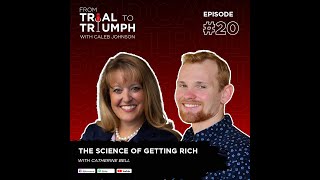
Catherine Bell went from an unstable childhood and 13 schools to becoming a millionaire by 30 through real estate and hedge funds. After her husband died in 2018, she built 13 passive income streams and now teaches financial literacy through her family mastermind and Flipping Females program.
Questions this video answers
13
16
By age 30
About 500 houses
13
Chapters
And people will hold on to their rage, their anger, their hurt, whatever it is, and literally keep themselves miserable rather than pull out the gifts. Pull out. What did you learn? What did you learn about yourself? What worked? What didn't work?
Welcome to Trial to Triumph, hosted by Caleb Johnson, the show about leaning into life's constant testing on your way to realizing your biggest blessings.
Hello, everyone. My name is Caleb Johnson, host of From Trial to Triumph. This is the show where I speak with people who have gone through tremendous trials and have come out triumphant. And even if you don't have the same story as our guest does today, that's okay, because you can still learn from their learning lessons and apply them to your life. And I'll do my best to bring those lessons into full view. So with that, our guest today is Kathryn Bell. Kathryn, welcome to the show. How are you?
I am wonderful, Caleb. Thank you for having me on. This is amazing and I love what you're doing. Yeah, this is a big deal.
Well, thank you so much for being here. I know we chatted a little bit before recording this, actually, and I already feel inspired and motivated. So I'm really excited to speak with you further and share that with our audience. Can you go ahead and give our listeners just a quick background story about yourself?
Yes, absolutely. So. So I'm Canadian and now I have a dual citizenship. I'm in the U.S. i was actually, my birth mother was 14 years old when she got pregnant with me and the sperm donor was 25. And when I was born, she was 15. And she didn't want me, he didn't want me. There were actually measures to take into try to eliminate me, but it didn't happen. And, you know, so clearly I grew up in a very unpredictable, unsafe, abusive childhood. I ended up having two younger brothers as well with her with several different fathers. And we went in and out of multiple homes as a kid and. And I ended up going to 13 different schools. Didn't learn to read till I was in the eighth grade, but I was still a straight A student. So people like, how did you become a straight A student? Because I learned as a child a couple of things, that when you are in extremely abusive situations, you learn to read the room and read people very quickly. And so one of the things to learn about school is that school doesn't teach you how to think. It teaches you how to get the right answer. So I figured out very quickly how to get the right answer and just tell them what they wanted to hear, give them the right answer, and that's how you get straight A's. And so that's one of the, you know, skills I still take from today is there's still, again, there's a lot of parts of the world, everything that we do where they don't want you to think, they just want you to get the right answer. So, you know, it just becomes a skill that you can fine tune. And then of course, the reading people in that situation, I, given how horrible it was for my brothers, and I started working when I was like 13 to provide and protect because there were days that we'd go without any food. There were, you know, we were homeless. And so being in and out of so many different homes when I was a kid, I knew that just because of what I was born into wasn't the only way that life had to go because I had all these different experiences and was able to observe different families. And I ended up getting my brothers adopted to their birth fathers. And then I eventually, when I was 16, ended up getting adopted. And that, that time I was at that time, because we were back and forth, you know, with our birth mother, I was with her, but we were living with drug dealers and she had me clubbing every night with her as her sister at 16 years old. Yeah. So I knew, I knew at that point that my life was on a really terrible trajectory. And so the opportunity to become adopted at 16, I knew at that time intuitively that that was going to change my life forever. And it did. It changed the course of my life forever. And for my adoptive parents, I am forever and eternally grateful for who these people are and the way that they love me. So went on and eventually I traveled the world, experienced lots of different things, ended up meeting my husband, who was American and moved down here to the US in my late 20s. And he had a dream, took his dream, turned into a multimillion dollar company. So. So we were millionaires by the time I was 30. So from, you know, a crappy childhood to millionaire by the time I was 30 and in another country. And then we, you know, after being married for a few years, wanted to have babies and discovered that I couldn't actually conceive. And so that's when we ended up learning about what's called fostadopt. And. And so it's children who are in the foster care system that due to the action or inaction of the birth parents, the parental rights have been severed, meaning that the children would stay in foster care forever, well, until their 18th birthday when they age out. And so there's two separate categories for foster children. There's foster children that the parents really are trying to do their best to get back on their feet, to get their kids back. And, you know, that's a traditional foster parents that people know about. Then there's these other ones that are. The parental rights have been severed, so now they have to figure out what else they're going to do with them so they become adoptable. And it costs less than $1,000 to adopt a child, which is pretty amazing. So I formed a nonprofit out of that to educate people on that and which we can circle back around to if you want. So we, you know, went on, you know, through my marriage, and my husband actually ended up getting really, really sick in. It was just after 0809, we sold our company and the market had crashed and everything. He got really, really sick. And he got so sick he wasn't actually able to go back to work. So it fell on me to. To have to go back to work and provide for our family. And so there was a lifestyle and, you know, which I'd become accustomed. And so I went to work and worked my tail off. The first company that I took on, I went in and they were doing about $2 million a year annually. This company was about 15 years old. In three years, I took him to 2 million to $13 million in revenue. And then the next company I took on, they were doing about 250,000 a year. In three years, I took them to over 20 million. So. And, you know, I formed my own hedge fund, which was a whole other thing. So the whole point being, like, as a child growing up, what I had learned was that there are patterns that people have, right? So patterns for good choices that have good outcomes, pattern for bad choices that have bad outcome. And so one of the things that I really took on as a child, be it intuitively or whatever, was to learn from other people's mistakes. So when I could learn from their mistakes, it meant I didn't have to repeat those mistakes, right? And if I could learn from the successful families and figure out what were the things that they were doing that had them be successful. And if I did those same things, I should get the same, if not similar results. So I was extremely conscientious and present to what my actions and activities were that of where the trajectory I wanted my life to go. Because let's face it, growing up dirt poor and in abusive situations, as an adult, you never want to go through that. So figuring out what it was that caused that and making different choices and figuring out when you saw happy families, what they were doing, make those choices now gave me the ability to literally manifest and create a life that I absolutely loved. Right. And so part of that was as an investor, you know, started investing, you know, when I came to the US 20 some odd years ago and went to different, you know, real estate investing meetings and stuff. And one of my very first real estate investor mentor said to me that in any real estate investing transaction, there's multiple roles you can play. So you can be the buyer, the seller, the realtor, contractor, subcontractor, bank, title company. There's lots of different roles that get played inside of that. And then he asked, out of all those roles, which one is the most secure? Right? Think about that. Which role is the most secure? Well, it's the bank, if you think about it. Like even when we play Monopoly, right?
Yeah.
Like I always ask people, like, what's, what's your favorite piece? So Caleb, when you play Monopoly, what's your favorite piece you like to play?
I like to play the dog. How about yourself?
Okay, right. I like to be the bank. Yeah, the bank always wins, no matter what, every game.
You're right.
So my question to him was, well, how do you be the bank? And he's like, you start a hedge fund. And so I went about my journey and started a hedge fund. So I think one of the things about being a kid that was like the outliner all the time, you know, when you're the new kid for 13 different schools, you like learn to sort of, you know, be a wallflower so that you didn't get picked on. You know what I mean? Like, you're figure these things out, but, and it allows you to observe and observe a lot. So that's what I did. And because of that, because I had been passed on to so many different homes and so many schools, there was a whole lot of things that people didn't tell me I couldn't do. Like, I didn't know that you had to like go to Harvard or some Ivy League school to start a hedge fund. My mind was, well, if they learned, I could learn. So I just went and learned and I figured it out and I did it right, and so formed that hedge fund, did all that. And at the same time, we had a whole program called the Flipping Females, right? And the Flipping Females was a program where we taught, we taught women how to invest. And it was more importantly fixing and flipping houses. So we fixed, we did about, we flipped about 500 houses here in the Phoenix Valley. And we did it all with women, which is a lot of fun, right? So again, it's taking that, like, again, as a kid, being an outcast for, you know, my entire childhood was one of the things I love to do is just include everyone, right? Like, I just love everybody to feel welcome and loved and included and inspired, because I didn't feel that as a kid. You know, I was always the new kid. I'm sorry. Kids are mean, trust me, nuts. And so, which is one of the things I always taught my kids is anytime there's a new kid, go and sit with them at lunch, Go and be their friend. Like, the worst thing is being the new kid. So anyways, so teaching that, and it just becomes a part of who I am and, you know, moving forward. Back in 2018, my husband ended up dying unexpectedly. It was very traumatic and unexpected. It was awful. So at the time, my twins had just turned 14. And it was horrific. It was horrible for all of us. But. But here's one of the things that I learned, right? So I learned early on that earned income is meant to buy assets that provide passive streams of income that pay for your lifestyle. So most people go through life paycheck to paycheck to pay for their lifestyle, right? Had I have done that when he died, my life would have been obliterated. But. But because I understood you take earned income, you buy assets, you have these streams of income, you know, that gives you some breathing room, right? So I always ask, like, how many streams of income does the average millionaire have? Do you know? Seven. It is seven. And so I always ask, like, how many do you have and how many do you want? Well, at the time, I had 13, right? Because money is like oxygen. The more you have, the easier it is to breathe, right? And the more you have, the easier you breathe, the bigger the difference you can make in the world. But when my husband died, I couldn't breathe, like, emotionally. It was horrific for my kids and I. But because I had created 13 streams of passive income, it allowed for me to take a sabbatical with my twins for a year and just grieve, you know, and work through the pain and the trauma and how awful that whole thing was, right? And it allowed me to basically push a massive, giant reset button in my life and get really, really clear what actually mattered to me. And I had a whole bunch of companies at that time. I actually shut them all down because they didn't bring me joy at the end of the day, right? And so for Me, it's like life is too short to not have a life filled with joy. And knowing what I knew about, you know, I've had the opportunity of being friends with a billion, with a couple billionaires, lots and lots of millionaires. And I love to ask questions like what had them be successful? What are the patterns that they do every day? What are their habits? And they all have similar things in common, which I'll share one of the most important things to you, which is right here, so you can see, I love to read. So this right here, every millionaire and billionaire that I know studies this book. So it's the Science of Getting Rich by Wallace D. Wattles. And here's the homework with it, right? The homework is that you read it all the way through. It's a teeny, tiny little book. It'll take you about 2 hours to read the whole thing. But then you read for 90 days. You read chapters 4, 7, 11 and 14 every day for 90 days. Every day. It takes you like 20 minutes to read those four chapters. It's super simple. But my point being that it's going to change what's going on here. You change this, you change everything that happens in the world, right? And so understanding those patterns, I mean, again, like today, I still look for patterns. I look for patterns when, you know, looking for deals that I'm investing and I look for patterns in how to have successful relationships. I look for patterns everywhere, right? And everything that obviously that I've created has come out of necessity. So one of the things that I created. So a couple years ago I just woke up freaked out, realizing that one day my kids are going to leave home and there were certain skills that they needed to go into the world and be successful. And so their dad was no longer there, school wasn't teaching it. So it was up to me, right? So what did I do? So I took that and formed a family mastermind. Now, you have to understand, there's 16. No 16 year olds want to listen to their mom, right? So I needed to make it mandatory, which I did. So it started every second Friday. They had to show up to the kitchen table and there was homework that they had to do and they had to come to the table with the homework done. And then I had a lesson on financial literacy, communication skills and relationship skills. You have those three things, you're going to be good in life. You don't have those three, you're going to struggle, right? So it was up to me to give them those, those tools. Now are they going to use them, I don't know. But at least they have the tools. They can use them or not. But me, I did my job. So. So we had this family mastermind. And by this point, I actually manifested an extraordinary man in my life. And we're engaged. And so his family ended up hearing about what I was doing. Well, they actually called. Several family members called up really upset, asking me why I hadn't invited them. And I was like, nobody was invited. Mandatory for my kids. And so they decided that they wanted to, you know, come be a part of it. So I turned it into something bigger. And one of the biggest things was understanding that when it comes to culture, be it culture in a family or culture in a business or whatever, that when we don't intentionally create culture, culture will be get created and you're not going to like what it is. So it was up to us to create culture. Now, the culture in this family was not a healthy one. And so we created the culture. There were really strict guidelines of how we were going to operate inside of this family mastermind. And everybody had to come. It wasn't a drop in. You had to show up every single time. You had to have your homework done. You need to do the work. Like, no matter how uncomfortable it was, you needed to get it done. And there was, you know, a lot of familial relationships that were very strained in here. So we completed our first year and we had like a completion dinner or whatever. Anyways, the end of that first year, the completion dinner, there was 41 people, right? So not only that, here's what's really cool about this, that collectively they had earned an additional hundred thousand dollars that year out of what I taught them. They had eliminated over $70,000 of debt collectively and invested over $50,000 collectively, all within that first year of the mastermind. But here's what's bigger. Multiple members in this family hadn't actually spoke to each other in over 20 years. The love and affinity that was present and the healing that happened that brought this family together really was extraordinary. And that all came out of a necessity of, you know, if it's going to be, it's up to me. You know, when it came to teaching my kids financial literacy, communication skills and relationship skills, right? Like, I feel like a lot of people go through life like, ah, somebody else, somebody else and somebody else, somebody take care of this. No, if it's on your heart, it's you. And you may not know how, but just start. You'll figure it out. Right? It's how I figured out, like, everything I'm doing. You know, I now have multiple mobile home parks because through my real estate investing journey, you know, and this is the other thing. Anybody that wants to get into investing, I invite you and encourage you to explore lots of different options, right? Don't lock yourself down into one thing thinking that's what you got to do the rest of your life, even though you hated it. Like, I did buy and holds. Turned out I didn't like tenants and toilets, you know, did fix and flips. Love fix and flips. There's a whole lot that goes into it, but it only works in particular markets. And because real estate is cyclical, it only works in a going in a market going up, it doesn't work in a market coming down. So, you know, did that, did vacation rentals. It turns out I don't like guests and toilets either, right? Did wholesaling. I like the money, but I didn't like that there was cash, wasn't cash flow. You know, at the end of the day, like, I just like being the bank and I like renting dirt. That's it. So as it weighed my own hedge fund, I get to be the bank. And my mobile home parks, I get to rent dirt. I love that, right? So, but it's because I gave myself permission to try lots of different things, right? Like, I didn't lock myself down into, like, oh, I'm a buy and hold investor. It's all I got to be for the rest of my life. Like, no, I tried it, discovered what worked, what didn't work, what I liked and what didn't like. And then I used that and went on to the next thing and then asked myself the same questions.
And Katherine, I want to pull that out a little bit. Where did you learn that from? Was that part of reading people when you were younger or where did that actually develop?
So what I observed as, you know, a kid going through all these situations was that people. I observed that these adults got stuck in their way of thinking, right? Meaning, like, even. Even my. My sperm donor, right? My birth father. So he even said to me at one point, he's like, you were born into this. You need to stay in this. Like, you need to be happy with this. Like, be happy with poverty.
No, thanks.
No, I decline. You know, and so again, it's that stinking thinking, right? Like, and people will hold on to their rage, their anger, their hurt, whatever it is, and literally keep themselves miserable rather than pull out the gifts. Pull out. What did you learn? What did you learn about yourself what worked, what didn't work? Forgive where you need to forgive, right? Like, when we forgive, we forgive for us. We do not forgive for the other person. Holding on to hatred and anger and angst. Literally, it's like us drinking poison and hoping the other person will die. Like, it's ridiculous. But I watched, like, adult after adult after adult do that, and it was so. It bothered me so much that these adults would hold on to their anger and their rage and literally create these horrible lives based on being miserable. Right? Like, even so, one of my brothers, you know, him and I are a year and a half apart. Love him to death. You have no idea how much I love him. However, same situation, horrible abuse. Just a horrible, horrible childhood. Well, you know, here we are. He went on to live a pretty miserable existence and got into drugs and alcohol and all of that. And him and I have had multiple conversations. I'm like, dude, you don't have to live like this. And his whole thing was he was determined to live a miserable life to make sure that his birth parents paid for and knew how horrible his life was. I'm like, honey, they didn't care about us as kids. Why the hell they care about us now, right? Like, for me, it was like I was going to go live an extraordinary life. These two human beings that, you know, created me, like, they want to be miserable. Go be miserable. Like, that's on you. For me, I just wanted to be happy and live an extraordinary life. And again, because I was in and out of so many homes that I got to see that life didn't have to be this one way. It actually could be something we create it to be. Because why not? So if I got to say how I wanted my life to be, I wanted to have it be extraordinary. I want it to make it make a difference for millions of people. I want it to matter. Like, I want to live a life that I absolutely love. Right? Because, again, if I have say in it, why wouldn't I choose that?
All right? And Katherine, was there. Was there one particular foster family? It sounds like being through that many homes, you saw the good, and you saw the really bad. And can you recall what one of those families. It could have been your adopted family as well. But one of the things that impacted you the most, that was for the good, right? Something that you saw that was really good from one of those families.
So two homes. One was actually with my aunt. My aunt was a foster. She had so many kids, Foster kids in and out of her home. But she, hands down my auntie Barb, she gives the best hugs on the planet. Like, seriously, the best hugs. Like, when I think of my auntie, it's just one ginormous hug. And so for me, that was, that was a big thing. Whenever we were there with her, we felt unconditionally loved. That was huge. And so I always wanted to give big hugs. And anybody who knows me gives, I give the most amazing hugs. And that's from my aunt because I want people to feel known, loved, heard, you know, just, just gotten. And then of course, it's my adopted parents that I'm still so deeply moved by them. They, the way that they, they believed in and still believe in me today. It's so inspiring. They tell me all the time, they're like, we're so proud of you. We totally don't understand what you do, but we're really proud of you.
Oh, they sound like amazing people, really.
I mean, you know, it's just that level of love and belief and encouragement and, you know, creating that really safe space for me to start to feel.
And there's something I want to pull up for the listeners is that if you listen to Catherine's answers, they were both on the emotional level, right. It wasn't how to make a million dollars, it wasn't how to get revenge or anything like that. It was how to love. Right. Coming from that kind of abusive background and being able to feel love. And honestly, we're all, we all desire love, you know, we could have the most loving parents and we still want to feel love. Right? That's who we are. And so something to pull out for the listeners is that, you know, give love. Right. And seek out how to be a better human being and maybe do like a life audit and look at your life. Is it all about the money? Are you in the day to day grind of. Well, it's kind of like getting lost, not being able to see the forest and only seeing the trees, right? You get focused on one thing and you're forgetting why you actually got started in this. If it's family spirituality, whatever that may be. And so I really appreciate you sharing that, Catherine. That's. That that impacted me a lot when your husband passed away. What in it, it's amazing that you had the opportunity to take a sabbatical for a year, right? So many people don't.
Well, it's not like I planned it, right?
Of course not. Right, right. But just we don't know what life is going to bring and so we could in the next hour, someone that we love could pass away, or we could pass away, Right. You just never know. So taking the initiative now, and, you know, it says in the Bible that you need to. Whenever it's time to harvest, harvest, and when it's time to plant, plant, Right. So you need to be in preparation. So that's amazing that you did that. Again, not.
And there's time to be fallow. It talks about that too. Fallow, Fallow. Like it's the time where you leave. You do nothing with the soil. You just let it rest.
Rest. Right, right, right. What did. How did. Was there a turning point after that year that really helped you, I don't know, move on or feel emotionally sound. And the reason I'm asking that is because, you know, I know people in the last week who have been divorced, who have had family members pass away.
So I remember the moment. I know what you're talking about. There was a moment. So here's the thing again. And I teach my kids this. I can't control what happens to me, but a hundred thousand percent I can control what I choose to do with it. Right? And so again, success leaves clues. So when he passed away, my best friend, she actually heard. I called a few friends, women that were widows with kids, and asked them the hard questions. If you had to do the whole thing over again, what would you do differently? And they all said, hands down, they wish they would have got their kids into therapy sooner. So I was like, that was huge. So when all those women said that my kids and I were in therapy within five days of him passing, like, I was not gonna mess with that. And so clearly, I've never been down this path before. Right. Then that's. Again, that's another skill that I learned, that just because it's a path I haven't been down before, I just need to look around and have conversations with somebody that has been down that path, learn what those patterns are, and do it right. And so got ourselves into therapy. We were in six forms of therapy. Because here's the thing with grief, no matter what level could be, like you said, divorce, death, the loss of a business, the loss of, you know, a portfolio. Like, those emotions are there. Loss is. Loss is loss. And the only way around it is through it. We have got to deal with and process through that loss. And that grief, I knew that. And as hard as it was going to be, I knew it wouldn't kill us, but I knew that if we didn't process, would destroy our lives. I knew that. And so again, it goes back to the anger, the sadness. Like, could we have continued having that in our lives? Yeah. But what would that have brought? It would have brought more of what I witnessed as a child. Right. Just look around, you can see it everywhere. And so going through all that therapy, it was one of the sessions that I was in on this particular night. It was an organization where it's parents and then the children. And so the children all go off into their respective groups that are age appropriate. And then. And based on how the parent died, which again, like, horrible. But these kids needed that place to talk about this and relate, because they don't. They don't at this point, you just don't relate to anybody anymore. And same with the adults. The adults were all together based on how the spouse died. And so there's lots of different groups, lots of different types of deaths. And so it was that night I was sitting at the table and you know, and people are at all different parts of their journey through the whole thing. And I just had this light bulb moment of like, oh my God, I hate my life right now. And then, wait, I can actually create what's next for me and my kids. And I got up from the table that night and I was like, okay, we're done. We're creating what's next. And that's what I did. And inside of it, like the creation part of it. And I talk about manifesting this. An extraordinary man came from January 1st. For the last 30 some odd years, I've been doing this exercise. And we're gonna do it this year. Cause it's what we do. So we go through and we really get introspective about the five areas of our life. The mental part, which is where are we growing, learning things like that. What are we doing mentally, emotionally, our relationships with ourselves, with everybody around us. Where are they at? Where do they want them to be Physically, the, you know, obviously, how do we want our body physically? Mental, emotional, physical, financially? Where do we want our. Where are we? Where do we want to be? And then spiritually, and I'm not talking religion, I'm just talking like being connected to source or whatever you call it, whatever that is for you, being connected to understand there's something greater than you out there and being grateful for that. And so we go through those areas. We write goals based on those areas. And then we go and get magazines and we cut out pictures and words and everything that represent all of those goals in all those areas. And then we go and get a ginormous frame that's like usually 3ft by 4ft. It's a poster board frame. You can get it from Hobby Lobby or Michaels or Walmart, wherever. And you open it up, you put the whole collage together, you close it up, frame it, and then you hang it. And that becomes what you're creating for this next year. And there's something really powerful inside of creating that, that all of a sudden, your unconscious mind, you know, and I like to say God and the universe conspiring to have my heart's deepest desires come true. Like it's there, especially in the crappy moments of, you know what, I get to create this next life in a way that actually matters for me. But then I took it a step further and all those goals that I wrote out, because our unconscious mind believes us, right? And so when we tell ourselves something, our unconscious mind will actually believe it. So I record recorded myself saying it, and then I listened to it every night before I go to sleep. So what happens is all night, my unconscious mind is going to work trying to figure out creative ways to make all this happen, right? And so by. And I've been doing this for again, decades. My kids do it now, our family does it. But I really got the power of, like, I don't. Don't have to know how I'm going to create a life that I love. I just needed to say this is what it would look like, so to speak. This is the vision of. And then be extremely grateful for when it actually manifests and happens. So again, I had to intentionally take the steps, work through the feelings, overcome the emotions, like really work through them responsibly, figure out what worked, what didn't work, what I love, what didn't love, and then take those things and. And then, okay, here's how I'm doing it and here's how we're gonna again hit the massive reset button and create what is next in a way that what would I love? Right? And I ask myself that question every day. So for all of your audience, I would love for you to ask yourself, what would you love? What would you love? When you can answer that question, like, what would I love? What would I love to eat? How would I love to feel? What would I love to experience? And then give yourself permission to have it and to love it, right? Like, that's the other piece. Like, people will go part of the way, but when they get it, because it doesn't look like how they think it should look, they miss that the vision actually happened and they Miss experiencing the full gratitude of it. Right. So it's giving up the picture. Hold the vision. And then when it happens, like, really let in all the love and gratitude. Right. Because then it happens more and more and faster and faster.
Right, Right. And, Katherine, I want to talk a little bit about that vision board. And I've read books, I've heard other stories of people that say they're gonna 10x their business. I mean, go from like 10 million to 100 million in like a year. And since they followed a processes and a system and wrote it down was intentional, they blew it out of the water, you know, and so some. Some crazy stories like that for you, what has been. Or your family, has there been something again in the last 30 years where you have written it down? And it was maybe on a date, an audacious goal, or it was. It was just crazy, but it actually happened. Have you experienced that?
So, yeah, becoming a millionaire by the time I was 30 after only being in the country a couple years, I mean, that was. It happens again and again and again. Like my babies, literally, I have this boy and girl twins on two separate dream boards before they came into my life. Like, and it looks like them, which is really weird.
Yeah.
Yeah, like, really weird. So again, even the relationship. And I actually have a whole course on this. Funny enough, because I have so many women asking, how did you manifest this man? Right. Because again, it was like, could I be afraid of love? Could I be afraid of my heart getting broken again? Like, yeah, absolutely. And what would I love more? What I'd love more is to have a man that I'm building this extraordinary life with, because I can have all the money in the world, but if I have nobody to share it with, what's the point? You know, my kids, I knew that it's healthy for them to eventually leave home and go create their own lives, holding them hostage to be like, they have to be with me because I'm alone. Like, that wasn't fair to them either. Right. So being really intentional about what I wanted to create in my relationship. So I had this really long relationship vision. And inside of that, it literally talks about every aspect of what I wanted in a relationship. And again, I walk so many women through this, and every woman that I walk through this ends up finding her amazing man, and then they end up having an amazing relationship and they get married. But, um, again, it's that being really intentional about what we're creating and why. And, like, what is the whole vision of it? So, yeah, it's Happened again and again and again. Like, this is why I go back to the basics, because it just works. Right? I mean, my library. Right. I always wanted a library with a ladder.
Oh, I love that. It's classic.
Right. Like, this is part of my dream board. Right. Like, everything I have in my life is because it was something I put on my dream board that I manifested. Right, Right.
And I wanted to. I'm so grateful that you shared that, because I wanted the listeners to understand that, you know, sometimes these things sound so silly. And, you know, ultimately, whenever I think people. So they don't want to put something. They don't want to write it down. One of the reasons could be because if someone sees that, they're gonna get criticized for that. And I've had that happen to me. And so you. It's taking a risk, but it's so empowering. And especially for visual people. I know that's one thing that aids them in that, being able to write it down, see it, and kind of process through that. Um, but it's possible, right? Even if it's something as crazy as finding true love or not as crazy, but as rare as true love, it's. You did it. You manifested it. And that's incredible.
But it wasn't like I. I manifested it intentionally. Right? Like, I wasn't waiting for the sun, the stars, the moon to align so that this man would magically show up in my life. No, I created it. And my relationship with him is created every single day. You know, like, I have the recording and, like, I listen to it when I'm getting ready. And he has the pleasure of listening to it right along with me, whether he wants to or not. But inside of that, we intentionally create this magnificent relationship together. Intentionally, every day. It's not an accident. We don't take it for granted, but we work at it. Just like we work on our business. Right. You know, and like, again, success leaves clues. So where I learned about listening to it every single night was from a friend of mine, Bill Bartman. He was a billionaire. You can look him up. And he was getting. He was in the middle of buying the Chicago Bulls. And he would go to all the practices and all the games. And he noticed that Michael Jordan would always sit on the sidelines before each game or whatever. And he would be sitting there with his elbows, like, on his knees, looking down with his earbuds in. And so he went over. He's like, what are you listening to? And he's like, ah, the Red Hot Chili Peppers again and again. And finally Bill's like, dude, I'm calling bs. What are you listening to? And so finally he said he had recorded himself saying, like, what he was going to do and how he was going to win the game and the celebration and the victory of winning it. Right. And he was listening to that tell himself that before every single game. Look what happened again. Success leaves clues.
Wow.
This isn't rocket science.
Yeah.
But it is the science of getting rich.
Oh, there you go. Well, I. I feel like I'm on another level of flying at the moment, so. So we should probably wind it down and ask the final three questions. And I just want to thank you, Kathryn, for being here and inspiring me, inspiring the listeners. What you said has really been impactful, and so I'm grateful for you being here. Thank you.
I hope it makes a difference. Yes. Thank you for having me here.
So the final three questions would be. The first one would be if you can recommend a book to our listeners. I have an inclination of what that might be. There you go. So the science of getting rich. I actually have not heard of that before, but I'm going to invest in it after the show.
Good.
Number two would be if people want to learn more about you, if there's a website, maybe if they want to invest with you, learn more about your fund, where's the best place for them to do that at?
So they can go and check out titanimpact group.com. so T I T A N I M P A C T group dot com. And I'm all over social media as well.
Perfect. And, Katherine, the final question would be if you can share one last thing with our listeners for them to take away from today's show. What would that be?
That you having an amazing life is up to you. You just need to do the work. You do the work. The work works.
I'm so happy you said that. So powerful. I feel like I could go run through a wall right now. So we should probably end the show here. And again, Catherine, thank you so much for being here. It was a privilege to have you.
Thank you. I absolutely love being here and I love what your show's about. Really, this is extremely so. Thank you for what you do.
Thank you. Well, everyone, thank you for tuning in and I hope you have a great day. Bye.
Time to grab your victory. Find us on the web at redseacapitalgroup. Com and follow us on Instagram and Facebook at Red Sea Capital Group.










