Using Yoda to Run Deals | Titan Impact Group
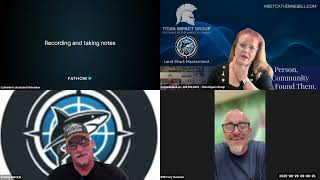
Live Deal Room session hosted by Titan Impact Group featuring Tommy, Catherine Bell, Corey, Hoy and an AI assistant called Yoda. The group discusses integrating AI (Deal Hunter) into real estate workflows, manufactured/mobile-home and land-home packages, fundraising using AI, and Opportunity Zone investing layered with data centers. Yoda performs web-research-style summaries (ADOT projects, fiber permits, Opportunity Zone policy changes and map timing) and proposes a five-part webinar curriculum. Participants plan follow-ups (calls, conferences, collaboration on Go High Level CRM) and note regional targets in Arizona (Yuma, Buckeye, Salome, Tonopah).
Questions this video answers
About $8.2 billion (Arizona Department of Transportation statewide road work through 2029).
Expected to be released around late 2025 or early 2026.
Five webinars (Intro; Funding and Finance 101; Due diligence and risk management; Deal structuring and exit strategies; Case studies and Q&A).
Lower income threshold to ~70% of area median income and addition of 'Rural Opportunity Zones'.
Billions of square feet (thousands of census tracts and millions of acres aggregated).
Chapters
Good morning and welcome to the Deal Room Live, the daily real estate deal tank powered by Titan Impact Group, a global leader in AI driven real estate investing and funding. Where the real estate world meets speed, precision and profit. And bring us your deal so we can put it into our AI model that analyzes and structures real estate deals in minutes, generates all the docs you need to get the deal done, and gives you a verified, unbiased breakdown of due diligence reports. The investors get the advantage of getting fully vetted AI analyzed deals that cut their due diligence time down by 60%. So you're in the right place. Let's hope the Deal room now and get into today's opportunity.
So are we going to be talking about opportunity zones today?
Yep, I'm just trying to get some stuff pulled up on my phone.
Yoda, please create an invitation to go out on social media that it's happening now and we're talking about opportunity zones, the ultimate opportunity.
The, the. The format is that we have Mondays is AI. We teach people about Deal Hunter, how we use it, how to find it, how to get into it, what, you know, what it does. We teach them about free estimates and tell them what, how we use free estimates. And so we just basically integrate AI into real estate investing on Mondays. Tuesdays is real estate deals, Wednesdays are commercial deals, Thursdays are land and industrial, and Fridays, Catherine Bell, opportunity zone time. So. Are you on mute? No, I'm trying to multitask.
Posted to all of the groups.
Mr. Corey, is that your note taker? Is that you?
That. This is me.
That would be you. How you doing, brother?
Doing good.
Yourself? I'm doing well. I've seen you got your, you got your ears lowered a little bit.
Yeah, yeah, yeah, yeah. We're on break time. I'm over here in Tempe at Papago Butte again doing a third floor or second floor remodel for Metro properties.
Nice, nice. I heard you got your, your, you got your dealer's license now.
Not yet, we're working on it, so. Oh yeah, we gotta, we gotta finish the, the coursework and then apply for the license, so I got you.
Okay.
Yeah, so hopefully we'll have a, in a few months. But that set aside, I do have a connection where we get wholesale prices on, on manufactured homes. So we could get wholesale prices, but probably not as good as I can get when I get my, my dealer license. You know what I mean?
Yeah, yeah. No, it'll definitely help you gain equity and properties when you're able to provide the, you know, provide the boxes to go on the dirt, so. Oh, yeah, I know. Like, I'm trying. I'm trying to find a. A model that will work well on my Winden project up there, because I want to do the tiny house, RV garage.
Okay.
Package, you know, and have that land home package like that. So.
Yeah, definitely.
Do you have a website or anything like that yet for the products?
Not yet. We're. We have our website, but we're kind of. We're just kind of keeping it like it is for now, but we're going to redo it and.
Oh, you're Black Canyon.
Yeah, we're gonna redo the website or. Or maybe make a new one, but.
Just make a new one. My suggestion would be to make a new one, bro. From. From experience. Yeah. Don't. Don't try to pack too much into one website. Websites are. Just go get another one and build that. That one out for your, you know, for your affordable housing. Yeah, but it's a good model, as a matter of fact. Have. Have you met Catherine Bell by chance? Corey?
I think I. I think she was in here last time I was on.
Yeah. Yeah. Yeah, that's cool.
Nice to meet you. Cory.
Yeah, nice to meet you. I. I seen you briefly last time I was in here a couple weeks ago. I think it might have been your first time on the show. I can't remember.
The last time he was in here was probably the first time you were on Catherine.
I think so.
Yeah. It's only been. It's only been two weeks. She makes it sound like it's been.
Forever, so it feels to me like it's been forever.
This. This. But again, her definition of a long time is three days. So, you know, a lot happens in.
My world in three days.
Yeah, you got to consider the. You got to consider the timeline when you're considering the source, so.
Mm.
It's all relative. That's how Canadians tell time, from what I understand.
So, yeah, productive people tell time.
Long time. We go by long time a little bit, and once in a while, those are correct term. Those are correct times in Canada.
Right.
So everybody out there knows what that is.
We did. So we did connect with a developer that lives right really close to us. We had a meeting the week before last and went really well, so we're kind of partnering up. He's already doing the Manufactured Home Lots packages right now, so we're kind of teaming together, doing the wholesaling. And then I got some working capital coming in and we're going to be kind of teaming up on these things because it's, it's not as easy to get funding or financing for, for these deals. So you're putting up a lot of cash up front. So we're going to kind of go in.
Send me what, send me what you're doing so I can take a look at it. I might be able to have, have some conversations and we can get, you know, maybe get some short term funding on that. We started working with several investors on private money, hard money situations. And I'm actually going to be. Going to get my fiduciary. Fiduciary certification, my, my series 65 so that I can just be a direct, you know, direct contact and purveyor for, for investors. So Catherine's got a pretty good extensive list of, of people in that network. She's typically over on the $10 million side of life. Not, you know, right well.
And I have, I own several mobile home parks. I love renting dirt. It's my favorite thing. So we are getting ready to buy several more here in January. And one of my partners, I think this would be a really great conversation and a synergy for what you're doing and what we're doing with his parks. No, Major.
Okay. Yeah, Major's got a lot of parks, but he also is a. I think he's also a dealer too.
No, he's not a dealer.
Not at all.
No.
So we're looking for the actual mobile homes themselves, but he will be the bank on holding the notes for the actual tenants in the.
Is he willing to do it in places like, like Arizona or is he only want to stay in Texas?
Let's have a conversation.
All right. Yeah. Let's put the four of us together on the phone and see what we can pin down with that. Because I, I had a conversation with this guy last week, Cory, his name's Major and his wife Bonnie. They are, they've got what, seven or eight parks or something like that? He said 11. Maybe. I don't know. I was up there. So. Yeah, and he's got a system. They, they got a management team, they got a, they got an operator system and all that so you can find yourself, you know, or your, your buddy there could find themselves being the operator one of these damn things and partnering up this couple.
So yeah, eventually we, we'd like to get there too and have some parks as well.
Yeah, for sure. No, I think they, I think they're good with doing joint ventures with people, so you can certainly look into that and then on the flip side, just to sidetrack off to your. Your genius, what do you need for me to give. Get you in order to send out offers to people via email? Like, I want to. I want to specify a specific and target, a specific area and a specific type of house. How would I be able to get you to send out those emails and start getting offers out to people in that area?
Just send me, give me the criteria, and we can put it together.
All right. Would it help if I already have, like, addresses of people?
Yeah, but I mean, it's not necessary. If you do have the addresses, we can definitely. Hey. So our skip tracing is about 80%, and whether it gives us the email or not is kind of hit or miss.
Got it.
So we could run the addresses and see what it gives us. If it gives us an email, we can send them out. I like to do big lists of like, I don't know, at least like, 500, because then you get about maybe 30, 20, 30% of those will have emails with them.
All right, so if I get you. Because I have a list of like, 1600.
Okay.
If I send you that list, would you be able to. What's it going to cost me to get that skip traced and built out?
I could skip trace it for free. We'll talk about sending them out. I think I'll have to look at the cost on those. I think it's like, I don't know, like a fraction of a cent to send them out. I'll look, I'll. I'll double check and see what the cost is.
Sounds good. Sounds good. And then I know you sent me your buddy who's a. Who's a electrician, but I. I don't have his number anymore. By chance, can you. Do you have one that you can send out to me? I got. I literally got to tap into a line and come out about six feet and put a security came.
Okay, yeah, I'll hit them.
I'll.
I'll send you the number.
All right.
Is that the one in Scottsdale?
Yeah, the one in Scottsdale. It comes out of. It'll come straight out of the box and over.
Okay.
You know, it's. It's super easy. Okay. So. Yeah, but. All right, cool. And so what else you got going on? You got. You got any wholesale deals on the table that you want to run?
Not at the moment. We just sold the Seligman deal. Like I said, my mom's been in town, so we kind of put things on standby. She's out of town now. So we're starting a brand new marketing campaign kind of targeting the areas that we want to do put, put manufactured homes on. So we're kind of just. We kind of pivoted, Tommy, because residential stuff is super saturated and you know, the market way the market is, people want 60 minus repairs. It's like, it's just super complicated to get lockup deals and good deals and be able to sell them. So we pivoted towards land and manufactured homes. So we started kind of just pivoted, revamped and we're starting a brand new marketing campaign moving in that direction now.
So I like it, I like it. And are you using AI to help you do that?
Oh yeah, I use AI as much as possible. Deal Hunter, I use it all the time. I have a couple other models that I use as well.
Right, right, right. No, that's awesome. Well, if we can help you expand like I know out in Salome, with, out in Wendon, out in Tonopah, West Buckeye, Arlington, those areas out there are going to be needing those types of housing as well. Yeah. And then like Catherine said, she's got two or three people that she's working with that like to, to build mobile home parks. But for me, when I hear mobile home, I think rural housing, you know, I don't think about, I don't think about 100 houses in, in a, in a two acre park. I think about 200 acres of, of 200 houses. So my brain kind of goes the other direction where I want to, I want to spread them out and make it thick, you know, instead of making it thick.
So yeah, yeah, I'm down to market wherever. But we kind of changed up. Like we went like move towards land. So I kind of want to pre sell so my buyers before we market. So whatever our buyers want, that's what we'll market for. That's what we're trying to do now because we don't want to be throwing away deals, you know, so let's get.
Together, let's get together on that because again, I've been, I've been selling land and lots of, and land home packages on, on Facebook and Instagram for, for quite a bit.
Okay.
Yeah. And where we're at right now is like I said, we've got spots where we could buy, you know, 50, 80, 100, 150 acres. Like Roman, he's got 150 acre lot down there in, in Yuma, between Yuma and San Luis and they're, they're opening the largest cobalt mine It'll be the first time since 19 going to be allowed to mine cobalt in, in the United States. And it's going to be happening right there outside of Yuma. And so that entire mining operation is going to need a workforce. And so to me, you, you put one mobile home on a, on a three on a third of an acre. That's good enough. My, my developer brain just goes right into how many, how many nice little land home packages can I build for these blue collar guys that like to have a little yard, a little garden.
And that's, that's where we kind of moved into the manufactured homes too. Because it's affordable housing. With the market the way it is, like no one wants to pay freaking 500000 for a three bedroom house, you know.
Right. It's a Cracker Jack built by, you know, built by these big, these big conglomerate home builders that literally like there's a guy on Tick Tock. I don't know if you've ever seen him sigh the inspector. Have you ever seen Sidey Inspector?
I'm not sure.
It's a guy on Tick Tock who literally goes toe to toe. He's a, he's a home inspector and he goes toe to toe with all the big dogs, KB Homes and Mahatney and, and K Hov and all those guys. He's literally, he literally goes, you know, head to head with these guys. So and, and calls them out on their crap. So they build crappy houses for $500,000, you know.
Yeah.
And it's a shame. So. But again quality products are you know, hard to find sometimes. And, and so when you're out there like us doing the research and going in and seeing these places, you've, you've probably been out to where they build these things, I'm assuming.
Yeah, yeah. I did a walkthrough of one of the projects and they're really nice, well built manufactured homes. Sheetrock Seams. You can get them however you want. But why not do premium, you know, get better quality that lasts longer and they're more appealing as well.
Yeah, for sure. One of our sponsors and very dear friends is United Tiny Home Stay. They actually just made it to the Inc. Top top 5,000 home builder in the country. Like four. They were. There's the top 5, 000 home builders in the country. They made it to number 1497 or something. And they build tiny homes, custom luxury tiny homes. I call them Mini Scottsdale. So United Tiny Homes has amazing product for houses under 480 square feet. They don't build anything over 480 square feet.
Okay. Are those HUD certified or.
No, no, no, no, because they're 700 and something, right? They're, they're, they're under the HUD and they are still attached to the, to the, to the axles.
Oh, okay.
You don't drop the axles on these.
Okay.
So, and, and the tongue doesn't, I mean the tongue does come off. We, they did design it now where you can remove the tongue, but they, when they first started making them, they were making them with fifth wheel trailers and literally going all 480ft. I, when I, when I order mine from my place, I'm ordering the custom, you know, the custom one that has the, the fifth wheel to it, so. Yeah, yeah, yeah, but. All right, cool man. Well I appreciate you coming into the, into the podcast today and meeting Catherine.
Yeah, definitely.
So I wanna, I see that I, we got another guest in here. Hoy in here and introduce Hoyti Corey. He's. Hoy is a private money broker. He's currently looking for investments to put in, in some, in some gap lending and stuff. He's also working on, on investing into like you know, mid, mid to low level fix and flip. So if you got some stuff, you know that you come across, if you have anything splat, you know that comes through your email there, let me know.
Yeah.
And we can, you know, we can get it in front of Hoy and show them what we got going on.
Okay, cool.
So Catherine, I want to talking a little bit about, about me. Katherine Bell.com and Catherine Bell AI. Corey, have you, have you been lucky enough to go and check out Catherine Bell AI?
I'm not sure if I, I don't think I have yet. No.
Well let me tell you about it. If you go to Katherine Bell AI and, and do the, do the call with her virtual assistant, okay, you're gonna, you're gonna basically be on the phone with Catherine Bell herself just in the, just in the, in the virtual world. Catherine built this AI clone assistant to know all of her books. Katherine's written five international best selling books about real estate and investing and, and just having, you know, having to, to persevere through, through struggles etc, but mostly you know, how to, how to, what do you call it? Catherine put add commas and crunch timelines.
Or yeah, collapse timelines and add commas to bank accounts. See that smile? Hoy loves that one.
Yeah, yeah, right there. That's how it gets done. And she's also written the one, the book that I'm really into is Raising Capital Using AI. Catherine was able to achieve raising capital at almost, probably a record pace based on the fact she was able to use AI. And she co authored this book with a very famous author by the name of Peter Swain. So Peter and Catherine put together an amazing book about raising capital with AI. And so I wrote a book called the Blue Collar Revolution, using AI to revolutionize the way that contractors do, you know, do business and deal. Hunter by land shark is a prime example of this. Also, the, the AI model free estimates is another example of this. And with Catherine Bell AI, I've actually been able to have over 85 conversations with Catherine without, without actually booking a call and get good quality coaching and information on things, you know, basically all things AI and real estate. So I encourage you to head over after our call right now or on your drive home or something. She's fun to talk to on the way home. Actually, it's something I do a lot. I just call Katherine Bell AI and just start talking to her and, you know, talking about all things real estate, all things, you know, all things investing. And, and the cool thing is, is she, she will provide feedback, but she'll also prompt questions. She'll. She's prompted to ask questions to get you thinking you'll start talking again. And she's done processing it, you know, through the gazillion words that Catherine put into that thing so that, so that you could get a more lifelike experience from it. I mean, she's not trying to fool you into thinking it's her. Yeah, it sounds like her, it responds like her, it interrupts like her. So I'll be in the middle of talking and then this thing, and I'm like, okay, I was done talking. I'll shut up. So it's amazing. Well, as far as I know, that's the, that's the Canadian dialect interruption. They just do it, you know, Eh.
So because it's a dialogue, it's not.
Oh, dialogue. Got it, Got it. Anyway.
Yeah, I'll definitely, I'll definitely check it out. It sounds really, really cool. I've just dabbled with AI a little bit. We just gotta, we have go high level with our CRM. So we, we got the AI assistant now that's answering calls if we miss a call and stuff like that. And we're getting ready to have the outgo, outbound, cold call AI assistant as well.
So I think you just clicked on something. I like. A little mousetrap just went off on Me. If you're proficient at go High Level and Catherine's proficient at this AI thing, we may need to get on a call, just the three of us, and kind of talk through that, because I know Catherine uses go High Level, and I do believe that there's more capacity for her with that. And if you can help us out with that, I'm pretty darn sure.
I'm just, like, getting learning it, man. It's like we just got, like.
If you had a clone, though, because the clone inside of what you're doing with the mobile homes, I mean, that would be freaking genius.
Well, what I'm saying is, yeah, maybe we could work together on helping each other because, yeah, definitely. You know, Catherine's got great skills with the AI. I know you're just learning with the go High Level, but you definitely know more than me, and I'm trying to figure it out.
Yeah, I've had it for about eight months, and I'm still learning it.
Yeah, well, I've been. I've been prompting. I've been prompting Charlie to tell me how to deal with it, and it's funny. It'll talk to me. And then I'm like, I have no idea what it's telling me. So I'm like, tell me like I'm a fifth grader and then boom, you know? Yeah, so if you don't. If you don't know that secret about AI, then you know you're missing out. But, yeah, if you don't tell your. If you don't tell your GPT how to respond to you, it's not going to know how to respond tech, you know, at the end of the day.
Yeah, so.
But, yeah, so, yeah, we'll definitely get on a call. As a matter of fact, Corey, if you want, go to meet katherinebell.com, pick a time that works for you, brother, and set us up. Yeah. And then once you're. Once you're scheduled in there with her, she'll hook me into the call and loop me into the call. Just put in the comments that, you know, you're with. You're with the deal hunter or the land shark deal, and she'll make sure to get me in the call too.
Okay. Yeah, definitely.
Awesome. So. All right, man. Well, Catherine, do you have. Do you have any questions for Corey? Anything else you want to know about the guy? You're on mute, by the way.
I want to dive in and understand more about the mobile homes and stuff, so we'll set up a call to dig into all of that.
Yeah, or, or we can have a, a podcast on it on our residential day, which is on Tuesdays. We have residential call on Tuesday. So if you want to do that as well, like definitely the three of us get on a call, but you know, once we do, or if you guys want to explore that more with, you know, presenting it investors and whatnot, we can definitely cut. Carve out some time on a Tuesday to run that too. Yeah.
Okay.
Yeah. Yeah. Awesome. Well, Corey, Corey's with Black Canyon Property Solutions. Corey has been a founding member of the Landshark Mastermind and, and also the, the deal room. So we appreciate all the things that Corey has done for us. And, and so if you, if you have property that you want to wholesale or you want, you don't want to hire a realtor, but you want somebody to give you a solid contract, reach out to Black Canyon Property Solutions. Especially if you're in the Heber, Prescott Valley. Where else are you doing business, Corey?
We're, we're Yavapai county, mainly from Black Canyon City, Cortis Junction, Mayor Dewey, Prescott Valley, Chino Valley, Paulden, Cottonwood, Camp Verde, all the Tri City area, Sedona. So doing anything in Gila County, Strawberry Pine and Maricopa county. So.
Gotcha. Gotcha. Awesome. Any. Any. Any property right now? You just said you did score a win and sold that Seligman property.
Yeah, we just sold the Seligman property. Like I said, we're re. We're starting up a brand new marketing campaign so we don't have anything yet, but we should be getting some stuff real soon, so.
Nice. Nice. Well, Catherine, Catherine and I did a visit to Seligman over, was it last weekend? This past weekend?
Yeah.
We went up there and checked out some property and did a little tourist stuff and thought it was cool to see where they. You remember the movie Cars? The kids movie Cars. It's based on that little town called Seligman, Arizona. So you go up there, they got, they got a, a store like the whole, like one whole little city block of, of the Lightning McQueen and the Tow mater to tow trucks up there and.
Oh, really?
Yeah. They have all the cars. Yeah.
Where's that at?
I.
Well, I seen the main.
It's in Saligman.
We went through like the main part of downtown. I thought that was all the whole town.
It is the whole like that's it. That's the whole town. It's just those little couple cars right there. But they have the little school bus or the little Volkswagen bus out front of the.
Oh okay.
Motor Emporium right there. And yeah, so it's just literally, if you sneeze, you miss it. So.
Yeah, yeah, I know we went to the Roadkill Cafe or something like that. The guy that we, we sold the property for, he's like, you got to go to Roadkill. I'm like, all right, we'll go. There you go. But it was actually wasn't too bad. It was decent. I gave me a heart attack, but it was, it was pretty good.
Oh, yeah, well, we went, we went from there back over to a place called Williams. It's okay. It's on the other side of Ash Fork.
Yep, I'm familiar with Williams.
Yeah. Gorgeous little town right there, back from the 1880s, 1890s. And, and it's got a lot of cool old west charm to it. It's got the Grand Canyon railroad station right there. You can get on the train and take it down into the Grand Canyon from there.
So that's where they have the Polar Express. They do the Polar Express.
Yeah, y. The Polar Express every Christmas.
You also got a Barizona there too.
Yeah, it was. Barizona is on the other side of 17. In it. On the east side of 17 or on the. It's not on the west side of 17, is it?
No, it's off. It's. You get off of the seven, you. It's off of the 40, like going into Seligman, I believe, or into into Williams, I mean.
Oh, okay. Well, because, yeah, we went up into Ash Fork, we drove the back roads through Chino Valley and all that.
Okay.
Yeah, so, yeah, we ended up popping into Ash Fork and then going, going both east and west up there on 40 and then coming back down Ash Fork into Prescott.
Okay.
We went into Prescott that night, went to a couple of the saloons, got the vibe out there, and then made it back to Phoenix. Like, we left at what time? Noon and got back at midnight, so a good 12 hour ride. So.
Right, it was, and it was raining, so it was nice to get, get out of the heat.
Yeah, yeah, we got a lot of rain.
Yeah, no, the rain was, Rain was significant, but no, we went up there and we were looking for properties that we can do the data centers on. Catherine's got this data center connection that's pretty significant. We've got.
Well, which leads into the opportunity zones, which is what we're supposed to be talking about.
Absolutely. But you know what? It's my podcast. I'll talk about what I want to prevent. I, I, it's been a Minute I haven't seen Corey and I love talking with Corey. He's got a lot of, a lot of amazing abilities. Like, Corey, how long you been doing real estate investing and stuff now?
We just started. We just launched our company at the beginning of the year, so we're pretty new to everything. But I've been studying for quite a while before we decided to launch the business and everything.
So, yeah, Corey, Corey started his LLC at the beginning of the year. He's been a member of Landshark since I think we hooked up right after you started Black Canyon Property Solutions. And.
Yeah.
And we've been able to help. Help you in, in more, more ways than we'd like to say. For sure. Yeah.
Yeah, definitely.
The, the nightmare in Whitman, we won't, we won't even mention. That's like, that's like a Beetle. The Wickenburg deal is almost like saying Beetlejuice three times.
I know, man.
I don't even want to go nowhere.
Near Wickenburg ever again, man.
But again, it's. Some people have great luck in Wickenburg and some people get burned in Wickenburg. So. And, and what you do is you just end up with these learning lessons that you have to take away from it and. Oh yeah, figure something out. But now you got a lawyer.
Exactly. And a good one at that.
And a good one at that. Yeah. Like it does. Like God sets you up with problems so you find the right solutions.
That's it, man. I prayed for wisdom and I got it. That's for sure.
There you go.
So I'm really careful what I pray for.
Sometimes you gotta, you gotta end up in the, in the, in the tight spot. So God can provide you with the tools to get out.
Exactly.
You know, and that's the beauty of free will, is that we get ourselves into it, but if we believe in him, he'll get us out.
Yeah.
So. But Catherine, you want to talk about opportunity zones, let's, let's bring them up. I believe what we've been talking about in our meeting today that we had this morning was that you feel like you need more education about it, more knowledge about it. You want to learn more about it. I feel like really the best way to do that is using AI. So do you want to share your screen and, and we can use your Yoda to kind of work through things. And you can. That way it's stored in your conversation bank.
Yeah.
And.
Okay, so let me show you.
Share. While you're doing that, I'm going to have hoy Jump in and do a little introduction and say good morning.
Yeah, let's do that.
Morning.
Don't mind me. I'm still here. I'm just. I'm. I'm stuffing my face with my burger. I didn't want to do eat in front of everyone.
So there you go. No problem. No problem. Good morning, Hui.
Good morning. You hear me?
Yes. How are you today?
I'm good. I'm good. I was getting ready to head out to Canada. We're leaving in a couple hours. Yeah.
So exciting. Where are you guys going?
We're gonna go to Ontario.
Nice. Are you just going for. Just for the weekend?
Yeah, we're gonna come back on Monday. And Tommy, would you like anything from Canada? I'm sending Catherine.
Nope. I have. I have all I need from Canada right here with me. I'm good. Everything I need from Canada is here.
Marty is hoy. You need to get Smarties.
Smarties. Those are the little tiny candies, right?
Yeah, like the colorful. They're like Canadian version of M&Ms.
Okay.
They're so good.
I've seen them when growing up, when I was little, but I haven't seen them recently.
Yeah.
Oh, wow.
They're chocolate covered. Or not chocolate covered. They're hard. No, no, not the tarts. They literally are. It's milk chocolate covered in hard shells. They're not the same as American. It literally is. It's. It's. They're like M and M's, but smaller and yummier.
Got it.
I check it out.
It's chocolate. My favorite food group.
Well, if you send chocolate to Catherine in Arizona, make sure you do it in between the months of November and January, because if it comes anytime before and after that or before that, it is melted to nothing.
No, because Smarties make it. Because they're hard shells.
I bet you they melt like Arizona just. I've seen. I've seen metal lug nuts melt.
Oh, God.
We're gonna go there.
I think it's pretty funny. Catherine went and got her tires done at a. At a. At a tire shop, and they used an impact wrench to take the lock nut off, which destroyed the lock nut. Because, you know, you're a complete. If you use an impact wrench on something that requires just a. A ratchet.
Yeah.
And so they tried to tell Catherine that it was hot out and that it was melted.
Oh, wow.
Again, I'm telling you, being a woman.
I got the guy on. I literally got the guy on camera saying that the lug nut melted. Wow. Yeah.
Yeah.
It Was.
It was a highly uncomfortable conversation.
Yeah. Discount tire. Discount tire does not hire the smartest guys. They. They good at changing tires, but they, they ain't too good at the science part of. Of life. So Arizona's so hot it melts metal lug nuts. It's pretty funny. So.
Right. But.
All right, Catherine, you want to dive in here like, like it says here and.
Yeah.
So give us a little introduction on.
How you would find maybe Deal Hunter so that we can start there.
So you go to the GPT library and you pull up Deal Hunter by Landshark.
Type it in. When you type it in, it pops right up. Go ahead and start a conversation with it.
Well, so I already have it.
Great. Let's start a new conversation with it about opportunity zones. Okay.
Hey, Yoda.
Hey there. Ready to dive into some real estate waters and hunt down the perfect deal? Just let me know what kind of property you're after and we'll get started on a custom plan.
So we're actually going to be talking about opportunity zone deals and more importantly, how I want to layer it in with data centers. And Tommy came up with a brilliant idea that because I need to learn more about opportunity zones, we're just going to put on a conference and bring in all the brilliant minds so that not only we can learn, but everybody else can learn as well. And our investors, more importantly, can learn about the benefits to them as we move forward into understanding how the Big Beautiful Bill act came in and how that comes together with the Fair Jobs act that Obama created and what that means moving into 2026, 2027. So we're on a zoom webinar right now with a bunch of people. So let's go ahead and dive in and just give a summary of. Because of these two bills that have happened. What does that actually mean for investors with regards to opportunity zones coming here in the next couple of years?
Absolutely. Let's dive in and break it down. So opportunity zones are basically designated areas that the government has highlighted to encourage investment by offering tax incentives. Now, the big picture is that over the past few years, we've had some important legislation, like what you're calling the Big Beautiful Bill act and the Fair Jobs act from the Obama era that have shaped how these opportunity zones work. In a nutshell, these acts have continued to make it attractive for investors to pour money into these zones. The idea is that if you invest capital gains into projects in these areas, like, say, building a data center, then you get certain tax deferrals and potentially even reductions on those gains if you hold the investment for a certain period. So going forward into 2026, 2027 and beyond, investors are looking at these zones as a way to not only get tax benefits, but also spur economic development in underutilized areas. It's a win win scenario where investors can potentially boost their returns while helping communities grow. And the idea of a conference is a great one because bringing all those brilliant minds together can help everyone understand the nuances and really make the most of these incentives. So, in summary, opportunity zones are continuing to be a solid avenue for investment. And layering the data centers could be a smart move as you're leveraging both the tax incentives and the growth of that sector.
So I love this because it fits with my philosophy of leaving every person, property and community better than we found them. So understanding. Okay, let's layer in the next layer, which is the path of progress. So when we look at what's happening with growth, we'll just go right here in Arizona. I know it's happening in the Texas triangle and other areas, but for right now, we'll just stick here. So with the path of progress, what do you see as opportunities with opportunity zone data centers and any other things that we are not ourselves seeing that we need to be paying attention to?
Absolutely. Let's layer that in. So you've got this great philosophy of leaving every community better than you found it. And that ties in perfectly with understanding the path of progress. So we talk about the path of progress, especially in a place like Arizona. What we're really talking about is where development and growth are naturally heading. That might mean new infrastructure plans, transportation corridors, or tech hubs that are popping up and expanding. Now, opportunity zones in those areas are like sweet spots where the future growth is likely to flow anyway. So you're not just investing in a static location, you're investing in a place that's on the upswing. When you lay in data centers, you're basically tapping into the digital infrastructure that's going to support all that growth and that's going to make those areas even more attractive over time. Now, a couple of things you might want to pay attention to that might not be on your radar. First, keep an eye on local zoning changes or municipal incentives that might further sweeten the pot for data center development. Sometimes cities offer additional tax breaks or infrastructure grants that align perfectly with opportunity zone incentives. Also, think about complementary investments, like maybe residential or mixed use developments that will pop up around those data centers. Those can also benefit from the path of progress. In other words, you're not just seeing the opportunity zone itself, you're seeing how the whole ecosystem around it can grow. And that's going to put you ahead of the curve as you look at those deals.
So when it comes to putting together opportunity zone deals and stuff, and with data centers, what are. Let's put together a comprehensive checklist to be able to start giving to our team so that our team can start dividing this up and moving these projects forward.
Absolutely. Let's get you a sharp checklist so your team can move like a well oiled machine. So for opportunity zone deals that involve data centers, here's a comprehensive checklist you can hand off to your crew. First, identify and confirm the opportunity zone boundaries. Make sure you have the latest maps and the zone designations so you know exactly where you're operating. Next, research local zoning and data center regulations. Look at what kind of permits you need, what kind of building codes you have to comply with, and if the local municipality has any incentives for tech infrastructure. Then line up your funding strategy. Since we're talking opportunity zones, make sure you know which tax incentives you're tapping into. Also, identify if you're using traditional financing, maybe some creative funding like partnerships or private equity, or a mix of those. After that, put together your due diligence checklist. This includes title verification to make sure there's clear ownership, environmental assessments to ensure there are no hidden liabilities, and zoning compliance checks. And then build your pro forma financials. This is where you project your income expenses and your tax benefits over time. Make sure the team knows how to lay out a solid financial model that shows why this deal makes sense. Finally, prepare your investment memorandum and any bankable documents. This includes your business plan, your loan packages, if you're going that route, and any partnership pitches. So in short, you've got a roadmap. Confirm the zone, know your local rules, line up your funding, do your due diligence, and have your financials and documents ready to go. That way your team can tackle each piece step by step and move those projects forward smoothly.
Okay, Perfect. Now what I want you to do is I want you to search the Internet for the Arizona projects at the city and county levels. And I want you to check ADOT info as well. Use newspapers, public announcements, any other things that this information would be posted.
All right, here's the scoop on what's happening in Arizona at the city and county levels. There's quite a bit of infrastructure investment going on. For example, the Arizona Department of Transportation has laid out a pretty hefty budget of about $8.2 billion for statewide road work through 2029. That means they're putting a lot of resources into transportation corridors, which aligns nicely with the whole path of progress idea. On the city level, Phoenix has a capital improvement program running from 2024 to 2029. They're funneling money not just into transportation, but also into areas like arts, aviation, economic development, environmental programs, and housing. So all of this is great context for your Opportunity Zone strategy because it means there are plenty of public investments flowing into infrastructure that can complement private investments like yours. It's all about riding that wave of development and knowing where the big public dollars are headed.
Yoda, can you go into the Internet and just pull out the top five Arizona DOT projects for expansion so we get an idea of where they're doing work currently or. Or maybe any RFPs that have been released about the work that's coming in, you know, in the near future?
All right, here are some top ADOT projects and RFPs that are currently in the works for 2024, just to give you a nice snapshot of where they're focusing. First, there's a big push on EV infrastructure. They've got an RFP out for building a network of electric vehicle charging stations. So they're definitely looking at the future of transportation and making sure they've got the state covered in terms of EV support. Then there's the Meridian Road Corridor study that's all about analyzing transportation needs along a key stretch for a superstition boulevard to State Route 24. Means they're planning for growth and figuring out how to handle future traffic flow in that corridor. They're also working on the SR101L to US 60 bottleneck study. That's a congestion relief project aimed at easing up the traffic jams between those highways. Basically, they're trying to smooth out one of the major choke points in the region. So these projects are a good sign of where the infrastructure dollars are flowing for your Opportunity Zone and data center plans. It means these corridors are definitely on ADOT's radar for upgrades and growth.
Okay, now can you do a search for any RFPs or any permits that have been pulled for running fiber optic cables in any of the areas west of Phoenix.
Got it. So there's indeed some fiber optic action going on in the Arizona area that might line up with what you're looking for. The Arizona Department of Transportation has pulled permits and set up RFPs for installing fiber optic conduit along i17, which runs from Phoenix up to Flagstaff and along i19 from Tucson to Nogales, all that's not exactly west of Phoenix. It shows they're expanding broadband access pretty aggressively in rural and connecting corridors. That's likely to include areas radiating out from Phoenix as well. So if you're looking at west of Phoenix zones for data centered opportunities, it's a good sign that major infrastructure is on the way. And you'll want to keep an eye out for similar permits popping up in the western corridor soon.
Has there been any, has there already been permits fulfilled in areas west of Buckeye, Arizona? Can you do a scrape for anything done in La Paz county or Yuma County?
So here's what I found. While there wasn't a direct hit on very recent 2024 permits, specifically in La Paz or Yuma counties, there's definitely been some groundwork laid. For example, Yuma county has been working on a broadband middle mile fiber network for a while now to boost Internet access. They had a request for proposals for that project a couple of years back. So it's definitely part of the regional infrastructure push. In other words, while we might not see brand new permits just yet for west of Buckeye and La Paz or Yuma, the trend is there and the groundwork is being laid. It's definitely worth keeping an eye on those townies because they're on the map for broadband expansion which can support future data infrastructure.
Awesome. Can you also, and I'm sorry I commandeered the chat for you, Katherine. Basically this is just a good example of how Deal Hunter works. Like if you ask it basic general questions, you're going to get basic general answers. But when you get deep into what you need to know, it'll find it, it'll go get it. And that's why I called it Deal Hunter by land shark. Land sharks go out and they seek out these big giant whales that need to be eaten piece by piece until they sink to the bottom of the ocean. And for me, big pieces of land that, that have no purpose or have no, no meaning are just like a big dead whale carcass. And until that shark goes out there and starts eating it, it doesn't even, it won't do anything except float there. When a shark starts eating it, it produces food for smaller fish for. And it literally turns this, this tragic event into a life sustaining ecosystem. And it does it by going out there identifying it and then just tearing it apart. And you know, this is what Deal Hunter by Landshark does for me. It gives me the opportunity to tear apart deals and put them back together. So that I can build an entire ecosystem for investors that are interested in doing path of progress development with moral and ethical standards. So.
I love that analogy. It's a pretty vivid way to put it and it definitely makes sense. We're basically out here as deal hunter, like a land shark, helping you break down those big opportunities into something manageable and turning them into a thriving ecosystem for investing. And absolutely, that's the whole goal. We go as deep as you need us to. If it's a general question, sure, we'll give a general answer. But once we're down in the details, we'll dig up whatever information you need so you can turn that big piece of land into something that really benefits everyone involved. So that's exactly what we're here for, and I'm glad we could demonstrate it.
Awesome. Thank you, Yoda. Kathryn, do you have anything you want to ask or add back? I'll jump back and let you jump in again.
I think that there's further conversations we need to have about now, what the next steps are, so. Okay, so here's something to consider inside.
Of.
Anytime you start something new, there's a learning path, a steep learning curve for people to be able to understand what it is. And then there's the natural early adopters, and then people who jump on board in the next phase, and then people who wait until it's mainstream and then they jump on board and then there's the late adopters. So given that opportunity zone investing is still at that very new, you know, bottom of the curve learning, what are. If we were to do a series of webinars and classes of teaching people about this, how many webinars should we do and what should the breaking down into microscopic bite sized pieces so people can really digest this. Let's lay out a whole curriculum for being able to create those. So how many webinars should we do and what should the topics of each of the webinars be?
Absolutely. Let's map out a nice little curriculum to get people from the ground floor of opportunity zone investing all the way up to feeling confident and ready to dive in. Great. So I'd say a good structure. All right, so let's break it down into a series of maybe five webinars that really walk people through the journey step by step. So the first webinar could be an introduction to opportunity zones. This is where you lay out the basics, what they are, what the benefits are, the big picture of why they're a unique investment opportunity, and how they align with that path of Progress idea. Then the second webinar could be all about Funding and Finance 101. You walk people through the different ways to fund these deals, from traditional loans to creative financing, and help them understand the tax incentives in detail. The third session could be focused on due diligence and risk management. Here you dive into the nitty gritty of what to look for in a property, how to check for zoning compliance, environmental risks, and how to put together that due diligence checklist so they can really do their homework. The fourth one could be about deal structuring and exit strategies. This is where you talk about how to actually structure these deals, how to plan for the long term, and what kinds of exit strategies they might consider, whether that's selling after a certain period or holding for long term income. And finally, a fifth webinar on real life case studies and Q and A. You bring in some real examples, maybe even some guest speakers who've done it, and let people ask questions. That way they can really see how all the pieces fit together. So that would give you a nice full curriculum. Five webinars, each one building on the last. And by the end, your attendees would really feel like they've got a handling the whole process.
Okay, fantastic. We're going to dig into this further. So given that we've got five minutes left, really quick. Corey or Tommy Hoy, I know this is new to you. Is there anything that you're curious about learning about, about opportunity zones? I know, absolutely.
No worries at all. It's all about diving in and getting those questions out there. If there's anything.
Hold on, hold on. Let them answer. Go ahead.
Of course, I'll let them jump in. Take your time.
I don't really have anything at the moment.
Are you guys familiar with opportunity zones at all or is this like sort of way new?
No, I, I'm familiar with, with them.
Okay.
How about you?
This is new to you?
Okay, so I'm gonna do more research on what it is, but.
Okay, cool.
It's basically tax breaks you get for investing in certain areas.
Yeah, let me, let me get. Let me see if I can get Yoda to, to just give us a short rundown. Some reason my camera is not working. Can you hear me?
Yeah, we can hear you.
Okay, good. The Yoda. Will you please describe to the people here in under 60 seconds what the 2017 tax cut and Jobs act was about and how the one big beautiful Bill act came to be from that?
Absolutely. I can sum that up in a nutshell. So back in 2017, the tax cuts and Jobs act was passed and one of the big pieces of that legislation was the creation of opportunity zones. Basically it designated certain underdeveloped or low income areas around the country where investors could get tax breaks if they put their capital gains into projects there. The idea was to spur economic development and bring investment into areas that needed it. And then the so called one big beautiful bill act that came afterward basically built on that foundation and expanded or refined some of those incentives to keep the momentum going. So in short, opportunity zones came out of that 2017 act and follow up legislation just helped refine and expand those benefits.
So again, one of the brilliant things I love about this country is that it's structured for the, for investors and entrepreneurs. And that's the one of the best parts about this country that I don't think people in this country realize.
Yeah, definitely. I wish I would have known a lot sooner in life.
Right?
Yeah.
But I was young and dumb and I guess I wasn't mature enough to do what I have to do to succeed. And God wasn't ready for me to do that yet. So it's all about what he wants in his plan. So I guess I have to live with that.
Yeah, absolutely. It's one of those things where once you discover it, you realize there's this whole world of opportunities that was kind of built into the system. And the nice thing is it's never too late to dive in and start learning. So it's great that you're both here and exploring it now and we could definitely keep the conversation going and help you get up to speed.
One more thing I'd like to add, Yoda, is can you tie in the 2012 Jobs act and how the 2012 Jobs act was expanded on by the 2017 Tax Cut and Jobs Act? Describe what the nuances were of the 2012 and under. 60 seconds, please.
Absolutely. So back in 2012, we had the Jobs act, which stands for Jumpstart Our Business Startups. The whole idea was to make it easier for small businesses and startups to raise money by loosening up some of the securities regulations. It introduced things like equity crowdfunding so regular people could invest in early stage companies more easily. Now, when the 2017 tax cuts and Jobs act came along, it kind of took that spirit of encouraging investment and applied real estate and community development through opportunity zones. So in a way, the 2012 Jobs act set the stage by making it easier to raise capital. And then the 2017 act took that idea and said, let's do the same thing, but for investing in underserved areas.
And so based on that, that's how we ended up with the Opportunity Zone program was through the restructuring of how 506 organ, 506 organizations operated, correct?
Exactly. You've got it. Essentially, the whole evolution from the 2012 Jobs act to the 2017 Tax Cuts and Jobs act and then the introduction of Opportunity Zones all kind of flow together. The 2012 act made it easier for certain types of investment vehicles like those 506 organizations to raise capital. Then the 2017 legislation took that idea and applied it to revitalizing certain zones. So yes, restructuring how those investment entities could operate absolutely paved the way for the Opportunity Zone program to come to Life.
And now, 10 years later, in 2027, we're going to have a new set of rules. I understand the map is being redrawn currently, and do you or have you been able to find information about when that new map will be available? Yoda, are you able to let me know when the new map for the 2027 Oba is going to be released? Apparently I left her speechless.
All right, here's what I found out. It looks like the updated Opportunity Zones map that's being redrawn for that 2027 cycle is expected to be released sometime around late 2025 or early 2026. Basically, they're currently in the process of gathering data and figuring out which areas will qualify under the new criteria. And then they'll publish the updated map a bit ahead of the 2027 timeline. So you'll have a good lead time to see the new zones and plan around them before they officially kick in.
Awesome. And do you have any idea of. I know that it's been published, but how much of the map is going to change? What I'm referring to, Yoda, is the fact that they've said that they're going to lower the income threshold to 70% of poverty. And I believe they also incorporated a new type of Opportunity Zone area called the Rural Opportunity Zone areas. Give me a breakdown in 30 seconds of what that is.
Absolutely. So in a nutshell, with the upcoming 2027 update, they're planning to lower the income threshold for Opportunity zones to about 70% of the area median income. That means more lower income areas will qualify. They're also adding a new category called Rural Opportunity Zones to make sure that rural areas get more attention and investment. So basically, they're expanding the map to cover both lower income urban areas and more rural areas that might have been over looked before, which just widens the playing field for new investment opportunities. Yeah, it's definitely an exciting shift. It means there's going to be a broader range of areas to explore and invest in. And it's all about making sure both urban and rural communities can benefit. So it just opens up even more possibilities down the line.
All right, here's a tough question. How many, approximately how many square feet of opportunity zone space exist currently on the map?
Well, that is a pretty tough one. But to give you a ballpark sense, we're talking millions upon millions of acres of land. Opportunity zones cover thousands of designated census tracts across the US and when you add all those up, you're looking at an absolutely vast amount of square footage, easily in the billions of square feet if you tried to break it down that way. So it's a huge Mac and a huge range of opportunities.
All right, that's all I got. So I don't know if you want to pause Yoda here, Catherine, and start storing that conversation for later use.
A bunch of notes. So, yeah, so all of it's here and we'll dig back in about the webinars and conferences and stuff because yeah, this fits in with my commitment to leave every person, property and community better than we found them. So this was good.
Yeah, yeah, I think we're going to end up having conferences. I don't know, let's, let's do a 10 city tour and go teach people how to make money in Oz zones.
You've got way more energy than me.
That's all right. I, I, all you got to do is show up and, and, and put on that smile. Let everybody else do the work.
You know, you figure that out.
I'll, I'll work on that. So, but again, we ran over a little bit. I appreciate everybody being here and we're looking forward to doing more opportunities. Come back Monday, 9am we're going to be talking about AI and how AI works. We're going to, you know, talk more about free estimates, talk more about Deal Hunter, talk about how, you know, Corey's able to do 500 offers in 20 minutes to people. So, and Corey, if you, if you didn't do it yet, please do get on. Meet Katherine Bell dot com, make that appointment so we can get you on the call and, and get that affordable housing figured out and maybe you can help us set up some things on go high level on our side.
Yeah, for sure.
Awesome. Well, real quick prayer. Heavenly Father, we thank you for the blessing of everyone in this room and everyone that's ever been touched by this room. We want to go out and do all the things that we've discovered today to do your will. And if it is your will, we'll be able to do it with. With the might of your son and our savior, Lord Jesus Christ. Amen. So, everyone, have a wonderful weekend. Do things that are memory, you know, memory creating. And make sure you come back Monday safe and sound. You all have a wonderful day.
Absolutely. You do the same.
Bye. Bye.
All right.
Bye. Bye.
Okay.










