Adam W. Barney - Transition Leadership Coach
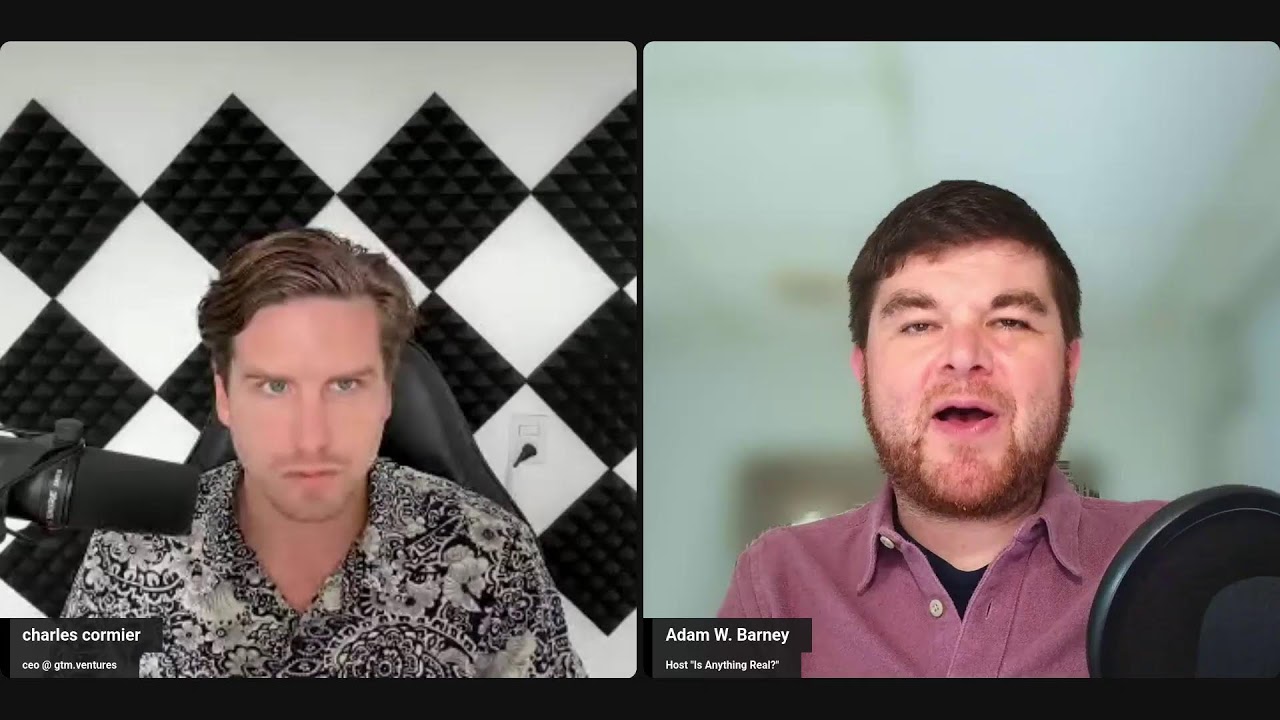
In this Founder Wisdom Pod episode, host Charles Cormier interviews transition leadership coach, author, and podcaster Adam W. Barney. Adam shares his unconventional career path from two decades in corporate marketing and tech to becoming a coach for founders navigating the shift from founder‑operator to visionary CEO. He introduces his "Energy OS" framework, describing "energy debt" and the battery metaphor to explain why burnout is a symptom of mismanaged personal energy rather than a label. He discusses the common founder trap of becoming the organization’s most expensive piece of middleware, the danger of over‑delegating capability, and the need for intentional delegation. The conversation moves to AI agents, with both guests describing a "golden age of sanity" where extreme outsourcing to AI can free founders from low‑value tasks, but they caution that technology amplifies capability without providing judgment. They explore how volume‑driven growth can mask broken processes, emphasizing that trust, genuine attention, and judgment become scarcer as outreach becomes cheap. Adam explains the premise of his podcast "Is Anything Real?"—using probing questions to surface authentic insights, and he outlines his approach to asking effective questions and building trust through personal connection. The dialogue also touches on diversity, DEI, and the risk of over‑wokeness, arguing for balanced, measurable inclusion. Throughout, Adam weaves personal anecdotes, such as a childhood baseball experience that sparked his questioning of systems, illustrating his self‑determination mindset. The episode concludes with practical resources for listeners to connect with Adam via LinkedIn and his podcast platforms.
Chapters
Welcome to another Founder Wisdom Pod. We have Adam W. Barney with us today, a transition leadership coach for founders and executives. He's also an author and podcast host. His podcast, I think it's called Is Anything Real? It's just an interesting title. Also your book, Make Your Own Glass Half Full. Adam, welcome to the podcast. Tell us a bit more about yourself and what you've been up to.
Yeah. Yeah, well, Charles, first off, thank you for having me. I love what you're building because, you know, I think founders need more conversations that happen somewhere between those polished success stories we hear so much about and those— the complete dumpster fires that we all experience, right?
There's a lot of noise out there. There's a lot of acting, but very few real shit, right? So tell us a bit more about yourself.
Yeah, so my background's a little bit unusual. I spent more than 20 years in corporate marketing, technology, and growth. That was across global agencies, major tech companies, and venture capital-backed startups where I managed over $100 million in budget. But for a long time, I believed almost every business problem could be solved with just simply a better strategy— positioning, targeting, systems, execution, resources, effort. But then life started teaching me something different. I realized I was becoming incredibly good at optimizing the businesses I worked within, but I was becoming less intentional about the person doing all the optimizing. And that was me. And that's a strange realization. I think when you spent your career being the person who's supposed to have answers, but suddenly the question isn't always what's the next strategy, it's what if the operating system I've been using to succeed is actually the thing that's prevented me from getting where I want to go. And that question changed a lot for me. You know, as you mentioned today, I'm a transition leadership coach. I'm an author. I host my podcast, Is Anything Real? And I've developed a coaching framework called Energy OS. But there's an obsession underneath those things. You know, how do we stay ambitious and how do we keep ambitious, capable people to build meaningful things without losing themselves in the process?
And your story, like, how does it relate to most founders' story and how they sort of lose themselves in the process?
Yeah, well, you know, my corporate career, I think, is what it comes from. You know, I learned from brilliant people. I worked inside organizations that understood market-leading things in marketing, technology, creativity, and I loved being there. But, you know, after spending that much time and money in that industry, you start noticing something. We've become extraordinarily sophisticated at buying attention. We can target people, you can retarget, segment, track them, model them, attribute them. You can build dashboards that showcase everything beautifully there. And sometimes those systems hide that value. But what started bothering me was we became really good at measuring whether people noticed us, but we weren't always equally good at proving that we had earned their trust. And those are very different things also. I think sometimes founders say, I need more leads. And I say, okay, you know, what happens if you get them? Can you handle the demand? Can you deliver consistently? Are your customers staying? Maybe does your team have the capacity? Are you profitable? Or are you about to spend a lot of money making an existing problem bigger, right? More demand into a broken system. I don't think that's scale. It's actually a louder leak. And that's a very important distinction.
Right. And the founders you work with, my question is more, what do they struggle with? What do they come to you with? What problems?
I mean, they come to me with the problems of everything that they're managing within their day. And how do you use that? You know, Charles, one of the few things that level sets every single human on this planet is the fact that we all only have 24 hours in the day to get done what we need to get done. You know, I hear, I hear some, some little voices in the background on your end, of course, coming up. And, you know, that showcases that our, our 24 hours looks very differently at different periods and through different chapters of my life. And we have to use our time during the day more effectively. You know, I've also written a lot about this idea of energy debt that we all accumulate. You know, we have these cell phones that we have in our pocket. And what do we do when they hit low battery on them and they hit that red, that below 20% battery charge? We run to an additional charger. We plug it into the wall or we take our extra charger and we plug that back in. But across those 24 hours of the day, do we do that when we run out of our own personal energy? not at that same speed and urgency that we do for those devices. So that's where I start with the clients that I work with. It's about understanding the holistic nature of how they refill that better— that energy battery that they have inside themselves. Because I think anyone listening today understands the concept of financial debt. You know, it comes back, banks collect with interest. When you actually don't recharge your energy battery inside yourself, the bank comes and collects. You come and collect from yourself. It could be exhaustion. It could be irritability. It could be any of these different things where, where that feeling accumulates. Right. And I'm also not a fan of the term burnout. Right. I've actually never been comfortable with that term. There's a process that starts with a match strike happening, and then there's a slow meandering line before you hit burnout. So I don't, I don't like that term, and we have to manage that, you know, importantly.
Founders today, are they mostly East Coast located? Are they mostly in tech, or is there Any array of founders that you accept in your program?
I mean, I love those founders that have hit an inflection point in their business. You know, maybe they're a founder-operator. They started as a solo person. They hired their first 3 employees. Now they're at 30 employees, and they have to realize how to navigate from founder-operator mode into visionary CEO mode, right? They, they don't They're having trouble making that transition. It could be as simple as delegation all the way up to, you know, building different tools that allow you to scale up and grow a business over time.
Energy, right? Sleep is the first keyword that comes to mind. I think that most founders don't sleep enough. I think You don't have like systems to fall back when stress happens, or healthy systems, right?
Right.
Like meditation or sports. You don't have a community as well. You're also like in the— I saw like Loneliness Action USA or something like that. What do you have to say about these mechanisms to fall back on when things get stressful and not to reach that 20% battery state?
Yeah, well, well, you know, I— it comes down to this idea. I think one of the biggest traps there, Charles, is that capable people get rewarded for carrying more, especially high, high-impact, high performers. You know, you know, when you get good at solving problems, people bring you problems. When you're good under pressure, people give you more pressure. When you're reliable, people depend on you. At first, that feels like success. You know, you feel indispensable, you're important, you're the one that everyone trusts, but that becomes dangerous. The organization starts to learn that everything important eventually comes back to you, and that's especially true as a founder. You're the approval desk, you're the escalation path, you're the quality control department. You're also an emotional shock absorber. You know, And then I would say, congratulations, you've become the company's most expensive piece of middleware. And, you know, unlike actual software, you need sleep. The really uncomfortable part is that founders often actually help create that situation. And it's not because they're bad leaders. It's actually because they care deeply. They want, you know, every— customers to experience excellence, the team to succeed. You know, they know what good looks like. And sometimes it is genuinely faster to do things themselves. But the trap is— Just because doing it yourself is faster today doesn't mean it's cheaper over the next 100 days, let's say.
Right. How do you—
Charles, capability can be a cage, right?
Capability, you're saying?
Capability can become a cage. Your greatest strength becomes the thing you can't stop doing.
Yes, I think, yeah, I mean, I've went through various phases on my end. I've went through extreme outsourcing, through going back to what I was good at because most of my humans wouldn't perform well. And nowadays I'm back to extreme outsourcing, but to agents. And then these agents, they constantly improve and learn and are recursive, right? Like every day they run, every day they improve. I think we're like in a golden age of, I would say sanity, right? Like, yes, AI brings a lot of stress because a lot of people don't know how to keep up and there's always this new thing. So that brings like FOMO and additional stress and noise. But I also think we're in a golden age in the sense that I can outsource things that I was good at without ego to AI. agent that will execute at a very cheap cost, and that very much helps, um,
Yep.
maintain my sanity, I would say. And basic stuff that I never like doing, right? Like taking my emails. Yeah. Or responding to stuff on LinkedIn, right? So I love outsourcing that to agents and having them take a piece of that. And then I also think it forces an exercise on me, which is like, oh, Am I really that good as a founder? Am I really that useful in my business? And it forces me to find really where I'm good at, I guess, like being customer-facing and being the first touchpoint in my business, right? And also because I'm changing the way that I did work for so many times, that brings like neurogenesis in my brain, right? I'm like inventing myself. So there's serotonin, there's fun on a daily basis. And but there's also discomfort, right? Because it's like, oh shit, I'm, I'm not working the way I used to do.
Right. But we can't, we can't continue always working the way we have to. We've always worked, right? You know, we, we're humans, we change over time. And, you know, I don't want to talk about AI, you know, but I think we're in danger of making some really old mistakes at greater speed. You know, I'm a systems guy. I love finding leverage. I love removing unnecessary work, just like you were saying. You know, AI and agents and systems can help us do things that required entire teams not that long ago. And you're right, that's a massive opportunity, especially for smaller businesses. But I keep coming back to the fact that technology can amplify capability, but it doesn't automatically create judgment, right? You know, If an offer is unclear, then that just communicates that unclear offer to more people. If sales is broken, you can move more prospects through a broken process, you know, and that's not necessarily progress, it's volume, and volume is not the same thing as value.
I would argue though that if you prompt your AI right, and that requires judgment, by the way, your AIs can have judgment, And even if you don't, the state of agents right now, they have pretty good judgments. They have more judgment than an intern. And I would say like most employees in a business is like, oh, Charles, I saw that email. And because you said that, I won't send this. That's judgment to me. Right. And I think agents are getting there. It's just about giving them the capability, right? Like to use your word, like access to your data and the permission, right? And giving— I think the full memory and context is also getting there. It's challenging, but obviously there's still some adult supervision needed, right? Just like most employees, right? Like you double-check their work at some point after, I don't know, 6 to 12 months that you've spent with them. They're good to go by themselves and hockey stick grow. Yeah. Some of them, right? Because most employees are not necessarily probably gonna go hockey stick craziness type of ROI.
Yep.
And agents are interesting, dude. Like, it's, you get to understand them. It's, people are like, oh, don't give these things rights and they're not human. But me, I'm pretty fascinated, like watching them work, how they think. It's sort of how us humans think because these things have been built by humans.
But
I'm super bullish on agents. I've been waiting for that moment for my full career.
Wow. Well, but it still gets down to what I think is humans first, AI second, right? And I don't mean that technology should literally come second in every workflow. I just mean that humans need to lead, right? You know, you have to understand the problems you're solving, where trust needs to exist— excuse me— what outcome matters, and then use technology intelligently. You know, I also don't like using technology to avoid doing the human work, right?
The thing is, yeah, humans first, right? Because else if humans don't come first, we're screwed as a society. And there will be like upheaval and revolts. But the question is like, how far are we from having— in the business context, right? I don't think we're that far away from that. Okay. Because in my profession, right, like I've been in sales for 10 years. I think like 50+ years old are not ready to buy from AIs and from robots, matter of fact. And the equation is quite simple. Like we buy stuff online without speaking to humans a lot, right? Like these 50+ years old, they'll buy stuff on Amazon. Right? Like on Uber Eats sometimes. I mean, my dad hasn't used Uber Eats yet, but he uses Amazon all the time. Yeah. In Canada, it's Instacart, right? But like, they might use like Amazon, but they might not use a robot or a landing page to be precise when buying high-ticket products in B2B, right? Like they'll still want to talk to a human. They'll still want more trust. But the question is like for how long? Because when agents get really good, right? Like at selling and buying, it's better for you and I because then Adam doesn't need to trust a random guy that he just met, right? Like Adam's buying GPT can do the research and buy the exact solution that you need right now with your budget, with like all your criterias. And an agent would be better at making this, this, decisions, right? So I mean, at the end of the day, it's a human that makes the decision, but I feel like we're also gonna have agentic buying and selling, uh, on rails like very soon because it would be a better decision for both parties. What do you think?
Yeah, yeah, no, I think that's a good point, right? Um, yeah, you know, it also just I don't know. I guess I would kind of ask Charles, you know, we're approaching a world where it's incredibly cheap to initiate contact with almost anyone. But, if everyone has access to the capabilities there, what actually becomes scarce? I think one answer is genuine attention. Another is trust and judgment. What happens when reaching someone becomes nearly free, I guess, from your perspective? Earning their trust becomes actually more difficult than ever.
It's a good question. Um, but I would challenge it, like, does it need to have a cost? Because ultimately, my agent would just reach out to the very best person I can sell to, right? And same for your agent, and they would match each other. So it wouldn't even reach out at scale. I guess it would be a system that it would pattern them, pattern match them together. For example, Bordi, right? Right. You saw Bordi? Well, Bordi is doing exactly this. Bordi is not reaching out at scale to like millions and millions. It's just pattern matching people. So I think that's where agents would go. And I don't think there would be like mass outreach because that really cheapens it. And I don't think— I think an agent, if my agent reaches out to yours and is like spammy, while your agent would be like, nah, I won't choose this guy, right? Right. I think make the best decision for you, right? So I think that would be the system. I want to talk about your podcast. Why is it called Is Anything Real?
Oh, because I, you know, it's about questioning everything, Charles, right? You know, it's— there are these systems that we work within, and the systems aren't designed necessarily for where we are today. Um, it's a fun question. I mean, the The shortest answer there, though, is, you know, I bring every guest on and at the end I ask them, you know, across what we covered, is anything real? And you get some really interesting, thoughtful ideas and you get a good volley. Half the people go, no, nothing is real in this world. And half of the other people go, yeah, this world is absolutely real. And I learned so much through it. It's just asking and questioning everything, whether it's these systems of leadership, systems of human capacity, systems of the future of work. It's fun to push those corners and get different perspectives from incredible people who've built some incredible things in this world to answer that question and volley around it for just 20 minutes.
I love questions, right? I'm pretty obsessed with questions. Do you have a framework on how you ask questions to get the best answer possible? Because the goal of a question is to get the best answer possible, right, that would serve you or at least like lead you towards a path. So what's your framework to ask the best question possible?
Well, I mean, first thing, it's about getting to, you know, having a conversation with someone to understand what they're building, right? That's ultimately important to start. And then it's understanding the expertise. And, you know, it's really this deep belief, though, that, you know, asking questions should follow what someone's built, right? And getting to that deeper level of what they built is the key of what I like to dig into, whether it's a business, nonlinearity, what they've pivoted through, what the challenges they faced are, you know, and it's kind of this this skeptical belief. You know, I, I— it comes from the fascination I have with all the things that we collectively agree are true. So those questions start to come in there, and I like to go, really, is that actually true, or is it just something we've repeated so many times that we stopped questioning it? And, you know, bringing people to find the point where their polished story gives way to something real, you know, and It's been some incredible things.
For someone to reveal their cards though, you need to— yeah, you need to be a master at having them like trust you, right? So how do you gain that trust till you can get like, uh, someone to be like, oh yeah, you're right, like maybe I'm not being upfront here, maybe I'm just covering my tracks here? Like how do you build their trust, build the The trust bank. Yeah, that comes to the question.
Yeah. Um, I— it's so innately built in me. I don't know if I can even answer that question, Charles. It's just what I do with people. I was on—
Right. That's the type of stuff that AI can potentially not reproduce.
Right. I mean, I was on a podcast qualifier earlier this morning with a woman who is an organizational coach about home organization. And within the first 5 minutes— and this has happened so many times in both podcasting and my life in general— we had covered the fact that her family grew up in the neighborhood that I live in here in Boston. She's been here many times. We connected on that. We talked about other trips we had been on. I hit to just the natural human level in those conversations. And that's what opens the door. Part of it, Charles, I've lived— I've done a lot of things in 44 years in life, right? I've experienced a lot of different things. I'm the kind of human who goes, and if an opportunity comes to my front door, I'll try it once and give it my best go. That's opened up doors to some incredible things that I never would have been exposed to had I not had that perspective. And it's also this weird, probably limiting in some cases. Place where I come from, where I've never been driven by outside competition. I've always been driven by an inside set of self-determination, and that self-determination is a really interesting thing. As I've gotten older, I've realized that I can depend on that. I should have confidence in that, and that's why, why I can open up and open those doors with people. But I love to just start at the basic level of asking about an origin story that can open up so many doors of those layers of the onion to peel back.
And what's your origin stories? Why were you built that way?
I mean, I was, I was born in the Midwest here in the US. I think that's a piece of it. But I've, you know, in my book, I even Make Your Own Glass Half Full, I talk about this early in the book. I was probably 7 years old. I played Little League baseball here, you know, in Western Massachusetts, uh, here in the U.S. And I remember pitching in the final out of a game. I'm a lefty. I struck the batter out. But then I was in the car riding home, even at 7 years old, sitting next to my younger sister and wondering why I was pitching to the only girl in the league. And that never felt right to me. And that's driven a piece of the conversation. And, you know, in my corporate career, I was working at places that didn't allow me to question that. Now, in the work that I do today, I can fully ask those questions and lean into that self-determination and that trust in myself.
Why were you pitching to the only girl in the league? I don't understand that
part. I'm not sure how she got into the league, but it made me realize that the systems around us aren't designed to include everyone. And that was the takeaway that I took away from that, that experience.
Got it. How much questions is too many questions? Should one stop asking questions and have some answers? And let's start with that one, because I have one about diversity that's similar to
Okay. I don't know if there's ever any limit to questions, right? You know, but, but you can't always ask questions without sharing back. It has to be a balance. I'm not saying it's about the total length. I think it's about the balance of, of that scale as it tilts from questions to answers and back and forth.
You need to write down the answers, right? It's like if you're questioning, if you're not listening and your mind is constantly Constantly seeking stuff without having a direction and like clear goals of how this can serve you. And yeah, how can this help you achieve your goal? I think that's where you lose yourself. How much diversity is too much diversity is another question.
I mean, our brain is only so big, so it can only hold so much information, diversity of thinking at any point in time. I'm not saying diversity is bad. Of course, I'm a big proponent in justice and equity. But, you know, eventually you have to, you have to also be self-reflective inside yourself rather than just looking for outward inputs.
I think diversity has hit a tipping point and it had became woke at some point. That's why we've seen it tip back. I think that was definitely a point where there was too much diversity. And what I mean by that is not to close the door on anyone from different background. But when diversity just becomes this enlightened thing and it's like, oh, I'm better than you because I'm including everyone, and then we're using taxpayers' money to fund nonsense, right? Like stuff that is not calculable. We need to calculate results. We need to run social initiatives like we run businesses and have like clear end results. And when it's just like, Oh, you, you don't— you're not for diversity or you're racist, right? Like, we've seen a lot of woke people take, um, these high horses, and I think that was very detrimental in the end for the, the broader society.
Interesting.
Any thoughts on that? And the DEI defunding was too much, right? Like, that, that was not good, right? Like, that had bad, almost catastrophic consequences in some instances. But I think when the emotions override, like, the rationality of, like, calculating the results of a program, I think that's where it goes south. What do you think about that?
Yeah, I mean, there's a, there's a balance to anything in the world, Charles, right? You know, I'm also a big believer That when you take 2 steps forward, you have to take one step back sometimes and reframe. But it's just about viewing every human, at least from my personal perspective, as having unique fingerprint. I mean, we all have unique fingerprints, but just because our, our skin looks different, our social upbringing looks different, doesn't mean that I can't understand where you come from. I, you know, that, that's what I mean by, by justice and equality. It's about just being open to different perspectives and listening to different people and meeting people where they are, not necessarily where I'm coming from or where you might be coming from.
Very much in agreement with that. Adam, where can people find out more about you?
Yeah, uh, I mean, the best way to find me, I'm on LinkedIn, Adam W. Barney, but you can also find us anything Real on all the major podcast platforms. It's up on YouTube. I'd love to connect and share more and talk to anyone who's going through a transition and needs a little guidance through that. Thank you, Charles.
Adam and Charles. That was Adam and Charles for another Founder Wisdom.
More from Charles

Founder Wisdom: the audiobook, version 2 (5 hours of stories from founders and CEOs)

8 CEO Questions I Love Asking: the audiobook (64 founders answer, in their own words)