Phillip J. Pipkins - Founder at Legba
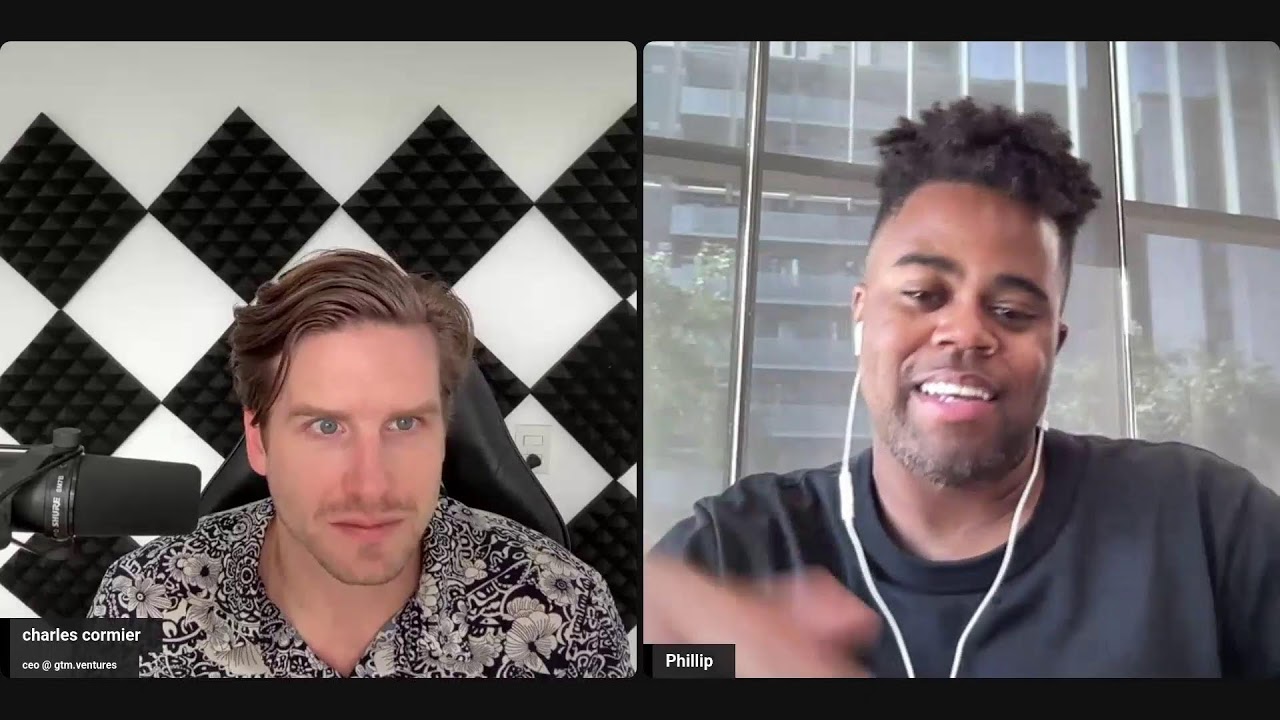
In this Founder Wisdom Pod episode, Charles Cormier interviews Phillip J. Pipkins, co‑founder of Legba and managing partner at Author/Alter VC. Pipkins explains his transition from running a private‑debt fund (Prospect) to creating Artour VC, a syndication‑focused vehicle that targets early‑stage deals amid a VC market dominated by mega‑funds and a power‑law concentration of returns. He critiques the current VC environment, noting that large funds are forced to write oversized seed rounds, squeezing out mid‑size funds. Pipkins argues that success hinges less on founder age and more on a robust go‑to‑market (GTM) engine that can reliably launch products, especially for AI agents. He then details the genesis of Legby (Legba), originally a consumer‑focused isolation product that runs browsers/apps in the cloud to eliminate attack surfaces. After discovering limited consumer willingness to pay, the team pivoted to a B2B model, leveraging isolation to protect AI agents from untrusted environments and providing fingerprinting that makes bots appear human to anti‑bot services (Cloudflare, Akamai, etc.). The company currently offers a freemium model—free access for low‑value sites and paid per‑successful login or task for high‑value targets—while planning a future headless payment layer that taxes each data request. Legba has raised an initial round, has two paying customers and about 90 unpaid users, and is pursuing a founder‑led sales strategy that distributes the product as a discoverable “skill” across AI agent repositories. Pipkins also shares his personal AI workflow, employing a suite of tools—Instinct (a phone‑first AI assistant), Claude, ChatGPT, Perplexity, Midjourney, and Dremena—for everything from email triage to pitch‑deck creation. He contrasts Instinct’s “any‑means‑necessary” approach with Claude’s more guarded behavior, emphasizing that Instinct’s design targets wealthy users who prefer text‑only, no‑UI interactions. Finally, he outlines upcoming goals for Legba’s “Labda” initiative: proliferating the skill across harnesses and personal chatbots, expanding integrations, and solidifying the payment infrastructure, while continuing to balance VC activities through Alter VC. The conversation touches on market dynamics, product‑market fit, technical differentiation, monetization, traction, and future roadmap, providing a comprehensive view of Pipkins’ perspective on building AI infrastructure in a rapidly evolving ecosystem.
Chapters
Welcome to another Founder Wisdom Pod. We have Philip J. Pipkins for a 3rd edition. Today's co-founder of a new company called Legba, also managing partner at Author VC, which is new that I saw in your profile, Phil. So welcome to Pod again. What's been new in your life since we last spoke?
Yeah, no, appreciate it, Charles. I mean, am I at the record now with 3? What's the record? I'm gonna go for it. Okay.
Yeah.
What's the record? So, uh, what's new with me? Um, so yes, last time we spoke, um, I believe I was, um, still doing Prospect. I had left SVB. SVB had crashed, a lot of things. Um, so, uh, Prospect's a private debt fund, still up and running, still got great returns. Um, but the main thing is, uh, debt doesn't work very well with the early-stage companies, and that early stage is near and dear to my heart. So, um, Artour VC— uh, one, Artour is in film, um, a filmmaker who, um, their grasp on the film is so tight that, um, without you seeing that they directed it, you would know it was them. So that same thing for founders, right? You see something that was built and you're like, that person probably influenced this market. Um, and so with the tour, essentially VC, um, VC is pretty, uh, down in the dumps right now. So What we do is, um, we look for deals deal by deal, and then we syndicate it up, uh, use SPVs, convertible notes, even warrants, uh, to get the capital into the companies.
Interesting. And why you, you're saying that VC is down in the dumps, like, tell me a bit more the state of the market.
Yeah, so, um, and this was never, um, like a secret, but, um, You know, it's a power law in both the returns. It is a power law in the LP investment in the funds. So 80% of all of the money goes into 20% of the companies, but actually it's more like 90% of it goes into 10% of the VC funds nowadays. Also, VC funds have gotten so large in their AUM that they're Obviously acting more like, uh, private equity companies, but they never gave up wanting to go early stage. So that's how you get a $100 million seed round. Uh, if you have a $6 million— if you have a $6 billion fund, you just gotta move money. So you're not doing $5 million checks anymore. You're purposely trying to deploy this as quickly as possible in Gusto's returns, which kills the middle. Uh, so now it's only either like emerging managers or tiny funds or big old mega funds, and that like $250 fund is gone for the most part.
Huh, interesting. I'm starting my new fund, maybe you've seen that, right? So what does that mean for my fund, MAC10? Uh, we invest, uh, $40 million a year in, uh, Y Combinator companies. What does that mean for us?
So at $40 million, you're, you're still in, uh, It's not unreasonable for you to be able to, you know, at $40 million, if you return $250 million, like everyone's patting you on the back. Uh, but if you had $1 billion and you returned $2 billion, right, that's not the actual, um, uh, return profile that you were investing in in terms of VC. So especially if you're going to do YC companies, the— I guess the caveat is, are you investing in them As you know they're going into YC, or is it that you're investing in them during Demo Day?
During Demo
Day.
But I have ways to invest before as well.
If, if you can go before, then much better, because the, the caveat is that— so YC is a machine, and obviously they know what they're doing in terms of like getting those, um, numbers up. But you know, coming into a $40 million round or coming into a $10 million round on a company that's valued at $50 million pre-revenue, or let's say it has a little bit of revenue, but it's the dude's friend who's his client. This is a scary proposition versus if you could influence someone as they're getting in the YC, then you'll kill it because ultimately you could probably put $100K, $250K into this company. They get into YC. YC teaches them how to raise basically $5 million. Your returns are already— your returns are set on demo day when the bell rings.
Yeah, sure. But I mean, founders are so immature, like, before they get into YC, they have like such like few notions that it's so risky to invest in them. Also, like, they would need YC to grow as founders, in my opinion. So if I invest in them and in the end they don't get in or decide to drop out of YC. I think this sort of lowers the stakes, you know. What do you think about that?
I mean, obviously you still have to like determine if the human being that you're putting the money into is— listen, let's put it this way.
They're all kids, you know, they're like 18-year-old kids with like zero—
And that's what I was going to get to. The, uh, from YC's own numbers, um, the new guard, I think it's like 30% of the people that are getting in now are like 35+. And obviously, like, I wouldn't invest in my own self at 22 years old, uh, but I would at 37, right? So, um, I think that's good that the, um, sentiment has changed, that you don't have to be a young person. You probably still need to either be financially set or you don't have a large enough family that, you know, you can go to San Francisco whenever you want. You like, you don't have to deal with that. But I think don't go for the kids. In my opinion, it's the likelihood of you finding a Mark Zuckerberg is very, very, very low. But the likelihood of you having a Susan Sandberg is a lot higher. You could tell that she was good probably on day one. You didn't know that about Mark. And then when she came in, Together they went forward. Uh, now you could probably just invest in the Susan.
Yeah, the power law is weird, right? Like, what if we could, uh, not rely on this excuse? Seems the power law is a nice crutch for VCs. What if we could have an engine that could predict very precisely who would, uh, who would win? Because the thesis— our thesis is still very simple. It's like power law meets GTM mentorship, right? Like we are gonna take these young talents with full energy, with lots of time in the right environment, the hypercompetitive environment that is SF, trust them on the product side, but help them on the go-to-market side, right? Invest in 10, at least one is gonna be a mega hit. Like that's still our— But what if we could have a tool that would be much more precise than that? It could predict the outcome, right? Isn't that the dream?
Yeah, I mean, I would— to that point, uh, I've— now that I've been on the founder side as well and been building, um, I believe when someone says I'm gonna build this thing, I believe that they could build it. Um, what I don't believe is if they can sell it to a bunch of people. And so now go-to-market is— wait, this is the most important— go-to-market is key. Yes, you can have some technical know-it-all, but that needs to be married up with go-to-market. So if you have the go-to-market engine, which I believe that's the whole point of, right? You have that muscle and you know how to game the system, you know how to get it in front of eyeballs and everything. That's a better proposition than I'm gonna go to Stanford and look for the kids that are working on the craziest things. You can now just go look for the kids that are experts in— and it's an oxymoron to say they're an expert because they're a kid, by the way, uh, but let's say they're very smart in something, and then your go-to-market engine can actually get them in front of the necessary things, that would outpace just, oh, this is a really smart person, I'm gonna put my money in, I'm gonna hope for the best. Because AI has made it so that outreach and cold outreach and just trying to get people to to pay attention to you is a commodity now. And so now it's like, how do you go to market? How do you make that machine? And you need to have that on day one, not I'm gonna build it and then it'll happen. No, it's like day one you have to go to market. And then honestly, if you had a good go-to-market machine, it doesn't matter what the product is. You could stuff it down people's throat.
Yeah, you can go as you— you can improvise as you go, right? So it's like if you discover that this feature is very much more wanted than your main feature, can quickly pivot to that, or if this ICP buys more than the others. So yeah, very, very much of a go-to-market machine, right? Um, how does that, uh, intertwine with what you're doing at Legba? Why did you start at Legba? Tell us a bit more about that one.
Yeah, so, um, probably ill-advised, right? I, I seen all the founders, I was like, oh, I, I love this, I love this energy, let me Let me jump into the arena. And so while I was raising for a tour, I encountered someone named Philip Williams, and he's my co-founder now. He's a cybersecurity expert, offensive security aficionado, and he was building a bunch of IP. And when I looked at that IP, it was better than a lot of the stuff I was seeing. So You know, as you're in market, you see a lot of things. He had already built a lot of stuff that was way more impressive, and the main thing was that it wasn't productized in a way where like a regular person off the street could use it. It was very developer POC friendly. So then we got together, you know, obviously did the motions and raised some money, of course. And the whole idea, and again. Nothing's set in stone, right? When we started, the main thing we were focused on was something called isolation. And what isolation is, is running an application or like a browser in the cloud away from your machine so that it removes the attack surface, AKA you can click on whatever you want and it's not happening on your machine, so it doesn't matter. So we went to market with that first. I'm like, great. And we even got it so dialed in that it could be used by a consumer. Uh, problem is consumers don't like to pay for that stuff. They, they go get free VPNs. They go— they either get it free or they don't care a lot of times. So at that point, now I'm realizing, okay, I get why all of the VCs say go business or go B2B, because consumer is very hard. So then we switched to, uh, B2B. Um, but the main thing with SaaS, because this would be a per-seat situation, right? SaaS has plateaued in terms of like the seat count, like going crazy. Seats definitely increased, but they're not going crazy anymore. And so looking at that, I'm like, okay, that's not the path that you should be going down for 10 years if you're going to be doing the blood, sweat, and tears. And but luckily agents and AI was exploding. And so the thing is, is that agents also need isolation because They're a party that you want to do something that you kind of don't trust, right? Even if it's Anthropic, you, you don't trust them. So isolation helps with that in that it isolates the agent away from you so that you can kill it, control it. And then the last piece is that with isolation, we are controlling the infrastructure. So that means we control the fingerprint. And with agents, the biggest thing is that the internet um, is anti-bot by default. So Cloudflare, Akamai, all these other, um, uh, Shape, all of these vendors, the defenders of the internet, do not like robots. And so they blocked them on purpose. So what we do is we provide out the fingerprint so that your bot looks like a human being. And again, this is human-initiated, by the way. It's not doing what it wants, it's doing what the human wants. And then that gets it to be able to get by and pass all of the anti-botting. And so now it can do more and do all the tasks that you need. And so people will pay per successful login or task for that. So that's the company and that's the backstory of how we got here.
Interesting. Are you going to get funding for that one?
Yeah. So we already raised some funding already for it. And the goal would be to raise again. Um, the main thing is, uh, one, obviously you need to show traction. So we do have traction luckily now. Um, and then it's the bigger thing is that we are, we're in the AI infrastructure game and AI moves so quickly that tomorrow is definitely not promised today. So for now, that is not a thing that any of the frontier labs do and they all have that problem. Tomorrow, if they solve that problem, then, you know, our legs are chopped off and we gotta change it up. And then the final piece is, uh, with our product, we are interfacing with the agent. We're like, hey agent, here's a skill, use it. And now I'm very aware that, um, the, the labs and the harnesses are the bottleneck because if I put it into Claude and Claude says, I don't want to use it, There's no click here to go past. It just says, no, I'm not going to use it. And then you're done. Your distribution is killed right then and right there.
That's my next question, actually. Um, but related to that, how many clients do you have right now using it?
So right now we have— so paid, we have 2, and then we have, uh, 90 other unpaid people using it. Take it, take it as you will, given that it's free. But there is 90 of the one.
And what's your go-to-market strategy?
So right now the go-to-market is, um, so we've compartmentalized this all the way down into a skill in MCP, and so that it is discoverable and easy to use by the agent. And so the go-to-market is to proliferate it through all of the various repositories and everything that an agent could access so that it becomes their preferred tool. And then the second thing is a founder-led sales, which is me reaching out to other basically AI founders saying, hey, I know you, based off of their business model, I know you're likely getting blocked on these sites. We can help you. Tell me a site, I'll demo it for you tomorrow. That's the go-to-market for now.
I love it. What happens if these labs come up with their own solution? Why would they come up with them? Why would they not come up with them?
So right now, the reason why they wouldn't come up with it right now is because the, um, the, you know, it's less— it's an 80/20 rule. So the agents right now can access most websites, um, and then the ones that they cannot access, they're fighting back on. LinkedIn, for instance, uh, Anthropic is not going to, um, be be antagonistic against LinkedIn because LinkedIn does know the data centers that it's coming from and stuff, and it can block— Microsoft can block it. So for the most part, the— it's bad enough that these Frontier Labs have taken data, taken IP, taken everything without really asking, um, to then also just go ask— access people's websites without API contracts and things. is probably going to ruffle up feathers. And that's why you can see that OpenAI has contracts with like Reddit and Twitter, because they were doing it before and then they chopped their legs off. So I don't believe that they're going to do it themselves. But the bigger thing would be like a Cloudflare or someone else, them adopting this and saying, okay, forget about it. This is the roads that we're going to pave. for agents going forward.
Right. Cybersecurity is a huge thing, especially for agents, right? It's— I don't know if it's not— it's not as valuable as agentic payment, but it could be as big, right? Because money can get stolen quite easily there. Let's say I'm a VC and I invest in that thesis, right? I invest in what you're building right now. What happens if you pivot on the way there? What's— where are you going from there?
So going back to my finance background and payments background, the next shoe to drop would be if, if we can get the agents to use the product, then mind you, it's a freemium, so the agent can use it for free and it— and the free tier will unblock, let's say, 50% of the sites that it couldn't get to in the first place. And then as it goes to a very high-value site, we're like, hey, you need to pay tier in order to access this. And a lot of times they'll pay because it's something that they really do need to access. But once we are the, let's say, the key that gets them into all the doors, the natural next step is that most things go headless. And by that I mean your Reddit or you're the Wall Street Journal or you're Fidelity. And so you know that the person is already asking ChatGPT how to manage my IRA, and then now they got to come to your website to interface with and everything, right? You could easily lose market share if you— if someone else opened up theirs to that chat so that I could chat at ChatGPT, it can access my accounts, pull that data in Do what it needs to do, action on it, and I never have to actually go to that banking website anymore. I'm a client. I'm still a client, but screw your UI because most of them are trash anyway. So that's the— that's like the next layer that I believe. And so once every— most things are headless, I believe that the ones with data will tax you. The agent comes, it's like it's a 4th of a cent to get each line. And then now the agent's like, okay, I was going to come for $200. I'm gonna go down to $50 because I need to be efficient with this. I'm gonna take my $50, I'm gonna pay you, and I'm gone. I feel like that's going to be how the internet moves. And so the next shoe to drop would be to add the payment layer so that you got in. Okay, now tax them. Because it's taxed, the company can make the money correctly, and then you got what you needed. Both parties got what they needed, and they're not mad at each other anymore.
So you're full-time in this? Do you still do some VC stuff? What is what is the new one that I saw at Alter VC?
So I do. I do both. So. Yeah. Deals come across the table all the time. Most of the time people are asking me like, what are the financing options? Or is this ready for VC? Or, I mean, do I know anybody that can invest? You know, they're asking various questions like that. And so I want to keep that muscle up. And so yes, I do that. But I would say it's probably like 90— it's like 90/10. So don't sleep very much There
you go. Um, what's, uh, what's in front of you, uh, this year? Like, what do you want to accomplish with, uh, with Labda?
So Labda, uh, the main thing is to get this proliferating through various, um, harnesses and, uh, personal chatbots. So for instance, um, you know what Instinct is? You've heard of it? You never heard of Instinct? So Instinct is the, uh, Instinct is basically Muse but for like VCs and dorks, essentially. Um, it does the same thing. It's a chatbot. There's a— it's not a chatbot, it's an AI that you interface through iMessage or WhatsApp, and then it can do all the stuff. And once I seen that, and I had an inkling of it, but you basically— AI allows you to dis— intermediate the App Store, the phone, all of that. Because think about it, this thing, I do not go to a website for it. I did not sign up to anything. It texted me. I put my phone number, it texted me. It said, hey, how are you doing? What you— what's up? And then I started talking to it. And then going forward now, I'm— I just interface with it via chat. And if it needs to give me a graphical interface It's like, here's a web link or here's a file. And again, it's connected to all my stuff in the background. So Instinct is, I think, a prototype of what's going to be in the future. And the main thing is that my Instinct couldn't do most of the— a lot of the stuff I wanted it to do. Hey, can you go fill out the YC form and submit it? And it's like, I can't because I got blocked by the CAPTCHA. So I gave it the skill. It downloaded it and now it uses it to go do all my stuff. So now I get like 75% more things done. The goal would be for me to be able to have people download the skill and a bunch of people have our skill within their chat box. That's the goal for the end of the, uh, year.
That's crazy. What other agents do you have running to simplify your life nowadays?
I got it, I got it, I got a shit ton. So I got Instinct and that's mainly on my phone via text. And then, um, I didn't trust Instinct because it's a brand new company. So then I have Claude connected to my work email as well. And so then combined I have Claude and Instinct. So Instinct, because it's free, I'm like, hey, here's a bunch of heavy lifting because it doesn't charge me. I make it do that. Then I have Claude fact check it on the, over the top of it. And then if I need, like, when I say heavy lifting, like, let's say I need to make a pitch deck, let's say I need to do heavy analysis, let's say I need to go back and forth. Instinct is not for that. Instinct is for like, hey, you missed this email here. Hey, I put the draft in your folder. Hey, I negotiated with this person here for these flight tickets. Like, that's what Instinct is for. And then Claude is for developing and doing things. And then I have ChatGPT as well. And then I have Perplexity for the questions because I don't want to gunk up ChatGPT and Claude when I'm like, hey, you know, how do I change this tire? So I go to Perplexity for that. And then outside of that, I have Midjourney as well, which is for images. Oh, and I have Dremena using SeaDance for video. Uh, creation. So I think that's the full suite, but I'm using them a lot and they definitely have drastically cut down on my, uh, workflow. Or let's put it this way, I have not had to hire extra people and I can continue to do what I need to do.
What's so special about Instinct? First time I hear about it. Uh, why couldn't Claude Code do most of what, uh, it's doing?
So it— so the— because there's nuance within these AIs. So Instinct is actually closer to OpenCLAW. And so the thing with OpenCLAW is that OpenCLAW was— OpenCLAW wants to get the task done by any means necessary. Claude wants to get the task done, but with a bunch of barriers. So Claude is like a hall monitor. Um, and then ChatGPT also would like to get a lot of things done, but they both also use up a lot of, uh, tokens. So you'll use it and then you can't use it anymore until 4 hours later. So the main thing with Instinct— and it's not that I'm gung-ho on it, it's just more or less I'm gung-ho on those types like Muse— is that we, being people in technology, have gassed up AI to the point where we assume that people gave a shit about LLMs, that they cared about a harness, that they care about any of that. They don't. They don't know about it. They don't care. They're like, I just want the thing to work. And so when you think about like a wealthy person who has an assistant, they would text the assistant, hey, I need this done. Can you get this done? Blah, blah. And they'll hold them to a high standard, but they're never going to do it and they're never going to look at the UI. Right, like there's wealthy people who do not type at all. They don't do anything except they're on their phone and that's it. That thought process is how Instinct works, in that you only need to be on your phone. You do not need to have a graphical interface. You do not need to click around in things. And you sure as hell do not need to know what an LLM is. You don't need to know if this is the latest model. You don't need to know any of this stuff. You just need to know, connect my stuff. I do it, it works, and then I can keep on giving it more work and it'll keep on doing it. That's how people probably are going to interface and like AI in the future.
And that's crazy. Yeah, I'm testing it right now. Let's see if it can get shit more done. Till then, Phil, where can people find out more about what you're building right now?
So legba.app. APP. Go to the website. We are live. Hit me up, philip@legba.app. And yeah, appreciate the call out.
Let's fill in Charles for another founder.
More from Charles

Founder Wisdom: the audiobook, version 2 (5 hours of stories from founders and CEOs)

8 CEO Questions I Love Asking: the audiobook (64 founders answer, in their own words)