She's building a psylocibin empire
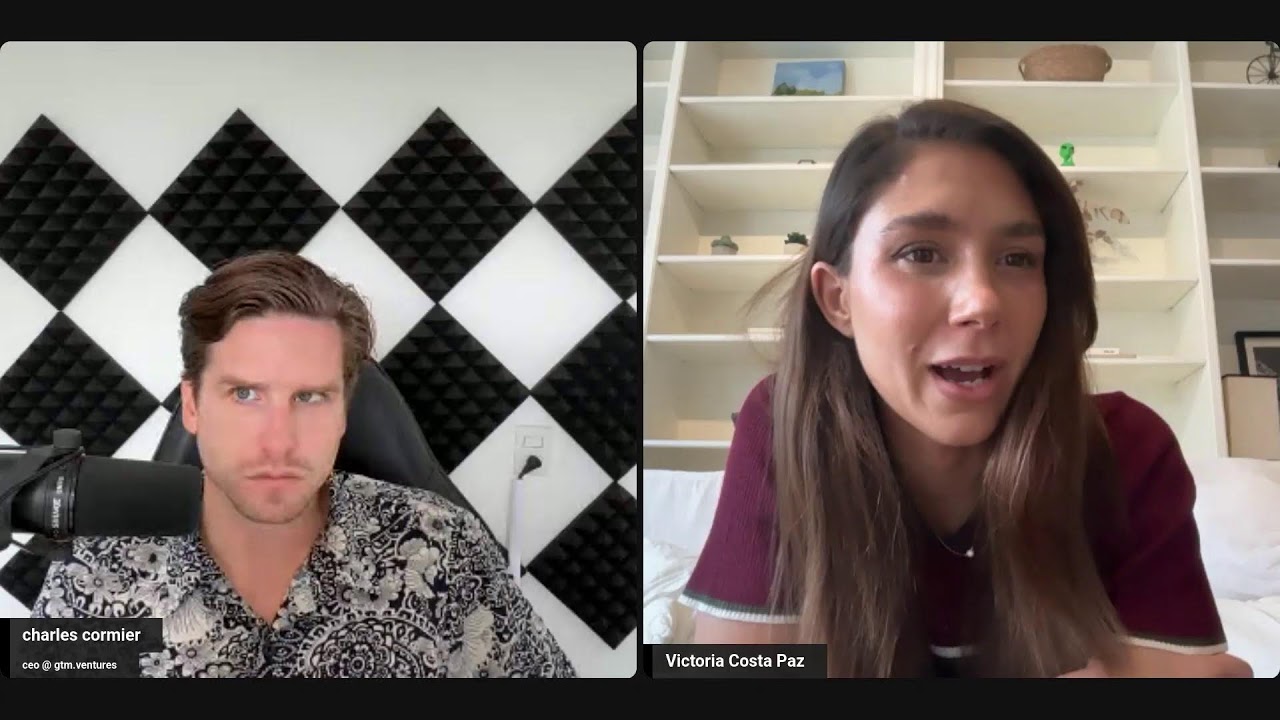
In this Founder Wisdom episode, Charles Cormier interviews Victoria Costapas, co‑founder and CEO of EWA (Eywa Biotech), a company that produces pharmaceutical‑grade psilocybin using engineered E. coli in Uruguay. Victoria shares her unconventional career path—from communications and consumer‑goods roles at Coca‑Cola to fintech and banking, then pivoting to biotech during the pandemic. She explains why psychedelics, especially psilocybin, are promising alternatives to traditional antidepressants for treatment‑resistant depression, highlighting their rapid, low‑dose efficacy and favorable safety profile. The conversation dives into EWA’s vertically integrated model: microbial production, purification (99.8 % purity), capsule formulation, and a proprietary software platform, Waelo, that supports therapy integration and remote care. Victoria outlines the regulatory and market strategy—selling capsules or active ingredient to certified clinics in Australia, the Czech Republic, the UK, Switzerland, and providing material for clinical trials in the U.S. and LATAM. Pricing is discussed, with current capsule costs ranging $50‑$300 and a target of $20 capsules after scaling. She also reflects on the challenges of building a global biotech from Argentina, raising U.S. capital, extensive travel, and the importance of a strong operations partner. The episode closes with resources for listeners to learn more about EWA.
Chapters
Welcome to another Founder Wisdom pod. We have Victoria Costapas with us today. She's co-founder and CEO at EYWA. It's a psychedelics business. It's really interesting. She's part of Sigma Square Executive for Argentina. I believe you are in Argentina right now, Victoria. So welcome to the pod. Tell us a bit more about yourself and what you've been up to.
Hi, Charles. Thank you very much for, for having me here.
Tell us a bit more about yourself. What's your background?
Okay, so, uh, I studied communication sciences. Um, back then I started working at the Coca-Cola Company. That was my first job, super fun, for Fanta and Sprite. Those were my, my brands. I really enjoyed that job, but somehow I always was some kind of curious about what the business of things were. And there I decided to do my master's in business and technology, started learning about startups. In the meanwhile, I was working in a bank called Santander. And once I worked in the first startup, it was a fintech, um, I got addicted to them. Um, this sense of like being doing a lot of things at the same time working with global teams, going fast. Sometimes you're in compliance, but you have to do business things. Sometimes you're a designer as well. So you get to learn a lot. I guess that one of the things that drove me more in my career was curiosity and being able to learn things, even things that made me feel a little bit uncomfortable. And I always knew I wanted to be a founder. But I didn't have that great idea, um, until the pandemics came. I started to get involved in, in biotech in general after a lot of screen, a lot of tech. Uh, I got— I fell really in love with biotech because they were more like developments and technologies but for the human body or something that you can like actually take into your health. rather than screens. And I really like that. So since I started getting involved with scientists, um, reading papers, I suddenly ran into this team of scientists in Uruguay. They were doing biotechnology with psychedelics, and I was like, what's this? Um, so basically they were creating a new way of producing, um, these psychedelics in precise doses, in a scalable way, and in a sustainable way, which can be compared to the pharmaceutical, um, way of doing things. But instead of using chemicals, we use microorganisms. And when they told me what they're doing, I did my research. I saw that psychedelics were already a thing for mental health, with clinical trials already super advanced. for depression, major depression. So I said, like, there's something here, there's something to explore. It's green enough in order to make something disruptive, but we have the clinical data there already. So we decided to create Ewa, and this was like 4 years ago. Um, today I can say Ewa, it's a company that already has a product already selling psilocybin for legal jurisdictions, of course, like Czech Republic and Australia, and places where clinical trials can be performed. So that's, that's a little bit of a summary,
right? Did you, did you start this company because you first experienced something with psychedelics, for one, and two, Uh, what kind of effect can psychedelics have in mental health in the population?
Perfect. So, well, my, my first experience with psychedelics was kind of accidental, like many, many, many people around the world. Um, in the Netherlands, it was because of a friend, so it wasn't the kind of psychedelic experience we're looking for at patients. Um, so a psychedelic experience for depression or major depression as it's performed today in the clinic— in the clinics in Australia, for example, uh, it's— it looks more like a patient, uh, lay down in a horizontal position with their eyes closed, probably listening to a playlist during 4 or 6 hours, experiencing what we call the trip instead of to the outside and looking like images and distortions, looking at the inside with your eyes closed. Um, and, and this is the way that it's done in a, in a clinical way, you know. Um, my, my experience, it was more like a first-time experience, um, let's say recreational, but still you get the biological effects of the drugs, which is more neuroplasticity for your brain. Of course, depending on the, on the dosage. Um, it's not recommended to do it without the advice of, of a doctor, of a psychiatrist, a physician, even though a lot of people do it. It can be super dangerous not having the great— the, the right set and setting. And this is how you prepare for it, who you are with in the moment as well. Um, how you're prepared, let's say, for, for the experience. Um, but, but yeah, so I guess that what we have to like separate here is the clinical way of doing it and the recreational way of doing it. And definitely AY is aiming for the clinical way of, of doing it, and we are aiming to a target customer that's not, um, keen to do it by themselves with mushrooms, for example, and they just trust what their psychiatrists are going to prescribe them. So our medicine, since it's GMP— this is good manufacturing practices— and has all the pharmaceutical seals, let's say, um, it can be prescribed safely by a psychiatrist. And then that's the idea.
Okay. And why psychedelics versus like normal, uh, pills and medicines historically? Right? Like, there wasn't any therapeutic solutions offered back then. Why has psychedelics stayed under the carpet for so long?
Yeah, so, um, regular antidepressants have helped a lot of people in, in history, but the truth is that 1 out of 4 people suffer or will suffer a diagnosed mental illness. 40% of these people are going to be treatment resistant. This means that no matter how many antidepressants you try, they are not going to respond to the medicine. So for these patients, on the one hand, psilocybin as a molecule is going to work in 1 or 2 doses a year. But then you have 75% of the people that take antidepressants that are going to quit from the treatment. Why? Because of many secondary effects. One of them can be, um, gaining weight, losing weight, changing personality, or being like too down. Some people report like not having, um, you know, like this dark and sadness feeling anymore, but also they're not able to feel happiness or joy in the moments. Um, so this is a really uncomfortable side effect for people. And also, well, antidepressants in general, they take a little long to, to act sometimes. 3 weeks, it can be 4 weeks, 5 weeks. And in cases of emergencies, for example, or in cases of suicidal ideation, it might be too late. So for this particular cases, psilocybin, it's a, it's a good alternative. And I think it's fair to say that today psychiatrists should have a way of prescribing them legally and safely.
Okay, so it's mostly plants, right? Because in the labs back then, yeah, MDMA was created in labs, LSD, right? So why the plant revolution? Is it like different compounds in these plants? Is there easier to manufacture? Tell me a bit more.
Well, yeah, um, there are many psychedelics that are being studied for different mental health indications. For example, MDMA is the leading one for PTSD today. LSD is being studied today. Psilocybin, DMT, and 5-MeO-DMT also have really good neuroplastic, um, profiles. Um, and I guess in the future is going to be more like a particular molecule for a particular indication. It's not the same in MDMA than psilocybin. For example, MDMA works more in the amygdala, responsible for, for fear. Um, well, and psilocybin, it's more keen for depression, resistant depression. But we still need more info— more information, more clinical trials, and more indications to be studied with all of the molecules to understand in the future which one is going to be better option for each indication, or combinations. There are some pharmaceutical companies already studying combination. Um, in the past, I mean, this, uh, I mean, this research is not new. It has been studied like way long in the past. The thing that when these substances got out from the laboratory and started being used in a recreational way It was easier for authorities to just put them on List 1 saying, um, it has no therapeutic potential, this is bad for your health, etc., etc. When, for example, psilocybin doesn't have a lethal dose, um, psilocybin doesn't hit the reward system, so you cannot get like bio— like chemically addictive to, to psilocybin. And I don't know, alcohol is legal, so Um, I guess we need more information, more clinical trials, um, to, to get more information and starting to catalog these molecules and putting things in, in place. But we're getting there, we're getting there,
right? Yeah. Um, it's curious to observe why governments have outlawed most of these, uh, substances, right? Must be a reason. I mean, maybe people would take these back then, go completely insane and it would cause more damage to society, right? Like, have you observed why so many of these compounds have been outlawed? And I mean, if we deploy them out there through society, like, should we still only allow the therapeutic context and not like, uh, have these legalized through society and people can go and self-serve? Or— Humans not mature enough to consume these substances? There's a lot of questions in there.
This is a, it's a really interesting topic because I, I could, I could be speaking about this for hours. Um, but short answer would be I, I think we need options for the future. Um, I'm not fully for just therapeutics or just recreational. Um, what I think—
Recreational therapeutic in the end is sort of my question. Like, if people self-medicate, it's for reasons, probably for a deeper cause, right? But it— I mean, it's perverse when they don't have the strength to fight back and there's an addiction.
It might, it might be therapeutic as well, but If you do it in a therapeutic way, you have more chances of getting the most of that experience because it's not the same taking 4 grams of mushrooms and going out there with your friends and having an amazing experience or a really bad trip to taking that same 4 grams, uh, taking care of someone that already have taken care of a lot of people having trips and that already knows your background, your fears. Um, what you want to work on this life, what are your problems, do you have any addictions, um, some patterns you want to break in your life. That's not the same. And I think it goes that way.
Oh, for sure. Yeah, my brain was like, um, what if we give them an app, right? Like, uh, I use othership.us to like breathwork app. I do it sauna and so forth, but like some kind of AI that would accompany me throughout the trip, right? I understand that the human component is still very strong. And like you said, they have experience, you have someone with you to control that. But I'm just not sure how scalable that is, right? If we could deploy these substances out there in society with the proper education, probably with an app or an AI app to accompany them while they're having the— Yeah. The experience, I think that'd be great. And arguably your house is a controlled environment, right? Like, but yeah, what do you think about that?
Well, um, I think that in the future we are definitely going to use technology. So for example, at Ewa, we developed Waelo, which is our software, because we are already thinking about access in these therapies. So for these therapies to be effective, you need a professional like guiding you, being guiding you, and you need to feel like you're working with someone. You need goals, you need to like have a schedule. And then after having your experience with, um, the psychedelic, you need to have a pro— a process that's called integration, which is basically what I'm going to work on right now. So what happens? The more hours you spend with a professional, uh, the more expensive it's going to be, uh, the therapy as a whole. So today the therapies with psilocybin can be from $12K till $30K or $40K depending on the place you are or how legal you do it and which— with whom you do it. And I think that part of this whole, um, experience experience and this whole treatment can be definitely remote. Um, we're already working on that. Of course, there's a lot of regulatory work we have to do, and it's not going to be the same for one country to one other country. But one of the mottos at AY is, um, clearing the way. Uh, and clearing the way for us is like, uh, doing better drugs that also are accessible, cheaper, available that can be used, but it's also like bringing the solution to the people in an accessible way, uh, and don't make them lose a lot of time. So I, for example, I don't know, imagine the future of Argentina, the country I live in right now. Um, the first clinics might be in the city, for example, in Buenos Aires, in the capital. So what happens if someone wants to come to Buenos Aires to have their experience, but they have to travel, I don't know, for 4 hours or 8 hours to get to Buenos Aires. Are you going to travel like once a week to meet with the therapist, physician, or maybe can we do something remote for that person? And that— and this is the kind of like situations in which I think technology really helps, not to leave the doctor aside, to make them like have more time and to have more patients also. And of course, to give the patient the chance to be comfortable in their homes and paying less for a therapy that should be accessible to many that have this kind of indications.
Tell me about the business aspect of it. How do you make money with that? Do you sell the compounds to only certified clinics? How does that work?
Yes, um, so we can sell the capsules, 25 milligram capsules of psilocybin, 5 milligram capsules of psilocybin, direct to clinics or to drug distributors. And then there's another model in which we just sell the active principle and the pharmacies or the pharma company finish the product themselves. So this depends a lot on the regulations of the place and the business model of the companies that are our clients. But then there's another model in which we go directly to clinics, or we can license our technology for some country for them to produce them themselves. And this is the good part of biotech and being vertically integrated from production till the capsule. We can choose the different business model to, for 2 different locations and regulations, etc. We decided to go not horizontal in terms of developing many, many molecules as a biotech company. We decided to go vertical on our approach. Um, for now, just psilocybin, developing the software, because we think that we can solve and we can accelerate the solution for the problem of mental health faster in this way. integrating technology with biotechnology for the ecosystem in general to develop faster.
Where are these compounds built? Are they built locally in Argentina?
So we made a partnership with Miami University— that's in Ohio, not in Miami. Um, they had a really good strain of E. coli, the bacteria, to produce psilocybin in a super efficient way. So yeah, we produce psilocybin in a bacteria called E. coli, and we can scale it with that technology. We took it to UROI to do everything that has to do with scale, because you can have like the lab proof that, okay, this mini bacteria can produce psilocybin, but one thing is to develop that, and another thing is developing the process in which that mini bacteria that gave an amazing yield in a small size, having that same yield or even a better one in a higher scale. So all of that, we have developed it in, in Uruguay, and we reached, uh, super pure psilocybin, like 99.8 purity psilocybin. It looks like a white powder, and that white powder is the powder that can be sold like that to finish a product, or being encapsulated to sell as a capsule.
Wow, I didn't even know you could manufacture, um, yeah, psilocybin from E. coli, but it makes sense because it grows in cow dung, right? Like,
yeah.
Um, what about, uh, 5-MeO-DMT?
Well, we used to produce a 5-MeO-DMT. Um, for now it's a project that it's on hold, and honestly It doesn't make sense to use biotechnology, what we use, for any kind of molecule in, in the world. And that's a lesson learned in the company. So for example, 5-MeO-DMT and DMT is always going to be cheaper if you produce it in a totally chemical way, in a total chemical option. And this is where you can do amazing science and develop amazing strains of E. coli or any microorganism producing something. But one thing is the science innovation, and another thing is that it's actually going to be cost-effective. And for psilocybin, it's the case. It's definitely more, more cost-effective than a total chemical synthesis. Um, and history is repeating itself. With insulin, it was the same case. So yeah, I mean, for some molecules it makes sense to use synthetic biologies. For some Uh, it's not going to be a business.
Got it. And again, you sell to clinics. These clinics are mostly in the US, or do you also sell in LATAM?
So for now, we're just selling in Australia, and we're entering Czech Republic probably soon, the UK, and Switzerland. Today in Latin America, this is not approved. In the States, it's not approved. But what can be approved in Latin America or in the States is clinical trials. So for example, if any university or pharmaceutical company in the States or in Latin America needs pharmaceutical-grade psilocybin, they can call us.
Got it. How did you pick these markets? Uh, is it a combination of one, it being legal, and 2, uh, the potential demand for it? How do you— because there must be a cost
Yeah, I mean, how I like to see it is, um, targeting from the most urgent populations. Uh, so, well, I was mentioning before, one of— one out of 4 people suffer or will suffer a mental health indication. 40% of them are going to be resistant to the current treatments. to a regular antidepressant. So, uh, I'd like to speak of that 40% first, uh, and that is, is a huge market. It's a huge market because today one of the most sold drugs are antidepressants on a daily basis, and sometimes one a day or 2, or in some cases 3. Um, so I think that the market potential is huge, but in the future it's going to be about optionality. Like, people should have the option of using a regular antidepressant if the indication and the psychiatrist thinks they need antidepressant, or just going for a psilocybin macrodose, uh, even if it's a mushroom or if it's, uh, if it's some— if it's a medicine. I think that the only thing that's important is that the person that is going to do this in a therapeutic way has the support from a professional that can do this legally.
Right. And Australia seems to have a problem, right, like with mental health? Uh, I've heard a lot about that, like, and an antidepressant. I feel I've talked about that on the podcast before. Um, the pricing of your compound, I guess it's not like, uh, street prices. Right? Like, it's more like something proprietary and specific to you. So it's not also dependent on the grams because it's more powerful, it's more potent. Yeah. What's, I mean, what's an idea of something you can sell to a lab? Is it like, I don't know, 1, 2 grams of psilocybin for $100 and then they buy in bulk? Like, how does it look?
Well, this is a This is a really difficult question, um, because when you buy 3 grams of mushroom, you don't really know how many grams of psilocybin you're buying. Um, so this is a hard one. So for example, I mean, for us, when we sell, depending on the client, we sell per gram or directly the, the pills. So a 25 milligram capsule of psilocybin can go from today. Today it can go from $50 to $300 depending, um, on, on the producer, the manufacturing process, etc. But we are super confident that from now till 5 years after we scale the whole technology after Series A, we can definitely get into a $20, dollar capsule. So doing it like super, super accessible. So the expensive thing here, it's not just the drug that can get expensive, it's more the therapy. And that's why we also developed the, the technology, the software, because we know it's going to be a challenge for many people to pay so many hours of a physician to be with you for, for the treatment. That is what's the most expensive today, the hours with the professional.
Yeah, for sure. Yeah, it's fascinating to think, um, yeah, that in 4g of mushroom you only have like 25mg of psilocybin, uh, or something like that, which is the active dose. And yeah, it's pretty bold. How's it, uh, on your end to be building this from Argentina, be raising capital in the US and commercializing in Australia? Yeah, does that cause challenges, or is it like organic? It feels organic to you?
Yeah, I mean, it feels organic to me, but it's still a challenge. Um, but I don't know, um, some people sometimes think like, no, I'm in Latin America, I shouldn't be like raising money in the States, or they feel a little bit smaller, but I think that if you're confident that the technology you have, it definitely can be taken everywhere in the world and you're doing something for people in terms of giving them something more accessible or saving them time, then you have value proposition. And we are sure about that in Ewa. So, I think that that's the confidence that took us far away. And also, The, the real challenge and the real effort is being physically in the events that you have to be. Um, so I don't know how many planes I take a year, but I'm confident to say I definitely take like, I don't know, 50 or more a year for sure. And because of being in these really important events, we, we get to meet our ideal investors, uh, our ideal partners. Uh, and from, I don't know, from 50 trips you do, probably you're going to meet the most important partners in just 2 or 3. Uh, the conversion rate is, is super small in, in venture capital. Like, from 100 funds you talk to, maybe 1 or 2 are going to say yes. But then with the time, you, you kind of learn which are the kinds of events that you should go, the ones that you shouldn't. the kind of investors that are going to be more interested in your technology and what you're building and the ones that are not. That's the hard part of pre-seed and seed, the resilience, being there, learning to manage frustrations and building a team that can support you while doing this. Like, I couldn't be doing anything that I'm doing without Pablo, my partner. Um, he's our COO and he's excellent in everything that has to do with operations, team building. Um, so that's a really important part as well.
Well, thanks Victoria for showing up. Where can people find out more about you?
ewa.bio on Instagram, Ewa Biotech on LinkedIn, or you can go to our website that is ewa.bio.
There you go. So that was Victoria and Charles for another
More from Charles

Founder Wisdom: the audiobook, version 2 (5 hours of stories from founders and CEOs)

8 CEO Questions I Love Asking: the audiobook (64 founders answer, in their own words)