In this webinar, Christoffel Sneijders presents a coaching framework built around a three‑brain model: the gut (survival brain), the heart (belonging brain), and the head (prediction brain). He argues that most coaching approaches focus only on the conscious mind, overlooking the distinct decision‑making authorities of each brain, which leads to a success rate of less than 50 % in typical therapeutic interventions. Sneijders identifies three blind spots: (1) ignoring the separate authority of each brain, (2) leaders communicating from the wrong brain, and (3) misunderstanding how new learning differs from re‑learning. He explains the evolutionary purpose of each brain – the gut seeks survival, the heart seeks belonging, and the head seeks to predict the future – and shows how each generates its own decisions. Using a managerial redundancy scenario, he illustrates how gut‑based, heart‑based, and head‑based choices differ, and how a 3‑brain preference test can help coaches and leaders become aware of their dominant brain. The core coaching method he proposes works “bottom‑up,” encouraging clients to explore how their gut, heart, and head interact, thereby creating long‑lasting change. He also references his book, which expands on these concepts.
Chapters
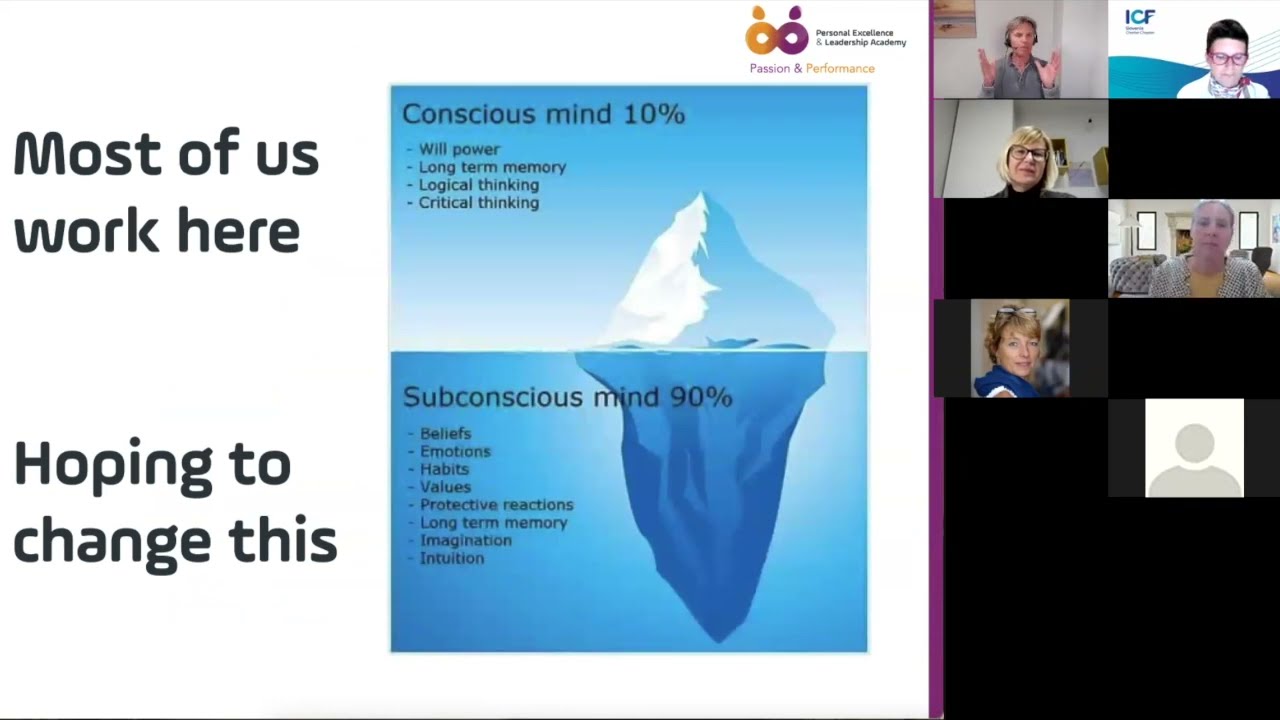
So what we're going to do— So what made me now really dive deeper, because that is that we like to do the best as a coach for coachees. We like to help them as best as we can. But when I did my research, I became aware that the success rate of us and most kind of therapies is less than 50%. Decisions are the core of everything we do, and actually that makes sense. Everything we do is based on decision. Every habit we do is based on decision, maybe a subconscious decision, but this decision— when we are working as a coach, most of us like to change the conscious mind hoping to change the subconscious mind. I'm aware we have actually 3 blind spots. What's the first one? We have actually 3 brains, and we come back to that later. 3 brains, and they have their own authority, they have their own decision-making, they have their own things what they find important. The second one is that most of us, we communicate, or as a leader, we lead from the wrong brain for engaging people and to make success. The third one is that how we learn, there's a huge difference between New learning and changing things you already know. All this, and maybe you taught people the same way. This is shared. We have a neocortex, a limbic brain, and a reptilian brain. Now actually, the word reptilian brain is scientifically wrong. That we have an emotional brain is actually all scientifically wrong in that part. And that's not coming from me, that's from neuroscientist Lisa Feldman Barrett. What kind of living creature is this? This is still a creature that is alive nowadays. You can find it in the sea. I will help you. What it doesn't have— it doesn't have a heart and it doesn't have a head. It's actually a living gut. What does it mean? What's the objective of our gut? Actually the same as the sea cucumber. It has a lust for life. It wants to live, so it needs to survive. I simply call it most times the survival brain. That one makes the choices for you, what is good for you. It does not think about anybody else. Think of a cucumber. A cucumber is not a social animal. These are all the actions of the gut brain. The heart brain So what does your heart do? If you think about, say, coaching again, the most important objective of the heart is to belong. Again, with emotions or sensations or feelings— love, acceptance, understanding, passion, aversion, hate, sadness, guilt, shame— and connects all the things with good and wrong. Last but not least, our head. And then we go to— Your head has one big evolutionary reason: predict the future. So tomorrow is better than today, for that's why we have a memory. Otherwise, why would we remember? Remember is only for prediction. How does it communicate that we have a thrive to learn, that we like to understand things, that we predict things, that we like to judge things? That's how it communicates, entices us. That's what kind of signals are sent to us. Having said that, what does it mean for our coaching and how can you create long-lasting change? Because that's where we're talking about. If we make this as a total setup, you could say in the deepest root of us is our instinct seeking happiness, belonging, love. That's how we are born. So if we take this as a working model, then talk coaching works with the communication and presentation. I see this, I observe this, how do you think about it? Well, say, I would say 3-brain coaching works the other way up and says, hey, actually, how does your heart and your gut communicate connected with your head? What is their part of the story? And just imagine you're a manager in a company, in a department, are doing not too good, and there's a need to take action. Oh, I forgot the slides. A minimum of 5 employees should be made redundant. You have 10 employees and they all have the same level of competences. Now you get 4 possible options how you could make a decision. And then the question is, the last one, I cannot choose between any of these 3 options. What would you choose? I don't know with whom of you made the 3 Brains preference test. what you could do. But if you did, then start relating to yourself. Hey, what was my score and how does it relate to this answer? Because for the first choice, you have to be a gut brain person. You just think about the company and your own qualities. You don't care about anybody. For the second one, you need a big heart brain. You sack your friends and one of your mentors, so your heart brain will feel shitty about that. LIFO is actually the most logical one, and it's a safe one because it's more in the head. D is actually, yes, of course I cannot choose because actually— and this is what happens in real life. Somewhere you made the decision, and if you now think about yourself and really go into yourself, what, what happened inside you that you made this decision? Was it a logical decision? Was the emotional decision? So when you don't use all 3 brains to make a decision, they stay reflectively loyal to an old behavior or an old belief or an old system that was working— heart, head, gut— and it then could cause you pain in the now. They have 3 different objectives. So whenever you say to one of your clients, follow your heart, actually what you say, follow just what's good for the team. If you say to follow what your gut instincts say, actually you say what's good for you. If you say, hey, what happens if you think this through, you go to their head. Can I share the title of my book? Yes, of course. I have— I had it next to me. It's, it's there.