The Science Behind 3 Brains: How The Head, Heart, And Gut Brains Influence Results
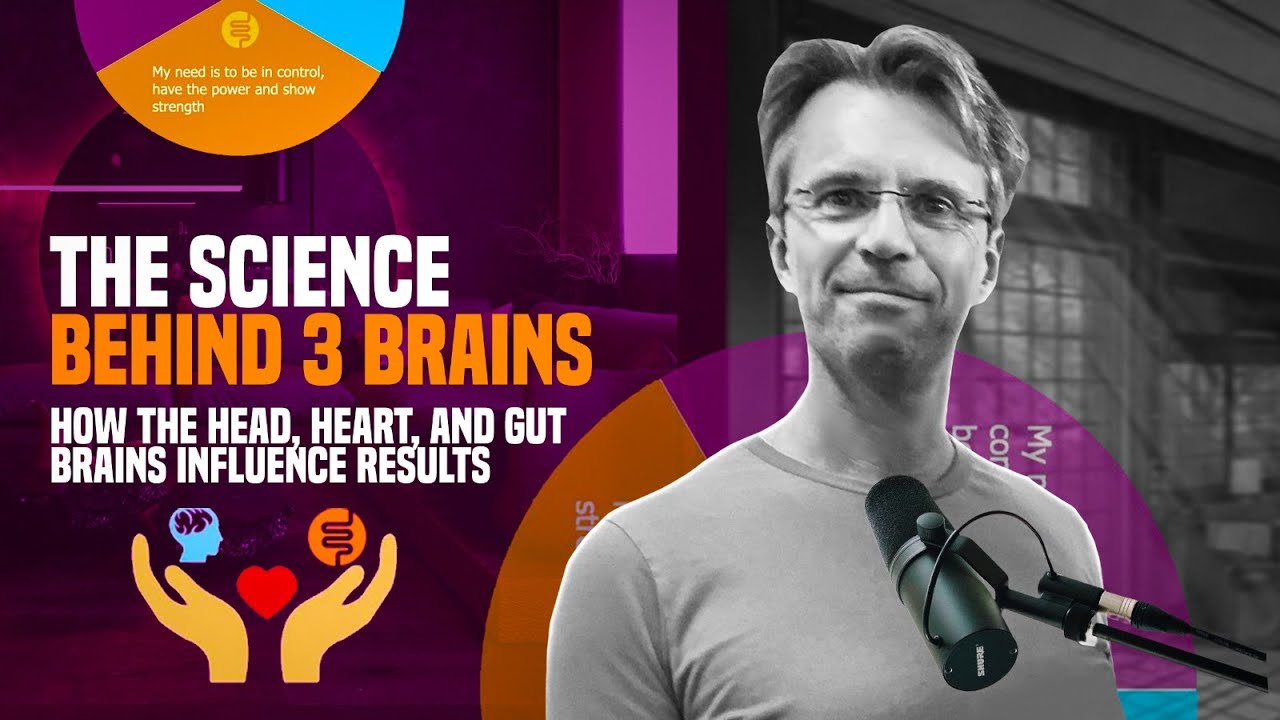
In this live webinar, Christoffel Sneijders presents his three‑brain framework—head, heart, and gut—as a practical model for coaches. He explains how each brain influences thoughts, emotions, and instincts, and shows how to detect which brain is dominant, silent, or blocking through clients' language cues. Sneijders discusses strategies for realigning the three brains, including asking targeted questions, using closed‑open question sequences, and addressing misalignments that cause hesitation. He extends the model to trauma and PTSD, describing how the gut brain can become stuck in survival mode and how techniques such as Emotional Freedom Techniques (EFT) and compartmentalizing memories can help. The impact of virtual communication on the heart brain is explored, with tips for fostering oxytocin‑based connection in Zoom (e.g., speaker view, eye contact). He critiques gendered stereotypes, arguing that labeling traits as “masculine” or “feminine” limits coaching, and promotes the neutral heart/gut terminology. Sneijders also promotes his 3‑Brain Certification Training, shares resource books, and answers audience questions about brain alignment, fear in the heart, and how to work with clients whose brains are out of sync. The session ends with participant feedback, a sales pitch for the training, and a call to apply the model to improve client outcomes and societal well‑being.
Chapters
Welcome. About 3 brains: head, heart, and gut, and how they connect, and how in my perception they're the missing link for long-lasting results. I really appreciate that you all joined. I'm rather grateful for that because it means somewhere you have interest in learning something amazing, getting the insights, in my opinion, of say what every coach should know, if I would be so blunt. Yeah, because what's my intention for this webinar? And that's connected right away. My passion is to provide you insights in how you can assist your clients to truly achieve long-lasting change, to thrive and excel, and to have successes in their business life as well as in their personal life. That's my passion. And to truly achieve that, I know after 28 years of being in this field have to get out of our logical brain because there is not the answer. Because even if we have full awareness, understanding of what to do, and we have all beautiful action plans in place, it's not an automatic result that you have long-lasting change. Just think about all the great resolutions we put down on the 1st of January, and that 90% of people before January has finished or already dismantled their good intentions. And my passion is to give you insights from how can we do, how can you do it as a coach. For that, we do a lot of things in this workshop, training, webinar. How do we make decisions? Go in there, just do a little touch. What is your 3 brains preference on the little preference test you did? What's the science behind it? So why do we actually have 3 brains and how do they work? And a little bit experiencing of yourself how your 3 brains actually make or does make decisions or how they block your decisions or how they promote them. Of course, Q&A. Excuse me, can you make it full screen please, your presentation? Could I make a—
It's not full screen, it's hard to see.
Oh, it's okay, it's hard to see. What I can do and Okay, so probably you can now see it better. That's my—
Yes, thank you.
Okay, totally good. And I can still see that the participants are coming in and have to admit them in the room. So that's all good. So somewhere I have full control still. That's rather nice. So Q&A, if you have questions in between, just unmute yourself and ask them or put them in the chat. So if I look there, you know I'm looking at the chat. And for everybody who likes to learn more, there's a special gift for you waiting if you'd like to follow the 3 Brain certification training, ICF accredited for 30 CCUs. So that's it. But the most important thing is you get some beautiful insights. And lovely to see where everybody's coming from. So who am I? That's just 1 minute, so at least you know who's talking to you. I'm a business coach like most of you. I'm at PCC level. I'm a visiting professor at the business school in leadership and behavior. Hey, goes on behind the picture. I'm a supervisor in clinical hypnotherapy. I'm also a hypnotherapist specializing in depression, PTSD, and anxieties. So I would say the fun stuff. I've been 30 years of working in coaching and training, saw more than 10,000 people around the world. I'm the founder actually of the 3-Brain Coach Certification Training and actually how it works, the 3 brains. And I'm an author of the book. If you like to have the cheapest option to know everything about it, How Men and Women Fit, everything about your relationships, personal or work-wise, how it connects to 3 brains. That's me. That's enough about me. At least you know that I've spent a lot of time in this. What are we going to do? So how do we learn and change to really dive into it right away? Hey, oh wow, I'm, I'm now drawing lines. Okay, that was not the idea I should do. What made me spark everything you did? As coaches, we want the best for our coachee. I think we can all say yes to that. But what I came aware, our success rate is actually different. And it's also different for happiness rates. If you look at success rates based on research, almost all the interventions we do as psychologists, coaches, life coaching, or culture change projects are below 50%.
Building it.
Now, how do I do that? How do I put everybody on mute, Jennifer? Because I didn't find the button. I could only see myself. How I do that? But I don't know how to put everybody on mute. Because I don't see it here. So just make, just make an announcement and tell everybody to mute themselves. Okay, this is a good one. Yes. Thanks so much, Simon. Also, Christoffel, you can make from participant list— when you click participants, you can, you can do unmute all.
Unmute all. Unmute all.
Okay, so there should be, uh, okay. Oh, there, uh, mute all. Thank you so much.
Yeah.
Oh, thank you. Okay, learned something about Zoom right away today. Thank you so much. And of course, if you'd like to interrupt like Simon just did to have a question, whatever, you can unmute yourself. But thank you so much for helping me out in this one. So how do we learn and change? And as I said, I came aware that we don't have a lot of change. And as a little bit perfectionist, I was disappointed about that the last 28 years. Although I did what I did, I thought, what can we do more? And it really sparked When I started to do trauma work ten years ago and be a therapist, and that our body is so freaking important. Just to test you right away on some activity, you can see here a little picture of Mentimeter. What we can do is to share ourselves our own three brains score. So I ask you to do three brain preference test. On my website, that was for free, just for, I would say, fun to test each other from what is our score. So when I release that one, where are you? I present it, then we can see actually what are our scores. And why is that so much fun? It's jumping in. Because we can see what's actually happening there. Now I have to do something else because I reset results, reset results, because we're still there. So that should be there. That's how you can do your scores and you can become aware what are your scores. Why is that so interesting? Because we can see what we do as a group, but also you can right away become aware what you do. And if you'd like to see the The Mentimeter thing again, you can just put your— easily put your phone on it, you make a picture of it, and right away you can open the Safari or whatever your phone supports, and there you can do the questions. It's extremely easy. I did it by myself, and if I can, I think everybody can. As you know, as you just saw my knowledge about Zoom already. Yes, so you can see some scores coming in, and I can almost predict what our effort scores will be if we all fill them out. You will see that probably the heart becomes number 1, head becomes number 2, and gut becomes number 3 as coaches, or somewhere stay the same. And if people like to have, say, the Mentimeter again or the score scan, this is the This is the picture you can just make a picture of. And the chat, I'll also put the code. You can go in there and you can see the scores going up. And also you can see in the variation actually that we as average coaches score less in our gut. Why is it so interesting to become aware of? Because one, a big heart brain makes us great coaches. Secondly, it also gives some insights what the challenges we could have with when we coach our clients. Of course, I can tell you, I can show you some research later on the slide What the average executive has, but the heart and head are most times the highest scores in all the coaches. What you have, you can see here the the variation how it goes, and what the score is somewhere. If you have your score visual, just go away. Otherwise, we wait too much time here. You can see. Almost 40, 93.5, and 28. Why is it so interesting? We will show that later, but keep in mind now your heart brain is probably number one, your head brain is number two, and your gut brain is number three in making decisions. Keep that somewhere in mind for yourself. So then we can go on with the thing. So when we start changing And we would like to learn our brains take more than 40% of the energy we have. And the head brain, our head already takes 23%, and at least 17% is taken by the heart or the gut just to process all the decisions they make. That's how we keep out digestion and the boom boom boom boom heart beating. So Based on the fact that 40% of our energy is used by making decisions, you can imagine that everything we learn or everything we have to make a decision for has to be on economic mode. And so how do we learn? The presentation will be available. Yes, I will send the presentation to everybody who likes it. So I will, so we learn in echo mode that's based on the law of association that's always active. And the law of association works actually, we use old knowledge and we, or experiences, and we compare it and we connect. What NLP says, we generalize, we distort, or we delete. Everybody who's done NLP knows those words. And if you come aware, NLP does not say we learn as the force entity. You only say we somewhere categorize it in an easy way. And we do the same actually as humans, most of it, because it is easy. It's extremely simple and low energy to do. It doesn't matter if that old knowledge is good or bad. Now, when we learned it in the past, it was good, otherwise we would not know it. Okay, hitting your brother or your sister was maybe good when you were 5 years old. Now when we're adults, it's not so good anymore. At least my sis tells me every time I meet her. And then actually we have the other entity, and it's new learning. And it means creating new connections based on neuroscience. What fires together wires together. That means we have to have a lot of firing before it starts wiring, and it costs a massive amount of energy, and it needs intense repetition. And if you like to know how this— I would say start learning a new language that is not compared with your language. So start learning Swedish if you're from, uh, if you're from a Mediterranean language, or start learning, uh, Spanish if you're, say, from Sweden, because they don't have the same kind of grammar, you will come aware there is a lot of— there's almost no comparison in the words. You will get a headache because you have to repeat all those words inside your head and create new connections. So that is the last option that is used in our 3 brains. So when we coach people, you already come aware what is actually the challenge we have, because we like to create change. But every coachee falls back so easily in his old learnings because that's the easiest automatic default way. So we have to change our old patterns or create something new. Now just have the metaphor. Say you like to build a house and you have 2 options. You have a flat field with nothing on top of it, that's a new learnings, Or you have a building already there, but you first have to tear down. Now, when you first have to tear down a building, that's actually old getting old learnings out of the way. We have to first demolish the building and then start a new one to make it rather rude. Although I know in some countries they're really easy in doing that. It's not the best way to do always. So then how do we make decisions? Now we know. How we like to learn? Old knowledge first, hard to get new knowledge. How do we learn then? And just to ask you, do you have those moments that you procrastinate? And I think everybody could say, yeah, we know those. I know them. So does your logical head brain makes decision? Does our logic make the decision to wait to the latest moment and think, oh shit, now I'm in stress? Is it logical to do that? Does it make sense to do that? Now I think everybody could say no. So it does not make sense to procrastinate, and still we do it. And some people have the excuse, yes, I work better under stress. Later on we could say a little sentence why it doesn't work. So it cannot be our logical head brain that is actually in charge of our procrastination. So then who is in charge inside us to make the decision? Oh, wait with preparing until the last moment, wait with calling your client till the last moment, wait till the last moment before you make your proposal, and then work to 2 o'clock in the morning. That's not our logical head brain that says that, because that says you have to go to bed early. If we then go to the stress we all have somewhere, Hey, that's a fight-or-flight reaction designed to make us physically go in action, and it's not designed to make us think back better because the sympathetic nerve is activated, and it means our frontal lobes are turned off because it is designed to run away from the tiger. And why would you think about your emails, your proposal, your client if you're running away for your life? Yeah, so your, your brain is actually deactivated. So if you go back to procrastination, actually you work less if you need creativity in your brain. So procrastination is actually the opposite of making a beautiful creative process. So there is no logic in doing that, but still somewhere we decide to do so. So how do we decide that? My head brain is turned off. I admit the person comes in. So who's inside us in this moment in stress? Because if, say, just imagine you run away from that tiger, who makes the decision to go left or right if your frontal lobes are actually turned off? So you cannot think, okay, left is probably shorter, right is probably a little bit more hurdles in the way, but hurdles in the way will actually get away of my predators behind me. So maybe I could go better right away. You don't have the time to choose that. There's somewhere inside you makes decision, go left or go right. Who is in charge? And of course we all procrastinate, but who doesn't? Yeah, it makes sense. So actually we have those issues and our clients has the same issues. So is our head brain then in charge, in charge of our learning?
Nope.
So then one more question: how many times have you been willing to do something that makes sense and you have the ability to do so? Say living healthier, going to bed on time, being more sweet to your partner, call your mother or father more. Or less, be nicer to your siblings. And still he didn't do it. So he had the ability, he had the willingness, and it made sense to do so. And still he didn't do so. And that's actually what happens with our clients. They have the ability to make their action plans. It makes sense that they make the action plans because we coach them half an hour or 1 hour on that. And they're actually willing to do so because they wrote down that, that action plan and actually paid our invoices, and still they don't follow up. What is happening with our client? By the way, we don't do anything wrong, or it's our client. But what is happening inside the client that actually makes them stop? Who is in charge inside us or them? Because we know we should not procrastinate. We know we should not eat unhealthy. We know we should not sleep too less, and we know we should not suffer from PTSD, depression, or anxiety. And I think everybody here does at least one of this sometimes. So then who is in charge of us in letting us do so when we logically know that it does not make sense? And if you now think about yourself, and we are smartasses as coaches because we do a lot of self-development. Now think about your clients who do most times less of self-development. They don't look in the mirror so many times and think, oh, what's happening inside me? What we as coaches are doing. So you think about it, your coachee on average will not think about it. So we have to help him or her somewhere to get somewhere in charge of this decision-making. So, oh, that walks in by itself. Okay, just a little bit, go to the science. I say a little bit, there's much more, but based on time, I will just tiptoe through it, otherwise it becomes a neuroscience class, and I will not do that unless you say please. No, please not. The sympathetic nerve system— I mean, you know, you have a sympathetic nerve system and a parasympathetic nerve system. Did you know the sympathetic nerve system is not connected to your brainstem? It's not connected with your brain actually. It stops there in your neck. It does not touch your brain. So when we always say the, the hijack of the limbic brain in the sympathetic nerve, they have to communicate with hormones to get into the sympathetic system. They don't have a direct way. There's actually a disconnection between those 2. Does that make sense? No, actually, the dorsal vagal nerve, part of the parasympathetic nerve system, starts exactly in your reptilian brain. And this picture is the reptilian brain, that little sponge there. And there the parasympathetic nerve ends. And do you know where the parasympathetic Nerve starts there in your gut, so there is a direct connection from your gut to your reptilian brain. Isn't it interesting? Yes, I found extremely interesting when I when I got all this knowledge somewhere presented to me or researched. Let's make it never. So then who's in charge? Now in the old idea, and I've been teaching this for 20 years now, not 15 years, so I never blame somebody who does, who still does it because I did it 15 years with all my enthusiasm. As you can see here, we have 3 brains inside our head: neocortex, limbic brain, emotional brain, reptilian brain, instinctual brain. That's it. And then in my research there came something else. I'm going to present you to your grand-grand-grand-grand-grand-grand-grand-grand-grand Mother or father, whatever you like to say. Your living ancestor, that this is him. So now is the question, the one million dollar question: What kind of still living, I would say animal, but not animal creature is this? I can tell you it lives in the sea. I will give you a little hint: This lives in the sea. What is it? It's still alive. If you go into the sea, nine out of ten you can see it. Because it's in all the seas, tropical seas, and also in the Nordic seas. The sea urchin. Almost, Simon. Yeah, you're close, Simon. You're close. Coral. No, it's not coral. Before we go in all things, it starts with C and it's— if you cut— yes, Sandra! High five for Sandra! All the coolers for Sandra. It's a sea cucumber, this. Yes, Agatha, a sea cucumber. And what's the most amazing thing? This is a live living entity, yeah, this living creature. If you approach it, it will all walk away on this little tube feet, or it will spit out some poison to you. So don't touch it in the sea, please, because it's poisoned. But what is now amazing of this animal or creature? It doesn't have a heart or doesn't have a gut. Or a head. It's living without a head, without this part. It's actually also living without this part, but it can act to survive. It's actually a living god. Now, if you now go back 500 million years ago, this is all where we came from. And Michael Gershon The writer of the book The Second Brain came aware that actually this part of our body is almost still a sea cucumber. So in his book The Second Brain, he describes how the enteric nerve system is a separate entity. There are 2,000 nerve cells coming in. And they split in 500 million nerve cells, and they become actually an enteric brain. The gut brain or the enteric brain can act totally independently. It is almost like a living entity inside your own body. I will not say you can take it. There's research done. They took away the intestine of Of a guinea pig, so they took that out. The rest of the guinea pig was thrown away. So they just keep the intestine alive on salted water, and they were putting air in the in the intestine. So the intestine, and on that moment, the intestine responded and blew back. And to do that, it had to actually. indicate, hey, there is a pressure going into my intestine. Based on that pressure that was built up inside by the air that was pushing in, it decided what to do and gave actually a physical response. And everything else was not there anymore. It was just the intestine. And that was somewhere the proof that the intestine can make decisions by itself. Because the whole guinea pig was not there anymore. That's official research done. Now there's much more to it. So if we now go back to coaches, because this is not what you're going to explain to your clients, please not. Or if you like, you can do so. But what is actually our gut-brain bonds? What is the needs? It's actually that seed cucumber. It says, I like to survive. So this part of your brain, these 500 million brain cells, will only think, how can I make my life the best for me? If you are coaching some high executives, maybe now start thinking, hey, I can remember somebody like that. If you think of some top politicians, you will find a lot of those. I will not call names because before you know, somebody's listening to me and they jump on me. But just think about the really high executive perceivers. they think about this. On the other hand, it sounds negative, every gold winner in sports has this. You cannot become number one in sports if you are a social animal. You have to be an asocial animal. You have to think only about me, myself, and I. I win, you lose. So it also has benefits, don't get me wrong. It's an amazing brain. It's not negative. But this is what it does. How does it do it? With neurotransmitters: serotonin, dopamine, cortisol, adrenaline, benzodiazepines. So for happiness, reward systems, fight and flight, action, and relaxation of valium. And it produces much more than you can buy in the average pharmaceutical shop. You can drug yourself really out of this heaven. You don't need ecstasy. You can make yourself high on your own chemical there. And it has the nerve system, the parasympathetic and the sympathetic nerve system that we just discussed, because also the sympathetic nerve ends somewhere or comes into your gut, because everybody who's nervous knows you have to pee, and it's actually an action on your bladder. And what is the actions? What does it do? It has fear so we can run away. It has anger and rage so it knows how to fight. It has lust and desire to reproduce. And there's hunger and disgust so they can eat and drink. If you now think about, say, eat less or eat healthy, you start coming over here. Hey, who's in charge of that, actually, that chocolate instead of the carrot? Who's in charge of the beautiful red wine instead of having a Healthy tea. Then your gut brain says, you know, I know what's good for you. I will choose what's— and it will choose. If you are a comfort eater, your gut brain actually takes over and will comfort you with food because that's what it knows. This is where you go in. And what does your Heart brain do. André Remour in 1889 discovered in his research document that actually the heart is also a brain. It has all the material inside: ganglia, white cell, gray matter, connections, neural dendrites to be categorized as a brain. If you don't believe me and you put the science away, then go into research and say. Memories after heart transplantation. And you'll come aware there are stories that people who got a heart transplantation, actually the memories were also transported. There's a famous case about somebody who was having horrendous nightmares about being killed after a heart transplantation. He went to psychiatrist, psychologist, went up to the police, and they opened the cold case Of the person who was killed and actually donated the heart to him, and they found actually the killer based on all his nightmares. It's amazing, and it's his research. It's not me who's telling now bedtime stories. The heart really has a memory. What does your heart want? Bonding for bonding for survival, and it makes sense because when we are born into into this world. We're totally helpless creatures as little kids. As babies, we're helpless. The only thing we can do is poop, peep, scream, and probably sleep, and that's when parents are really happy. Okay, so we need to bond with our caregivers, otherwise we don't survive. And the heart is amazing for that, because what does your heart do? It creates oxytocin. The love hormone, and when moms are delivering births, they boof get overflowed by oxytocin, so they love their own kid. You'll never hear mom say my kid is ugly. They always say it's amazing. They create a lot of dopamine, so it rewards, and they appear for you to keep in action, so you can survive those six times waking up during the night and giving or giving breastfeeding. And kick your husband that he's a lazy pig and doesn't get out of bed. And that's, that's the right thing to do, by the way, moms. Also, your heart has a bio-physical communication. So when it beats, boof boof, it gives pulses, and it has electromagnetic field 5,000 times stronger than your head, than your head brain. So all those tests on your head, your heart can override 5,000 times. You can measure the energetic field of the heart 9 meters outside the body. So it can detect the heart of somebody 9 meters outside the body if you're open for it. And of course, the parasympathetic nerve system. So that's how they communicate. What does it do? Love, happiness, acceptance, understanding, inspiring, enthusiasm, and persuading. Hey, doesn't that sound like a beautiful coach? Acceptance, understanding, inspiring, enthusiasm. Hey, that I can hear a coach coming back. That's why we need a heart brain so huge. Aversion and hate can also be there for protect, for protect you. Sadness to deal with letting go when we finish a beautiful client. Guilt and shame, we need somewhere to reconnect because we come aware we cross a boundary of some of the relationships. And it has the values of good and wrong. So also know what we have and don't have to do. So this as a coach is essential to know and to have. That's why I always say the coaches have the highest score in the heart brain. What makes sense? Otherwise, you would never listen to all those boring stories of your coachees. And we don't find them boring as coaches; we find them interesting. But how many of your coachees don't say, "I have to listen to?" Boring stories of employees. Hallelujah! I know I get paid for that, but please don't. They see their the year we appraisal things like a mandatory stuff because I have to talk to my employees. Hence, they have much less heart brain. Most executives, they have a massive gut brain. Where do we find each other? In the heart or in the head. One hundred thousand million neurons. So it's amazing thing our head. And it can predict the future. That's why it's there. It remembers so we can predict the future better. If you know that you did something stupid yesterday, then probably you don't do it tomorrow. That's the whole meaning of this neocortex there, to predict. So the mantra of the head is, how does this work and is it correct? So it also loves to judge. Is it wrong? Okay, then don't learn it because that doesn't make sense. So how does it do? What are the resources? We're the only animal that knows yesterday and tomorrow. That's why we can remember. We have an awareness. We know that we're moving our hands. We, of course, we have the language and a database of memories, actually. And we can activate the limbic brain for neurotransmitters, and so we can think We can watch a scary movie and actually get fearful. So we can activate it if we do our best. And we can influence our autonomic nervous system with our breathing. Hence meditation, mindfulness, and all those kinds of things. That's the only way how we can activate, how we can be in charge of our autonomic nervous system. But it takes— for everybody who does meditation or mindfulness knows it is also a hard job to do so. Because then you sit still there for 20 minutes, and how many thoughts don't pop in your head and like to distract you? For me, at least, I'm sitting down in the evening, get relaxed, do my breathing, and then think, oh shit, I should have sent an email. Okay, get up, do the email, sit down again. Oh, did I actually— Of course, your head is busy. To really influence your autonomic nervous system to relax, it takes some time. And it is because your heart and your gut are stronger. So what does it do for learning? It gives us interest, anticipation, surprise, wonder, curiosity that makes us learn. Reasoning, abstraction, analysis, synthesis, to also to understand how does this work. Creating means for predicting and judging for protecting. Because if we would not judge, we'll just assume that everybody is right. And everybody who's now in America knows there's some slight discussion about were the elections fake or not fake, were they honest or not honest. And somewhere we like to judge then to keep our own mind somewhere sane. That's what our 3 brains do, or actually what their objective is. You know, as coach also come over here. Wow! I see some challenges because what is the challenge for when we coach executives is that we have a massive heart brain and they have a massive gut brain because you don't become an executive to be a sweet boy or sweet girl. You come become tough. You run a little bit faster. You put an elbow sometimes if it's needed, and you put yourself in front of everybody else. And so sometimes our executives don't understand us because they think us too sweet, and we don't understand them because we find them too competitive. So where do we find each other most of the times? We find each other in the logic. If you now make it black and white again, and just black and white, if you look at the origin of coaching— questioning skills, understanding skills, awareness skills— then have a lot to do with the head brain because that's where you can find each other and where you can find that beautiful connection. The only thing we also now came aware, actually the heart brain and the gut brain are rather important, so we have to work on that. That's actually a challenge. Does your main brain change? Yes, we have— that's a beautiful question and an extremely great question. I'll just jump in. Your heart brain, as an example, has between 40,000 and 120,000 brain cells. Actually, after people died, they did autopsy people and came aware some people have a less developed heart brain and some people have a massive developed heart brain. What made sense, the people who had only 40,000 brain cells were actually the Scrooges of this world. Isolated, negative, did not have a lot of friends, and were called Donald Trump. Oh, sorry. Men with massive heart brains, okay, they had the social connection, were happy people, enthusiastic, had a full, rich life of happiness. The other side. So yes, you can train your heart brain to expand and not to spend. Your gut brain can also train. Brain plasticity is not only here, it's also in the other areas. Only it's less researched how we can actually really do that. But you can create fear in people and create much more fear. So you can create much more connections in your gut to be a fearful person. You can also create much more courage in your own gut. To give that answer shortly, I hope this helps. So how do we make decisions? And let's go into action. Let's do it, say, in a group so it goes quicker, so we can have a Q&A after that. And I will just— I can keep it like here. So what we'll ask you to do, to relax. And why I say close your eyes is because if we close our eyes, we get disconnected from the outer world. It's easier to connect with the inside world or Head pain or heart pain or their gut pain. Now, say take a deep breath, exhale at ease, and take two fingers of your right or left hand, your index and your middle finger, and please put them on your third eye in between your eyebrows. And then just say out loud your own name and say my name is. My name is, I would say my name is Christoffel. And just come aware how your head responds when you say that. My name is Christoffel. And just come aware what happens. If it's saying yes, if it's saying no, if it says nothing, how do you perceive it there? There is no right or wrong, just come aware of it. And if you have done so, you have your answer. Then I will invite you to take a deep breath in and put your two fingers on your heart, and then say again out loud, "My name is." So I would say, put my two fingers on my heart and say, "My name is Christoffel." You just come aware how your heart responds when you say that. Some people maybe have a feeling in it. Some people have a sensation in it. Some people. Just stay blank. There is no right or wrong. Just come aware how it responds when you say it. And then the last one is to put your same two fingers on your gut brain. That's actually two centimeters underneath your belly button. So for the chakra lovers, somewhere in between your first and your second chakra, a little bit more to your second chakra, and just say it again. My name is Christoffel. Why you have your fingers there? And come aware how your gut responds. What does your gut say? What do you perceive there? So what you now actually experience is how your 3 brains respond on something they think and perceive that is true because it's your name and probably they know it already for a long time, but it has a history Your name, so maybe had different responses to it. If I say Christoffel, then sometimes I think about my parents who call me Christoffel. Otherwise, they get because a lot of times I call myself Chris. So if I if I say my name is Christoffel, I hear my dad sometimes. I almost feel it in my gut because my dad says Christoffel, and I think oh shit, I did something wrong. And my gut sparks up from oh yeah. And that's okay. So, and now I'd like to test you, and I just have 4 names already there to make it easier, but you can choose another one. And just choose the name of between Tom Cruise, Will Smith, Meryl Streep, Oprah Winfrey. We're going to test the same but now with a fake name. And just come over here. What happens in your 3 brains when you use a fake name? And if you really like to use a different name and like to be, say, independent, or think you know a better name, or you like just love another name better, it's okay for me. But come aware, if you choose another name, that actually one of your 3 brains is actually now making a decision for you. And then I would invite you, if you have chosen a name, close your eyes and say, my name is Tom Cruise. My head right away spins.
Yeah.
You bet. You would love to. You would love to have that, although he's shorter than you, Chris. Then put your hands on your heart, your fingers on your heart, and say the same. Take a deep inhalation. Say out. Say, "Hey, my name is Tom Cruise." My heart would say, "No, he is Scientology. We don't go there." And then put your Fingers on your gut and say the same. Hey, my name is Tom Cruise. Then my gut says, yes, you would love the Mission Impossible movies, Chris. You would love to be that hero. And so I have 3 different responses in my 3 brains on just saying a different name. I don't know how it's with you, but what I would ask you to do, just to I just now do a stop share, so, oops, so I can see you a little bit more. And I would say, if somebody likes to respond what happened to him or her, I would say unmute yourself. Let's have a couple of minutes just to come away what happened with you, or that doesn't happen to you, or maybe you have questions, or maybe not totally traumatized by saying a name and say, Chris, you messed me up. That's also okay. Who likes to say or share something? And please unmute yourself, otherwise you're talking to— When I touched my heart, it felt really warm when I said my name. And when I touched my God, there was a bit of anxiety, you know, kind of nervousness. But when I just operate with grief, nothing happened. It was That's okay. But that's interesting, say, and a lot of times when we— our heart gets warm when we use our own name, it's connected with the positive memories we had, and the love is somewhere. When our gut gets anxious or feels— it could also mean that that name was somewhere connected or being called when we had something that we did wrong or felt not At ease with it. As I said, if I use my full name Christoffel, I think about my dad who calls me Christoffel, and that's always in a way that I did something, say, naughty. When I connect this my heart brain, I can feel also the warmth because I also know my mom loves me and calls me like that. It doesn't mean my dad was the bad boy; it's more say how it was. So it makes sense. Now that you respond on the different names. And just curious, did somebody else use a different name than the 4 I shared? That's allowed, but I'm always curious if somebody was saying, quote unquote, independent chooser. Oh, you're all compliant. How sweet of you. Because sometimes people will choose different because they don't like the names. So then the heart brain is making decision, the gut brain says no. I just do my own way. Chris, shut up for one moment. I would just choose my own thing. Or the head brain says, I don't know those persons, or maybe I know a better one. That's also our 3 brains can actually choose in that moment. Other questions you maybe have or like to share what you just had? What are the typical responses? Now, on this one, it's a good question, Jennifer. When we use our own name Most is a little bit neutral. There are not a lot of— I mean, there are not a lot of emotions connected with it. When we use a fake name, it depends. I now chose just, say, 4 persons who are in general perceived as positive: Tom Cruise, Will Smith, Meryl Streep, Oprah Winfrey. They're not bad persons. There's a normal People don't have a lot of emotions with it. If you would dare put there Adolf Hitler, Mussolini, now and calls him that Stalin, people would get a quite a strong experience. And then you could see a lot of things. But you could also see when there's an emotional connection with the name, say you would have a nickname. How you were called when you were young by your parents, then a lot of people will feel a lot of emotions with it. What you also see when people are emigration, have emigrated, that I'm talking English now, but I'm originally Dutch. When I say it in Dutch, I have a different response than when I say it in English. When you come aware when people are immigrants and they say it in English and say, hey, my name is Christoffel, you don't have a lot of response. When they use their own language, they can have more emotional response because it brings them back to the time of their old place, especially when they are refugees. They have a massive response when they talk in their own language, when the heart brain and gut brain sparks up. That's what you can notice. What is important— I now did the quick one, okay— to let people close their eyes because they can More in tune, and of course let them be more in a relaxed state. Because if they're still nervous, you don't feel your system. So sometimes it makes sense to do a little bit more breathing. Oh yes, and I hope I pronounce it right. Nolven Scherte. I choose my given name since was eighteen, and notes my head brain reacted to it. And differently than my baptism name. Yes, it actually makes sense right away. Yeah, because you learn it on different states. When we adapt our name after our childhood, then actually a lot of primary emotions, the imprint period of the first seven years of life, are not connected with it. So it makes that makes totally sense. And something I Could I share? Of course you could share. I don't know what you're going to share, but that makes me right— you make me right away curious.
It's very similar to what Dolwyn was saying, but, um, because I was, I was born with the Japanese name and then I was given a Korean name, and then when we immigrated to the US, I have an American name, or my English name. Yeah, yes, my Sandra. And then with Sandra, I have a nickname, Sandy. So it was, you know, I had to do the test 4 times just to see how it resonated. And I just wanted to share that also, just timing-wise, um, I've been in this indecision of whether I was going to launch my business as Sandra Cusano or Sandy Cusano.
Yes.
And I don't know why it's been such a point of contention. And so I'm gonna have to do this a few more times, but I felt like my natural, um, easy ease was to go with Sandy because that's, that's how I introduced myself. And that's how my friends know me. And this was very helpful in that sense to identify that.
It's good. Thank you for sharing Sandy, Sandra, and all the other 2 names you have. Because that's actually also what happens when we make decisions. And in your case, it's even more beautiful because you have 3, 4 different names, that our 3 brains actually have different responses. to it. And somewhere, why do we procrastinate? What can happen? It's later in the slide. We have 5 misalignments. So say we have the normal brain dominance, what you did in your test. So you choose more easily from your heart or from your gut or from your head. You can have one brain is more dominant and the other ones are silent based on belief systems. And so we have to be strong. I cannot cry. We cannot trust people, always should be the best. Then actually one brain is more in charge and the other ones are more silent. One can be actually stuck in, say, what they call trauma. You have had physical, emotional bullying, abuse, or whatever kind of stuff, and then actually you are single-tracked, and that brain is actually always active and will just ignore the rest. Or we can have what you just experienced, Sandra, actually an, yeah, I would say discussion between the brains where actually they don't agree and you have just one big mess. There's that yes, no, yes, no, yes, no. And that's my discussion in front of the fridge. Carrot or chocolate? Carrot or chocolate? Carrot or chocolate? That's actually logic against gut brain, logic against gut brain. And most times the The bottle of wine wins, so who cares? So that that's actually the inner thing. And what could happen is the fifth misalignment when one of the brains is taking over the role from the other brain. So say I feel sad, so my gut brain takes over for the heart and starts giving me a bottle of wine. So I don't trust my heart anymore because it has so many betrayals or wrong partners. So now I just find love. Love and a rational system of my head. And say a lot of— and I'm a man, so I can say it— a lot of men think that love is in their genitals. And every woman knows love is not in your genitals, but in your heart. So actually, for men, the gut brain has taken over from the heart brain. That's the 5th misalignment we can have. Now, how does all of this work? And let me see if I really Am I right? Yes. How does it all work in, uh, in, in, say, in the coaching world? Because now, how can we use this? I'm going to share screen and go on. How did it go? Nope, it's there. No. So what is blocking long-lasting results? And we just became aware of it. Our head thinks about logic, our heart thinks about you, and how can we please the other one. And everybody with a big heart knows we are not the best in boundaries. We like to please the other one even if it's not the best for us. Well, the gut brain says, hey, what's the best for me? So what is blocking it if those 3 are not aligned? Because there's 3 different objectives, and somewhere we have to align those 3 objectives to one to one answer. If not, later on the person will regret it and say, yes, I should have known, yes, I should have followed my gut feeling, I should have followed my heart feeling. And they will somewhere regret what they did. So we have to align them, because if not, what we do, we stay reflectively to the old behavior because that is taking the less energy of us. So we stay to the easy road. Water flows the big channels, not the easy ways. So that's our job as coach for ourselves, also for our clients. That makes it quote-unquote harder. So what I spoke about, the 5 misalignments, they're here. Why I show them? Because they're now in the recording, so at least there, when you see the recording, they're there, the 5 things. And why it is. So let's just test how we can do this in coaching. And Sandra is already working with it. So what would you want to do and didn't do up to now? For Sandra or Sandy, it's, hey, choosing my business name. And I will just ask you, we could do it again, say, in the group, because it is easier. Then we can have a little chat after that. You know, to close your eyes and take a deep breath. I'm first going to explain it and then say I want or will do this. So I will call my business name Sandy, as an example for Sandy. And then come aware how your head responds. And they do the same with your heart. Say, hey, I will call my business Sandy. And you see how your heart responds. Then you put your fingers where you got and say, hey, I will call my business Sandy. And you see how you got response. If you have an order objective, it can be true. I like to live healthy, go to bed at time. I like to make $1 million. I like that all my clients are jumping through the roof from happiness. Whatever your objective is, but make it a short objective and make it one that you can say I want or will to do. Important for if you use this technique, it should be a closed question or command. If you ask, how will I call my business? Your head brain could respond. But your heart brain doesn't know how to respond to a how question. Your gut brain also doesn't know how to respond to a how question because that means actually I have to make decisions based on time. Because then you have to make a decision, predict the outcome, and then compare those kind of things. Your gut brain and your heart brain are less in that. They're always in the present. So you have to, you have to make them, give them the opportunity How does it feel now? That's why you have to make it a command. I will do it now, because then your heart will say no or yes. Is that clear for everybody? Because then I would say choose your own objective for what you want to do now. I would say, and just do it. Close your eyes, take a deep breath, and say out loud with your 2 fingers there, hey, this presentation is the best I will ever have. And we see how your head responds. Take a deep breath, put your fingers on your heart, and say the same. I will do this. And at the end. Do what you got. And in between, really come aware how your brains respond. Do they give an answer? Does it give a sensation? Does it give whatever they give? And so if you did it, I'm there. Yes, we still have time. Ah, that's good. Then I'm curious if you've done it, what did you experience? Did you experience misalignment in your 3 brains? Were they all aligned and said, yeah, great? Or did one say yes and one said no? Or just had a crunchy feeling in your gut, or maybe in your heart, warm feeling, cold feeling? And we can share now, ask questions. Of course, you already see it. I would say unmute yourself. I see a hand up from Eleni, I hope I pronounce it correctly, Eleni, otherwise you could just slap me and say off.
No, it's correct, it's correct. Thank you so much. Uh, when I touched my head and heart, it was pure relief. My gut showed a little bit more resistance, but it was, you know, it was something connected to appetite. So I guess it's trying, you know, to, to switch to comfort. But all in all, it felt actually good. So it was surprising.
That's good. It is surprising and also positive. That's good. Sometimes when you feel a relief, you also express something. That's lovely to do. Now, Simon, you're not limited to open-ended questioning in coaching. You could ask a closed question. Yeah. Yes. If the answer leads to an open-ended question. If that's so true, Simon. As coaches, we are allowed to do more. And as long as you don't do an ICF test, you can make still make your client happy. Only if you have to do the ICF recording, you have to be aware of your coaching, not giving advice, all kind of stuff. Sorry, I did not say that. I did say that now, but you're right, Elenia. If you have to that have somewhere a relief and your gut has a little, it's always interesting what does your gut on that moment. Need to also have the same relief with it, because that little spark could still spark something, whatever it is. And so what, what's the final objective is that they all are somewhere aligned. And if you would ask, are we going to do this from this moment onwards, they'll have something like yes, yes, yes. And even if, say, there is a hesitation in the answer, you will probably come away that one of the brains, if it hesitates, that probably it needs some more work or some more investigation what's really happening there. Now, how to do that? I would love to give you all the answers. When it's a normal situation, people can access their brains and you can have a discussion with them. Hey, what does your heart say? What does your gut say? That's easy when it's an easy topic. A lot of cases when there are belief systems connected, when there are deeper issues connected, It becomes harder because actually we don't know them. A belief is most times verbalized by our head. I'm not good enough is here a verbalization, but most people who believe I'm not good enough will feel it in their body. And so you have then to connect with them. Where do you feel that in your body? And how did you learn that? Who, who was teaching you that? Yeah, I definitely slap my wrist. Absolutely. I know, that's why I'm still a PCC and not an MCC, Simon, because I always cross the boundaries. So you have to teach that somewhere. You have to come in connection with your heart and gut brain both times and then start using their language. And it goes too far for this time because I could not do everything, but in how people talk about the topic, you already become aware which brain is connected, not connected. If people say, hey, I think about it, you can actually come aware, hey, the head brain is talking about it. Say, hey, it doesn't— I cannot digest this topic, you know for sure the gut brain is connected with it. If they say, oh, it doesn't feel good for the relationship, you know their heart brain is connected with it. So in our coaching, we can listen to the client, already come aware based on what they say which brain is connected, and then we actually have to come aware, and that's what I showed you in a previous slide that's there, that you actually become aware, hey, which brain is blocking, which brain is giving a solution, which brain is maybe silent. And based on that, you can find the misalignment and then start working with it to let them all start communication, that they also must say, hey, I agree. That's the whole idea about it. That goes a little bit too far to discuss what do you do in all those order 4 issues, because if just is normal brain dominance discussion, here you need more work. And of course, like a good sales guy, in the 3 Brain Certification Training, you will learn that. I always say it's my passion to educate everybody in this, and that's not because of the money, because then I should do it in the business world, just do it for companies because it makes much more money. Why I would love to do so, because if I teach all of you this, you can teach all your companies and we have a much greater impact in this world. Because everybody who read once my book will know my deepest passion is actually to get bullying out of this world, to get gender equality into this world, that we all become more heart-brained people. That's my biggest dream that will happen, that my kids will actually live in a better world than I did. And that's my big passion. That's why I'm so passionate to talk about to you coaches, because somewhere I know you have the same passion to make this world a better place. And we all can do so. If you disagree, it's allowed to disagree with me. Yeah, so that's my real passion. If we still have 10 minutes, I just show you this because also the thing, if you like to join it, you have 200 euros gift. I make it cheaper for you or less expensive. You find the training. I know from all the feedback I had, this is the best training you will ever have. Now, having said that, that's, that's the sales pitch. What would you like to know more in this other 10 minutes? We know this is to read more. I just show you because then it's also in the recording. Now, the most important thing, what's your Q&A? And I do the stop share. So you can unmute yourself, and I would say in a friendly way, shoot. But shoot sounds like a rather gut-brained sentence. So if you have questions, spit them out, share them so we can all learn. If you're all silent, it means or I was boring, or you know everything, or I overloaded your brain so much that you're just thinking, okay, I would just shut up. So who has something to ask? So are you now really telling me I, I could create that 46 coaches are silent? Because then I think I'm— I, I go to the Guinness Book of Records. Could you put the resource slide again? Resource slide. I would love to do so if you help me out. What is the resource slide? Share screen. The references. Okay, thank you so much. We do a share screen. Share screen. So there are— I just put a few books in there. The Second Brain of Michael Gershwin. It's extremely easy to read. It gives you also a lot of insight. It's an easy brain to know how the gut brain works. Trauma and Memory from Peter Levine. He's, in my opinion, the trauma expert of this world. A lot in the somatic brain. Science of the Heart is from HeartMath. HeartMath is actually all about heart coherence. They have their own device for it, but in Science of the Heart, they give a beautiful insight how the heart works. And now my book, of course, is there because it gives you all the science, but also how it relates to relationships. How do I connect with it in working with a client? Now, a lot of times I don't introduce the whole theory about the 3 brains because my clients, most of my clients don't pay me to get educated. They most times pay me to have a solution. So a lot of times I just go with them and go with the flow and they share their story. I make the analysis, hey, they talk more from the head, the heart, or the gut. And I always know the brain that is not talking is also somewhere having the solution, because if that brain starts talking, it becomes a more full picture. So if they talk about, hey, I think about this, I think about this, I think about this, and actually I don't know if it's good for my career, then I know actually they talk from the head and they talk from the gut. But they didn't talk from their heart. So when I ask, hey, I'm just curious, hey, talk about what you all think about it. Now it's maybe not good for your career. If you would really follow your heart, what would your heart say? And actually let their heart talk in that moment, if they can. And they say, I don't know what my heart would say, then I know I have to do something extra to let their heart talk. If they only talk about, you know, I'm passionate about my team, I like to build the best, I like to build a beautiful team, it all works together. And in these Zoom meetings, I'm always spent a lot of time about relationship and all those kind of things. And I come aware actually that he's not me, or they're not meeting their objectives when they talk all about heart and they forget the gut. Then I will ask, hey, and how does your gut really think? If you would really follow your gut and you think about the objectives, what would your gut say? What would your gut instinct say? And then they always respond, as a client said, you know, I would just keep my Zoom meetings Half an hour shorter. I would send them a presentation. What's your objective? Let's share about that. Okay, so hey, if you follow your gut, this is what's saying. Actually, what you what you're doing is this. How could you combine those two?
And then they come away.
Hey, I see two perspectives, and they start merging it in. But this is when actually they can access their three brains because a lot of people cannot do that. If someone from the head injury— now it depends what kind of head injury you have. If it's still a simple concussion, it will go away. If they have a head injury, now the brain is plastic, is plasticity, you can change our brain. The good thing is your heart brain is always working, your gut brain is always working. To make it black and white, so PTSD. If you have autism, A lot of people with autism have a massive heart brain. They're extremely social, only they don't see social cues. There are almost no naughty or cruel autism because they have still a big heart brain. So if people have a head injury, it depends how much you can access the language, but you still can because they have feelings. PTSD— I work with PTSD. I say I love it, not for them, but it's beautiful. What you will see, they are stuck in their gut brain of survival. And the gut brain does not know present or future. For them, the trauma is now. And awareness of time is actually turned off by the gut brain. So they live there. So what somewhere helps is to disconnect the gut brain from the head brain in experience. To teach, quote quote, teach the gut brain its present, its past. But you have to do that more therapeutically wise, careful, because before you know, you can retraumatize persons because they live in that part. But PTSD is if it's a single trauma, EFT works amazing. But you can do a lot of other things. But single trauma, EFT works amazing. If it's multiple trauma, so say sexual abuse for a long period of time. Whatever, then EFT doesn't work anymore. And then you have to do other kinds of things. EFT is wiping out just one memory. Now, if you have 2 years of sexual abuse, you cannot wipe out 2 years. It's not a handy thing to do. Then you need some more kind of things. But actually, it's retraining the heart brain and the gut brain. And what I say, it's actually compartmentalizing that period back in life. What I mean is compartmentalizing. We all have compartments in our life based on time or based on roles. In time is I had a childhood, I had a primary school, secondary school, university on time, but also say I'm a parent, I'm a partner, I'm a kid, I'm a coach. So you put back actually that trauma back in the compartment where it belongs. Okay, it belongs in Vietnam, it belongs in Iraq, it belongs in— I don't know where it belongs. It belongs when you were a firefighter, it belongs in that period. If you put it in that compartment, then all the other compartments are free from it. So you can have a normal life and the memory is connected to that specific time, and then they have a more normal This is say the simple procedure to do it, or actually this is the what. The how becomes a little bit more complex a lot of times. This is the what. Now I see people when I see people more. I what I see, I see people with say a sad heart brain because they miss the connection. Because when we are physically together, oxytocin is released. Based on connection and what they call in NLP rapport. When we are in Zoom, oxytocin is less released, so we feel more lonely, more separated. If you work on Zoom and like to make that better, then my advice is not to be in view mode. You go into speaker mode. So now I see, yeah, I see Ellen with her headphone on. I can see Ellen now. I can see your smile. So if you now really go into Ellen and start looking in her eyes, then actually I create again oxytocin in my heart and I can get a better connection with her when I really start looking in her eyes. She has beautiful eyes, so that's not a hard thing to do. And you can create that connection again. Most of us in Zoom, we are in a gallery view and they don't make a connection because now going gallery view, I see Ellen in the right top of me. And they see 20 other people, and then it's really hard for the heart to make a connection. So that's why I see much more—I see much more lonely hearts than people in God. Yeah, people go in God for survival mode after that. But I see more people are say depressed, sad, lonely. You know, it's kind of. Of course, you can get more God brain based on insecurities. What will happen with business if they're? Business is still alive if they lose their job? What will happen if the government stops subsidizing the companies? There I see gut-brained people. That's based on fear. I really like the plus part, this compartment. That's great. Thanks. Thank you that you like it because that's of course mine. I see the time, so people have another time constraint, officially have to shut up now. based on your time. If you'd like to stay a couple of minutes, it's totally okay for me for the questions. I don't have anything behind this because I cleared my agenda out. If people still have a question, because I find it wider rude just to stop because time is time. For everybody who has to leave, I thank you so much for being here, and I hope you really got value out of it to make your life, your client's life better. Because if that, if that happens, then my objective is there. If you ever like to learn more, I love to see you in training, but that's not mandatory. If you like to have also a cheap option, read just my book. It's just €9 or €9 on Kindle. Now I think everybody can afford that one. But the most important thing I would say, keep on doing the beautiful work you do and make your clients better persons in the world, because then on this moment we all live better. If you have another question, you can— I will leave as last one from this presentation, so that's okay. So in the old days when I was still young, I was the last one who turned off the light in the café after I was kicked. So most times I do the same here. So, and I will send you later on. And thank you, Phil. If you're more interested, I'll send you after this the presentation and the recording. So as one of my partners— my partner said, why do you share everything? Shouldn't you keep it less tight and don't share everything? I said, then I would act from my gut brain based on fear, and I'd rather go from trust and just share. And if people use it or misuse it, okay, that's in that case, but I'd rather start with trust and with sharing. Because otherwise I would not follow my own heart. And I'd rather follow my heart than my gut, unless when it is about the kitchen. Thank you so much, Phil. So I was saying, it was lovely to see you from all the kind of places, from Turkey, Sweden, America, States, wherever you're coming from. I wish you a beautiful weekend. So if you have a last question, although you turn off, you can just unmute yourself. Hey, now everybody's gonna have a question they didn't dare to share prior. It's also okay. And if I provoked you, as Carol says, that was also my idea, not to make you feel incompetent because now you think, oh shit, I always worked with one brain, but much more to provoke you. Hey, there's much more to do with my clients. And Elizabeth, I will not pronounce her last name, probably from Sweden or Scandinavia. Yes, have a beautiful weekend. And Simon, thanks for helping me out in the beginning for making it silent. Now you mute everybody. That was also rather handy.
Thank you very much.
Chris got a question. Good, Simon. Please drop, because now the only— there are some few who will benefit from your question. Come on, drop it. Okay, so is the goal in this to have the 3 hearts align in order to make a decision? That's part 1 of the question. Part 2 of the question is, if the hearts don't align, do you address The ones that are same, I don't know if you want to say negative or in a corporate— I would say blocking. It's a good question. If the 3 brains are aligned, then quote unquote, the best decision comes there. Because people will not, of course, the outcome can still say we regret it, but they will not regret the decision-making. Because they know they did the best. The blocking brain, I know it's called the negative brain, the brain that is blocking the solution or is silent, a lot of times there's also the solution because it blocks from the positive intention. Now one of our brains doesn't say no because it doesn't like us, because it said, no, no, I learned in the past this is not a wise decision to make. So I say no, I veto. So then we have to come aware, why are you vetoing? What has happened? What happened to you that you now say no? Because you do it from a positive intention, because you like to protect me for whatever kind of reason, only it doesn't make sense now to me. So then we have to go, hey, how did you learn to block it? What's your positive intention behind? So then we can help it out. If a brain is silent based on whatever kind of reason, we have to let him or her talk. But it also can be based if you always learned that you are useless and that your voice is— that you're saying stupid things, then it could be that your gut brain is totally silent or your heart brain is totally silent because it never had any acknowledgement and you never learned to speak out your own truth. So, and I see a woman here and I will say that a lot of women heard that they are less than men. That's why I get so pissed off by it. They all say I'm a feminist in a male body. Of course you're not. But you have to be sweet. No, no, women should not follow their own career. They have to be good housewives and good— so they never learn to voice their own voice. So actually the gut brain is silenced. So a lot of times when they coach women like that, they come over here and say, what do you really want? No, I like to be happy. My family is happy. I said, yeah, what do you want? And they always give a solution for something else. Yeah, I like that my team is happy. Yes. Okay, what do you want? And they come aware, what do I really want is sometimes really hard to express for them. And then we really have to help them to say, okay, of course you like that your team is happy, your family is happy. Okay, but say they're not happy, what do you then really want? What is your— now, it doesn't mean it's wrong, but they have to— they're still talking from the heart in that moment. You have to make— what does your gut really want? You know, I just like to have sometimes a day that my family takes care of themselves. Ah, it's coming out. You know, I would really love that my team is not always asking me the question, but sometimes just comes with solutions. Ah. And then the gut brain starts talking. And then it makes a lot of sense. Yeah. And then we come away, okay, how can we combine those 2? I don't have to throw anything away, but what's happening there? I say, and I say the efforts, your flip side, there is men most times say, I know what I want. I like to have a good career, good car, good car, and all of that, how we're educated. And then we have to say, what does your heart want? Uh, and then we have to start talking about the team or the family, those kind of things. So most times that's The opposite, that in traditional ways, I make it traditional because a lot of in between. But where if you would read a book, we are socialized that men should be strong and females should be sweet. Men should be gut brain, females should be heart brain. And we call, we give it names, feminine and masculine traits. Now if you really like to make the world crappy, call it masculine and feminine traits because which guy would Would like to have feminine traits? You come to be seen as gay. Which woman likes to have masculine traits? No, you come to be seen as a manwife or a bitch. The moment we call it heart or gut brain, it becomes acceptable. And that's also one of my pursuits why I'd like to talk about 3 brains. So in my coaching, I never talk about feminine or masculine traits. Okay, what does your gut, what does your heart want? And then it starts working out. Does it make sense, Simon? Good.
What happens is—
Really good. Forgive me for interrupting there. That's really good explanation. Thank you. Thanks for asking, Simon. And I don't know how I'm going to pronounce your name, Bego. I hope I do it correctly.
My name is Christina.
Christina. Oh, Christina, other way around. Christina.
It's okay. I was just wondering what happens if there's fear in your heart. So when we did this exercise, I had the feeling that my head and my gut are aligned and my heart is afraid, simply.
It's interesting because fear, in definition, you would feel, say, more in your gut because fear is created You know, there are no hormones or neurotransmitters in your heart that create fear. It's oxytocin, norepinephrine, or, um, yeah, dopamine. So when you feel fear in your heart, then it could happen that actually your heart brain is taking over some of your gut brains. And I would then right away start diving deeper. So what kind of sensation did you have in your heart? heart. So not talk about the sensation. What was really the sensation in your gut? Because I like to challenge right away, it doesn't mean I'm right, that you're fearing your heart, or the fear is connected with, say, coming from feeling disconnected, feeling being rejected, feeling whatever. Then you could be fearful, but then The root cause is different, because if you feel rejected, you could become fearful. If you are being abandoned, you could become fearful. If you are going to be betrayed, you could become angry and fearful. And so I, I would dare to say there is probably an emotion or an indication before that in your heart.
So having said this, Christina, If you would go back, I tried following you, but I'm not 100% sure I could understand everything.
Okay, now say, okay, so I was— what was the reason that your heart was fearful? If you would ask your heart, if you would ask your heart, what is the reason that your heart was fearful? What could happen? But your heart said, I'm afraid. I don't know. Okay, I don't know. The head doesn't know. If you would feel in your heart, what would you feel? I don't know what the question was. What would you feel in your heart?
A kind of panic.
Panic. Why panic? What, what, what's happening?
A kind of helplessness.
Helplessness. Beautiful. Now it's beautiful what you say because you see, now become aware the helplessness is actually, hey, I don't know what to do. I don't know if somebody else will help me, maybe. So helpless in what case, Christina?
What is the specific situation?
You feel helpless, maybe helpless. How come you feel helpless?
I don't know what will happen.
I will not know what will happen. Okay. And is it relating to relationships, or is it, is it more connected with, say, success or outcomes or achieving things?
It's work-related.
Work-related. And then related with the people you work with, or related, say, with the objectives you have to achieve?
Both, I would say.
Both, I would say. So if you can wear both, so the relationship is the heart.
Mm-hmm.
So, and, uh, let's say that the work plate is in the gut. So what you see here, that now we can do it extremely quickly, but that we should, could dive deeper to start become aware, hey, why, why, what is the difference? Because still somewhere there would be something happening in there, and I don't know what, but something your heart would say There's something happening different. And you're— I would rather challenge your gut. Of course, if it's fear and helplessness and also work-related, I would really wonder if your gut feels totally at ease with it.
My gut is totally—
If your gut is at ease with it, so happy with it, or okay with it, if your gut would really be okay with it. So is your gut totally okay with what you asked him or her?
I had the gut— I had the feeling of energy in my gut.
Okay, action. Okay, so I don't know the objective, but you become aware, say, somewhere there is a difference happening. So the gut will maybe cause action, but the heart doesn't know what's happening. So that is an interesting thing. If you would say, if we would going coaching, then it makes sense to have a little bit insight of what's happening or what's the objective, because now we're still guessing somewhere. But become aware that there's something, that there is something happening. So I will not go on with this, otherwise the next 15 minutes we're busy, or maybe more. It's really interesting, but at one moment also have to leave. Other kind of questions you'd like to ask or like to share?
Thank you very much.
No, no, thank you for adding, Christina. Last questions of the beautiful girl Alina with her beautiful eyes. No questions?
No, I think I'll send an email, but I would like to thank you for this webinar because I have attended a lot of seminars during this week and this was by far the best I have attended. So thank you so, so much. It was like 1.5 hours very well spent. Thank you so much.
I got goosebumps. If I just take this little sentence and post them on Facebook or on LinkedIn, you know why. Thank you so much. And now why I'm really grateful, because I— you don't know how much hours I spent on this presentation because I really wanted to make the best and greatest a massive impact. I did it yesterday, I was still not happy with it, so today I spent another 4 hours in changing it because I really want that the message comes across. So that you say this really gives me the goosebumps from, oh yes, probably I, I'm now finding somewhere the right way to do it. So I'm really happy with that feedback.
You should be very proud of yourself. You have done an amazing job, and it was very, very inspiring for all of us, I think. Thank you so much for that.
Thank you so much. Yeah, thank you so much for saying that. Yeah, I go away this Friday evening with a massive good feeling.
More from Christoffel

AI Already Does 90% of Coaching, Here's What Makes You Irreplaceable | ICF Coaching Week 2026

Why You Don't Change Even When You Know the Answer How | 3 Brains Coaching | ICF Coaching Week 2026

Why You Don't Change Even When You Know the Answer How | 3 Brains Coaching | ICF Coaching Week 2026

AI Just Took Your Head Brain’s Job. What is left for you? | ICF ICW 2026 | 3 Brains Coaching

What C-Suite Leaders Have, and Middle Managers Don't, Based on 5.218 3 Brains Test | ICF ICW 2026

What C-Suite Leaders Have That Middle Managers Don't — Data from 5,218 Tests | 3 Brains Intelligence


Episode 160 The 3 Brains Advantage Getting Your Head, Heart, Gut to Sign the Same Contract


The 3 Brains Theory Explained: Is the Heart Really a Brain? Christoffel 3 Brains Intelligence
