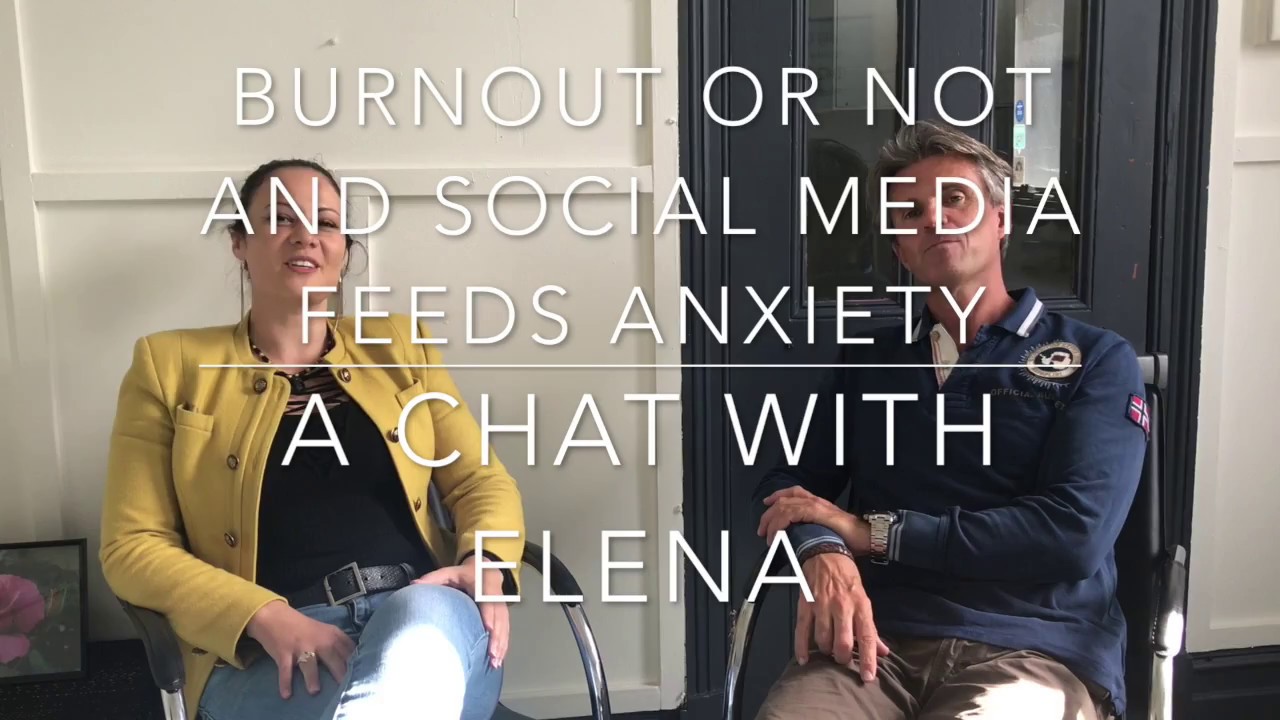
In this informal interview, host Christoffel Sneijders talks with Elena, a clinical hypnotherapist and former student, about the nuanced differences between burnout, depression, chronic fatigue and grief. Elena argues that many people who feel exhausted and low‑mood are misdiagnosed with depression, when the root causes are often boundary violations, constant connectivity, and adrenal burnout. The conversation links modern social‑media habits to a pervasive low‑level anxiety that triggers cortisol and adrenaline release, eroding energy and attention. They discuss how social platforms create a feedback loop of likes and responses that fuels anxiety, and cite research showing a dramatic decline in attention spans, especially among children, attributing it to multitasking myths and information overload. Practical self‑care strategies are offered: setting clear work‑life boundaries, turning off phones at night, mindfulness, meditation, self‑hypnosis, regular exercise, and dedicated “offline” time. Elena emphasizes small, repeatable habits—like one‑hour focused activities, learning new skills, and mindful eating—to restore energy without medication. The dialogue also highlights everyday phone‑first routines, the physiological impact of early‑morning screen exposure, and the cultural shift toward paying for relaxation after self‑induced stress. The interview ends with a light‑hearted wrap‑up and a reminder to practice these techniques regularly.
Chapters
Hey, good day. Christopher having a beautiful chat with Elena, and Elena is also a clinical hypnotherapist and one of Chris's ex-students. So we found a beautiful topic to share, and that is what's the difference between, say, burnout and depression? Now it's connected because Elena also recently pitifully came aware of that. But how's it connected also with grief? How should you overcome those things? So what's your idea about it before I start babbling on like I love to do?
My idea about it is from personal experience and also having had contact with people. I have a lot of people saying to me, look, lately I'm just absolutely have no energy, every little thing is an effort, and I've got no motivation. Would I say that I'm depressed and that I need to go on antidepressants? No.
No.
But in today's society, there's so many, there's so many things going on. Our phones are going off. We've got so much pressure at work. Everybody that I talk to, especially, um, lately in Perth, have been telling me that they're practically doing the job that 3 people need to be doing.
Yes.
So, you know, this is like going on. You haven't got your correct boundaries in place, and then you're just waking up and you're just like, I'm absolutely exhausted and I've got low mood and I'm not finding any joys in life. Now, if you were to go and see a normal doctor or a normal medical professional, they'll be like, well, you're obviously clinically depressed. We need to get you on antidepressants. But what I'm finding is, and with a lot of the things that hypnotherapy teaches and psychotherapy and NLP, all these small little adjustments of putting your boundaries in place, knowing your values. Why am I working? Do I want to be working in this work environment? And all these little things that you can tweak to sort of regain your energy again. You know, no, you're not depressed. You don't need to be medicated. You actually need to just be educated. Um, and this is how we need to be looking at things. Um, in the past, I've had like adrenal fatigue. It's so common now. You know, you're—
Yes.
You've just got, um, relationship issues, work issues, this and that. all the stresses build up and your adrenals basically burn out. You just think you're tired, so you think, I just need that extra coffee or that extra sugar. And it takes a while to recover from it, but you need to know how to think.
Yeah.
You need to know how to think properly. And obviously from doing your course, and we were looking at Many, many of the famous guys like Michael Yapko and all that, they're all saying you clearly just need to learn how to structure your life better to avoid this energy zap. You know, put timelines on things, turn your phone off at night, say I'm having a meal and I'm just living in the present.
And how hard is that nowadays when Facebook, Instagram, and all the 10 other social apps are always pushing the messages through.
It's so hard because you have, you know, especially if you're also running a business, you've got your personal email, you've got your Facebook going off, you're constantly checking everything, and you want to be on top. And you really have to just stop and think, and that's where you need to have your practice as in place, whether it's, you know, meditation, or I need this quiet time, swimming, exercise is great for that, um, connecting with people, uh, that have the same values as you. You need those little breaks away from everything, otherwise we're just scrambling around and, you know, checking everything.
That should do this. To add on that, there's research done recently that when you're on your social media and you post something, you like to have a response back.
Yes.
You like to see how many people have liked my post.
I know. We're going to be doing this with this video. We're going to be like, how many people have watched our video?
Do you know what it creates? Anxiety in you.
Yes. Yes.
You know, when anxiety hits in, your glands, your adrenal glands, start pumping out all that hormones, cortisol, adrenaline, those kind of stuff.
Yes.
So people nowadays live somewhere on a low life anxiety level.
Yes.
And they just burn out because they always like to be connected.
Yes, exactly.
And that makes life really hard. So what you said, disconnecting, living in the moment, makes so much sense.
Yeah.
But it's also so hard.
It's hard. You actually need to put practical steps in place to be like, you know, 1 hour I'm doing this and, and staying present in it. It's absolutely crucial. Or dedicating to learning a new skill, whether it's a language or reading a book. Self-development books are great for that because you need to focus on what you're reading and everything and shut everything else out. So you're very right, everyone is actually living on this lower level of anxiety I had a friend tell me yesterday that he was so stressed out because his battery died and he couldn't WhatsApp people. And he's like, oh, I was so stressed, I had to have a few beers. And I'm like, oh my gosh, we're, we're now just needing to, to be connected so much that one day without our phone, it really affects us, you know.
Yes. So that's a beautiful topic, say, from how anxiety creates depression or Chronic fatigue or what kind of other kind of medical issues where you go to a normal GP and they say, okay, so it is antidepressants, anxiety medication, or whatever.
Yes.
Instead of creating that mindset from, okay, I just let go.
Yes.
For 1 hour. That's why meditation or mindfulness is so popular now.
Yes.
Because people go to silence for half an hour, an hour.
Yes.
That makes so much sense. You can do those by yourself.
Yes, you can do it by yourself. And a lot of the techniques that you taught us were so important because you don't need to be going to a particular class or to a yoga class. You're just simply tuning in. And that's where self-hypnosis is, is great as well. You know, you can find a lot of things online and Just sit there and actually be with yourself, even if it's for 10, 15 minutes. Or if you're waiting in, in a queue or on the train, you can practice it. And unfortunately, we do now live in a society where we need to literally make very practical steps to make it happen.
Yeah, and our research showed on that, that kids The attention span of people went 25 to 30% down. In the old days, we would have an attention span of, say, 1 minute. Now research shows the attention span is less than half a minute. And actually, the stats are, before we got— think about something else, it takes 13 seconds. The average dog can have an attention span of 9 seconds. And kids nowadays are dropped down to 7 seconds. So the attention span of a kid is less than that of a dog. Oh my God.
Wow, wow.
And that's really based on all the social media.
Yes.
We've got so many impulses.
Yes.
And what we call multitasking, what's not true.
Yes.
It's just, that's almost shocking, but it's, I would say, good for our business, but it's horrendous for society.
Yes, because we put our phone on and it's like we just have adverts and adverts and events and events, and you're just like, whoa. And And then at the end of the day, we're almost feeling fried because we have so much information being thrown at us. Yeah, we have too much information.
Look at it. What did you do when you were, say, 10 years ago? What's the first thing you do when you wake up? Coffee, tea, or whatever? Nowadays, what do you do first thing?
Check your phone.
Grab your phone.
Yes.
Just imagine you're just in a sleepy state. And the first thing you do when you open your eyes is look at your phone. What happened?
Put data in your face.
Yeah, put a lot of light and electricity in your face. And what does it do for your brain that is just trying to wake up?
Yes.
That's amazing. Sleeping without your phone, so having your phone in your living room, is for some people even frightening.
Yes, I can imagine. I can imagine.
Where do you keep your phone?
I actually keep my phone next to me charging. You know, I have a battery problem all the time. But yes, I find I'm constantly catching myself out as well, going, oh, man, the first thing I did when I woke up, instead of actually saying, I'm alive, I'm grateful for being alive, and setting my intention for the day, I'm like, oh, you know, putting the emails in front, and I'm just like, stop this, you know.
And then after all your stress and your coffee and your breakfast, you go to yoga or meditation classes to find yourself back again.
Yes.
And I always say to people, explain me that once again. So first you make yourself totally stressed, and then you're going to pay somebody else to relax again. Just imagine if you did not make yourself stressed.
Yeah, yeah, I know. There's, there's so many little tips that, that we can do, but it, it's— you're all— you always have to be working at it and, and catching yourself out. You know, you're having a meal and you're looking at your phone, and it's like, wow, when was the last time we actually looked down to, to eat our food? You know?
Mm-hmm.
Um, and now you see a lot of people on dates.
Mm-hmm.
And, um, you know, they're having a date and, and the guy or the girl is on their phone, and you're like, wow. 10 years ago.
You were looking in their eyes like, wow, you look amazing. Now they say, oh wow, you don't look like your picture, by the way. When was this taken?
You do— you look a little bit skinnier on your Tinder profile. Far out. Yeah.
So I think we're talking 10 minutes. Yeah, so it's nice to cut it and leave the discussion open for next time.