2023 Business Model That Can Make You Rich
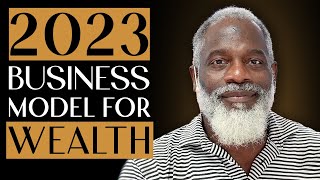
Myron Golden breaks down four business models: wantrepreneur, entrepreneur, Walterpreneur (high volume, low profit like Amazon), and wealthrepreneur (high volume, high profit). He shares his own revenue examples and explains why high-ticket coaching and partnerships beat low-margin scaling.
Chapters
Hey there, YouTube. Myron golden here. And I just want to share with you a business model that can make you rich in 2023. And I know a lot of people want walk around and they talk about business plans. And I submit to you that a business plan is nothing more than a bunch of words or a wish. For the most part, the people who came up with this idea of business plans are college professors who've never had a business. I actually have a business. And our business does millions and millions and millions and millions and millions and millions and millions of dollars a year. And I'm not saying that to brag, but it does. And I've never had a business plan in my life. So you don't have to have a business plan to be successful in business. In fact, I submit to you that a business plan oftentimes gives people something to procrastinate with. One more thing to procrastinate with. Well, that doesn't fit into my business plan. I submit to you you're much better off having a business model. And when I say a business model, a model is a replica of something. It's a way of duplicating something. And so what you want is you want a business model. And in my Boss Moves book. Boss Moves is a book that I wrote in 2020. Business optimization success secrets. That's what BOSS is an acronym for. Business Optimization Success Secrets From a million dollar roundtable. In that book, I shared four business models. The first business model we talked about was LP times lv. Now this is a business model that you don't want. So this business model right here, LV times lp, I call that the wantrepreneur business model. Now what does LV times LP mean? It means low volume times low profit. Low volume times low profit is the business model that most wantrepreneurs have. And that's why I call it the wantrepreneur business model. And what that means is basically I want to have a business. I'd like to be a business owner, I'd like to run a business, but I don't know how. So what I do is I sell a little bit of something that makes me a little bit of money. And so I think I'm in business because I gave myself a business name and a business card and I have a desk and I have a printer and a computer and I've got some stationary and, and I've got an llc. Well, if your business model is LV times lp, I've got some bad news for you. But I'm going to have some good news later on and that is you are a wantrepreneur that you are not a real entrepreneur. And there are people in all kinds of businesses who involved in all kinds of businesses that are wantrepreneurs. You might be a person who has a multi level marketing business. Wantrepreneur. In other words, you don't understand that the real way businesses are built in network marketing is not by selling the products. Right? So you got a lot of people involved in multi level marketing. They'll get signed up and they'll start trying to sell a few bottles of vitamins a month or a few bars of soap a month. And there's nothing wrong with a multi level marketing business model because or a business that type of business. Because I made a lot of money in multi level marketing. In fact, I've made more money in multi level marketing than I've ever made in any job. In fact, I've made more money a month in multi level marketing than I've ever made in any job that I've ever had in my life doing anything. It's not the business model that I'm a part of now. So before you send me a message, say, Myron, I've got a great multilevel marketing business, but I don't do multi level marketing businesses anymore because I like high profits and I don't want to manage 4,000 people again. Right? So I don't want to do that. And if that's what you want to do, I think multi level marketing, by the way, is a great training ground for entrepreneurs to learn the skills of sales, to learn the skills of team building and recruiting and leadership and all of those. I believe it's one of the best training grounds in the world for an entrepreneur who's going to go into any business. Okay. However, it's not a good business model for me because I'm just past that stage in my life. But you are a wantrepreneur. Or maybe you have an e commerce store and you sell four candles a month, right? And you make $2 per candle. You are not an entrepreneur, you're a wantrepreneur. Or maybe you sell things on ebay, right? And you go around, you find some things or you sell stuff on Facebook, Marketplace and you only sell a handful of those things and when you do sell them, you don't make any. Now there are people who have real businesses selling stuff on ebay. There are people who have real businesses selling stuff on Shopify and Amazon, there are people who have real businesses who sell stuff on Facebook, Marketplace and in Craigslist and so on. But if you're only selling low volume and low profit, you are not an entrepreneur yet. So my recommendation would be, if you're going to do the work anyway, you might as well tap into one of the other three business models, because any one of the other three business models can make you wealthy. Entrepreneurship does not make you wealthy. So what's the second business model? The second business model is what I call the entrepreneur business model. And that's LV times hp. That's low volume times high profit. Low volume times high profit is a business model that can make you rich. I had an entrepreneur business model for a long time. And so when I first got started with my training company, my very first offer was. My very first offer. Are y' all ready for this? Was. Was $147. I did a presentation and we sold about 70 of them. Maybe it was a little less than that. It was less than that. It was 50 something, maybe, or 40 something. Anyway, my first time I ever did a presentation making this offer, we did $5,900 in sales, right? So it was low, it was, it was low volume, like 40 something sales, but it was high profit because it probably cost me $30. So if you subtract the $30 from that, that leaves me with $117 profit times 40 sales. And you do the math. It was pretty good business model, right? So being, being an entrepreneur now, today, if you want to be an entrepreneur, you can be an entrepreneur with affiliate marketing. You can sell somebody else's product. And we've got, we've got, I've got affiliates. Okay, so let me tell you what affiliate marketing is first. Affiliate marketing is you don't have a product, so you sell somebody else's product. And when you sell their product, they pay you a commission. So like, for instance, in our business, we do the make more offers challenge. We do that challenge. Once a month. We sell VIP tickets for $297. So for $297, I don't know what I'm doing wrong here. Okay, there we go. Not rendered. Okay. I don't know what that means. So we sell, we sell tickets for $297. And if you divide that in half, we pay out in affiliate commissions. We pay out in affiliate commissions $148.50 for every ticket sold. We have, we have, we have.
Affiliates who make thousands of dollars a month. I mean, we've paid out. I Think last month we paid out like $19,000 in affiliate commissions to our clients. So if you have, if you're an entrepreneur and you do affiliate marketing, you can literally sell somebody else's product and make money. You sell 10, make more offers. Challenge tickets. For VIP tickets, you would make 14 $80. 1485. Well that's not, that's not great money. But part time ain't too terrible, right? If you sell, you sell like 10 tickets a month. That's pretty stinking good part time money, right? So I now I do affiliate marketing for other people. Like I promoted Russell's.
Your first funnel challenge. Russell Brunson's your first funnel challenge. I made like $60,000 promoting his product to my audience. So if you want to have, if you want to be an entrepreneur, sometimes you might have an offer but no audience. Or you might have an audience but no offer. Well, if you have an audience but no offer, go to somebody who has an offer and no audience and say, hey, if you'll promote, if I can promote your product to my audience, you get, will you give me half the money? Or if you have an offer but no audience, you go to somebody who has an audience and says, hey, can I, will you be willing to promote my offer to your audience? And y' all split the profits. And a lot of people don't like the idea of splitting profits. But I submit to you that splitting profits makes sense because of one of the business models I'm going to talk to you about in a minute. These multi billion dollar corporations have figured out that like, like partnerships are the, the bomb dot com. Awesome, right? You like partnerships are good. I have a lot of strategic partnerships and the strategic partnerships that I've established over the last several decades have created an environment where I don't have to spend money on ads, hardly ever. So.
Entrepreneur business model, you might have low volume. So you may do like entrepreneur, you may do low volume. You may do a webinar once a month. Like a lot of people do a webinar once a month. They'll sell a thousand dollar offer, right? So they sell a thousand dollar offer and maybe they make 20 sales a month. Well, that's low volume. 20 sales, not that many sales. But that gives you $20,000 a month. That's an entrepreneur business model. It's a great business model. I used to have an entrepreneur business model. We had a, when I started, like I said, my first offer was $147. Then we had some $497 offers and then we had some $997 offers. And we just, we just kept trying and tweaking different things until we had our offer stacked down, right? And so like you could do, you could make 100, you could get to. And I know this probably sounds crazy, but as an entrepreneur with an entrepreneur business model doing with $1,000 offer, you could like realistically get to $100,000 a month in business revenue, right? And you, let's say, if you're cautious, like, let's say your cost of doing business is 30%, you'd still end up with 70,000amonth in profits. After you pay your taxes on that, you'd still end up with, you know, less and less increasingly. Right? But, but you'd end up with probably. Or you end up with $45,000 a month in tax after tax profit. That's not terrible, right? So that's the entrepreneur business model that then you have what I call the Walterpreneur business model. Now the reason I call it the Waltrepreneur business model is because Sam Walton is the guy who started this concept. Sam Walton, if you read his biography, you'll see that his business philosophy that governed his business model was I never want to make more than 30%.
If I get a good deal from one of my vendors, I'm going to pass that good deal onto my customers. I never want to make more than 30 cents on a dollar that I spend, right? So on a 30% margin, which for most businesses, believe it or not, a 30% margin is pretty good, right? That's that most businesses, if you can have, you're running a 30% margin. Most businesses think they're doing pretty good. Now for me, I don't, I don't want to run on a 30% margin. But, but, but they're, it's, it's better than most businesses, right? Because businesses have expenses. You've got the expense of cost of goods. You've got the expense of paying employees and contractors and building and materials, and you have all of those costs. Well, Sam Walton sold his business was high volume, low profit, low profit being 30%. This is what most e commerce sellers, this is the business model that most E commerce sellers have. And I know E commerce sellers who make hundreds of thousands of dollars a month, pennies at a time, right? So, and, and I say pennies, but like, like could be pennies, could be dollars, but like they sell plastic spoons on Amazon, but they make like $4,000 a month off the plastic spoon and they make $4,000 a month off. The plastic fork, right? The plastic serving fork. And bicycle bells. Like had a dude tell me like he started an E commerce business selling bicycle bells and he did like a Christmas special and he made like $25,000 with his first E commerce product. And that like E commerce is a great business model for those who like to do it. I don't like it personally because it doesn't matter. Like there's way too much minutiae, way too many moving parts, way too much. It's not a bad business model. It's just not good for me and my personality type because I don't want to do inventory, right? I don't want to think about inventory, right? When we get low on Boss Moves books, we just order 5,000 more. And when they get low, we order 5,000 more, right? Okay, so. And then we have people who manage the inventory too, but. But it ain't me, right? So that's a. Well, a Waltrepreneur business model is a good business model. Shopify.
Amazon and so many other e commerce platforms. Some people just do E commerce on their own funnel, right? And make like the guy who in clickfunnels had the fastest growing business in clickfunnels. He did like $26 million in six weeks or something crazy. It was just insane. And he was selling flashlights, tactical flashlights, right? Like what? And gun oil and just, it's like mind blowing, mind blowing stuff. So the thing about, the thing about, if you think about Sam Walton and his philosophy, I never want to make more than 30%. And then you, you migrate that over to Amazon. For instance, you put a something on Amazon's shelves, they'll pay you 30% the profits.
They'll pay. They'll pay. I'm sorry, they'll pay you 70% of the profits. They'll keep 30%. So let's say you write ebooks for Amazon, okay? So I've written some ebooks. Put some ebooks on Amazon, right? Or let's say you do some audiobooks for, for Audible, right? I don't know what the. I don't know exactly how much money you make from Audible. I know exactly how much money you make from ebooks. If you are part of a Amazon's KDP select program and you sell ebooks for $10 or less on Amazon, they will pay you 70%. Now here's what's amazing about that. So I've got Trashman the Cashman on Amazon. The book, we sell the book, physical book, for $20 plus $10 shipping. And handling. Right. We don't sell that part on Amazon. We sell the ebook though, on Amazon for 9.99. Why? Because if we sold the ebook on Amazon for $20, they would still own. They would own. Now they would pay us 30%. So we'd make $6 if we sold it for $20, but we make $7 if we sell it for 10. Why? Because Amazon wants to incentivize authors to sell their books for a lower price. So Amazon gets the business. That's how they became the King Kong of marketing. Right. By high volume. High volume, low profits. That's the Walterpreneur business model. I'm going to give that to Sam Walton because he was the first one not going to give it to Jeff Bezos. Okay. My favorite business model is HV times hp. What's that? That's higher volume times high profit. What is that? That's. You have a $3,000. A $3,000 offer. Okay, you have a $3,000 offer. So I'm running out of space here. So what I'm going to do is I'm going to go. I've already talked about that. I'm just going to go straight to my whiteboard. So when I. You can have a three thousand dollar offer that you sell and you sell 100 of those a month. Wow. Now you're talking about 300,000amonth. Let's say you have a $25,000 offer.
Right? If you have a $25,000 Offer and you sell a $25,000 offer and you sell 100 of those per year times 100, that's 2.5, that's 2.5.
Million dollars. This is why this is my favorite business model. Now here's the thing about wealth. This is what I call the wealth tripreneur business model. Here's what I like about the wealth true business model. It is the business model that if you have something valuable, like if you're gonna sell something for $25,000, you better be able to get people a $250,000 result. You're gonna sell something for $3,000, you better be able to get people a $30,000 result. If you're gonna sell something for $50,000, you better Be able to get people a $500,000 result, right? So we've got coaching programs that range anywhere from on the low end, $5,000 on the high end, all the way up to a million dollars, which means I would have to be able to get somebody, what, a $10 million result, right? So for instance, One of our new offers that we just created this year is a VIP day. And I'm not telling you this to sell you a VIP day. I'm telling you this just to tell you what we've created. So, so we created a VIP day. We've sold, we sold 16 of them this year. So that's not a ton, right? And it's $350,000, right? Which means like we can, we can fully expect to help people have like recuperate at least three and a half million dollars based on that in that timeframe, right? So to give you an idea of what I'm talking about, like.
Like Marv, for instance, I won't tell you his last name, but like he did a VIP day back in June when it was only $200,000 in full disclosure, right? And I know that sounded funny probably, but he did a VIP day. Within two weeks he had a seven million dollar day revenue day. And then within two months of that had a $9 million revenue day. And I'm telling you this because like, just raising your prices is not enough. You have to know something that gets people result that's worth the more than the money they're paying you, right? And that's how you become a wealthrpreneur. Now my favorite business model is wealthrepreneurship. That's my favorite business model. But we also have, I also like the entrepreneur business model where we have some products that are lower profit. Like lower profits. It's not low profit though. It's high profit, lower volume. Like books, for instance. Lower boss moves book. We sell three to 500 books a month, $30 a pop. That's, that's high profit for the book. Because.
In full disclosure, cost me about $1.75 to print that book. And we sell it for 30 bucks, right? So that's high volume, that's high profit. And then the volume is not that high. It's not like I'm selling thousands. Like I know people who sell 2,000 books a week, right? So our volume is 300 to 500 books a month. It's not terrible.
More from Clegg

The #1 Skill Gen Z Needs | Simon Sinek + Esther Perel | A Bit of Optimism Podcast







AI Won't Tell You the Full Truth | Arthur Brooks + Simon Sinek | A Bit of Optimism Podcast



How To Make the Best Decision | Arthur Brooks and Simon Sinek | A Bit of Optimism