7 Things You Can Do To Stop Being Too Smart For Your Own Good
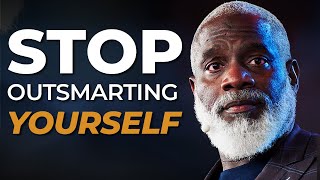
A YouTube talk by Myron Golden explaining seven habits that cause intelligent people to 'outsmart' themselves and practical changes to avoid that. Golden emphasizes cultivating daily curiosity and continuous learning; distinguishing formal education from practical smarts; listening more than speaking; valuing feelings over facts in relationships and sales; avoiding fixation on being right; questioning one’s own answers; and preferring inquiry over proving oneself. The tone is instructive, anecdotal, and motivational with religious and personal-development references.
Chapters
Have you ever noticed that the people who seem to be the smartest struggle the most? Have you ever looked at somebody and they got. Maybe they've got a lot of degrees, they got a lot of education, maybe they're just downright smart, but they live on the struggle bus. Maybe, maybe, maybe that's even you. Maybe. Have you ever noticed that.
Sometimes you say something and you know it to be true, but all of a sudden you say, oh, why did I say that? Or why did I say that right now? Well, if you've ever seen any of those things and you wondered why, today, this video is going to be for you. Because I want to talk to you about this. Stop outsmarting yourself. Seven things you can do to stop being too smart for your own good.
I heard somebody say a long time ago.
When somebody who they were coaching wanted to argue with them and he said to this person, you be right, I'll be rich. And I thought, wow.
Well.
Let'S dive in and figure out these seven things. Number one.
The. Like, this is how you. So many people, this is millions, maybe billions of people in the world. How they outsmart themselves and are too smart for their own good. They let a whole day go by where they don't learn anything new. Like, how in the world can we be surrounded by all of this amazingness and all of this beautiful grandeur and design and not go through life with a perpetual question mark in our mind asking, I wonder how this works. I wonder how that works. I wonder why this happened. I wonder how that happened. Like, I'm just fascinated that there's so much that I don't know. And it's really fascinating also that the people.
Who feel like they know the most actually know the least. Why? Because they stopped being curious when they graduated from high school. And maybe they weren't even curious then. I've noticed that in my, in my own coaching that I talk to a lot of people after they get out of high school. They haven't read a book. Do you like to read? No, not really. Like, what is that? Do you understand? Somebody spends. They spend 20 years of their life cracking the code to something. They spend two years of their life writing it down in a book. You could read that book in two hours, but you're too busy doing who knows what for God knows why. It doesn't make any sense. How can you let a whole day, 24 whole hours go by and you don't learn anything new? Now, I'm not the smartest person in the world, but I'm smart enough to know there's a whole bunch of folks in God's big old earth that know more than I do. And I want to spend as much of my life as possible finding it out. Why? Because the more I learn about how life works, the better I can live my life. And the better I can please God and the better I can serve other people. So, like.
Here'S what's amazing. Like, learn to develop a level of curiosity. I'm gonna. I believe the. One of the primary reasons, maybe even the biggest reason, that keeps people from learning new things.
Is believing that the stuff they know is already enough. Well, the stuff I know has gotten me to where I am. I know. But what got you here won't get you there. So why stay stuck like Chuck in a pickup truck on some knowledge that was 2022 and now it's 2025. And the world has changed a lot in the last three years. So I'm going to show you why I believe that is so. What happens is.
We have.
What I call a knowledge base. By the way, this is not nothing I'm about to draw on this board of scientific. It's just an illustration to help you conceptualize an idea that I think will make you a better learner. So we all have a knowledge base around different disciplines. We may know something about science, we may know something about math. We may know something about.
Social media. We may know something about business. And our knowledge base has these things that I call idea receptors. I guess in real life, this is how the reticular actuation mechanism works in our brain. You know, you buy a new car, you never see that car on the road until you buy it. And it seems like everybody has that car, right? Because now you've become aware, hyper aware of this car. Now you see it everywhere. So. So our reticular actuator actually works like this. We have these little vacuum tubes that suck in all the knowledge that's directly outside our knowledge base. But there's all this stuff out here that we don't know, and all this stuff out here that we don't know. And we haven't discovered this yet. And we don't know anything about that yet. About that yet. And we don't know anything about this yet. And we got this over here. And like, we don't. We know the stuff that's here. We got this on lock.
We come in contact with this and say, oh, that's pretty good. And we suck that in, and then we suck that in and we draw in all this knowledge that's out directly outside our knowledge base, our knowledge base gets bigger. It has a bigger surface area. So now we have more room for more idea receptors, and we come in contact with more ideas that are now here. And so that's why the people who learn the most feel like they know the least. Because the more I learn, the more I come in contact with more things and more disciplines that I don't understand. And so because of this, don't let a day go by where you're not learning something that you didn't know yesterday. Like, be reading a book, be watching a tutorial, be asking someone a question. Why? Well, because.
I've discovered that the more I know, the better I can go. So I'm going to keep on learning. Well, that's mistake number one. Like, don't. Like, stop. Seven things you can do to stop being too smart for your own good. Stop letting a day go by where you don't learn something new. Number two, stop thinking that being educated is the same as being smart.
I have coached thousands of people. Like, literally. That's not an exaggeration. I've coached thousands of people.
And.
I've discovered that the people. This is not 100% true, but it's largely true. The people that have the highest degrees from.
Higher institutions of higher learning are the hardest to coach.
And they struggle the most in business. Why? Because they let what they know keep them from learning what they don't know. There's a passage in Hosea that says, my people are destroyed for lack of knowledge. Do you understand how.
Paradoxical that statement is? My people, they've got access to God's knowledge, but they're destroyed for lack of knowledge. Now, my question was, when I read that, why do God's people lack knowledge? Tim, that's a good question, isn't it? Why do they lack knowledge? Well, it tells us in the next verse, because thou has rejected knowledge, I will also reject thee. Huh? It wasn't that they couldn't learn that they didn't learn. It wasn't that they couldn't know that they didn't know. It was because they wouldn't know that they didn't know. Let me ask you a question. What knowledge are you resisting because of the things you already know? Like, when I'm having a conversation with somebody, I am way more interested in learning what they know than I am in demonstrating to them how much I know.
Like, become more curious.
When you have too many answers. You don't ask enough questions.
And it's not the Answers that you know that make your life better. It's the questions that you haven't asked yet and the answers that you haven't yet received. Don't make the mistake of thinking that being educated is the same as being smart. Be. Be smart enough to know that whatever your education level is, you have not yet learned enough. Can I get a witness? So. So don't make the mistake of thinking that being educated is the same as being smart, because I know a lot of people who are educated and just can't get it done because they let everything they know stop them from learning the things they don't know. It's really interesting.
How much.
Effort and energy institutions of higher learning put into getting you and I, when we attend those institutions to get our validation from the degree that they gave us.
And so a person goes to law school, they learn how to practice law. They think they're going to be a successful lawyer because they got A's in their class. But the one class they didn't teach in law school was how to go get clients to practice law for. And so you graduated from law school, you hung out your shingle, and you, you open to practice, and now you're having a hard time finding business. Why? Because you were led to believe that because I now have this validation certification degree, that that means people are going to want to do business with me. People don't even know you exist.
I'm not saying there's anything wrong with a degree. In fact, I just found out about. So, okay, I'm back up. So I personally am not a big fan of college, personally for most people. I'm a big fan of college for the people who need college to do the thing they're going to do. I'm a big fan of that. You're going to be an engineer, right? You're going to build bridges. Please go to college. Learn the math. Get A's, do not get B's. I do not want to drive across a bridge that starts with a B with a student who graduated with B's. I wanted to get some A's, okay? I'm not confused.
So I'm not. And you know, I've heard about, you know, these Ivy League schools my whole life. Well, I had the privilege recently of speaking at Harvard Business School. My good friend Melvin over here, his daughter attends Harvard Business School, and they had the African American Student Union event, and she worked it out so I could come and speak to those people. And it was. And to be honest with you, I didn't know what to expect when I went to Harvard. But I was absolutely blown away. It was mind blowingly. It was like I went there thinking, oh, okay, I'm gonna go encourage these young people about business. I left there thinking, man, I could go here.
I'm not even exaggerating at all. I was like, that was amazing. When she showed us how they teach the classes. The classes aren't taught by a professor who's never run a business and he's just up there running his mouth about theory. No, those classes are taught by successful business people who went out and built successful businesses and they exited and they came back and this is their contribution. And then they study businesses. They actually study business cases. And the students have to read the case and the professor read the case, and then they come in and they discuss and they debate how they would fix the business at different stages. I'm like, this is so brilliant.
So then. So that happened a couple weeks ago. I'm telling you this story for a reason. So I get to Vegas last week. I'm going to this conference, and I get there and one of my friends calls me. He texts me, hey, are you gonna be in Vegas this week for the conference? Yeah, I'm gonna be in Vegas for the conference. He says, oh, cool, maybe we can get together and have a podcast. So I see him in the hallway one day. We start talking. He's like, dude, dude, you should do this.
Program that Harvard has for executives. It's called opm. Harvard opm. It's like three weeks out of the year, you go and live at Harvard. It's $50,000, and you are in this class for three weeks, and then you study together and you study these cases, and it's really, really intense. He said, it's one of the best things I've ever done. This is a guy who I know personally, who built a solar business and. And a couple years ago, sold that Solar business for $180 million. See, this is not some slouch, right? And so he's like, I'm telling you, dude. And he called me when he did it, and I was like, yeah, Harvard schmarvard, right? But now he's talking to me about this. Oh, that sounds really interesting, right? I'm like, I'm thinking, okay, what three weeks of the year can I go to Harvard, right, To be a part of this OPM program? Why? Because I realized that as much as I know, there's way more than I don't know, right? So I'm not Pooh poohing. College. And I'm not pooh poohing business school. I'm just saying, don't make the mistake of thinking that's the whole picture. Because I'm legitimately, literally thinking, you know what? I'm probably going to do this program. And you can only get in if somebody who's already been in refers you. He's like, I'll give you a referral. Like, he wants me to do it. He wanted me to do it when he did it. Okay, so anyway, so thinking that being educated is the same as being smart. But even if I do do this Harvard OPM program and I go through it and I do whatever the next. Whatever that thing is, graduate or whatever they call that program when you're done with it, let's say I go through that program for three years. At the end of that program, I'm not gonna stop learning. I'm not gonna think that just because I got this education, that makes me smart. Okay, you are tracking. Okay, number three. Next thing you can do to stop being too good for your too smart for your own good is stop talking. When you're in the presence of someone who knows more than you, it always blows my mind when I watch an interview and the person interviewing keeps interrupting the person they're interviewing to interject their ideas. It drives me bananas. It's like, dude, let the person talk. I'm not watching this interview because I want to hear you. I've already heard you. I already know what you think. I already know what you believe. I want to hear this person. Stop interrupting them. Let them finish their thoughts. And it's like some interviewers invite people on their podcast or their shows so they can use that person to validate their own knowledge in front of their audience. How many of y' all have seen that, right? It's like, stop talking. Listen. Even people who don't know as much as you know something you don't know, you learn way more from listening than you do from talking. Well, maybe you don't, but I do. I know I learn way more from listening than I do from talking. And so we'd be so much better off to listen twice as much as we speak. Maybe that's why God gave us one mouth and two ears.
Hashtag, just saying.
So talking in the presence of someone who knows more than you. Like, I don't want. I don't want to show you how much I know. If I'm asking you for your advice, I don't need you to know what I know. If I'm asking you for advice. I need to know what you know. So here's what I'm gonna do. I'm gonna ask you a question. I'm gonna shut my mouth till you done talking. Hmm. Wouldn't that be fat? Fat. Fascinating. Okay.
This one's probably going to wreck your brain.
And this is the biggest mistake salespeople make. This is the biggest mistake business owners make, is valuing facts over feelings when dealing with people.
So I probably shouldn't say this, but I'm going to.
I was talking to my friend Kenny Grant.
And Kenny, well, he knows how to say some stuff. He knows how to hit you right where it's at, right? I'm like, but, Kenny, I don't understand why my wife does this. And I tried to explain it to her. He said, man.
And then he paused. Man, use your logic on yourself.
I am telling you, that is the best. Not just marriage advice, but it is the best marriage advice I've ever gotten. Man.
Use your logic on yourself. And see, men are very logically based. And if there's a problem that comes up logically, we just want to fix it. And we know that there's a logical answer. But sometimes when our wife, our daughter, our sister, our mother tells us that they have a problem, they're not telling us they have a problem because they want us to fix their problem. This is hard for us to wrap our minds around. So ladies don't hate on us because of this. This is just the way it is. But they're telling us they have a problem, so we can feel what they're feeling, and they can feel that we feel what they're feeling.
All the ladies are like, yeah, that makes perfect sense to me.
I accept it.
Understand it. Not even going to try, but I'm going to, man, use my logic on myself. But also not just when it comes to interpersonal relationships, but also in the arena of selling.
You believe that somebody's going to buy your product because in your mind, it's an absolute fact that you have the best product. Whatever that means, it doesn't matter. It's not that. It doesn't matter that your product's not good. Your product has to be good.
But even if it is a. If it's a scientific, mathematical, measurable fact that you have the best product, that does not mean you're going to make the most sales. Why? Because people don't buy because of the facts. They buy because of the feelings.
In fact, I would say that human beings are singularly motivated, and that is that People do things for one reason and one reason only, and that's because they feel like it. So in the arena of interpersonal relationships, in the arena of personal self control, and in the arena of selling, we would be better off figuring out how we can get other people to feel like doing the thing that. That we desire them to do. And in our own personal development, I'm way better off figuring out how to make myself feel like doing the thing than I am attempting to figure out how to make myself do the thing. In other words, with regard to me.
As long as I don't feel good about working out, regardless of how much I know I should do it, I'm not gonna do it. The facts are in, exercise is better than not exercise, not exercising. The facts are in, you want to be in shape, eat less, move more.
But if I don't feel like eating less and moving more, even though the facts say that I should eat less and move more, I'm not going to eat less and move more. I'm going to eat more and move less. Why? Because that's what I feel like doing. And I had to figure out for my own health, because I'm 63 and I'm probably going to be 64 before I'm 62. Again, it's just a guess.
I had to figure out how can I make myself feel like working out? And the first thing I had to do was stop telling myself I don't like exercise.
And start telling myself, you know what? I love how I feel when I'm done working out. And I do. I love how I feel when I'm done working out. Now I'm not gonna talk about all the stuff that happens in the interim. I ain't gonna talk about how I feel when I start working out. I ain't gonna talk about how I feel while I'm working out. But while I'm done, I feel good.
And so the reason I'm telling you that is some of you, you've been outsmarting yourself because you know the things you should do, but you're not doing them.
Because you don't feel like it. And you don't even know how to make yourself feel like it. But I'm gonna, I'm gonna. I probably shouldn't do this.
Do I have time to do this?
I do. I think. Pray for me. I'm gonna show you how to get yourself to feel like doing the things that are in your best interest instead of just how to do them.
Because if somebody teaches you this, by the way, this is why people read personal development books and then don't succeed. This is why people get coached by people and then they don't do what the coach told them to do. Why? Because the coach taught them how to do it, but they didn't teach them how to feel like doing it.
This is why salespeople give a brilliant presentation and nobody buys because you laid out all the facts and the facts were true. But the fact is.
The facts don't matter. They don't matter. Most.
Say, what do you mean? I'm going to show you something I learned from Romans chapter six. And some of you have seen it before and some of you haven't. I don't know that I've ever done this on YouTube. I'm not going to go into all the detail, but this is you.
These are the facts.
And you observe the facts.
Maybe you see them, maybe you hear them. And then the first thing you do when you observe the facts is you put a frame around those facts. And the fact has a positive aspect and a negative aspect. And you put that frame, that fact goes in your head as a focus. You are focused.
In your head, but you're not focused on the fact. You think you're focused on the fact, but you're. I promise you, you are never. None of us are almost. There's almost never a time when we're focused on the facts. We're almost always focused on an aspect of the facts. We're either focused on the positive aspect of the fact or we're focused on the negative aspect of the fact. And it does not matter what the fact is. Every fact has a positive and negative everyone, it does not matter. But the one we're focused on determines what we build in our mind. As a result of that focus, we build a belief.
That belief is also a two sided coin. And that belief, if we focused on the positive aspect of the fact, the belief is going to manifest as faith. If we focus on the negative aspect of the fact, that belief is going to manifest as doubt. Here's where most people are confused. Most people think that faith is belief and doubt is the absence of belief. But faith and doubt are both belief. Faith is belief in the outcome I desire. Doubt is belief in the outcome I don't desire. And so when I'm focused on the negative aspect of the fact, I'm gonna manufacture a belief. And then that belief that I manufacture is gonna travel down into my heart and it's gonna produce a feeling in my heart. And this is what causes us to act or not act. The feeling in our heart is like, you know why you go to bed? Cause you feel what? Tired. Right? You eat. Cause you feel what? Hungry. You drink water. Because you feel what? Thirsty. Now, sometimes we'll drink water because we just know we should. But the reality is which one's more compelling? Knowing you should or being thirsty? Being thirsty. So feelings are the fuel that produces action in everyone. So this feeling in our heart, if I'm focused on the positive aspect of the fact, it's gonna manifest as anticipation.
But if I'm focused on the negative aspect of the fact, that feeling is gonna, that feeling's gonna manifest as anxiety. Now, what's the difference? Anticipation is the energy I get when the outcome that I expect is desirable to me. So when I'm expecting a favorable outcome, it energizes me.
By the way, say Myron, what do you mean? Okay, here's what I mean. Christmas Eve, like three weeks ago, you snuck into your parents room to see what you were getting. So you already know what's coming the next day. Your parents, because they were sadistic like mine, made you go to bed early on Christmas Eve. So you went to bed, but you couldn't. What? You couldn't what? You couldn't sleep. Why couldn't you sleep? Because you were so excited about what you knew was gonna happen the next day that it energized you, so you couldn't sleep. That feeling of energy that doesn't let you sleep, that's called anticipation. Anticipation is the energy I get when the outcome I expect is desirable to me. So when I'm expecting a favorable outcome, let's say I'm an author and I'm expecting to sell 10 million books, I do not have writer's block.
But if I'm an author and I think, well, what if I write this book and nobody likes it? Well, what if I write this book and people start calling me names? What if I write this book and find out later that I'm wrong and then it's going to be in print? Well, if that's. Then I'm going to have anxiety and now I have writer's block. Writer's block is nothing more than believing the book's not going to be good or believing the book's not going to sell.
Oh, so do you see how focusing on the facts doesn't matter? Focus on the aspect of the fact that's going to give you the feeling you desire to have. That's going to help you produce the action you desire to produce. And so what happens is the focus in our head causes a feeling in our heart. And by the way, anticipation is the energy I get when the outcome I expect is desirable to me. But anxiety is wasting present energy.
Wasting present energy on a future outcome that's unwasting present energy on a future outcome that's undesirable to me. What does that mean? That means I'm expecting to be eaten by lions and tigers and bears. Oh no. And so what happens? My heart starts racing. I'm really worried about. Oh my goodness. It's almost the end of the month and I don't know where I'm going to get my ring from. My head's sweating, my hands are sweating, I can't sleep, I'm all revved up, but I'm not producing anything. I'm just wasting energy worrying about tomorrow. That's why Jesus said, don't worry about tomorrow. Take no thought for tomorrow, for the morrow shall take thought for the things of itself. Sufficient unto the day is the evil thereof. What does that mean? It means stop wasting today's energy worrying about tomorrow's problem.
And so many people do it. I got a doctor's appointment. I'm so afraid. What if I find out?
Stop it.
Okay, so now anxiety is wasting present energy on a future outcome that's undesirable to me. And so what happens is if I'm focused on a positive aspect of the fact, it makes me happy. But if I'm focusing on a negative aspect of the fact, it makes me sad. And we think it's the fact I'm having a bad day. You're not having a bad day. You're just focused on the negative aspects of your day. You're focused on the difficulty in your day. Instead of focusing on the blessing of your day, you're focused on the burden of your day. They're both there. Say Myron, how could you say they're both there? Because I know they're both there. Have you ever eaten. Everything has two sides. Have you ever eaten a one sided piece of bread? Have you? No. Have you ever written on a one sided piece of paper? No. You are writing on two sided pieces of paper right now. Have you ever flipped a one sided coin? No. Why? Because it cannot exist. Not. Because it does not exist. It's impossible for anything to exist with only one side, including your circumstance.
And so what happens is. What happens is we get so locked in on the thing we don't desire that we are drawn towards it because we have anxiety that robs us of our Energy to take the action that would keep that thing from happening. That's why worrying about something makes it happen. And so you're so worried about what's gonna happen because, oh, I need to make sure I'm ready. I don't know what I'm gonna. You fumbled on a one yard line. Okay. So the focus in our head creates the feeling in our heart and the feeling in our heart.
Creates the function.
In our hands. What's the function in my hand? Well, it depends. Are you focused on the positive aspect of the fact? Are you manufacturing a belief called faith? Are you building anticipation like you're getting energy from your expectation of this future outcome? Well, if that's the case, then the function in your hand is called power. You now have the power to act.
But. But if you're focused on the negative aspect of the fact and you're manufacturing a belief called doubt, and the feeling in your heart is anxiety and you're wasting the energy that you could use to solve the problem, worrying about the problem not being solved, then the function in your hand is called powerlessness.
Like. But Myron, you don't understand. I suffer from depression. I know you suffer from, from imagining the worst outcomes.
And I know if you're really, really good, if you're really, really good at imagining the worst outcomes, you could use that very same imagination to imagine the best outcomes. That would energize you to move away from the worst outcome that you've been worried about for the last 16 and a half years.
See, one of the things we do that outsmart ourselves is we think that the facts matter most. The facts don't matter most. If the facts mattered most, Nelson Mandela would never have become the President of South Africa. The facts don't matter most. If the facts mattered most, Viktor Frankl would have died in a concentration camp. The facts don't matter most. If the facts mattered most, Frederick Douglass would have never been freed. Stop acting as if. Well, this is the way it is and it's so terrible. No, that's what you're focused on and it's terrible. And so you're going to go out and produce terrible results and make your life a self fulfilling prophecy.
Period.
No, take the period back. Exclamation point. Okay, so.
Valuing facts over feelings when you're dealing with people. So how can I use this illustration that I just gave? When I'm dealing with people, if I'm selling somebody something instead of me telling them how wonderful my product is, instead of telling them how long my company has Been in business. What if instead I just tell them in great detail how their life is going to look and how their family's going to feel and how their friends are going to feel and how they're going to feel when they have the result they desire to get. Now I've empowered them to say yes as opposed to giving them a whole bunch of logical reasons and thinking that that matters.
Okay.
Number five. We only have two more after this. Number five. Focusing on being right.
When a focus on being rich would serve you more. So many people go through life attempting to prove themselves right.
In fact, they're so vested in being right, people love to argue.
They think it makes them look good. I'm gonna prove this person wrong in front of all these people. Yep, that's what you're gonna do. It's, you know what fascinates me? Fascinates me not just on my channel, but on anybody's channel. Like.
People come and they leave a negative comment that's like it's a commentlopedia to prove you wrong. And then you go to their YouTube channel, and they've not created one video. So you believe what you believe so much to write 37,000 words in a comment.
To people who didn't come to hear from you.
But you don't believe in what you say. You believe enough to go produce your own video on it because you're only good at pooh poohing on somebody else's work, not creating some work of your own. Now, it doesn't even bother me. I just find it fascinating. If you really believed it that much, wouldn't you have done something about it already?
People say, well, I just think rich people should give more of their money away. Okay, so let me ask you a question. Do you really believe that? I really believe that. Okay, so let me ask you a question. Are you rich? No. Do you give most of your money away? No. I would, but if I was rich. Okay, so then if you really believe that rich people should give all their money away, if what you think they should give their money away to was really that valuable to you, you value it enough to go get rich and give all your money to it. It's so fascinating how much people believe they know what somebody else should do with their money.
But you don't even care enough to go make enough money to do that thing yourself.
Just, you know, real talk. Okay, so focusing on being right more than being rich, like you, you. You have it. Maybe it's because you have a degree. Maybe it's because of something your mom told you. Maybe it's something because your grandfather told you and you are really close, but. But you go through life attempting to prove your theories right.
It might serve you better to see if you can prove them wrong. Just saying. Okay. Which brings me to my point number six. This is one of the things you could. One of the seven things you can stop doing to keep from being too smart for your own good. Stop having answers you're afraid to question.
So I'm a student of the Bible.
And.
I'm not picking on anybody's religion. I pick on all religions because anyway, I do. But I'm just going to tell the story how it happened. So we used to have these Jehovah's Witnesses that would come by our house and people say, oh, no, don't let them in your house. Oh, I'm letting them in. Longer they talk to me, the less time they're going to have to talk to my neighbors.
And so I'm keeping it real. So they come in the house.
And we start talking.
And.
They'Ll say, yeah, but God's name is Jehovah. And I always ask them the same question. What was his name before 1619?
And they say, what does that mean? What was Jehovah's name before 1619? You're saying his name is Jehovah. J, A, h, O, J, Vah. What was his name before 1619? Why are you asking me that? Because the letter J in the English language was not invented until 1619. I want to know what his name was before that.
Wait, what?
And by the way, Jesus is not. Okay, the name. The name is Yeshua. Okay, so what does Yeshua mean? It means Jehovah is salvation. That's what the name means. And so I have a conversation with them about the Bible. Like, and if they're right, I'm not picking on Jehovah's Witnesses. I'm not afraid to talk to them, though, because if they're right, then I want to find out so I can be right. I'm not afraid to talk to Jehovah's Witness. A Catholic, a Mormon, whatever, like a Muslim. I don't. I'm not. I have no interest in being right. I have no interest in proving that I'm right. I would rather be right than prove I'm right. And so I'm open to a conversation. Why? Because I've studied. What? I've studied enough to know, and I've already attempted to, unlike to, like, prove it wrong. And I have not been able to do it. But if you're like, if you can show me where I'm wrong, I promise you I will change. Because when I'm talking to anybody that disagrees with me, I am 100%. I am right 100% of the time. What am I right about I'm right? That there's a 50% chance they could be right. And there's a 50% chance I could be right. And if I'm right, then I want to know why I'm right. And if they're right, I want to change so I can be right.
I'm not married to my ideology, and too many people are married to their ideology and they're afraid to question the answers they believe to be true. And a good friend of mine, Joe Marfolio, here's what he said. I would rather have questions I can't answer than answers I can't question.
Which brings me to the last one.
Being more interested in proving what you know rather than pondering what you don't know. And.
It'S interesting. Even when we think we don't as human beings, we are seeking validation from other people.
When it's pretty much a waste of time, because the people who are going to validate you are going to validate you. And by the way, if a whole bunch of people are talking good about you, don't believe everything they say. And if a whole bunch of people are talking bad about you, don't believe everything they say, how many are tracking? So instead of, like, doubling down and proving yourself right, why not ponder? Well, what if I am wrong about this?
What would that look like? We get married to an ideology and then we don't even want to think about whether or not I could be off base. I want to think about whether or not. One of my favorite books that I've read in recent years is a book called thank youk For Arguing.
And another one was the Coddling of the American Mind.
And what happens is we've created a generation of people who are afraid to question their answers.
And I am here to tell you that there is such a thing being too smart for your own good.
Stop thinking that you're smart and start being a student again. Because I'm smart enough to know this, there's somebody smarter than me, and I'm smart enough to know there's always something new I can learn. Let's stop outsmarting ourselves and being too smart for our own good. Thanks for watching. Appreciate y'. All. We're only 11,000 subscribers away from a million. We're gonna have some kind of million party when we hit it. I don't know what we're gonna do, but it's gonna be a party up in here. So I appreciate you, those of you who watch the videos, those of you who subscribe, those of you who are here in the room with us, stay blessed by the best, and we'll see you on the next video. Bye for now. Hard enough to know there's always something new I can learn.
More from Clegg

The #1 Skill Gen Z Needs | Simon Sinek + Esther Perel | A Bit of Optimism Podcast







AI Won't Tell You the Full Truth | Arthur Brooks + Simon Sinek | A Bit of Optimism Podcast



How To Make the Best Decision | Arthur Brooks and Simon Sinek | A Bit of Optimism