9 Tough Interview Questions and the BEST Answers
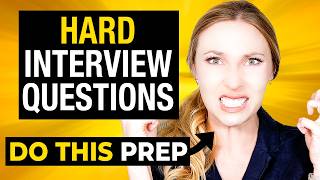
A career-advice YouTube video by Madeline Mann that lists nine common but challenging interview questions and gives concise, repeatable answer frameworks and sample responses. Key takeaways: emphasize cultural fit and personal drives for "tell me something not on your resume"; always admit other interviews exist (say "yes"); match three descriptive words to the job description with examples; craft a real-but-safe dislike about a past role; use CAR (Challenge, Action, Result) to answer failures; use a three-part approach for weaknesses (name, improvement steps, results); map quirky personality questions to a desired trait (then choose an illustrative animal/superpower); answer "why should we hire you?" by restating role needs, matching your experience, then asking the interviewer for alignment; and avoid naming an initial salary number — ask for the employer's range or defer until value is shown. The video also references free worksheets and masterclasses linked by the creator.
Chapters
Here are nine tough interview questions with answer formulas and sample answers. I have seen these questions throw off so many job seekers, but you're in the right place because this channel has been named the top YouTube channel for job interviews based on the sheer number of success stories you see in the comments of these videos. Well, your job offers next. If you're new here, so good to meet you. I'm Madeline Mann. I'm a human resources leader and job search strategist who turns job seekers into job shoppers. You may recognize me as a top job search instructor on Spotify and LinkedIn learning, or you may have seen me on ABC, Bloomberg, New York Times, and more. Be sure you're subscribed to elevate your career. The first hard question you may hear in a job interview is tell me something not on your resume. We always need to ask ourselves why would someone ask this question? And what I uncovered, because I personally would never ask this question is the interviewer wants to see you as a whole complete person and see if your culture fit and what truly drives you. Okay, sure, we can play that game. So knowing this, I would say something that connects to your values and shows some something about your character. So it could be volunteering for a cause that you believe in. It could be a side project that you've been building that shows you're a self starter. It could be that you're upskilling in something to show that you have a growth mindset. Such as if I was asked this question today, I might say something like my whole life I've labeled myself as being bad at learning new languages. It just has never come naturally to me. And so finally this year I am determined to overcome that shortcoming and I have three hours of Spanish tutoring every week. I'm frequently studying on my own and I am committed to learning the language. It's never too late to learn a new skill and it has been very challenging, but also rewarding. The next tough question you may be asked in a job interview is, are you interviewing with other companies? This one really trips job seekers up because I've heard them say that they feel awkward that they're considering other opportunities because it feels unloyal or distracted. I don't know. But it's actually the complete opposite of this. It is a very good sign to be wanted by other companies. It shows you have marketable skills. So there is one answer and only one answer to this question and that is yes. I'm currently in a few interview processes and if it makes sense, you can Continue by saying and I'm especially interested in this opportunity because the third difficult question you may be asked in an interview is describe yourself in three words. What? How about I give you three words, Ask different questions. Okay, I'll calm down now. Here's how to answer it. Going into the job interview, you have deeply studied the job description and reviewed your notes from your previous interviews where they gave you additional information about the role, right? Right. So when you answer these questions, use three words from the job description, name one trait, and then give a quick example from your experience for each trait. So your answer would sound something like the first word I'd use to describe myself is innovative because as a product leader in my most recent role, I use market research to launch two new product lines that opened up completely new markets to us. Okay, and then do that for the following two words. What three words would you say for your answer? Let me know in the comments. Now, I asked my audience what they think is the most difficult interview question. Tell me about yourself comes up time and time again and so I created a free worksheet for you to craft the perfect answer to this question that has led to thousands of people emailing us saying it helped them tremendously. So I will link that below. The fourth hard question for an interview is what did you dislike about your last role? This question is quite common as popularized by the WHO interview. And I know I talk smack about a lot of interview questions, but I actually think this is a good question. A company is looking for a mutual fit and making sure that this job won't make you miserable because that's not good for anyone. So understanding what you didn't like in your previous job can help them see if you're a good match for this job that you're interviewing for. The key to this answer is to give a real answer. If you say something like I liked everything, they are going to walk away feeling like they didn't get to know you and will likely pass. Though if you say you don't like a core part of the job, then that could get you rejected too, so tread lightly. I recently helped one of my clients answer this question and we crafted her response to be something along the lines of I generally love working with external vendors and building deep relationships with them, but you get one now and then who are slow to respond and leave things to the last minute. So those rush situations where I have to keep following up with a vendor is probably my least favorite part of the job. What's great about this answer is it's totally understandable. Most people would find that frustrating. It's honest, but it also didn't paint her into a corner of where she won't do certain work or won't be successful at it. I teach my clients to hit on the 15 competence triggers in job interviews, which is a job shopping strategy. So if you want companies competing for you, I will link a free job shopping masterclass below the next difficult question is Tell me about a time you failed. When you're picking your answer for this, look for a story in your past where it truly was a mistake or a failure. You can dodge a wrench, you can dodge a ball, but you shouldn't be dodging this question. The most important part is is how you reacted to that failure. What did you learn? How did you rectify it? A story with a strong lesson is the one you should choose. So the answer framework to use when you answer this question is car. This is similar to the Star method, if you've heard of that. But I prefer CAR because it's three steps instead of four. And from working with thousands of job seekers and helping them to land offers, this format is more effective because concise is key in an interview. CAR stands for Challenge, Action, Result. So challenge set the scene. What were you working on? What was the importance of it? Then? What went wrong? What was the impact of that event? Then move into action. What did you do in response to your failure? Who did you get in communication with? What did you do to risk manage in the moment? What was your reaction? Which brings us to a pirate's favorite part of an interview answer and the R R is for results. What was the lesson you took away? What were the outcomes of you trying to fix this mistake? How did this impact future projects where you did things differently and had lots of success? This is the part where you really stick the landing, so don't leave it out. The next tough interview question is what is your greatest weakness? Boy, does this question come up a lot. Let's dive in. Here's the three part formula for answering what are your weaknesses? Part 1 Name something that you're list legitimately not great at. But don't choose just any weakness. Choose one that you're already working on and improving and make sure it is not a core component of the job, such as a salesperson should never say a weakness that they're working on is cold calling or facing rejection. Those are too important to the role. Part 2 Explain how you're working on it. Describe the steps that you are already taking to improve that Weakness Part 3 Articulate the results you've seen from improving. It's not about the weakness going away completely because then they may ask you for another weakness that currently exists, but this shows that you are working to better yourself. Now let's walk through a sample answer While I am comfortable with one on one negotiations and small group settings, I will say presenting complex legal issues to larger audiences and has been initially challenging for me and public speaking is a weakness I've grappled with. To improve, I have taken steps such as enrolling in public speaking courses and seeking opportunities to present at industry conferences. Additionally, I have practiced by leading internal training sessions on legal updates for my colleagues. These efforts have significantly improved my confidence and ability to communicate effectively, though it always is still a work in progress. The seventh hard interview question is if you were an animal, which animal would you be? Or really any offshoot of these wacky questions that have nothing to do with the role or your competency? Not that you asked, but boy do I hate these questions. Let the heat flow through you. Yes, they're asking you this to see what your personality is like, and they likely have some convoluted pseudo psychology rationalization of what different answers mean. But really, this question is a bit of a power trip where they are watching you squirm.
For any of these types of questions, a special trick to think of a really good answer is to think of the trait you want to exhibit for this role and then build your answer back from that. So I worked in human resources and a major trait is being a great communicator. Now I'm asking myself, what is an animal that is good at communicating? I have to think on the spot and I go parrot. I'm like a parrot because they focus on listening and repeating things back and others feel heard. And this works for other questions as well. Like if you were a superhero, what would your superpower be? So again, okay, communication. That's the trait I'm trying to display. I would read minds because my empathetic question asking helps me to understand someone's perspective and get to the root of issues and solve them. So that's the trick to these questions. It's exhausting. But here we are. The eighth difficult interview question is why should we hire you? Here are the steps to answer it. Step one Review the role. When asked this question, rather than dive into who you are, take a moment and reiterate what you know about the role and what challenges you see that you'll be facing if hired. This tells them that you're business minded that you're focused and that you did your homework. For example, you might say something like from what I understand, this role is meant to streamline the process for X and help clients with Y, and the biggest challenge is likely going to be Z. This brings us to step two Tell them about your relevant experience, experience and skills. Don't be a generic Eric here. Tell them about specific skills you have that address those challenges and things that need to be done that you just made. This should sound something like based on those business goals, I can bring my experience doing X in Y industry to achieve goal Z. This is so powerful because at this point you're essentially matching the top priorities to your skill set. It is the best way to clearly show show your value. Give a few examples of experiences from your past that are relevant to the challenges this company is facing. Step 3 Ask your interviewer now is the grand finale where you turn your answer to why should I hire you? Into a conversation and make absolutely sure that you ace this question. After answering it with the first two steps, I want you to flip the question and ask the interviewer. Is this how you see me in this role? Seriously? This approach is so powerful. It keeps the interview flowing naturally like a conversation, and it gives your interviewer the opportunity to either agree that you are the perfect fit and they'll hear themselves say it out loud of how you're great fit, I mean music to my ears or address where maybe you're misaligned so that you can answer any of those concerns right on the spot. The ninth tough interview question you may be asked is how much are you looking to get paid? Here are the steps to take when you're asked this first, you're better off not saying a number since they haven't had a chance to see your value yet. So you don't want to say something too high and then you'll get auto rejected. But you also don't want to say something too low and now you've undercut your earnings. So you could say something like I'm open, I'm looking for the best fit and overall package. If they again ask for a number, ask them what is their range and say that you'll be happy to tell them if what you're looking for fits in that range. And if they still don't give you a number, you can say a research salary range. I'm curious to know which of these nine questions do you think is the hardest? Let me know in the comments and I can do even more videos with similar questions or even do a full video. That's a deep dive into it. And be sure to like this video and subscribe to this channel. You've got this WI Fi high five.
More from Clegg

The #1 Skill Gen Z Needs | Simon Sinek + Esther Perel | A Bit of Optimism Podcast







AI Won't Tell You the Full Truth | Arthur Brooks + Simon Sinek | A Bit of Optimism Podcast



How To Make the Best Decision | Arthur Brooks and Simon Sinek | A Bit of Optimism