Activist Gardening with Ron Finley | A Bit of Optimism with Simon Sinek: Episode 42
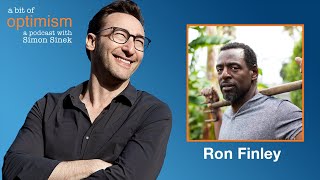
Simon Sinek talks with Ron Finley about turning vacant urban lots into gardens. Finley sees gardening as a way to teach kids self-reliance and agency, and as a metaphor for the kind of change communities need.
Chapters
All Ron Finley wanted to do was plant some flowers and vegetables in a dirt patch outside his house in South Central la. And he got a ticket for doing that, for gardening without a permit, which then led to a warrant for his arrest. Well, after he got through that, he's been turning dirt patches into vegetable gardens ever since. And as a result, he's completely rejuvenated neighborhoods and revolutionized education through his gardening projects. So I wanted to talk to him not just about gardening, but what gardening serves as a metaphor for how we change our society, change our communities, and revolutionize education. This is a bit of optimism.
I've been talking to you while you are in your garden. Where exactly are you?
Exactly? Exactly. I'm in Los Angeles, South Central Los Angeles. This is a swimming pool. The place I'm in used to be a swim school. So I turned the pool into a garden.
That's amazing.
The thing is, Simon, I tell people, design the life you want to live, not the one that's been designed for you. You can take something and change it to what you need it to be. You don't necessarily have to go anywhere else to get it.
How old were you when you sort of discover the joy of gardening? Because, you know, it's usually something that people discover in their later years.
I mean, it's been different times in different spaces that I've lived in. But, you know, it happened after the Depression that they keep calling a recession. You know, it happened then when I was like, damn, it was a relaxing thing for me. I had what we call a parkway. You know, it's the part of land between a street and a sidewalk. And see, and some cities don't have it. Some cities do. We happen to have them. And I planted my parkway, which, you know, I wanted to come out, Simon, and just see beauty. I wanted to feel beauty. I wanted to smell beauty. I want to see beautiful flowers. I wanted. And it wasn't that much food at first. I had banana trees and things like that on the street. That's where it started. And it just. And I got an arrest warrant.
You know, and the first time. And then I told me I had to take everything out. Everything. I had to put it back. I had to put my weeds back in the ground. You know, instead of growing food, you.
Had to put the dirt and weeds.
Back to replace the beauty. Exactly. And then years later, I formed an organization. I put it in again. And so it was going good. And this time it was more food, but also flowers. Also, people would just give somebody something to look At. And again, a neighbor called, and I got another arrest warrant, and I had to go to court twice. And that story ended good.
What got you the arrest warrant wasn't necessarily. The police were coming around looking to arrest you, but your neighbor complained twice. I want to know what's going through someone's mind when you're beautying their neighborhood, but they prefer the dirt and the weeds. Have you reconciled with that neighbor?
She's not here anymore. She was old, and I think she passed away. She moved away, but I think she's passed away now. But if she wouldn't have done that, I probably wouldn't be talking to you right now. But I wanted people to see a difference. I wanted people to know that you can take this opportunity, that you have these resources that we don't call resources and utilize them to the good instead of leaving it like this. Because what we do is we think things have to be the way they are, Simon, because that's how it's designed. We're supposed to do this. We're supposed to get on the freeway every morning in. In rush hour, you know, so my whole thing is, we got to shake all that up, man. We got it. We got to shake this education system up. Definitely where we tell kids that they are the most special, the most important, the most brilliant things, the most beautiful, the most worthy, and the most expensive things, because these kids think shit they can buy gives them value. Yeah. And it doesn't.
I heard a story that Jamie Oliver told. He had a food program where he was bringing food to, I love Jamie, inner city schools because a lot of kids, the main meals that they eat are at school. And so he's like, well, let's make that food healthy then. And he tells the story of going to one of these schools and was absolutely shocked that all the kids who are taking photos with him and of him when he showed up, all had the newest whiz bang iPhone that money could buy, and yet at home, they couldn't afford to eat. And he started asking this question, is like, why is there a greater value put on having the newest iPhone than there is on food?
No, it's. It's terrible. And I speak to that. I. There's a. There's a story that I was in Long Branch Junior High School.
And this kid. Everything was fortnight, you know, I'm like, come on, guys. This guy saw the picture of the. Of the. Of the pool where I'm at now, and he says, are you rich? And I said, yes, thank you. I'm I am rich. But I said, so are you. You're very. You're rich. I'm not rich. I want to be rich. I said, why you want to be rich? He said, then I could play Fortnite all the time. And they all screamed, 450. Ah. I said, no, really, why you? I said, I know you want this, you want that. And I said, you want diamonds. I set his little ass up. He said, yeah, I want diamonds. I said, why you want diamonds? He said, because if I had diamonds, that means I'm rich. I said, really? I said, okay, so you have $550,000. And he goes, yeah. So I said, okay. And then you go to the diamond store, and it's beautiful. Everything is shiny and gleamy and lit and sparkly. And you go to the counter and say, I want a Diamond. I have $550,000. And I said, okay. So they bring your diamond in this beautiful velvet box and they hand it to you, and you give them your $550,000. And Simon, he goes, yeah. And I said, and then I let him. I did a three count to myself. I said, what? And then I said. Got real close to the mic, and I said, okay, who's rich? There was this low. Just silence in the audience, Then this big old crescendo. They went crazy. And I told myself, I said, got your little ass. And I said, you gave them your riches, and they gave you a rock that came from the mother, that came from the earth. You don't respect the earth, but you only respect what comes out of. I said, it's worthless. It's a rock like any other rock. It came from Mother Nature, who. I said, you're. Nothing you can buy gives you value. Nothing that you can buy is more special than you. Nothing that you. And I just. I just had a download and I went on one with a man to tell them, you. You have a intrinsic value just being here on this planet, you know, social capital, community capital. Money is not the thing that makes you rich. I said, you cannot buy value. And they got it, man. They heard me.
So you take people of all ages, obviously, but you focus on kids coming in and beautifying their own environment, planting all kinds of things in any space they can find in their neighborhood. Is that right?
I tell people, simon, I'll help you, but I'm not the help, so don't get that twisted. You know what I'm saying? I want to show you how to me, gardening equals freedom. I want you to do this yourself. I want you to See how this feel? I want a kid to see this passion fruit seed. And you can barely see them. And so to get this. And then all of a sudden you put in the ground and you have hundreds and hundreds of passion fruits. That's magic, Simon. What else can you call that? So when a kid is exposed to that kind of magic, not once, but over and over, it becomes normal for them where they see this and they. They value this. And I made this.
Can you tell me a specific story of someone who came and joined your garden and was gardening, who turned their life around?
I mean, it's a bunch of them. I mean, one of the big stories is. And this was dope. I had no idea these guys were following me in prison. And so I met one of them. He came out. I mean, he did like 16 years. And he drove down from San Diego, came and said, ron, I just had to drive down to meet you because you changed my life. And you don't know me, but I was inside and I. And I found this article on you, and I'm like, damn. So he said, I just did a deep dive on you. And I said, okay, I want to be like this guy when I get out. And he. He wound up learning how to farm. Not even just garden farm. And so at that same time, at this event, there's a. We're talking. I'm. Got my sunglasses on, crying under my sunglasses. This other guy comes up and he got. He's been out a year. And he says, hey, man.
From another prison. And I'm like, what the hell kind of day is this? And he's the same thing. What he told his co he said, release me to my neighborhood because I want to change the things that I screwed up in my neighborhood. So when he came out, he said, I want to do what this guy's doing. I want to be like Ron Finley. And he said. And he said, man, you don't have any idea how many people are inside that look up to you that watch you, that want to be like you. Because he said, we got tricked with the OG gangster guys, you know, having us kids do the work. Why. You know, why they skated. And we the ones that wound up doing the time. So, I mean, there's stories. I got kids, they used to send me pictures from India Simon of them calling themselves gangster gardeners. Like, they 10 and 11 at the time, and they're. They're shit. And they get it. They get the whole what it ain't. The gangster has nothing to do with violence. And. And Drugs and alcohol, misogyny. It has no. I wanted to change the vernacular with that word. No. The soil is gangster. This air is gangster as hell. You can't get no more gangster than air. You know what I'm saying? So being self sustained, being self regenerative, that's gangster? Teaching showing people how to change their life, that's gangster.
What's one specific thing that you've been a part of since you've been on your gardening movement? One specific event, one specific day or person you've met that really captures why you do this? That if every single thing that you did, every single weekend was like this one, literally, you'd be the happiest person alive?
That's a hell of a question, Simon. Come on. The first one that comes to mind, and this happened early on. This kid in San Antonio had his parents and him. They took up their grass in their front yard, and he called it his neighborhood. Grocery stores. They started growing food on the parkway. I mean, not just on the parkway, but on their lawn. And. And I was like, damn. People across the country literally saw me talk and say, okay, I like what this guy's doing, Mom. Let's tear it. Let's tear up this grass and let's start feeding our community. I mean, come on. That's. What about if we had an effect on 20% of the population like that? I mean, this, like I said, this is humanity, man. This is a. This is culture. This is. We treat it like it's frivolous. This. The school should be in the garden, not the garden at the school. Yeah, because there's too much to learn in that garden. That's why I'm trying to take it, man. It's like, because in school we're being indoctrinated. We're being. Not being educated. No one's telling us to value ourselves. No one.
What's your earliest specific happy childhood memory? Not like we went to my grandparents every weekend. Something. Something that I can relive with you.
Boy. They had this thing called Pacific Ocean park back in the 1800s when I was a kid, and it was in Santa Monica. And I think just going there, you know, from South Central to the beach, that's. That's a vision that came up in my head when you asked that. That's the first vision that came up in my head.
What specifically about that memory as you ask that?
I see the Ferris wheel spinning around, you know, and it's right on the beach. And we just. I just. It just was fun, man. It was. I You know, I mean, one, one of the proudest moments is when I was a child was in junior high, I used to walk by the cooking class, the home ec. They used to put pies and the cakes in the window to cool down. And I'm like, I need to be down with those pies. You know, I need those chocolate chip cookies. So I went to the counselor and said, I want to take the cooking class. And she said, you can't because that's for girls. And you know, what am I, 11, 12? I don't know. And I'm like. So I don't know where I pulled this from. Something I said, well, aren't most men chefs? And she goes, you know, you're right. And so at Horseman Junior High school, they started a boys cooking class because I wanted hot chocolate chip cookies. I didn't realize that that was paradigm. No, Simon, that's some paradigm shifting shit. You know what I'm saying? But I didn't as a K. It was for one reason. I get hot German chocolate cake now. That was. That was pretty baller right there, you know that and that, that it fell on her ears was the beautiful thing, because she could have stayed with the status quo. Yeah, that's for girls. You need to go to a wood shop.
There's a scum and theme in all those stories you told me from the cooking class and going to the beach and even the story of the kid who ripped up his lawn. It's about going to new places or creating new spaces.
Wow.
Which is I can go somewhere new or I can make somewhere new around me.
Right?
That's.
That's crazy, Simon. I wouldn't have thought that.
I mean, it's so clear.
Where the world around us and you say this, you talk around this, with the world around us isn't necessarily the world we have to live in. And you can simply ask for something. I'd like to do that. You can simply agree to go somewhere. I'll go to the beach. Or you can just build it. That's your lawn. You're actually allowed to do whatever you want on your lawn. And it can just be a lawn or it can be something magical that you create. And I think the metaphor here, because you know, the gardening that you do and the gardening that you inspire other people to do, there's a metaphor in all of that as well. Which it's not just beautifying your own space and making food and loving the ground and finding community, but it's about agency. It's about creating the life you want to live and living in the space you want to live in, rather than society, tells me I should value this rock out of the ground. And so I'm gonna spend all my money on a useless rock. But I create my own definition of value and success and beauty and all of this. I'm in love with the metaphor as much as I'm in love with the actual work that you do.
Thank you. Thank you. No, it's funny that you put it like that because. And I think a lot of it comes from being dyslexic, you know, Simon. I mean, because in school, I, you know, I didn't read the way I was supposed to, and they just. They still shuffle you through and, you know, even though you. You're not getting it like everybody else. But I'm so glad I didn't get it. I'm so glad.
So do you consider yourself a gangster gardener or do you consider yourself an education reformer?
To reform education, you gotta be gangster, Simon. I mean. Cause you gotta think about it. We're dealing with some serious gangsters here, so we. You can't come in like Tinkerbell, you know, with a wand. No. People don't realize that it's a perfectly oiled machine and it works perfect. But does it work for us? I speak at architect schools and things like that, and I don't know how the hell I wind up doing that. And I. First question I asked Simon is, what is cities designed for? And then I heard this one time in Atlanta, the professor's got people like, duh. And I'm going to. Wrong. I said, she's going to tell you the cities are designed for people. She's wrong. I said. The cities are designed for commerce.
Exactly.
Period. I said, people do not even. They think about storming people, but they don't think about people's health, they don't think about people's needs. They don't think about people's comfort, you know, or for having a beautiful lifestyle. I said, but you as architects, you have to change that instead of designing some phallic building that represents you or something, you know. And I asked her, I said, you want to debate this? And she didn't have nothing to say.
Again, that theme of changing the environment around us, which is agency, you know, it's not about moving to the inner city, because that's, as you said, we're, commerce, where they built the factories and they had to bring the people close to the factories. You know, the Industrial Revolution. And it just kind of stuck because Then we built offices and we built headquarters, and then as you said, we sort of had to live nearby and tada, you've got a city. We can live a life by design or we can live a life by default.
Exactly.
And I think most of us don't realize that we have choices. And the choices aren't about quitting and moving and like selling it. That's not what it's about, as you've proved it, which is if you find a patch of dirt outside on the street, fill it with something beautiful that you want to look at, because nobody wants to look at a patch of dirt. Now what if that patch of dirt was a friendship that you could make more beautiful by filling in the gaps? What if that patch of dirt was the way you feel about yourself? And you can find little beautiful things about yourself and it's not about wholesale change that like, like a plant, it grows like, you got to start with a seed and then you water it. And there's patience.
Gardening is a whole nother kind of patience. I mean, it's the, the spirit of the garden and it seduces you that it's, it's not instantaneous. That's why I said the, the school should be in the garden. We're spinning around on a ball, Simon, and outer space looking for aliens. But right now we're spinning around on a ball. You know, nobody thinks about that every day and they should. So to me, it's like, we need to fix this. We have to fix this planet. We need to stop trashing it. And I think if we show kids at an early age that you are nature, okay? You are a part of this planet. It's not nature in you. You are a part of this planet. Your energy, your life force, your chi, your prana comes from this rotation of this ball that we're spinning around on.
I always get a kick out of when people, you know, you have a piece of garbage and somebody says to throw that away. Like, throw that, like where exactly is away? You know, it's like I'm going to put it here, then I'm going to move it to the front of my driveway or put it outside the building, and then somebody's going to come and move it somewhere else and eventually it's just going to get moving. But there's no actually a way, like, there's no. It just gets moved. It's like, it's like blowing your leaves onto your neighbor's lawn and be like, there we go, fixed. I got rid of the leaves. This is what we, we don't actually throw anything away. We just take our problems and turn them into somebody else's problem.
Right.
And then pay taxes for that. No, no. What. And that's, it's funny, you said the part about the leaves. I tell people a leaf falls for a reason. In a particular season. That leaf is not following falling on another tree, it falls right under that tree because it has a purpose. Not only is it photosynthesizes the sun and feeds the tree and directs the rain and the moisture. When it happens, a leaf has a lot of purposes. So then after finish that season change, it falls to the ground. Now it becomes mulch. Okay. When the season change now it become, it turns into compost. Okay. So it returns in the soil. Yeah. And it starts all. And it's a circle that continues on.
And on and on to change subjects. You're teaching kids about self reliance. You're teaching kids about changing their environment. You're teaching kids patience. What about health? It's one of the big topics these days where, because, because cheap food is shit food, you know, generally McDonald's and stuff.
Yeah.
Are you teaching kids to change the way they eat? Not just the things they buy.
That's the thing with this garden. If a kid grows kale, they're going to eat it because now they have skin in the game, you know, so. And now they know where it is. And they saw the magic when they put that carrot seed in the ground and all of a sudden it's a carrot and it's like, I made this. You got them, you know, so now, now, now they're vested in it. But yeah, it's not only do you show them eat, you show them how to cook. You know, that's what I'm saying. I learned, you know, I had a cooking class in, in junior high school, you know, so why, why, why aren't we showing them how to grow food, harvest food and cook food? I mean again, that's another trade. That's a, that's a bunch of different trades right in there that these kids can be self reliant. They don't have to be dependent on anything. But yeah, that, that's the big part of it. But you don't go in necessarily with that. One of the things I do with these kids when I, when I go to schools is I'll, I'm like, I brought you guys some snacks. Yeah.
I have bait and switch, right. I have somebody, I pass them and have somebody pass them out and I have two mics set up. I said but you can't eat them. I said, what I want you to do. I want you to turn the package over, and I want you to get on your phone, and I want you to look up what these words mean and what are they related to. And it's always, oh, this is related to acne. Irritable bowel syndrome. And this thing. And this is, you know, made from beaver anuses, and it's an ice cream and makeup, and it's like all kinds of crazy shit. And it's. And it's always this kid that gets up that can't pronounce this word. Yeah. And I'm like, I've been waiting for you. The whole thing has been about you. I've been waiting for you. And I said, really? Because if you can't read that shit, don't eat that shit. I said, nothing in nature has 16 letters that you can't pronounce. Okay? So it's like man made. And I get them like that, man, because they realize they're. They associated. Oh, I got acne and I'm eating this. Or, you know, I got irritable bowels in them. And a lot of the stuff. This gives you cancer. So why are they. Why are they allowed to put this in our food? Yeah, why are they allowed to give you cancer? Why are they allowed to keep you sick? And that's, you know, it's not. It's not health care. It's sick care. Yeah.
How often do you garden? Is it every day? Every week?
Oh, my God. Yeah. I mean, at some point. I mean, because it's maintenance, man. It's. It's a. It's maintenance. But the thing I tell people, be the forest. Because if you garden like the forest, who's. Who's gardening in the forest? The forest does what it's supposed to do, you know, And. And people, oh, this is junky. I'm like, do you go to the forest and say, oh, this is junkie. It's a damn forest. This is how they look. So I try to. I try to do biomimicry, which is replicating what nature does. So a lot of times if you do that, you don't have the weeds, you don't have the soils being built, because you're. You're leaving stuff right there where it falls, right where it's supposed to. And that's. Why do we go out and buy forest soil. This soil is from the forest. You can make your own forest. I mean, if I could take you guys on the park where you see I mean, I have, I have banana trees, orange trees, pear trees.
Apricots, plums just growing on the street.
What's one place that you want to plant a garden that you have not yet been able to get to, to.
Plant in every school in the world?
I think every school in the world needs to have a garden. And they should be everywhere. And why aren't they, why aren't we showing these kids nutrition? Why aren't we showing these kids self reliance? Why are we showing them, you know, we're training greedy bastards from day one. If you had this, you and you lived here. If you, this makes you special. So now you got these kids thinking I need. You're showing it and flashing all that shit in front of their face, but you're not giving them the access to it. I mean, you got to think some people in this world are bonds for the, all these industrial complexes, from the prison to the army to, you know, to the health industrial complex. You know, they're not showing, they're not showing really people how to, how to get well. They're showing you how to maintain.
There's that pattern again, which is here's the dirt and you can accept the dirt and take a pill to continue to look at the dirt or every single one of us has the agency to change our lot, literally and figuratively. God bless Sir Ken. We all love and had admired him and I firmly believe that the torch of education and reform that he held has been handed to you. And you are carrying that torch.
You about to make me cry?
You are doing it your way. He did it his way.
That's too big, dude.
And you're doing it your way. No, no, no, it's true. I mean, listen to your words. You want to have a garden in every city school. You want to change every kid's life. I mean, you're teaching kids agency and you're doing it. And the mechanism, the mechanism is gardening. But that's because that's where you come from.
Exactly.
You know, it could have been something else if you came from somewhere else. And you are, as far as I'm concerned. Ron, I. Look, I love your story, I love the gardening story, but the thing that inspires me more than anything else is you are reforming education. How we think about education and how we think about how to treat children and what children need to think about for their own futures and that they have agency and choice for the world.
That they live in, that's what makes it dangerous, that's what makes it gangster, is because as you Know, I tell people, imagine yourself free, but imagine if people had free thinking instead of thinking in this so called box, you know, Ain't no box. You know, let's just. Just think and be free. But you would. It just seems to me that the world would be such a better place, you know, if you. If people didn't. You don't realize that somebody's foot is on your neck. Yeah.
Ron, you are. You are just an inspiration, a magician.
I'd like to bring my niece and nephew out.
Would you please come garden? Make it happen.
Can we?
Yeah, no, without question. Make that happen. That's what we do.
Good. I want them to learn how much agency they have in life.
We all need to realize that. And I think if we train these kids that they have value. They will realize, I don't really need those shoes. I don't really need that phone. I don't really. It's like. Because I have value in myself, you know? And no one's who. No one's teaching that, Simon. No one's. No one.
I can. I can think of one person.
Whatever. No, but not. But not. Not. Stop, dude, stop.
Not.
Not the way it should be. Not on the scale that it should be, man. It. I mean, I don't know. It's just. And I think it's a lot because of how I was raised and what I wish. The way I raised my sons, man, I got three sons and people like, oh, it's so hard raising kids. I'm like, it's. Shut up. It's not hard. You know, most people become their parents. And I'm like, no, that wasn't cool. There was no violence. There was no drugs, there was no alcohol. I said, let me take all of this stuff that was in my household and see. Cause I tell my kids, you guys test tube your baby. You were experiments, you know, And I'm three for three. So I wanted to let them know that operate from happy. Basically, if the shit don't make you happy, don't do it. And so what they're doing is just that. So I took all those negative things out that a lot of people don't see as negative because this is this part of my life, this is how I grow up. And it works, man. If you're there, if you were there and you show up and it's not hard.
What was your household like when you grew up? And how is the household like that you have with your three sons different?
There was love expressed. There was no violence.
More from Clegg

The #1 Skill Gen Z Needs | Simon Sinek + Esther Perel | A Bit of Optimism Podcast







AI Won't Tell You the Full Truth | Arthur Brooks + Simon Sinek | A Bit of Optimism Podcast



How To Make the Best Decision | Arthur Brooks and Simon Sinek | A Bit of Optimism