Biblical Leadership And Company Culture
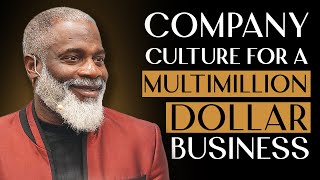
A recorded talk by Myron Golden on leadership and company culture, blending biblical principles with personal anecdotes. He argues that human differences and connections create conflict, and effective leadership develops others' desire to follow through competence, confidence (rooted in biblical promises), and compassion; servant leadership and 'Kingdom culture' (serving others and treating everyone as you would treat Christ) are emphasized.
Chapters
Hey there, YouTube. Myron golden here. And I am here in studio with a live audience. Say hi, y'. All. Okay, so, so now y' all know I'm not just talking to y'. All. So my eyes are dotting around all over the place. It's not because I'm shifty eyed. It's because I'm talking to the people here as well as you. Today we're going to talk about leadership and company culture. Because what happens when businesses are growing and you start becoming successful, you start having human interactions. Here's, here's the first thing we have to acknowledge about human beings. We're all different, right? And, and one of the things that's hard for people to do is to respect the difference in people that exist. Because, like, we think that we are always right. Like, if I think something, well, of course I'm right. I thought it right? And how, how could anybody possibly ever disagree with me about anything, like, ever, ever, right? And so I think if we approach human interactions understanding that.
People are different, it's fascinating. So I was thinking about, like, when we find fulfillment and purpose, it's because we acknowledge that.
Our curiosity creates this insatiable need to create, right? We're made in the image of God. And like the first thing God tells about God, in the beginning, God created the heaven and the earth. So the first thing he's really telling us about Himself is that he's creative. The first thing he tells us about us is that he made us in his image and he formed us in his likeness, which means he created us to create stuff. And he made us to make stuff. Okay? So my curiosity, I wonder how I could do that better. I wonder how this could work more smoothly. I wonder how my life could be better or easier or whatever as a result of tweaking these natural systems and putting some things together to create leverage and make my life better, right? So our curiosity causes us to want to create, but creation by itself does not bring fulfillment. And we see that in what God did next, right? Because when God created, He created three categories in creation. When he created creation, the sun, the moon, the stars, the trees, the grass, etc. He created creatures. The dogs, the cats and the alligators, and the chimpanzees and the giraffes. But God still all he had when he created creation, and when he created creatures, all he had was creation and creatures. And he was totally different than creation and he was totally different than creatures. And so since he was totally different than creation and totally different than creatures, he.
Said I've got to create something more like me. So he created creators. He created adom aleph dalad mem, the godlike creature with flesh and blood. He created creators. And he created creators not just so we could create, but so that he could have an extension of himself who had that same creative intention so he could connect with the people he created. So here's what happened. Our curiosity creates connection. Our curiosity creates. Spawns creation. But then our creation then requires connection. But here's what connection does. Connection brings conflict, right? So connection spurs conflict because people are different. I grew up eating peanut butter and jelly sandwiches, and it's clearly called peanut butter and jelly for a reason, because there should be more peanut butter and less jelly, right? And so, see, that's why y' all are laughing, right? Right. But my wife did not grow up eating peanut butter and jelly sandwiches. She grew up eating jelly and peanut butter sandwiches. And so I asked her to make me a peanut butter and jelly sandwich when we first got married. And I thought to myself, what is this? Right? Because it's clearly not a jelly and peanut butter sandwich. It's a peanut butter and jelly sandwich. And we're laughing because something as simple as that as making a sandwich, we're using our creativity. I can say something, and I can ask you to do something. And I think I asked you to do what I wanted you to do, but I asked you to do what you interpreted my question to mean.
And so now we've got this conflict. This is not a peanut butter and jelly sandwich. This is a jelly and peanut butter sandwich. I don't like jelly that much. Jelly only exists to accentuate peanut butter, Right? Peanut butter does not come along to assist jelly. We are like, we don't get this confused, right? And so. And so you grew up in a family where the food is seasoned heavily, and your spouse that you marry eventually grows up in the food where the seasoning. What's that for?
Like, why y'. All. How you can't even taste the food? It's just, I taste. I taste all the stuff you put in the food, right? And so. So what happens is when people come together because we are, like, infinitely different, even though we're similar, that connection always brings conflict. And it doesn't matter if it's in a home. Connection brings conflict. I've got six brothers. My brothers are the best friends I have on planet Earth, right? My brothers, like, obviously my wife, my son, and my daughter. I'm. They're the ones I'm the closest to, most responsible for et cetera, et cetera. My granddaughter, she owns me, right? She's three and owns a full grown man and everything he has, right? But, but, but my brothers and I were. All have the same mother, same father, and we're all so similar, but wildly different.
And my brothers got on my nerves like nobody's business. I don't know why they just couldn't be more like me when I was growing up, right? And everybody can relate to what I'm saying. So if you can imagine people growing up in the same household, same mother, same father, and they didn't always get along. We, we. We pretty much always get along. Now I'm trying to think of a conflict that I've had with one of my brothers in recent years, and nothing comes to mind. And, and literally I can only think of two of my brothers that I've ever been in conflict with as an adult. Like, and it was, it didn't, it didn't last for more than a couple of hours. One and a couple of days. The other ones, like, like, we get along great. But one of the reasons we get along great is because when we were children, we moved around a lot. And then moving around a lot, you find out, like, in short order that people are different. Not just the way they look, the way they talk, what they mean. What's important to them is very, very different. I remember.
I moved to Brunswick, Georgia to pastor a church, and I was from up north. And up north, you talk fast, you, you move fast, you do everything fast. You say something, you mean it, right? You don't say something nice when something necessary is required, you just say the answer. Like, you ask somebody a question, you give them the answer. Well, I didn't know that was like, taboo. You don't come to Brunswick acting like that. We don't even know your people, right? And so it's really fascinating. So because we moved around a lot, we understood that we learned how to get along with a lot of different people and a lot of different kind of people. And it's really fascinating. It's really fascinating how hard the human dynamic really is. So we have to acknowledge, like, if we're going to have. We're going to lead people and we're going to create a culture. It doesn't matter if it's in a family, if it's in a church, if it's in a business, we have to understand that human relationships are hard. That's one of the reasons they're important. But that's one of the reasons why they're so hard. Are y' all tracking? Okay, so connection brings conflict. And so the last thing that God created because. Because even God's connection with man brought conflict. What conflict did it bring? God said, you can have everything but this one thing. If you get all this other stuff, it's gonna be fine. You get, you mess with this thing over here, now we gonna have a problem. Well, guess what man did. Well, what about that thing over there? Yeah, I think I have some of that right there. And so you have to understand that when you're doing. When you're doing people stuff, you ain't always gonna agree.
My wife and I don't always agree. My son and I don't always agree. My daughter and I don't always agree. My granddaughter and I don't always agree. But she always gets her way. No, she doesn't really always get her way, but. So me and Larry don't always agree. Me and Miraima don't always agree. Me and Karina don't always. Me and Rob don't always agree. Me and Jeff don't always agree. We don't agree. But here's what we do when we disagree. We agree to disagree and still love each other. Right? We agree to disagree and still respect each other. I forgot Rollin. Rollin and I definitely don't always agree. No, I'm just kidding. But Roland and I don't always agree. Zach and Laura and I don't always agree. Lorenda and I don't always agree. It's so interesting how much work has to go into these human relationships. And if you are unwilling to put work into a human relationship, that relationship will. It won't last long, Period. Okay, so let's first talk about leadership before we talk about culture. Okay. The best. Well, first of all, let me define leadership. I'm going to define what I believe leadership is. Leadership is developing in other people, a desire to follow you. Okay, I'm going to say that one more time. Leadership is developing in other people a desire to follow you. So how do I develop in other people? A desire to follow me? Well, the best way to develop in other people, a desire to follow you. There are three components that are really, really helpful. One is competence. You have to know something. Like, if you want me to listen to you, you need to know something that's going to benefit me as well as you. And if you don't, if you don't have competence, like, why should somebody follow you if you don't know what you're talking about? Right. This is One. By the way, this is one of the problems. This is one of the problems in the whole coaching slash, guru space. You got a whole bunch of people who read a book and now they're an expert, right? They went to a seminar and now they're an expert, right? And they know how to make a promise, but they don't know how to deliver on the promises that they've made, right? And so you have to have a level of competence. Everybody say competence. You have to have a level of competence because without competence, you have. There's no leadership. Without competence, there's no leadership, okay? But competence by itself is not enough. You also have to have a level of confidence. What is confidence? Confidence is a sense of certainty.
By the way, I'm going to tell you where I believe we can find, like, all of these characteristics that make for good leaders, okay? So you have to have a level of competence, but you also have to have a level of confidence. Now, confidence is a sense of certainty. Where does a sense of certainty come from? Well, some of the sense of certainty that we have about outcomes in things comes from.
Competence.
Sometimes confidence comes from competence, but that's not the only place it comes from.
Confidence also comes from comprehension of truth. So I've had. I'm in some masterminds. I'm in one mastermind in particular, where I've had a couple of people ask me the same question. And they said to me, my good friend.
Brian, he's my hole in one, homie. So he was with me when I got my only hole in one so far in my life. And I'm saying so far because I'm sure there are many more in the works, okay? So Brian was with me and he asked me this question. He asked me this question more than once, but other people have asked me this question too. He said, myron, he said, you have a sense of certainty that is unlike any human being I've ever met. Do you teach that? I said, no, but I can tell you where it comes from. I said, I got this book, it's called a Bible, and it's filled with these things called promises. It's a book. People think it's a religious book, but it's a book of principles and promises and precepts and practices and prophecies and prayers that give us the ability to make predictions about outcomes in the future so that we know what's going to happen before it happens so we can position ourselves in on that path of prosperity. And by the way, when I say path of prosperity, I'M not talking about name it and claim it, blabbing and grab it. Like, what I'm talking about is the word prosper means to flow. So you put yourself in the path of flow. Okay? And. And a lot of those promises are. Some of those promises are unconditional, but a lot of those promises are conditional. And a conditional promise in Scripture is like an if, then go to statement encoding. So in computer coding, there's a statement that says, there's a line of code, if, then go to. So when this happens, then this will automatically push this button. This automate makes this happen. It creates a chain reaction. Well, the Bible is a series of those kinds of promises. So I know what's going to happen. I don't have faith in faith. I have faith in the one who is faithful because he cannot lie. Right? That's where my confidence comes. My confidence doesn't come from the fact that. That I'm just. I just. I just got this strong sense of confidence. Strong sense of confidence. So what? Right. I believe the one who cannot lie because I've been following his word as truth since I was a teenager, since I was 16. I'm 61. They're the same numbers, but they have totally different meanings.
And he said, if you do this, this will happen. I said, I'm going to try it, see what happens. Here's one of the things he said. We're talking about leadership. We're talking about company culture. Here's one of the things he said. And I tried this on my brother, who's one year younger than me. And one of the things, like, one of the things, like, we got was really easy for us to become hyper intense as children, because my dad was pretty intense. My mom was intense. So, like, we were intense. No longer intense, as you can tell.
That's hilarious. Okay. But we were hyper intense. So. So I said the next. I read this verse in Scripture, and I read this verse, I said, the next time one of my brothers comes in screaming at me, I'm gonna see if this works.
And so it's Proverbs 15:1. I think it says, a soft answer turneth away wrath, but grievous words stir up anger. Hmm.
Then there's another verse in James, chapter one. It says.
Let every man be swift to hear, slow to speak, slow to wrath. Okay, let's try that. So the next time somebody raises their voice at me, I'm going to soften my tone, listen twice as hard and speak less and see what happens.
It was amazing. It was amazing how Fast, the situation de escalated. It's like, that was so cool.
And see, it was in that moment. I was a teenager when that happened. It was in that moment I realized this Bible is practical. This is something I can use every day. So the next time you get ready to get in conflict with somebody at your job or at your house or in your church or at your whatever, in traffic.
Especially in Tampa.
Right?
Softer tones. Speak more slowly, listen more rapidly. If every human being would be willing to listen. See, here's the problem. We're so sure we're right, we're afraid to find out when we're wrong.
Like, if I. If I'm gonna find out I'm wrong, I want to find out right now.
I want to find out later. I want to find out as soon as humanly possible why the sooner I find out I'm on a bad path, the sooner I can course correct and make my life better. There's no advantage to being wrong and sticking to your guns. There's zero advantage to that.
But we do it because we're people. That's what we do as human beings. We're wrong. And we dig our heels in when we're wrong. And we decide, okay, I'm just gonna stick with this because, you know, I made up my mind, and I don't want to be confused with the facts.
You know what that's called in the Bible? You know what that's called in the Bible? It's called iniquity.
It means you have your mind bent on doing the wrong thing because you have your mind bent on it. Hmm? Isn't that fascinating? Isn't that fascinating? And so what we have to do, what we have to do is we have to make sure. We have to make sure we don't practice iniquity by having our minds made up. And we don't want to be confused by the facts. Okay? So when we talk about leadership, if people would lead.
From a place.
Of listening more than talking.
And caring more than controlling, the game would change. Like when? Right now. Right now.
See.
We want our way.
Oftentimes to our own detriment.
We have to make sure that we don't do that. So. So, okay, so. So that's the first thing when it comes to leadership, right? You're going to develop others desire to follow you because of competence, because of confidence. And that confidence comes from, like, a sense of certainty because you know, you know the truth, right? And when I say I know the truth, here's what I mean. I know the truth. As far As I understand it. But I also understand that I don't understand it fully. And that's why I can be open to having a conversation with somebody I disagree with. Are y' all tracking?
That's why I was never afraid to talk to somebody who believes something different about the Bible than me. Because they're right. I want to find out so I can be right. And if they're wrong, I want to know why I'm standing my ground. Oh, no, I can't talk to that person. They believe something different. What's that? Anyway, this third place. That.
That, that.
I forgot what I was talking. Connection. Confidence. Competence. Oh, leadership. Yeah, leadership. Leadership comes from confidence. Leadership comes from competence. Confidence. And it also comes from compassion.
People don't care how much you know until they know how much you care about them. And it doesn't matter if you're confident, and it doesn't matter if you're competent and you're right and you're sure you're sure you're right and you know what you're talking about, because you know your stuff. If you don't love people.
Love covers a multitude of sins. You'll have a whole lot more mercy on me when I mess up. If you know I love you, can I get a witness?
Right? And so, like, if I know you have my best interest in mind, and you know I have your best interest in mind. It's hard for us to be. To like, for conflicts to last.
Conflicts last. When I know you have your best interest in mind at my expense or you know I have my best interest in mind at your expense. Right. So. So. And it's so simple, like, to let folks know that you have their best interest in mind, especially people you're leading. People that you're leading.
One of the things that we have to do when we're leading people is we have to communicate with them. And we have to. Especially number one, we have to clearly communicate directives and objectives.
And I am telling you, I got this from my daughter. If she were here, she could tell me where she got it from. Maybe she made it up, I don't know. But it's really one of the best statements I've ever heard about communication.
The biggest problem with communication is thinking that it happened.
Ain't that good. The biggest problem with communication is thinking it happened. So you think that you said what you thought you said, and they think you said what they thought they heard. Now, which is it? Perhaps neither. Maybe both. So now we gotta fix that. So we have to communicate as clearly as we possibly can. And then every time we have an opportunity, you wanna create great company culture every time you have an opportunity, communicate appreciation.
Communicate that you appreciate your team, that they're not just a rug for you to walk on. Communicate that you appreciate your family, that they're not just somebody there to be at your beck and call. Like, communicate it. But I feel. I feel appreciate. I feel like I appreciate them that. Don't tell them nothing.
Ain't nobody in your head but you and you only in there sometimes.
So communicate clearly. I just want you to know you're appreciated. But don't just tell them they're appreciated. This is the scary part. You already ask them if they feel appreciated. That's scary.
Because if they say no, now I got to go, work on me. And I've been spending all these years working on you. I ain't got time to work on me right now. And it's only funny because it's true, right? Am I keeping it real?
So if you want to have a good team, communicate clearly, but communicate appreciation. Compliment your people when you see them doing something good. Talk about it. Why? Here's why. Because that's the best way to create personal growth in other people. When you find them doing something good. Mention like, say it. Here's what it says in scripture. It says, as a fining pot for silver and a furnace for gold, so is a man what unto his praise. We think we help people grow by arguing with them. And we think we help people grow by pointing out all their mistakes. But the scripture says we help people grow when we find them doing good and we praise them for it. What is a fining pot? What is a furnace? Well, the refiner would put the gold in the fining pot, and he would put it in the furnace. The gold would become molten or the silver would become molten. And then all of the dross and imperfiridities, impure impurities, imperfections, all the things that are not gold or silver would rise to the top. He'd take it out, set it aside, let it cool off. After it cools off, he'd take a sharp instrument, scrape a thin layer off the top until he gets down to pure silver, pure gold. He put it back in that furnace again. And he'd do it again. How many times would he do it? Seven. Seven times. Why seven times? Because after he did it the seventh time, Seventh time, he could look into that finding pot and see a perfect reflection of himself. Watch this. Without spot or blemish.
How many are tracking so we use. We use.
Praise to create improvement in other people.
Now, where else do we see this?
And God said, let there be light. And then what do you do? And God saw the light, that it was good. God saw the light and God said that it was good. Huh? So God said, was so. And then God said, it's good. So God praised the work that he did and recognized the good that it was while it was being done.
It's amazing that something this simple. Now that's not. That's not. It doesn't end there. I gotta. I gotta move along because we got. I got eight minutes, which means I have six minutes. Okay? So the second point of leadership, the best leadership model in the world is the model of servant leader.
So the people who are on your team have to believe that you are there to serve them.
You don't send them somewhere, you lead them somewhere. Because you cannot teach what you do not know and you cannot lead where you will not go. Here's what the scripture says. Let this mind be in you, which was also in Christ Jesus. Okay, what was that?
Let his mind be in you, which is also in Christ Jesus, who being in the form of God, thought it not robbery to be equal with God. So he knew who he was, but made himself of no reputation. He didn't make a big deal about who he was because he knew who he was. You know why people make a big deal about who they are? They make all this noise about who they are. Don't you know who I am? Me not knowing who you are is not the problem. The problem is you don't know who you are because if you did, you wouldn't have to make so much noise about it.
Being in the form of God. Thought it not right to be equal with God.
But was made in the likes of man and being, but was humbled himself. Man, I'm gonna. I have to quote the whole thing and stop stopping. Let this mind be in you, which is also in Christ Jesus, who being in the form of God, thought it not rivalry to be equal with God, but made himself of no reputation, but took upon him the form of a servant, was made in the likes of men. And being found in fashion as a man, he humbled himself and became obedient unto death, even the death of the cross. Wherefore God also hath highly exalted him. Oh God highly exalted him after he humbled himself. Now, Yeshua, in the beginning was the Word, and the Word was God. The Word was with God, and the same was in the Beginning with God. And all things were made by him. Without him was not anything made. That was made and the word became flesh and dwelt among us. We beheld his glory as the glory of the only begotten. That same Yeshua, he made himself, took upon him the form of a certain and was made in the likeness of men. But I can't be a servant.
Don't you know I'm the boss.
Are y' all tracking?
So we also see that in the prayer of Solomon.
What do we see in the prayer of Solomon? When God asked Solomon, what would you like me to give you? I'm give you anything you want. What do you want? Here's what Solomon said. Dear Lord, give me the wisdom to do the thing you put me on this earth to do in a way that pleases you and serves the people you put me here to serve. The best business culture that exists in the world is the Kingdom culture. What is the Kingdom culture? I yield myself to God as the sovereign king of my life. I rule over my assignment as the sovereign king of that assignment. I use the assignment that I rule over to serve every human being whose path I cross.
It changes the game forever. Okay, y' all tracking.
So the last thing about.
Like, having a Kingdom culture in your company, in your family, is this.
God said, how you treat anybody is how you treat me.
So if you wouldn't talk to me that way, don't talk to the people that way. Like, Like. Like if I'm a parent, if you wouldn't talk to me that way, don't talk to your brother that way, you wouldn't talk to me that way. Don't talk to your sister that way. Like, if you wouldn't talk to me that way, don't talk to your co workers that way.
Treat everybody who works in this place the same way you treat me. Treat every customer who comes in the door just like you treat me. And if you ain't willing to do that, you ain't a fit. You either treat everybody good or go somewhere else.
God put us all here to rule over an assignment. He didn't put any of us here to rule over each other.
Now, sometimes on my team, like, I'm willing to hear input from any of my team, but at the end of the day, I make the decision, and that's what we do. But at least I'm going to listen to him, though. They might have a better idea than me.
My wife might have a better idea than me. My daughter might have a better idea than me. My daughter is good at stuff I'm not good at. My wife is good at stuff I'm not good at. My son is good at stuff I'm not good at. The people who work on my team are good at stuff I'm not good at. I don't have to. It don't always have to go my way, right? And I'm going to treat you like I would treat Christ.
I'm going to treat a stranger, a server in a restaurant, a homeless person, my next door neighbor. I'm going to treat them like I would treat Christ. Because here's what the scripture says.
How can you say, how can you, if you hate your brother whom you have seen.
How can you say you love God whom you haven't seen?
Now that'd be a pretty good company culture, wouldn't it?
So those are the things that some of the things that we can do to be better leaders, have a better company culture, have a better family culture, have better relationships with everybody in our lives. And if we do that, if we're always looking to do what's best for the other person and seeking to serve and showing love and giving acknowledgement and appreciation, the world would just be a better place, period. So let's make our little worlds better places. Hope that helps. Subscribe like comment and thank you for world would just be a better place, period. So let's make our little worlds better places. Hope that helps. Subscribe like comment and thank you for subscribing. Already commented and stay blessed by the best. Peace out Cub Scouts.
More from Clegg

The #1 Skill Gen Z Needs | Simon Sinek + Esther Perel | A Bit of Optimism Podcast







AI Won't Tell You the Full Truth | Arthur Brooks + Simon Sinek | A Bit of Optimism Podcast



How To Make the Best Decision | Arthur Brooks and Simon Sinek | A Bit of Optimism