Biggest Job Search Mistakes After Age 40 & How to Fix Them
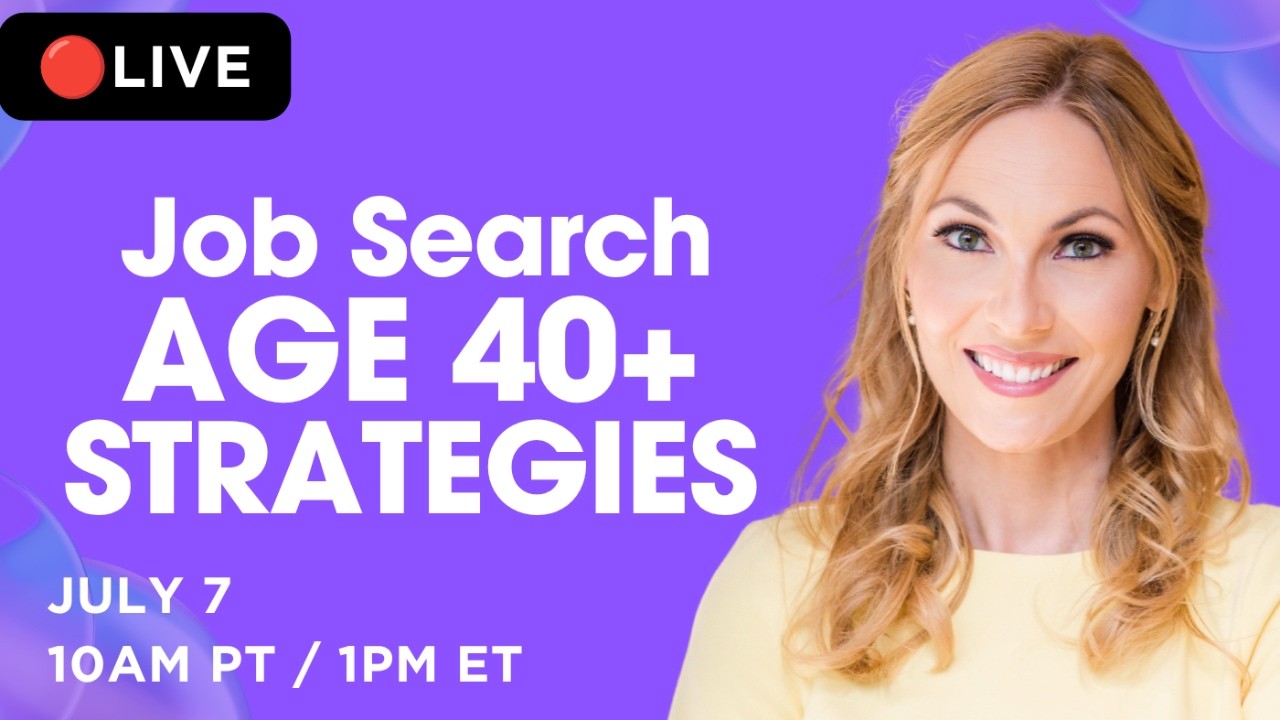
In this live coaching session, career strategist Madeleine Mann addresses the most common job‑search pitfalls faced by professionals over 40 and offers concrete, modern solutions. She begins by acknowledging the real fear of ageism but refutes the notion that age is an immutable barrier, citing data that hiring timelines are not correlated with age. Mann then critiques traditional resume advice—such as emphasizing unique personal traits, listing hobbies, or using functional formats—and explains why these tactics no longer resonate with recruiters. She shifts focus to interview energy, urging candidates to replace "expert" or "authority" attitudes with curiosity, learning‑orientation, and a willingness to get their hands dirty, positioning agility as the new currency. The discussion moves to how to re‑frame extensive experience and transferable skills to match employer needs, avoid appearing over‑qualified, and effectively communicate career changes. Mann provides strategies for presenting career gaps positively, whether due to caregiving, skill‑upgrading, or unemployment, and advises on the appropriate use of cover letters, LinkedIn profiles, and AI‑driven interview tools. She also shares practical networking tactics for the 40+ demographic, including email versus LinkedIn outreach, template usage, and targeting the most responsive contacts. Throughout, she promotes her suite of coaching resources—resume and interview masterclasses, job‑shopping frameworks, and free downloadable tools—while encouraging participants to engage actively and ask questions.
Chapters
Hello, it's so good to be live. I am Madeleine Mann. Today we're talking about mistakes that folks make in their job search after the age 40, and exactly the strategies to do instead. And go ahead and say hi in the chat, say where you're joining us from. Now, the majority of my clients are over the age of 40. So there are very consistent patterns of what is happening in the job market and in their job searches. And, uh, more than 40% of my clients report that they fear ageism is a factor in their job search, that it could be impacting them and their ability to land jobs. So that is why I brought this topic up today. And one of the great things about these sessions is that they are interactive. So if you have questions, I am here to answer them, and I am so glad to, you know, have a conversation. You all have been asking incredible questions on these sessions. I am here almost every Tuesday, so be sure to keep coming back and keep joining the conversation. Oh my gosh, look at all of our friends here. We have Ashley from New York, Noah, uh, from New Jersey. We've got Dawn from Philly, Meredith from New Jersey, um, hello, Jawad from Saudi Arabia, Safi, welcome, welcome. It's so good to see you here. And I missed a couple people up above as well. Rx Mills from Oklahoma, We had Ryan from Atlanta. Amazing. Well, it's so good to hear. Oh, yes. Safi from Pakistan. Dara's here. Janet from Dallas-Fort Worth. Amazing. Hal. Hi, Hal. Okay, so good to have you all streaming in today. So mistakes in the job search after the age of 40. Okay, and how can we then spin that into something else. I will say the, the, the biggest thing is I want you to know that if you do fear that ageism is your number one issue— first of all, ageism exists 100%, it exists. Is it this immovable object that you cannot get beyond because you cannot change your age? Absolutely not. Like I said, The majority of my clients are over the age of 40, and a good number of them report that ageism is a big fear of theirs. And we have found zero correlation with the number of days to hire based on age. So you can absolutely overcome this, and we're going to talk about those strategies today. One of the things that I found is even just when we're thinking about the things that have gotten us jobs in the past, A lot of those strategies do not work anymore. Tell me if you were taught this strategy. Okay, let me know in the chat, yes or no. Um, so many folks— this is what I was taught as well— they say make your resume your best accomplishments and make it— add the things on there that make you a unique candidate. Like, what is something that's different and interesting about yourself? You need to catch their attention. What if they're looking at, you dozens of candidates, what makes you unique? What is that unique kind of value proposition you have? What is that thing about you that stands out? What is that unique combination of skills? What's a skill that you have that others don't have? That is what I was taught, right? As well as, okay, and also make sure you're describing yourself, right? That you're, that you're a creative professional, that you're innovative, right? Like, put that on the resume because they're asking for that. They're looking for that. So say say you're creative, say you're a great leader. That is what I was taught. Okay, what makes you interesting? What makes— what are your best accomplishments? And so that actually sets us up for failure. And it, you know, probably worked in the past, but now in this job market, that is not what gets you to win. Okay, I'm seeing Janet, um, she's joining us from LinkedIn and she's saying yes, that is what I've heard as well. Yeah, exactly. And so we need to shift away from that mindset. Um, oh yeah, and Rx Mills says they used to want hobbies, volunteer opportunities where we were involved with. Yeah, exactly. We were always encouraged to put those things on there. Um, But it's also, it wasn't even just, I'm even talking about professional experience. So people will say like, oh, well, I have a really unique research background that probably someone in sales doesn't have. Or I have like a really interesting legal background that I think would make me an even better HR leader, whatever it is, right? Like they're like, oh, I have this other thing over here that would make me even better at here. Yes, I'm seeing people say like, yep, that's what I was taught. That's what I was taught, right? So we definitely want to move away from that mentality of what is kind of like telling our story. You— well, Hal says, I need— as an art director, I need to say I'm creative. I need to back it up with metrics though. I actually would disagree. I would say just the things you do will show that you are creative. So I mean, if you're using the word creative as like a noun, like build the creative assets or that kind of stuff, like, yes, of course you would say that. But if we're saying like, I am a creative art director, no, we wouldn't say that. We would say I'm an art director who has built award-winning installations or built these campaigns that have You know, gauge, right? Like it shows you, you always want to show instead of just like giving yourself these, these adjectives. Yes. So Ashley's saying, I've not heard that. I was taught to include accomplishments and responsibilities in the resume. Of course. Yes, of course you include accomplishments and responsibilities. But how do you choose them? Do you choose them based on what makes you interesting and unique and what is your best accomplishment? Maybe the work you did the most. Or do you do it the new way? Right. Do you do, do job shopping? Yeah. Yes. Using as a noun is how. Okay, perfect. Okay, perfect. We're on the same page then. We're on the same page. Exactly. It's like, it's like someone who works in communications, right? It's like none of us should say I'm a good communicator on a resume. But if you work in corporate communications, you use that as a noun. So that is, that's perfect. Perfect. How? Okay, so, uh, here's some of the things that we, we need to focus on. So when we are, uh, interviewing, um, and putting ourselves forward for these opportunities, it is so important that we look at our energy. Now, this is kind of a crummy thing to hear, but it really is So much of what we're feeling is ageism is the energy we are bringing in, especially in the interview. Like, a lot of us will get the, get the interview when we think, oh, they, they came on and they saw my gray hair, or they saw my style, or whatever it is, and they said, oh, this person's too old. What I would say, that, that can be completely overcome with your energy. So let me give you some very specific examples. So we need to stop coming into interviews with too much like expert energy. So what do I mean by this? I have so many clients who, when they're interviewing, especially when they're interviewing with someone who is younger than them, and who— there's someone younger will be their manager, which is totally— most of us will work for someone who's younger than us, like as our manager, our lifetime. That's, that's completely normal, um, because, you know, that people are like— just because you're, you're necessarily older doesn't mean that you've been in that industry longer or you've been in a company longer or anything like that. Like, we can— we all have very, um, unconventional paths a lot of times. It's not necessarily a straight ladder. Sometimes it's more of a jungle gym. So that person could very well have earned that spot to be your manager, or sometimes also Maybe you could have had their role, right? Which creates an interesting dynamic, which we can always cover if you guys have questions about that dynamic. I've had a lot of clients kind of, kind of fumble over that, that dynamic of interviewing with a younger manager when they are older. And I have, I have some very specific solutions on how to solve that. But basically a lot of what I found is that my clients will kind of start with this energy of, oh, I'm older than you. I can help you. I can bring in my wisdom. I have so much experience here. I will help you. I will make this great. That is the wrong energy to bring into that interview. Instead, what you need to do is you need to bring in curious energy. So what does that look like? It means, yes, I've done this. I would love to hear how you're currently doing it. And oh, okay. Like, like that curiosity, that wanting to learn. Another version of this is going from kind of knowing to learning. So a lot of people give this vibe of like, yeah, yeah, I've done this for 25 years. Yeah, I know this. Versus saying, wow, the marketing landscape has changed so much in the past few years. I've been learning all these new skills. I have been taking these classes. I've been experimenting with this in my off time. That's the kind of energy— when I'm talking about energy, that's the kind of energy we're looking for. So That's what— that's the new currency of the job market. The currency of the job market is not experience. It is agility. It is learning. It is evolving. So you need to bring that energy. You need to bring— you need to bring this energy of, oh yeah, I'm experimenting with things. I'm learning new things. I have these fresh ideas. That's the energy they're looking for versus, yeah, I mean, I can— I can tell you how to do this. I know it. I know it like the back of my hand. I've been doing it forever. That's not the energy. Okay, so bringing that in. So that, that, that is a huge thing. Another thing, another way to put this is kind of moving from just the advisor element to more of a builder. So a feedback that I hear a lot that's like very coded when I see feedback from interviewers is kind of this, this worry that this person at this level of their career and this number of years of experience, they're not going to get their hands dirty. So what that means is they want you to come in with a no task too small kind of energy. And also, as I mentioned, the learning energy. So instead of it being like, yes, I've done this forever, I can do this, I got this, it's more of a, yeah, how do you do it? Okay, I, yeah, I— giving examples of you get, you know, not just telling your team, here's how to do this, or telling others how to do this, but saying, you know, I ended up, you know, because that thing broke at 9 PM, I actually got into the code of the website and tried to figure out what's happening. And then I was the one who packaged up the envelopes and shared it with the CEO, right? Like someone who is willing to do that work. Um, because a lot of, uh, more senior level Candidates will kind of give this vibe of, I paid my dues, I've done it right. Whereas the teams are getting a bit smaller these days. And so they're looking for someone who is going to have that energy to say, no, no task's too small. I'll get my hands dirty. I still, you know, I'm staying up to date on what is the key things in my profession, all that kind of stuff. So that's, that's super huge. Now, uh, Jacob is asking, does a functional resume stand out better than the traditional reverse chronological format? No, I would not do a functional resume. Really, a resume should be as easy to read as humanly possible. It should be logical, and what they're looking for is a reverse chronological format. Um, And so, uh, so yeah, I would say there's a few different strategies to use on your resume. I will say, um, we— if you're in an interview and they ask for maybe your best accomplishment and you give them one from 10 years ago, that is a huge red flag. They're going to say this person hasn't accomplished really anything of note in 10 years. So things like that we need to move away from, as well as you can put an earlier earlier career section on your resume where it doesn't have— you don't have every single job and things listed out. It's just more of like titles and companies, right? And you can just put like a date range of like, yep, from this year to this year, I held several roles in this industry and here's some of the companies I worked for. So that, that can— that's a great way to do it. And then, you know, there's always been the question of should I put my graduation years on my resume in the United States? I would say no, just skip it. Just take your graduation years off. They can ask for it. That's not an illegal question per se. Well, it is. It is seen as a proxy for age. So it's, it's when I've trained interviewers, I've asked them to not put it. But of course, if they're like checking your background and stuff like that, that's important. So we have a question. Should you address career gaps on your resume? Yes, I think that that can be good. So like, let's say you had an aging parent who you took 2 years off of work, and there's that, there's that gap there. I might just put a small line on your resume that says something like, took time to care for aging parent. Okay, who— and I might even say who has since passed, right? And I know it's kind of— that's sad, uh, but it— but who has since passed kind of implies that this is not an ongoing situation that you will have to be tending to in your new employment. Okay, so you can, you can word it how you'd like, um, but yeah, I do think that that is good. Um, wouldn't, uh, the years of employment help them guess your age? So here's what you have to know is, uh, in order to be honest about your employment, you can never lie about employment you've had. But you can leave off however much employment you want. I think I've had upwards of 30 jobs in my life, but I think there's only about 10 that appear on my LinkedIn profile. I can't, I I don't know. And even, you know, it's tough to say also because I have a lot of overlapping opportunities right now. You know, I do LinkedIn Learning as a LinkedIn Learning instructor. I'm a Spotify instructor. I'm an author with Penguin Random House. So like I have like, you know, at this point I have like a bunch of overlapping ones. But it's really— you can especially also if you're going for roles where you keep getting the idea that you're overqualified, you're overqualified. A lot of people won't tell you this straight to your face, but you need to downplay your experience. Now you either need to downplay your experience or you need to go, go to something that's better, that's a better level. Now my vote would be go to something that's a better level. And that's typically what my clients do is I help them to position them so that they're extremely compelling candidates. So if you are looking for that type of coaching, just go to madelamann.com/coaching. If that's kind of been your issue. Mailoman.com/coaching. I will put that in the chat. And you can book a call with our team just to see if it's the right move for you to get coaching. So essentially, so I would say, because it's actually harder to get a job that's below your level. Companies are too freaked out. A lot of, a lot of candidates think that when they have a lot of experience, that'll be easier to go lower because they think, oh, I'm overqualified, they're going to get an absolute bargain by getting me in this role versus someone who they have to possibly train more. Now, companies, companies have been burned too many times by this play because guess what happens? And a lot of you will admit to this being kind of the play you're planning on making too. That person who's overqualified takes the role, within 6 months they leave. Why? Because something better, something bigger came up and they took that other opportunity. What they would rather do is get someone who is saying, oh my God, this role is my next career step. It's going to be— it's going to help me grow. It's going to be really exciting for me. And then they're going to stay for years because they're really fulfilled. They feel like this was a great step up in their career. So companies, companies know the game. Now, it might not be you, but then you have to convince them, possibly by downplaying some of your experience, which I've absolutely helped people to do. And in some cases, that's really great because some of us also don't want to climb the ladder. Some of us want to stay at a certain position, but we're giving this feedback that we're overqualified, and it's really quite, quite frustrating. I've heard that Cover letters are no longer necessary. Is that true? Uh, so I would say cover letters are probably more important now than they were a few years ago because it's one of those signals of, like, you know, I've hired quite a bit since the essentially the AI boom since 2022, 2023. You can read these cover letters, it's, it's It is clear as day who wrote them versus who used AI. And I'm not saying that it's bad to use AI. I actually have a cover letter generator in my suite of tools that I give my clients that is incredible. Like, people have gotten a lot of interviews from this cover letter generator, but it's because it is highly curated to the opportunity and it's written in a way that's not like the generic, like, Hey, generic AI model, just write me a cover letter for this company. Here's the job description. No, because companies are noticing a lot of people are just auto-applying. They haven't read the job description. And so a cover letter can actually be an opportunity for you to show, oh no, no, I'm not like all those other people. I actually legitimately want this job and I understand what your company is. And here's the reason why I want it. So that can be really compelling. Now, does everyone read cover letters? Absolutely not. If you're applying to really large companies, are they reading cover letters? Probably not. Especially the most competitive employers are not really reading resumes. If you're applying to a small or mid-sized company, you better believe that they are noticing who's actually written a decent cover letter. Um, so, uh, Why do employers look so negatively at gaps? I would disagree that they look so negatively at gaps. I would say when I, when I've actually seen the behind the scenes of what employers are saying, I would say that they are really— they're more against job hopping, you know, moving from one position to the next quickly outside of contract positions. And they, they're not, they're not too, they're not too upset about gaps. What they are fearful of is, are you a low performer? Do you have a gap because you, you know, couldn't ever meet quota, or you were really difficult to person to work with, or, you know, whatever? You know, one thing that I do to help my clients get multiple job offers is I get them multiple job offers. Like, one job offer begets more job offers. Like, I will— I coach my clients to, even if they don't want a job, to still get the offer, and that helps them to get more offers. And why I'm telling you this, well, it'll all come back around. So the reason being is companies are attracted to candidates who are wanted by other companies. So just the gap makes them— might make them think sometimes of like, well, why doesn't anyone else want them? Right? But that is— that's one of the reasons why I'm like, okay, let's just get several offers so that we can get them competing so that we can show that market value of you. So that sometimes comes up. Is it a performance issue? Is it that no one wants them? And so I would say the majority of my clients, have gaps, and I coach them through exactly what to say. And it leaves the interviewer actually envious of them. It leaves the interviewer saying, wow, you've had a good life. That's awesome that you've had this space and time outside of work to have that breathing room, right? You can create this envy actually, or this respect. It doesn't have to be like the sad thing. Like, isn't it wonderful? Like, like, shouldn't we actually be envious of the people who have career gaps because that means they didn't have— they weren't just like straight up working for 40 years straight. So I think, I think gaps can, can sometimes be positioned as, um, a really great thing. Um, so, um, I think the COVID letter will be important at the interview stage. Hmm, I haven't— I mean, no comment. If you believe that, that's cool. Okay, so let me know what other questions y'all have. So what, you know, we're talking a lot about the resume. And just like, you know, I think, I think the resume is an important thing. And then really kind of taking a lot of those things and putting them into into your LinkedIn profile as well, using that as, as kind of a mirror to a lot of things you're putting on your resume is important. Make sure your LinkedIn profile is up to date. A lot of my clients report over 50% of their interviews come from LinkedIn, from being sourced, especially if you're a more experienced professional. That is something that you should absolutely be focused on. Should you tell a potential employer that you have an offer from another company? Yes, absolutely. Um, you should tell them as soon as humanly possible, even sometimes before. Sometimes I'll tell my clients, hey, go back to all the companies you're interviewing with and tell them you're in the final round of interviews with another company. Absolutely. If a company ever asks you, are you interviewing elsewhere, what is the answer? Yes, the answer is always yes. Uh, you know, you— it's companies want people who are wanted. You know, it's— it just shows— it shows— it further— it further— it's called, um, social proof, right? It is social proof. It's— we, in the job search, we want as little to have to prove ourselves but have the other factors basically show, oh, of course this person's great. Now, Some of those implicit factors are, of course, oh, that person worked at that company that is hard to get into, or that person went to that school that's hard to get into. Those are obviously some of the things that we can't help as much as far as if those things have already happened, you know, they've happened. But then there's a lot of other signs that you can do, right? I have multiple job offers, right? Those types of things where, um, it implies a lot of these things, uh, you know, just the words of other people integrating how other people have talked about you into your interview answers can be really compelling instead of just self-describing that we talked about in the past. So would you add that sentence to address the gap under the summary at the top of the resume? No, I put it, I put it where it would be chronologically. Yeah. In what ways do 40+ years need to speak to our work experience if we are switching careers? So I've had a lot of clients switch, change careers in their 40s, 50s, and 60s. So anyone who tells you you can't change careers just isn't— like, what the great thing about changing your career in that, at that age, is that you have so many transferable skills at this point. And that's why I love working with those types of clients, because at that point, it's a lot about positioning and repositioning your skills versus reskilling, reeducating. So many things you already have, but you need to speak the language. And so that is my, um, that is my biggest thing is like what so many people will do. Like I said, I have this client who she was going for product manager roles and her past two careers were sales and legal, being like a lawyer. And she found— she kind of used that old version of the advice we were all given. She found that she's positioning herself as this product leader who had this amazing legal and sales background that made her a super leader. Now, I do believe that those backgrounds helped her tremendously. As a product manager. Is her positioning herself as a product manager with a legal and sales background helping her? No, it's actually incredibly distracting. So that is the thing I need to peel away from your mind is we're not trying to sell what's most interesting about you. We're trying to sell what they are asking to buy. Okay. If you're telling me you wanna buy a car, and your two things are it needs— the cup holder needs to fit my cup and it needs to be baby blue. I am not going to start telling you about the engine. I'm not going to start telling you about the trunk space, right? I'm going to say, hey, look at these three cars, they're all baby blue, and bring me your cup. I'm going to show you, I'm going to show you how the cup fits in, right? That is the way you need to think about your job search. We need to— I know, I know your car has the best engine. I know You know, maybe the sound system is incredible, but you need to focus on what the company is actually looking for. All right. Oh my goodness. Donna had an AI phone interview last week and felt it was a total waste of time. When asked if I had questions, had questions, answer was that I would have to ask the recruiter. Are AI interviews worth it? Um, so I would say, here's the thing, um, I've had a lot of clients really do well with AI interviews, uh, because basically you— if you're good at the skill of interviewing, you will be good at AI interviews. And it gives— so, so having the correct experience on page, of course I work with people to position it the right way. But at a certain point, you max out, right? At a certain point, you just don't have any additional experience that we can mine without just flat out lying. But if you are good at interviewing, that's a skill set that I could teach anyone on this call right now. And so if you're then able to bring that into an AI interview, you can beat out people who are more experienced than you. You can beat out people who are better on paper because you're able to articulate things better. So for people who, I mean, who are on my YouTube channel, people who look at my stuff, you guys have a distinct advantage because most people, most job seekers are not watching my content. Most job seekers are not leveling up. They just think, oh, I should just be already good at job interviewing. No, it's a skill. So if, if it's comfortable, then it's crowded, okay? If it feels hard, then it's hard for other people. So that, it should always be an indication to you of like, ooh, I should go where it's less crowded. I want to see, I want to see opportunities where other people see obstacles. And that's worked out really well for my clients. Okay, so, um, I'm confused now because I thought you— I heard you say gaps were bad and to write like you took off time to do XYZ and that and fill that gap, but now you're saying I heard your gaps are good. So it's— I'm not saying that gaps are good, I'm saying that you can position gaps in a way that does not feel like you are a low performer. Or that no one wants you. I said that those are the two fears the company has. So obviously, if you have— if your gap was your, your parents were on their deathbed and you took care of them, they're not going to think you're a low performer. They're going to understand that. But what if that, that wasn't your gap? What if it truly was no one wanted to hire you for 3 years, which I have plenty of clients where that is the case? Okay, then I help you to position that in a way that doesn't make it seem like you actually are someone who is not an appealing person to hire. Thank you for the clarification. Um, um, let's see. So maybe, maybe give me a little bit more context here. You said, what about individual businesses like entrepreneurs or solo business ventures? Let me know what you're asking, because— and also I just want to verify that you're asking maybe some question around you being an entrepreneur and going back to work in a corporate setting, because that is, that is what I focus on. Um, well, I do have lots of business advice and all that, I like to keep it to job search. So just give me a little bit more context there. Um, do you— is it good to hire someone to rewrite your resume? Do you have a recommendation for a service? How do we beat the AI writers? Um, says Kyle. So what was interesting, um, I think it was like a couple months ago, someone asked this. So I have like a private Slack community for my clients, and someone wrote in there, they're like, hey, Because I do, I like for my like more white glove clients, I write their resume for them. But then for my, my like flagship program, I have a tool that will initially help you write it and then me and the other coaches will give feedback and we'll actually make like actual edits on the page and stuff like that. And then one person was like, hey, I just want to hire someone to write it. Like someone wrote it in the chat. They're like, hey, Who, like, who should I hire? And all of my clients were like— and I was like, sure, you know, if you also want to hire someone else, that's totally fine. I mean, all the— they were like, why would you do that? Why would you hire someone? Like, Madeline literally taught us how to do it, and there's ways that you can— like, you want to further, uh, change your resume based on the opportunity, and then Madeline is here to give you feedback. Like, why would you do that? So the— I think what they were trying to get to is this idea of sometimes if you just hand your resume over to someone, first of all, you definitely get what you pay for, right? So if you kind of do like a, like an inexpensive one, like $300, $400, $500 one, you know, you, you typically like not get great results because it'll sound really good, but, and it'll just be for like one, you know, moment, one job. And it'll typically, you know, make your, make your accomplishments sound really good. Like such as, I mean, I'm not going to say her name out loud, but one of basically the top LinkedIn resume writers, I had one of their, their clients come be one of my clients and I saw the resume that was written and I was like, oh no, you know, this is like super— it just went to what we were talking at the top of this. It was like super around like, oh, let's make your accomplishments sound really good and make this sound really corporate and use a lot of self-describing. Versus really understanding what each company was kind of looking for and like positioning it. Like we— I think, I think what— and I can find it was Brian, his testimonial, he was like, you cut out a lot of the fat, right? So anyways, I would say go do your own research. I, I've just had so many clients come to me after they hired a resume writer and then get so much better results. So I will say You know, do your research, do what you want, but also learning the skill of writing a great resume and then giving coach feedback, I think is really effective. All right. Yes. Opportunities where others see obstacles. That's exactly right. Does cold emailing hiring managers actually work? Yes, you need to do it in the right way, um, with the right, uh, type of approach. But yes, I've, I've seen this happen a lot for my clients because hiring manager, what is their job? To hire more people for their team. So it's actually helpful that you reach out to them. You just need to reach out to them in the right way. Um, let's see. So I'm seeing some questions about recent graduates. I will say that this session is focused on more of like 40 plus. So I'm going to set aside any questions about recent graduates as that typically implies someone who is several decades earlier in their career. Um, so, you know, just, just a heads up that we'll, we'll focus this a little bit more on seasoned professionals. So, um, can great networking— can give you new explore opportunities from— for your career gaps or other industry people or non-relevant experience people/professional roles, hospital and leisure travel industry. Yeah, absolutely. Yeah. And another, another comment about transferable skills. I agree about changing careers. Transferable skills are valuable. Yes, we just have to put them in the right way. Um, can we, uh, justify a gap with a skill upgrade? Yes, yes, especially if you were getting your MBA or, you know, you're focused on building certain skills during that time. I definitely think that, uh, that you can do that. Absolutely. "Do you have people that work for you who coach or do you do it yourself?" asked Janet. So I do both. So I'm super hands-on with my clients. And also depending on which level of coaching you get, I do a lot of the really high-touch coaching. That's all me. But then for any level, I know every single client and I know every single client's story and I give feedback. And then Also, I have coaches as well that, that also contribute their thoughts because that, that's been super helpful because it's, it's, it's good to get different perspectives as well. Like, oh, okay, yeah, well, well, I've worked in these industries, he's worked in these industries, he can also give that perspective from this other industry as well. Phrasing, um, the transferable skills so that the new industry can understand them is critical. Says David. Yes, absolutely. This was a huge thing. If you all came to my launch a— maybe was it a month ago or so? Um, we had Paul come on, one of my former clients who's now a mentor in my program, and he just— he, he volunteers his time to like network and talk with, uh, my clients, and he's amazing. He had a big challenge when I first met him of moving from, you know, being in the military to civilian work in corporate environments. And just, he had all of these words that meant so much in a military environment but meant absolutely nothing to a corporate company and was very confusing. And all the titles were difficult to decipher. And so that was a huge undertaking. But once he did it, he got multiple job offers. And so that's exactly right. It's such an important component. Absolutely. Um, cool. Yeah. And Janet, I can also pop in here if you're looking at coaching. I can pop in. Uh, you could just book a call with us. Uh, we do do complimentary, um, calls if you want to talk to a coach and, and see if it's the right move for you. So here, let me put it in the chat. www.metalman.com/coaching. There Um, cool. All right, uh, so yeah, I would say, uh, it's super important when you are going for these opportunities, uh, to, to not be afraid to kind of also show a lot of enthusiasm. I— when we were talking earlier about the, the energy aspect, they want to feel that excitement and that kind of jitteriness of someone who's kind of maybe early in their career. So what does that look like? Like, yes, I've done this before. I know how to do this. This of, yeah, well, the reason I was really interested in your company is because of this, and I can't wait to learn more about how you do this. And these are the skills I'm excited to build when I join your company. Right. So it's kind of like this focus on the future. I think a lot of people who have a lot of great experience will focus a lot on the past. Here's what I've done in the past. Here's why I'm great. Here's why I'm great. Versus here's what I want to do. Here's what I want to accomplish at your company. Here's what I want to learn. That energy feels really good to a company, especially with how fast the world is moving right now. So that is, that is a super great approach when you are thinking about like how to change your energy in interviews. Another, another energy shift is a, is a story I've mentioned before, and I've gotten a lot of comments of how it's very enlightening to folks is one of my clients, she was telling me, oh my gosh, you know, this interviewer made this terrible comment in, in an interview where she said, well, you know, the average age of this team is 25. Are you okay with that? And this, my client felt kind of attacked and like, wow, totally singled out. Like she's basically saying, hey lady, you're old, right? And what I, what I said to her is like, no, she was not saying that. She was saying, we want you on the team, but we want you to be comfortable and excited about this dynamic. And I'm just warning you, like, are you going to feel strange that there's this age discrepancy because both I'm— this is me being interviewed— because both I'm going to be your manager and I'm younger than you. And then the team itself has like a very like young age bracket. And so this is actually invitation for her to go, oh my gosh, I love teams that have younger teams. That I'm actually— that's my previous job was that we had amazing time. I actually learned so I feel like I actually learned more from teams that come from a different generation than if it's my same generation, because you will see the world differently. Like, I'm so excited. That actually makes me more excited. She probably would have gotten the job, right? So it's, it's really, instead of viewing these things as kind of like hate or prejudice, view it as an invitation of this person is putting forward this you know, the same saying, hey, are we— will you like this? And you embracing it and assuming positive intent can make a huge difference. Any tips on networking 40-plus? So I would say, I don't know that networking really changes if you are 40-plus versus any other age. Um, I think one thing that a lot of people— it's funny because when you're on the earlier side of the career, you're afraid of networking because you think, well, I have no value to add to anyone. I'm so early in my career, I don't have any network. And when you're later in your career, you think, well, shouldn't I show up in a way that is impressive? And shouldn't— isn't it kind of embarrassing for me to be asking them for things or like ask them questions about their job or anything like that? Like, shouldn't, shouldn't that phase have like ended? And the answer is no. The answer is you should be. If you all were at my launch a few months ago, Kathy came on and Kathy, I don't know her exact age, but she's over 40. And she basically was transitioning her career into the sports industry, very competitive industry. She's talked to basically every top sports organization. Currently, I helped her land a job at FIFA. She's talked to NASCAR, she's talked to F1, she's talked to the NFL and a bunch of NFL teams, right? She's done it all. But she got access to all these people and a lot of it just came out of this, again, this interest and this curiosity. She would ask them lots of questions. They would talk shop. It wasn't about her impressing them. Frankly, they really enjoyed just talking about themselves. And so I think we need to shift that energy when we're networking of, again, it's similar to what the advice was giving an interview of this curiosity. Okay. As well as, you know, I basically, I had Kathy on one of my coaching calls the other day with other clients on there too. And people are like, but how did you get in contact with all these people? She said, I just use Madeline's email templates. I just use them. And then that was it. And then, and I then use Madeline's follow-up email templates if they didn't respond the first time. It's that simple, right? I have heard that you should change your resume to each job you apply to. I don't get many interviews. What's your view? So here's what my clients do. So, uh, you should have a base resume, and sometimes your base resume might be longer than what you are planning on sending, such as maybe— let's say, let's say your resume can fit on one page, but the base resume is like a bit like a page and a half or something. But maybe that's because you just put extra bullets so that you'll just delete the bullets that are less relevant when you apply, right? That happens all the time. So that's one way to do it. You kind of just like delete and reorder bullets because a reminder, no one's reading your full resume. Most of them are reading maybe your top of your resume and then maybe the first bullet or two under each section. But, you know, you— the order of how things appear on your resume is absolutely critical because, I mean, so, you know, someone might read more about your resume, but it's only after you've caught their attention that makes them want to read more, right? So, so the, the more visible bullets, the first ones that come need to get, get that attention of like, oh, this is the right person. So, so there's that. You have the base resume. Then when it comes to the actual opportunity, knowing what I just said, and I do think that if you need help with your resume, I would go to www.standoutrésumé.com. I'll put that in the chat. There's a free class there that I would recommend taking that will kind of go deeper into what I'm describing right now. I'll just do like a quick overview right now. And what I would say there is you, when you're editing your resume, you just should edit the hot points. Okay. And in that class, I go over what are the hot points. But just edit those, and that makes the editing really quick so that you're just— when they're looking at those certain hot points on your resume, they're okay immediately. Okay, Donna is the right person. Okay, let's move her on. Or okay, let's read more of the resume. That's what you should customize. You don't, you don't redo the entire resume. And if you notice that you have to redo the resume, you're not being targeted enough on, you're not being targeted enough with what you're applying to. Like, that means that you have too much variety in what you're applying to and you're spreading yourself too thin. Okay, how do you decide who to reach out to at your target companies? Should it be someone in the department you're interested in? Oh, good question, Christina. Um, I love that you have target companies. That's Fabulous. That's a fabulous step. So I would say the best person— I wonder if anyone's been following me long enough to have memorized this line. Who is the best person to reach out to in an organization? The person who is most likely to respond. That's right. So I think a lot of people will overthink this sometimes is that they think, oh, it needs to be someone exactly in my department. Um, with, with who can influence the hiring decision. Now, if you can talk to someone who is in your department and can influence the hiring decision, I love that. I love that for you. Um, but even if it's someone, even if your friend's niece works there as an intern— oh, is that— she works as an intern in a different department. Oh, is that Is that even worth my time? Yes. Why? Because she probably responds. Why? Because she knows a lot more people at the organization than you do. She can introduce you to someone else. She can also give you information. Oh yeah, internally in our job board, we actually also have these other job opportunities that you didn't see on Indeed because it costs a lot of money to post jobs on job boards. Or yeah, you know, the person who's— oh, I can see that the person who's hiring for that role is X name. Yeah. And then you can then say, oh, I spoke to this person in your, your this department when you're talking to the hiring manager. And now you're not a random person. That's the goal is like to try to just not appear as a random person. So I would say, yes, there is an advantage for it to be someone closer to the role you're going for, especially if there isn't necessarily an open role. Because you want to hear a little bit more about the department. But you can, you can sometimes leapfrog your way there if there's someone who can actually reply to you who is in the company. Amazing. Oh, saying great content. I appreciate the kind words, you guys. I appreciate the kind words. You guys are the best. Okay, so let me just double check. Okay, good. Good, good. I was just making sure my website is working because you all have been updating me that there's been some weird things happening. It's working. Um, so yes, definitely, if you, if you want. And also on my website, there's like a ton of free resources. Like if you just go to— yeah, actually, I can— let me see if I can show you. Um, if you go here, you can see that there's a part that says— here, let me actually Switch, switch us. There we go. There's a place here on my website that says free resources. And yeah, it's a ton of free resources. So there's Resume Revamp Masterclass. This is, this is the one I was mentioning earlier. If you're looking for help on your resume and looking for those hot points and all that kind of stuff, that's a great class. If you're more of someone who is landing interviews, but you're getting, you you're not getting that offer at the end, you, I would say, watch Unshakeable Interviews Masterclass. Personally, for me, interviewing was the literal most terrifying thing you could ask me to do. My nerves would take over. I would, I would like lose a bit of confidence. And so this class is really about, okay, how do we, how do we take control of the situation in an interview? And absolutely master it. There's like 6 types of inner, like, job seekers that we talk about there. And so you can— you'll figure out which one you are and how to better improve your interviews based on that type. There's also a class here on 3 Strategies to Become a Job Shopper and Land Offers. This one's good. Like, if you're kind of looking for an overall job shopping strategy, that one can be really great. This one is just like super fun and like quick. And people have told me it is so, so accurate. It's a job search assessment. So the number one thing standing between you and your job offer. And also, if you take it, let me know what ends up being your results. Tell Me About Yourself worksheet. That one's, I would say, out of any download I've given out, that's the number one that people said this was life-changing. Like, now I understand how to Convey my value in an interview. This question is asked in every single interview. Why, why is it asked so often? Follow-up email templates, uh, that, that are great for getting fast responses. Best questions to ask an interview. Phone interview cheat sheet. LinkedIn profile checklist. There's just so much goodies in here. I'll actually, I'll pop this, uh, link in the chat in case you all want some of that. Okay. Oops. Here we go. Okay. Um, oh, Hal asked, do you think it's better to email those people or try to connect on LinkedIn? Uh, either are good. I will say I lean towards email because people check their email more often. There's plenty of people who like barely go on LinkedIn. Um, all right. So, uh, Kavita says, hey Madeline, while applying through LinkedIn, I also connect with people who are working there, but the second thought comes that they are not HR. Do I get any benefit through that? What's your opinion? Um, I would say that connecting with HR is not super helpful. So I actually think that you— it sounds like your strategy is actually great. I would say connecting with HR is not as helpful for a couple of reasons. Now, it's not unhelpful. I'll just tell you, it's just like, it's like there's kind of like this weird rumor that that's the way to do it. And it's, it's just so the reason, let me tell you the reason. First of all, they are, they get the most emails out of anyone. Okay. And second of all, they don't have positional power to, to get you the job, right? So, so the HR and recruiting does present resumes, but they don't actually, like, they don't have any say necessarily of whether or not you're going to get the job. I mean, maybe they have like a small say of like, hey, you know, I thought they did well in this interview or not, but in the end, the hiring decision is not made by them. And the third thing to note is, um, So, and the third thing is that they— y'all, I lost my train of thought, um, but I can come back to it if, if I remember what was the third, the third element. But yeah, it's really, it's really that they, they have, they have a lot of noise, um, and they don't have a ton of influence, uh, but they, you know, I would say at a smaller organization where maybe it's like, like if it's a company like Google where everyone wants to work there, those people are not responding, okay? Especially HR, they're not responding. But if it's, if it's a smaller company where they aren't getting as much like inbound of, hey, let me, let me come in, then they might be more likely to respond. Um, let's see, Janet asked, I actually reached out today to someone who at the company Um, he said he was not familiar with the city office location I was in. How do you respond to that if you are trying to target someone? If, if that clear. Okay, so, so I would say I just probably still maybe ask him some questions about uh, you know, his experience at the company, if he liked it, all that kind of stuff. It doesn't have to purely be about introducing you the right person, but also, you know, it might also be kind of him being like, hey, I don't necessarily feel comfortable like putting myself out there for a referral, which is totally fine. Um, and, and so you might just even ask him for his advice of like, hey, you know, do you have any advice for you know, how to like a good way to apply. Just so my application doesn't get lost in the shuffle. Or you could ask him, like I said, how, how he's liked working there. And then when you speak to the company or you send your cover letter, you can say, hey, I talked with this person and, and he said he really enjoyed working here. And that's one of the reasons why I decided to move forward with my application. Right. So you can sometimes just like, just even just talking to him about his experience, And even if he doesn't feel comfortable, like, propelling you forward, that helps you to show that you're not just some random person. You're someone who's, like, actively building relationships in the company. And I think that's fantastic. All right, Jeffrey says, thanks for terrific Tuesday teachings and techniques. Have to drop for my next meeting. Thanks so much, you guys. I'm gonna give you a Wi-Fi high five if I could get some Wi-Fi high fives in the chat. Thank you, Jeffrey. Jeffrey, you are— you've come to a lot of these Tuesday meetings and I really appreciate it. And I see a lot of faces and names popping up each week. We have new topics each week as well as we're really driven by your questions. So keep asking your amazing questions every week and look out for these sessions. I'm here. I really enjoy being here with you. It is one of my favorite parts of my weeks. Is to connect with you, feel that we are sharing the same time and space. Oh my gosh. Oh, ooh. David said this one was especially informative. Says, thank you for the wonderful session. All of your Tuesday office hour sessions are great. This one was especially informative. Wi-Fi high five. Oh my gosh. That makes me so, so happy. Y'all, I'm a words of affirmation person. That is what I live off of. So anytime you all share your love, your thanks, your success stories, I love being a part of any piece of your journey. It makes me so privileged to be a part of. So thank you so much. I'm getting WiFi high five from Hack Dog, from Donna, from Kyle, from Christina. Thank you. This was so helpful and greatly appreciated. Oh my God, that makes me so happy. Janet. Oh my gosh, so good to be here with you all, and I will see you next week.
More from Clegg

The #1 Skill Gen Z Needs | Simon Sinek + Esther Perel | A Bit of Optimism Podcast







AI Won't Tell You the Full Truth | Arthur Brooks + Simon Sinek | A Bit of Optimism Podcast



How To Make the Best Decision | Arthur Brooks and Simon Sinek | A Bit of Optimism