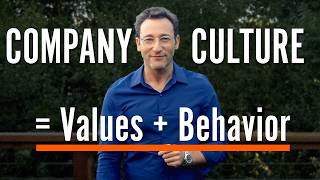
In this presentation Simon Sinek argues that leadership is widely misunderstood as a rank rather than a responsibility to help others rise. He explains that most people become managers because they excel at their technical job, but they are never taught the skills needed for leadership, leading to a gap between being a manager and being a true leader. Sinek stresses that when leaders become students of leadership, metrics such as productivity, engagement, and innovation improve. He critiques superficial value statements on walls, asserting that values must be expressed as concrete behaviors (verbs) – e.g., “do the right thing,” “find a new way to solve a problem,” “tell the truth.” He defines culture as the sum of values plus behavior, and recommends incentivizing and rewarding those behaviors, promoting individuals who embody them into leadership positions to reinforce a strong culture.
Chapters
So I think the concept of leadership is one of the most misunderstood concepts in business. Quite frankly, we think about leadership as a rank or position. Like, I'm in leadership. The question is, are you a leader? Leadership is the awesome responsibility to see those around us rise. It is a skill set that needs to be learned and practiced. Most of us, the way we have achieved our leadership position or rank is because we were good at the job. The problem is, that's not your job anymore. You know, when we're super junior, the organizations we work for give us tons of training how to do our jobs. Some of us go to college on how to do our job. If you're an architect, you have to go to school to learn how to be an architect. And if you're really good at your job, they'll promote you until you reach a position where you're now responsible for the people who do the job you used to do. But they're going to teach us how to do that. And so the reason we get managers and not leaders is because we don't get taught how to do our new job, called leadership. When leaders take themselves on, when leaders become students of leadership, you'll find that all of the traditional metrics that we try and push and drive every day go up. Productivity goes up. Engagement goes up. Innovation goes up. I think it's very funny. I love organizations that when they write their values on the wall, it's like, integrity, innovation, honesty. By the way, if you have to write honesty on the wall, you've got bigger. But those things are not things you can do. Those are the result of things. You can't walk into someone's office and say, lyn, a little more innovation from you today, please. What are you supposed to do? And so it's not a value. A value is a behavior. And the better we understand our values and the better we incentivize to behavior, the stronger your culture, and the stronger your culture, the more innovation you get, the more integrity you get, the more productivity you get, the more engagement you get. My favorite definition of culture is culture equals values plus behavior. So values number one need to be written as verbs. It's not integrity, it's do the right thing. It's not innovation, it's find a new way to solve a problem. It's not honesty, it's tell the truth, which are behaviors. And we can incentivize and reward to those behaviors and the people who are best at embodying those values. Those are the ones that we should promote into leadership positions, because those are the ones that set the example of, of how we, how we work.