Confident Ignorance with rapper, novelist, and filmmaker Logic | A Bit of Optimism Podcast
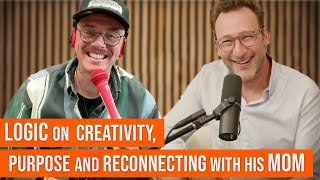
Logic talks with Simon Sinek about reconnecting with his mother after 15 years, leaving rap for filmmaking, and how his wife and kids changed what he cares about. He self-funded a multi-million-dollar film and wrestles with a creative drive that won't stop.
Chapters
I'm purposefully not making pop music anymore because that doesn't really make me happy. And when I reached the height of that pop mainstream success, I was left a bit empty. And I think finding, finding your purpose is really important. But I had found mine so young that by the time I finally hit the goal and reached that goal of like essentially everything a musician could dream to attain, there was nothing left. And so that's where we talk about that sense of self worth and not equating that to your work. And when I realized that, I found myself much happier, which is still a struggle every day. I'm a human being.
You said something, you talked about, you know, I had my purpose until I achieved my goal. That's a common misperception where people confuse purpose and goals. Like my purpose was to become a pop star. My purpose was to have a number one hit. But those aren't purposes, those are simply goals. And you can't achieve a purpose. You can advance towards it, you can build upon it, you can live it, but you can't achieve a purpose.
Wow. That's exactly how I feel like that's, that's what I had gone through.
Do you prefer Bobby or logic? Even though I like Bobby. Logic.
Oh my goodness. Dude, I had a.
We made it work. I mean, we get an A for effort, man.
No, for sure, but you don't understand, bro. I just talked to my mom for the first time in 15 years on the phone.
What?
Yeah, I know. That's why I was like a little late to start. I hadn't eaten. There's a whole thing. Anyway, you caught me at a crazy ass time, dude.
Okay, let's. Okay, I want to know a. Why haven't you talked to your mom in 15 years? Let's start there.
Because she was very.
Abusive and mentally unstable when I was a child. But I know that was due to her own abuse through throughout her lifetime which led to her mental decline and essentially just kind of ruined her human experience on this earth. And then it was a crazy. She's had a crazy ass life, you know.
How old are you?
I'm 34.
So 15 years ago. So this is, this is known to your 19.
So you haven't talked to your mom since you were 19? And when you say she had her, her own challenges and she had a crazy life. What, what, what was her life?
Well, you know, she, it's, it's, it's super deep, you know what I'm saying? From just like physical and sexual assault and abuse and all that, all that kind of stuff. It's just something that was. It stayed with her. You know, she has PTSD and trauma and a lot of that stuff that I had to deal with, like, when I was a kid, you know? Know what I'm saying? Like, she almost killed me when I was a kid. She, like, almost choked me to death and stuff. And wild stuff, man. Just being around, you know, having killers and murderers and robbers in the house, and she's an addict, and so is my father. So being surrounded by violence and drugs and guns and craziness makes for good books.
You know what I mean?
So. And what. What. How did it come about that you talked to your mom just now, like, literally just before you got on with me? Who reached out to who?
I had. I've. I had tried to talk to my mom for a couple years or just over the years, I would, like, reach out or I talk to a brother or a sister, and they kind of be like, nah, like.
You know, don't. Like, she's not really in a good space or this or that. It's just never kind of worked out. And then I talked to my brother, like, last year or the year before and told him that I wanted to speak to my mom, you know, because she's getting old. She's 63, you know what I'm saying? So. And she's. She's done a lot of drugs in her day, so I'm like, that time's gonna come, you know? And I. I had already previously, like, kind of forgiven her for all the stuff that she put me through as I've grown and matured and aged as a human being and, you know, just come to the realization of essentially.
She.
Was just a broken person at that time, you know what I mean? And. And she had told my brother, if he wants to talk to me, he can write me a letter. And that really hurt me because I just wanted to hear my mom's voice, you know, because it had been so long. And.
When I talked to her today, though, she was like, that wasn't my T.O.
You know? So I kind of took it, like, if he wants to talk to me, he can write me a letter. I'm like, what kind of is that? I just want to talk to my mom. But she was like, no, I just wanted to see where you were at mentally. She was like, before I put myself in that. Because maybe I was upset or angry or wanted to, which is not who I am, you know, but she's even told me. She's like, I haven't followed your career because it just hurts too much to. It hurt too much to see you or whatever.
So anyway, needless to say, it was a crazy conversation. It was super positive and very nice and great. And I just hadn't eaten and I was starving, so that's why we had to start a little late. Good way to start the pod, though.
To hear this from you is. It's. It's a perfectly good thing to start talking about.
A lot of people who go through childhoods like you had.
Sound like you now.
Maybe, or maybe they do, but many, many years later.
You know, that you have forgiveness. I'm very curious about people who go through extreme difficulty and abuse and things like that. How they. How they get to the point of forgiving the people who hurt them.
I think it's looking at it from a realistic standpoint, you know, because how can you actually be, like, angry at a drug addict? You know what I'm saying? Like a person with a disease, like, how could you be angry at, you know, someone.
With mental health issues? You know, I think we tend to, as human beings, we do that. Like if. If you have a dad who was abusive or this or that. But it's like he himself was ab. So because of that, you know, he was never really.
The right figure in the first place, but he was the only figure there. So then you can hold that resentment, you know what I mean? But I think as you age and grow and get older, it's like, you know, there are some straight up evil people in the world. That's not really who I'm talking about here. You know what I mean? I'm talking about people who leave their families or, you know, spend all their money or use them for money because of a drug addiction or this or that. Like, that's. It's actually different. Is it messed up? Of course it's terrible. You know, my dad stole my Social Security card because we have the same name. My name is Sir Robert Bryson hall ii. His name is Robert Bryson Hall. And it's like, when I was 10, he ruined my credit. So it. It's like there's things like that, or I could step back and be like, yo, he was, like, living for an addiction. So as an adult, I can put myself in that position, in that situation.
And, you know, kind of find solace in the fact that it was. It wasn't a man trying to take advantage of some child. It was, you know, a man who was internally broken and essentially the only thing that could free him from such purgatory was the substance in which he was trying to escape through. So when you, when you, when you see it that way. Yeah, forgiveness isn't that hard.
Yeah. But you're looking at it as if you're a third party. Right, Because. And this is what I'm curious about, which is, though that is all true, you also were forced to live a more difficult life and. And suffered as a result of their disease. So, for example, your credit was ruined by the age of 10. So when you're at an age where you actually need credit and you've got none, through no default of your own, you had to fix your credit yourself or you had to overcome the challenges of not having parents who are there for you. And all of those things you still had to overcome. And so how do you go from.
And I have to believe at some point in your life, you felt a little bit like a victim. Like, they did this to me or I have to do this because of them or I'm suffering more because of them. Like what. At what point or what happened that the conversion happened?
Because there's no way you went through that and you were fine with it the whole time and had forgiveness in your heart from the beginning. No way.
No, I definitely didn't have forgiveness in my heart the whole time.
But what was crazy is I always had this sense of.
I had common sense. So, like, you know, I. I walk in on my father smoking crack, trying to deny it in the bathroom, and he's like. And I'm like, okay, don't smoke crack. You know, I walk in on my mother bloody and beaten by some random dude she brought home. And I'm like, this is not how you treat women. You know, my brothers are in the streets shooting guns and resulting in certain things I won't even say publicly. And I'm like, maybe I shouldn't run around the hood. Like, it's just as. As it's happening. That was where my. My mind was. So I don't know what that is, man. I don't know what you call it regarding forgiveness in specific. I think that was more so just maturity, growth, and especially fatherhood. You know, it puts things into perspective. You know, I think about the things that I endured and went through based upon decisions made, or rather not by my. My parents, primarily my mother. And I look at my child and think, I could never do that to. To. To a kid. I could have never done that to this pure soul.
But I think that's also what makes me awesome. You know what I mean? Like, if I'm just being real. Like, it's like, I'm not gonna do that. Like, so. So those experiences that I went through taught me.
In, in, in great detail how to be the best father and me that I can be. And I mean, I still ain't shit, you know, I'm saying, like, I'm still trying to figure it out. I'm floating on a rock, you know what I mean? But, you know, I think I'm doing okay. And. And that makes me happy. It makes me happy that my kids love me and I'm there for my wife and my friends and a support system. I was talking to my homie yesterday, man. I don't really get a lot of days for myself, so I've been trying to.
Give myself a personal rest day just for me. And my homie was hanging out with me and I told him, I was like, man, I got so much on my plate, you know, I just filmed this movie. I'm gonna star in another movie. I got this album done. I'm working with Seth MacFarlane on another album. I just started this other album. My novel's about to drop. I got one I'm working on. I'm writing this three scripts.
All of a sudden I was like, man, it's just a lot. Hey, doggy. And.
He was like, sounds self imposed. And like, I knew that for a long time, but the way he said it to me, it hit me in such a way where I was like, oh, I am doing this to myself. I am kind of adding this stress and this weight. Okay, why are you breathing so damn loud? Doggy, run. Go. I love you. I am adding this, this stress and this weight to myself.
And.
I like it. And I think the thing that I like about it stems from the fact that I never really had much to do as a child or much to distract me. And so I would. I would fall into creativity and I would fall into work. And without question, I'm a workaholic.
I can't not work even on my off days. Yesterday, you know, I was working on 30 pages of a new script at midnight. Like, I just. Just who I am. And it all, I think, stems from the fear of not wanting to be what the surroundings were when I was a child. You know what I mean? My parents didn't work, these people around me didn't do anything, and I didn't want to do that. I think the good part of it is, although I am a workaholic, I know that I have a healthy relationship for the most part. And on most days with my work, you know, and I don't ignore my family or my children. And I have mandatory days, weekends, no matter what, just me and the family, no work, you know, date night set every week for me and my wife to go out and you know, have some fun romance and. This is important, man. It's crazy. Sorry, I know I'm going off on a bit of a tangent.
No, you're. It's such a.
What I so appreciate is there are people who, you know, let me ask the question. I'll come at it differently, which is how much of your identity is tied to your work? Do you have an identity separate from your work or are your work and your identity intertwined?
Said deep ass questions.
My identity is separate from my work without question.
But for example, and the reason I ask is a lot of workaholics, their identity is too intertwined with their work where they are strong, confident, good people. So long as they're working hard, doing good work and having success. And if they aren't or they have a setback, they'll be defensive about the work. But really they're defending themselves.
No, I'm not. I'm not that way. Okay, like. Like what? My work. It's weird man, because it is a part of my identity, but it's not solely my identity. Like I said, it's a health.
You have a healthy separation without question. Because I would argue that my work is a reflection of my identity. But. But my value of myself is disconnected from my work. So I can have a serious work setback. And I don't think of myself as a failure.
I didn't do that until a couple years ago because you know, my work was.
My story, my life, my this, my that. So it's like if I put out an album and it's received negatively or a song or people on the Internet or whatever, that would affect my actual every day. Like, you know, it would affect me and my, my sense of self worth or lack thereof or feeling, you know, regarding enough good enough, cool enough, black enough, this, enough that, enough like whatever. And it would really mess with my, my mind deeply. Yeah, I was very depressed and even through having my first child and through Covid like trying to discover and figure that out. And once I. I truly understood the. This sense of self, love and appreciation for myself away from my work. Yeah, that's when I had it. So. Yeah, I think, I think it's funny. I think it was that thing.
Yeah.
But it's not anymore. So when you had said it I was like, no, I don't feel that way. It's crazy. And I feel very much so like yourself. I feel that my work is a reflection of, of me. I'm not a reflection of my work, and my work is the ethic behind it. You know, I'm like Edison a thousand times, however many times until that light goes off. Like, that's just who I am. Whether I'm playing a video game and I'm trying to beat the boss, and I'll say, I'll be there for eight hours, or, you know, I learned the Rubik's Cube. Learn how to learn the Rubik's cube on Thanksgiving 2014. And I locked myself in a room for 16 hours, however long it was, like, I'm not leaving until I can solve the Rubik's Cube. And then I did it, you know, and learned every single algorithm, every level, every step, like, that's who I am.
What's funny, you know, you, you come from two. You're both your parents are addicts. And what's interesting is it seems like you have it in you. You know, they say addicts are children of addicts.
You know, I am 1000% an addiction.
And so you, you, you, you get addicted to the things you get addicted to. It sounds like are just healthier than crack. Low bar, I grant you, but that is a bar. That's a rap bar right there.
Yeah, you just snap. No, for sure. Like, you know, I was never into hard drugs, anything like that, even with alcohol. I've always, like, watched it almost over to the point I remember talking to my therapist and I was like, she was like, you don't have a problem with alcohol. You have a problem with alcohol. I was like, what? She was like, you just overthink alcohol because of your parents. She was like, you're fine. And I was like, oh, like, you know, so that was a couple years ago. And I've just like had all these thoughts regarding addiction and this and that. And my thing is I have to be doing something, you know, my heart. One of my hardest points was actually last year.
When I felt like I didn't have anywhere to put my creativeness. And I was drinking a little more than I should because of that, you know, kind of definitely using alcohol as a form of self medication. Not to the point where I'm drooling and falling all over the place or anything like that to really turn the voices in my head down because they never stop, you know, intrusive thoughts of creativity and stuff like that. But the question is, if you feel that you genuinely have no outlet, it feels as though that those voices that are generally there to aid you have now kind of in many ways, become a foe. And so, you know, I drink more than I should because I didn't know what was next for me. And then it hit me, like, you know, I was trying to turn these voices down. And it's not that I need to turn them down. I mean, don't get me wrong, nightcap, you know, gotta enjoy a good nightcap, you know what I mean? But it's like trying to turn shit down because I didn't know what was next. And so if my mind is forever going, and it's usually thinking about, like, a scene or a lyric or a novel idea or this or that. Now it's like, is my health okay? Like, I'm checking, like, health anxiety, and I'm overthinking that and my future and money and. And like, oh, no. Like, what if I just did this? What if I stopped working? Is the money gonna go away? Am I gonna go away? You know, I'm purposefully not making pop music anymore because that doesn't really make me happy. And when I reached the height of that pop mainstream success, I was left a. What do I do now? And then it hit me one day that it's. It's not just film, but it is film. Film is my true future. That's where I'm putting a hundred billion percent of, like, my energy towards. But it is music, it is novels. It is like I'm. I had to realize, like, it doesn't have to just be one, one thing. And I think finding. Finding your purpose is really important. But I had found mine so young that by the time I finally hit the goal and reached that goal of like, essentially everything a musician could dream to attain, there was nothing left. You know, it's like Michael Phelps, eight medals. Like, then what? You know, your body's not what it used to be. Then what? You woke up every single day, jumped in a pool every day of your life, and now you're in a desert, what are you gonna do? You know what I mean? And so that's where we talk about that sense of self worth and not equating that to your work. And when I realized that, I found myself much happier, which. It's still a struggle every day. I'm a human being.
You said something, you talked about, you know, I had my purpose until I achieved my goal.
You said. And I think that's a. If that's what you meant, that's a common misperception where people confuse purpose and goals. Like, my purpose was to become a pop star. My purpose was to have a number one hit. My purpose was to win eight gold medals, become the most medaled, you know, Olympian of all time. My. But those aren't purposes, those are simply goals. And you can't achieve a purpose. You can advance towards it, you can build upon it, you can live it, but you can't achieve a purpose.
Wow. That's exactly how I feel like that's, that's what I had gone through. Yeah. You know what I mean? So I hear you on that. Yeah, that, that's what I think.
That's where people get confused because you try lots of things looking for your purpose or you set these goals thinking that you're living your purpose. And the two are easily confused because both, both require lots of energy and lots of passion. You know, like whether you want to be on Broadway or you want to be a singer or you want to be an actor, or you want to go to law school or you want to get it to Harvard or, you know, whatever this outsized ambition is. And it feels like purpose because you, you make sacrifices for it, which you do when you're purposeful.
You.
You're, you're fixated on it. You can see it, you can smell it. But the problem is it's achievable. Or worse, what if that is you confuse your goals and your ambitions with your purpose and you don't make it to Broadway and you don't become, you know, a multi platinum selling artist, then what?
My purpose is to create. That's really what it is. To create, to entertain, you know, to inspire. That's, that's what it is. Because I've been inspired, taking my inspirations and wearing them on my sleeve. That's. But it took a long time. It takes a long time, man. You know what I mean? Look, and I mean, I've learned it young. Like I'm 34. That's another thing.
You're pretty much ahead of the game.
Yeah, but it's like the game makes you think. Like, especially the hip hop game. And like mainstream media, it's like, oh, you're 34, you got wrinkles and your hairline's going a little bit and oh, that's it, that's over. You know what I mean? So I had to make a switch of realizing, like, I'm not making music for teeny boppers no more. You know what I mean? I'm not making Music for kids. I'm not a kid anymore. It's like when I'm rapping on songs, I'm rapping about, like, doing your taxes and like, you know, being a successful person. And like. You know what I mean? Like, it's different. When I was younger, albeit, you know, very still positive and, you know, in that lane, I was still, you know, just rapping about young people's shit, you know, and stuff. And. And so for me, yeah, my purpose is. My purpose is to create and write and. And spread a positive message. Like, that's really. That's. That's all it is, you know, And I think I thank you for this because, like, this is already off jump, like a core memory because you kind of helped me be able to put it into words that I couldn't even explain. But I knew inherently and deep down in my self through a sense of. Or.
A moment of. Of self discovery, you know, say 10, 11 months ago when I decided to fund my own film for a few million dollars and really dive into that which isn't out yet. But.
Hold on, hold on. I want to push you, which is you went from conflating your purpose with a goal to conflating purpose with an activity. My purpose, you said, is to create and write and make inspiring stuff. Right?
Yeah, My creative purpose. Yeah. As an artist. Yeah, my purpose is as an artist to.
So wait, wait, so what's the difference in your purpose as an artist versus your purpose as a person?
Because I think my. I mean, my true purpose as a person is to just set a good, positive example. But I think that. But I think that I am. I am an artist. Like, it is my identity. Like that. That is a real thing. Like, it's who I am. Like, I'm not saying my work, there's a big difference, but, like, I'm an artist. You know what I mean? You look at. And I'm not comparing myself saying you look at Da Vinci. That's not just a guy, you know what I mean? It's like that's Da Vinci, you know what I'm saying? Or this or that or Prince or whatever. It's like that's who they are. Yeah, Like, I am a writer. Like, if you understand. Yeah. If you take writing and creativity away from me, I don't think I could.
They are. They're a core to your. Your, Your, Your identity.
Yeah, it's like the. The thing that is the most important in my life is my children and my wife. Like, that's the most important thing to me. But if you took away creativity and time for myself to be able to create my own worlds, I'd be no good to them because I wouldn't be happy. You know, it's like the mask at the bottom of the ocean or on an airplane. Like, there has to be that thing that self selfishly gives me purpose. And to me, that's what it is. It's to create, you know, and as you said, a goal. Man, that's really cool, to be able to really differentiate between the two, you know, and. And wow. Thank you. Because it's really cool the way you put it, because I. I'm at this place in my life, this. This juncture where I'm, like, really trying to figure out a lot about myself in a good way, you know, And I'm. I'm doing it, I'm seeing it. I was really locked off for a long time of, like.
Not knowing what was next. And I think those were goals because it's like, no matter what, the whole time, I'm still doing that thing, which is writing or creating, singing, rapping, acting like I love that. And the main key component there is a message.
Tell me, tell me. A project you've been a part of, something you've made, something you've written, something you've sung about, a song. I don't care.
It doesn't even have to have been commercially successful. And if all of your projects were like this one, you know, you'd be the happiest person alive.
Honestly, it would be the film I just made. I never felt anything like that in my life. It was the greatest experience ever because it wasn't just me in a room alone with four guys for 10 months. It was me and 80 people. And I'm at the head of this. And they're all kind and they all understand the tone of the film and what we're trying to say and what. What we're trying to do. Make people laugh, but also think and this and that. It was the craziest experience. I was. I was scared and nervous because it was new and exciting and. Yeah, it was. I mean, just to wake up every day.
And be surrounded by dozens and dozens of people all there for what I'm trying to do in from my head and they care was the craziest experience for me on anything. Over music, over everything.
So. So you've done some amazing things in your career. I mean, the, The. The. The song you wrote about the suicide hotline, you know, that was remarkable, and it had a massive and positive impact in the lives of people. And yet you choose to tell me about the film and not that song. What. What was it about?
That's. That's selfish. You said what's. What's the greatest thing that I loved more than anything that I could do over and over and over again?
Right, Right. But that's what I want to push. What specific. What specifically was it about making this film that was so different than all the other remarkable things that you've. You've worked on?
I think the thing that was. Sorry for the Elon Musk. Pause. I think the thing that was.
It was different. It was like. It was like letting me know that I don't have to just do that thing and that even though I might make a bunch of money if I just did that thing over and over and over again, it wasn't fulfilling. And. And to know that I was absolutely terrified, like, every day, I mean, in millions and millions of my own dollars in this film, that if something went wrong and a lot of things went wrong, but I made it work. But if something devastating happened, it's like this dream, this thing could not be there. So what was it? Is that it was. It was since I was a little boy making Jim Carrey faces in the mirror, wanting to star in a film, and. And this and that. And then you get on set and you realize how.
Like, it. It. It just becomes so much less about the vanity of it. It's weird. It's like, whoa, this is an ecosystem of something I've never been a part of. And deep in my heart and soul always knew I could crush. And I'd go to auditions and they're like, nope. And I go to auditions and they're like, nope. And I'd go to studios and be like, check out this script. And they're like, yeah. And I come over here and I'm like, please, please, please. And then I sit down with Kevin Smith. And Kevin Smith was like, just make it yourself. Fuck them. Just do it. And I'm like, easy for you to say. You know what I mean? He's like, just do it.
I mean, it was a beautiful experience because it was unlike anything I'd ever done in my life. You know what I mean? I've made music since I was, like, 11. You know what I mean? So stepping into this new space and seeing that, I mean, don't get me wrong. Same with novels. You know, I can describe myself in a different way. But you know what? It really is. I think what's so beautiful about the film is that there's so many.
Messages in this film that I've talked about in my music for so many years. But it's crazy when you can show someone instead of telling them. And in my music, I've just been telling them. But with this film, I was able to show them. And another thing that's crazy is, especially in today's day and age with how we consume media, there's people literally on the Internet, like, oh, I don't like Drake. I don't listen to Drake. That's just how they feel. Like, no matter what Drake does, they're not even gonna listen to it or pay attention because they have a predisposed notion of whatever it is that they just don't like this person.
Pretty much everybody's gonna watch a movie. Like, if you're into a specific type of a genre of movie, even if you don't like Brad Pitt, but some crazy movie comes out that everybody's talking about, you'll watch it. And guess what? Even if you don't like him and he crushes it, you'll be like, yeah, he did good. He did okay. Like, it's a different space and it's a visual space that I don't think I've ever been able to partake in. And I'm glad I could. Sorry. Very long winded. But no, I'm on. I'm on a journey of self discovery. So you're asking questions that are really making me think, man.
Tell me an early, specific, happy childhood memory.
Going on an Easter egg hunt with my mom that was probably about three and a half.
Okay, what do you remember?
I remember walking in this park by our apartment complex, picking up Easter eggs by a creek and then getting a turtle. I found a turtle and she let me bring it home because I was like, I have to bring this turtle home. And then I put it out on the balcony and the next day it was gone. And I think it jumped off. But now, later in my life, I realized I went to sleep, my mom said, I'm gonna get this turtle the hell out of here.
I know you had a difficult childhood, but, you know, there were some happy moments. What was it about all of your memories that you think that this one stands out?
I don't know. It's probably just more so the first one that came to mind, you know, you said, give me a memory, and that. That's one that popped out that was happy.
Yeah, but I. There's not too many of those, if I'm being honest.
But. But play with me. Here a little bit. So, like, what is it about that memory that that is happy that makes you smile? I mean, I'm sure there were other happy things that you've forgotten.
Probably that.
For me, personally, in that specific moment, there was no.
You know, screaming or yelling and money issues or this or that or blah, blah, blah, blah. It's the fact that it's. It's. It's that it was a happy memory because there's so little man. So it's just the fact that that other wasn't happening in this specific memory. You know, it was just me and my mom. Another one is being under a weeping willow with my mom and eating. Eating lunch, having a little picnic, which is crazy.
Say more.
I remember that. Yeah. Just by this lake in Montgomery Village on the way to Germantown in Maryland.
But that's it. Like, I have snapshots. I don't have, like, complete, like. And then we did this and went here. Like, that doesn't exist. Yeah.
So interesting. So now tell me a memory, a very clear memory that I can relive with you as if you're telling. As if I'm reliving a movie with you, and come up with a particularly difficult one.
Oh, here's a good one. So when I was about four and a half, almost five, there was this. These two kids, these, like, little white kids that lived in the neighborhood, and they never wore shoes, which I thought was weird. So this is actually gonna go deep. So they never wear shoes, and they'd always walk outside without shoes, and they would always try to convince me to take my shoes off. And I was like, no, I don't want to take off my shoes. Then there was this one day, they were like, hey, Bob, we have a cigarette. Go ask your mom for a lighter. I was like, what? And they're like, yeah, tell. Tell your mom our mom needs a lighter. Because we told our mom, your mom needs a cigarette. And I was like, okay, that was for me. I don't know why that thing just went off. So I was like, okay, so I get it. And then we end up walking, like, through this. These. These woods near the back of our apartment complex. And we have to go through these thorn bushes, and they end up crying. And they start crying, and they're crying because they don't have any shoes on. And me, I'm just like, told you, man. You know what I mean? Like, don't be walking outside with no shoes. And then we make it to this specific space with this other kid, Ian, and they start smoking the cigarette in the bush. Ian doesn't want to do it. He's like, cartman, like, I'm going home. So he goes home and they're like, come on, Bobby, do it, man, just do it. So I take a puff and he's like, no, you gotta inhale it. And I'm like, bro, we're five years old. What do you know about this, right? So I'm like, okay, I do that. It's so disgusting. Ian's mom tells all of our parents. My mom sits me down and she's like, I can't believe you were smoking. Blah, blah, blah, blah, blah, blah, blah, right? This is a good memory. And so she sits me down with my stepfather who actually was killed by the police in prison or the guards. Long story short, whatever, that's a different situation. And he sits down. His name was Tony Bransford. He has these big ass hands like cinder blocks, right? He was French and, and black. So mixed guy, very, very brown skinned, chocolate fella. And he goes. And he had to him, you know what I mean? And he was like. She was like, but you know what, Bobby, so you know that I'm not messing around, Tony's gonna take you in your room and give you a whooping. Don't you ever do this again. So he takes me into the room and I'm crying already. I'm terrified. You know, this guy is like the kingpin from Spider Man. Like, I'm like freaked out, right? And he comes and he goes, damn it, Bobby. And he slams the door and he turns around and he goes, listen, when I was your age, my dad, he used to beat up my brothers and sisters and my mom and he would beat me up really, really bad. And I always promised that I'd never put my hands on a child. And I was like, okay. And he goes, but we gotta make your mom think I'm kicking your ass in here, okay? And he goes, so? So just pretend like I'm beating you. So he's clapping and I'm like, oh, ah. Tony, no. Oh, stop. And he goes, good job, good job. Oh, Tony, no, please. Oh, oh. And he goes, okay, that's good.
All right.
And then he leaves. And I'm still in there. I'm like, oh. And he comes in and he goes, shut out. Shut the hell up. I can't be in here kicking your ass and out there at the same time. And I was like, oh, okay. And it was one of the sweetest things that anybody's ever done for me.
That's beautiful.
So what I find really interesting is you use the word terrified to describe the film. You use the word terrified to describe what you're going into with Tony. And both the sitting under the willow and going egg hunting are not really fully complete memories. They're these little snapshots. But the only thing that the snapshots give you value is there were moments when. When life was okay. There was an interruption, you said, to the screaming, the yelling, the violence, dare I say, the terror. Right. And so I wonder if you know that this idea of.
This idea of.
Facing terror and not in an aggressive way, but finding a way around and through it, is part of this.
That you have a weird relationship with terror.
And the experience you have with Tony is not dissimilar to the experience you have on the film, which is absolute terror, but thanks to someone else, thanks to the guidance and support and advice of other people, because you said that. You said the best thing about the film is it wasn't just me. There's all these people who helped help me get through this. Yeah, right. And to some degree, you know, you. You've a little bit become Tony, which is you are sort of helping people face their fears in a way that they didn't expect. Like, they're. They're standing there petrified, and you're like, no, no, no, no, no, no, no, no, no. I'm gonna get you through this. You know, and some of. And you look at some of your work, it kind of does that.
That.
It's kind of a helping hand.
You're.
You know.
I just find that interesting. Yeah.
I just think. I like to help others because in many ways, I didn't have anybody there for me, so I've spent a lot.
You did. I mean, you didn't and you did.
There was moments, though, you got to understand there was nobody that I could ever go to and talk to.
Yeah.
There was nobody to guide me. Yeah. There was no so. But I hear you. I'm not sure by. By no means.
No. I'm just thinking out loud. I'm thinking out loud with you.
I never had.
A person there, like, in my life, you know, So I think as. As I. I. They would be specs, you know, of. Like. Like a good person would enter, but not for a season, barely for two days a year, if you will, in this metaphor, I'm trying to use like. And I would. I would keep these little things from them. And so, you know, I've spent millions of dollars taking care of other people, you know, and. And supporting people and their Families and this and that and all that other stuff. And that's great. But I find myself at a very selfish point in my life. In a good way. Like, in a good way where I'm really just focused on me and my family and, you know, just trying to figure out. Because I don't know at all. You know what I mean?
I appreciate your sense of discovery. The other thing you talked about before, which I was drawn to. What was the term you used? Invasive creativity.
Yeah.
And I. I think I suffer from invasive creativity as well, because it's. Because I'll lie awake at night, I'll get three hours or four hours of sleep, and people like, why couldn't you sleep? I'm like, oh, my mind wouldn't turn off. Or I woke up in the middle of the night to pee. And then, like, the mind starts up again, you know, And I couldn't. I couldn't turn it off. And it's not bad. I'm not depressed, you know, necessarily. I'm not, like, dealing with something difficult, necessarily, but rather it's like a pinball machine of ideas, and I don't want them right now.
It's intrusive thoughts as well, you know, I really don't think.
But who doesn't have intrusive thoughts?
No, exactly.
Our minds wonder. We think about things we don't want to think about. You know, we replay the events of the day. We create false narratives about people or about ourselves. Like, it's all intrusive, isn't it?
Exactly. I think the thoughts that become conscious are the ones that we grab on and then either obsess over or kind of begin to dig into. So.
Any thought, right, that plops into your head, is it really yours? You know what I'm saying? It's like when. When. When the apple fell on Benjamin Franklin's head or whoever the hell it was.
Like Isaac Newton. Yeah, Benjamin Franklin was the one with the electricity.
Yeah, yeah, one of them motherfuckers. Anyway, so that's like. You know, it's like. Is it. Is it really? Like, oh, man, an apple hit me. And then. And it's like, maybe. Yeah, sure. But it's like that thought hit him. And that's how I feel. All of our thoughts are. They're like. Like apples falling. And then it's up to us to take it. You know, think about how many great ideas you probably forgotten. You know, so many times I wake up in the middle of the night and I have gnarly dreams and I'll, like, wake up from the most intense, vivid. I know every detail, and I go pee, and then I come back in bed and completely forgot it. So it's like, think about how many things that enter our mind almost unconsciously that we don't actually grab onto. It's a. It's a gnarly thing, but creatively.
That'S how my mind works. But it'll be like, oh, okay, I'm at a gas station. Like, what if this guy, like, took out a gun? And then I, like, John Wick, like, flipped around and then took the gun and, like, shot him in the foot. And then, you know, we got this crazy fight that I, like, stabbed it with a pen. And then I'm like, what the.
What the hell?
And I'm just trying to buy a can of coke. I'm like, where the hell did.
That was it.
What was that? But it's like. Then I'm like, that'd be kind of crazy. I should write that down and put it in a book, you know, or do this or that or whatever the case may be.
Do you carry a notebook? Do you write things down?
My app, like, yeah. Yes, I just do notes. It's in my.
You do it constantly? It's filled up with random nonsense, bro.
I have, like, tens of thousands of notes. Like, it's not even a joke.
One of the things that I think that I wish more people would do, because I agree with you, a lot of us, we're all creative in some way, shape, or form, and we forget more ideas than we can remember.
Is to carry a device or a notebook at all times and write them down. And the thing is, they don't have to go even go back and read them. Sometimes the act of writing it down reinforces it and makes it play a role later on. The number of times I've gone back and read my notebooks, I carry a notebook in my back pocket. The number of times I've gone back and read my notebooks, and I realized that the thoughts have reoccurred in other shapes and forms, and I'm not sure they would have if I didn't write it down.
That's really cool. Yeah. No, I love it, man. It's a wonderful thing. Like, I'm sitting on at least 20 script ideas for a film. I'm sitting on three or four fully fleshed out films that aren't in script form yet. You know, I'll come up with ideas for lines. You know, I could even go through my. Right now.
Let's see. I have so many notes, it's it's like, actually ridiculous.
So, yeah, here it is. Oh, no. I can't give away some of these ideas. They're actually really good. I don't want anybody to steal my. Let's go into lines. So I have different lines that I'll just come up with.
Right here.
My lyrics make people third month. So I guess that's a line that I ended up coming up with that turned into something else. So here, let me see. Give me. Give me one moment. I'll explain.
Yeah, this is a. This is actually one of my favorite lines I've ever written. Engaging in. I want no parts. Wrapping in my jeans ain't no starch. I could rhyme without rhyming and still make the people. Third month. So March. Right? You know what I mean? Which is cool. And then I go fifth month, I continue to ensue. Cut you like Ginsu. You don't know the. That I've been through. So that's like, May I continue? Just these little, little lines. And I'll write those. I'll go on and on and on. Some of them live, some of them don't. Let me just see if there's anyone. Let me give them one more. Let's see.
Oh, damn. These are like whole things.
Here's one. I stay with a pocket of duck mouths. That's fire bills. Like, basically I got, you know, just some rapid braggadocious, but I stay with a pack pocket of duck mouth. So that's pretty cool. I never like.
Right. It's like reverse rhyming. Slam slang.
Yeah, it's fun.
You are very inspiring, I have to say. You know, this is the first time you and I have met.
You're inspiring, dude. You just had me rethinking what it means between purpose and goals and shit. I'm like, yo, this is. You know, that's one thing not to interrupt. I apologize. But like, man, do I love learning. So thank you. Because, you know, meeting people like you is very special. I am a student. I don't know it all. What I do know, I'll be quick to let you know. I know it. But.
You got a lot of really wonderful gems. So I just wanted to say thank you, man, because I'm all ears. I'm hearing you, dude.
Thank you. I appreciate that. You touched upon something that my favorite leaders say. All my favorite leaders, when I meet them and you ask them about them, they all say, look, trying to figure it out. They all say, you know, not sure we're getting this entirely right. They all say, you Know, I've done things like this before, but this is the biggest thing. I don't know. I'm not 100% sure. The, the. It's what, it's confident self doubt, you know, which is the it. And I think people confuse uncertainty and doubt with lack of confidence, and they don't go together. You know, I think weak leaders say, oh, I don't know what I'm doing. This is the first time I've ever done anything like this. I don't know, I don't even know where to begin. And the great, so the great leader, the ones are like, look, I don't even know what I'm doing. I'm figuring this out as I go along. And you get a sense of like, self confidence and doubt are, are go together really, really well. And, and where it gets bad is when we have a. And. And I think when people, as I said, confuse their identity with their work or, or think that if they tell everybody how great they're at everything, it'll make them feel better. But the opposite is true, which is owning doubt and having confidence and doubt and having confidence and lack of knowing is incredibly empowering. And the more that I've owned my stupidity, you know, like, I don't know.
That I call it stupidity. I think I call it ignorance. Big difference.
Well, okay, the more that I've owned my ignorance, some of it's stupidity.
You know, like, I remember when I was younger, I got those things confused regularly where I had to prove how smart I was so that people would take me seriously. And just probably I got lucky that some people saw past that nonsense and were able to dig a little deeper.
That's just being young. We all.
That's just being young. But I think one of the things that a little bit of experience and a little bit of age provides is there is the incredible power that comes from owning ignorance and taking pride in your ignorance and being fascinated and curious in your own ignorance. You know, I. Because you ask more questions and you're more curious and, and I just, I just love that. I'll give you a funny story, please. That sort of captures the value of ignorance. I did this little challenge that somebody challenged me to, and I can challenge anybody who's listening to the same challenge because it's more difficult than you think, which is don't tell a single lie, absolutely zero lies for the next 48 hours. Everybody thinks they're super honest until you take this test.
Right? Like, but Dan, we talking like, like, like, like your auntie is like, how do I look in this dress? And she kind of. She might be.
Now, hold on, let's not confuse, let's not confuse honesty with meanness, okay?
You wouldn't say you look fat in that dress. You'd be like, I like the other dress on you better.
But she only showing you the one dress.
I. Auntie, I think I, I think that there are other things that would suit you better.
Okay? Right, Right.
You don't have to be mean to be honest. You just. To be honest. To be honest. You just have to tell the truth.
Right?
And so. And so, yeah, every little white light, like, we all do it, you know, you're sitting in a restaurant having a meal and you're complaining to your friend that this meal is cold, this meal is salty. And the.
And then, you know, the server comes.
Over because how is everything? And everybody looks up and goes, yeah, it's fine. Everything's good. Yeah, everything's fine. Lies. Absolute lies.
That's some Seinfeld shit right there.
Absolute lies. And so now I, whenever any. I don't like, make a point to go out of my way to like complain about food unless it's like really, really, really inedible. But if, if it's just a little bit like annoying, you know, and a server comes up, goes, how is everything? I'm like, okay, I'm saying if I'm honest, it's a little salty, you know? Wasn't going to tell you, but you asked. Because that's the deal I've made. Right. Anyway, but I digress. I took this challenge from someone not to tell a single lie for 48 hours. Try it. It is incredibly difficult. You don't realize how many stupid little white lies we tell on a regular basis. And I happened to have this meeting coincidentally, within this 48 hour period where I was in. I went to Washington and I had a meeting with the head speechwriter for a senior member of government, right?
Flex.
And I'm sitting in this beautiful office in the Capitol with these vaulted ceilings and these frescoes, and the speechwriter comes in and she sits down and the first question she asks me is, how much research have you done on the Congressman? Now on any other day, I would have said a little just to save face, just to not look like a freaking moron, ill prepared and unprepared for my meeting, right? But I literally. She asked me the question. I literally went to my. I thought to myself.
You know, because I'm promised not to tell a lie. So she goes, how much research have you done on the congressman. And I said, none. And she said, okay, let me tell you. Then she wasn't testing me. She was finding out what my baseline was. And depending on my baseline, then she would explain everything that I needed to know. And if I had lied and said a little, she wouldn't have told me as much. But she told me everything I needed to know. Now, it went well in that period, in that particular. It could have been humiliating. She could have said, you came for this meeting with out doing any research, what the hell were you thinking? That could have happened. But I learned. I learned that telling the uncomfortable truths, more often than not, sometimes they humiliated me. But more often than not, I got more information than I would have if I had, if I had told a white lie to save face and protect my ego. And, and this is, and this is where I think I started to learn. Confident self doubt or confident. Not self doubt. Confident doubt or confident ignorance. I kind of like that term, confident ignorance.
Confident ignorance is awesome. Confidence not to be mistaken with arrogance, which some people will try to correct, throw on you and you fuck them.
And ignorance not to be confused with.
Lack of self esteem or self worth or stupidity. Ignorance just means. I don't know.
When I was young, people would talk to me about movies. Like, older people. Not older older, but like when I'm a teenager and they're like, older than you. Yeah. And they're like, you know, or even other kids, you know, like, oh, man, yo, you, you heard that new song, blah blah, blah, blah blah. You know when they said these lyrics And I'd be like, yeah, yeah, yeah. Because if you go, no, I haven't heard it, they'd be like, what, you ain't heard that? Oh, man, like, or, yo, you seen that movie? No. Oh, you ain't seen that movie? Movie. Like they kind of make you feel a certain way. And I think that's, that's mainly people looking for power, looking for their own sense of self worth, of like, oh, I, I know this thing. You don't know. Yeah, but I think a great teacher is excited to find out that you don't know something so that they can tell you. And, and also I think it takes a great student to be honest and say something when they don't know, so I can't tell you. And I'm talking idols. Like, I'll be around. Like, I'm, I'm having a drink at Seth McFarlane's house. And he's like, let me tell you, you know, you know, you know that song by Billie Holiday? Right. And. And he's like, you know the one. The little jingle that goes whatever. And I'm like, nah. And he's like, really? And then he'll tell me about it, you know? And like, that's exciting. That's what's. Exactly. And even going to my film, like, yeah, I was terrified. Like, I remember sitting down with my. My first AD assistant director. My, like, right hand, right? His name's Kevin Brown. Fantastic guy.
There's that word again, by the way. Terrified. Just go on.
And we were in. I was thinking about doing an album called Terrified, full of, like, a bunch of types of music that I've, like, never done before, because it really scares me. Anyway, so.
So I remember we're, like, days away.
From filming and we're doing shot listing. I'm doing that with my. My. My dp, Kevin Fletcher, all this other stuff. And I asked kb I say, how do you shoot a scene? Like, yo, I'm the director, dog. Like, you know what I'm saying? And he just looks at me and he's like.
Oh, let me show you. And he just takes out paper and he's like, okay, you got your person here.
Yeah.
And you do over the shoulder coverage here and this and that. And you got your wide. That's pretty much it. And I was like, oh, okay, cool.
But there's an important nuance here, right? You didn't say.
How do you shoot a scene?
Yeah, you're right.
Right. Because then he's like, what am I doing here? Right? You just went, hey, how do you shoot a scene? And there's that confident ignorance again. Right? And by the way, for those who want to practice confident ignorance, there's two ways. There's two. There's two ways you can dip your toe into it. When somebody says, have you heard these lyrics? You can say, not yet. I add the word yet sometimes. And the other one, I. When they say, joe, have you heard these lyrics? I'll say, tell me.
Right?
Because now I'm empowering them to give me something that I don't know. So they still get to have the power dynamic if they want it. But I don't feel stupid.
I love that. Tell me another thing.
Confident ignorance. I really love this. I.
Before I hear this whole.
This whole conversation coming down to this confident ignorance has been. I love that concept so much.
Here's where I get all the little.
Stupid thumbs up that keeps coming up that we can't figure out how to turn off has now been worth it, because that's what that is. That we have confident ignorance right now. We have no clue how to turn off those stupid little thumbs.
I don't know what it is. Maybe it's me.
Maybe it's like I'm. I think it's your computer. I mean, not to, not to, not to be like, blamey about.
It's definitely my computer. But you know what? Who gives a. We're fine.
So wait, I don't tell you this.
Let me tell you the story. So, So I am about to do this film, right? And I was talking to my, my producers, Liz Destro and Jordan Monsanto Muse, two badass women. And they. I was gonna go with this different director, a dear friend of mine. And we ended up couldn't being able, we weren't able to do it. And they were going to say, bob, we were going to tell you that you needed to do it anyway. And I was like, what? No, we need to find somebody else. And they're like, no, Bob, like, you have to direct this. And I was like, what do you mean? Why? And they're like, because honestly, you see every page, you know, every piece of dialogue. You have the vision for it. And in my mind, I was like, I don't, I've never directed in my life. I, I. And I was very honest with them. I was like, yo, I can act, I can write. I was like, I don't know that I can direct. I've never done it. And they were like, bob, trust us. We would not put you in a position. You're spending millions of dollars. You're not going to fail. You can do this. And I was like, all right, if you really think I could do it, all right, it, I'll do it. And then as soon as I got into pre production, all I realized directing is truly is just having vision. And I've been like, yo, I've been directing for 15 years in the studio with people telling people, taking what's in my head, talking to someone who can destroy the guitar and going, okay, you know when you go boom, boom, boom, boom, boom, can you actually go boom, boom, boom, boom differently? And, and kind of slide it? And they're like, oh, yeah, you want me to take the eighth note down, blah, blah, blah. And they're like saying all this jargon. I'm like, yeah, I don't know what the hell you just said, but if you can give me what I just asked for, then we can do that. And it's about, you know, bringing in these people that are masters of their own craft.
I tried. I'm not a dancer, but I tried my hand at choreography because I like watching dance, and I know what's good and I know what's bad.
I just got to know, now, what kind of dance was it?
This is modern dance. Modern dance.
So, like, jazz hand vibes?
No, that's like jazz. This is.
What the hell is modern dance?
Okay, I'll take you to a performance one day and I'll.
Let's do that.
You can Google Peanut Bausch or Anna Von. Anna Teresa Von Kirsmacher.
See, man, you just sound smart. You'd be making me feel like, damn. I'm like.
It's just. I know you can say the names of people that you like in the arts that you like, and you'll make. You'll sound smarter than me. It's just. It's. I like dance.
I love it. Okay, please continue.
So anyway, I decided to. Tammy Stronak. She's pretty awesome. Anyway, I decided to try choreography because I know it's good and I know it's bad, but I have no facility or. Or technical capability whatsoever. So I did what you did. I cheated.
I hired two dancers who are really, really good, and I said, this is what I imagine. Can you make it do that? You know? And they did something. I went, no, no, no, not that. Lift your arm higher. This is what I. This is the thing. And then I came up with the scene. I was like, so this is the. The emotion that I'm trying to do. It's like this. And I explained the emotion. I explained the relationship between the couple. And they. They heard it and they got it. And within a few minutes, we choreographed a very simple but really good little, short little piece that was visually incredibly appealing. And the greatest compliment I got was they liked it, too.
Oh, wow, that's awesome.
And to your point, I have no facility. I can't tell them technically what to do. I just know it when I'll see it. And I think to your point about vision, which is. Vision lives in our imagination, and I can see it, but nobody else can see it. But if I can take words on a page, you know, movements from a dancer or visuals on a painting, and I can help, and somebody can help me do the thing until it matches the thing that I can see, then. Then I think I've created something worth creating. But I think many of us hold ourselves back because we have the vision, but we don't have the facility, so we just don't do it.
And when you.
When you say facility, what do you mean?
Like, you, You. You said, like, the guitarist is like, oh, I'll move my B7 to this. And you're like, what have you said? Like you don't have the technical understanding of the chords of the guitar. Yeah, you just need it to go. You just need it to do that slide, right? And. And over the years, you've learned some of those technical terms and you've learned what they. They mean. And so you can talk. In short, when you understand the technical terms, it's a little more efficient because you can talk in shorthand. Like, I need you language. I need you to move the slide from B7 to B5. And it's like, God, I'll do it. But. But the point is, is that that's just language, that's just vocabulary. That. That helps you operate more efficiently.
But if.
If somebody hasn't taught you the technical stuff, if you don't have the technical ability, doesn't mean you can't create. As long as you can see something that you want created, somebody else can help you make it. If you ask for help.
Yeah, but that's what was fun working with my dp because he was like. He literally said to me, just like these dancers said to you. He goes, I've worked with a lot of directors in my 56 years. And he goes, I've never worked with someone who had as much vision as you. And when he said that to me, it like, almost made me want to cry because I was like, whoa. And what I'm really realizing is I work in a very, like, avant garde, kind of obtuse manner. You know what I mean? Where it's like, I don't give a. What the studio does. I don't care what they say. This, this, this. I'm just like, man, this is what I'm doing. This is how I do it. And I think people find it refreshing, you know what I mean? That honest. Because I'm gonna be a thousand with you, man. I. I think it might be fun to take that no lie challenge, but I'd be hella honest. I might not be honest about somebody hairline, you know what I mean? Or something like that, if they're looking well.
Why? Well, look, no lies means. Doesn't mean only a few lies when it suits you. Again, you can be honest without being mean. But you should take the challenge. But, but, but going back to what you just said, I think what that director is responding to is. And I'm. I love that term again, which is the confident ignorance, which is what you express. Was confident ignorance. And so he got to use what he had because you expressed the fact that you didn't know and you needed his help, and that's what made a team, which is I. You have vision that he doesn't have, and he has capacity to help your vision come to life. And your confident ignorance made him valuable and made him great. Versus other directors who probably don't have vision, but they want to show that they're as good a DP as the dp, you know, which is not confident ignorance. It's just overconfidence or over leveraging ego.
Because now you're just up the film. You know what I mean? Like, confident, evasive creativity.
I love it. Invasive creativity, I would argue, is the pejorative. Is the. Is the downside? Is the bad side of it?
But is it?
No, but is it invasive creativity.
But is it? Because it's those intrusive thoughts that keep us up at night. But is it? Or is that our superpower?
I don't know.
And it's merely, like, the task.
I love my pinball brain, people. Like, what's it like to be in your brain? I'm always like, ever play pinball? You know, I love my brain. My brain is the source of creativity, but it's also the source of sleepless nights occasionally. And like, sometimes. Sometimes I would like to turn it off. Mine's not because I hate it. I just want to go to sleep.
What's this shit? And sorry for all the thumbs up. At least they're thumbs up and not downing.
No, we had a bunch of thumbs down too, but that's okay.
Oh, whatever. It's fine. What are those things where all the flights are on? What is that called? You go into airport and it's a.
Oh, yeah, the flipboard. It's called.
That's what my head's like.
That's.
Yeah, that's what comes to mind. Vision.
Yeah. That's a good one. Yeah. Hey, Bobby, I could talk to you forever.
I could talk to you forever. But yes, I. I get it.
Well, no, if we keep talking, we have to rebrand it and make it a completely separate podcast.
I was about to say that. Man, hit me up. What's up? I'll do that all day. Get his money. No, I'm just kidding.
A real pleasure meeting you. You've taught me a lot.
Oh, you taught me a lot.
And thanks. Thanks for. Thanks for just being so open and so confidently ignorant. It's such a magical thing.
It's such a cool thing. I think I'M gonna start saying that. Thank you for having me on the show. I had a wonderful time. You're very cool and nice and shout out everybody behind the scenes that's helping you out. Thank you to everybody listening who stayed and wanted to hear lul me story. Appreciate it and hopefully you'll have me back and I'm here anytime you need it and feel free to like just grab my number from my managers or whatever. Just so we're in touch if you.
I would love that.
I would love a glass of milk. You want to borrow some sugar? I got you.
Thank you man. Appreciate it. Likewise the feelings mutual.
All right, cool. Peace out.
If you enjoyed this podcast and would like to hear more, please subscribe wherever you like to listen to podcasts. And if you'd like even more optimism, check out my website Simon Sinek.com for classes, videos and more. Until then, take care of yourself, take care of each other.
More from Clegg

The #1 Skill Gen Z Needs | Simon Sinek + Esther Perel | A Bit of Optimism Podcast







AI Won't Tell You the Full Truth | Arthur Brooks + Simon Sinek | A Bit of Optimism Podcast



How To Make the Best Decision | Arthur Brooks and Simon Sinek | A Bit of Optimism