Do THIS nail your virtual interviews
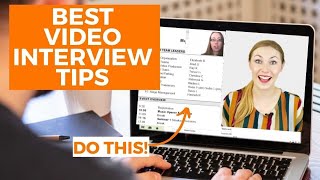
A practical, example-rich YouTube tutorial by Madeline Mann (with contributor Elizabeth) offering 15 focused tips to improve performance in virtual job interviews. Advice covers technical setup (notifications, background, device positioning), interpersonal tactics (rapport via similarity, eye contact, asking tailored questions, flipping questions), preparation practices (story toolbox, exposure practice, rest), scheduling (morning/10am peak), and a live-style digital portfolio/screen-share example that demonstrably helped a candidate land a job.
Chapters
You want the 15 video interview tips that have led to these thousands of jobs landed? Oh yeah, a big helping of helping coming at you. I have years of video interview tips and I've packed the 15 of the best ones into this compilation video. It's like shoving my entire wardrobe into my carry on luggage so that you will be legendary at rocking the virtual interview. Note that most people don't realize that number eight is important, but yet yet it's a zero effort way to stand out and stay to the end for number 15 for a high impact strategy that I guarantee your competition is not doing in a video interview. And if you're new here, this is self made millennial. I'm Madeline Mann, a human resources leader and award winning job search strategist. You may have seen me in these places. Subscribe to change your approach from job seeking to job shopping. Now let's go through the top virtual interview tips that will help you ace the video interview.
Notifications. Nothing gets your nerves going haywire quite like someone you know deciding to send you eight texts in a row while you're interviewing. Set your phone to do not disturb and create a guest account on your computer and then log into that for interviews. That should eliminate any notifications from your normal computer that they may throw at you.
The Power of Similarity we as humans are naturally inclined to protect our tribe or really anyone who seems similar to us. Of course, this is highly problematic because people often hire and promote people who are like them, which leads to about the level of diversity you'd find in a bunker full of minions. But there are ways that we can twist this desire to feel like we are in their tribe. What I want you to do is request the names of the people who will be interviewing you. Ask this to whomever is coordinating your interview and trust me, it's a normal ask. Then do some tasteful Internet sleuthing. Their LinkedIn profile will often be enough information, but you could branch out to their Twitter, their personal website as well. Pick out one or two things that you can connect with them on. Such as they also have moved a lot. They also have stayed at a company for more than four years. They also do community service. Notice none of these things are hyper specific. Like you both went to the same school, which if you did that will really help. But not all of us have that luxury. So expand your mind and look for anything that makes you slightly similar and bring it up in an interview. You can say something like I was excited to speak with you because I saw saw the different cities you've lived in on your LinkedIn profile, and it's nice to connect with someone who has a similarly nomadic past. You get what I'm saying, right? And you know what's the wild thing? This person is going to feel seen. They're going to feel noticed. They can now talk about him or herself, which is their favorite topic, and they are now seeing you as more similar. This is powerful stuff. Pooches.
Ask Questions at the End of the Interview all the time I hear people say oh no, don't ask questions at the end of the interview. The company will get annoyed. What all those people have in common is that they have never hired anyone or they ask really poor questions in the interview, such as before they get to the offer stage, asking questions like how much vacation time can I take off? Or asking a lot of questions that are easily answered online, such as what does your product do? Don't do that. But a very common reason that a candidate is not selected for a job is if they didn't ask any questions. Happens all the time. You need to ask questions at the end of an interview. If you only get one thing from this video, it's that when they ask do you have any questions for us? You ask them several questions. You come across as someone who isn't properly vetting the opportunity. Otherwise. I've seen this time and time again folks, I cannot emphasize it enough. I will put it in obnoxious text across the screen so you all can see it in the back. What do you ask though? Well, I have a few questions that are super effective. Ideally your questions are customized to the opportunity, but watch the video I have on five Questions to Ask during the interview I will walk through five different types of questions to ask and several variations for each. Those work really well in many interview scenarios. Excellent success stories have come from that very video. A few of my favorite approaches include tailoring the questions to to the interviewer so asking them how long they've been at the company, or if you've done your research on LinkedIn ahead of time, you already know that answer. And then asking them if it's been over a year, how the company and their role has changed over time, or what has kept them at the company and if it's been less than a year, asking things like how has their expectation of what the role in the company would be like different than their actual experience once they joined? Another great question to ask the hiring manager is has the search for this role been moving quickly or have you been interviewing for a while? If they Say the latter. Ask them the what have candidates been consistently missing when you interview them? The answer to this question is some of the most valuable information you could ever dream of. Whatever their hang up is now you know and you can address that head on in your interviews. You gotta make sure that won't trip you up and stop them from choosing you.
Now let's talk about how to appear friendly and confident. Practice looking into the camera instead of looking into the center of the screen. The person on the other side will feel more connected to you because it'll feel like you're looking at directly in their peepers. Smile a little more than you normally would and pep up your energy. The video may add 10 pounds but it subtracts 3 cups of coffee so you will come across a lot less energetic. Practice all of these moves with a friend on the other end and choose your most honest friend. They will tell you if you're coming off confident or like grinning buffoon. Make sure you have practice answering interview questions and that you have your key stories that you want to tell and make sure they are well rehearsed. I will link the Tell me about yourself worksheet to help you sketch out your answer to that question because you know that one is coming at you and if you answer it poorly it sets the tone for the rest of the interview. So I will link it in the comments and and in the description.
The rule of thumb for in person interviews is to dress one step up from what employees typically wear and it's the exact same rule for video interviews. That means that you should dress a little more formal than what an employee would be expected to wear on a typical day. Guess what? This rule is actually more important for video interviews because it can make such a powerful impression because so much your competition isn't doing it. I was scheduled to run a video mock interview with one of my clients. The video turned on and for the first time I saw my client wearing a button up shirt with a tie and a jacket and I had a huge smile on my face. I mean he knows me. He knows that I'll think he's a champ no matter what he looks like. But again, it spoke volumes to me that he was taking this interview really seriously. And then of course he completely rocked his mop interview. Wi Fi High five. Hitting the airwaves for you sir.
Make sure before you do your first one way interview that you put yourself through some good old fashioned homemade exposure therapy. Exposure therapy is where you simulate the stress inducing environment so that when you face it in real life, you are better at coping so I recommend practicing with things that make you nervous, such as have a countdown timer right there in your face, record your responses on video, have a friend on the other end with their video off just sitting there judging you and have them ask you questions that you possibly didn't choose or plan for. If you're anything like me, all of these factors get your blood pumping, but you will feel much more in control come the real thing. I will link two videos in the comments and in the description that include how to not ramble in a job interview and also how to increase your confidence.
Background for the background behind you, aim for the least amount of clutter possible. Notice what is in your background. I know I have a desk in the bedroom and it's usually only once I log on to the video call that I noticed the closet door is wide open and it does not look so good. So luckily I often remember to then close it before starting the call.
The Power of Timing okay, this tip is really juicy and takes no effort. When I look at my Rise app, it shows me when are my peak focus times and when are the times I am not focused, AKA when I will find any excuse to be distracted. And it sends me push notifications based on my circadian rhythms to say you're about to be productive this hour. Get in the focus zone. Or or your mind is about to be as useless as the G in lasagna, so just go relax and don't screw anything up. These focus notifications are so helpful. So what does this mean for you? Take interviews in your peak times. A general rule of thumb is that most people are peaking in the late morning and again in the early evening. You and your interviewer will be at your emotional and cognitive prime. 10am is my recommendation. That is the golden hour. But really, having any interview between 9am and 11:30am is ideal. This research is reflected in job interview studies, but also in studies of surgeons. They found that surgeons had far lower incidences of mistakes for surgeries performed in the morning instead of after lunch. So get those morning surgery slots for.
Folks.
Clarify before diving deeper. You will often be asked broad questions in interviews, and possibly those questions aren't even well crafted, but there is an intention behind them. Help the interviewer to further guide you. So if they ask a broad question like what is your project management experience? What do most of us do? We just start rambling and talking in circles until we see some sort of acknowledgment or nod that we're on the right path or we are far too concise and say something like yes, I have three years of project management experience.
What should you do instead? Give what I call a menu answer where you understand where to dive in deeper. Such as Project management is a huge part of my day to day for the past three years. I define the team's project scope and objectives, I manage the project scope, the schedule and cost, and I have extensive experience with different project management systems software. Would you like me to dive deeper in any of those areas? So here you're giving them a menu of what you can serve up as a fantastic answer so that you can better understand what the heck were they trying to get out of that question? Maybe it's simply checking that you have the experience so they just want short and sweet answer which you gave them. Or are they waiting to hear you say that you've worked with a certain type of software you don't know and so by providing a broad answer and asking them to narrow you down, you'll give the type of answer that they were hoping for.
Computer Ideally use a computer for your video call instead of a phone. It looks more professional. And then stack it up on several books so that you're not looking down at the camera. It subconsciously sends a signal that you are looking down on the interviewer. You want them to see you as their equal and so there's some low key psychology associated with all of this. So make sure to get that puppy eye level.
Come prepared with notes. Have the job description out in front of you and have stories from your professional career that show your competence as relating to that job description. It's what I call building a story toolbox and is one of the most potent ways of passing an interview with flying colors such as this job seeker who landed her job dream job at Amazon during the coronavirus outbreak. From using my story toolbox approach, I will link a video on how to build a story toolbox of your own and a playlist of all of the most common interview questions and exactly how to answer them. So many of these questions in that playlist show up all the time in these spark hire one way interviews so make sure you have bullet point notes of what your answers will be to those questions.
Flip the question. This one has dramatic results. For some questions that you were asked, finish by asking a question such as they ask what is your leadership style? And you answer my leadership style is answer and then make it more of a conversation and ask does that fit with how you all work? Which leadership styles are most successful Here this is is important context for you to know. Should you work with this company? I have a full video on how to answer this question. What is your leadership style? Because it can be a really challenging question which I will link in the comments and in the description.
I want this job because I want to work remotely and have a flexible schedule.
Oh my gosh. Yeah, I've actually, I've had this experience with a candidate once. He was like, yeah, you know I really like this role on salting because I don't have to go in the office because you don't have one.
Yes, those benefits, any benefit that a company gives you, of course that's going to play into whether or not you're going to take that role. But making that the primary reason why you want to work there, having a remote work situation and flexible schedule, you can find a hundred million jobs that will offer you that. So a company's looking for something a little bit deeper. What do you like about the company? The product, the team, the role? How does the role play to your skills? So just dive a little bit deeper versus what are the benefits the company is offering?
And you can see the benefits usually on different platforms, whether it's Glassdoor, other sites and they'll sometimes even have it in the job description that it is a hybrid or remote role.
The power of rest. Speaking of interview preparation, there is no doubt that the more you prepare for an interview, the more you are going to slay it harder than JLO in any decade. But a huge mistake people make is is cramming that information the night before, late into the night or even worse, the day of. Studies show that learning doesn't happen in the moment, it happens when you sleep. It is best to do interview prep a few days in advance of the interview because the learning and memorization happens while you're sleeping. It's incredible. Studies show that a full night's sleep after learning new information significantly boosts how well and how accurately you're able to recall what you learned. Being sleep deprived for an interview is proven to be one of the most detrimental things you can do because you're less clear headed, you're less charismatic. I always practice the evening before and relax the morning of because our brains do all the hard work encoding in our memory while we're sleeping. And that's on working smarter, not harder.
Now Elizabeth, you did the bamfinder approach in your interview, but the digital version. And for any of you who are unfamiliar with the term bamfinder, I have a full video where I walk through how to create a portfolio for any profession. And that is going to be a great tool for you to watch in tandem with this video. So I will link it in the comments and in the description. But Elizabeth, can you walk us through what you so what I had is.
Several work examples open on my screen ready to pull up depending on what question I was asked. I knew they could work for several different questions. And then when they asked the question I would answer in high level summary first and then I would say something like, in fact, I happen to have a document that shows how I organize this event. It's our running sheet that I use with the volunteer team leaders. Would you be okay if I shared that right now on the screen and then I could walk you through some more detail? Then they might be a little surprised and they'll say yes and then share the screen, make sure they can see it. Okay. And then walk through the document briefly and then I share the screen before the very end of the answer. So at the end of the answer is where tying into relevance passion about connecting it back to the organization. So that was sort of my approach. And I do have a couple tips for when you're actually sharing the document. So first thing is make sure you don't scroll too fast. And to be mindful, the interviewers may not be able to follow the cursor. So using some like verbal direction, sort of like, hey, you'll see under column 3 it says such and such. And then secondly, just to make sure to unshare soon enough so that they're not looking at a boring document for too long.
I love your approach. You are the mvp. Can you show us an example of this in action?
Okay, so here's an example that would work for any question to do with like so just tell us a little bit about your experience working with volunteers or planning an event. So my answer would be sure. I actually was a music department coordinator overseas and I worked with a lot of volunteers. We had one annual conference a year where we trained musicians. Around 400 musicians came from across the UK and so I helped coordinate team leaders to plan leading up to the day and organize logistics on the day as well. So I actually happen to have a run sheet that I used with all the team leaders on my computer. Would you be okay if I shared my screen right now and then I could walk you through some of the details?
Yes, go right ahead.
You'll see here that my name's at the top. So I was organizing logistics and coordinating the volunteer team leaders. There's around 10 volunteer team leaders, all different areas, around 100 volunteers total. And the scope of the event was we had several music performances and keynotes, some breakout sessions and a concert. So a lot of moving parts, which is what I love about event organizing. And then you'll notice here that we have it broken down by time. Team details. We use this run sheet as our agenda for all the planning meetings leading up to the event, so every team could see where they were and what they were doing. This was definitely shifting as we went along. So it was important we have a document, very detailed. And then you'll notice here at the top that each seminar had multiple breakout sessions, multiple venues, multiple locations. So it was really important that as volunteer leads, we had ways of communicating, whether phone or other methods. So that was part of the approach that I used. What the event showed me is I loved leading volunteers. I loved the coordinating and the administration, all those details. Right. And it affirmed for me that that's the type of thing I want to keep doing in my career. My boss gave me such a good compliment after he said that that was the first conference in some time where he's able to totally relax and just like enjoy the event knowing that I had all the details covered and the team leads could come to me if they needed. So that, that just affirmed that this is the type of thing I want to keep doing. Which frankly is why I applied to the role. I saw that you two events, I think next year. So I know that I want to bring these same skills to your organization and help all your volunteers, like, be a part of bringing forward a great successful event.
Phenomenal. Such a tangible example. And what was the reaction at the.
End of the interview? When I got the job, I made sure to follow up with all the panelists and their. Each one separately told me their first impression was the ease of use of the technology, sharing the screen. And how they were absolutely floored in their conversation after the interview was that they should really consider hiring me. Especially in the state that we're in where working remotely is the new normal. For now. It was important to demonstrate this seamless experience that's very personable and mimics the in person experience as much as possible. Right?
That is so great. Do you prefer phone interviews, video interviews, or in person interviews? Put your answer in the comments. I am actually like phone interviews the best because I can just focus on conveying information and not all the other distracting elements of an interview. What about you? Be sure to grab your tell me about yourself worksheet.
Good luck.
On your video interview. And don't forget to like and subscribe. You've got this Wi Fi high five.
More from Clegg

The #1 Skill Gen Z Needs | Simon Sinek + Esther Perel | A Bit of Optimism Podcast







AI Won't Tell You the Full Truth | Arthur Brooks + Simon Sinek | A Bit of Optimism Podcast



How To Make the Best Decision | Arthur Brooks and Simon Sinek | A Bit of Optimism