How And Why Your Business Should Do Business With The Government
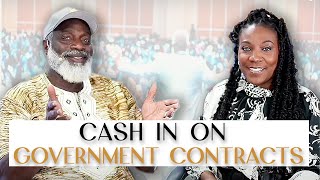
Carwana Dyson went from video production to winning government contracts worth $70,000 and $200,000. She explains how entrepreneurs can tap into government spending with nearly any product or service, and offers a 5-day GovCon Challenge to help you get started.
Questions this video answers
Don't Duck the Government: How to Make Millions Pitching and Winning Government Contracts.
govconchallenge.com.
$97.
$297.
$27.
Chapters
Hey there, YouTube. Myron golden here. And I am here with one of my inner circle clients and one of my VIP day clients and the genius, the business maven that teaches people how to get government contracts, teaches entrepreneurs, high level entrepreneurs, it doesn't matter if you're an author, if you're a photographer, if you're a coach, if you are a speaker, if you are a landscaper, if you're in real estate, whatever, a builder, she teaches you how to get government contracts and how to make up in one sale what it would take you a hundred normal sales or a thousand normal sales to do in revenue. So help me welcome to our platform and our YouTube channel, Carwana Dyson. Hey, Carwana. So glad you're here.
Thank you so much for having me.
My pleasure, My pleasure.
Thank you.
So I met Carwana. Well, I met her a long time ago, but we really got a chance to connect when she and her husband and their baby, they were on a VIP day flight with us from Tampa to Los Angeles back in September. And she was talking about this stuff and I am not even kidding. My mind was blown. My mind was just like a million pieces all over that airplane.
Right.
And because she teaches like, like people like me, people like you, how to get government contracts. And the government needs entrepreneurs and authors and coaches and landscapers and drywallers and photographers and videographers and all kinds of folks to get like to. To do work for the government and to do that via government contracts. So, Carwana, how did you. First of all, let me ask you this question. How did you get started as an entrepreneur and did you start in the arena of government contracts?
Okay, great. So I absolutely did not start in the arena government of government contracts. I actually started a little over 20 years ago as an entrepreneur simply because I got tired of working for somebody else. And not just because I was working for someone else, but I felt like I wasn't able to utilize my skill set in the way that I, I know that I could on the job. And I had started having children and I felt like I was spending all this time working for someone else and I had a very little time to go home, to spend time with my family. By the time I got home, I was getting going home to cook and go to sleep. That's all I had time to do. And so I was like, man, is this what life, you know, is this what it is? And not for a lot of people.
It is though.
Yeah. For me, it's just. You wasn't feeling, I wasn't feeling It. Although I was making really good money to do that, I felt like I had a lot more to offer to life. And on top of that, after going to school for however many years to get a college degree, I was pretty much making the same amount of money as someone who dropped out of high school and just built their way up to the top. So I was like, wait, what just happened here? You know? And so that's how I really first got started in as an entrepreneur, because I wanted to live my dream and be able to, you know, be home first, you know, be able to spend time with my children, quality time, and kind of build my life around that.
So it sounds like you were disillusioned on two fronts. One.
You didn't have enough time to spend with your family.
Right.
Two, you spent all this time, all this effort, all this money to get a degree, and then you graduated, and there were people who didn't go to college and do all that same sacrifice you did who were getting paid the same exact amount as you were. So now you're disillusioned on two fronts, you said. So it sounds like you came to a conclusion. There must be a better way.
Absolutely. Absolutely. I mean, I felt. I felt like I had been duped. Like, really, when I discovered that other people were making the same amount of money and I'm walking in, popping my collar, like, I got a college degree. You know, Like, I made it. To me, that. That's. You made it, right?
Yeah.
But I realized that I was duped. Like, it was like one of those, aha moments that, you know, they say, go to school, get a college degree, you're going to know, get top pay. And all that stuff was like. So it was just like, the same thing of, like, discovering. Christopher Columbus didn't really discover America.
And you're like, there were people already here when he got here.
People already here. And so it was one of those moments like, Santa Claus ain't real, y'. All. Santa Claus ain't real.
The Easter Bunny is not a thing.
None of that stuff. So, yeah, so, yeah, it. It was definitely an eye opener for me. Yeah.
Wow. Okay. And so you decided to become an entrepreneur.
So what did you do?
You just quit your job, said, I'm out of here. I'm gonna go start my own business.
I didn't. I actually. I didn't necessarily quit right away. It's crazy because, like, I. I despise going to work so much that I found all. Every loophole to stay off work while getting paid. Right. Which means that I've. I discovered that if I stayed off work for, you know, three to four days and get a doctor's note, they're still going to pay me the same pay and I don't have to be at work, I could be at home. And so I started working. However many PDLs paid leave time I can get off, how many sick days I can get. Like, I just stayed off work a lot and I was like, well, I don't know if I want to continue like, you know, doing this. Like, what's the purpose of going to work if you don't love what you do? And so, so basically after that I just kind of decided that I wanted to start a business, but I wasn't really sure exactly what I wanted to do in business. And so I tried a lot of things. I tried MLMs, like multi level marketing. I tried, you know, of course Mary Kay was one of the first that actually taught me the principles that I wanted to live by in business, which was God first, family second, and then everything else around that. And then I tried like, I tried a whole bunch of things, but ultimately I said, well, what. What have I done consistently all my life or what has been consistent throughout my life that I love and have a passion for? And I went to school for actual video production, broadcast television. And so I was like, well, it's the video thing. So I started my. Initially I started a business with that.
And then shooting videos.
Y.
What year was that?
That was. I mean I was shoot 2003, I want to say.
So we're talking about VHS or, or those Mini V. Those Mini DV tapes.
Y Min.
Dvs.
Yep. It was Mini dv's. Yeah. Actually it's crazy because when I went to school for it, we, we edited on vhs. So it was like, it was analog before it was digital. Right. And then it evolved to like the vhs.
So when you. And when you. And when you edit on, on dvd, if I'm. I don't know, you would have to literally cut and splice stuff back together, like physically.
Yeah.
Because it was a real image.
It was, it was real live. And it's like if you mess up, you got to start all over. It wasn't like it is today, you know, but I had got.
Can you imagine not being able to edit on your iPhone, y'?
All?
I mean, this is crazy.
Crazy. Like, man, the evolution is real.
Wow.
But I had got really good at that and so I just started a business with the one thing that I felt like I was really passionate about. It reminded me of when I was, when I was a kid. You remember? Speaking of tapes, like the cassette tapes. So when those, when I was a.
Kid, it was eight track tapes.
But I do remember, well, back in my day, right, Back when I used.
To say it's called cassette tapes, back.
In my day, like we had the, my mom and them had the eight tracks and I had cassette tapes.
I saw what you did there. I saw what you did there. That's okay.
But it was cool because, you know, eight tracks in school still, they still had eight tracks.
You couldn't rewind. You had to fast forward all the way to the same song you wanted to hear again.
Exactly. Anyway, but, but I remember, like we used to have these, these, these tapes, cassette tapes, and we used to, you know, have a playlist on it and every so often the tape used to pop, Right. And I was so good at splicing back the tape seamlessly and you'll never know that it had popped.
I used to do that same thing.
That's crazy. And so it's crazy how I ended up in video production and I started editing, which is the exact same thing.
Yeah.
And I was like, okay, well that's the one. I've been doing that all my life. I need to start a business in that. So, yeah, that's, that's what, ultimately, that's what I end. Wow.
Okay, so, so how did you go from video editing, shooting video to. Or just shooting, shooting and editing video to government contracts? That's a, that's. I don't know, Maybe it's a huge, maybe it's just me, but it seems like a, like the Grand Canyon, you.
Know, it's definitely a huge leap. So first let me say when I went to school for business, I went to school for business and communications and broadcast. So I have a bunch of totally. A bunch of overrated degrees and stuff like that. But when I went to school, I was, I was taught in business it takes, you know, two to five or three to five years to turn a profit. And you have to have startup capital and you have to go get business loans. You have to do all these things. So I really believe that. So when I first started my production company, I built it that way. And I built my production company off what I heard was a bootstrap, you know, bootstrap budget. Right. You take a little bit of money and you invest it in, you reinvest it and all those things. So it was really hard the first few years, like first five years in business, like, I barely Was making ends meet. I barely was making, like, 15 to 20,000 a year, but I was working, like, 50 to 60 hours chasing customers, right? And I said, it's just got to be a better way. Like, after so much time, I was like, it's got to be a better, better way than this, right? But it wasn't until, like, I had been married before, and I was. I was on the verge of getting a divorce. Of course those types of things happen. And I was trying to figure out how was I going to be able to pay bills off 15 to 20 thousand dollars a year. I wasn't gonna be able to do that and provide for my children. And so I had heard from one of the first black billionaires that I had met personally that how you build a business is by selling to the government. I said, well, what. What do you mean by that? Like, I don't sell weapons, you know, because that's right.
What do you think? Yeah.
What are you talking about? Like, you know, But I had asked him because I was like. Because I, you know, I was freelancing. I had started freelancing, and that's how I was making the 15 to 20,000. Freelancing for other small businesses, building out their portfolio, doing videos and photography stuff for them. And so he really just told me. I said, well, how did you become the billionaire? Right? Most of most people don't want to ask a question of who's successful, how did you do it? Because in our culture, or at least in my culture or community, like, that's, like, you don't ask that. It's taboo. You don't ask a person how they did it, right? But you know what? I was just so sick and tired of trying to figure things out and working my fingers to the bone and had nothing to show for it. And here I had, like, three children. My son and, you know, about to get a divorce. My son was walking, getting ready to. You know, he basically had holes at the bottom of his shoes. And I was like, I can't provide. And that was, like, one of the biggest, like, grief moments for me. Like, I can't even. I can't even do nothing for my son because I got all these bills and all this stuff. And so for me, I asked him, right, that. That. That's what gave me the courage. Yeah.
Taboo or no taboo, how. I need you to put some shoes on my baby.
How did you do it? And so he looked at me. He gave me a serious look, and he said this. These are the words that literally changed my Life. He said, the same thing that you're doing for me. You can do it for the government and make tons of money doing it. I said, what do you, what do you mean by that? Right? He said, well, don't you know, you do photography services and you do video services. There are trillion dollar projects where they have to use women owned businesses or minority businesses and small businesses like yours. I said, okay, so I actually made the commitment to myself to go learn everything about that because for me, I needed to change my life and I needed to do it sooner rather than later.
Isn't it interesting how sometimes, like being in enough pain is the exact catalyst you need to take your life to another level?
Absolutely.
And it sounds like to me it like if you wouldn't have been in that situation where you're going through a divorce.
Yeah.
You can't put shoes on your children, you can't pay your bills, you're making 20,000 a year, not a month, a year. Yeah, 15, 20,000 a year. It sounds like if you hadn't gone through that situation, you may not have even had enough intestinal fortitude to ask him that question.
I was playing like I wouldn't, I wouldn't have had enough to just to ask that question. But also I felt like I was playing in business because I wasn't serious. I really wasn't serious enough. Right. Because I was still running around chasing customers, doing the things that I knew didn't work and I was doing them anyway. Right. And so that's why I came to the conclusion back then that regardless of what situation I'm going through, I, I learned to trust God. Right. I said I would start telling myself, God, I trust you. I don't understand the season that I'm in. I don't understand what I'm going through or how or why I'm going through it. But I trust you. And I know that you told me when I was a child, you spoke to my spirit that, that I was going to be great like I was, there's greatness within me and, and I'm ready. So I start having those types of conversations with myself rather than, oh, woe is me, come on now. Oh, they don't have anything for me. Oh, they won't allow me to get this loan because my credit is bad. Like all these different things that we can talk about why the world is set up or basically is set up to keep you out or keep minority or black and brown people out of wealth. Right. I could have used all those excuses and I did For a long time. But it wasn't until I came to the realization that I have to be the one to make something happen for myself.
Go ahead with your bad self.
Yeah, go ahead. Yeah.
Okay, so. So you decided you're going to go into government contracts. You researched everything on your own. And so it sounds like you, you dove it, you got out of the. Okay, I've got a degree. So you got out of the formal education swimming pool.
Yeah.
Into the self education swimming pool.
Yes. It's crazy.
And you got in that pool and you started learning.
Yeah.
And you applied what you learned?
Yeah, absolutely. I actually, I actually stole. So when I started self educating myself, it all came full circle to me. The things about what I learned in school, I felt like that's a lie. And the things about like what I learned about Christopher Columbus discover in America, I'm like, that's a lie. I'm like, if all of these things that we've been taught by society is a lie, then I need to learn more truths. And that's when I went into self study mode. And what I discovered was it does not take two to five years to build a business. You can be highly profitable in your first 30, 60, 90 days if you're selling to the right person. And what I learned about the government is they're obligated. They already have this money, pools of money. Like we're talking about multiple trillions of dollars that they've already earmarked to spend with entrepreneurs. Right. That's the only way to get the.
Money is if you have a business like, you know, say less. You had me at hello.
So instead of chasing customers, here's a customer who's already chasing you. They've already raised their hand and say, hey, come get.
I've got all this money.
Come get.
I want to pay you. Especially I want to pay you if you're an entrepreneur, if you have a business, a small business, number one. Number two, if you're run by a minority, Number three, if you're run by a woman, Number four, if you're run by a person with a disability. Yeah, I want to pay you any one of those. Great. All four of those.
Yeah.
Your chances are better than anybody else. That's how it sounds to me.
That's exactly what it is. I start checking those boxes and then so, so, so I started actually initially when I first heard of it, I didn't really know what I was doing. So I said, you know what, I'm gonna do it anyway. All the mistakes I've Learned from. Right. So I. So for, for everyone that's, you know, there's a lot of times I hear about people, oh, I tried this and it doesn't work. Well, you have to keep trying until you figure out how to make it work. And so for me, it took a couple years for me to continue trying to get the nose and, and I was like, what am I doing wrong? So I start going back and repeating and rinsing, repeating and, and moving some things around until I finally landed my first contract with Literally, which literally changed my life. And it, and it happened like the day I signed my divorce paper, it was like final. Right. Like two days later. It was like, here's the $70,000 contract for the 28 days of work that you're going to do for us. Taking photos. Right? And I was taking photos. Taking pictures with a camera and taking photos. And it was like two hours on site. 28 days, $70,000. That's 56 hours. So it was what I was making in a year when I was working for a corporation. Right. Working 40 hour work weeks in overtime. Replace that in a 28 day period. Working for myself and selling to the right customer.
Whoo. $70,000. 28 days of work.
Same like. So there's. You just said so. So I, I don't know if you are getting this, but I hope you are getting this.
Yeah.
She's telling you, she's like letting you in on insider secrets. She said the government has trillions with a trillions of dollars that are earmarked. That means they can't spend that money on nothing. But you. You exactly right. I just want to make sure I'm picking up everything you putting down.
Absolutely.
And you went out there and said, I got a camera.
Yep.
I'm a small business that's owned by a minority woman.
Yes.
And I want to go take some pictures for y'. All and I'm only going to charge you $70,000 for 28 days.
And it's crazy because.
Because we would think in, in the real world, no business, no business is going to pay you $70,000 for 28 days worth of work.
It does not happen, right? Nope.
So how. Like so and so I was having this conversation with you when we were on the plane and a light bulb for me came on. So I'm gonna tell you all the light bulb that came on for me.
So.
So she was talking, I was like, wait a minute. The government as a buyer is the opposite of a consumer.
Right.
Or a business. Because a consumer or A business, when they're buying something, they have a vested interest.
In spending as little money as possible and getting as much value as possible. But the government's the exact opposite.
Yeah.
They are incentivized.
To spend as much money as possible, even if it means overpaying for something by 2, 3, 4, 5, 10 times. And please correct me if I'm wrong.
That's correct.
10 times. Paying 10 times more for our service than it's worth than the average person in the marketplace. Because if they don't spend all that money.
They get less money from the federal government the next year as a subsidy.
Absolutely.
So the go. The federal government is subsidizing local governments to waste money so they can get more money from the federal government so the federal government can come and take more money from us in taxes.
Absolutely.
Man, when I heard that, y' all don't even know how I was through. It was a rap. I was like, like, like. Shut up. Like, stop. No, don't even.
What? Yeah. It's crazy. Yeah.
And so, So I don't. I hope you are getting this. Now. I have. I, I. My customers are entrepreneurs, and so we have. I have customers that pay me a lot of money.
Right.
Our VIP days are now $350,000 for somebody to come spend the day with me. So that's significant amount of money. We've got masterminds that are anywhere from, who knows, $20,000, upwards of a million dollars a year.
Right.
But. But like, when I create.
A coaching program when I. I'm sorry, not a coaching program. When I create an offer for the United States government, for the. Because I'm. I'm going straight for the, like, the federal government. I don't. I'm gonna skip all this local stuff. Yeah, but that, but when I create an offer for them, I could potentially make millions, tens of millions, hundreds of millions, or a billion or multiple billions of dollars in my first year, if the offer is right.
Absolutely.
Because the money is there.
The money is there. Yep. You're right.
I'm so through. And I don't know if y' all have heard me say this before, but I've said this. I know you've probably heard me say it, but, like, when I started in business, I was B2C business to customers.
Yeah.
Then I went B2B business to business. My next move in business is B2G business to government. And now I've got the person who is my B2G coach. Right. So I'm one of your clients now. Right. So B2G where you teach people how to get government contracts. And now we're in the process of learning all of that stuff so that we can go out and make offers to the government and have them pay us.
It does, it's just, it's a no brainer. And like most people have never heard of B2G business model. They, they hear about B2B or B2C.
Right.
But the B2G is like one of the biggest kept secrets that can literally, it can literally transform your life. Your bank account, your zip code, your.
Your family for generations, generations to come.
Absolutely.
You get, if you, you can figure out the right government contract for the right niche inside the government and then you can do a test, like a test sample y improved proof of concept Y they'll throw money at you for the rest of your life.
Absolutely. Absolutely.
Child, please, you don't have to tell me three times. I heard you the first time.
Yeah, and, and it's like, so the government has like a fiscal budget every single year. Like, and so the fiscal year for the federal government normally starts in October and it ends in the end of September. And so what normally happens because they have to spend this money from green to red when they went at the end of the year, towards the end of the year when they still are in the green, if you're in position, they start calling people, hey, can you come? Basically they don't say, come get this money, but basically that's what they're saying, like, hey, we have this money. I see that you, you sell or the service you offer is X, Y and Z. And we, you know, we need to get rid of this money. Can you send us a quote or proposal for it? So it's just like that's a customer that's picking up the phone and saying, hey, I want to give you this money. It's crazy.
Didn't you tell me about when we were on the plane, you told me about.
Somebody who the government called and wanted some toothpaste or something. I don't remember what it was. Something wild like that.
Yeah. No, so I say I have a colleague who actually sells toothbrushes. They make millions of dollars selling toothbrushes to the government. And like you, like you, like you.
I mean, I'm so dizzy right now. Like, what are you. How you make millions of dollars selling toothbrushes?
Because they buy in a bulk. So the government buys in bulk. So if it's a person product, they buy it in bulk. Like they'll buy it a million or 10 million at a time. Because it's crazy like that.
Who's the government buying toothbrushes for?
Well, the people who are in the military. Like, okay, so here's the thing. The government cannot buy its own stuff. It has to outsource to businesses for whatever they need for food, for, like, toothbrushes, toilet paper, supplies, services. Everything is outsourced to businesses. And so. And so, basically, you know, you have the Navy, you have the military, you have the army, you have people who.
Are marines, you have the air.
Marine, Air Force. And so they need prisons. Right. And you have prisons, and they have commissaries, you know those convenience stores and things on bases. On bases, yeah. So supply stores and all that stuff. And so, yeah, that. That is where. Why they buy it and where it goes. Yeah, for toothbrushes. For toothbrushes.
Millions of dot. Millions of dollars a year selling toothbrushes to the government.
Yeah.
I have heard everything I ever need to hear for the rest of my natural life.
What? Yeah, yeah. No, it's. It's like some of the craziest things. Like, so I have actually worked with a. With a business owner, and she actually does hair. That's what she does. And so most of the time, I get the question, well, how does the government buy my stuff? I'm like, government. The government buys literally everything. There's nothing.
There's nothing for sale.
There's nothing.
The government doesn't buy.
That the government doesn't buy. If you can sell it to a person, you can sell it to the government. It's just about positioning and understanding how to position that. Right. And so she does hair, and she's trying to figure out, well, how can I. How can I take this business? I love what you, you know, what you teach about changing, you know, creating generational wealth and leveraging the government contracts. It's earmarked money for me. I want to learn how to get it. And so I showed her exactly how to position herself, and now she sells prosthetic wigs to the government. Yes, the government will buy wigs. They buy hats. It's amazing.
Why do they buy wigs?
Okay, good question.
Yeah. What's the government gonna do with a wig?
So you have people who have been, you know, they have veteran benefits and stuff. Like, the veterans, they come home from war, maybe they had surgeries and things of that nature. And so they have people who have alopecia, like, who have government veteran benefits. And so that's what they use the wigs for. Wow.
Okay.
So, yeah. So in fact, like, some of The. Some of the craziest contracts that. That I've seen. In fact, a barber. There's a. There's a contract where a Barber was awarded $895,000 for one year to cut hair in the federal prisons. There are like hundreds of thousands of dollars in contracts for bottled water. Bottled water. The same water that we see people with carts at ballpark selling it for a dollar, maybe two dollars for. Well, the government buys that in bulk, and they'll give it to you, like a half a million dollar contract to provide the same water to the government. It's crazy.
So basically you're saying. And maybe you're not saying this, but it sounds like you're saying to me a person who doesn't yet sell to the government, that I can become a middleman between the government and my manufacturer.
Absolutely.
And make an absolute fortune.
Absolutely, absolutely. It's just all about positioning.
So what about. Okay, so. So what about all these people out here who have these E commerce stores and they're selling E commerce products to individuals? Are you telling me somebody can sign up with, like, an Alibaba account, import all the stuff from Alibaba or a US Manufacturer, whoever.
Yeah.
And then sell it to the United States government and you're getting paid because you know where to order it from and where to ship it to?
Absolutely. That's it. That's it. And so there was a young man, his name is Wesley, IN. In 2019, during. During COVID this young man, 16 years old, found a contract, paid him millions of dollars selling hand sanitizers and face masks to the government. And so anybody can do this stuff. You know, it's just really about knowledge. But not only does the government buy y'. All.
Can y' all see how done I am?
I'm through.
I'm through.
Look, not only does the government buy products, but they also purchase services. So for everyone, that's like doing accounting, bookkeeping, landscaping, like, all of these different janitorial services, the government will buy your service as well. So you see how we have, like, all these cameras and lighting and all this stuff. Microphone. The government buys all that stuff. Podcast services. Like, they. They will buy your service to do a podcast for government agencies. It's crazy. Absolutely. Run the camera, do some editing, all that stuff. In fact, one of the largest contracts that I've been on was a million dollars for me to shoot and edit videos.
How many videos? Like 40 million.
I mean, like, okay, so no, not 40 million. Let's just say, like, this one video that I've shot. And it took me like a week to edit. It was like $200,000. Like, like you. I mean, you can't even. Like, if you try to look.
What are you talking about?
That's what I'm saying. If you try to look for an individual person that, that you want to sell your video production services, then first of all, a lot of people can't afford that.
They don't have 200.
They don't have 200,000. They. They barely want to pay 5,000. Right. They be like, give me a hookup for $1000 or 1500 or something like that. But to. To do the same service for the government, you can walk home with a. A1. A $200,000 check for that same one video.
And so, so, so I have to ask, what was the video of?
So it was some video training. So at agencies at the Department of Transportation, they were doing trainings. They were actually training entrepreneurs how to do business with the Department of Transportation. And so I was the videographer who. Who taped those sessions and edited it so that they can actually provide it. And so.
And they paid you 200,000 for one video?
For one video because.
Shot and then edited in a week. And then you invoiced them, and then they sent you a check for two.
It was simply because I. There was a couple re. Edit requests on top of that. Yeah. So, absolutely.
I'm stupefied, dumbfounded.
You know, I was stupefied when I first. When I. The first contract that I landed for 70. 70,000. I was stupefied. I was dumbfounded. I was like, wait, let me hurry up and cash this check. Because I don't know if it's real. I don't know if they gonna come back and take it back. No, but I. But I had to remove that block from my mind that the service that I was offering is so valuable. And the people that I've been chasing all this time, trying to convince them, like, they just wasn't the right customers.
They weren't the right customers.
Right. And so, yeah, you're the. The government will pay you your value. They don't pay you.
They'll pay you more than your value.
Sounds like they actually.
They will help you. They'll help you identify a new value.
That part, yes, that part, yes, absolutely. Absolutely.
Oh, I feel like I literally feel like I just discovered a gold mine.
It is. It is truly a gold mine.
So, like, I've got. I've got a guy that I play golf with here in Tampa. He has a construction Company that's like a $50 million construction company. And all he does is build colleges for the government. Build colleges, college buildings for the government. And he's, he's like one of the richest guys I know.
Wow.
Yeah, like, like crazy, like ridiculous, like crazy rich. Yeah, yeah, that kind of rich. Yeah, the kind of rich. Like.
Wait, what, what? Yeah. And the crazy, the, the best part about doing business with the government is that they always pay. And regardless of what's going on, whether it's a recession or pandemic or whatever, they pay more. Like, you know, when all businesses, most businesses are shutting down during these economic hard times. Right. During these times of economic hardship. Right. Most businesses are shutting down because they're, they're depending on foot traffic, consumers, B2C. Right. Depending on those people are in the house, they stop spending because they're afraid of what's going on in the world. But the government says, well, well, I'm Gonna set aside 54 billion for XYZ or 54 billion for the upcoming recession or 54 billion for the, for the pandemic. Right. Just to say a number. They spend more money to create solutions and they're looking for businesses to help them solve those problems that are happening. And so it's a, it's truly a recession proof business model, but it also gives you consistent income and sustainability that.
You don't have to get anywhere else.
You're not going to get that anywhere else. Absolutely.
So what's the most remarkable government contract.
Story? You somebody, you know, a client.
Somebody who's a contemporary of yours, Somebody else who does what you do. What's. Tell me some, give me some remarkable. I can't believe, like you Carwana, I can't believe people got a government, this person got a government contract doing this, this for this amount of money.
I'm going to say, okay, so, so a couple stories. So I, I work with a lot of entrepreneurs showing them how to do this. Like for the first time they're landing like millions of dollars, quarter of a million, like they're, they're life changing income. And so one young lady a couple years ago, she actually came to me and she was like, you know, I don't even have no money, but I'm, you know, but I believe that this, this is going to be for me. So she pulled out of her 401k, right. So she got really resourceful because she saw an opportunity to change her life and she actually signed up to sell travel services during the pandemic to the government. However, travel Was not, you know, airport. You know, the airports were like shut down.
They were like ghost towns.
Yeah, it was ghost town. So it was really hard for her to find an opportunity and travel. However, when you're a position, when it comes to the government, like you can sell anything. Right. You just got to get creative. And so she saw an opportunity for health breast care exams. Right. Yet she's in travel. She's not a doctor. Right. She's not a physician in no kind of way. But she saw an opportunity and then she went to partner with someone else who was a doctor. They went on that contract together and she landed her first quarter of a million dollar contract doing that. That was remarkable to me. I'm like, wow.
She's not even.
Just a simple fact. Just look. Just a simple fact that she didn't go on, that she didn't go through those, those opportunities and say, well, nothing in travel. Well, I guess it's not for me. Right. She was like, well what opportunities are there?
Like tapped into her creativity.
To her creativity. And that's the type of mindset you have to have because a lot of times people give up too soon.
What about. So I got one for you. So what about entertainers and singers and comedians?
I'm glad that you said that. So ironically I just thought of that.
So that came to mind.
So I have a lot. So I grew up in a church, so I have a lot of friends who are musicians and like ministers of music and things of that nature. So I actually started like doing some research. I'm like, well, I wonder if there's anything for them. And what I discovered was not only do they have multiple six figure contracts for ministers of music, like musician services for their chapels. Right. But with those types of contracts, what look for their chapel. What are you talking about? But with those type of contracts. So if you're doing it for a church, you probably make, you know, let's just say you make 30, 40,000 a year and you got to be at every church service, every rehearsal, all this.
Right. Cuz I know how it is.
And then like they got to leading acquires like herding cats.
Exactly. But they for that, for multiple six figures, doing the same services with the government. One Sunday service and one rehearsal a week, that's two days out of the week, that's eight days out of the month for multiple six figures. You still have your life, you can still do your side hustles and all that other stuff. Yeah.
So they probably have chaplains for the military. Then they have chaplains for prisons and they have chaplains for.
For the hospitals. It's. It's the chapels for every. For everything. In fact, there are like. So at events. Are y' all seeing this? Are y' all hearing this lady? Yes. And so. So at events, they actually. At government events. Right. They hire event planning.
What is a government event? What does that mean?
So. So government event. So it could be a banquet. It could be inaugural or whatever.
White House. Whatever. Whatever. Whatever.
Yeah. So when they have these ceremonies or types of events, they hire event planning companies. Well, normally that comes with hiring an entertainment company, too. Right. Someone to come sing, to perform, a dj. So musicians and people who are in entertainment can absolutely get a contract. You just have to understand how to, you know, position yourself to do that. They also, like, those event planning contracts also come with, like, there's contracts within contracts. Right? These. These are all the things that I teach, like, contracts within contracts. You have to just kind of think outside the box. Well, normally when those. They. They're having those events, they. They hire caterers for food, Right. So that's a contract within the event planning contract.
So if you're the event contractor, you can get a contract for the government, for the.
For the.
For the event and for the food, and then you can subcontract the food out to somebody who does catering.
Absolutely.
Make the difference.
And the.
A middleman between the middleman manufacturing, the government, and then you're a middleman between the subcontract.
Yeah.
What?
So we're talking about security, we talk about decorations, we're talking about all this stuff. Yeah. And then you're hiring a photographer and a videographer on top of that. And so you just. Just, you know, ideally when you. When you're working with an individual. So let's just say you're doing a baby shower or those type of events or something like that. Right. They pay you one thing for your one service. What? You know, one fee for your one service or. Well, when you're doing business with the government, you actually itemize all that, Right. I'm doing the event planning, the coordination, the security, the. The food, the service, the janitorial cleanups, like, all that stuff. So that's how event planning with the government, like, you can have hundreds of thousands of dollars in a day for one event. Hundreds of hundreds of thousands of dollars in a day for one event. Absolutely.
Kind of makes you want to be an event planner, don't it? So, okay, so tell me another success story that you're already, like, you already messed up all my Hair rearranged all the furniture in my head. So tell me another success story, like somebody else that, you know that got a crazy government contract.
Okay, so another young man that I work with, his name is Remy. In fact, I started working with him earlier this year and already, like, within. First of all, he. He's. He beat the record of landing the contract within record time. So ideally, I like to tell people it may take up to like six months before you can really start landing your contracts. But for some people, it's sooner because of how they work. It's their work ethic. Right. That allows you to be able to do that sooner. And so for him, he just had an amazing work ethic. He landed his first contract in four weeks of learning how to do it. Right. In within four weeks. And the first contract was 750, 000. And then a month later, he landed a contract for another 300, 000. That's his first million. First million dollars in government contracts his first year.
His first. In his first two contracts.
Yeah. In his first two contracts, two sales. Yeah.
Okay, so let me ask you a question. You're an entrepreneur. When was the last time you made two sales and made over a million dollars? This is why business to government is so powerful. So if you're watching this on YouTube and you're thinking, well, what does it have to do with me? I think she's explaining it. Carwana's explaining it so eloquently, like, it doesn't matter what you sell or what you do as an, as an entrepreneur, if you sell it to the government, you're going to make more money.
Absolutely.
Period.
So there.
Yes.
All right, so give us one more. Give us one more. I want to ask you some other questions, but give us one more crazy success because this, this. Oh, by the way, let me. What does Remy do? What does he. What did he do that. 750. 750, 000.
So the first. So the first contract that he landed was actually to do housing for veterans. Yeah. So. So he went out and bought like these houses to house veterans, like, who were homeless and things of that nature. And so they have contracts for that. And actually there's a lot more opportunities within that space. And so his second contract was. I can't remember exactly. I think it was like some photography or something to that. Yeah, too.
So I have. I have a house in Pennsylvania right now. It's vacant. So possibly I could figure out a way to lease that house to the government.
Absolutely.
For more than I would ever release it to anybody else.
Absolutely. Absolutely.
And I won't have to think about it anymore.
Yep.
Okay. Wow.
And they, and they also, they also lease commercial property. So the government is like, they're always actively looking for commercial properties to lease, warehousing to lease. And their, their leases are like 20 years. So 20 year long money. And, and they do it for like 20 million a year.
Like, and they do it for way more than you're going to get from an individual.
For way more. Absolutely.
Oh, man, this is making my head hurt. Oh my goodness. Not head hurt. You're not making my head hurt in a bad way. You're making my head hurt in a good way. Okay. Give us one more success story.
Yeah. Okay. So, so I have another, I have another client. Her name is Kim, actually. She's, she's one of the rock stars as well. So Kim actually teaches diversity and inclusion. So she's a trainer. So she trained the trainers. And so basically, of course, right now with racial inequalities and all these things like being the thing, now, more agencies are looking for ways to educate their agencies on how to avoid or how to be more inclusive. And so anyway, she's trying to figure out how to actually sell that service to the government. I helped her get in position and one day for a, I think she said she's probably spent like eight hours. It probably wasn't even eight hours. It probably wasn't Even a whole eight hours. But one day was $26,000 for her to go. Oh, actually it was a one hour. It was a, it was a one hour training that she did for $26,000.
One like one hour training. That's basically saying that you, you build the government $26,000 an hour and they happily pay you. And they happily paid her. In fact, she's done a couple of those.
Wow.
Since then.
Wow. So understand that the government is paying you with money they've collected from tax collector, from tax, from taxpayers.
Right.
So they're not nearly as stressed out about how much they pay. In fact, they are incentivized to overspend because if they don't overspend, they won't be able to get their cover. Their budget's renewed.
Yeah, right.
And that may not approve for the next year for the same amount or more.
Right, right.
They, they're incentivized to actually spend too much money.
Right.
And when they spend too much money, then, then they're out of money by the end of their fiscal year. So now they can ask for more money the next Year so they can overspend again.
Absolutely, absolutely.
It's, it's.
It's crazy how. How it works. Right.
And. And I get it. I. So for me, I think. Yeah, but that's not cool because now they got to go over tax all these people, which is what they're doing anyway. Yeah, but they're going to do that whether you get some of that money or not.
Or not. Right.
So that's the part you got to understand.
They're gonna.
They are going to over tax people and like, hit people over the head with the tax hammer just because they can, regardless of whether you get some of that money or not.
Absolutely, absolutely.
Okay, so. So I know you wrote a book, so tell us the name of your book. I see you got. Got a book there.
So it's called don't duck the government. They've got your money. And it's all about how you can make millions pitching and winning government contracts.
How may I see that? So don't. Don't. What is it called?
Don't duck the government.
The government.
Yeah.
How to make millions pitching and winning government contracts.
Because.
Because they've got your money. This. That's. That's such a. Isn't that a great book? Isn't that a great title, y'?
All?
That's it. Don't Duck the government. So you've been trying to sell to your next door neighbor, the person down the street, the mailman, the milkman, the dog catcher, people in your family who don't think that you need to be selling anything. You should give it to them for free. And the government's out here with all this money they want to pay you.
Carana wrote a book on it called.
Don'T duck the Government.
Y.
They. Because they've got your money. How to make millions pitching and winning government contracts. So where can people go to get this book?
You can go to Don't Duck the Government book dot com.
Don't Duck the Government book dot com. And I'd be happy to. I don't know. How much does the book sell for?
27.
27. So I'd be happy to pay you for this book. And because I want to know how not to duck the government. I'm already in your program, but I want to know how not to duck the government because I sure want them throwing some of that money my way. So check. Is there anything else you do to teach people how to get these government contracts?
I teach them. I teach them the what, the how, but most importantly, the why. I teach the why? Because if you don't really understand what you're doing, when you bump your head up against the wall, you will give up. And so I have to teach them, here's the psychology behind all the different strategies. This is the reason why you want to do it this way. So that you will have some substance when it's time for you to.
When you're, when they're asking you questions.
When they're asking you questions and all those different things. Right?
So, so. And don't you have a challenge or something where you teach people in your challenge about how to get started, how to get themselves set up and how to get prepared for government contracts?
Absolutely. So, so it's a five day challenge. Basically. I show, I show you how to add an additional six figures to your business with or more to your business by selling to government. Selling to the government. So I teach them how to get pre qualified for government contracts. And if you go to govcon challenge.com.
That'S govconchallenge.com g o v c o n C-H-A l l g.com.com go challenge. Go go govcon challenge govcon challenge.com okay. Which stands for government contracts challenge.com so.
You can actually, you know, get yourself registered for the challenge and I walk you through exactly what you need to do to position yourself to start landing these lucrative contracts. Because definitely the government has your money. A lot of times people like, they duck the government because they think about taxes or they think about all these, like getting audited and all this stuff, right? But literally, you know, the Bible says, I will make your enemy your footstool. Not saying the government is your enemy, but if you look at the, the government as an enemy because of taxes and because of these things, well, this literally shows you how to make that enemy your footstool. Like to make it create your financial wealth and legacy to make it change your business and your, your family's life. Right?
Wow.
By paying you.
And they got to pay.
They got to pay.
I know what some of you are thinking and I, because I, I can hear your thoughts right now. I'm hearing them come through YouTube right now. And I know you're thinking, yeah, but, but they're going to, they're going to be taxing people. They're going to tax those people anyway. They're going to tax me every month. They're going to tax you every month. All Carana is saying, like they want to pay, they got to pay. They're going to pay somebody.
Yeah.
And if you don't get set up. Excuse me? If you don't get set up to start winning some of those government contracts, you're not keeping the government from paying, you're just keeping them from paying you.
Yes.
Wow.
Absolutely.
That's mind blowing. That's mind blowing. So when is your next. Well, I mean, obviously. How often do you do a challenge? Let me ask you that.
So I do it every month, actually.
Every month?
Yeah, every month.
So every month. So if you go to govconchallenge.com whenever the next challenge is, it'll let you know how much is the challenge.
So it's only $97. It's actually for the, for the general. But I highly recommend that people become VIP, which is 297, simply because you get to actually sit in the room with me and ask questions. Virtual, the virtual rooms of Zoom, and ask questions about how this pertains to your business and the things that I'm going to be showing you and teaching you. How does it pertain to your business and how you can leverage the information to get results faster and to literally change your life. And so it's definitely recommended to become VIP.
Gotcha. So for $297, you're going to teach people how to get started in this new game of government contracts?
Absolutely.
And get paid left, right and center. Yes, Carwana. Not even. No exaggeration. One of the most mind blowing interviews I've ever had. Like, my mind is blown to a thousand pieces.
Thank you.
It's going to take us. Our cleaning crew is going to have to come in and clean up all of the brain splatter all over this room because my mind is blown.
What final words would you say to people watching right now on YouTube who are contemplating government contracts? Or maybe they're not contemplating government contracts, but they're an entrepreneur. They're struggling to eke out a meager existence. They're wanting to end the year strong this year or begin next year strong. What would you say to those people about taking their life to another level?
I would say if you really want to change your life and take your life and your business to the next level, you have to tap into this multi trillion dollar spend because like you said, it's already happening. They're already going to be spending money with someone and they want to spend it with you, so why say no? And especially if you started a business to be highly profitable, then why chase customers and struggle in business when you can actually go after the customer who's already looking for you? And actually pay you leaps and bounds, and so that you can grow your revenues by quantum leaps. This is a way to infuse quantum revenues into your bank account by doing business with the government. There is no other platform. There's no other type of business model that I've ever seen that works this well. And so you definitely want to basically do business with the government. If you're looking.
I definitely want to do business with the government. Y' all might not want to, but I want to do business. I'm ready right now. Go get me some of them on contract. So hopefully, this has been really beneficial to y'. All. Like, I've already had conversations with Carwana. I'm already in her class, like, and this was beneficial to me.
Right?
So. So if this was helpful for you, like, the channel comment, subscribe. Hit the notification bell. So when we do a new YouTube video, you get notified. And, man, don't miss out on this. Like, go and get registered with Carwana's channel. I mean, her challenge. Not her channel, her challenge. And.
So that you can learn how to get government contracts for whatever. If you do drywall, if you do hair, if you do makeup, if you. If you do whatever.
Landscaping or whatever, so that you can get government contracts to do things with the government that you're doing for regular customers right now. It'll change your life.
Absolutely.
At least it seems like it will. I can't speak from experience yet. Oh, but you talk to me. This time next year, I won't have. I won't have. I'm gonna have a testimony. I'm gonna have a story to tell. Let me tell you. So good stuff. Carwana, thank you for sharing this valuable information with the people who view our YouTube channel. I appreciate you so much, and congratulations on all us.
Absolutely. Thank you. All right. Appreciate it.
All right. All right, guys. Follow her.
Like, get her on her challenge. Get her book. Don't miss out on this opportunity. Peace out, Cub Scouts.
Peace.
More from Clegg

The #1 Skill Gen Z Needs | Simon Sinek + Esther Perel | A Bit of Optimism Podcast







AI Won't Tell You the Full Truth | Arthur Brooks + Simon Sinek | A Bit of Optimism Podcast



How To Make the Best Decision | Arthur Brooks and Simon Sinek | A Bit of Optimism