How Heroes Are Made | Robin Sharma
Robin Sharma argues that real success comes from building your interior empire first: your mindset, emotional health, and spiritual life. He uses Nelson Mandela's 27 years on Robben Island as proof that interior work precedes exterior achievement, and offers concrete habits like rest cycles, study, and firing toxic clients to get there.
Chapters
Hi, it's Robin Sharma, author of the Leader who Had no Title, founder of Personal Mastery Academy and welcome to my hotel room here in Rome. I'm out on the terrace. I've been working on the 5am Club, my new book, and I've been spending a lot of time in Rome running past the Coliseum, going to Trevi Fountain and really dialing in to my inspiration so I can come up with hopefully the best book I've written to serve you. But that's not what this adventure video is about. I haven't done an adventure video for many months. So thank you for being here with me. Thank you for your faith in my work, thank you for owning the hero within. I mean, you're with me right now because you understand the 2x3x mindset which is to double your income and your impact, triple your investment and your time spent on two key your personal mastery and your professional development. And I want to start off with a story and I call it the Pirate and the Giant. And so there was once this little boy and as a little kid he used to walk around dressing like a pirate. He viscerally believed and knew he was a pirate. And everywhere he would go he'd go raw, I'm a pirate, I'm a pirate. This little kid, when he was really small also believed he was a giant. And he would walk around thinking like a giant, believing like a giant, behaving like a giant. And his well intentioned parents basically running the programming that they learned when they were little kids said, you're not a pirate and you're not a giant, you're a little three year old boy. And slowly the little boy stopped behaving like a pirate. He stopped being really creative, he stopped being a disruptor, he stopped chasing and thinking about his dreams. He was no longer thinking like a pirate and he also stopped thinking he was a giant. He started thinking a little bit smaller, started giving up and betraying his dreams a little bit more, started to forget who he truly was. Well, he grew up a little more and he went to school and he started still he had that, you know, I'm still a pirate, I want to do my own thing, speak with my voice, dream my dreams, believe my beliefs and live life on my own terms.
And when he went to school he.
Also still had that sense, I'm a giant. And he had this incredible, incredible imagination. And he wanted to be an astronaut and a poet and a billionaire and humanitarian and the teacher, well meaning, as she was, said to the little boy, you're not A pirate. You're not a giant, you're a little school kid. And he started to forget more of who he truly was. His original and most authentic and most powerful nature. Well, as he moved on through his life and got older and older, you know, society worked their hypnosis on him and he forgot more and more about being a pirate and about being a giant. And he became a lawyer and he forgot how to live his own life. And he became successful in the world. He had a beautiful house, he had a beautiful family, he had a beautiful car, he had lots of money. But here's the thing. He forgot being a pirate and he forgot about being a giant. He felt very empty in his life. And he went through his best years and his best decades basically being asleep to life. He was living someone else's life. But as he got older and older and older, he started forgetting things.
And he started forgetting where he would put his wallet, and he started forgetting.
Where his office was.
And as he got even older, he forgot where his house was. And he got really, really, really old. He actually forgot the faces of his loved ones. And here's thing, when he got really, really old to the last hour of his last day, he even forgot his name and who he was in the world. And he remembered he was a pirate. All about dreaming big, betraying convention, not following tradition, being true to his heart, doing his dreams, living his talents, doing the things and being with the people who brought him joy. And he also remembers he was a giant meant to do historical, epic, iconic things in the world. And so my point on this terrace here in Rome to you is where have you betrayed your true nature? And that's what this adventure video is all about. I will give you the principles and the tools and the protocols to help you live your life, to help you achieve personal mastery. Now you might say, robin, I want to be more successful in work. I want to have more money, I want to have better health, I want.
To have more love.
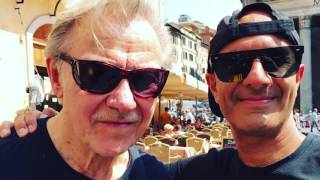
I want to have more impact in the world. And my point, with deep respect, but also to challenge you, is simply this. You will never rise any higher than your self identity. The behavior you show every single day at work and at home is simply a reflection of three key things. It's what's going on with your interior life in terms of your thinking, in terms of your emotional life, and in terms of your spiritual life. So you might say, well, I want to do amazing things in my field. But if you have a mindset, your belief, if you've installed a mindset which is you are average, then your daily behavior will always reflect that deep belief. Let's say you want to be more financially successful or more physically dialed in so you get to the best fitness of your life, like pro athlete level fitness. So you have energy, you've optimized your brain and you experience exponential productivity because that's what happens when you get really, really fit. But again, if you have a mindset of undeservability because you really don't think you can be a titan of your field, well then no matter what you do out in the world, it will be aligned with that self perception. So your thinking, your belief system, that interior life in terms of your mind is fundamentally important to your productivity, your performance and your impact in the world. Your emotional life. Why is that important? Well, if your heart is full of anger, or if you are full of fear and you haven't cleaned that out, I'm going to show you how to do it in this video and in the following videos in this training series. But if you have an emotional life that is full of mess and toxicity anger, and if you haven't forgiven people or you're sad, or you're frustrated, which is really a low grade form of anger, and if you haven't done the interior work to release that, then when you go out in the world, you're not going to be able to work with love, you're not going to be able to give love to your customers, you're not going to be able to inspire your teammates, you're not going to be able to grow a world class team because inside you're feeling angry. And that's a really, really important part. You want to release the fear first so you can unleash your giant out in the world. And I'm going to start off really with something interesting that happened to me today. You might have read my book the Greatness Guide. Now I wrote that book probably 10 years ago and I think it was chapter two, but it was Harvey Keitel and Windows of Opportunity. And I talked about a chance encounter with Harvey Keitel where I saw him, but I didn't have the bravery because I hadn't achieved personal mastery. And I still haven't achieved it. I mean, basically it's a process. I'm a work in progress. But I was at a certain level 10 years ago and I didn't have the bravery and the confidence and the wisdom to walk up to Harvey Keitel, extend my hand and possibly build a new friendship. At the very least have a conversation. So here's what happened. Yesterday I was at the Pantheon with my best friend in the world. His name is Luigi. And who did I see 10 years later, I saw Harvey Keitel walking with his wife. And so this time I said, this is a window of opportunity and I am going to go to the place that scares me. I mean, remember this, please. Being brave, being the pirate of your ambitions, being the giant of your life, doesn't mean you are going to feel terrified. Feeling frightened is just your next level of growth coming to get you. Society says if you're uncomfortable, there's something wrong. I'm suggesting to you and challenging you with the idea, which is if you want to live a world class life, then you'll be uncomfortable all the time. Discomfort is the price legends pay to reach world class. And so I walked over to Harvey Keitel and I connected with him and I spoke to him and I, we had a great conversation. I got a picture and I want to show you the picture.
So the reason I wanted to show you that picture is because every single day we're in a coliseum. And you know, the Coliseum is one of the places on the planet which is an ancient testament or arena of great bravery.
And every day you walk out in.
The world, whether it's trying to get the great sale or do work that wows, or show more love in the world, or scale up your lifestyle exponentially, or do whatever the opportunity is, each day you're walking out into the Coliseum.
And here's the thing, and this is.
Why I came to the Coliseum to shoot this video, you're literally in a.
War, you're in a fight, and it's.
A fight against your neurobiology.
Now I'm going to show you a.
Model, and it's a key model that explains why we sabotage our dreams. And so I call this the two brain model. So every single day, when you are in the Colosseum of your professional life, or in the Coliseum of your personal life, or in the Coliseum of your spiritual life, if you're trying to change the world and get to know your highest nature, that pirate and the giant within you, and that's deep interior work, which is the best work of your life.
So I'm now here at the Pantheon and two things I really want you to dial in and brain tattoo, and it's really fearlessness, is muscle. I want you to think about neuroplasticity and neurogenesis, which is really confirming that the brain is a muscle. And if you really want to strengthen a behavior, it begins by installing A neural pathway by practicing the skill that you want to build. So fearlessness is a muscle. And I also want you to remember that putting yourself into situations that make you feel uncomfortable, even though society says they're not great, that's actually the, the antidote to regret in your life. And, you know, no one knows how long we get to live. I'm here with this place behind me, which is just so ancient and yet life is ultimately really short. You don't want to wait too long.
To seize those massive opportunities to get.
You to your next level of world class and allow your dreams to come true. Don't love yourself very much and you really don't. You know, you're stuck in your ego. That takes a lot of interior as well to give your life over to something bigger than yourself and to serve.
Your customers and serve the world.
So from here in Rome, and this adventure is going to continue.
We're going to go to South Africa.
Next, but thanks for being here with me.
I'm just off Piazza Navona here in.
Rome and I hope you enjoyed it so far. Just wait till the next sections. You're going to learn some amazing ideas.
On playing an iconic game. Chose to do it to rest and to recover. And so really what makes greatness is your ability to rest and recover and then go out in the world and then do world class work. And it's this pulse, these cycles, and it's almost like the farmer's model. The farmer will tell you they have a fallow season and that's a season where it looks like nothing's growing, there's no green shoots. But that is the time actually that under the soil, all of the harvest and all of the crop is growing. And so to the untrained eye, it looks like, you know, it's dead, there's nothing happening, it looks dry. Yet because of that fallow season, the next season is a rich harvest. And you in your life, you have these seasons. It could be in the day, a period after a short burst of really intense focus. Take the time to recover, take the time to write in a journal and take the time to go for a walk and then come back and do another strong burst of intense activity with deep focus and deep creativity. And then once a week, take a day off to rest and recover. And then even in your life, know that as a creative person and as a high producer, what's going to happen is this. You're going to have these seasons where you're not very creative and you don't have a Lot of energy and you don't have a lot of game and you don't. And you feel like you're wasting time. You know, maybe you're thinking and challenging your values and you're just reading a lot of books and you're doing a lot of interior work. And it looks to the untrained eye like this is a time where you're wasting time. Actually what I'm reminding you, deep respect and also to challenge and inspire you is that is the twin cycle in that period where it looks like you're resting and you're recovering and you're thinking and you're introspecting. There is great value in that time. Haruki Murakami, the great Japanese novelist, said the book is simply the end result of all the previous experiences that you went through to make the great book. And I also want to speak to the Johannesburg janitor who you recently met in this adventure video. You know, I've been suggesting to you in our time together so far that your outer world is simply a reflection of your inner work. You will never make more money, produce more poetry, do more amazing things in the world, leave a richer legacy than the quality of your self identity. I mean, you can have a victim story that you are running every day, or you can go out in the world and make history. You don't get to do both. And that man that I introduced you to, a lot of people would say, well, he's just a janitor. You know, a lot of people say, well, when I'm a CEO or I have more money or I have a bigger title or a better car, then I'm going to do epic things in the world. Then I'm going to respect my talents and go out there in the world with a blazing glory and lift up everyone around me and do these things that previously frightened me. But right now I'm just a janitor or I'm just a manager or I'm in a stuck place in my life or whatever your excuse of choice is. And as you go deeper into personal mastery. And that's why I wanted to shoot the video here in Nelson Mandela's room.
I met someone very close to Nelson Mandela. And they revealed to me Nelson Mandela wasn't Nelson Mandela when he went into prison. And what I mean by that is that person told me he went into prison a very angry man. But it was the 27 years of deep interior work. It was the 27 years of dedication to personal mastery. It was the 27 years where he learned how to forgive Open his heart, dream a bigger dream, Leave the ego and serve the world. Where he read books of philosophy, where he meditated and he prayed, where he wrote, where he. Where he learned how to release his limits, where he learned how to awaken what was best within him. I mean, we all have this interior core deep within us. And this is our truest nature. This is the pirate, this is the giant, this is our authentic selves. This is where true power lives. It's deep in our core. You have it. Everyone on the planet has it. The thing is, most of us have been hypnotized by the messaging and programs and the beliefs of our parents, of our teachers. Just like that little boy in the story at the beginning of society and of the media, to think small. A lot of us have therefore become, because of all this programming, for years of our lives, we have become card carrying members of the cult of personality. And I'm here to tell you, no matter where you are in your life, no matter what your past has been, no matter what tragedies or pains you've experienced, today is a new day. And today is the day I invite you and challenge you to start thinking about personal mastery and about owning your talents and about playing a bigger way of operating in the world. And you deserve this, you see. But you have to leave the mob mentality and you absolutely have to leave the crowd. And you absolutely have to learn the ideas in the models that I teach and the tools that I will offer to you.
To build that heroic core. And Nelson Mandela did this, not for a week, not for a day, because consistency is the mother of mastery. He did it for 27 years. And what happened because of that commitment to building an undefeatable interior life, to really owning his true nature. And you have the same nature deep inside, owning that true power. Not fake power. Fake power like, oh, I have a big car. I'm powerful. Oh, I have a lot of money in my bank account. Oh, I'm powerful. Oh, I'm. I have a lofty title. I'm Powerful. Those are fake powers. They don't last very long. You lose the title, you lose your power, you lose the money, you lose your status. There is a much deeper power. It's the power that resides within you, within your core. And as you get to know it, I'm going to share the tools on how to get to know it. But as you get to know it and as you start identifying it and as you release your addiction to fake powers, what starts to happen is you become this force of nature. That becomes unstoppable. And you do world class work and you start to honor your talents and you start to do things that previously frightened you and you start to influence everyone around you. You start to become inspirational in the world and you become incredibly attractive to the world. And then customers and followers and amazing things start to happen to you. And because of who you are, as you become more powerful through deep interior work, you become more powerful in the world. And that's what happened to Nelson Mandela to the point where when he was released from prison, he invited his jailers to his inauguration as president of South Africa. And he was asked why? And he said, because if I didn't, I would still be in prison. And so my point to you is simply this. Do the work required to own yourself. Now, you may be still saying, robin, why do I have to do this interior work? You know, and I go back to this principle I've been offering to you through this video, which is exterior empires begin with interior empires. Okay, let's go to the science. We know that grit and relentlessness is so important, according to the scientific research, to do iconic things in the world. If you don't have any persistence, if you give up too early, you're never going to get amazing things done. Well, that is an inside job. Building this ability to believe in your mighty mission and your loftiest goals so that no matter if people ridicule you and they laugh at you and they put you down, you stay strong. That's an inside job. Okay, if you look at well I want to do, I want to make history, well, that again begins with your interior story. Heidi Grant Halvorson's work on that internal narrative, your story about your potential determines whether you go out in the world and live your potential. And if you don't think you're very much and that people like Elon Musk or Tesla, Shakespeare or Kurt Cobain, if you think those people were somehow cut from a different cloth, then you're not going to read the books and do the predictions, practice time and put in the work hours and surround yourself with the right peer group required to do.
Iconic things in your craft.
So even your thinking and your performance is a result of that interior work. As I mentioned earlier, if you really don't feel deserving of success, then you're not going to go out in the world and create success. Okay, Even something like being innovative. How can you be innovative if you're really concerned about what everyone else thinks of you? I wrote this in the back of my journal earlier this Morning. And it's what I've learned is that the more you care about what others think of you, the less amazing your life will be. And again, that's interior work. Getting to know yourself. Trust yourself, believe in yourself. No one will believe in you if you don't believe in you. I heard recently Kanye west has this giant poster in his living room of himself. Someone, a fellow musician, said, kanye, you've got a poster that is so huge of yourself in your living room. And you know what Kanye said? Well, if I don't believe in myself, no one will believe in me. No one will believe in you until you do the personal mastery work required to believe in you. And, you know, you look around the world right now where everyone goes to the social media so that they show, here's how I'm living like a rock star or whatever. And a lot of that is coming from insecurity. And they just want other people to like them. And so you can't be an innovator and you can't be a legend of your craft, and you can't be authentic and true to yourself if you've got this insecurity deep inside of your heart.
Which requires people to like you. Even something about asking what you deserve. You know, I often at my live events, I encourage people, raise your fees and fire the customers that create stress for you. And that's been a game changer for a lot of my customers. But you won't raise your fees and you won't ask for what you want. Not only in your business, but in your personal life. If you don't have that self belief, if you don't think you're very valuable, if you don't really believe your work is very valuable. So from here in Johannesburg, I just want to remind you that external exterior empires begin with interior empires. And you can be running your daily victim story, if you have one, or you can go out in the world and make history like Nelson Mandela did. You can't do both.
I'm here on Robben island, and behind me is the quarry where Nelson Mandela spent a lot of the 18 years that he was in confinement on Robben Island. This quarry right behind me is where they would bring the political prisoners to break their spirits. Because in the summer it was very, very.
Hot, and in the winter it was very, very cold. And it was the dust and the glare in here that damaged the health of so many of the prisoners. And then you see behind me, in 1995, Nelson Mandela came back. There was a reunion of the political Prisoners. And he dropped the first stone there, and then the other prisoners dropped it. So this was a place where they tried to destroy the spirits of people like Nelson Mandela. And for whatever reason, through his education and his grit and relentlessness and his interior work on his character and his leadership, he survived it. And he actually grew stronger as a result of what happened. And a lot of it was here in this quarry.
So I'm here on Robben island, and this is the view. I mean, it's Cape Town behind me. You can see it right over there. And as you know, Nelson Mandela spent.
18 years on Robben Island.
He was confined for a total of 27 years.
But it's such a strange thing.
I mean, he suffered so much here.
Such deprivation, and yet, if you look.
Behind me, you see this incredibly vast beauty. I'm here on Robben island in the courtyard where Nelson Mandela used to walk around.
And I just heard, there's a tree behind me. You can see it right there. And it was a grape tree that was given to him where he was given a great plant. And the guards told him, nothing will ever grow. And he proved them wrong. And he created this incredible garden which fortified his character and provided some joy for him. But this is where we would also walk around on Robben island to stay strong. And I just have a.
Former political prisoner touring me or showing me around Robben island. And he just pointed out this very place right here. I wanted to show it to you. Right down there, there used to be some trees, and in this area, that's actually where Nelson Mandela hid the manuscript of his autobiography. So I just learned he was actually working on his autobiography here on Robben island, and he used to hide it here in this garden. In that very place. You can see the former political prisoner just with his foot, showed me the area, which is mesmerizing and fascinating to be here on Robben island and learn about what these brave people did in their fight for freedom. Well, this is really remarkable. I'm here in Nelson Mandela's prison cell. They don't usually give a lot of access to it. And I just want to show you. First of all, you look down there.
And.
That'S actually where Nelson Mandela slept. There's really. There's no bed in here. And I just want to show you how small this is. I mean, this is just.
A very, very, very small cell. You can see the actual place where Nelson Mandela would write. I just learned that he used to kneel down here and write. And then behind me, this is the view that he had.
Of his garden which would get give him inspiration. And the fine gentleman who is an ex political prisoner who's touring me around here said some very interesting things. And he said, for example, Nelson Mandela used to say leaders must lead. And he repeated that a lot. He also, every time he would meet one of his fellow political prisoners, he would say, are you studying? Are you studying? Are you studying? Which really speaks to the importance as you lead, as you raise your life, study, focus on developing yourself, learn as much as you can. And the gentleman who's giving me the tour also said, when I said, what was he like? Because this gentleman spent time with Nelson Mandela here, he said he was a humble servant because to lead is to serve. And so I hope you've enjoyed being here with me on this, on this travel or this journey I've taken you on. And I'm ending it here in Nelson Mandela's prison cell. And it really speaks to the absolute imperative of you working on yourself for personal mastery and you learning how to develop a mindset so that you can endure the good times as well as suffering, so that you can build a strong heart so you serve the world. And so you build a strong character and you master yourself so that in good times and bad times, you show leadership and you bring on your talent into the world and you are a hero of your work and of your life and you ultimately use your life to build a better world. You have a hero inside of you and it's all about getting to know that person and then polishing it. Nelson Mandela was in this prison cell for 18 years. And I just, you know, I want to leave you with the image.
Of.
The bed that he slept on in this very, very small prison cell and remind you that the world has never needed more heroes. Yes, Nelson Mandela was one of the greatest human beings who has ever lived. But you can be your hero if you can own life. And it begins with believing in yourself and then, you know, investing in your education and investing in your character, investing in developing self belief. So you go out there and you.
Revolutionize the way that you think and.
The way that you live. I hope I've been of service to you from Nelson Mandela's prison cell on Robben Island's Dubai.
I just want to show you where.
We are right now as we start off.
Video 2. I'm at Drakenstein Prison.
And that right there is the long walk to freedom.
I mean, February 11, 1991, Nelson Mandela.
Left prison for the final time, walking.
Right through, through that very gate. And the jailer said, would you like to walk, Beauty?
So eat the great food, having the.
Nice things, you know, but let them.
Be your servants, not your masters. And I think more than anything else, it's all about who you become, your character.
How you leverage the heartbreaks of your life to become stronger, wiser, faster, more creative. How you use the good times of your life to become even more productive.
To become even more successful on your own terms. But ultimately, I think life is really about one thing. It's about who you become.
Did you live your potential?
Were you brave and were you kind? And so here in Paris, I'm going to leave you with that idea. Commit to your personal mastery. Commit to being the highest version of your best self.
Commit to leveraging each day of your.
Life to birth more of your potential and your genius into the world. When you stumble, rise. When you are ridiculed, get back up.
When you feel like throwing in the towel, keep on going.
Relentlessness is so powered, powerful.
And more than anything else, be kind.
Thanks a lot for being with me.
I'll talk to you soon.
More from Clegg

The #1 Skill Gen Z Needs | Simon Sinek + Esther Perel | A Bit of Optimism Podcast







AI Won't Tell You the Full Truth | Arthur Brooks + Simon Sinek | A Bit of Optimism Podcast



How To Make the Best Decision | Arthur Brooks and Simon Sinek | A Bit of Optimism