How the Nature of Work Has Changed | Full Conversation with Simon Sinek
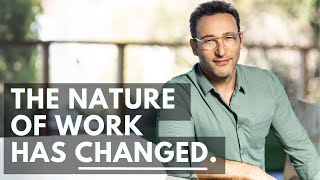
This recorded conversation (YouTube, Jun 9 2023) features Simon Sinek answering live Q&A about leading during and after the pandemic. Key points so far: Sinek describes personal emotional struggle during COVID (sleep disruption, low motivation, social withdrawal), the importance of reaching out and asking for help, and leading by example through vulnerability. He stresses the need for leaders to teach and model human skills (listening, feedback, conflict resolution), to maintain a clear vision/just cause to prevent mission creep, and highlights courage as an underappreciated leadership trait. He also recommends practices to sustain curiosity (reminders, generating many alternative explanations) and notes that remote work revealed colleagues' personal lives, which can increase empathy and patience.
Chapters
So I've got a few questions that came in that are around the theme of what it means to lead now. By the way, I should have told everybody that Simon did not want to see these questions in advance. So this is real time, so bunch on what it means to lead right now and into the future. But the first one someone wanted to ask is, you're a leadership expert, but you're also a human being going through this pandemic as well. So how are you doing and how are you living and leading through this moment?
Yeah, I mean, my experiences in terms of emotional ups and downs is like everybody's. When Covid first started, like many businesses, our business lost its primary source of income. We made most of our income from live events and live workshops. And of course, those disappeared almost immediately. And so we had to completely reorganize and change the business we were in.
I needed to stay focused, even though there was all of this uncertainty and craziness. You know, we were cleaning our groceries every day. So I called a friend of mine who was. Who is active duty military, and I asked him a simple question. I said, when you go to combat, how do you compartmentalize your emotions so that you can stay mission focused? Because that's what I need to do. And he gave me a stern warning. He said, we can't. He said, we can compartmentalize our emotions only for a short period of time. He said, but nobody escapes the trauma of combat. And so I sort of called all my A type personality friends and said, listen, we're all going to go through this, and so let's just all agree to call each other if we start to feel off our game. Sure enough, four or five months into Covid.
I started to feel completely off my game. I wasn't sure what was going on, but I remember struggling to focus. I didn't know what it was. So I called that same friend and I said, what are your symptoms? And he said, well, number one, he falls out of his sleep pattern. He starts going to bed really late and doesn't want to get out of bed in the morning. And I thought to myself, yep. And then he says he'll have an unproductive day and he'll rationalize it to himself, oh, you've been working really hard. It's okay to have a slow day. But then he has another and another. And I thought to myself, yep. And then he said, and he becomes antisocial. He doesn't want to talk to anyone, and he definitely doesn't want to ask anyone for Help. And I thought to myself, yep. And that's when I realized I was going through the trauma of COVID And I didn't want to use that word, depression, because it sounded like a diagnosis, but that's basically what it was. It was little D depression. So I asked him, what do you do to combat it? And he said, well, number one, he forces himself back into a sleep pattern. Number two, he lets people know on his team, listen, I'm going through something. I'm not going to be that reliable. Please just help me out here. And number three, he forces himself to reach out to people and ask for help. And so that's what I did. I forced myself to call people and.
Basically tell people exactly how I was feeling and ask for help. One of the people I happened to call is a remarkable executive coach named Andrea Garfield. And I hit record on my computer and then eventually posted it on YouTube with the hope that it might help someone else, the advice that she gave me. But I can tell you that everyone goes through it. Nobody goes through it the same way. Everybody goes through it at different times. And the number one thing that helped me get through it reasonably healthily and reasonably quickly in comparison, was the fact that I reached out to people, and there were so many people there to help me.
It's such a good reminder that no matter who you are, that concept of just being vulnerable and letting people know you need help, how powerful that can be in terms of helping us get through that. So it's nice that you've shared that with us. And I love the concept of compartmentalizing that. We all think we have to compartmentalize and control our emotions. So I love that. Let go of the compartmentalization. It's not a task that you can actually master. That's great.
It's also really important for leaders to recognize that they lead by example. And a lot of leaders make the false mistake that they have to pretend to be strong and in control all the time, even though they may be struggling and suffering on the inside, because it actually backfires. Because if your team is struggling, especially through something as extreme as what we've gone through the past 18 months, that when our team who's struggling sees us, you know, strong and all the answers and optimistic and confident all the time, they start to think it's them. That if. That if my leader is managing this, then there's something wrong with me. And so it's actually very important from a leadership standpoint for those leaders to express, I'm going through something, or I need to talk to somebody or I'm asking for help or I'm off my game. Because it actually allows everybody else to be expressive and ask their leaders for help when they're going through something so powerful.
So powerful. I totally agree. We've been doing a lot of work over the last couple of years on focus and focusing on what matters most. What have you been doing to help you stay very focused, notwithstanding some of those other things you've been working on? But are there a couple techniques you do to just make sure you stay focused on what matters most?
Well, having a vision is really important. I mean, you know, you can't go on a trip and not know where you're driving. And I think, unfortunately, that's how a lot of businesses run. They run visionless, which doesn't mean they don't have goals. But that's like saying, I'm going on a trip, I'm getting in the car and we're going to drive 100 miles a day. That's our goal. And it's like a business. We set financial goals and we keep looking at the speedometer and seeing if we're on pace to hit the financial goal and hit how much mileage we want to cover over the course of that day. But the question is, where are you going? And so you hit all your goals and you hit all your mileage and you hit all your speeds and you hit all your financial targets, but to what end? And so one of the things that helps me stay focused is a constant reminder, both to myself and to the team of why we're doing this in the first place. Because then we may see opportunities that may be lucrative in the short term, but they'll take us off path. It's mission creep that'll eventually, over time, start to waste resources. And so sometimes it's the discipline of staying focused on something that. That we have to get done and not get too distracted by even shiny objects on the sides. So a clear sense of purpose and a clear sense of just cause has helped me immeasurably.
That's terrific. And I think we're going to start using that mission creep. I like that we do scope creep, but I love that concept of mission creep. We really try as well to keep focused on our North Star to try to anchor us, but it is tough. We do get distracted, and it's a tough but very important discipline. So Suzanne is someone is going to join us for a question. And I'm going to throw over the question to Suzanne Truesdale. Hi. Thanks. Sandy Simon, lovely to meet you. Thanks so much for joining us today. I lead our small Business solutions sales team. And in my role, I lead a large number of people, leaders. And just wondering what advice you would give all of us, you know, as we think about how we best support our leaders, to make sure our leaders are set up really well to lead effectively during these challenging times and to really be able to support the team members that they have the privilege to lead every day.
You know, it's one of those.
Questions about what is the core of leadership. And when I remember when Covid started, a lot of people lean back on their humanity, whether they were effective or ineffective leaders. Prior to Covid, many people picked up the phone, called the people in their charge and said, are you okay? How are you doing? Just checking in on you. Well, that's just called good leadership. And so I think empathy is one of the things that I would recommend, one that you have empathy for those leaders, check in on them. You know, I think the phone is a wonderful thing. Even though you may have an open door policy, remember, you're assuming that people have the courage to walk in.
So checking in on people, I think is a big deal. And like I said, using the telephone, but then also giving them the skills to do the same, it's very hard to do that sometimes. We, I think, in businesses can do a lot better job of teaching our people, especially people in leadership positions, human skills. I hate the term soft skills because hard and soft are opposites, you know, and not to mention soft sounds mushy and gross. Right? The reality is what we need to do our jobs and what we need to train our people to do their jobs are hard skills. These are the physical things they need to do to be effective at their work that we've asked them to do. And human skills, which are things like listening, things like empathy, things like effective confrontation, how to give and receive feedback, how to.
Things like that.
And we don't teach those, we can do a much better job at teaching those. And if someone has the hard skills and the human skills, it makes them a much better leader. So one is us leading by example, checking in on people, exemplifying that empathy, but also teaching them the skills that we want them to pass down the same way, especially if they're responsible for small businesses. I mean, small businesses have gone through an unbelievable stress that few of us can even relate to. And simply to just call up and say, how are you not offer a solution, not sell something, but to just give an ear, that's called building trust. So that when it does come to actually having a solution of when somebody wants something, they're more likely to trust you than somebody else simply because you treated them like a human being in a time of difficulty.
Thanks so much for that, Suzanne. And just as a follow up to that, Simon, because I think it's an excellent point around just the empathy and calling up people and asking how are you? And just being human. Why do you think it's hard for many leaders to just show that other side of being human? And you mentioned we don't train those skills. A lot of them are innate, but they can all be developed. What gets in our way of fully developing those attributes?
Well, I think some people turn off the humanity when they go to work. You know, they may be loving parents and loving friends and loving children to their own parents. And yet for some reason there's a switch that they think that that's irresponsible to do at work. Now, I'm not talking about necessarily wearing your heart on your sleeve every day. There is something called emotional professionalism. You know, if you're having a bad day, you can say, listen, I'm a little off my game today. But you can't sit in a meeting with your arms folded and be grumpy and give one word answers. That's emotionally unprofessional. You know, you can have hard feelings, but you can't go around screaming and yelling at people you know, you can have. So I think there is emotional professionalism, but I think for some reason, especially as people make their way up the ranks, they think that expressing any kind of emotion is a sign of weakness. Even that word vulnerability. We talk. You know, it's such a common word now being talked about in the business world that you have to be vulnerable. To this day, it makes some people feel very uncomfortable. I don't want to be vulnerable. Well, all vulnerability means is saying things like I don't know or I need help or I'm overwhelmed or can you, you know, can you help me do this because I don't know how to do this, or I've been promoted to a position where I may, maybe I need more training. And the reason we're afraid of saying that is for fear that it makes us look weak, which will then damage our careers. The reality is the total opposite. By saying I don't know means someone can help us. But instead we choose to lie, hide and fake very often, which eventually gets revealed, enough stress piled on and that lying, hiding and faking collapses. Either Professionally or personally, we either feel the stress or the projects that we're working on start to go haywire. And very often when we get to those points, everybody knows anyway. And the amazing thing that I've learned is when you say, can somebody help me? We're surrounded by people who would love to help us. They just didn't think we needed it because we acted as if we didn't. So I think a large part of it is, quite frankly, fear. Fear that if I express these things that people will think I'm not qualified for my job.
Where the opposite is true. And remember, when you are in a position of leadership, you don't actually have to be better at doing the job that the people you lead, you have to be responsible for taking care of them to make sure they're good at their job. But for some reason, we think that I have to be better than you at your own job because I'm the leader. Completely false. I just have to make sure that you're equipped, you have the tools, the training and the psychological safety to be the best you can be. Even if it's better than me.
Incredible. And there's someone once said to me, there's freedom on the other side of that fear. So if we can get past the fear, there's freedom to be authentic and as you often say, to do your best work. So I really love that. Shazia has another question and she has a question for us and she's going to appear momentarily. Shazia, over to you. Thanks, Sandy. Hi, Simon. Thanks for being here with us. I lead the team that supports our award winning broadband networks and I'm really interested, knowing your views that what would an effective leadership look like in post pandemic world.
I think post pandemic leadership looks exactly the same as good leadership pre pandemic, which is acknowledging the awesome responsibility to see those around us rise. One of the things we have to acknowledge is that things have changed. I actually think there's a lot of good that's come out of the pandemic in terms of leadership. One, as I said before, that we relied on our humanity for those who did or didn't do it prior to the pandemic. I hope you continue to do it afterwards. That's just good leadership. But also we got to see people in their own environments, right? We got to see people in their homes. We got to see their kids and their pets run in and interrupt. We became a little more patient. We were okay with things not being perfect. You know, it was kind of remarkable how Meetings would get disrupted and nobody really got bothered prior to the pandemic, we would have got annoyed by that. Also, we didn't even know that you had kids, you know, so just to discover that people have families and they have lives outside of work, I think helps us see our colleagues as human beings with other stresses and other strains and other things going on in their lives. I hope that all remains so post pandemic. I hope we continue to ask people, how are your kids? Do you have kids? You know, when there's a new hire, do you have a family? Usually we just get straight to work and we avoid those things. So I think seeing people as a human being and having other lives, finding out what their hobbies and dreams are, I think is a wonderful, wonderful thing. The other thing is, I think, as I said before, we got a little more patient. Like, we understood people had stresses at home with kids at home, learning from home. And we said, listen, if you need to miss this meeting, we'll fill in for you. We'll fill in the gaps. Don't worry. You go do that. Well, I hope those things remain, that we start to recognize that part of the work life imbalance that so many people struggle with is actually not the problem of the people who are trying to find the work life balance, but it's us who don't recognize that people have other things in their lives. We see them only as employees. So, yeah, I hope some of those things that we've learned during the pandemic remain.
Thanks, Shazia. We hope so, too. We've been really trying to emphasize leading with compassion. And I think we all want to see a world where we're leading with more compassion as a permanent change. I want to double click on something you said earlier. We've been talking about this as well, the no such thing as soft skills. I want to come back to that. And I think we all agree we want to say goodbye to the term soft skills. We're trying to get that out of our vernacular now. What do you think is the most underappreciated leadership skill? You named a few, but the most under appreciated.
For me, the most underappreciated one is courage. Leadership is hard. It's extremely hard. You know, talking to a friend of mine who used to lead all Marine Corps training for the United States Marine Corps, he said the number one criterion for being a leader is you have to want to be one. And we have to remember that being a leader is like being a parent, you know, where for a lot of people who Have a job, they do their job for the time they're at work. Well, when you're a parent, you know, there's no on off hours. You know, you're a parent all the time and you're not sure when something's going to happen. It can happen at opportune and inopportune times and you have to react well. Leadership is the same. You don't get to turn on or off. When you're a leader. The minute you accept a position of leadership that's now a 24, 7 job, leadership is actually very, very difficult. It also comes with the courage to stay the course. We talked about mission creep to say, no, we're not going pursue that shiny object. We're going to stay on this course. That takes courage. Because remember, so many of the pressures put upon us, both external and from sometimes inside the company itself, with our financial incentives, are putting pressure on us not always to do the right thing or sometimes to do the expedient thing or the financially effective thing. But that may do damage to the organization and to the people later on. But I'll benefit things like that. So the courage, the courage to do the right thing, the courage to have integrity, the courage to say I'm struggling, I need help. The courage to set an example, the courage to build a trusting team, the courage to learn and teach human skills. I think people under appreciate just how difficult leadership is. And it's much more than simply accepting the promotion. You know, it's kind of like having a family, you know, having the child. That's the really fun, easy part. Like getting the promotion, you know, that takes two or three minutes. Right. But actually raising a child.
That'S a lifelong pursuit, kind of like leadership. And there's no one who's an expert in leadership. I've never met a great leader ever who consider themselves an expert in the subject. They all consider themselves students.
Well, it is one of those things that it's just a pursuit of mastery over many, many years of self reflection and getting better. And it really absolutely is a journey. I liked your definition of courage. That's a nice way for us to. To reflect on what courage means.
Next question someone submitted is. We've had some discussions about curiosity over the last couple of years and sadly how for some people, curiosity can diminish over time. How many questions we ask by the time we're 13 cuts in half from the amount of questions we asked when we were five. And then I'm sure it just continues and continues. So how do we challenge ourselves like you do, to stay curious and to overcome comfortable confirmation biases and complacency that can just sit in over time.
That's such a great question. And when it becomes even more insidious, we replace curiosity with judgment, which happens a lot. And so the question is, how do we replace our judgment with curiosity? So there's a simple technique. There are simple techniques to do this. One is write yourself a little reminder, put a little sticky on your computer that says, be curious or ask questions. You'd be amazed how well that works. But especially in times when we're judging, especially when we're in groups of leaders, we're in meetings, we can snowball into judgment really quickly. Let's say someone's performance is in decline immediately. They're lazy, they're stupid, they don't understand. They're a problem child. All it takes is one person to break that judgment and say, well, maybe they're going through something. And there is a technique where, when you believe, when you start to form a narrative about someone or about something, that you force yourself to come up with 21 possible alternatives of what could be going on in their life. So are they lazy? Absolutely. That's absolutely a possibility. Are they a problem child? Are they toxic? Absolutely. Are they going through. Are their kids struggling at school? Maybe. Do they have problems in their family? Maybe someone's sick? Maybe. Do they have medical issues that they're hiding from us that they're too embarrassed about? Maybe. Like, my point is, can you go through the Exercise of writing 20 or 21 alternative stories of what could be happening? And all of a sudden we find ourselves talking about and treating that person differently. And it doesn't just come about people. It's also about decisions we're making at work. And all, again, in a meeting, all it takes is one person to raise a question of what if?
And as leaders, the more we start asking each other and ourselves, what if? Or what are the opportunities? What are the possibilities? We'll find ourselves doing that with our people. That when they come to us, instead of us correcting them and telling them that they're wrong, raising questions. But believe it or not, simply having a little reminder to be curious is really important. The other thing is do things outside of your own work. People ask me what leadership books I've read recently, and the answer is none. I don't read leadership books. I like to read things and watch documentaries that are completely outside of the things that I work on. Why? Because, yes. Can I learn things in my own discipline? Of course. I can. But to read a whole book that I'm either gonna just completely agree with or completely disagree with for one or two nuggets seems like a lot of effort for very little gain. But what I love is doing things outside of work or sometimes even in work that seem to have nothing to do with my work. Because what I've learned is that we're, you know, this whole idea of personal life and work life is nonsense. It's us. It's us. We're going through the same life. Sometimes, you know, all that's different is the table we sit at and the clothes we wear. That's the only difference. The reason our colleagues love us is us. The reason our friends love us is us. And so I think bringing some of the curiosities we have outside of work to work and sharing them is actually promoting those kinds of things. It shows us as whole, well rounded human beings and it promotes us that we have interests outside of just our work as well.
And it makes us much more interesting to be with even at work. And it helps us learn. Learning happens through experiencing different things that are not in your day to day. So I really love that as well.
I used to take my team. I remember. Oh, sorry.
No, keep going.
I was going to. Sorry. I remember.
I called an essential meeting years ago. I called a mandatory meeting for my team and they all showed up with their notebooks and I said, okay, we're taking a company a little mini off site. And I took them all to a museum. They thought they were showing up for a meeting and we all went to a museum. And I just wanted them to look at things differently. I wanted them to talk, I wanted them to get to know each other. And so, you know, fun things like that promote curiosity.
That's amazing. That sounds like best day ever. I'm sure they went home and said, best day ever at work.
I hope so.
And I think one of the things you mentioned like what if? Or we try to say things like what if? Or what else? Or what could be wrong with that? So it's important to remember to keep those questions prompting us to shift our mindset. And I think as you executives tend to and leaders, we're rewarded for solving problems. And the faster you solve problems, the better. But that's where the judgment kicks in quickly. So it's a bit of an over development of the judgment muscle for speed of answering problems versus the take your time and be curious. So we need to work on that right balance. So I appreciate that. So the next question that came in was diversity of thought. It's around diversity of thought and how to make sure that we have an environment that still allows some productive conflict. So when we have diversity of thought and we're inclusive of different opinions, which is very much important to us and to our workplace, friction happens, cognitive friction, which builds curiosity and creativity, but it can also impact psychological safety. So can you talk a little bit about how we can have an environment that feels psychologically safe, but cognitive friction and conflicting views are okay and they're productive?
Well, I think again, this goes back to those human skills that we don't teach. We don't teach difficult conversations. We don't teach conflict resolution. We don't teach de escalation, and we don't teach how to give and receive feedback. We don't teach how to treat ideas. We don't even teach people how to have a meeting. We don't teach any of these things. And so we're just leaving it up to chance to hope that somebody knows what they're doing, which we would never let somebody on the front line do. We give them tons of training on how to do their jobs. So part of it is, is the skill set that we can train. The other thing is a lot of leaders, I think, are afraid of doing things for fear of saying the wrong thing. And again, this really lends itself to the training we need to give our leaders. And especially I think this was really exaggerated after the murder of George Floyd, where so many leaders did nothing. They're not bad people. They were just so afraid of saying the wrong thing or inflaming a situation or triggering someone that they chose to just do nothing. And so one of the things we need to do is teach people how to lean into tension.
And to learn how to de escalate one's own anger or one's own trigger. And again, you brought it up before, which is. And replace it with curiosity. Tell me more. What else I'm struggling to understand. Let me tell you. The story that's going through my head, I think, is a really big one that I've learned, which is because I'm reacting based on.
More from Clegg

The #1 Skill Gen Z Needs | Simon Sinek + Esther Perel | A Bit of Optimism Podcast







AI Won't Tell You the Full Truth | Arthur Brooks + Simon Sinek | A Bit of Optimism Podcast



How To Make the Best Decision | Arthur Brooks and Simon Sinek | A Bit of Optimism