How to Do Your Best Work - 3 Keys To Mastery | Robin Sharma
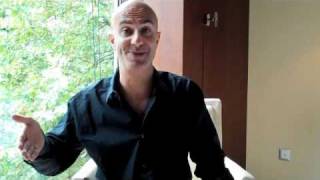
Robin Sharma outlines three practices for mastery: tackle a difficult challenge every 30 days and do your hardest work first thing in the morning; exercise early to boost energy and mood while learning through audio; commit to one skill through deliberate practice over roughly 10 years, as Anders Ericsson's research shows.
Chapters
Hi, I'm still in Zurich, Switzerland. This video is all about the tactics to lead without a title. In the previous video, what I was sharing with you is it's mission critical to shift from victimhood into leadership and the key competitive advantage that you have, the key choice point that you can make, the number one move that you can choose is to lead without a title. This philosophy I want to share with you is so profound if you really tattoo your brain cells around it and then start to apply it. So this video is all about the specific tactics of the best leaders without a title. This is in my studies of people like Da Vinci, people like Michelangelo, people like Warren Buffett, the CEO of Berkshire Hathaway, one of the richest men in the world. My studies of people like Branson, and my work with peak performers in sports. The other day in Romania, there was a gold medal athlete in the audience. And I have coached billionaires and I've worked with Nike, FedEx, IBM, Microsoft, General Electric. So what you're going to get in this video are some of the key tactics that will help you take the lead without a title idea. Take the idea that from the previous video, which is there are a lot of people being busy being busy. There are a lot of people majoring in minor things. And now with the tactics I'm about to share with you, you can actually apply them. So you become focused on the few things that matter. First idea. Do difficult things. Every 30 days, choose something difficult to do, and then every day do the things that are hard first. That's what the best performers do. Why? Because locked inside of that difficult project that you've been avoiding, or inside of that difficult conversation you've been resisting, lies your power. So when you resist difficult things, you are actually running away from your freedom and your power and your confidence and your growth. So the first tactic is, every 30 days, pick something difficult to do. Whether it's running farther than you've ever ran, whether it's picking a project that frightens you at work or makes you feel uncomfortable. Or maybe it's reading a really difficult book in a world where most people look for what's easy. And as a result, they never grow, they never stretch, they never expand. So the first tactic, do difficult things every 30 days. And even more importantly, every single day before. When you first get to work, do the most challenging things first. It'll infuse you with confidence, strength. And then what starts to happen as you start doing the things you've been resisting? You shift from being fearful to being powerful. Because the fears you do not face become your walls. And most people, what they do is they structure their work life to avoid the difficult projects, to avoid stretching, to avoid leaving the safe harbor of the known, because they think that's a great way to ride out all the disruption in the world right now. And actually, that's the kiss of death. The best thing you could do is run towards your fears, leave your comfort zone. I was reading about Columbus the other day, and one of the interesting things he did was every other explorer sailed in a way where they could see the shore. Columbus went perpendicular, and in doing so, yes, he went out to the unknown, but in doing so, he discovered new lands. So, number one, run towards your resistances. Make it a habit to do difficult things first thing in the morning. Secondly, secondly, and this is such an important, important point, exercise first thing in the morning. Why? It'll jumpstart your metabolic rate so you will have energy for at least 15 hours after that early morning workout. Secondly, you will dump endorphins in your body so you will feel good and feel confident and feel powerful and be mentally clear and adjust your mindset to peak performance first thing in the morning. Also, while you're working out, put something good into your mind, something inspirational. Listen to a motivational or an inspirational audio program, a business book on leadership, but do something where you're learning. There's so many incredible audiobooks out there, incredible podcasts, so you can set your mindset so when you get to work and all the negativity and disruption is out there, you are focused on what's most important third tactic. Make a commitment here today. Because today is the day you can start to work and live in a whole new way. If you make that choice to be ridiculously good at what you do. One of the founders of Ben and Jerry's Ice Cream said, be so good at what you do that no one else in the world can do what you do. Steve Martin used to be asked by young comics in Hollywood, how can we be the next Steve Martin? He said, be so good at what you do that they cannot ignore you. Now, I want you to start researching Anders Ericsson. Just go on the Internet, Google Anders Ericsson. He is the preeminent researcher in the emerging field of peak performance performance and exceptional productivity. And what he has realized is, if you look at the Russian chess champions, if you look at the best tennis players, if you look at the greatest geniuses in the arts, they all had a few things in common. Number one.
Every genius began as a beginner and Every expert began as an amateur, in other words, Mozart, for example.
10 years elapsed before he first started composing music to when people started calling him a genius. This whole idea of the gifted genius is not true. Literally, Mozart and the best of the best in the arts, science, businesses, sports, spent 10 years focused on one specific thing before they got to a genius level performance. So on this idea of being ridiculously good at what you do, devote yourself to being fantastic at one thing for at least 10 years. And in 10 years, people will see that you are a genius also. These geniuses, according to the work of Anders Ericsson and a book called Genius, explained.
What they did was they practiced every single day. See, practice is the price champions pay to be called champion. And most people go to work every day or in their lives and they don't practice. So it's really important. From five to six every day, you take the time to practice. While you work out, you think about your goals, you think about how you can improve. You listen to the audiobooks, you listen to the podcast, you read, maybe while you're on the bicycle, but that's your practice time. Because if you're in business right now, you're in show business. And when you get to work, you're on stage. So you want to practice before you get to work. Next tactic. Please remember, and this is so fundamentally important, that a key way to transform and to be completely productive is to find the time to avoid distractions. I know this might sound obvious, but you can't do your best work when you're checking your BlackBerry or your email or your voicemail every few minutes. So it's really important you do what I call deep work. Work in chunks of time. Give yourself at least two hours, the two hour chunk where you are away from technology so you can put your mental focus and the full potential of your creativity onto the work that you're doing. Most people are so distracted, it takes them another hour or two to get back into the work that they were doing. So find some time, two or three hours a day to do deep work. And related to that, another tactic, find the time to think, what's the point of climbing these mountains every day? Only to realize at the end of the week you've been climbing the wrong mountains. So find some time every day. Maybe it's early in the morning, maybe just before you go to sleep. One CEO I worked with every night while his family was asleep, before he slept, he pulled out his journal and he asked himself, what are the three things I did today that Were good. What are the three time wasters of this day? And then what are three things I can celebrate about this day? So find some time before you go to sleep perhaps, or first thing in the morning where you can actually think deeply about how you're working, about what are the highest leverage activities, those high impact activities that if you did them tomorrow, you would take your career to the next level. Okay, a few more tactics. Remember the 1% wins. Small Daily improvements over time lead to stunning results. A lot of people don't start to lead without a title. They don't start to be more productive. They don't commit themselves to genius level performance because they say it's too big a goal, the mountain is too high. And so they resign themselves to mediocrity. They coast along, they get to the last hour of their last day and they say, I wasted my life. You don't want that to happen to you. I don't want that to happen to you. Your life is too important. Your life is meant to be meaningful. You are built to make a difference. You are built to lead without a title. You are built to influence other people. You are built to inspire people by how good you are at what you do. And so it's really important to remember that small daily improvements over time lead to stunning results. If you want to climb Mount Everest, it's one step at a time. And we tend to forget that Confucius said it. Well, the journey of the thousand miles begins with a single step. But because that idea is so simple, it's simple not to do it. And so most of us then go to work and we coast along and we do the same things that we do every day. And you know this Einstein said it brilliantly. He said the definition of insanity, doing the same things and expecting different results. And what I'm suggesting to you is every single day, just make a 1% improvement in the few things that are most important. Do something small that you've been resisting. Inspire or develop a teammate that has been frustrating you. And by the way, Abe Lincoln said it brilliantly. I don't like that person. I must get to know him. So 1% improvements every day over time lead to a tsunami of results. How do you build a great organization or a great career or a great life? It's not by revolution. It's not by reading one book and then going out there and deconstructing your whole career or your whole life. How do you build a world class career and a world class life every single day? While most people are Busy being busy while most people are running around in a million different directions because they don't have any focus, they don't have any clarity, because at some deep level, they're confused. Confucius said it. Well, he said, man who chases two rabbits, catches neither. You go to work and you improve the few things that are most important. 1% every day. End of 30 days, that's at least a 30% improvement. But you're actually going to have more than 30% of an improvement in your productivity. Why? And your performance. Why? Because then once you start making those little improvements every day, you start getting momentum, you start getting more confidence, you start tackling other projects. You start seeing opportunities you didn't even see. Because most people are so caught up in this emotion called fear, they can't see the opportunities that are out there. They will fight you if you say there are incredible opportunities to grow your career, to make a difference, to leave without a title. They will criticize you. They will fight you. They. Because they can't see the opportunities, because their lenses are covered by fear and doubt and disbelief. 1% improvements every day are so important in terms of a tactic. Two final tactics. Every single day, learn something new. Be ridiculously curious. If you want to double your career success, double the amount you're learning. Because what what you're doing is, your labor becomes more valuable. You might work the same amount of time as the other people at the office, but because you know more than everyone else, because your perception is higher than everyone else, because your performance is better than everyone else, your labor will become more valuable. And here's a key idea. We are paid in business according to the value we bring to the marketplace. Final idea. Get your health to world class. Madonna's trainer was asked, what do you think of Madonna? She said, madonna is as fit as a professional athlete. So few things are as powerful as getting into great health. Thanks a lot. I hope this has been helpful for you. Bye bye. Keep leaving without a title. Bye bye.
More from Clegg

The #1 Skill Gen Z Needs | Simon Sinek + Esther Perel | A Bit of Optimism Podcast







AI Won't Tell You the Full Truth | Arthur Brooks + Simon Sinek | A Bit of Optimism Podcast



How To Make the Best Decision | Arthur Brooks and Simon Sinek | A Bit of Optimism