How to Fearlessly Speak Your Opinions | Robin Sharma
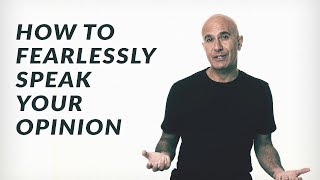
A short Mastery Session by Robin Sharma advising viewers to speak their truth respectfully to build self-worth and improve relationships. He argues that swallowing important opinions causes emotional buildup and damages relationships (including the relationship with oneself). He offers practical steps: increase awareness, practice speaking up, use respectful language, and rehearse via journaling and conversations.
Chapters
Hi, this is Robin Sharma, author of the Leader who had no Title, founder of the Titan Academy, and welcome to this episode of the Mastery Sessions. Well, this episode is called how to fearlessly speak your opinions. A lot of people ask me when I meet them at a live event, or maybe it's online. Robin, I want to say speak my truth, but something prevents me from doing it. Maybe it's at the office, maybe it's in your intimate relationship, maybe it's with your family. I don't know where it is for you, but I wanted to make sure I offered you some valuable insights to help you speak your truth, even when your voice shakes. Because ultimately, one of the ways that we can develop self respect is. And one of the ways that you can build self worth is speaking your opinion and sharing what's important to you and putting a voice to what you need to say, even if people don't understand you, or even if people don't like it. I think it was Dr. Seuss who said, speak authentically. Be real, be yourself, share your opinions. And here was his line. Because those who matter mind, and those who mind don't matter. And there's a lot of wisdom. If you wanted to deconstruct that idea of Dr. Seuss, it's pretty powerful. Because ultimately, I believe you can say whatever you need to say so long as you say it with respect. And so if it's with your intimate partner and there's something that's bothering you, but you want to say it, first of all, when you say it, it's like you release a pressure valve. You know, what most people do in any relationship, they swallow what they need to say even though it's incredibly important to them. And here's what that does in your professional relationships and in your personal relationships, every time you swallow something you know you needed to say so that you're clear, it builds up. It builds up emotionally, it builds up psychically, and it eventually that pressure builds up and eventually it will come out in conflict. It happens at the office. There's a teammate, and you don't say something like, here's what bothers me, or here's what I need to say, or here is my opinion. Over time, the wound will fester and it will damage the relationship. And I've seen it so often in home relationships and personal relationships, a little thing that could have been handled, you know, like, I didn't like the way that you said that to me or wanted to go to do this on the weekend, but you wanted to do that. And I really didn't feel heard. And rather than just saying it because most of us don't know how to say it, they don't teach us how to communicate at world class in school. We swallow it because human beings don't like conflict because we're tribal. And I don't want to get into, you know, the neuroscience and the psychology of tribalism, but we're tribal. That's how we survived thousands of years ago. And so now we do have an instinct hardwired into us not to have conflict because we want to fit into the tribe to survive. But if you don't speak your truth when you know you need to share your opinion, well, you swallow the words, you swallow the emotions. And here's what it does. It not only then damages the work relationship or the personal relationship, here's the powerful insight, it damages your relationship, relationship with yourself. And I think in many ways all lack of success and creativity and productivity in someone's life comes down to a lack of self worth. One of the best things you can learn how to do is learn how to honor yourself, learn how to build self worth, learn how to build self respect, learn how to build self love. And one of the best ways to do that is to speak your truth even when the fire is on. And so how do you do it? It's like any other skill, you practice it. So you look for opportunities every day at work or at home where you want to say something and then you start paying some attention because as you know, with better awareness, you'll make better choices. And with better choices, you'll make better results. It's my three step success formula. Write about it in your journal so you can really build awareness around it. With better awareness, step one, you'll start making better choices. And with better choices, of course you're going to see better results. So the greatest women and men of the world all built high awareness of what they wanted to improve and where they were weak. And so start thinking about, where am I swallowing my truth, where am I not sharing my opinions, what context or what situations do I do this? And that's going to build some awareness. As you become more aware, you're going to start catching yourself in the moment and you say, then you can say, you know what, I have power, I have choice, and I'm not going to do this anymore. And you start to speak up. And there's a brain tattoo that has been so helpful to me in my own life and with the work I do with members of the Fortune 500 and Sports Superstars and people who come to my live events like Personal Mastery Academy and the four day flagship event. I do the Titan Summit, which has become one of the highest level events in the world for empire builders. But when I work with these heroes of business and these leaders of humanity, here's one of the things I remind them. You can say whatever you want, so long as you say it with respect. Don't swallow your words. If you're in a restaurant and the service is mediocre, you're a paying customer, you can speak to that server with great respect. You can say, can I offer you some positive feedback or some feedback, please?
I'm a little disappointed. Don't blame, don't be angry, say it with respect. You know, I was hoping to have this kind of a meal and I found that this is what happened here. And I'd be ever so grateful if you could just find some kind of a solution for me. So I leave happy because I want to leave you a great tip as well. Would that be okay? That's an example of how you could deal with a situation in a restaurant if you weren't happy. What do most people do? They swallow it. They just never go back to the restaurant or they go online and tell 50 people or the wound festers and all through the meal they're upset and then maybe they have a fight with their family. That's true, right? That's what most people do versus having the bravery and the self respect to stand for yourself. You're paying for the meal, the dinner, whatever it is, or you're at a hotel. If the service wasn't good and if you feel it's important to say something about it, then speak to someone at the front desk. Often they'll say, how was your stay? And say, well, I'd love to share my experience with you and you don't have to go on for an hour, you can just go, here's what happened here and here's what I experienced here and here's what I would love to have happened and I'd love to hear what your solution would be. And if you say it with that level of, of respect and no emotional charge and you're not blaming and you're not angry and you're just being a respectful human being who is also self loving, you're going to create some magic in my life. I have experienced nine times out of 10, the person says, oh, I'm so sorry and here's what we'd love to do for you and we weren't aware of this, et cetera, et cetera, et cetera. So you can do this at work. And let me just, hopefully to be very helpful for you, because I shoot these episodes for you, to serve you, to inspire you, to give you some real tactical information, to be a better leader, to be a better performer, to be a super productive, and to build a gorgeous life you'll be proud of at the end. So maybe in your personal life, if you are having, let's say, let's say one of your children or let's say someone in your family is sort of rubbing you the wrong way, usually at the dinner table, or maybe it's at a family gathering, you don't say anything. Why don't you say this? Hey, so and so, can I have a few minutes to chat with you? And then you go off into a private place because you never want to do this in public. You. You always want the other person to save face. And you say, hey, you know what? Here's what I've been feeling. That's a great line. That's a great verbal cue. Here's what I've been experiencing in our relationship, and I really care about the relationship, and it's making me feel angry, and I'm feeling really disappointed. This is really powerful. This shows someone who not only loves the relationship and the other person, it's showing someone who respects themselves. And so you say, here's what I've been experiencing, and it really hurts me and it disappoints me sometimes I feel really angry and I want the relationship to last. Is there a way that we can find some solutions so I don't feel like this? And whatever, what do you think about it? And that gives the other person the space to say, well, I had no idea, or thank you for letting me know, or, well, I'm upset too. And here's what I feel and here's what I've been experiencing, and I'm frustrated about this. And then you can say, wow, I didn't know that. And it's hard and it takes bravery, but if you practice it, you get stronger and you learn to be a better communicator. And this builds the relationship not only with the person at work or the person in the restaurant or the person within your home or family. Most importantly, it builds the relationship with yourself. And I will share with you with great love and respect everything you do in your outer life, whether it's your relationship with money, your relationship with your productivity, your relationship with your craft, your relationship with your team, your relationship with your customers, your relationship with the world. All of those external relationships depend on one thing, the relationship you have with you. Honor that relationship first. I call it the primary relationship of personal heroism. That's the relationship you have with yourself. Tend to that, because every other relationship depends on that. And so when you speak your truth, when you're scared, when you speak your opinion, when your voice shakes and it's difficult, that's a high act of honoring yourself. You build self worth, you'll build self respect, you'll get more pert, you'll get more individual power, you'll feel stronger. And every other relationship in your external world will rise as a result of that. So I hope this jam on speaking your truth and sharing your opinion in easy situations as well as difficult situations has been tactical and practical for you. And here's what I want you to do over the next 24 hours. I'd like you to share this episode with three of your friends so you elevate their lives as well and so that you build the relationship with those three friends. Secondly, I'd like you to start a conversation with those three friends about what you learned in this episode. I don't want you to just watch the episode, I want you to study the episode. I want you to master the episode. And that comes through practice. It doesn't come from just watching it once. Watch it a few times, share it and then talk about what you learned. Because teacher learns the most. And like I say, if you're interested in my live events or learning about Robin Sharma Nation, which is my world class online coaching program that so many people from around the world are getting tremendous benefits from, just go over to robinsharma.com robinsharma.com or robinsharma nation.com if you want me to be your coach online and you'll get all the information and I'd love to help you if that feels right to you. Okay. Thanks for being with me in this episode and I'll look forward to seeing you next time. Hi, this is Robin Sharma. I hope you received great value from this Mastery session. If you'd like to receive potent training videos, blog posts, learning tools and information on my two live events, Personal Mastery Academy and my flagship four day experience, the Titan Summit, go ahead and visit robinsharma.com.
More from Clegg

The #1 Skill Gen Z Needs | Simon Sinek + Esther Perel | A Bit of Optimism Podcast







AI Won't Tell You the Full Truth | Arthur Brooks + Simon Sinek | A Bit of Optimism Podcast



How To Make the Best Decision | Arthur Brooks and Simon Sinek | A Bit of Optimism