How to Get Recruiters & Headhunters to Bring You High Quality Jobs + Live Q&A
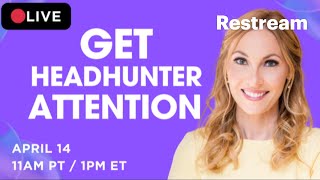
In this hour‑long live coaching session, Madeline Mann walks job‑seekers through a comprehensive framework for attracting high‑quality opportunities via recruiters and headhunters. She begins by explaining that senior‑level candidates (Director, VP, C‑level) often secure over 50% of interviews through inbound recruiter outreach, and she outlines why recruiters are valuable partners despite their busy inboxes. Mann stresses that generic outreach to recruiters is ineffective; instead, candidates should be hyper‑specific about the role they’re targeting, reference the exact job posting, and succinctly articulate why they’re a perfect fit. She differentiates internal vs. external recruiters, noting that both will never email from generic Gmail addresses and that external recruiters often source from niche job boards. A large portion of the session is devoted to LinkedIn strategy: building a broad network (aiming for 1,500‑2,000 connections for mid‑career professionals), using the “Open to Work” badge correctly, optimizing headlines, and ensuring profiles are fully public. Mann introduces tools like JuiceBox for digital‑footprint consolidation and advises on being findable via niche job boards and targeted company lists. She also addresses common pain points such as AI‑driven resume screening (reassuring candidates that AI filters are meant to surface qualified talent), ghosting by recruiters (follow‑up with value‑adding updates), handling multiple offers (communicating timelines and negotiating), and resume construction (focus on the most recent 10‑12 years, tailor gaps, and keep bullet points relevant). Throughout, Mann answers live chat questions on topics ranging from response speed to recruiters, dealing with fake recruiters, converting LinkedIn followers into connections, and leveraging her “Reverse the Search” book and coaching programs. She promotes her upcoming “Reverse the Search Live” masterclass and provides links to her coaching site and book resources. The session ends with encouragement that participants are already in the top 5% of job‑seekers and a reminder of future office‑hour sessions.
Chapters
Hello, welcome. We are live today. We're talking about how to get recruiters and headhunters to bring you high-quality opportunities. Okay, so it's really about, you know, people always talking about how to work with recruiters, recruiters. I want to get recruiters to bring me jobs. It's a little bit more complicated than that. You necessarily shouldn't expect all these recruiters to be working for you, but there are very distinct strategies that you can do that can make it so that you are attracting opportunities and working well with recruiters. For example, my clients often report that they land more than 50% of their interviews due to inbound requests from recruiters. That means that roles that are not applied to. So that's what we're talking about today. And welcome. I want you to say hi in the chat, say where you are joining us from. Hi, Steve from Spain. Hello, The Merry Blue. Good to see you. Welcome. Welcome. Go ahead and say hi in the chat. It's so good to be here with you today. And just, you know, what is the vibe of this session? So I have some points that I'll share with you, but I do want to make this session yours. So any questions you have as I'm sharing, ask them, right? Let's make this a dialogue. That's why I'm here. These are my office hours. I am here for you. All right. So a bit about recruiters, right? So as I said, many of my clients report over 50% of their interviews coming inbound. And how does that happen? Well, it's because recruiters are finding them in lots of different ways and that they're then landing interviews from that. And so that is kind of the way that you put your job search a bit on autopilot, right? We're still working hard and all of that. But you want that part of your job search to be in tandem with the more proactive, you know, approach where you are going out there applying for roles and all of that. You want to be found, especially if you are going for these role level roles which are director, VP, C-level. I work with clients all the time at those levels who are really looking to attract more opportunities. And that— this is a huge, huge component is working with recruiters. Oh my gosh. Okay. So a bunch of people just came in. I just want to make sure I am saying hi to all of my folks here. So I want to say hi to Tom, Christian, Douglas, Knoxville. I once spent New Year's in Knoxville. David in Maryland. Hi from Indy. I'm guessing that's Indiana. Maybe. Ashley is in New York City. I'll be in New York in a few weeks. New York City. Andrew. Yes. Good to see you, Rosemarie. Welcome. Okay, so, so good to see you all. All right, so here's the thing. A lot of recruiters, obviously, they're getting tons of applications and recruiters are still reviewing applications. It's still an effective way to build their pipeline. But it's really tough to sift through them as well as a lot of companies have a lower headcount. So if you have lower headcount, so if you can only hire 3 people, whereas maybe in past years you were able to hire 5 or 10 people, you're going to try to find the best possible people to fill those roles, especially when we're talking about again, these higher-level roles, director, VP, C-level, you only have so many people you can put in those roles. So what are you going to do? Are you going to simply wait for the perfect candidate to luckily apply, or are you going to go out there and find someone who is already successful in their profession and, you know, ask them to interview? Companies do the latter, right? They— yes, they accept the applications, but they don't assume that the best person applied, right? That's— they're just— they're, they're more open to thinking, okay, there might be other people out there who would be a great fit. And so that is why sourcing is such a big part of the recruiting process, is they're looking for the best possible talent. If you only have so many people to hire, you're going to try to go out there and look for the best. You're trying to hand-select the right person. Now, a lot of people think that working with recruiters means that you need to message them and get in their inbox and that kind of stuff. And I will say that recruiters are one of the least effective people in a company to email and to message. The reason being is they have some of the most crowded inboxes of anyone. Okay. So I wouldn't say that, okay, my strategy in the job search is to message 10 recruiters a day and that's how I'm going to win. That's actually not a really effective approach. I would actually move away from that. And also, they're not the decision makers, right? It's usually more of the hiring manager, even the skip-level manager who has more influence. Even the team member has more influence than the recruiter. Unless, of course, you're going for a recruiting job, then the recruiter probably has a lot of influence. And oh my gosh, I see this really nice message here. I just caught it out of the corner of my eye. Says, you are so lovely. Love your Storybook content and cheering for your continued growth and development. Can't wait to learn from you today. Oh my gosh, what a perfect way to start the session. Thank you so much for the, the warm, the really warm welcome. Okay. And then Michael asks, are you focused on internal recruiters versus external? So let's talk about both today. Okay, let's talk about both, because here's the thing. External recruiters are recruiters contracted by the company to say, hey, we need more manpower behind this hiring process. And external recruiters are often the ones who are doing a very large amount of sourcing, and they also have backlogs and all of that of the talent that they want to put into roles and all that. So it is good to get in their orbit. But if you're getting a message from a company saying, hey, will you interview with us? It's a toss-up of whether or not it's going to be an internal recruiter or an external recruiter. One thing I'll say on that, though, just, just so we're aware, whether it's an internal recruiter or an external recruiter, they will never email you from a Gmail email address. Okay, I've been getting so many spam recruiter mails and I haven't been on the job search in over a decade. And so I'm not on some sort of like job search site. I just— they just are. I guess my phone number and email is really easy to get. I don't know. But anyways, they will never email you from a Gmail. Okay, so they're trying to get really clever. They'll say they're working at certain companies. Now, even if you get contacted by a recruiter, and they're not using Gmail, but their email is something different than what is the company they're hiring for, that can be okay because that might just be an external recruiter. So don't immediately shut the door. And sometimes they also do confidential searches. So if they don't tell you exactly what the role is right away, I would still be open to it. I've, I've had a lot of my clients have extremely fruitful interview processes where they didn't know what opportunity it was at first. And then once they found out, they thought, okay, this is actually a fabulous opportunity. So I wouldn't, I wouldn't get too intimidated by that. So, so also another thing to know about recruiters is that it is their job to fill roles. They want you to be the right person. So know that when you're communicating with them, you can be very to the point. With a lot of other networking, we want to not just lead with which job we want and all of that. We want to get to know the person. We want to add value, all that kind of stuff. And in some ways that is true a little bit for recruiters. But in the end, a recruiter wants to reduce the number of roles they have open as quickly as possible with the best possible candidates. So you introducing yourself, you, making it very clear of the role that's open that you'd be a great fit for and why you'd be a great fit for it is extremely important to to tell them. Okay, don't come in with, hi, how are you? Hi, how have you liked working here? What's the culture like? Do not waste their time like that. Get straight to the point because they want you to be the person who they hire. That is value to them. So you just by being a great candidate is valuable. Okay, write that down. That is the value. So, but, but you never email them saying, here's my skill set, do you have any open roles that would fit that? No, you say one of two things. You either say, I saw this open role, this is the title, this is the link to it, this is the reference number, whatever it is. And here's the reason why I'm a great match. And not, not just the boilerplate, like, let me tell you about what makes me interesting. No, it's you ask for someone with B2B experience. Boom, I have that in the cosmetics industry. Yes. Boom. You know, you wanted someone who has built these types of products, right? You just, you're just basically making it so it's, it's on a platter. Here's how I'm extremely relevant to you. And then on the other side, if there isn't an open role, you need to say which role you're going for. And you cannot say, oh, you know, I'd be good as the VP of Communications, or, you know, a, the Director of HR, or, you know, right? What? These are very different roles. No, you need to say, and I'm, I'm targeting Director of Business Development, or, you know, Senior Director of Business Development roles. If you kind of have anything on the business development or sales realm, realm, I'm your gal. I'm your guy. Okay, we need to be very specific. We need to not waste their time. And they might say, whoa, actually, we're just talking to our, our business development team, and they actually are preparing to hire someone in the next few weeks. Let me push your resume forward, all that kind of stuff. All right, I want to get over to the chat because I want to make sure I'm not missing some good questions here. So Do you think the subject of resumes being sorted out and reviewed by AI, a lot of these recruiters and/or companies are as much of a challenge as we're actually hearing about? Here's something that a lot of people probably wouldn't expect me to say. I think if, if a company is sorting your resume using AI, you should be So grateful. You should be like, okay, I'm definitely applying to that company. Because if you follow me, if you are here right now, you are probably a candidate who is much more thoughtful than 95% of others. You are thoughtful about, okay, how do I build my application to the, to the way that the company wants? I know a lot of you have read my book, Reverse the Search. You all have followed the things in here. You've gotten lots of interviews from it. So you're ready. Like much better. And if you are following the strategies of Reverse the Search and the Glory Formula, your resume is going to pass through any sort of AI filtering. Boom. Like, it's just— it will. Unless, of course, you are unqualified, right? If you've gone through the Glory Formula and you're not qualified, it might not work, right? So, so the reason you want it is because You are— the companies are overwhelmed with applications right now. The number of applications an individual, uh, job seeker sends has more than doubled since the advent of ChatGPT in 2022. Okay, so your competition is sending more than double the amount of applications they used to. So what does that mean? That means that Anything that is going to help surface someone who is better is going to be better. Now, the reason why I'm saying that these things are good is because people think about, oh my gosh, is there an AI scanner scanning my resume? And they get freaked out about that. What they don't realize is that if it's scanning your resume, it's not going to be a tool that filters out good people on purpose, right? The goal of the company is to hire the best possible person, and they wouldn't use these tools if it didn't help them. So people think they need to game the system and all that. No, you just need to follow me and I'll just tell you how it all works. And it's, it's not so much you're gaming the system, it's that you're learning the psychology. That's actually what the base of all this is, is you have to learn the human psychology that is timeless. And that's what I coach on. And that's what I do all my coaching programs on. And that's why it works across We've tested across over 40 different countries. That is why it works so well is because it's all psychology-based. And it's knowing, okay, how do I say the one thing about my background that's going to catch their attention? Because we're too close to our own story. We say too much and we don't actually get to what they're actually looking for. All right. So I have, I see more questions here. Priya says, how to deal with ghosting? Okay, so I'm curious if this is— if this is when you're applying and you're not hearing back, or is this during the interview process? Let me know in the chat, Priya, of what your experience is, as well as everyone who's here, any experiences you have with ghosting. Um, I'll focus more on in the interview process because I'm guessing that's probably what we more associate with ghosting because You know, if you've already been talking to me and then you suddenly stop talking to me, that's very unsettling. So what's the deal with ghosting? So I would say following up is so important. I have so many clients in my Standout Job Search program, and I also have an executive program, um, which is like really, really hands-on, um, for those director, VP, and C-level roles. And what we found is that there's a lot of weird stuff happening in companies where they'll say, oh, I loved you, but we're just going to pause this role because this person just moved teams and this person just resigned and this person just came back from maternity leave. And we don't know what the heck the team is supposed to look like, or we just did a reorg, or we're, you know, trying to divide the tasks among the team. There's just a lot of things happening. And so sometimes this ghosting is because the recruiter truly doesn't know what to tell you. They're like, guys, are we still hiring this role? What is going on? And I've been there before. It's so embarrassing as a recruiter. Let me know if anyone's a recruiter in the chat or even a hiring manager who's been like told to freeze their hiring. It's mortifying. Okay, so that could be a thing. Now, of course, it's not reason to ignore you, but it is their reason. Now, what works is truly following up genuinely and without some sort of— it's almost like you ignore the fact that they're ignoring you. So a really high-value job shopper way of staying in touch, especially after they have ignored you. And this, let's, you know, job shopping is kind of what I talk about a lot, right? Like how to go job shopping. Instead of— a lot of us will say, hi, any update? Any update? You, you give them an update. So you might say, hey, want to let you know, I'm, I'm still really interested in this opportunity. I am in second round interviews with another company and first round interviews with another. It doesn't seem too serious yet, but I will update you if it gets more serious. You know, looking forward to next steps. Right. So we're just updating the company now. Still asking like, hey, what's the status? Is totally fine. I'm not saying that that's bad, but I found that updating them in a way is really good because first of all, it shows you're in demand. It shows that you're saying, hey, I'm still interested in you, right? I'm excited about you. It's a very positive message versus being like, hello, did you forget about me? And I've had clients get offers after 2 weeks of silence. 3 weeks of silence, right? And, and it all is because someone was on vacation, something happened, all that kind of stuff. Um, got it. Um, and so then let's see. Ah man, you got, you got interviewed by AI. Phyllis got interviewed by AI and there was not— they were not able to get to know me during the interview. Oh yeah. I mean, that is, that is tough. And, you know, I have videos on my channel about HireVue, Spark Hire. These are these one-way interview platforms. So definitely check out those. I go very in-depth. I just did an updated one like a few months ago that's very in-depth. That is like, you know, we're really getting deep into this in case you all have to do any of these one-way interviews. What is the recommendation, says April, for following up after an on-site panel interview? How long do you wait before inter— reaching out? Do you contact them via email or call? So I would say, first of all, you typically want to ask when the day ends, okay, what are next steps? When should I expect to hear back? And I would typically follow up after that time has elapsed. So if they say, oh, we'll follow up Monday, I'd follow up the Tuesday. They say we'll follow up in a week, I'd follow up— if the week is Friday, I'd follow up the next Monday and whatnot. And, um, I would typically say email, but it truly depends on what has been the rapport. If you, if you all have been calling each other, I know some situations They're texting with these recruiters, whatever is already the idea that is set. And you can even ask, right? If you're asking them, hey, what would next steps be? You say, okay, great, I'll make sure to follow up in a week. If I don't hear anything, would you prefer email or text or what would you prefer? You can always ask that as well. Is there a strategy, says Wendy, to connecting with external recruiters? How do you find a reputable recruiter when just starting out on your job search? Okay, so, so here's the thing. I'm glad we're bringing— we're bringing it back to this topic because I think people misunderstand a little bit about connecting with external recruiters. So yes, it is great to build relationships with them, especially if you're a senior-level executive, which is a big focus of mine. A lot of my coaching goes towards that direction. And if you obviously have a very clear expertise, you are a VP of operations in the e-commerce industry, you are a chief marketing officer in construction, right? Whatever it is, just having that, those two distinct things is going to make it so much easier for a, an external recruiter to place you. Being that really easily packageable candidate is huge. And then finding those folks, you know, a lot of recruiting firms or even recruiting professionals specialize in certain roles. And so finding those can be really great. Now, what is most effective is actually being findable. Okay, so there's several different ways you should be findable. First of all, let me know in the chat, how many LinkedIn connections do you have? Okay, let me know. I'm curious. You can— and rough estimate's fine. The more LinkedIn connections you have, it's awesome competition to get to 30,000. But truly, the way LinkedIn works is even for when you have a recruiter seat, you can only look at profiles of people who are at least you know, 4th-degree connections or so. Like, if they're too far out, like too many degrees out, then you will not show up in recruiter searches. You know, LinkedIn works as a network, and so you won't be showing up for those folks. So you should be building more connections, and they can be very loose connections. I would even rapid-fire connect with a bunch of folks when you go to the networking tab on LinkedIn. It'll suggest people to connect with. You can kind of see the first part of their headline. It seems like they're in the right industry. They're at companies, you know, that, that are the types of companies you'd work for, all that. I wouldn't focus too much on having the exact right pedigree. I would just click don't add a message unless it's someone who you know, or you really want to connect with and add a message. But if you're just kind of building up your network, you can also go ahead and shoot me a message, shoot me a connection. I have a pretty large network. So connecting to me would then make you a secondary connection to a lot more people. That's also kind of another hack is like if you connect to someone who has a lot of connections, that then makes you a secondary connection to far more people. So let's see how many, how many connections do we have? Okay. Okay. So y'all have a good amount. Wendy has over 4,700. April's at 780. Randy's at 815. Rosemary, she's at 133. I would like to see that higher. Rosemary, if you can focus on the next month, like getting it closer to 500, that would be great. I think that's great. Ron says 700. I would say if y'all have had more than 10 years of experience, I'm looking more— I recommend more like 1,500 connections. But under 10 years experience, over 500 is fabulous. Um, so cool, cool. I— yeah, I'm seeing— oh, 2,400 here. Let me show, show the— what everyone's putting here. Um, 1,200, 2,400, 330, 300. Okay, so yeah, we're working on it. We're trying— we're getting those connection numbers up. So good. So we want to show up in, in more searches, and, and the Big piece of that is, you know, to actually, to actually be connected to enough people. The second piece is that the— you are being searched like a search engine. LinkedIn is the biggest search engine for professionals. You also need to get on niche job boards. Write this down. Okay. This is why targeting is so important, y'all. If you have not focused on a specific specific role title and industry, it will set you free. It'll bring you so many more opportunities. So yeah, I would say make sure that you are— you're targeted, right? In my coaching program, we have this whole thing called a one-page career vision and all these tools that help you figure out exactly what is the market demand of the opportunities you're going for. What are the great ones to go for? What are the excellent target companies? It like generates target companies for you and then you get coaching on that and all that. So that's super important. So get focused, right? And then get on those niche job boards because a lot of these recruiters are sourcing on niche job boards where just the existence of that job board makes it so that they are finding the right type of people because they know if this person hasn't thought about this industry, thought about this profession, they wouldn't be here. So it's like a really good filter. You know, sites like Indeed and Monster and LinkedIn, like I said, LinkedIn is still the number one for sourcing, but everyone's on it. So if you're on LinkedIn, that doesn't really narrow it down to, oh yes, like you are someone who is in more of like the health tech space or whatever it is, right? So that's super important. So you're on LinkedIn, you're on niche job boards, And if you guys have ever heard of a tool called JuiceBox, don't worry about it. It's, it's a recruiting tool, but it, it basically consolidates your digital footprint across mainly LinkedIn. That's the number one thing, but also across other parts of the internet. And it creates a profile where it essentially, you know, leads recruiters to hiring certain people. And so I actually recently did a coaching session for for my private clients where I showed them the tool and we kind of went through a whole exercise of figuring out how to show up higher in the rankings in Juice Box and how to, you know, make that— how to, how to kind of work that system and make sure that we are showing up versus others. Um, and that's super important to consider when you're looking to be sourced. All right, so let's see. Um, All right, I'm seeing a lot of chat about the ghosting, the interview process. Dealing with ghosting after an interview makes me cry. I did it, um, I did 2 interviews, I thought they were awesome and didn't hear back. I'm assuming they have someone to offer to someone else. I know, I know, it's so tough, um, and yeah, that, that is, that is really rough. And then interviewed with a recruiter. Yeah. Okay. So there's a lot of folks who are kind of talking about, yeah, just not hearing back and it's so, so frustrating. All right. So let's see. Can you review a prior advice per LinkedIn Open to Work tag on/off per searches? Okay. I'm thinking, I'm guessing that you kind of mean, should you, should you put your profile as, as open to work. Yes, that is absolutely crucial. If you want to show up in recruiter searches, your open to work badge should be on. Now, there is a way to do open to work, open to recruiters, or fully public. Open recruiters is all you need, right? You don't need to go fully public in order to show up in recruiter searches. And then there's areas of you can say what job titles you want. And all that. And for that, I would say make sure that you, um, you're specific and you're not too broad. Like, if you're writing the job titles that you're open to, again, don't say things like, oh yeah, I'm open to VP of Software Engineering and Head of Product and, you know, a Senior Project Manager. It's like, wait, we're going way too broad here. Specific, that will work out a lot better for you. Um, but you don't have to be super specific, like you can be broad when it comes to cities you're open to. So, you know, it'll ask you what cities you're open to. You could put a bunch if you want to, that's totally fine. Um, yeah, so we kind of talked about this a little bit earlier. Wendy says, I got a handful of recruiters from India with great roles and they want my resume right away, but they then they ghost me. What do you know? What do you do when you know it's worth your time to submit? Okay. Yeah. So we talked a little bit about this, but I think that there's a lot deeper I can go, Wendy. So I'm really glad you asked this. So, you know, in my coaching program, I will typically just, you know, someone's confused, I'll just review it for them. I'll say, just show it to me. Let me see if this is worth your time. But some things to kind of think about for yourself is, Of course, you know, are they from some sort of external firm? There's, there's great reputable external recruiters and internal recruiters that are from India. Okay. So being from India does not necessarily mean, oh, this is a scam or anything like that. Typically also sending your resume should be fine. Everything that's on your resume except for maybe your phone number should already exist on LinkedIn. And here's just another thing, y'all, make your LinkedIn fully public. Okay, put, put yes in the chat if you will do this. Okay, because I see too many people, they're hiding their last name. They're making it so that in order to connect with you, you need to have an email address, all this stuff. Think of your LinkedIn profile. If you want to be sourced by more recruiters, think of your LinkedIn profile as your website for your services. Okay, you have to think about your career, not as this story about yourself. And I know that's the way we tend to feel, but we need to remove ourselves from that and actually think of it as you are like a— you are a store that they are— people are purchasing skills from. Okay, that is a better way to think about it. And then you'll start to think more rationally and objectively about how to present that. And so should a store who wants to buy content marketing skills, should they have to, you know, if someone wants to buy those content marketing skills, should they really have to like fill in the right email and guess what, you know, not be able to see the photos unless they're connected? No, fully public. Okay, let's get back on topic. So, um, is it worth your time? So I would say, so you give them, I would say give them your resume. Okay, because all that information is already on LinkedIn. Don't put your personal address, Okay, don't put anything on there that would be not okay. And you could even get rid of your phone number for this first round if that made you feel better before you found out more information. But email should be fine. And then, yeah, you can just ask some questions. Definitely check out the email address. But why are they not responding? Right? Why are they asking for information and they're not getting back to you? So here's something when you're working with recruiters that happens a lot, unfortunately. They gather all of these resumes. They say, are you interested? Would you be interested in getting a job? 80% of the time, you know what the person says? Yes. That's one of the reasons why saying that you are open to opportunities is worthless, because LinkedIn did a study and found that 80% of professionals are open to the potential of moving jobs at any given time. So that is not a differentiator for you. You're actually fitting in. So anyways, they say, hey, would you be open to a job if it was kind of like this? And you go, yeah, sure, I'll send you my resume. They throw over— oops. Sorry guys, it's getting wild over here. This is live. This is, this is the live. This is the real deal here. I gotta find a better way to— the base of my— whoo, the base of my camera is quite, uh, quite narrow. Okay, we're back, baby. Cowabunga! All right, so, um, so they say, hey, you know, would you be able to do this job? Send us your resume. And then what happens is, is they share the resumes with their different clients and the client goes, yes, no, yes, no. Sometimes the client also takes forever to get back to them. First of all, they go, yes, yes, yes, no. And they send them over 20 resumes and they just don't get back to you, which really sucks, right? But the client typically, typically because the client didn't select you. Now, if they asked for your resume in the first place, that might be that they're the type of recruiter that hires you and the type of person you are. So it is good to follow up and be like, hey, you know, you know, asking for an update every few days or every week or so. And then after that being like, hey, I totally understand. I mean, I wasn't the right fit for that other role, but, you know, I'm still open to other opportunities and still in the job market. Would love to be considered for future opportunities. And this person might go, oh my gosh, I felt so awkward because I didn't get back to this person, but they're being so warm and great and not blaming me for not getting back to them, I actually am going to bring them up an opportunity. And you might listen to that and be like, oh my God, that is such baloney, that never happens. I, I don't know if you guys have heard that I've been called the comeback coach because so many of my clients land offers at companies that have previously rejected them. And it's because I don't give up. I know how to I know what it's like for recruiters. I know what it's like for these companies and how to be better than others and still be reconsidered. So that is huge. All right. So let's see. All right, let's see. Tested. Okay, here, wait, let me also— I'm kind of a little bit behind on the messages here. I'm seeing yeses in the chat. I'm seeing from Michael, Claire. Straits, Straits, Franck, David. Okay, I appreciate it. I appreciate it. Noel also said yes. Okay, cool. Sorry, I'm a bit behind on the questions here. So when reach out from recruiters, how fast should you, should you respond? How fast should they respond? Realistically, I feel I need— oh, how fast should I respond? Like the individual. Okay. Realistically, I feel I need some time to think, and a lot of people are quite vague in their messages. I would, I would respond and think later. And maybe I, I, maybe I, you know, am misunderstanding your question, but I would say, yeah, like, let's talk, you know, here's my resume. Because here's the thing, if the opportunity they give you or offer you or offer you the opportunity to have a conversation about is not good, that's okay. You can just be like, I don't, that's not a good match. But guess what? You just networked with a recruiter who can then get you other opportunities. Every conversation is a networking opportunity. So you are taking the call not because the job is the perfect match, but because they are someone who can help you get a job. That's the only criteria really. Are— do they, do they have the capacity to hopefully potentially get me a job? Yes, I'm taking the call. Right. So I wouldn't think about it too much. Okay, so, okay, so, and then Alexander, Alexander says several people on LinkedIn have seen my profile and have an interview tomorrow. Could they be related? Yeah, I think especially if you, if the number of views on your profile is like a little bit uncharacteristically high, then yeah, I would say when reviewing resumes as well as you know, getting ready for interviews, it's extremely normal to review someone's LinkedIn profile, even if they already have the resume. Something about looking at a LinkedIn, it's just like the, the information is presented a little differently. It can be helpful to look at. So I think that's definitely, definitely true. All right. This has been fun. This has been fun, y'all. I'm still— I'm going to stay on for the full hour. So let's keep rocking. I have more people following me than actual connections. Is that an issue? Okay, y'all, let's talk about this. Okay, we're talking about getting sourced, we're talking about getting enough connections, all this stuff. If you are job searching, if you're building a network, do not have LinkedIn creator mode on, do not have the default follow button on. I mean, it's totally fine that like people follow you, that's not an issue. Follows do not help you. Follows do not help you with your, your network of growing your network larger. So it definitely doesn't hurt you by any means. A follow is more to see your content than to be considered someone who is in your network. So just make sure that if you're on the job search, if you are not really, frankly, someone who is just like a thought leader who gets too many connection requests, like literally like I get too many requests, connection requests. So I switch it to follow instead, because like, I prefer people to follow me and, and all that. And, you know, I would hit— I have over, I have like 200,000-something connections on LinkedIn, or follows on LinkedIn. You can only be connected to 30,000 people on LinkedIn. So if I didn't have the follow button, I wouldn't be able to have, you know, people following me. So anyways, but that is just— that's a case for in my situation. If you are job searching, if you're building your network, make sure it's the connect button. Don't make them go searching for the connection button. Cool. All right. So, oh my gosh. Pricey Joy says her book is very good. I'm telling you, no kickbacks. It's good. New concepts to me. Thank you so much. And y'all, it's at, it's at a lot of libraries. To especially— I don't know internationally, but internationally too. We have it in Spanish, Español here. Okay, we have it in Taiwanese. Okay, so we got— we've got the book in all different languages, so you can grab it. And like I said, we've really pushed for it to be in as many libraries as possible. And if it's not in your local library, request that it is. Writing this book has been so amazing for me to reach so many people and change so many lives, and you all have been using these methods. So it's been so, so great to see how many folks have loved it. And yeah, I'm excited to hear your success stories. Also, if you are someone who has read the book, the literal most helpful thing you could ever do is write a review on Amazon or Goodreads. Right? That the, the book world, the currency of the book world is reviews. So please do that. All right. Um, let's see. Hugo says, on job date gaps, does it help to show the date gap over 4 months on, or your profile and resume should say what part-time contract business you were doing during that time? So I think The farther back you go in your career, it's much less important. If it's kind of a small gap, I would say I've talked to so many hiring managers. Gaps on a resume is not a huge, huge issue. I wouldn't worry too much about it. I think if, if you had a part-time or contract job in between that is in rela— is relevant and in line with what you're doing, then I would say put it, put it in the in-between. If it's not, like, if it kind of messes with— like, I actually had a— I was on a client call yesterday and I was helping him with that. He had, um, a— he has his own art studio, um, and so that was there in between his, his marketing roles, his senior-level, like, marketing roles. And I was like, oh, okay, it's kind of throwing off the narrative here. Of saying that you're a partner at an art firm and whatnot. So it just kind of threw it off. And so that's just something to think about. That's something I work on with my clients is getting that narrative really tight because the problem is, and it's not even a problem, it's a beautiful thing. So many of us are multi-passionate and I call them kind of like mosaic professionals. We have so many different skills. We have lots of different professional jobs that we've done. It's, it's wonderful. But when we're on the job search and I work with folks, I'm like, okay, let me get it airtight. Here's the narrative we're going to say. Here's the things we're going to say. Just because you don't say that you did that thing does not make it a lie or anything like that. You're just excluding information that's not important for them to make their decision on you as a candidate. We have to remember that a resume is not a full history of everything we've done. It's the true things that we've done, but only the ones that are most relevant to what we're going for. So we are going to leave things out. Okay. All right. Um, let's go. Um, so I see some people asking about niche job boards. Go ahead and put in the chat what niche job boards you have used. Um, I know for me, I, uh, when I did a lot of hiring in Los Angeles for startup companies, for mainly startup tech companies, right? We weren't looking for necessarily big company people. We're looking for people who specifically wanted to work at startups and maybe were a little bit more technologically advanced because I was working for like a blockchain cryptocurrency type company. So we would use the website built in, right? And we use the one built in Los Angeles. There's built in Chicago, there's built in New York, there's built in San Francisco. You know, there's a bunch of them, but we use built in Los Angeles because what does that do? It finds people who want to work at a startup in Los Angeles immediately. That, that pool is much smaller. So that's an example, right? And so, and I also personally found a lot of jobs and opportunities when I was on the job market through that. So go ahead and put in the chat any ones that you do. But I would say like do some searches, right? Like all of us here, and obviously like if you're, if you're my client, I would just kind of give you, you know, we could just talk about it, you know, but like all of us have different professions and I, you know, there's, there's hundreds of us here, so I can't necessarily say, okay, here's the job board for you, here's the job board for you. But I would say do a little searching and maybe even ask recruiters, which ones they use. Okay, so, um, let's see. Um, all right, so All right. So I'm seeing lots of chats. Yes. Yes. How should you address a career— a career— a large gap on your resume? Experienced job elimination due to restructure over a year ago. Is it best to omit the dates on the resume? So if the— if the gap is the most recent thing, I would say, what are you doing now? Okay, so what is your profession? Start doing some pro bono work. Okay, I would start getting that on your resume. Um, first of all, having a gap, again, like I said, is not a big deal. Um, you could just leave it. But I would also say, like, if it's been at least a year, um, or it says over a year ago, I would say let's start thinking about how are you adding value to the world. This will do two things. First of all, I found that job seekers who have personal projects that are in line with their profession, who are, you know, calling up their former coworkers or their friends and giving them some advice on some of the work they're doing, right? Like if I was in between HR jobs, I might, you know, help some of my friends. Like I know lots of friends who have business. I would just kind of like give them, you know, some advice on how to build out a great recruiting funnel or, you know, help or recommend, you know, help them with sourcing or give them advice on how to build a great comp structure, whatever it is. And it makes you feel really confident because now you have things to talk about in the interview. When you, when you, when it's been over a year since you last landed, since you were in your last role, you start to get a little rusty, right? And you start to have a little bit of imposter syndrome. You think, oh my gosh, you know, what am I, what am I going to do? You know, all that kind of stuff. And so you, you start to feel rusty. So you get that confidence as well as you need things to talk about in the interview. You should essentially, especially because I help a lot of people who kind of are a little bit later in their career and all of that. And maybe that is you, Regina, where you are, you're a little bit more focused on like kind of like having your own, almost like consulting, right? I'm a consultant. I'm consulting in HR. And you could talk about that. As your more recent experience. Not lying and saying that you're employed by these businesses, but know that you don't have to earn money for what you've done to be valuable. A lot of us don't really think about that that way. All right. Oh yeah, this is so great. Lightweight says the video did with the guy on AI helped me get a new position. So great to hear that. Um, so good. Okay, um, so I'm seeing lots of people like giving others advice, which is fabulous. Um, how do you deal with two possible offers at once if I get the offer, um, for the second choice while waiting for my primary choice? Okay, so this happens all the time with my clients. Um, we typically— I have like a whole process of like of like ways to line up multiple offers so that the timing lines up nicely. But of course, even when it— when like the 2 or 3 offers kind of line up at the same time, or there still could be days or even like a week in between, which is still pretty good. But you're right. So you— what you'd want to say is as soon as you're in the final round interviews or as late as getting an offer, You need to tell every other company you're interviewing with, hey, I want to let you know I'm in final interviews with another company. I understand if you cannot speed up your process, it's totally up to you. But if there is any way to expedite, I would love to continue the conversation because you are my top choice company. Okay. And tell them that. So you try to line up things and then ideally you try to make the other opportunities go faster, not the one who gave you the offer go slower. Though you can make the one who gave you an offer go slower by asking questions. Can you explain how the equity works? Can we have a call to talk through, you know, like, you know, how this would work as far as the hybrid model and all that kind of stuff? Can we, can we set up a call? Can we review the offer on a call? Okay. Yeah. Oh, you're available in 3 days. You just bought yourself 3 days, right? That kind of stuff. So it's really about trying to speed up the other one and then kind of slow down a little bit. Of course, Of course, eventually you can possibly ask for more time. I don't like to do that too often because you really, you want, you want the company who gave you the first offer to really, you know, see your, see your enthusiasm and not kind of take that for granted. Amazing. Oh my gosh, there's so much going on. Yay, Roland said your book is amazing and very helpful. Specifically the toolbox and show, don't tell sections. Yes, these are so crucial. I'm so glad you brought those up. Um, those are some of the— I would say that those are like the things that I get all these emails from of like, okay, that's what really changed the game and got me so many more offers. Um, it helps kind of people to beat that, um, silver medal curse of getting interviews but not offers, I would say that those two things you just named are the things that kind of beat the silver medal curse. If y'all are looking for the book, you can just go to www.reversethesearch.com. I was super lucky to get the correct URL for my book. So reversethesearch.com. I don't— it was really inexpensive too. So it just, it really worked. Worked in my favor. But yeah, I also, in my coaching program, I've built out all these tools and of course I coach people individually on, okay, let's improve your story toolbox. Let's go story by story and improve it. Okay. You know, I have a— I built out a whole tool that helps you brainstorm show, don't tell ideas so that every interview you go into, you can blow their mind. And I've been getting a ton of really good feedback from clients on that. So So that's been really fun. Okay. We have two people who actually asked the same thing. So how far back should you go on your resume? Should you add just a line and dates? It shows you have experience in a different industry. And then, and then Courtney has a very similar question. So Sandy and Courtney. So how far back should we go on the resume? So here's the thing. Companies favor your more recent experience over everything. The last 5 years is more important than the past 10 years, but then the past 10 years is way more important than the 10 years before that and the 10 years before that. So that being said, I would say with the past 10 years, probably put the past 10 years on your resume. And then, but beyond that, maybe I would say things like earlier roles include, you know, and you might put the job title and the, and the company. You could do it and you could even just do it from, you could say like earlier career experience and you can have like the dates of the entire thing and you could list out like the companies or job titles or whatnot. If that earlier experience is actually some of your really juicy stuff. Maybe there's brand name companies there. Maybe they're like really relevant to the industry you're going for next. Leave them, leave them, leave them very visible, visible on your resume. What we're just doing is if the roles are not super relevant to what you're going for next, let's not spend a bunch of time on them. And that's even true for your more recent roles. Let's like really go— just remember, there's no rule for resumes that says you need to have 3 to the 6 bullets under each job. You could just have 1, you could have 0. Only give them relevant information. Super important to know. Cool. Oh, this is a good question. Sarah asks, I've been posting on LinkedIn since November of last year. I have not received any offers from recruiters. Any tips of what I'm doing wrong? So, you know, if you're, if you're actually, you know, we're actually on a coaching call right now, I would just pull up your LinkedIn profile and be like, all right, let's dive in. Because there's, you know, you could be the posts. What it is like, I would say the large number of— so my clients often are getting sourced constantly for these open opportunities. And just a few of them post on LinkedIn. Most of them are getting sourced because of the way I've helped them build out their LinkedIn profile. So that's actually the place I would start first, Sarah, is, is your headline banging? You know, is it the exact right thing they're looking for? You know, going to the different sections, you know, really making sure that that is optimized. Now, of course, then the posts, If you're really struggling with posts, y'all scoot up a chair here because this is— this will, this will change your life. Okay, so if you're multitasking, come back to me right now. If you're posting on LinkedIn and feeling like you're not getting traction, I want you to do this. I want you to shift to finding people who work at your target companies. You should have a target company list. Like I said, I have a tool that helps you produce those target companies. But like, you know, even if you don't have any sort of tool, like, come up with a list, okay, of at least 20 target companies. And you want to find the people who post from those companies. And you can comment on those posts and make them really thoughtful comments. And then you might be getting— you'll be building relationships with those people who are posting who are at your target companies. You might be noticed by recruiters, you might be noticed by others. Have you all seen how, you know, it shows you now how many views your comments are getting? Comments get a lot of views. So that can be a really good way to save a bit of your energy, to get a bit more attention. And, and yeah, really, really build relationships. Awesome. Oh my gosh. Matthew's been contacted by fake recruiters. Oh my gosh. I get contacted by them all the time. I can't even imagine how it is for you. So let's see. Lots of chat about resumes. Michael's— Michael's pointing out that this is supposed to be recruiters getting— reaching out to us. So, Michael, I mean, we've been on for 54 minutes, so I am here to answer any and all questions. If it goes in a different direction, that's fine. Um, but I, I can, I can hear your pain if, if that is what you wanted. I feel like we've been doing a fairly good job, but I'm also open to feedback. Feedback is a gift. I appreciate it. Um, all right, so let's see. Um, does startups, recruiters— let's see, how to convert followers into connections. I would send send connection requests, right? I would be the one who's reaching out. Um, you can even do a post of like, hey, I'm looking to connect with, you know, people in this industry. You could do something like that. I would also join groups on LinkedIn. Um, you can join groups, you can connect people with those to kind of narrow down, you know, I would, I would kind of, I would be more of like the connector. You can only connect with a few dozen people a day. So just know you might have to spread out your connections over time. Um, oh, I'm so glad, Lily. Um, she said, I missed some parts, but everything I've heard so far has been helpful. Um, did you already say how we can find recruiters? So, uh, I did talk about finding external recruiters, but when it comes to finding internal recruiters, I wouldn't even focus on that because like I said, they have, uh, too busy of inboxes. And so I would focus instead on being sourced. So yes, we did talk about that, about how to be sourced. So, and that's kind of a misconception, right? We think we need to be connected to all these recruiters and all that kind of stuff. I do think it's great to link up with some executive recruiters and external recruiters and all that who are, who are a good match as far as your profession. But as far as internal recruiters, I would actually focus more of my time on team members or hiring managers or just people in the company who are more likely to respond to you. So yeah, good stuff. All right, so I feel like really long resumes are really CVs, university academic positions. Yeah, I would say so. I mean, look, I think having a long resume is totally fine. But just know no one's going to read it. So, you know, it's not— I don't think someone's going to be like, oh, this person has a long resume, I hate them. No, it's just, just make sure that whatever is the top of the resume and kind of the first few bullet points and kind of the first bullet point under the most recent roles, that better sell you. Because sure, they might read like something on the second page or they might check your education or something like that, but the large majority of what you wrote in your resume will be written. It's not— that doesn't mean it's not going to, you know, damage your reputation or anything like that, but it's just, it's probably not super useful. And but obviously, if you're doing a CV, that is expected to be a lot longer. So that makes complete sense. All right. Love it. Love it. So I don't know if that's to me or to someone in the chat, but I think we should all accept the compliment. So, all right, let's see. All right. We're almost at the ending here. So let me kind of get in a few more left. So I applied to a dream job over the weekend, says Wendy. Used Claude to help me get my resume to tell the right story, connected to someone on the team that is likely decision maker. Anything else I should do? Um, so I don't know. I mean, using Claude, uh, that's not a very specific tool. It actually aggregates the average of everything that's out there. So I think pos— I— it's very tough to say if like Claude could have actually possibly even sent you in the wrong direction because a lot of the generic advice out there is actually really bad. Personally, because I've built out all of my own AI tools and it's taken me so long because I have to change the way AI is telling people how to write their resumes, how they're telling them to phrase their interview answers. Like, it's so bad. Like, and the backend is It's not Claude, it's OpenAI. But I have to like do so much backend work and backend prompting to make it so my AI tools are really, really effective. And so it has actually turned me off a lot of using more generic tools like Claude or whatnot because it's just, I realized, oh my gosh, like me as someone who is an expert who does this every day, is very disappointed by what it is telling, what it's producing, even after like, you know, a reasonable amount of prompting on my end. So anyways, I just give you like a big, big warning there of, uh, maybe just don't believe everything it says, um, and, and possibly get a second opinion there. Um, amazing. So, uh, it was amazing coming on with y'all. This has already been a full hour. Um, be sure we're gonna do these office hours pretty much every Tuesday for the foreseeable future. Every now I'll take one off. Also later in like May, like mid to late May, I'll be doing like a really deep dive. I'll be going live 5 days a week for a masterclass called Reverse the Search Live. Okay, so it's kind of like the kind of taking the idea of how to be a job shopper and I'm going to go deep dive and make it more of a workshop style. Style. Um, and I'm gonna do that, and it's really focused on getting these like high-level, high-income jobs, $200,000 jobs to $400,000 jobs and all that kind of stuff. Um, so that's really going to be a focus. Um, keep coming back, keep asking your questions. If you are looking for coaching, you can go to madeline mann.com/coaching. I believe I put that in the description as well in case you have like more individualized questions. It is just such a— so good to just be connected with you here and live. It is absolutely my pleasure. And it's always so fun to hear what you're up to. I know the job search is really gnarly and can kind of take your spirit out of you. But know that I'm seeing a lot of success stories every day. I'm seeing a lot of momentum. Companies are still hiring. It's just competitive. We just got to step it up, unfortunately. And there's a lot of noise right now. But the fact that you are here, you are already in the top 5% of folks. Um, so thanks so much. It's been so good to see you all. I'm seeing lots of love in the chat. Um, okay, cool. Ron's gonna read the book. I'm so glad to see that. Um, all right, love, love seeing you guys. Have a good
More from Clegg

The #1 Skill Gen Z Needs | Simon Sinek + Esther Perel | A Bit of Optimism Podcast







AI Won't Tell You the Full Truth | Arthur Brooks + Simon Sinek | A Bit of Optimism Podcast



How To Make the Best Decision | Arthur Brooks and Simon Sinek | A Bit of Optimism