How To Live And Love A Life You Don’t Need To Retire From
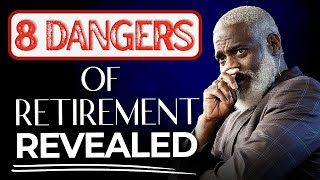
Transcript of a talk by Myron Golden arguing that traditional retirement is harmful for most people. He traces retirement’s history (corporate pensions, Social Security, shift to 401(k)s), lists eight dangers of retiring (drift from direction; decline in discernment; depletion of dollars; drop in discipline; disconnection from daily relationships; disruption of domestic dynamics; diminishing of social/marketplace voice; detour from spiritual devotion), and proposes an alternative life design of alternating “seasons of focus” with “seasons of balance” so people can keep purposeful, productive lives they won’t want to retire from.
Chapters
If I've ever been controversial in my life.
Today we gon do the controversy of all controversies here in America. We about to get controversial. So today I'm going to talk to you about the dangers of retirement.
We go through life here in America as if we believe that the 11th Commandment was Thou shalt retire when thou art 65. Right? And I submit to you that from my observation, for the most part, for most people, not only is retirement not a good idea.
But retirement is a terrible idea for most people. And I'm going to talk to you about the eight dangers of retirement. I might even throw in a bonus number nine. But before I do that, let me give you a little bit of the history of the whole concept of retirement. Because retirement is a relatively new concept. In fact, did you know.
That the concept of a job is a relatively new concept? Like, it's, like it didn't exist like a job. I'm not saying work. In fact, we've come to equate work with having a job. And when people don't have a job, maybe they have a business, maybe they're a stay at home mom. They say things like, well, I don't work. What do you mean you don't work? You're a stay at home mom. Oh, if you don't do nothing, you work. Now you got plenty of work to do. Oh, you own your own business, you don't work. No, you work.
There's a seminar company that has an event called Never work Again and they're telling people to become an entrepreneur. They're teaching people how to become entrepreneurs. You'll never work. No, you go work. You become an entre. Let me give you one of the best definitions of an entrepreneur I've ever heard. Y' all ready? Somebody who works 16 hours a day for themselves so they don't have to work eight hours a day for somebody else. So don't make the mistake of thinking that becoming an entrepreneur means you ain't gonna work. Oh, you gonna work. I'm an entrepreneur. I work. So. But this whole idea of retirement, we have this idea that it's a good idea because. Well, let me give you the history of retirement. Pre 1800s, there was no such thing. It never existed. It was not even a concept in anybody's mind.
So no retirement. You worked until you died. Which by the way, working until you die is not necessarily a bad idea.
It's way better than working and then retiring and dying because you retired. Okay. This is way better than that. Okay, so. So in the late 1800s, the first corporate pension plans emerged. You know who created the first corporate pension plan? American Express. They created the first corporate pension plan. And that was in 1875.
In 1935, during the Great Depression, what happened was older people found it increasingly hard to sustain themselves. And so a lot of older people died because they didn't have work and they didn't have a way to take care of themselves and they didn't have like, families that they could go stay with or. And it just was very devastating to senior citizens. And FDR stepped in and said, I'm going to create like a government funded pension plan. Which is when they created the Social Security in 1935, a national retirement. And so they said, we'll tax everybody a percentage of their income so that when they become a senior, like when they become retirement age, that wasn't a phrase, but what we think of as retirement age, then the government can take care of them for the rest of their lives. But here's the caveat. The average lifespan was only 61. So most people never lived long enough to get it. So this is like, this is like a great government Ponzi scheme. Okay.
Anyway.
Then 1940s and 1960s corporate pension plans began to boom. And the whole idea of retirement, it got like, idealized. And people started thinking, well, I'm just going to work really hard my whole life and then I'll get to retire and then my company will take care of me for the rest of my life, or my pension will take care of me for the rest of my life for my retirement. My RA and all this stuff will take care of me for the rest of my life. So we went from working until we die to this whole idea, I'm going to work really, really, really, really hard for a defined period of time. And then when I retire, I won't have to work anymore, but I'll still be able to live my life and maybe even live my dreams. And so people have this happily ever after, fairy tale imagination of this concept of retirement. And most people find out that it doesn't actually work that way. 1970s and 1980s, we shifted from pension plans to 401ks, and in the 2000s to 2025 and beyond. The problem is that.
People live longer. And so retirement is constantly being redefined. And so here are the eight dangers of retirement. Number one, a drift from direction. Without a clear sense of purpose, retirement can lead to aimlessness and apathy. And so many people, when they retire, they feel lost. Why do they feel lost? Because when they were working. Their identity was wrapped up in the work that they did. You ask people, so what do you do for a living? It's so fascinating. That's an interesting question. What do you do for a living? How many of you have been asked that question before? I've been asked that question. A bunch of, what do you do for a living? We've asked that question, what do you do for a living? But there is a better question that we could ask. What's the better question? A better question than what do you do for a living? Here's a better question. What do you do while you're living?
Most people are so caught up in what they do for a living that they forget to do something while they're living. And so what they do is they work, work, work, work, work. And then they go home and indulge, indulge, indulge, indulge, indulge. And then they get rested up so they can go back and binge, binge, binge, binge, binge, binge, binge. And our objective is we work until we get to some.
Predefined age where we can say, I don't have to do this work stuff anymore, and I'm willing to work really, really, really, really hard and really, really, really, really long so I can get to the point one day where I don't have to do this anymore.
But when that happens, a lot of people feel lost. And some people die just because they feel useless. Like, I don't ever want to feel useless. Somebody asked me yesterday, I was on the driving range. I was hitting golf balls. I saw this guy that I used to play golf with sometimes. His name is Bill. Say, hey, Bill, how you doing? He said, hey, Myron, how you doing? I'm so good. He said, how's business? Oh, business is moving. He said, no. He said, are you retired? I said, oh, no, I have no intention of retiring. I have no intention of ever retiring. Like, I love what I do too much. Retire from this child, please. Right? So a drift from direction.
Then that leads to a decline in discernment. Like, it's interesting how purpose is directional, right? Whereas, like, confusion is more environmentally. Like, where am I? What am I going to do with my life? Right? And so a lack of mental challenge causes cognitive sharpness to dull over time. I'm so glad that I have things that I have to do and I have to think about. I have things I have to think about every week. I think instead of winding down our learning as we get older, I think we would be so much better served and serve humanity better if we'd ramp up our learnings as we get older. Like learn a new language, learn how to play a musical instrument, learn a new skill, learn how to use a computer. Learn, learn how to do something that you never thought you'd learn how to do in your life, but maybe that you've always desired to do. And what will happen is as a result of that. Man, if you're involved with meaningful work, it gives, it provides so much opportunity for you to think. But if you don't do that, you're just going to like, your discernment's just going to decline over time. You're just going to be like if you don't. It's fascinating how having to think causes you to think more clearly. Having something to think about causes you to think more clearly. I'm so glad that the work that I do, I have to figure stuff out sometimes. I have to figure out more stuff than I desire to figure out at that time. I have to have conversations and people ask me hard questions and sometimes I know the answer and sometimes not so much. But man, I'm so glad to be involved in something that still challenges me. At the age of 64, I'm still challenged by my work and I still love my work and I embrace my work. And by the way, at the end of this video, not only am I at the end of this video, I'm going to give you a really, really great viable alternative to retirement that will give you the ability to like, enjoy your life, your whole life, in ways that you.
More than likely won't be able to do if you have this.
Desire, in my opinion, which is delusional for most people to retire. Okay, so then let's don't even talk about the depletion of dollars. You stop working. So now, and most people's retirement plans do not compensate them 100% of what they were making when they were working. So now you're going to retire. This is your goal. So I just want to make sure we under that we're on the same page. Your goal is to stop doing the work that you're good at.
So you can stop working. Get 1/2 to 75% of what you couldn't live on when you were working.
And somehow this is going to make your life better. So now you've got all this time in front of you, but you have no money to enjoy it. When you were working, you had the money, but you didn't have the time to enjoy it. Why because that's how you set up your life. See, if you don't create a life by design, you're going to live a life by default. If you don't design your life, somebody else is going to design it for you. And so you have a depletion of dollars and you don't have to have a depletion in dollars as you get older. If you become more, the more financially literate you become.
The better off you can be doing as you get older.
I was just sharing with the studio audience before we started this live this morning, you don't have to make a fortune from your work in order to become wealthy. You just have to have a better plan for your money based on a better understanding of the purpose of money in order for you to create wealth. And then when you, when you get.
What they call retirement age, your dollars don't have to deplete. Like, I don't need to work, I'm not working because I need the money. I don't need the money. I can invest, I can live off of my investments for the rest of my life and I'd be okay, I'd be fine. I'd fully sustained. I could just play golf, have a golf YouTube channel.
Have my Bible study YouTube channel, my business YouTube channel. Just because I know stuff about business and people like asking me questions and this is a great place for me to answer those questions. Because then.
For those of you who believe you don't have enough money to pay for it, you don't have to pay me and I don't have to have one on one conversations with you. Everybody wins, right? And so like YouTube could pay me, but my investments could pay me and I don't have to do any of this stuff anymore. It's like so simple, okay, Depletion of dollars. And then this one's really, this is probably the most dangerous. Maybe not, I don't know, I don't know which, but this is really dangerous. You have a drop in discipline, you lose the structure of work. And because that was the main structure of your life, you lose a lot more structure in your life. And so you don't have discipline anymore. You just kind of do whatever you want to do when you want to do it and you don't have structure. Unfortunately. Unfortunately, one of the reasons most people need a boss is because they don't have the ability to make themselves do the things that they need to do the most when they need to do the most. That's the reason most people need a boss. Because most People don't have enough self discipline and they don't have enough self motivation in order to make themselves do what they. Now, I'm not saying it's true about everybody, but that's true about a lot of people. And so you quit working and now you don't have a reason to be disciplined anymore, so you just kind of let yourself go. So now that time you were spending working, you're spending watching television and eating Twinkies and Ho Hos. Well, maybe that's not the best use of your time. And so you drop in discipline. And now all of a sudden you start to pick up some excess weight. Now all of a sudden your joints start to hurt. You know what trips me out?
Dr. Siobhan, you're a physical therapist. You can appreciate this. People say, oh, I have a bad knee. They say, oh, I have a bad back. You don't have a bad knee. You have a really, really good knee that's doing the best it can to put up with your bad habits.
A bad knee? Your knee ain't bad. Your knee's doing the best it can. If you're knee could talk, what would it say about you while you're blaming it for being bad? Oh. Oh, snap. You know what's really fascinating? Like, I've had issues with my back my whole life. Like I have. I have like, I mean, X rays, like show. I have degenerative discs and blah, blah, blah, blah, blah, blah, and all these.
Maladies, right? Because I had polio as an infant and I walk with a brace and my gait is off and it's like, that's not good for your lower back. But guess what? I have.
Virtually no residual.
Acute systemic pain in my body.
Now you have. Sometimes my back locks up, but it hasn't recently. Not since I've been consistent and intense about working out. So I do back exercises every day. I do back exercises and guess what happens? See, your body knows how to compensate for what's missing in your body.
You don't even have to tell it to do it. All you have to do is tell it to do something. And guess what? I do these back exercises and my back, which is a naturally weakened part of me, becomes stronger. And the muscles will compensate for the misalignment in bone structure. Wow. I'm not making that up, am I? You're a doctor. Okay, I'm telling the truth. Okay? I just want to make sure.
Check with the doctors. Now, like I had. So my right leg is really strong and my left leg is not as Strong. And I had a couple of incidences where I tore my meniscus in my right knee in 2018, and I could barely walk. Now, you don't understand. If this leg don't work, brother man's in a wheelchair. You feel me? So this leg, this is the foundation, and it was jacked up. And so I did something that I did with it. I did what? Anyway, I got meniscus scraping surgery, which is. I don't. I wouldn't. If I knew what I know now, I wouldn't have done that. But I also got stem cell injections back in 2018, which worked really, really well. And now, like, I've got full. Almost like full extension and almost full flexion in that knee. And I have no pain in my knee. But you know What? At least three times a week, at least three times a week, I do one minute squats with a 50 pound weighted vest, and then I do three sets of assisted squats on my tonal with like 10 to 14 reps, depending on how many I get in in 30 seconds. So why do I do that? I make my body work. Why? So that when I need it to work, it knows how. But if we. If we retire, because, wow, I deserve not to work anymore. What does that even mean? Right Then we have a. We have a. We have a drop in discipline and we start losing, like, the motivation and the reason to like, like, like, find something. Find. Figure you want to live. Who wants to live to be 100? Who'd like to live to be 100 and healthy? Not just live to be 100 and be like, people, like, dragging you around, like, weekend at Bernie's, right? No, but you want to live to be 100 and healthy, right? Find something. Figure out something you want to do with vim and vigor at 100 and envision that every day while you're working out.
And work out for that reason. Like, I don't. I don't. I don't. I don't work out because I want to have big biceps. I already have big biceps. I mean, have you ever in your life seen anything? No, I'm just kidding. That's not why I work out. I don't work out because I want to have big biceps. I don't work out because I want to have shoulder rollers. That's what my coach says. I'm like. He's like, shoulder boulders. Come on, let's go. Shoulder boulders. Like, not working out because I want shoulder boulders. I do like the idea of shoulder boulders, but I. That's not why I'm doing it. I'm doing it because I have a great desire for this body to serve me into my 1/ hundreds.
And so guess what? I act as if that's real right now while I'm 36 years away from 100. Hmm. Like, get a vision for your future and don't have a drop in your discipline. Okay.
I don't know if we're ready for this disconnection of daily relationships. When you leave the workplace now, you have fewer people to interact with. And God is not right about heaven and wrong about this. It is not good for man to be alone. People need people. Even people who don't like people need people.
And so what happens is you leave the workplace and now you have nobody to interact with. You used to interact with the people at work, right? Because, like, I thank God that, like, my kids live in Tampa. I thank God that my daughter lives right around the corner from me. We had it like, we had a family. A family mastermind call last night. And after it was over, I called Dede and I said, hey, what are y' all doing? We're getting ready to bring Ari over.
Over where? Ari's my granddaughter. Over where? Oh, to your house. Oh, okay, cool. So how can I not be excited by that? Right? But even though it was, like, past the time, I really liked having people come over because I like to go upstairs at 8:30 and run my bath water. I'm just keeping it real. Then they came over, and then John and Dee Dee were gonna go to the golf course, and Ari was gonna hang out with me and my wife, and I'm like. Like, I'm gonna go upstairs, I'm gonna take a nap.
Don't ask me why I take a nap at night. It really works. Well, because I have this pulse electromagnetic field mat. Sometimes I take a nap on it at night. It helps me sleep better. Sounds weird, but it works. Works for me. And so I'm gonna take a nap, and it's gonna be great. And I'm gonna listen to my binaural beats. It's gonna be. It's gonna be epic. And then.
My wife comes and says, hey, Ari's gonna stay here. Great. Great. Okay. Well, I was gonna. She's like. She's like, go play golf with John and Dede. I'm like, I already played golf today. And that's what I was thinking. I already played golf today. I don't want to play golf again. But my daughter's gonna play, and she doesn't really like golf, so okay, I'm gonna. I'm gonna go. So went. Played. We went and played eight holes last night, and then the sprinklers came on, so we left. But so we went and played eight holes and.
I came. I've got the good fortune of being really close to family. My brother Rob lives in town. My brother Mark lives in town. Their kids live in town. So we have, like, we had a Fourth of July at my house. We had probably 40 people at my house, right? But everybody doesn't have that. Some people, their network is their network at work. And if you retire, you lose that, and then you start. Start being disconnected from people. Then you start wondering if people like you. Then you start wondering if your life matters. Then it just creates. It creates all kinds of negative impacts that we. Like, I'm just talking, like, I'm going to give you a viable alternative to retirement that's really, really way more fun, way better, way more profitable, way more exciting here in a minute. So that was number.
That was number five. Number six. Disruption in domestic dynamics. Unrealistic expectations at home can create tension with the spouse and family.
Retiring. Now, the person who only had to deal with you a couple of hours a day, now they got to put up with you all day long. Go do. I don't care what you do. You got to get up out of here. Can I get a witness? Right? It's like, I love you. I love you, but I want to love you in smaller doses, right? Y' all know what I'm talking about. Now, if you and your spouse spend all day together and y' all work together, that's fine. But the reality is, like.
I actually could hang out with my wife all day. I don't think she could hang out with me all day, though, because I'm a lot. I'm keeping. No, I'm a lot. Oh, I'm a lot. I'm a lot. Trust me, I'm a lot.
I always have an idea. I always have something great I want to do. I always have. Hey, let's do this. Hey, let's do that. You'd be like, bruh. Go, go. Okay, so we are gonna.
We are going to take a vacation, my wife and I. We're going to take a month of vacation for our 40th anniversary. We're leaving August 24, and we're not coming back till September 25. If we're not tired of the world. If we're not. If we're. Unless we're tired of the world. If we're not tired of the world, then we might stay longer. Okay, so disruption of domestic dynamics, like absence, does make the heart grow fonder, right? And then so number six is diminishing, distinct diminishing, diminishing of distinctions. Retirement retirees feel their value and their voice are no longer vital in the marketplace or at home. They don't matter. I feel like I don't matter. I don't want to ever feel like I don't matter. You know, here's what's cool. My family makes me feel like I matter. So I'm cool, right? When I come here, Like, I create a YouTube video, people watch it. Oh, maybe something I think, something I believe. Wouldn't it be a shame for somebody who's lived for 64 years and knows something, and they actually put it out there and said, well, May 14th next year, I'm going to be 65. I'm done doing this. Y' all just gonna have to watch the videos I already have up there. There's so many people who've lived a long time and had a lot of experiences and so much to offer, and they. Because of some arbitrary timeline that somebody else created, they say, I'm not gonna do this anymore. I'm just gonna retire. Why? That doesn't make any sense. You can do whatever you want to do. I'm not saying don't retire. I'm saying, have you really ever thought about whether or not that was really your idea? Or are you just doing it because they told you that's what you're supposed to do when you get here?
So you have this? Anyway, I'm going to give you.
An alternative here shortly. So diminishing of distinctions and a detour from devotion, without routine, spiritual practices can fade and faith can stagnate.
One of the primary reasons I work.
One of the primary reasons I work is to exercise my God likeness. What did Jesus say? He said, my Father works, hitherto I work. What else did he say? I must work the work of him that sent me. While it is day for the night cometh when no man can work. Why would I have an objective? To stop exercising the godlikeness of work?
It's one of the ways that I demonstrate that I illustrate that I operate and show that I'm made in the image of God.
My Father works, hitherto I work. And so I think those are the eight dangers of retirement. What is a viable alternative? Let me give you a dynamic alternative. You ready? Here it is. Instead of working towards a day when you no longer have to work at some distant Time in the future, when you may or may not have enough energy in your body to do all those things you wanted to do your whole life. What if you set up your life in such a way where you have seasons of focus.
Alternated with seasons of balance, and you don't wait till sometime in the future to do that? You decide, I'm going to start living like that right now. So here's how it looked for me when I first got started.
People would say to me, myron, you're so out of balance. As if the twelfth commandment was, thou shalt be balanced. Okay? But balance is not the objective of life. Balance is a season in life. It's never winter and summer in the same place at the same time. You're never in focus and in balance in the same person at the same time. When you're in focus, you're out of balance. And when you're in balance, you're out of focus. Let me tell you something. If you're broke, you don't need balance.
You need focus. Balance will not change a broke person's life. Focus will change a broke person's life. And so what you do in the beginning, this is what happened for me now. In the beginning, I had really, really, really long seasons of focus. Every day. The part of my day that was spent on focus was the longest part of my day. Every week. The part of my week that was spent on focus was the longest part of my week every month. The longest part of my life was the part spent on focus. Every year, the largest part of my year was spent on focus. And such a small part on balance that a lot of people around me couldn't even see the seasons of balance because they were so small. I saw them. I felt them. But the people from the outside looking in, it looked like I didn't have any saying, why are you so out of balance? Why are you so out of balance? Because I'm focused on. And I'm focused because I know that focus can help me reach my objectives where I won't have to be this focused for the rest of my life. If I attempt to have focus and balance, what will happen is I'll end up with neither.
But if I decide I'm willing to sacrifice focus, I mean, balance on the altar of focus in the beginning and I focus this much, I can balance this much. And that much balance gives me the ability to recover in my day, in my week, in my month, in my year. This much focus, this much balance, this much focus. And the longer I focus consistently and intensely. Over a longer period of time, my seasons of focus become more effective, which means they get shorter, they're more optimized, so they don't have to be as long, and my seasons of balance get bigger. And so eventually I get to the point where my seasons of focus are this big and my seasons of balance are this big. And then my seasons of focus are this big and my seasons of balance are this big, my seasons of focus are this big, my seasons of balance this big. And if you work hard enough, long enough on the right things over a long enough period of time, what you can expect is that eventually, eventually your seasons of focus can be this big and your seasons of balance can be this big. And even though I'm not retired, I'm 64 years of age, even though I'm not retired.
I get to do way more stuff than retired people can do because I did this for such a long period of time. And now my seasons of focus are this big. I come into the studio other than the week when we have a challenge, which is this week, by the way, and our Make More Offers challenge starts in about 30 minutes from now. So if you want to join our Make More Offers challenge, go to makemofferschallenge.com, get a VIP ticket or get a general admission ticket, either one. And if you go to makemoreofferschallenge.com it starts at 11am if you buy it at 10:55, you're not going to be able to get in a challenge until next month. So that's not. I'm just telling you. So other than this week where we have our Make More Offers challenge, every other week, I come to my studio on Monday from 9 to about 11 o', clock, unless I have a coaching call, then it might be until 1:30. And then I do the same thing on Thursday, 9 to about 11, unless I have a coaching call, it may go to about 1:30, then I'm done. And then during my week of my challenge, I'm here from 11 to 1 every day that week. And sometimes I do events, but my life is really, really, really, really, really balanced with some intense seasons of focus. So I still have work to do. Makes me feel viable. It gives me something to do, gives me people to interact with it. Like it really jacks up and boost our revenue. And then I go back to Seasons of Balance. I'm telling you, that's. I, that's. You're not going to read about Seasons of Focus and Seasons of Balance in a book unless it's a book I write, which I haven't. It may be in Boss Moves, but it probably isn't. So maybe I'll write about that in a book one day. But I'm telling you, the life that I live is so much better than a retired life ever could hope to be. And if I want to take a vacation, I just take a vacation. If I want to take a 10 day vacation just because I feel like it, I can do that.
Set up your life in a way that you designed it so it does you and your family and the people you serve the most good. And then you spend your life pleasing God and serving people. And then you can live a life that you don't want to retire from. Wouldn't that be so much better than. I'm going to do the stuff I hate, man, until one of these days I don't have to do it anymore. I'm just going to sit around and do nothing that only sounds fun until you get there.
I would much rather live a life I have no desire to retire from. So those are the eight dangers of retirement and a very, very, very viable alternative. Now, maybe, maybe when I'm 75, I might only want to come to the studio and record videos once a week. I might only want to do a challenge once a quarter. Like my seasons of focus might get even smaller and my seasons of balance might get even bigger. But retirement child, please.
I promise you. I promise. Hey, I promise you.
If you were living your life according to seasons of focus and seasons of balance like I am, oh, you wouldn't want to retire either. So I hope this blesses you. I hope it blesses your family. Take it seriously and literally go apply it to your life. I challenge you. I challenge you to put that on for a year, two years, five years, 10 years. Come back and tell me I'm wrong. I dare you. So that's all I've got to say. Stay blessed by the best and we'll look forward to seeing you in the next video. Peace out. Come scout.
More from Clegg

The #1 Skill Gen Z Needs | Simon Sinek + Esther Perel | A Bit of Optimism Podcast







AI Won't Tell You the Full Truth | Arthur Brooks + Simon Sinek | A Bit of Optimism Podcast



How To Make the Best Decision | Arthur Brooks and Simon Sinek | A Bit of Optimism