How To Make, Manage, And Multiply Money And Break The Generational Curse Of Poverty
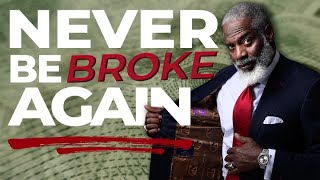
Myron Golden shares how he escaped poverty using three steps: make money by creating offers that solve problems, manage it with preset allocations like tithe and savings, and multiply it by investing when opportunity matches your skills. He went from broke to building wealth, then rebuilding after near-insolvency.
Chapters
If you've ever been broke in your life, you know, it is not fun. I was broke for the first part of my life. You say first part. How long is a part? It depends on your life.
I was broke for the first part of my life. I'm gonna say right around 38, 39 years. And then I got kind of rich that I thought was really big rich, and I overextended myself too soon, and I expanded my lifestyles too soon, and. And I say too soon, but it was really more at the wrong time, right? I expanded my lifestyle at the wrong time, and. Because when I expanded my lifestyle, it wasn't too soon for the past, but it was way too soon for the future. And so we went from broke to rich to broker than broke. And here's what I mean by broker than broke. If you can imagine going from just regular broke people broke. I wasn't pitiful poor most of that time. Like, pitiful poor is when you're so poor, poor people feel sorry for you. I've been there, right? I've been married with a pregnant wife and no electricity and no water at my house. So I've been pitiful poor. But this is not what I'm talking about. Then I was just regular poor. You know, just, you know, do I pay my electric bill or my water bill this month? Right. Or do I pay my insurance? Y' all know what I'm talking about. So anyway, do I. Anyway, do I pay the ticket for getting pulled over, for having a car that the registration's expired on, or do I pay for the registration? I'll take my chances on getting pulled over. Okay? Just want to make sure you. I understand. I was that dude, right? I lived there, and that was just like regular people broke. And then I got rich to the point where I was making, you know, 30, 40, 50, 60, 70, 80, 90, sometimes 100,000amonth, and then got to the point where I was fairly consistently making over 100,000amonth. But then I expanded my lifestyle and bought my dream cars and my dream house, and I was living my dreams until it turned into a nightmare. And then they created the Great Recession, and then clients who owed me a lot of money disappeared. And then I got audited by the IRS, and they told me I owed them a million, $65,000. I didn't have a million dollars or 65,000, right? So I was broker than broke. I was over a million dollars in the hole.
From 2010 through 2015, and then started climbing out of the hole 2015. So and I'm telling you this story because I have discovered some ways that you can never be broke again. Like, you. Let's say you don't ever become wealthy. Let's say you don't ever get rich. Wouldn't it be nice to just never be broke again? Never.
Never have a Motel 6 refrigerator again. Say, what's a Motel 6 refrigerator? We'll leave the light on for you. Open refrigerator. Only thing in there is a light. Right? Okay. And so.
And I've had a Motel 6 refrigerator with a family. It's not fun. Being broke is not fun. And so I said, okay. If I were going to teach people who are, like, maybe not on the struggle bus right now, but you're, like, you're not getting ahead at all. And, like, it'll only take one thing going south, like, car breaking down, refrigerator breaking down, somebody in your family getting sick. It only take one thing to like, blow you out of the water financially. Like, how can you get to the point where you're never broke again? And so what I'm going to do is I'm going to share with you three things you can do to never be broke again. The first one is make money with offer strategies. When it comes to money, I believe in offers. By the way, everybody who makes money makes money because of one of two things. Either an offer you've made.
Or an offer you said yes to. Everybody makes money based on an offer that you presented or an offer that you accepted. Everybody, you say, what does that mean? No, Myron, I don't make an offer. You did. You went to. I didn't make an offer. I drive a truck. Right. You went to the trucking company, and you said, I will drive your truck for X amount of dollars per hour or per mile. Right. If you work at a factory, you said, I will work for you for X amount of dollars per hour. X amount of dollars per month. X amount of dollars. You already made an offer. Everybody's making an offer here. This should encourage you. Hopefully, this will encourage you. Let's say you have a job and you're making $60,000 a year. Okay. You have a job. You're making $60,000 a Year.
What if you just started thinking of your employer as your main client?
So you got one client who's agreed to pay you $60,000 per year. Wow.
If it doesn't do anything else, it should encourage you. Why? Because if you got one person that's paying you $60,000 a year, maybe you can get.
Somebody else to pay you $6,000 for something that you can provide for them, that they want more than they want the $6,000. Just like you providing a result for your employer that they want more than they want their 60,000. Or maybe you could say, like, you could find maybe even fewer, I mean, more people who would be willing to pay you $600.
Right? What if you could create an offer for. You already created an offer for 60,000. What if you created an offer for 6,000? What if you created an offer for 600? Say, well, Myron, I don't know what I'd offer somebody for 600. Okay, okay, don't do that. Don't do that. Don't do that. Pump the brakes, baby. Pump the brakes. Let's do this instead. What if you said, I'm going to make an offer for $60? Surely you got somebody pay you 60,000. You can get somebody to pay you 60. What if you got 100 people in 2025 to pay you $60?
That's 6,000 extra dollars. Let me ask you a question. What could you do with 6,000 extra dollars right now?
Right? What if you could get 100 people to pay you $600 in 2025? That's an extra $60,000, and you don't even have to jeopardize your job. You can keep your job and make your $600 offer to people on the Internet. Make your $60 offer to people on the Internet. And so here's all I'm saying. You've already made an offer. They already said yes.
You got somebody to say yes to your $60,000. You say, Myron, I don't make 60,000. I make 45,000. Okay, you got somebody to accept your $45,000 offer? Myron, I make 120. Great. You got somebody to accept your $120,000 offer. Like, if you stop thinking about it as I found the best job I could for the money I could, and when I find a better one, I'm going to leave. Instead of that. Thinking about, okay, this client that I have.
They'Re paying me $60,000 a year, 45,000, $120,000, whatever the number is, they're paying me this amount of money. How can I serve them at such a high level that they never want me to stop delivering value and they never want to stop paying me? And if I do decide to leave or we decide to part ways, they will give me rave reviews? What if that were your thinking? Like, I had clients five years ago that are not my clients right now. But if you talk to those clients, they will give you rave reviews. Oh, I see. What if you treated your employer like a client that you made an offer to and they said yes? Because they also made an offer to you and you said yes. Now, if you're having cognitive dissonance and you're like.
I don't know if I should have said yes to that offer, then you're. If you got this, if you have a pause in your spirit about the offer that you accepted and you feel like.
I just feel like I'm worth more than this and I should be worth more to them, then you're not going to serve them at the highest level.
Like, you have to build your business, by the way, you are your business. You have to build your business in a way that gives you the energy to serve your client and. Or clients at the highest level. I mean, it gives you the ability, like, it serves you at the highest level and gives you the energy and bandwidth to serve your clients at the highest level. So, like, if you have a job that you hate.
Reframe it and learn to love it.
What does that mean? It means if you have a job that you hate, instead of thinking about, I hate this job so bad, think of it. I'm so thankful for this job because it's why I have electricity at my house. It's why I can cook food at my house. It's why I'm not hot in the summer and cold in the winter. Because I have this job and this client is paying me very well, and I'm going to take care of them. And then if I've got to go make some other offers to some other people on the interwebs on ebay or on Facebook Marketplace or on my own website or on Instagram or on. Or wherever, then I'm gonna do that. But in the meantime, in between time, I'm gonna serve the clients I have and every client that I have now and every client that I will ever have, I will serve them at such a high level.
That they will never want me to not. They will never not wanna be my client again. And if I do decide that I don't want them as a client anymore, they'll give me rave reviews. Like, that's. What is that called? That's called ownership mentality. Are y' all picking up what I'm putting down? And so stop. Even if you get paid by the hour, even if you're making minimum wage right now and you're like making seven layer burritos at Taco Bell for minimum wage right now, instead of looking at, oh, man, I'm just getting this dead end job, blah, blah, blah. It's a dead end job if you have a dead end perspective.
But what if you showed up every day like you were the owner and the CEO of Taco Bell and you served the. The manager and the other employees and every customer that came through like they were essential to your livelihood instead of treating them like they're an inconvenience. How would that change the game for you? Sheesh. See, your biggest problem, one of the reasons poor people are poor is because they don't make money with offers, even though they're making money with offers. They don't even know that they're making money with offers. Here's what I mean. I'm gonna go to the board, Michael. So here's what I mean.
Poor people and middle class people feel like everything is expensive because they pay for everything with money they've exchanged their life for or their time for. So they feel like they're paying for everything with their life. And you've seen me do this illustration before. So what you do is you say, hey, I've got this time. I'll sell you my time. By the way, you are the asset. I mean, you're the resource. Resource. You're the resource. God's the source. You're made in his image. You're the resource. Time is an asset.
But it's a limited asset. What do I mean, limited? You only have so much time. How much time do you have? 24 hours in a day? 60 minutes? An hour. If you're really, really nice. If I'm really, really nice, will you let me have 70 minutes in an hour? No. Everybody gets 60. It doesn't matter. Doesn't matter how tall you are, how short you are, how famous you are, how not everybody gets the same amount of time. You get 60 minutes in an hour. You get 24 hours in a day. You get 365 days in a year. And so what you do is you trade. You say, I'm going to trade my time if you will give me money. Now, here's what most people believe. Most people believe that time is money. So I'll trade you my time if you'll give me some money. And then you trade that money and you go buy. And by the way, this is a depreciating asset. Depreciating asset. And so you go trade it.
For a very old car, okay? So you trade it for a car, which is a depreciating Liability. And so you wonder why you're getting broke, you're getting broker, because you believe that time is money. And the only way to make money is to exchange your time for somebody else's money. So if you're trading this for this, you probably believe that this is equal to this, and time is the stuff that life is made of. But when you trade this for this, you believe that time is money. That is absolutely not true. The reality is that time is. This is what that should look like. Time is infinitely greater than money. That's what it should look like. Time is infinitely greater than money. And when you realize that, you'll stop selling a whole bunch of your time for a little bit of somebody else's money, you'll stop trading, traipsing around in discount locations, looking for the best deal, wasting hours and hours of your life, wasting a whole bunch of time to save a little bit of money. And what you'll do is you'll figure out, how can I make my time more valuable? And here's what wealthy creative entrepreneurs do. Instead of doing this diagram, here's what we do.
We perceive with our eyes or our ears a problem in the marketplace. We say, oh, there's a problem. And then what we do is.
We come up with a solution. We solve the problem. I have an idea. So this light bulb represents my creativity. And what I'm going to do is I'm going to create a solution, but I'm not going to create a solution for me. I'm going to create a solution for you. I'm going to create a solution for all of you. I'm going to create a solution for the YouTube sphere. And the more value that I bring to the marketplace, the more I'll be compensated. If I bring a lot of value to the marketplace, the marketplace is not going to gyp me. The marketplace is not going to cheat me. The marketplace is going to compensate me. And all I got to do is keep bringing value to the marketplace, and eventually some of the seed I sow will reap a harvest, period. That's how it works. Now, wealthy creative entrepreneurs are wealthy creative entrepreneurs because we pay for things according. Everybody say according. We pay for things according to our creativity. What does that mean? I don't pay for it with my creativity. I don't pay for it out of my creativity. If I paid for it out of my creativity or with my creativity, here's what would happen. I'd pay for it with my creativity, and I'd have less creativity after I paid for it. Than I had before. I paid for it, but I don't pay for it out of my creativity because once I create a solution, I don't have less creativity. I have the same amount. Actually, I have more. Wow. So time is a depreciating. Oops, that was an eraser. Okay, time is a depreciating asset, but creativity is a replenishing asset.
By the way, how much does it replenish? It has infinite replenishing ability. That's so mind blowing. And I have it. It's mine. I mean, it's not mine and not yours. It's mine and yours. Like, you've already solved so many problems in your life already, but somehow or another the cultural, hypnotic, societal mechanism got you to believe that you don't have the ability to solve problems. I'm blown away.
You're not smart enough. You're not good enough. You're not. You're not enough. Really. Hey, look in the rear view mirror of your experience of life and take inventory of all the things you couldn't do when you landed on this planet. You couldn't walk. You couldn't talk. You couldn't chew food. That's right. You didn't even have no teeth. Like, you couldn't control your bodily functions. You couldn't drive a car. You couldn't use a phone, you couldn't use a computer. You couldn't count. You couldn't write, you couldn't read, you couldn't do anything. You couldn't play a musical instrument. You didn't even speak any languages, let alone two or three. And now all of a sudden, you look at a rear view mirror, experience of your life. You got all this stuff you know how to do, and you think there's something you can't learn. Oh, the enemy got you blind. No, child, please. There's not. Let your life be a testament that there's nothing you can't learn. Now, there may be some things you don't desire to learn. There may be some things you're not willing to learn, but that's not the same as things you can't learn.
Mm, mm. I wish I had. Okay, y' all tracking. So what happens is I create an asset. So we're going to call that asset. I'm going to create an asset. And that asset, I'm going to call it a book.
And it's got words on the page. Yeah. Recreate a book. And then I'm going to sell that book. By the way, when I create, when I write this book, it's going to make. Cost me about, I'm going to say $3 to make. Then I'm going to sell the book for somewhere between 20.
And it could be. I have a friend. I'll just put his number there. I have a friend. I know you're going to think this is crazy. His name's Dana. He had a book that he sold on a webinar for $2,000. Let me ask you a question. How many of you have ever thought, if I wrote a book, how could I sell it for $2,000? How many of y' all have ever thought that? Right, okay, Right. But have you ever thought, if I had a book. No, I never thought I would have never thought of that until I saw Dana do it. He did a webinar and he sold hundreds and hundreds of people this book for $2,000. You know what it's called? The book was called High Ticket Book how to sell books for $2,000.
But you know what he did when they bought the book? He didn't just give them the book. He also gave them bonuses. He gave them training. He gave them other stuff that was worth more than the $2,000. So here's the question. What bonuses can you add to the offers that you create that will make the offer that you've created more valuable?
Could you give people access to a members portal on a website? Could you give people access to a community? Could you like, what else could you show them? What else could you add to it? So I think y' all are tracking. I think y' all are tracking. Okay. Y' all tracking. Okay. So then people are gonna give me money in exchange for that offer. So I created I'm greater than the book. I'm not the book. You're not going to read my book and think that book is me. You're going to know that book was created by me. So if the book is created by me, I am greater than the book. I am greater as the resource. I am greater than the assets I create. Does that make sense? Yes or yes? Okay, then the asset is greater than the money. Because when I sell the asset, in fact, let me grab one here. I'm going to grab two of them here. I could grab three of them here. In fact, I'm going to grab all four of them here. I'm going to tell you all the story. So back in 2006, I wrote this book. So here's what's cool. I'm not a graphic designer, but guess what? I didn't have to be. I created the concept For I didn't create this cover, but I created the concept for this cover. It wasn't a good concept, but worked for me. So I wrote this book called the EBONY Treasure Map, the Roadmap to Riches for African Americans. I thought, you know what? We don't have a book for African Americans. Teach us financial literacy. So I'm going to write one. And so I wrote the EBONY Treasure Map, the Roadmap to Riches for African Americans.
And the book came out and I said, I'm going to sell this.
I'm going to sell this 139 page book for $20. Guess what? Now before I wrote. I won't even tell you that part because it doesn't matter. So the first week this book came out, I got 500 copies printed because I went to a books writing conference. It had to be a best selling author conference. And they said most authors never sell 500 copies of their book. I said, I ain't gonna be most author. 500 copies printed, right? And so my book came out, I had 500 copies printed. Guess what we sold? 900, 900 times $20. Anybody know how much that is? That's $18,000. My first week as a published author with a book with an ugly cover.
Made $18,000.
That's more than half as much as I've made in any year at any job I've ever had. A book. B O O K a book. Paper. Words on paper, Black ink on white paper. Okay, y' all tracking.
So I wrote that book in 2007 or 2006? In 2000. Don't miss this. Now I realized, because all transformation begins with awareness. So I became aware of the fact, you know, there are some people who are going to look at this book cover, this book title, the Ebenev Treasure Raptor Road Raptors for African Americans. They're going to say I ain't an African American. It probably won't work for me. Now, do I want to sell a few books or do I want to sell a lot of books? A lot of books. I want to sell a lot of books. So what I did was I changed the name.
That's called Repurposing and Repackaging. In case you're wondering what the marketing term is. I changed the name of the Ebony Treasure Map from the Trashman to the Cash Man. How Anyone Can Get Rich Starting from Anywhere. Added a couple pages and added some stuff to it. And now the book is more than 139 pages. It is.
140, blah, blah, blah. It's 147 pages. So 147 page book, added some pages to it, changed some stuff around so nobody would feel like, this is not for me. Right? So rebranded it, repackaged it, repurposed it, and turned it into the trash man to the cash man. Between these two books, we've sold over 175,000 copies of these books. I'm not bragging. What I'm telling you is a book is an asset that I create. It's one of many assets that I created. And I remember when I first got started and.
I was Mr. Big Businessman Pants, right? And so I was selling. I was selling a home study course for 4.97. Yeah. Yes. On cassette tapes.
Let's don't forget the cassette tapes part. And then, and then somebody said to me, myron, why don't you write a book? I'm like, a book. Why would I write a book? $20. I'm making 490 something dollars, right? Every time I make a sale, $20 book. What I didn't realize is that if I wrote a book and it was good, the people who bought the book would also buy other stuff.
So I used to think a book was a waste of time because it's only gonna make you $20. But it's not about how much money the book makes you. It's about the time someone invests in. In reading the book that you wrote that makes them feel like they know you, genuinely like you and believe that they can trust you.
So those two assets, boom. But wait, there's more. 2017 was like my first bounce back million dollar year after being over a million dollars in the hole. So I wrote this book called Click and order for Brick and Mortar Online Strategies for Offline Market Domination. Most of you have probably never heard this book, right? You never heard of it, didn't even know it existed, right? I wrote this book for the purpose. Really pay attention to what I'm saying right now. I wrote this book for the purpose of acquiring brick and mortar clients for my consulting business. That's why I called it click and order for brick and mortar. I would do trade shows. I would give these books away at trade shows. I would sell these books on my website. And then what the book gave me was what I call an excuse for follow up.
Because I taught them my methodology, and then I would follow up with them and find out which parts of these they would like my help in implementing. When I wrote this book in 2007, guess what happened? That was my first million dollar Bounce back year. I did over a million dollars in consulting because of the principles.
In this book. This is an asset. It's an asset that makes people desire what? More assets from me. Because I'm the resource. I'm not the asset. I'm the resource. Right. Which means I got a whole bunch of assets in here that haven't even been harvested yet. Got a whole lot of assets in here that have not even been harvested yet. Okay, so then in 2021, I wrote this book. It's called Boss Moves. I wrote some books in between. I wrote a couple books back in 2012 as well. I didn't go into those because those are just ebooks. I shouldn't say they're just ebooks, but they're ebooks. And so I didn't go into those. I wrote this book, Boss Moves Business Optimization, Success Secrets from a Million Dollar Roundtable. I wrote. Wow, that was cool. Okay. That was very theatrical. I'm gonna have to do that again. Okay. The things you discover when you're not looking for them. Okay, so I wrote this book. This book does between $18,000 and $40,000 a month in sales. This book cost me $3 to print, sells for $30. Now, if it only costs you $3 to print, what makes you think that you should charge $30 more? Because it's my book and I wrote it. And you're not buying the paper. I'll sell you the paper. I'll sell you exactly the same amount of paper that's in that book for $3 if that's what you want to buy. But you don't get the words. Now, see, the paper's worth $3. The words is the other 27. How many? All track it. Okay, so I'm saying the asset. Now, guess what? Just these two books right here, these two books right here generate a half a million dollars a year in revenue, two assets, half a million dollars. Now, what if that's all I had? Well, I don't know how your lifestyle is. That's how my lifestyle is. If that's all I had, I'd be okay.
Why? Because one of the things that I learned after I was really broke most for a part of my life and then got, like, rich that I thought was big rich for another part of my life and overextended myself. Here's what I discovered. Don't overextend yourself. Keep it easy. Live well below your means. How far? As far as you possibly can. Okay, I'm taking too long on the make money part. We don't have to do a part two of this, but I think we'll be okay. So now when I want to, it doesn't matter if I want to go buy a house.
Or a car.
Or a world class vacation, it doesn't matter because this.
Like when I spend the money, this keeps on spitting out more money.
And so I'm never broke again. I promise you. I don't, I haven't looked, but I'll look right now just so I'll look in front of you so you can see that. I'll look in front of you so you can see that I'm not making this up. So here's the reality. Okay, here's the reality. Books.
How much money did we bring in from our online assets since midnight last night? Is that a good question? Okay, good.
Okay. Now this is not, this is not the end of the world, but it's something. Wow, wow, wow. Okay, so at 12:08am while I was asleep dreaming about being asleep. Okay, just wanted y' all to know what I was doing. Okay. I was sleep dreaming I was asleep. $297. And then at 12:27, not even 30 minutes later, $39.94. And then at 12:46, $29.98. By the way, that's the first hour of the day today. And then we didn't have any more sales come in until 6:21am 2998 at 6:21am, 3994 at 6:34am, $297 at 8:52pm, 3994 at 9:45pm, $116 at 9:50pm and $29.98 at 10:04am that's the money that's come in since I want to, like since it turned today.
So far. You say, Myron, what are you saying? I'm saying you make money with offers. That's all I'm saying. I'm saying. And by the way, who can create an offer? Anybody who cares to now. So that's number one, you create money. You make money with offers. And then when you're making money with offer strategies, you have to start with a vision for an offer. Where does the vision for an offer come from? It comes from the complication of somebody else's problem. You can never create an offer that will change your life by trying to create an offer that will change your life.
You create an offer that will change your life by creating a solution to a whole bunch of other people's problems. So when I'm Creating an offer that's going to change my life. As paradoxical and oxymoronic as this seems, I have to stop thinking about myself long enough to create a solution for somebody else. Wow. Maybe Jesus was right when he said, he who will be greatest among you, let him be servant of all. The person who serves the most people is the greatest person. Okay, cool. So you have to start with a vision for an offer. Where do I start? I look around, I find a whole bunch of people struggling with something. I say, oh, I know how to do that.
Since I know how to do that, if I tell them how to do it and I charge them a little bit of money, maybe they'll pay me. Or maybe I'll show them how to do it and charge them a lot of money.
Okay, cool. So, starts with a vision for an offer. Start with a vision for the offer. Then this is. By the way, this is still all under point number one. Make money with offers. Okay, so that's letter A. Start with a vision for an offer. C. The value of the offer. See the value of the offer you create. Now, here's the thing about the offer you create. You must see both the intrinsic value and the perceived value of your offer.
If your offer does not have both intrinsic value and perceived value, it probably has no value.
Are y' all with me? And so what do I mean by that? What's intrinsic value? Intrinsic value is the value that that offer has to actually do. The thing that you're telling people it's going to do. It has the ability to solve their problem.
That is the intrinsic value of the offer. What's the perceived value? The perceived value is the degree to which their pain will be eliminated.
Times the degree to which their pleasure will be elevated.
When they say yes to the offer. So when I'm talking to people about the offer, I definitely spend some time talking about the intrinsic value. But I spend most of the time talking about the perceived value. Why? Why do I spend more time talking about the perceived value than I do the intrinsic value? Because I have to have the knowingness to know that the intrinsic value is there. But if that's all I know, and I only talk to them about the intrinsic value, I promise you, they're not going to believe me.
Why? Because the perceived. They don't know if it works or not.
So if I'm talking about the intrinsic value, I'm talking to them about something they can't know.
And unless I've imagined it for them and proclaim that imaginary solution and the way it would work. Their life would look. When they say, yes, if I haven't done a good job explaining that, describing that, presenting that they don't have anything to buy, nobody buys the intrinsic value in your offer. They buy the perceived value. What do I mean? They buy the perceived value. They buy what they perceive their life is going to look like and feel like compared to what their life looks like and feels like now. Nobody. People say, well, I paid for your product. They didn't pay for your product. Nobody. When people buy your product, they didn't buy your product. They didn't pay for your product. They paid for your description of your product because they don't get the product until after they pay. So they don't know if it's worth it. They only know if they believe it's going to be worth it when they pay. So you've got to get good at describing both the intrinsic and the perceived value. I hope you are tracking what I'm saying. Okay, this is really hard for people. So you start with a vision of your offer.
You see the value in your offer. One of the biggest problems I see entrepreneurs have, and I coach lots of entrepreneurs, is they don't understand. They can't even perceive the value of your own offer. Guess what? If you don't perceive the value of your offer, you can't proclaim the value of your offer. They're always talking about the stuff they're talking about, oh, it's got this, it's got that, it's got the third. It's got this many of these and this many of those and that many. Okay, well, guess what? None of that. They don't care. They don't care about the pieces. They just want to know, does it work? By the way, the more pieces it has, the more you are building skepticism and resistance. Because now every piece you add to it, that's not necessary. They believe they've got to learn how to use that piece in order for them to get the result they're looking for. The real question in their mind is, is it easy? Does it work? Can I do it? If the answer to those three questions is not a resounding yes, the likelihood of them saying yes to your offer is highly unlikely. Okay, cool. The last one is simplify the verbiage around your offer. What does that mean? You have to. You have to stop using insider lingo on the outside world. You have to stop using technobabble. You have to stop talking to people. I help people overcome past trauma. If.
I help people in the area of self love. I'm telling you, I'm telling you. Nobody knows what that means.
And it may be what you do, but you better figure out a better way to explain it. In other words, if you said it to a third grader, would they understand it? If a third grader's not going to understand it, probably neither is anybody else. The highest grade level I'm going to let you go to is 5th grade. Your explanation of the transformation of saying yes to your offer cannot be understood by people between third and fifth grade. It's not clear enough.
So simplify the verbiage. By the way.
I know you know how to sound smart. Talking about consortiums and think tanks, blah, blah, blah, right? Third grade language.
Don't impress people with how smart you are.
Impact them with the success they could have in using your solution to their problem. Okay, So.
I said there's three things you gotta do. We talked about one of them. What is it? Make money with offer strategies. That's the first point. All of that was under the first point. That was a nicest rant. Okay, number two. Manage money with optimization systems. You manage your money with systems. What did W. Edwards Deming say? He said systems under which people work account for 90% of the failure. Therefore, the key to success in any endeavor is to perfect the system. You need a system for managing your money. And the number one reason you need a system for managing your money is so that you don't decide what to do with it after you get it. That decision was already made before you got it. You have to sit down and predetermine what's going to happen with your money before you get it.
I really believe this. I don't. I can't prove this to be true because I'm not going to go work at McDonald's because, number one, I don't like the smell. Number two, I don't like the food, if you want to call it that.
So I'm not going to go work there. But if I worked at McDonald's, I could get rich working at McDonald's. Why? Because I would manage my money in such a way that I would create wealth. Why I would manage that money with systems. Now you need to have a system for money. Awareness.
Awareness of your beliefs about money.
Awareness of your feelings towards money.
An awareness of your actual practices, what you do with money. Like you want to never be broke again. Stop making emotional decisions around money.
Make your decisions about money based on systems that are going to produce the outcomes you desire before you get the money. So you already know what's going to. Like, I don't have to wonder what's going to happen when I get some money. I already know what's going to happen. I'm going to take that money. Well, I'm not going to tell you what I'm going to do with it yet. I'll tell you what I'm going to do with it in a minute. But I have awareness of me and money. Like, I have no internal resistance. See, maybe your internal resistance to money is, well, I don't want to make too much money because I don't want the people who are closest to me to judge me and think less of me because I have too much money. And that may not even be a conscious awareness. It may be a subconscious awareness. But all of us know that if you make more money than people around you, a lot of those people are going to have judgment for you. Can I get a witness? So you got to, like. You got to stop worrying about that. It don't. Here's the reality. It don't matter. It is what it is. So.
Systems of awareness, your awareness for money. I'm aware that my parents didn't understand money. They were great people. I loved them. They taught us well. They did not understand money. You say, how do you know they didn't understand money? Because when I got older and I started developing a level of financial literacy, these are things that my parents didn't teach me and they would have taught me had they known them, because they taught me the stuff they knew. Right? So I can't get. I can't let the limitation of the people that raised me and the people that taught me as I was growing up. I can't let their limitations around money be my limitations around money. I have to discern and decide for myself what that's going to look like. So system of awareness.
You have to have a system of awareness of what money is and what it actually does, because money is an exchange and store of value. Money's not even real. It just represents something that was real, and it represents something that will be real. But money itself is not real. Are y' all tracking. What do I mean, it represents something that was real? Well, I did some work in the past. I got paid for it. That money is how I prove to people that I want to serve me, that I've served somebody other than me. So money is really a certificate of service provided. I went to Eddie V's last night for dinner, and I said, okay, I want y' all to Bring me some food. They brought me some food.
But Eddie V's is one of those restaurants that will only serve you if you can prove you served other people. Oh, that's right. All restaurants are that way.
In fact, all businesses are that way. Nobody will let you move into a house unless you can prove that you served other people.
Wait, what? See, this is my awareness of. This is one of. This is part of my money awareness. I'm aware of the fact that everything that I desire is on the other side of me being able to prove that I've served lots of other people. And the more that I serve those other people in ways that they are willing to compensate for, the more money I have. And all I'm doing is proving that I've served other people. So now I'd like for you to serve me. Thank you very much.
Okay, y' all are tracking. You need to have a system for money accounting. So in my book from the Trash man to the Cashman.
I talked about the money management system of millionaires. In this book, okay, it is called I can if my cans say I can. Oh, boy. I can if my cans say I can. So you have. That was a terrible can. Okay, you have can number one. This is my. I. In fact, I'm not going to write all that.
This is my first can I can tithe can.
So I'm going to take 10% of my money.
I'm going to put it in my I can tithe can. Then my next can is going to be also 10%. It's my I can finish.
Free.
My next can.
Is my I can pay my bills can.
Now, isn't that interesting? I'm going to tell you, just understanding that this is 10%, this is 50%.
By the way, you may have to adjust the percentages based on where you are financially. Maybe you can't pay all your bills on 50% of what you earn. Maybe it's going to take. Maybe it's going to take 70%, 80%, 60%, whatever. If you don't know what percentage, put a dollar amount in each one of these cans, say, I'm going to put $10 every time I get paid in this can. $10 in this can, whatever. $20, $50, $100. That's not my point. The point is you have to know what your money's going to do before it gets in your hands. And if you don't know what your money's going to do before it gets in your hands, it's going to do whatever it wants. To do it's going to do the thing you did last time. Are y' all tracking? Which is what got you to where you are, which is not exactly where you desire to be. Because if it were, you'd be doing something different than trying to figure out how to get someplace else and never be broke again. Well, I'm gonna take this. What I'm showing you right now is the number one car, which is not exactly where you desire to be. Cause if it were, you'd be doing something different than trying to figure out how to get someplace else and never be broke again. Well, I'm gonna take this. What I'm showing you right now is the number one key to never being broke again. So then you have your I can educate myself. Can.
So I can educate myself. This is where I buy my books. There's 10% goes in there. This is where I buy my books. This is where I buy my courses. Then you have your.
I can save for what I want can. So I'm going to save for. I'm going to call this save for desires. Save for my desires. Okay, boom. So now 10% goes in there.
And then we have one more can, which is one of my favorites. Okay, they're all my favorites, but this one changed my life probably more than any of them. 10%. What's that? This is my I can have fun can.
Now, this is the only can. This one and this one probably, but this one for sure. You have to spend.
It all every.
Month.
What does that do? What that does is it inspire, like your I can have fun can will inspire you to make more money, More than any of those other cans. You're like, I spent this much. I can afford my country club membership now. I can afford to go bowling in a bowling league or whatever the thing is you do for fun. I can afford that guitar. I can afford guitar lessons, Whatever. The thing is, I can go out and eat and spend as much of that money. That's my fun can. So all of these, this is how you manage your money with systems. I've got a system for accounting for the money that I make so that I'm not. I'm not just like willy nilly, I got some money. Oh, I look at the money in my hand. I think that's the money I have. And then I go spend and I remember something I was supposed to pay. You may have to adjust the percentages. By the way, I would recommend get a bank account, a different bank account for each one of these.
If you have a business you can have your. You can have your.
Operating expenses can. And you can have your I can pay my taxes can. Until you learn how not to pay taxes by investing in real estate. But that's another conversation for a different day. So all of this is a part of managing your money. And then you need a system for amassing money. Because what's going to happen if you start applying this. What's going to happen is you're going to get to the point where literally just that thing right there. You'll never be broke again. You'll always have money in your I can finish free can you don't take any money out of that can ever. Unless you're taking it out to put it into an investment for when it's time for you to finish free. A lot of people call it retirement. I don't call it retirement. I call it finishing free. I don't have any desire to retire. I only have a desire to aspire higher. See what I did there? That's a poem. And I know. Okay, anyway, so I only have, like, I don't have any desire to retire, but I will. I know what my finished free freedom looks like to me. Like the ultimate financial freedom looks like to me is when my investment cash flow from my investments is more than my passive. I'm going to call it passive, even though it's not passive, because people know what I'm talking about. My passive cash flow from my investments is greater than my active cash flow from my business. From my businesses. That's when I'll know I'm free. Why? Because you talk about never being broke again. It'll change the game forever. Okay, so you are tracking. So that is a system for amassing money. Once you get past.
$250,000 that you've accumulated in any one of your accounts, you have to figure out what to do with that money. Because keeping it in a bank is very. A very unsafe thing to do. When you walk in the door of the bank, there's a sign on the door that says funds are insured up to what, $250,000 FDIC. Right. But that doesn't even mean if you have $250,000 in there and the bank goes belly up that you're going to get $250,000. It means you could get up to whenever you hear up to. Think of up to as less than.
Okay, so where are you going to put this money? You need to put it in someplace that has. You need to put it in assets that have. That are more Secure assets. Like what? I'm gonna let you discuss that with your financial advisor because I am not one nor do I play one on television. I know where I put mine. And like, I think, I think some good places to look are life insurance, gold.
Real estate. Places where. Places where.
The money, if it goes away, you still have the hard asset. You have something that you can use in exchange for value. Okay, so, and then lastly, I'm going to go through this one a little more quickly because I'm running out of time and I over prepare. But I. So I'm going to sit back down because I'm hot.
This is the last point. Is this so we talked about. The first point is you make money with offer strategies, you manage money with offer manage with optimization systems, and then you multiply money with opportunity savvy. What does opportunity savvy mean? Once you start having money, guess what you're going to have. You're going to have the opportunity to invest in things.
In things that are going to make you money. The greater the amount the money is that they can make you.
The more likely it is to have some level of risk. Sometimes that level of risk gets higher. Okay, so here's what the first thing you have to do when it comes to multiplying money with opportunity savvy is you have to be aware of how close you are. What does that mean, be aware of how close you are? It means you have to be aware of the fact that you are only one great investment away from finishing free. You're not 15. Like you're one offer away from making boatloads of money. You're one investment away from your money perpetuating for the rest of your life, one really great investment away. It almost sounds like, wait, what? How can I only be one away? You're one away.
Some of you probably had money when Apple stock was $20.
But you didn't realize you were one investment away, one opportunity away. So you have to be. You're always, you're only one great investment away. Now that investment might be real estate. That investment might be in acquiring a business. That investment might be investing in somebody else's business. I don't know what it is. Only you can know that. But it's going to be determined by your mindset, your skill set and your tool set. We'll talk about that in a minute. So you have to be aware of how close you are. You're only one opportunity away. You have to be authentic about your competency.
Which means you are only.
That you should Only say yes to things. Opportunities that are in your wheelhouse. People come to me with opportunities all the time. Like, I get more opportunity pitches than I can stand.
Most of the time, the answer is no. Some of the times the opportunities are great, and I can see the opportunity is great, and I can see there's a lot of money in the opportunity. And I still say no. Why? It's outside my wheelhouse. And since it's outside my wheelhouse, it's going to require something that's not mastery for me to participate in it. And if I'm. If I'm using energy that I could be putting into mastery that causes my life and my business to grow exponentially, and I don't use that, then I'm using it on something that's going to produce less for me. Okay? So I only say yes to things to opportunities are in my wheelhouse. So if they're not in my wheelhouse, it's no.
Unless it's a wheelhouse that I intend to develop because I want it to be in my wheelhouse. Like, for instance, real estate. I mean, I own some real estate, but real estate is not in my wheelhouse to the degree that I'm a real estate expert. I'm not a real estate expert yet, but it's in my wheelhouse enough to know that I desire to be it. To be in my wheelhouse. Why? Because I don't like writing checks for hundreds of thousands of dollars every quarter and sending it to the United States government. And so in order for me to not have to do that, I have to become savvy. More savvy. I mean, I'm already savvy. I own a couple million dollars worth of real estate. But I have to become savvy enough to where I can offset the tax liability on my earned income by investing in real estate because it's the best vehicle for mitigating and eliminating taxes. So that's outside my wheelhouse, but not for long. Okay, y' all are tracking. And then when it comes to multiplying money with your opportunity savvy, the last one I'm going to say is this. Be all in when you are confident. What does that mean? When the opportunity matches your mindset, skill set, and tool set, go all in without. And it's a good opportunity, obviously. Go all in without reservation. All in. Like, it's like, okay, I'm going for this. Recently. I'm going to end with this. Recently, I had a friend of mine who owns tens of thousands of apartment units worth billions of Dollars. He said to me, he said, I'm going to challenge you to acquire hundreds of millions of dollars worth of real estate this year. Now, I don't even own tens of them. I intend to develop because I want it to be in my wheelhouse, like, for instance, real estate. I mean, I own some real estate, but real estate is not in my wheelhouse to the degree that I'm a real estate expert. I'm not a real estate expert yet, but it's in my wheelhouse enough to know that I desire to be it. To be in my wheelhouse. Why? Because I don't like writing checks for hundred millions of dollars of real estate. I own millions, but not tens of millions. And he said, I'm going to challenge you to acquire hundreds of millions of dollars. And I'm like, okay, it kind of makes sense. What does that mean? Well.
I don't know how I'm going to do it, but he's challenging me to do it so he knows how I'm going to do it.
And I know hundreds of thousands of dollars every quarter and sending it to the United States government. And so in order for me to not have to do that, that it's easier to make a lot of money in a short period of time than it is to make a little money over a long period of time. So hundreds of millions of dollars is easier to make than tens of millions of dollars. And I've made tens of millions of dollars. So I have to become savvy, more savvy. I mean, I'm already savvy. I know how to make. I know. I don't know how to. I don't know what this whole hundreds of millions of dollars worth of real estate thing is, but I know the principle is there to support it. And so it matches my confidence. And when I see an opportunity that matches my mindset, my skill set, and my tool set, I'm all in. So in 2025, I'm all in on multifamily real estate. Bada bing, bada boom. So these are my pieces of sage advice. I only say sage because my beard is white.
Sage advice for those of you who would like to be like me.
Going from broke as a joke and ready to choke to never broke again. Hope this video blesses you. In the meantime, in between time, we'll look forward to seeing you on the next video. And bye for now. Peace out. My peeps.
Own a couple million dollars worth of real estate, but I have to become savvy enough to where I can offset the tax liability on my earned income by investing in real estate because it's the best vehicle for mitigating and eliminating tax.
More from Clegg

The #1 Skill Gen Z Needs | Simon Sinek + Esther Perel | A Bit of Optimism Podcast







AI Won't Tell You the Full Truth | Arthur Brooks + Simon Sinek | A Bit of Optimism Podcast



How To Make the Best Decision | Arthur Brooks and Simon Sinek | A Bit of Optimism