Humble Confidence with veteran and entrepreneur Blake Hall | A Bit of Optimism Podcast
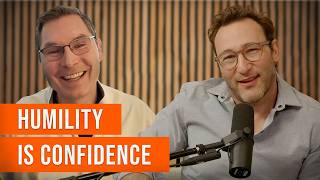
Blake Hall, a former Army Ranger who led scouts in Iraq, founded ID.me after learning veterans experience identity theft 80% more than other Americans. He left active duty in 2011, attended Harvard Business School, and built the company into a verified digital identity platform used by first responders, teachers, and students. Hall discusses how military leadership taught him to ask for help quickly.
Questions this video answers
2004
Approximately 15 months (June 2006 to September 2007)
Seven years (four years active duty, then reserves)
2011
About 80% higher
Chapters
Never confuse humility for meekness. You can have the biggest fricking ego, but if you also think great of the people on your team and you are curious about their ideas, that's being humble.
I was at Clay Christensen, the famous Harvard Business School professor. Like his last lecture, he asked six Harvard PhD students to define humility. Not one of them had defined it as like false modesty or self deprecation. They had all defined humility as a byproduct of confidence. People who are fundamentally secure and confident in themselves can be quiet. And with quiet comes the ability to listen. So it's just really interesting how confidence and security breeds humility, and then humility sets the conditions for great leadership.
That's such a great insight, right? If you want to help people on your team build humility, work on their confidence.
Blake Horn, all you, for me, are one of the embodiments of what.
What makes America America. That someone can live a life of service and then continue to live a life of service and also be a successful entrepreneur. Now, no one knows what we're talking.
About.
So it's probably worth just taking a little step back and.
We should tell people who you are and why I would say, you know, you are this, this wonderful embodiment of these great values.
Yeah, I'm gonna have. I'm gonna have to rep America now, which is. Which is a big, A big burden. But no, I'm a. I'm a third generation soldier. You know, I grew up on military bases all around the world. And.
When I went to college on an ROTC scholarship, not because I wanted to serve for a career, but I just wanted to pay back a little bit to this country that's given me so much. And then 911 happened during my sophomore year while I was at Vanderbilt in Nashville, and it ended up changing the arc of my life.
So 911 happens. You're a sophomore in college. What goes through your mind?
It was one of the most unifying moments in American history. Like, remember the American flags everywhere? And people wanted to find a way to kind of give back and to support this community after we'd been attacked. For me, I knew that instead of going into a peacetime military because it had been pretty sleepy for a while that we were going to go to war. And I knew that if I was going to lead young men into combat, I wanted to be an Army Ranger, and I wanted to play with diversity, so to speak. And so, so, you know, fast forward. I ended up commissioned in 2004, got my Ranger tab and everything Else through Ranger school, was a rifle platoon leader for five months, and then ended up leading a platoon of scouts and snipers in Iraq in 2006, 2007, running after high value targets.
Just out of curious, how many deployments?
Just one. 15 months from June 6th to September. 07.
So, all right, that, that's, that counts as many. That doesn't count as one.
That's true. Yeah. If you ask, if you ask how many months over there, I'm up there.
That's a better. That's a better question rather than the number of employment. 15 months is serious.
A long time.
Yeah, that's a long time to be in a war zone. How long were you, were you in the Army? How long were you in the. In the service?
Seven years altogether. So four years active duty, and then I spent a few years in the Army Reserves working with European Command and then resigned my commission in 2011.
Sure. Path is, you know, it's not the typical American entrepreneur path. You know, you. It's a life of service, and now you're running a business as a service, which I love. That's what I love. That's one of the reasons I wanted to talk to you. And I'm curious who your business role models are, because the traditional business role models aren't necessarily the best human role.
Models for business leaders. I really looked up to my dad and to my grandfather. My grandfather.
Was a war hero In World War II Command, Sergeant Major, 66 months of combat, which is crazy. And my grandpa had, he had three rules. And you know, the first rule was never think that you're better than the men that you lead. Because both my dad was enlisted and went to West Point, was an officer. I was the first soldier in my family to go straight, you know, to be an officer. So that first rule is never think that you're better than the people that you lead. The second rule was if you have a choice of units to go to, go to the one with the worst reputation, because when you leave, you can see the impact that good leadership makes.
And then the last one was never associate yourself with logistics, which I'll have to explain the story behind it.
Kind of funny, he was on the front lines in the Alps and the guys he was fighting with, everyone had like frostbite and frost nip, you know, just frigid. And he got, you know, haul detail, like, we're going to go back to the rear headquarters, whatever. So he got in the truck. And as they drove farther and farther back into Italy, they started to see the Newer cold weather gear and then the fur lined parkas and the gloves until they were back at headquarters. And all these guys who have all these creature comforts have the latest and greatest while everyone else doesn't have any of that in the Alps and they're freezing and it left an indelible.
Mark on him. And so I kind of took that lesson and said listen, you, you, you need to serve those who need it most first before you take care. It's you, you know this, it's leaders eat last.
Well, it was the newest thing. I mean, you know, we gotta, we gotta, we gotta take the new stuff, you know, the new fur line stuff before we send it up front. But I love this, I love these lessons by the way. And I wish, oh my God, I mean anyone who's in business, you know, who aspires to be a, any kind of decent leader, that your grandfather's first lesson is never think that you're better than the people that you lead. You know, you may have talents that they don't have, but they guaranteed have talents that you, you don't have.
That's right.
And I think that, that, that one lesson alone, if more people could obey that one or just learn that lesson, you don't even have to study leadership, you'll just naturally be better at it if you can have that kind of humility. And by the way, that doesn't mean false humility, right? Oh shucks. You know.
Bob Gaylor, the 5th Chief Master Sergeant of the Air Force, has my favorite definition of humility. He says never confuse humility for meekness. He says humility is being open to the ideas of others.
Love it. You know, and it's not the oh.
Shucks, no, I'm not that good. You can have the biggest frickin ego and think you're all that and a bag of chips. But if you also think of greatness of those of the people on your team and you are curious about their ideas, you're doing just fine. And by the way, that's being humble.
So what's amazing about this too is that I was at. Clay Christensen, the famous Harvard Business School professor, like his last lecture, he relayed the story at the time when he thought he didn't have a lot of time to live where he asked six Harvard PhD students to go off into different corners of the room that they were in and to define humility. And when they came back, not one of them had defined it as like false modesty or self deprecation. They had all defined humility as a byproduct of confidence. And I found that insight to just be. It instantly rang true that like people who are fundamentally secure and confident in themselves.
Be quiet. And with quiet and humility comes the ability to listen, which is what the master chart came from. So it's just really interesting how confidence and security breeds humility and then humility sets the conditions for great leadership.
That's such a great insight. Right. So if you want to build your humility or I would take it a step further, which is if you want to help people on your team or your kids build humility, work on their confidence, catch them doing things right, show them how smart they are, show them, point out their talents.
Yeah. Now that I'm, you know, farther along in my career and I think the principles are still true that you need to be confident and secure in sort of your domain, expertise and what you bring to the team, but you need to continue to show vulnerability and being self aware of where you're actually like quite weak and need help.
And so VPs and down are kind of functional experts. They're expected to know their domain well. The C suite is different in that it's the cross functional, alignment and mesh where you have to work together as a team across, not down. And what I've just noticed about the executives who do the best are the ones that ask for help quickly. And I think a lot of it comes from that confidence and security. They're confident and secure enough in what they're good at that they're able to be vulnerable in areas where they're not good at. And I think folks who've maybe been over titled and over promoted lack that sense of security and they're just worried if I show any vulnerability or weakness there's just a thread that's going to start getting pulled and it's going to unmask me as a fraud. And it's really complicated because even really good talented people have imposter syndrome where they just need to get over themselves. But then there are folks who maybe need more development and are in a position that's a little bit over their skis. And this is why it's so difficult sometimes to lead at scale and to try to get teams to trust each other and to be open with each other because everyone is kind of dealing with their own stuff at any given point in time.
Good leaders are the ones who ask for help the quickest. Confident leaders are the leaders that ask for help the quickest. I know that I learned that lesson the hard way, which Was, you know, as a young leader, lying, hiding, and faking every day of my life because I thought that having all the answers and being right was what gave me my credibility to be in a position of leadership. The problem was in over my head and incapable of solving the problems, didn't even understand the problems to solve them. And only by being battered that I was I forced to ask for help. And what I discovered was I was surrounded by people who wanted to help me and were willing to help me. They just didn't think I needed it. So one of the. One of the hardest things for a veteran to do is to acclimate into civilian life for any host of reasons. And whether people love the service or hate the service, one thing I know about all vets is they all miss the brotherhood and the sisterhood that they struggle to find that again in the private sector. Where did your life go after you left? Well, there.
There were a few moments that stuck with me, right? Like when. When you're on.
When you're in combat, you get, like, two weeks to come back home and to visit your family and everything else. And my. My leave happened to be in the Christmas New Year's of 2006, and I went back to New York City, and I was in Manhattan, and. And I really just had a hard time, like, relaxing because I was carrying the lives of 32 men that I was responsible for. And I'd met their. Their dads and moms, and I'd met their wives and kids. In some cases, you know, some of them were too young to have kids. And I just had this pit in my stomach that if anything happened to them while I was gone, I would just never be able to forgive myself. And I'll never forget. I was just late, late night in Manhattan. I was watching all these people, like, walk into bars and, like, laughing, and I was just like, no one. No one really cares. And this is the city that got attacked and, like, wherever they were fighting, but nobody really. Nobody really cares. Not the way that I cared about my guys. And so I honestly just wanted to go straight back. I didn't want to be in the States while my team was over there. And you're right, that camaraderie when you leave is really difficult. And I think, like a lot of veterans.
The sense of purpose and the locker room and the camaraderie.
We took down a vehicle bomb network that had killed thousands of civilians in two weeks before we left Baghdad. And that was the last thing. When I had my platoon together, I was like, you'll never see the faces of the folks who survived the vehicle bombs that never went off. But what we did together, if you look at the stats of what that terrorist cell was doing and now that it ceases to exist, you've saved a lot of lives, and it's something to be proud of.
A few months later, I'm a student at Harvard Business School, and It's like you're 26, 27 years old, and the biggest decision you have to make is, like, what bar to go to on Friday night. And in some ways, psychologically, it's like going from being maybe 60 or 70 years old, where you're confronting your own mortality, your friends are dying, and all of a sudden you're like. You're like a time traveler, you know, you're like, back. And. And so for me, I wanted to find the same sense of purpose and camaraderie that I felt while I was wearing the uniform. And. And I was really, you know, struggling to find that I didn't. I knew that I couldn't stay in the military because I didn't feel any strategy behind it from our political leaders. But I was really longing for that sense of purpose that I felt.
When military service is done right, soldiers exist to protect the weak and the unarmed, and we get to fight bad guys and blow stuff up at the same time. It's kind of like the ultimate combo in its ideals. And was just trying to figure out what to do with my life.
Did you apply for jobs after. After business school and sort of struggle to find a company that. Did you struggle to find one where you felt like you belonged?
Well, I think I went to McKinsey for a summer, and the folks at McKinsey were wonderful to me. I mean, brilliant people and. And everything. But I ended up working on this engagement with a telecom company, built a pricing model. First phone call, it saved $17 million. And I went home that night, and I just. I didn't care. You know, I feel like maybe it greased the squeaky wheel of capitalism, like, a little bit, but I didn't find meaning in that. And I talked to another veteran I was serving with, and I was like, listen, like, I don't think I can do this.
And so, you know, that really is what catapulted me into entrepreneurship, even though I had no idea what I was doing. Lawn mowing business, lifeguard getting shot at. Rock.
So I ended up declining an offer to join McKinsey and to start a company where I felt like I could make people's Lives better.
So the company you started is the company you are now the CEO of, which is ID Me.
Yes.
I think the best way to describe the value of this company is to talk about the origin story. So how did you come up with the idea?
Like, where did.
Where did this idea come from? And then obviously, that'll reveal what it does.
Yeah, I think there were a few twists and turns, but, you know, the root of it as we. As we got out of, like, prototyping and kind of figured out the real issues, is that veterans suffer from identity theft. That about 80% higher the rate than the typical American, according to the FTC data. And then there was all this goodwill from retailers, from nonprofits, from the government to help military families. But they had to go in person in order to prove their identity. And so you'd see crazy stuff, like at the outback, they would give free blooming onions to veterans on Veterans Day. And you'd have a veteran showing their paperwork, which has their Social Security number on it, to a stranger to get a fried vegetable. And it's just like, that's a. That's a terrible trade, you know?
So I said, gosh, like, there's gotta be a better way here where we can help you get your fried onion and not show your Social Security number to somebody you don't know. I know a little bit about identity from my work overseas.
We were doing a lot of stuff with telecom networks and so.
Just jumped into it. Never dreamed that as we pulled the thread back, it would lead to where it is today. But that was really the initial sort of wrong that we set out to. Right.
And so let me say it back so that I'm clear. So when a veteran, for example, signs up for. Goes to your site and signs up for ID Me, there's all kinds of things that verify their identity, that they are who they are.
Right.
And then for any company that has ID me on their website, for example, that. That vet can go to any website that has ID me, and they don't have to show a Social Security number, and they can instantly be verified as being who they are and be eligible for whatever thing they are offered. Is that right?
Right. Right. Yeah, that's right. Like, Apple uses us for their military and veteran discounts, and before you'd had to go into an Apple Store. And I'm like, hey, that's kind of hard to do when you're in Afghanistan or Iraq or, you know, just deployed overseas. It's kind of inconvenient in general. But they just didn't have a tool that would help them keep that offer secure. And so they were confining it to their stores because they didn't want to be defrauded by folks.
It's well intentioned, otherwise anybody could pretend they're a veteran. And it defeats the purpose of taking care of those who've taken care of others. So, I mean, it's perfectly legitimate. And the only way to truly verify somebody is if they come in or as you found the solution, especially as most people are buying things online anyway these days.
Yeah, that's right. I think it's the old thing where like there's only, you know, tens of thousands of Navy seals, but on the Internet there's like six or seven million, so.
Exactly. Now, what I, what I love about this is, it is you looking to continue to find that fulfillment from service, like, as opposed to just helping companies make slightly more money. You know, that you, you leave the service, you look to build an entrepreneurial, an entrepreneurial life in some way, shape or form trying to serve. You find a very real problem for the people you love and care about and with whom you served so that they will be taken care of, not miss out on benefits, be able to take advantage of other offers that are offered to them from a commercial world. And that's like all great companies. It actually became something like, you know, Amazon only imagined being an online bookstore. Netflix only imagined ever being sort of a video rental company. They didn't imagine owning studios. Like, these things came later. And so you would have been very satisfied serving the veterans community and having this niche little company doing its thing. Except something happened.
Yeah, two things happened. One, the brand said, you know, hey, it's not just military. It's first responders, it's nurses, it's teachers, it's students. And then at the same time, the federal government had this program running out of the Department of Commerce. And they said, why are we making Americans create logins at different government agencies and paying a credit bureau over and over again to verify the same person? Why don't we just verify them once and then let them take their login and their verified data with them? And so as I began to look at the federal government, I'm like, well, pretty sure veterans want to be at the va. But then I'm like, well, students need to be a Department of Education and federal student aid. Senior citizens who get discounts from retailers, you know, in retirement, at Social Security, I'm like, holy cow. The opportunity is to be a digital wallet the same way that your physical wallet works or that my military ID works, that I could take it, you know, to Lowe's and get a discount on home improvement products and I could go over and get access to a government installation that you should just have a digital wallet that works the same way. But it was, I mean, I wish I could say that I had seen that coming into it, but I just saw the Social Security blooming onion problem and was just, you know, focused on that. And as I got deeper into the space, I realized the problems go way deeper than just like the outback scenario that I described. An institute at Duke University last year released a report that data brokers who have aggregated all of our personal data, they sell our military, personal military service personnel data to overseas entities for pennies, which is crazy, I think, like treasonous in some ways. And, and so, you know, when I saw that, oh my gosh, not only is it inconvenient for you to have to manage different logins at different websites and to have to reprove who you are for high risk services, but the industry behind it is really creepy and does things that I don't view as ethical to replace that ecosystem with a user centric model where your data is yours, your login is yours, and we get to solve the annoying password problem that you can go wherever you want to go with minimal friction with that one login. But we're also getting rid of these faceless data brokers who sell and trade and use your data in ways that you likely wouldn't approve of. That's become like our, our mission, you know, today.
Can you, can you tell us, can you tell me a story of something you did in your military career? You know, whether it was a mission you were a part of or it doesn't even have to have been combat related, just could have been something that you did that really, when you look back at it, you loved being a part of it. And if every, every experience you ever had in the military or indeed for the rest of your life was like this one thing, you'd be the happiest person alive.
Something specific that I can relive with you.
I think the, the day I'm most proud of was a firefight we got into in Mosul, where a combat support hospital in Mosul is being shelled by insurgents. And as our second patrol of the day, it was dusk, so we were pretty tired. And as we rolled out of the base, just heard like, on the support hospital, I was like, that's battery fire. That's what we call a Time on target, where all the shells land within five seconds. It's difficult to do and is the mark of, like, professional, in this case, mortarman. And so we took this turn. A suicide car bomb detonated in the alley behind us. And then tens of fighters stormed the alley, heard the machine gun guns on the tower open up, and later learned that they were trying to take American prisoners and then execute them and get some money from their Middle Eastern benefactors in different countries, like Saudi Arabia. And what I had done after I called it in is I had a map, and I just quick. We were. We were, like, 50 meters away from the point of impact. Like, as we were driving by the support hospital, I drew a radius of the max range of the tubes because I could tell they were 82s, but I circled this field. So we. We, like, went over this bridge on top of the Tigris. And I just remember looking out over Mosul, and every single base and police station in the. In the city was under attack. And it looked like Star Wars. There were just green and red tracers, like, lancing through the air and then spiking up into the. Into the sky as they would hit and, like, split off and.
And, you know, as we took this turn to the southern field, we got into a pretty intense firefight. There was no close air support. It was all small arms for the most part.
And. And that was a crazy day.
We.
We fought in three different directions, but by the grace of God, like, all of my guys, like, made it through that day. It was a miracle. And my commander, when. When I got back, he just said, you know, he's like, lieutenant hall, tell your guys. They. They saved at least 20Americans from being, you know, critically injured and saved their lives. And so that. That was like. That was one of the coolest moments of. Of my life. Like, I'm very grateful for. I'm very cool is maybe a weird way to describe it, but I'm just. I'm so proud of them. But it was really. It was really a culmination of, like, listening to the collective wisdom of everyone in the unit. And what I get to do, which is an amazing privilege as a leader, is if I can soak that up, bring it to bear in a way that can drive impact. And so the nurses for the next few months that were in Mosul before we went down to, like, Lake Tartar in Baghdad and later Karbala, they sent us care packages, like, every week. My platoon sergeant was Catholic, and they got him a rosary that went from literally, like, his forehead down to his shins that he hung as the biggest rosary that I've ever seen in my life.
And it was an amazing thing to be part of a team where we went to the bullets because other Americans were in danger instead of. Instead of moving away from them.
Thank you for sharing that. Of all the remarkable things you got to see and do, what was it about this one experience that makes it stand out from all the others?
Well, I think when you're a platoon leader, especially in combat, if you make one bad decision, you could cost people their lives. When you're the only American platoon out in the entire city, I mean, Mosul's got 2 million people, and there are nurses that are being shelled by these, you know, huge 82 millimeters, 120. Like, the kill radius is like 30 meters plus that there's like a 90% plus probability that you'll be killed or wounded if you're above ground and that shell impacts. I'm just so grateful for what my dad taught me, what my soldiers taught me, that I was able to make, I think, the best educated guess of my life in a way that saved lives. So I think for me, there's other stories that are impactful and stuff, but that was definitely, I think, the best day of my life as a military leader. And so it sticks with me for that.
The thing that I appreciate about the story you told is.
A lot of people would say, I was proud I made the right decision, right? And what you said is, I was proud that I learned the lessons from my grandfather. I was proud that I listened to my guys and took the collective intelligence and collective experience of this group and was able to make the right decision that saved lives.
And.
What I love about that is you recognize that we are all.
Only as good as our ability to learn and the people who are willing to share with us. And it sort of makes a very.
You know, it makes a very high standard. Surround yourself with people who know more than yourself, who have a point of view, who are willing to speak up, and creating an environment in which people will tell you what they think. But you didn't think you're the smartest guy in the room. That's the most important thing here.
Never.
Right, but that's.
But that's. It's.
I mean, you say it as if it's a. It's an understood. And it's not, you know, because I think a lot of people in leadership positions think they have to be the smartest guy in the room. And the great irony is, is By. By knowing you're not the smartest guy in the room is the thing that made you smart. Yeah, there's. There's a beautiful, ironic nuance.
Yeah.
Which is you actually do. You actually are the smartest guy in the room only by recognizing and practicing not being the smartest guy in the room.
Life. Life is full of those paradoxes. And it's what you were just talking about, you know, in that.
Like, the biggest companies, like, they had to focus small to get big.
You know, whether it's Uber with affluent riders and black car drivers, Facebook with students, Pinterest with Midwestern moms, Red Bull with, you know, like, adventurous, like, young men, and Red Bull gives you, like, you. If you focus really small, you can get really big. And. And that's. That's just a different, like, counterintuitive truth that once you kind of get it, you're like, ah. And. And the world starts to unlock a little bit for you.
And no one proves that more than you. And. And it's true. In the company you're building, you focused on a small group of people, your veteran brothers and sisters who just needed some help, and. And your company is growing. But as it turns out, it turns out we all would like to have our identities protected and follow us wherever we go also. Blake, you are an absolute inspiration. Thank you so, so much for coming on. I so appreciate it. I've learned a lot. Thank you very, very much.
Always a wonderful conversation, Simon, and glad to call you a friend.
If you enjoyed this podcast and would like to hear more, please subscribe wherever you like to listen to podcasts. And if you'd like even more optimism, check out my website, SimonSinek.com for classes, videos, and more. Until then, take care of yourself, take care of each other.
More from Clegg

The #1 Skill Gen Z Needs | Simon Sinek + Esther Perel | A Bit of Optimism Podcast







AI Won't Tell You the Full Truth | Arthur Brooks + Simon Sinek | A Bit of Optimism Podcast



How To Make the Best Decision | Arthur Brooks and Simon Sinek | A Bit of Optimism