Ideas That Stick with Advertising Legend Lee Clow | A Bit of Optimism Podcast
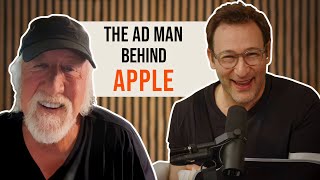
Lee Clow, the advertising legend behind Apple's 1984 Super Bowl commercial, talks about creating that iconic ad with Steve Jobs and how it changed advertising forever. He reflects on Jobs' creative demands and why anthem-style ads don't work anymore.
Chapters
You know, I started my career in the ad business and you were always a God and a hero to, to most of us, including, including me. And so it is a thrill and an honor personally to. To meet you and have you. To have you join me on this, on this, on our little podcast.
Well, it's fun. I'm kind of old and over the hill, so I hope I have something that can contribute to your audience.
You have lived a life and have a perspective on a world that I hate to say, may be a bygone era. The work that you have done, and I think it's worth sharing just some of the more iconic stuff. You were creative director back at Chiat Day, back in the day, and are responsible. You're part of the twosome that created the iconic 1984 ad for Apple, which, correct me if I'm wrong, was the first ever big budget super bowl ad. Right?
Yeah, that was. That we did. And it was a very special moment. This whole idea of democratizing technology was the impetus of the 1984 commercial to launch the Macintosh for Apple. But it also kind of dramatically changed the super bowl because that theater that we created, that kind of unique. Nobody had seen a commercial quite like that before on the super bowl, gave permission to every creative guy in the world to say, I want to do a Super bowl commercial. And every client believing that if they did a brave, interesting super bowl commercial with that huge audience, it would be worth the millions of dollars they'd have to pay for it. So it was a moment in time. Of course, in my career. It was like.
Amazing in terms of. I mean, we knew we were doing a good commercial. We were working with Ridley Scott. He had just done Blade Runner and introducing a product that nobody had ever seen before. So it's not like you're just introducing another soda pop.
Is it true the commercial only ever ran on television just that once.
It wasn't intended to only run once. Only now that's the legend that we were so daring and so brave that we ran at one time. And.
The reality was Steve Jobs, very brave guy, and he wanted to do an amazing different shake the world up commercial. And.
He believed when we finished that we succeeded. And we showed it at a sales meeting in Hawaii in 1983 and got standing ovation. But then the board of directors got cold feet. They decided, we're going to spend millions of dollars on a commercial that doesn't show the product, doesn't explain what the product does, and we're going to spend all these millions of dollars so the board said, sell all the time. We're not running the commercial. And Steve and I kind of, kind of wink in a nod. We sold a lot of time off, but we had this one spot left, and I don't know, they were going to give us 50 cents on the dollar or something. And Steve says it, let's run it. And we ran the commercial and the rest is history. But, you know, they think that's part of the legend that we were so courageous as to only run it once.
But it is an amazing thing that, you know, I was old enough to see it, to see it when it ran. And I think even a lot of people who may not even been born yet know that ad, that 1984 ad that, that introduced the Macintosh. And it is an astonishing thing that all these years later that it only ran once. I think that's just an incredible thing that it became such an iconic piece of our commercial history.
It's pretty amazing. I mean, every, every year there's different media. Every year wants to do a story about it and tell the story of, of the commercial. And I don't know if that's where young people kind of dial in and realize it. Of course, kids that are coming into the advertising business probably hear about it, but it seems to have a life of its own.
I'm so curious. Again, you get a phone call from Apple, from Steve or whoever the CMO was at the time that says, we want to do a commercial to introduce our new computer called the Macintosh. We're moving away from the Apple one and the Apple ii. It's going to be an entirely new platform. Like, I'm so curious how that first meeting. What happened in that first meeting?
Well, we, we were working for Apple for a couple of years. We did Apple to advertising, and we're Steve's agency. But Steve kind of threw down the gauntlet because this computer was his baby, his dream child that he's going to introduce this, what he believed was the future of computing. It had graphics, it had typography, it had all the, the aesthetics that Steve loved about a computer, and it was going to be easy to use.
So he basically threw down the gauntlet and said, look, we're introducing Macintosh. I want a commercial that, that, you know, shakes up the world.
We also did a lot of other advertising launching Macintosh. There were individual kind of, not tutorial, but demonstrations of, of how it works.
It was because it was something entirely new. We were used to typing in commands into a computer. And this was the first computer that was really graphic user interface, mouse clicking, dragging. It was, it revolutionized what we know as computing today.
Yeah. And he, he basically, like I said, we did commercials that showed how it worked and that were charming and wonderful, but they weren't the, this 1984 thing. And then we did a magazine inserts that were like 20 pages that introduced and explained how Macintosh worked. So 1984 wasn't the only commercial. It was just bravest and the most unique one.
It was the anthemic one that introduced the piece. So.
The reason I say you sort of had a front row seat to what is probably a bygone era was this time of, you know, where Jobs is still a larger than life personality. Even after his death, he's still seen as able to have created a creativity outside of a company. Innovation in a company that, you know, seems to have yet to be repeated. What was it about him that allowed people like you and the people who worked at Apple to be so creative? Because there's no lack of creative people in the world today. Why isn't the same innovation and creativity seemingly not coming out of companies today? Like what did, what did he have in the way he led that you think is lacking today?
Well, he, as far as I'm concerned, he's the maybe the only true genius that I ever worked with. I mean, he was virtually able to see two horizons further than anyone else and knew where he wanted to go and what he was trying to accomplish. And his expectations of people were so high. I mean, you might have heard stories that he was very hard on people, very tough on people. A lot of people threw up their arms and said, fuck it, I'm not going to do this because he was so demanding. But the people that stepped up and said I want to do what Steve wants to do ended up doing things that were beyond maybe what they thought their capabilities were. They did things when Steve kept challenged them to be better and better and better. And you know, Jony Ives later gave, got the same opportunity to become one of the most famous product designers in the world because Steve challenged him. He was in the company for a number of years making beige boxes for John Scully and those guys. And then all of a sudden Steve came and said, go do something. Genius. Started with ipod and then I want to make a phone and I, and I want to make a pad. And then he went to Pixar after he left Apple and he didn't go to Pixar, he bought Pixar from, from Lucas. And they were doing, you know, just a little kind of Cute. Digital, digital stories. And he said, let's go make movies. And he took Pixar into the stratosphere in terms of being maybe the most successful movie studio in history. And then now it's part of Disney. And he just challenged people to do and be better than they knew they could be. I mean, he was the most challenging leader and he, he was fearless. Most CEOs don't trust creativity. They're afraid of creativity because it's not rational, it's intuitive. And Steve trusted that. And most CEOs, most companies don't trust flying by the seat of your pants and trusting your intuition. They, they believe that, you know, we got to be more methodical.
Yeah.
And it's just rare that there are leaders.
There's a lot to unpack there. You know, you said Jobs pushed his people harder and challenged them more than you had experienced in the past. And the problem is when people read books about Jobs or they hear you speak, you know, a young aspiring CEO might come out and start being really hard on their people and pushing them and saying, ah, well, I'm just like Steve Jobs, you know, I'm pushing my people to do more, but it doesn't make them good leaders. So there has to be more to it than simply putting pressure on their people, on people to outperform.
It was not only he pushed people, but he knew when they had arrived at some place that was bigger and braver than what they would normally do. I mean, a lot of CEOs are hard ass and say, you know, go do something great. But they don't necessarily recognize great when they see it. They don't necessarily recognize.
The high ground. Like I said, Steve could see two horizons further. So he'd know when you're nailing what he was looking for. And you sometimes didn't even know if, if this is exactly what Steve's looking for. But you put the bravest, most courageous stuff you could on the table and sometimes he'd reject it because he didn't see what he was looking for. And sometimes he'd say, that's it, I love it.
And most leaders, you know, they can be demanding, but they don't necessarily know if they've accomplished what they've asked their people to do.
The other thing you said was that he trusted creativity. And you say a lot of modern leaders don't trust creativity because it's too much. Trust your gut, you know, seems to me that you can trust creativity so long as you have vision. Right. But you have to know what the distant Horizon looks like. And perhaps, perhaps one of the reasons that too many leaders don't trust creativity, aside from the fact that they're probably too accountant minded, left brain oriented, numbers driven, which is a different way of thinking. So putting that aside, you know, well.
So often, so often it's the, it's the manage, quote management of companies that rise to the top and become the CEO and become the, you know, executive vice presidents as opposed to, you know, the developers, the thinkers, the creative people in the company are usually a department as opposed to the leader. Steve was the leader and he was the most creative guy in the company.
Apple is credited so much of changing the way computing works, but had it not been for their ability to message Steve's vision, arguably it would just be a, you know, a small little company for, for hobbyists, even if it was a better product. So I think Jobs gets a huge amount of the credit for the world that we live in today. But I think you deserve at least a good portion of that credit because without his ability to translate his ideas into advertising and marketing so that the world understood his vision, it would just be the ramblings of a crazy man. So you translated genius so the rest of us could understand it. And, and you did it for years.
What was really interesting is he loved advertising too. He loved, he loved marketing messages. He could recite Polaroid commercials by Garner and Harley. He could, he could recite Sony Walkman commercial. I mean, he understood marketing as a tool, but he loved the creativity of that too. And you know.
The idea of.
Introducing the computer that led the way, I mean, this is the thing that ultimately pushed it over the top. And you were saying, I have a lot of credit. I deserve some credit for that. And sometimes I'm funny, we're sitting around in a restaurant and everybody's looking at their phones and I said, that's my fault.
The fact that I introduced the world to this stuff and now, now it's changed everyone's lives, not necessarily always in a good way.
What was it that David Ogilvy said? He said something to the effect of the quickest way to, you know, to ruin a bad company or a bad product is with good advertising. And so, and so to some degree, which is, you know, the quickest way to destroy society with, with addictive technology is with good advertising.
Okay, Lee, I won't give you too much credit then, but, but I mean, truly, you know, the anthem ad, you know, these iconic companies with these iconic CEOs, they produced anthems, advertising anthems that were like Visual manifestos for the rest of us to understand what the company stood for, what the company's vision was, what the company's beliefs were, what their values were. And it wasn't there to sell any product per se. And it seems like the anthem ad making these bold statements of vision or purpose seem to have completely fallen by the wayside. And most marketing and advertising these days seems to be much more product driven. A is, why did that happen? Why are companies not making, spending money to make bold statements about simply their beliefs and their vision?
Well, I think, I think the big change is this media scape that's changed so dramatically. So everything now lives on your phone, everything lives on the Internet. And yes, people watch TV and maybe they come to the super bowl and watch some commercials, but the idea of there being a platform to put beautiful manifestos out there is kind of gone. I love doing, I love doing anthems. You know, the Think different commercial that we did is still, you know, one of, one of my favorites. And I love that part of advertising when the tools were television was the, you know, push it out there and then you use other means to explain. Now television has kind of lost its luster, particularly in companies that believe that the Internet is some new magic marketing tool and the old ways don't work anymore. And the new ways are, are, you know, using algorithms and popping up in your Instagram and telling you you might want to buy this carpet or this, this trip to Tahiti or whatever.
True, that media landscape has definitely changed. We now live in a technology world where it is impossible to skip an ad, where whether it's on our streaming services or a website, you're forced to watch an ad before you can get to the content. You. In fact, I joke that you know how bad a product is when there's literally a timer next on top of your product. That is the piece of advertising that tells you when it's going to be over. Right? I mean like that's. But if we're forced to consume advertising, whether it's on television, on our streaming services, or on a phone, why can, why, why not put a manifesto and force us to watch your manifesto, tell us what you believe. Are companies just. Do they lack, do leaders lack the boldness to, to make these declarative statements? Is that what it is?
Well.
I keep believing that the next generation of really creative media artists are going to find a way to do exactly what you're saying. How can, how can we put something out there in these new media scape that says beautiful and Bold and interesting as the, you know, the historic manifestos or storytelling of the past. And.
One of the worries is.
Yeah, lots of ads pop up and I can't escape them. But most of them are pretty ignorable, even though they pop up and I can't escape them. But having the courage to do something that so grabs you that you want to actually pay attention to this commercial that just interrupted you. I mean, yeah, advertising has always been an interruption to what you're trying to do, whether you're trying to read a magazine, whether you're trying to watch television. Back in the day, an ad was always an interruption.
Just like they interrupt you now on the Internet. But.
What we discovered back in the day was if you do something smart enough and creative enough and interesting enough, people will pay attention. And I think the same thing is a little bit true on the Internet. If you put some content out there that's so kind of special and amazing and interesting that people want to share it and say, did you see this? And you get comments and all that kind of stuff.
I think it can happen and can be the front runner to then other messages from. From the brand. But it's got to be. It's got to be so captivating and interesting that people actually look at it and say, that's so cool. I got to send it to all my friends. I got to repost it, or I got it. You know, it's got to be that good. But I think lots of companies still are living in the world of products, so we just show our product and, and say, we got a discount today if you buy it. I think.
I think you said it before, which is part of the problem is the creatives, quote unquote, aren't running the companies anymore. It's the accountants that are running the companies. And so accountants will make accounting decisions. Creatives will make creative decisions. That entrepreneurial sort of creative mindset has largely been replaced by sort of like an ROI or.
Pressure from investors mindset. So just to change tack slightly here, how did you come up with the Energizer money?
That's a. That's a very cool story, actually, for those.
I mean, I don't know. I don't know if anybody knows we're talking about. But for many, many years, the Energizer commercial was this bunny that just kept going and going and going. And I think that's what the tagline was. It just keeps going and going. This little pink bunny with a. With a bass drum that it would beat would just go and you would produce spoof commercials, and then all of a sudden, an Energizer bunny would, you know, go across the screen. Yep. Still going. How did you come up with that concept? It was so genius of its time.
It was very interesting. They had a pitch for their account. It was at Doyle, Dane Burnback, and we were invited to pitch for Energizer. They had done a commercial that was a bunch of mechanical rabbits going, bum, bum, bum, bum, bum. And the Energizer Bunny marched through. This is Doyle Dane Birnback did this. The Energizer bunny marched through and spun around and left. And.
When we looked at their history, we said, that commercial is special. And we said, that bunny is special. So we took the bunny from a commercial at Doyle Dane Birnbault.
More from Clegg

The #1 Skill Gen Z Needs | Simon Sinek + Esther Perel | A Bit of Optimism Podcast







AI Won't Tell You the Full Truth | Arthur Brooks + Simon Sinek | A Bit of Optimism Podcast



How To Make the Best Decision | Arthur Brooks and Simon Sinek | A Bit of Optimism