Inspiration for Business Leadership | Full Conversation
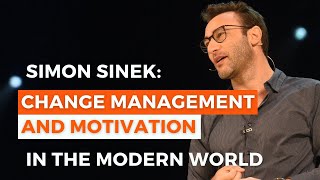
Transcript of a live conversation between Mike (interviewer) and Simon Sinek focused on leadership principles, personal experiences (including LA wildfires), Start With Why framework, organizational values and strategy execution, sales/customer relationships, friendship and wellbeing, and lessons from the military. The tone is conversational, with practical anecdotes and prescriptive guidance for leaders and teams.
Chapters
How we feeling? You excited?
Yeah. Good. I was doing jumping jacks in the back.
Were you? Is that what you do before you go?
Oh.
Okay. So I don't know if everybody knows this, but you don't preview any of the questions that I'm going to ask you, so. But I do. If it's okay. I want to start off with one that is something a little more personal because I want to thank you on behalf of all of us for being with us today, because I know you live in LA and are personally dealing with the wildfire crisis that's happening, and I was just wondering if maybe you could tell us a little bit about what you're experiencing.
Thank you. Yeah.
It's been a wild week, that's definitely for sure. I got very lucky where my house is. Fortunately, we haven't evacuated and the house is still there, but it was tense a few days ago. The evacuation zones came closer and closer. And you and I were talking backstage. It's the STR thing. We've all played this game, you know, with our kids, you know, where you sort of sit around the table and be like, if you had to grab three things, what would you grab? And when you actually have to walk around the house and actually make those decisions, it was the strangest thing. I was literally looking at my stuff, thinking, I love that I'm going to leave that. You know, sort of just sort of mentally preparing and really going through this gratitude. You realize when you. When you face the potential to lose things or have things destroyed, you just. You start being immensely grateful for the things that you have and that you may not have them. And I was talking to a friend of mine who lost everything. He lost his house, and he's lost everything in it. And he has this sense, like, he has to go do something of service now. He realizes that he lost everything that he's accumulated, and he's been a taker for so much of his life, and he realizes, like, losing everything, it's made him realize he needs to give more. So I think it really does. It really does change people's point of view on the world.
I've heard you say a little bit about just what that feeling is. Like when you find out the winds.
Yeah, yeah.
Are not coming to you. Yeah, but that. That's not. It's not always a great feeling, is it?
It's just a strange feeling. Like, we've all been peeled to this app called WatchDuty, you know, obsessively. I mean, I check it like a teenager on TikTok you know, it's like every few seconds I'm checking the app. I know it only updates every three.
Hours, but, you know, you're still checking it more often every five minutes. Okay.
It's like my. Yeah, it's like an unhealthy way to view a stock portfolio. Same thing. And it is, you know, the wind is everything. Is the wind bringing the smoke or the fire towards us? Is it pushing it away? And I was keenly aware that I would be watching and going, oh, good, the wind is going away from us. This is what we want. It's pushing the fire away from us while simultaneously fully aware that somebody else is going, oh, no, it's coming here. And it's just. It's just a strange duality.
Yeah, well, really sorry about that. We're all thinking about everybody there. And I just want to think about. One of the things you mentioned after on one of your Instagrams was you were talking about great leadership and what it looks like in extreme circumstances. But I guess I'm wondering, how can this team think about how that parallels with just everyday leadership?
So there's no one way to lead. There are some foundational principles. We put people first, we have empathy, we practice human skills. Those are universal. Yeah. But our personalities are allowed to show up. But styles need to adapt for situations. So, like, I've met so many leaders who are like these sort of command and control leaders. They've watched too many movies, is probably. You know, they make movies about bad leaders, by the way. Right. Because bad leaders are really exciting. You know, they come in and they scream and shout at everybody, and nobody knows what to do until they get there. Right, Right. And then they come in and save the day.
Right.
That's actually terrible leadership, but really makes for great movies, good leadership. Like, they've never made a movie about Marshall or Bradley. You know, when you have great LED organizations, right. You know, you walk into the office and you're like, hey, is the boss here today? And they're like, maybe. We don't know. We haven't seen them. You know, everything just gets done. Pretty quiet. People just help each other. You know, it's better. Not very exciting.
Right.
However, that said, you know, in times of extreme stress, that can't work. The whole like, hey, I'd like to get your opinion and how are you feeling today? In times of extreme stress, it doesn't work. And so that command and control mentality does need to be able to turn on and turn off rarely.
Yeah.
So I was talking to Some Marines. Marine. I visited Quantico, where the Marine Corps selects its officers. Ocs. Any Marines in the audience? Any Marines? There's one. Oh, there we go.
So. And we were talking about it, which is, despite what you see on the TV from the military and Marine Corps, they're not screaming and yelling at everybody all the time and telling them what to do. It's just not how it is. There's a lot of feedback. There's a lot of, what do you think? There's a lot of leaders getting input from other people because more information and perspectives you get benefits, your decision making ability. Nobody expects you to have all the answers. It's ridiculous. So getting points of view and perspective is really important. But in combat, in times of extreme stress where the trust has already been built because you can't just show up and expect everybody to trust you. That's not how it works. In good times, you build the trust and then in extreme stress, you can turn that command and control on. And everybody trusts that you're giving them orders that are probably in everybody's best interest and they trust. And when that. And when that's gone, you turn it off.
Yeah.
And so a good leader knows how to adapt for the situations and personalities that they work with. They don't expect their people to adapt to them.
Yeah. You know, here at Equinix, we talk a lot about hunger, like the hungry leadership, but also humble. And I know you talk a lot about humility and leadership. Maybe you could just share a little bit about that and what you think about humility and leadership.
I mean, there's not a single person in this room, total of zero, that has achieved what they've achieved, accomplished what they've accomplished and arrived what they arrived by themselves. Zero, every single one of us. Somebody took a bet on us. Somebody gave us an opportunity. Somebody put us in a position that we could completely screw it up. And maybe we did. And then they said, try again. And I think for anybody to have anything other than gratitude and humility for anything that they've accomplished, I would be very suspicious of those. I guarantee there's a lot of fear and insecurity underlying which at some point is going to backfire. Humility is everything in leadership.
And you see it in all the best leaders. When you compliment them, they go, it wasn't just me. You'll see it all the time. Trust me.
Everybody here knows that's the case. This team right here, when it's me, nobody ever says that comment to Mike. It's like, no, we all know it's his team. It's obvious. But you do talk about a story that I've heard you talk about the undersecretary. Can you maybe share that story with everybody? I think this is powerful.
Yeah, it's my single favorite story that I think I've ever told. That's 100% true, too. Some of the ones, not so much.
So a former undersecretary of defense was giving a speech at a large conference much like this. And in the middle of his speech, he sort of took a sip from this cup of coffee. He was holding the Styrofoam cup, and he interrupts himself and smiles, and he says, you know, last year, I was still the undersecretary. Last year, I spoke at this exact same conference, but I was still the undersecretary. Last year, they flew me her business class. There was somebody waiting for me at the airport to take me to the hotel. When I got to the hotel, someone already checked me in. They just gave me my key. When I came down in the morning, there was a car waiting for me. And they took me to the same venue. They took me backstage. They took me through the back entrance. They took me into a green room, and they handed me a cup of coffee in a beautiful ceramic cup. He says, I'm no longer the undersecretary. I flew here coach. I took a taxi to the airport, took a taxi to the hotel, checked myself in. Yep, Took another taxi this morning to the venue. Came in the front entrance, found my way backstage. And when I asked somebody, do you have any coffee? They pointed to the coffee machine in the corner, and I poured myself a cup of coffee into this here Styrofoam cup. He says, the lesson is the ceramic cup was never meant for me. It was meant for the position of I held. I deserve a Styrofoam cup. And I think this is the lesson that every one of us has to remember. As you gain seniority in an organization, it does come with perks. You get more money, you get a better parking space. If you leave your jacket in another room, someone will go get your jacket for you. If you're a junior, you get your own jacket. People will treat you differently, and it does come with perks. But we have to remember they're not giving it to us. They're giving it to the position we hold. And we have to. We can enjoy it, but we can't feel like we're entitled or do we deserve it, and we have to be grateful for it. And when danger threatens the tribe, we have to be willing to give it up. That's the rub. I'll tell you a quick addition to that. I know the CEO. You know who the CEO is, and you know who this company is.
Okay, but we'll leave those details out.
Yep. No, we're good. But I know the CEO of a major company who retired very recently. And every year, there's a huge, big party in Hollywood, and he always gets invited, and he didn't get an invitation. And a friend of his was over his house. He's like, you got your invitation to the party, right? And his friend goes, yeah, of course. He goes, I didn't get mine. I mean, it probably just got lost in the mail. It never occurred to him that they don't want him at the party. They want the CEO of that company at the party. The invitation went out to his successor, but it never occurred to him that he's not invited. Right.
That's powerful when you think about that.
For sure.
So I know we have many, many people, after we announced, you sent me messages of how they first read your book. Start with why. And maybe I thought, instead of going through all the amazing things you had in there, maybe you could just start by telling us a little bit about what actually inspired you to write that book and why do you think it connected so well with so many different people?
So start with why. Like, all of my work is semi autobiographical. You know, it's my journey. None of my books are complete. They all leave off where I am in that moment. And start with why. Wasn't supposed to be a book. It wasn't supposed to be a TED Talk. It wasn't supposed to be a speech. It wasn't supposed to be any of those things. It came at a period in my life where I had lost my passion for my own work. I owned a small little business, had good clients, was doing good work, and I completely fell out of love with my work. And because superficially, my life looked pretty good, I was very embarrassed that I didn't want to go to work anymore. And I kept that feeling to myself.
So you had the feeling. You knew you had the feeling. You just weren't.
Oh, no, I didn't.
I hadn't open about that.
I had no passion and no motivation. And I was like, you know, I don't be Like, I don't want to go to work. I mean, I'm unmotivated. And people like, oh, poor you. You know, So I kept it to myself. And for anybody who's ever had a Dark feeling. If you keep it to yourself, it gets worse. And that's exactly what happened to me. It festered and it grew. It turned into paranoia. It turned into depression. It was pretty dark. And it wasn't till a very dear friend of mine came to me and said, something's. Something's wrong. I was good at lying, hiding, and faking every day. And she could see right through it. And I came clean. And it was this huge weight lifted off my shoulders. Not because I had a solution. It's because I no longer felt alone. And when you don't feel alone in your challenges, it's amazing the energy that you can find to actually fix those things. And because I no longer felt alone, all of that energy that went into lying, hiding, and faking every day, I turned to finding a solution to reignite my passion. And the solution that I found was this thing called the why. I knew what I did. Yeah, it was crystal clear. I knew how I did it. That was fine. But it became abundantly clear to me that I didn't know why I was doing it. It was only meant for me. It worked. I shared it with my friends. It worked for them. They asked me to share it with their friends. It worked for them. And before you know it, I was getting invitations to share with other people.
So I believe that your why gets set when you're young, right? Or when you start to think about you being a young Simon. What were you like as a kid?
You were thinking about what it's like.
To be a kid? No, I was thinking to myself. You had to think to yourself, what was it like?
So our whys, by the way, there's only people are like, what's my work why? And what's my personal why? No, you have one why. Well, my why has changed. No, it hasn't. Because we are products of our upbringing. You are who you are because of the experiences you had when you were raised. And I am who I am for the same reasons. And you can't change who you are. You can either be authentic or not. You can either live in balance with who you are or. But you don't get to just change it, right? So you only have one why, and it's fully formed by your mid to late teens. That's it. The youngest person I did a Y discovery with was about 16. And now the opportunity for your life is to make choices and decisions that allow you to be your natural best. And that's the hard part, right? The hard part is implementing it. But, yeah, that is correct. You only have one Y, and it's there from your mid to late teens. That's 100% true.
And when you think about it, there's a lot of people that are saying to themselves, this is an interesting concept. Like, I don't even know if I have a why.
How do you think they could go about figuring out what is their why?
So the reason we can't. Like, we think to ourselves, I don't. Do I even have a why? Is not because it doesn't exist. It's because the part of the brain where the why exists in the limbic brain, controls all of our feelings. Like inspiration, like trust, like love, like loyalty. It controls behavior, right? But it doesn't control language. And so it's very hard to verbalize feelings, right? Like when you sit down with somebody you love or somebody you're angry with, it's. These are complicated, difficult conversations sometimes because it's hard to verbalize feelings, right? It's just a problem with being human, right? So it's not that. It's just hard to put into words, which is why it sometimes feels like I don't know what mine is. Right? But there's multiple ways you can do it. I've tried to put as many of them out in the world as possible. But I can tell you one fun exercise that you can do with your friends. I call it the Friends exercise. Basically, find a friend you love and who loves you. The kind of friend who, if you call them at three in the morning, you know, they pick up and you would pick up for them. Do not do this with a spouse, a sibling, a parent, okay? Those relationships are too close and it won't work. A friend who loves you, and you ask them this question, why are we friends? And they're going to look at you like you're crazy. Because it's hard to verbalize why we're friends with each other, right? And so they'll start. They'll look at you like you're nuts. And then.
You weirdly stop asking the question why? And you ask the question, what? Because you want to engage the rational brain. So you say, come on, come on, come on. What specifically is it about me that I know that you'd be there for me no matter what? And they'll start describing you. You're funny. You're always there for me. I trust you. And you play devil's advocate. Good. That's the definition of a friend. You have that with lots of people. What specifically is about me, then? I know you'd be there for me no matter what. And they're going to go through a few rounds of this, but they keep going. And it's going to get depressing and it's going to get more frustrating. Right. And at some point, they'll give up. At some point, they'll give up and they'll start describing themselves. And this is what my friend said to me. My friend said, I don't know, Simon. All I know is that I can sit in a room with you. I don't even have to talk to you. And I feel inspired. And I got goosebumps. Right. So in other words, what they're doing is they're articulating my value in their lives, which is the thing that I give to the world, which is my why. And the reason I had an emotional response is because it's deep inside of me. So you will get to something where they'll say something about themselves and you will either get goosebumps or you'll well up with tears. You'll have an emotional reaction. I did it with multiple friends. They say very similar, if not the exact same thing, because the space I fill in their lives is my why. That's the thing I work hard to give to the world.
And so is that what happened with you? A friend said that. And then is that literally when you said, okay, now my why is to.
No, no, that's not how I figured out my why, but I figured out a way to help.
Figured out other people to help little people like me. That's kind of.
That.
That's what you meant. I got it.
It works.
However.
Hey, speaking of that, though, has there been anybody that you ever kind of talked to about their why and it surprised you?
It's never surprised me. I love doing why discoveries with people I like because it informs why I like them.
Yeah.
Because whatever it is about them, like, oh, I love.
Love, Mike, you can say it. I love thinking it.
Yeah. So it's okay.
We got that on tape.
It's proof. Where's the camera?
So, yeah, it's not so much surprising as it is reinforcing. There's only ever been one person ever that I couldn't figure it out, but that's a different story. A good one or. No, it's just because the whole process of a wide discovery is that people just have to be honest. That's all they have to do is answer questions about their childhood and things like that, and they just have to be honest. And I always tell people, if you're not honest, I won't be able to figure it out. And so this guy was exceptionally good at not telling me what I wanted to hear.
So if you think about. So as you know, we've got a sales team out here and they are constantly trying to think about how can they connect deeper with customers.
Yeah, yeah.
Is there anything from just the principles of start with why that we could be using in our interaction with customers and prospects?
Oh, my God, yes. Okay, so I think I wrote about this and start with why. But for me, interacting in a relationship, whether it's a sales relationship or going on a date, it's all the same thing. So what's the difference between a sales call and a date? Right. You're sitting across from somebody and hoping to close the deal, right?
Yes. I mean, you know, however you define deal.
Right. And so think about. So let's take our. Let's take a hypothetical character. We'll call him Mike. Right? And let's send Mike on a date right now. Mike, we set Mike up. His friends set him up. And the way they sort of pitched the girl to him, they said, you're going to love her. Like, she's gorgeous and she's like super rich and she's like super famous. You're gonna love her. Right. And you're like, I'm in. Right. So we send Mike on his date and he sits down across the table and this is how the date goes.
I'm really successful. I'm like, I've done really well and I've got a great, beautiful house. You really should come by sometime. And, you know, I'm good looking, which is great because I go on TV all the time and I know a lot of famous people, you know. Now the question is, is Mike going to get a second date? Right.
Yeah.
And it's so obvious that that's not a good way to go on a date. Yeah. Now let's. Now let's pretend it's a sales call. You know, we're the largest company in the market.
We've got amazing offices. You really should come by sometime. You've probably seen our TV commercials, you know, very, very successful company. So if we know inherently, instinctively that that date was appalling, why would you think that's a good sales call?
Yeah.
Right.
Now let's send Mike out again. Except this time Mike's going to start with why? Right. He sits down, he goes, I gotta tell you, I just got here from work. I mean, I love my job. I get to wake up every single day to inspire people to do the things that inspire them. That's my work. Like, could you think of anything more fulfilling? And here's the craziest part. Like, I made a bunch of money because of it, and I got a big house because of it. You should come by sometime. And I got to meet, like, a whole bunch of famous people. And it's just been an amazing journey. Profoundly different. Yeah. All the stuff is still there, but profoundly different. Simply because you started with why.
Why?
And the joke is, is you were. Both of you, both you and the. And the person you sat on a date with were both told about the stuff. When you agreed to go on the date, like, somebody said, you should meet with this company. You know, they're really big in the market, you should. And people say, sure, I'll take the meeting. But that's not what makes people want to connect with you and do business with you. And so there's multiple ways. So to have a good sales meeting. When you start with why, number one, you could talk about yourself. You say, I love this company. Let me tell you a specific story that happened to me. Why I love this company. Right. So people resonate. When you have passion for the thing you love, you can say the company's why. Right. So let me tell you what we stand for, which, quite frankly, is a great way to get out of bed in the morning, like, to work for a company that cares about that before everything else. Let me tell you. Pretty inspiring, right? And you can tell even if you don't have the words, even if the company hasn't properly articulated the why, or you don't actually know your why, you can tell a story. You can tell me. Let me tell you this one time. When to exemplify it, to capture the love, the emotion, and then all the stuff can come out afterwards. But the people who will fall in love with doing business with you, they believe what you believe. That's why they want to do business with you, and it's why they're loyal to you. You're always going to attract people who do business with you because you happen to show up at the right time. You happen to be the right price. You happen to have this. That's the commodity stuff. Those people are not loyal.
Right?
They're just. They're just looking for the lowest common denominator. Sometimes you get them, sometimes you don't. What makes companies great are the loyal ones. And the loyal ones, it's always based on the relationship with the people and with the company.
Yeah.
So you know what? I love that, actually. And our CEO talked a little bit about that the other day, which makes me think about our new strategy. So we've just rolled out a new strategy and when we leave here, we're all planning on continuing to execute just like what we've and all of our colleagues back at home have been doing. And as you start to think about it, you've seen plenty of companies out there that have created the strategies. How do you, how do we make sure that we're one of the ones that are successful about achieving it? Like, is there anything we could learn from those companies that. Yeah, like, because there's a lot of people who have good strategies.
Sure.
But there's only some that execute very well. How do we make sure that we could be one of those that executes really well?
So let's be crystal clear what a strategy is.
Right?
A strategy is a path you take. That's what it is. Right. It's not the product. That's the, you know, the tactical stuff are the tangible, measurable things. Right. That's, that's up front, Right. The strategy is the path we choose. And so let me, let me, let me sort of like follow the analogy. So I think of a company like a car, right? We don't buy cars in order to buy gas. That's not the purpose of a car. Right. The purpose of a car is to go somewhere. Clearly, gas is the thing we use to make it go somewhere. Right. And so it's the same for a company. The purpose of a company is not to make money. The purpose of a company is to go somewhere, to do something, to have some sort of impact in the world or give something to somebody or make their lives a little easier, entertain them or whatever it is. It's a thing outside. And clearly we need to make money because money is the gas that makes us be able to do this wonderful thing. But the car is the car and the car is based on the great companies. The best companies are values based. Right. And those values don't change. This is how we got here. These are the values that got us here. Yep. And we can change. We realize that because of changing technology, changing taste, changing politics, changing culture, the world we're in. We have to change the path that we're on. We have to take the car down a different route, but we don't fundamentally change the car. You don't say our new strategy is to go from a Volkswagen to a BMW. That won't work. And by the way, it's not worked for car companies as well. Volkswagen came out with a $70,000 luxury car. Nobody bought it. Why? Because nobody's spending $70,000 to have a VW badge on the front of the car. Right, Right, Totally. When Honda wanted a premium car, they called it an Acura. When Toyota wanted a premium car, they called it a Lexus. Different.
Right, Right, Yep.
They changed the path, but the values remained constant. And that's very, very important. The best organizations, because you can't come up with a new strategy, change the car, change everything, because you're going to need all new people. The people you have here, they've been raised in a certain culture, They've been raised with a certain set of values, and you constantly abandon those. You can absolutely change direction. And I'll tell you what happens to companies who don't change direction. Right. So Apple invented itunes, not the music industry.
Netflix pioneered streaming, not the television and movie industry. Amazon invented the E. Reader, the Kindle, and not the publishing industry. What? It's because those companies were so fixated on staying on one path that they completely missed the fact that the world around them was changing. And so good companies absolutely need strategies for a different world. Yep, it's a different world. But. But, but not at the expense of the company and at the expense of beating a dead horse. Here. Let's look at Disney. Disney's a great example of a company with really strong values that is still built on the foundation that Walt Disney said, if you go to Disneyland, right there on a plaque that was written in, like, 1957, through these gates, you will leave behind your stresses and come into a world of imagination, or whatever it says. And that hasn't changed since the 50s. Right. The foundation of this company. Good, good, clean family fun. But there was a little period. And by the way, as a result, they could attract the best talent. People were loyal, like, it was just an amazing company. And there's a little period near the end of Michael Eisner's tenure where he decided to abandon the values and become obsessed with world domination. Right, Right. Yep. And nobody really knows why, because it's still the same company. But he tried to change by announcing these new strategies. What he was actually doing was changing the foundations. And all of a sudden, they couldn't attract the best talent. And all of a sudden, people weren't happy to pay a premium. And all of a sudden, where they were treated as an exception now, they were just an evil corporation, just lumped them with all the others. When Bob Iger and Tom Staggs took over, the first thing they did, they Said was, okay, put strategy aside. Let's go back to values first. Let's make sure our values are intact. And they looked at the portfolio and they saw that they owned companies, that they had a production company, Buena Vista, that made Quentin Tarantino films. They had a record label that had a band on it called World War three. It was a death metal band. As I say, these things, they don't make sense that they should be in the Disney portfolio. So the first thing they did, even though these were profitable entities, they completely divested of them because it didn't make sense. It diluted, it broke the car. It was making it something. It wasn't simply to chase market. Right? They got rid of all of that. They returned to basics. They got back to the values, and now they said, okay, now what's the path we can take? What are the routes that we can take to advance this set of values in a modern world? And then you saw Disney skyrocket once again. Get all that trust back so you can have whatever strategy fits the market. But the strategy is the path you're taking to advance your values in the world. That's what it is.
And is there any key values that we need to make sure you hold.
Onto in that the values of an organization like you and me, like our why is the sum total of how we were raised? Organizations are exactly the same. Strong organizations are the sum total of where they were born. A why is ostensibly an origin story. Disney is Walt Disney. Apple is Steve Jobs. Virgin is Richard Branson. Your origin story, your founders, how this organization was built, the foundations you built are the things that make you who you are, which is why you attracted the talent and why the talent wants to stay here and say, I feel like I belong here. So whatever those values are, and there's Rarely more than 5, between 3 and 5, if you have more than 5, there's probably overlap. And one of the big mistakes people make when they talk about values, they write generic values on the wall. Innovation, integrity, right, Honesty. If you have to write honesty on the wall, you have much bigger problems.
But those things are usually nonsense written by a couple of executives in some value session. They're not based on anything. They're aspirational. Values are not aspirational. Values are the behaviors you do, the behaviors you perform when you are operating at your natural best. Right? And what you're trying, you don't always operate at your natural best, but you want to articulate those things that are always present, always there when you're operating at your natural Best. So the value should be written as verbs. So it's not integrity. Let's do the right thing. It's not innovation. You can't walk into someone's office and say, like, stacy, a little more innovation this week, please. Right? Nobody. Nobody knows what to do. Right? But you can say, look at the problem from a different angle. And then you can say, have you looked at this problem from a different angle? Right. Honesty, tell the truth. So they should be written as verbs. Verbs, actions. And they are the patterns that exist when you're operating at your natural best. And those things have to remain constant no matter what your strategy is.
That's very helpful. Thank you for talking a little bit about that. Because we've all been thinking about that at the corporate level strategy. But here as individuals, there's times when each person themselves are starting to think like, hey, things are shifting around me. I'm maybe getting a new boss. Or I got new goals in place. What is it that people, individuals could be thinking about how to handle and being able to be okay about transforming and evolving.
So I love this thing. When these change management management firms come in, it's like, people fear change. No, they do not. People fear sudden change. People fear uncertainty. Right? That's what people fear. Change is not the problem. It's how we do change that's a problem. And one of the things I think most almost every organization on the planet, big or small, can do better is communicate, right? Because communication, honest communication, like, if you don't know the answer, don't lie. Everybody knows you're lying. It's like your kids know when you're stressed out, even you're like, everything's fine, right?
And you're saying that so your kids will feel better, but they know you're lying, and it makes them more stressed because they don't know why you're lying to me. It's the same at work. And one of the big mistakes companies make is they don't bring the people along the journey, right? So, for example, this is what usually happens for months. Somebody in the higher, you know, all the way up in the top will say, I had this idea in the shower this morning. What do you think about this? And then the next day, somebody goes, I was thinking about that idea you told me about. I think you're right. The world around us is changing. We need to be aware of that insight that you told me. And then somebody else goes, what if we did this? And like, three or four months later, somebody's like, this is a great New strategy. I think we should do this strategy. And then all of a sudden the strategy is announced. But it took months to get there and everybody went on the journey, so it wasn't so sudden for the executives. But all of a sudden it's like, we have an announcement, we're changing directions. And it was like, what happened with the other direction? Right. Bring people along, say, hey, we're thinking about this, we had this insight, we're not sure what to do with it. But it's interesting because by the time you get to the announcement, I don't believe in tadas. Right? Like, wait for it, wait for it. Ta da. Right? Look how smart we are. Right. I believe that the way effective communication works is you bring people along on the journey, you include all the uncertainty. That allows you a lot of flexibility. Be like, yeah, yeah, we abandoned that idea. Right? It allows you a lot of flexibility. And by the time you get to the ta da, everybody's like, oh, yeah, yeah, yeah, yeah, totally makes sense.
Of course, of course, Right, right, of course.
So you're gonna have a lot fewer people. Because the reason you get resistance to changes of strategies is not because people necessarily disagree with the strategy, it's because they're afraid how it affects them. It's just insecurity and fear. Communication, it's just communication.
Open transparency.
Open transparency. And again, it doesn't mean you have to be right. And when people ask questions like why are you nervous? Or do you know the answer? It's okay to say.
We'Ve thought about that, but we don't have an answer yet. But like you, we're not sure, we'll.
Get back to you.
There's nothing wrong with saying that. It just makes people relax as opposed to giving some nonsense answer that everybody knows is a nonsense answer. So just, I think, open and honest communication and bring people along on the journey and ask for help. Because the people at the top, this is David Marques work. People at the top have all the authority and none of the information. And people at the bottom have all the information and none of the authority. Right. And so you want to, you want to close those gaps. Because if you're looking to change how to implement a strategy, it's good for senior people to come up with strategy, but implementation of strategy, go to the front lines and say, how would you do this? In fact, start having those questions before you lay it in stone, because you might find out you lay it in stone and then it's unimplement.
Learn about before.
Bring people into the frontline people into the meetings and say, what do you think? And then you'll feel that everybody's along for the ride.
So I think we've done a good job of trying to do that so far. I feel really good. And hopefully people agree with that because we definitely engage.
If they disagree, they can simply raise their hand and say, can I ask you a question? That's a great point. Yeah.
So how about this team? We have been fortunate over the years to have very good sales team that has been extremely successful. But now we've got the highest targets that we've ever had set out in front of us. As we get ready to think about 2025, I mean, how, how should people, how do they just think about getting motivated about that kind of an opportunity and view it as an opportunity as opposed to something that's unachievable.
Successful a type personalities that very often find themselves in sales roles because suits the personality, right. Goal oriented, that kind of stuff.
Don't like failure, like to achieve. And so when the goals get aggressive, it creates a little like. Right. And I actually just had this.
Conversation with somebody on my team where I set out something pretty, pretty aggressive. And somebody on my team goes, I think we should change it. I don't think that's achievable. And I go, well, let's try and fail at 80%, right?
Yeah.
And I said.
Why so coy? And she said, she goes, I don't like to fail. And I don't think you do either. And my answer was, oh, I'm actually very comfortable with failure. I've actually had very few successes in my life. In fact, most of my life I would view as a failure because my ambitions are vastly bigger than anything I've been able to achieve. And I'm okay with that. And so I think being comfortable with the fact that it's really fun to strive for big because you're moving the needle further than everybody else. And this is where the infinite mindset sets in, which is if you set a bold goal and you fail at 80%, the game isn't over, it's still going, it's fine. And usually what we do is we remember every single goal we set is arbitrary. Here's how goals happen. Couple people sitting in a room go, I think the goal should be this. And somebody goes, I bet we could do this. Okay, let's make it that. And that's the goal, right?
Like, wow, this is starting to sound more familiar than you know.
And maybe they look at market data and they look at Past performance. But basically it's.
It's just fiction. It's just fun.
Right. You realize I need a job after this.
Yeah.
Right.
I'm also aware that I leave.
But all joking aside, right, so we misunderstand business. We treat business like a sporting event. Like there's a score at the end of the game and then the game ends. But that's not how business is. There's no end of the game. Only if you go bankrupt and cease to exist. That's the only end of the game. It's simply an infinite journey. There's no winning business. You will never win whatever it is you're doing, nor will you ever be the best because you get to decide the metrics that make you the best. So you can pick your own metrics and you could be the best or the worst.
We have to think of it more like a lifestyle. So let's say it's like exercise. What are the things we're going to have to do to achieve this goal? What are the things that I have to do to lose weight? Well, I want to hit this goal. I want to be this weight by this date. It's exactly the same as work. We want to hit this sales target by this date. Usually end of the financial year, because that's when we have to pay taxes.
But they're both arbitrary. And then we do all the things we have to do. We eat right, we exercise, we get enough sleep. All the things we have to do to be healthy. And every day we're weighing ourselves. And some days it's good, some days it's bad. And then on the date, we look at our weight and we hit our goal and we celebrate. But the problem is, the game's not over. You don't get to stop exercising. You have to keep exercising for the rest of your life. Right. Like, business doesn't end because you hit a goal. Congratulations. Now what are you going to do tomorrow?
Yep.
Right. But I'm more.
This is our world, baby. We live it every day.
But I'm actually more interested in the opposite. Right. What happens if you miss your goal? What is. You've been doing all the right things, but you miss your goal.
Have you failed? No. You just picked the wrong date, the wrong time. You're probably healthier than you've ever been in your entire life, and clearly you're going to hit it two months from now. The trend data is more important. And great organizations don't just look at the absolute accomplishment. They look at how you got there. Right. Because that's really important because the trend data is good and we're doing all the right things, then we're okay. Right? And also, it also goes to the kinds of leaders we're promoting. Right?
Because if you're promoting, you know, you get to the end of the sales year, you know, you pick up all the phones, you dial for dollars, you're going crazy, you leverage all your relationships, you drop the price, you offer a bunch of promotions, you offer a bunch of free stuff. Ram, ram, ram. You hit the number. But we don't do it that way.
But that's fine. I'm sure other companies do. We don't give away any of that. But that's okay. But I got you. I was following the.
But the point is, there are a lot of bad leaders who hit the numbers, who work their people too hard. They're aggressive, they're micromanagers, and they hit numbers. And we keep promoting those people. And we're sending a signal to the rest of the company saying, I don't actually care what kind of person you are. If you hit your numbers, you'll do well at this company. So guess what kind of culture you're going to get. You get Wells Fargo opening fake accounts. That's what you get. Because the numbers become more important than how we do business. Whereas if you look at some of the best leaders, they have great teams with a lot of trust. No churn. Nobody's getting fired, nobody's quitting. There's high morale on that team. And you can see steadiness where usually there's other teams with those crazy leaders. It looks like this, but you see this beautiful steady slope. And yet we don't tend to highlight and promote those leaders because sometimes they didn't hit the right number on the right date. Right. Absolute. The accomplishments matter. Don't get me wrong. The metrics matter. But I always want to know how they got there. I always want to know the people who are leading, how we got there. Because I want to preserve the best leaders and I want to coach the bad ones.
So the, you know, being in technology, there are lots of people who don't know me, who think that I am good with technology. The ones who do actually know, I absolutely don't know anything about. But.
So there's misperceptions that people have. Right. Just because they assume a title or whatever they read about you. So what are one of the biggest misperceptions that people have about you?
There's a list of them. People think I'm extremely organized and are Very surprised to come into my home and find that it's not organized. My old assistant called me a surface abuser. If there's a horizontal surface, I'll fill it.
It's true. I also struggle to read. I have pretty bad adhd, and so I've really. I've written more books than I've read. That is not a joke. That is a true statement. People think I read everything, and I've read everything because of the work that I do. I've started a lot of books. I finished very few. I finished Da Vinci Code. What an amazing book.
Da Vinci Code, yes.
So good. Couldn't put it down. I don't have to feel bad.
My wife tells me that's the only book I've ever read.
Yeah.
So I think people misperceive, but everyone.
Assumes that you, not only just because you're a writer, but just because you're constantly thinking and looking for trends that we would all assume you would be reading.
And I read articles and I read the newspaper, but I struggle to read books. And I think what it does is, you know, there's all these quotes of smart people, like, if you don't read, you can't accomplish. And all it does is put a lot of pressure on people like me who don't read. So. And I think the better course is to learn how you learn and do that. If you learn by reading, read a lot. If you learn by listening, have a lot of conversations with people. If you learn. So I think out loud. So I need. So this is not me answering your questions. Every question you've asked me, I'm thinking. You're thinking. Right. Which is why my answers tend to be long. Yeah.
I was going to give you the wrap it up on a couple of them, but I think most of the parts have been pretty good, which is.
Why my answers tend to be long. It's because I'm thinking it through, but you're listening to me think. And so I think what's really important is not worry about how everybody else learns, but learn how you learn. But most people misperceive that. I learned one way when I learned the opposite.
Yeah. That's actually powerful for all of us to be thinking about. So I want to go back a little bit to 2016 when you shared some people use the term provocative ideas about digital addiction and how it was affecting millennials in the workplace. And I was just curious, now that we are coming up on a decade later.
Is it still affecting the same way? And then what happens about the Next, like Gen Z, same thing happening. Have we made any improve? Has that changed? Maybe you can just pontificate a little on that one.
I think the difference is it's kind of like cigarettes, right? In the 50s and 60s, everybody was smoking because they didn't know cigarettes were bad for them. And then we got wise and like, cigarettes are really bad for you, but people keep smoking. I think that's where we are now. I think when I gave those comments.
I don't think we were fully aware of. It was just the beginning to recognize that. But there wasn't a lot of studies done, a lot of data yet. I think now there's plenty of data where we know social media and cell phones are very addictive, very bad for you. We know about the dopamine hits. When I say dopamine hit, everybody knows what we're talking about, right? Like it's.
But you wouldn't have back then. Were you even using that term?
Yeah, yeah. Is that when I studied those chemicals, when I wrote Leaders Eat Less. So that's one of the things that got me on that bandwagon to have some of those insights. I was studying it for another reason and realized, oh, my goodness, it's over here. Okay. But, yeah.
It is very bad. It affects adults as well as young people, obviously. But young people are much more susceptible to it because they're much more susceptible to a lot of things. Young people need twice the amount of dopamine as adults to get the same feel good, which means they're drinking twice the amount of alcohol.
The analogy.
And I think what I'm obsessed right now with is with friends, friendship. It's sort of my latest. The thing that I'm fascinated by and working on. If you look at most of the challenges that we're talking about these days, the epidemic of loneliness.
Rising rates of depression, anxiety, inability to cope with stress. In extreme cases, suicide. Friendship fixes all of those things. Friendship fixes all of those things. It's the ultimate biohack. And yet, if you ask people, are you a good friend? Most people say, yes. And if you peel the onion just a little bit, you realize that we're all pretty, actually pretty bad friends. Like, would you cancel on a friend for work? Or would you cancel on work for a friend? Oh, but my friends will understand, right? And you realize pretty quickly that we're not very good at communicating. Like, if you're having trouble in your marriage, right. If you have a fight, if there's a violation of trust, you try and talk it out. You Work on it. You sit in the mud together, you get therapy. You try very hard to make the relationship survive. If you have a huge fight with a friend or there's a violation of trust, we just abandon friends. Like, we don't do friend therapy to save a friendship. Why not? And one of the reason I talk about this is, as adults, we're struggling with friendship. How to make them, how to maintain them, how to look after them sometimes how to end them, how to repair them. We're bad as adults. We're not teaching our kids how to make friends.
When your kids have play dates, they all have phones. Take all the phones away, put them in a bowl, call the parents and be like, well, the parents called you because you made the play date. But say, listen, we're planning on taking the phones away. If you need your kid, call me. And we know this. A lot of schools, a lot of schools want to get rid of phones. It's the parents who won't let them. Well, what if there's an emergency? Well, call the office. They know where your kid is. Old school, right? Like, the old systems work. And so one of the things that I'm very afraid of, even while we're struggling, is we are not teaching our kids how to relate to each other, how to have fights with each other, how to resolve things, how to repair and how to make friends. Which means the epidemic that we're facing now of loneliness, stress, depression, and suicide gets worse. And our children will be the ones struggling even more than we are.
So you are writing a book about friendship right now.
How should we think about friendship in the workplace?
That's a great question.
So I think about friendships as relationships right now. Not every friend is a close friend, right? But the relationships we have at work, I think it's very funny. We spend more time at work than we do at home. We spend more time talking to our colleagues than we do sometimes to our own friends. And so relationships form, especially when you work in an organization with a strong corporate culture. We share the same values. The likelihood of us getting along is pretty high. And so when friendships exist in a workplace, you're going to get much, much better cooperation.
When we deny friendships at work or we screw up the incentive structure, what you get is people hoarding information because it's going to help my bonus. So if I give it away, it's going to hurt me. And so that's not good. Hoarding information and strong. Well, we want to help our friends. Let me give you something. So I encourage friendships at work. Yes, it does have sometimes complications, especially if there's a hierarchy. But at the end of the day, being friends with the people we work with can only be a good thing because it means we get along with them, we happy for their successes, want to support them in their struggles, rather than being happy for them when they struggle.
And do you think there's anything in either any of your research or any of the things that you've been talking to people about that are things that we could do to be better friends?
Yes. Just like there's no such thing as an expert leader. Just like there's no such thing as an expert parent. All of these things are journeys. And we're always, you're always a student parent, you're always a student leader. And the best leaders, the best parents, they're constantly learning, they're constantly finding new resources. They're reading books, they're reading articles, they're watching TED talks, whatever it is, more information, they're having conversations with their friends. Right? The best leaders, the best parents. And it's the same with friends, which is you have to learn how to have a difficult conversation. You have to learn how to listen, you have to learn how to have an effective confrontation. If your friend has done something that hurt your feelings, can you bring it to their attention in a way that they will hear you rather than just defend themselves and fight with you? Like, do we know how to hold space for our friends in a time of need? You know, like I was struggling and I called up a friend and said, hey, can I just talk to you? And I told them what I was going through and they started trying to fix me. And I thank goodness that you can tell people in the middle be like, I don't need solutions, I need you to just listen, listen. But most of us, well intentioned, we go to fix. Men are particularly bad, right? We go to fix when sometimes all somebody needs is for you to sit in mud with me and make me feel not alone. That's all I need. And so most of us don't have those skills. And when you talk about translating them into work, right? If somebody's got struggles at home, their marriage is on the fritz, their kids are acting out, I don't know, you're in a, you know, there's a towering inferno a couple miles to the east, right?
The you think that doesn't come to work. So screaming and yelling at somebody, why haven't you made your numbers? Is not helpful. Empathy is the thing we have to practice. I'll give you a Real scenario that can happen at work, how empathy exists, right? So let's take a real life scenario. Somebody missed their numbers, right? So we walk into their office, call them up, whatever it is. Hey, I noticed you missed your numbers for the third quarter in a row. You got to pick up your numbers in the fourth quarter, otherwise I don't know what's going to happen. You got to hit your numbers. That's fairly normal. Now let's inject empathy, dare I call it friendship, into that scenario. Hey, your numbers are down for the third quarter in a row. We've talked about this before. Are you okay? What's going on? I'm worried about you.
Right? That will get you a more honest answer of where they're struggling and the.
Person can open up with you.
But so we can help.
They won't be defensive in that scenario. So we can help them.
So we can help them, right? If somebody is struggling, we can help them. But if they can't tell us and we don't know how to listen and we don't know how to ask and we don't have confront, and we don't know how to have empathy, then we're going to get no information. And that tension is going to get worse and worse and worse until somebody quits or gets fired.
So how about the best leader that you've ever personally had?
The best leader that I've had.
Two people come to mind for different reasons.
Dennis was my leader back in young in my career. And this is when I learned about behavior over accomplishment. I was a young account executive at a big ad agency, and new business pitches were done by the senior leaders. It was the end of the year, and all the senior leaders had gone away on their holiday vacations. And me and another junior person who were assigned to work on this pitch were told, prep the war room. And, you know, so when all the senior folks come back, they can do the pitch. Prepping the war room means hang the research on the walls. That takes an hour, right? We had a week to kill, so we just decided to do the pitch ourselves. Like, we combed through the data, we found an insight, we wrote the deck, came up with the strategy, the whole thing. And when the senior leaders came back, we were like, we finished. We did the whole deck. And they used our pitch, they used our strategy in the pitch, and we lost the business.
Oh, boy.
We did not win the pitch. And my boss gave me a huge promotion. They didn't just move me up one level, they moved me up two levels in one night. And what he was doing was rewarding my behavior, not my accomplishment.
Interesting.
Because I took initiative. He was rewarding my initiative. And you know what he gets when he rewards my initiative? More initiative. If he said to me, look, great work, but you didn't hit it. So sorry.
Yep.
I would never have shown any initiative after that because why would I? Or I would just play it safe, you know? So one thing I learned was reward the behavior. You want to be repeated. And so that was a big lesson for me. But probably the single best leader I ever had was a guy named Peter Intimaggio. Peter never answered a single question I asked him. It was so annoying. Peter, I don't know what to do. What do you think we should do? Well, I think we should do this, then I think you should do that, Peter. Something's horribly wrong. What do I do? I don't know. What do you think you should do? I just like. So annoying in the moment. I couldn't see it. I just thought he was. Just answer my. Please. I'm asking you because I don't know. Isn't that obvious? But what he taught me was self reliance. What he taught me was self confidence. And what he taught me was accountability. Because when things went horribly wrong, he taught us that you couldn't go in and be like, it got screwed up. You said, I screwed it up. You didn't go and say, they screwed it up. You said, it got screwed up on my watch. Like, he taught us accountability, but we never got yelled at. I never got yelled at. When something went sideways, even he would sometimes get stressed, but he would say, well, how are you gonna fix it? Yeah. And I always knew that he had my back, but he always made me do it. And it was single best leader I ever had.
And have you implemented that same way of.
Yeah, yeah, yeah.
Working with your teams?
Yeah, I mean, as best I can. I mean, I'm human, but. But, but yes, I am pretty good about being laissez faire. And I'm okay if people screw things up as long as they take where I become difficult. If somebody doesn't take accountability, that it got screwed up. Really, it just happened. Yeah.
Yeah, yeah. You know the market. Yeah, yeah, the market.
Yeah. So I love accountability. I love when people say it's kind of like, go back to our Marine Corps friend here. The Marines say, no greater friend, no greater enemy. Right. Like, if you take accountability, I will be by your side no matter how bad it is, and I will help you fix it, and I will look after you and I'LL protect you. You lie to me or don't take accountability. I'm going to be asking you so many uncomfortable questions because I know what's going on and so do you. And I would just keep noodling at you. Probably not a good leadership quality, but it's. I love accountability. And by the way, I have to model it. I can't expect people to do it if I don't model it. So I'm the first person to say I screwed up. I'm the first person to say this happened on my watch. I'm the first person to say I shouldn't have given you that. That is on me. I am so sorry. I am the first person to own every mistake, every screw up. The buck stops here every time. Because I cannot expect somebody to do something if I'm not willing to do it.
Yeah, that's fantastic. How about, let me ask you, just on the military, as we start to think about that for a second, you've watched the way that they build teams. Is there anything that surprised you about how they build cohesive teams?
The military is one of the most human organizations you'll ever meet. And hugging is fine. Hugged more people in uniform than I've ever hugged in suits. Crying is fine. Cried with more people in uniform. I've been brought to tears by a commanding officer saying something on a stage. I've never been brought to tears by a CEO giving a speech of any kind, ever.
And you realize these organizations are human values based organizations and the lessons are not unique to the military, but the lessons are exaggerated because the stakes are very often life and death, which is why it's so human. And so I'm always, I'm no longer surprised. But in the early days getting to know them, I was surprised how opposite it is that we think they are. Again, too many movies, right?
I was talking to the, the guy who is in charge of training for SEAL Team 6, the training director for SEAL Team 6. You have to be the regular SEALs before you're eligible to go into SEAL Team 6. Right?
Okay.
So it's, it's, that's the, it's the best.
Ultimate elite.
The best, right? And so they're already badasses, but what makes them different? And so I asked him, how do you choose who gets in SEAL Team six? And he drew a line graph for me. He drew an x, y axis, right? And on the vertical axis he said this is performance. On the horizontal axis he said this is trust. And the way they defined it is performance is how good Are you at your job? Right. Can you make the sale? Trust is. What kind of person are you? What's your character? Right. And he said, clearly, nobody wants this person on their team, the low performer of low trust. Clearly. Yeah, clearly everybody wants this person on their team, the high performer of high trust. What we learned is that this person over here, the high performer of low trust, is a toxic team member. And we would rather have a medium performer of high trust, sometimes even a low performer of high trust. It's relative scale over the high performer of low trust. Right? Now, if you think about business, we have a million metrics to measure someone's performance, but how many metrics do we have to measure someone's character or trustworthiness? And so what we end up doing is we take toxic team members who are high performers and we keep promoting them because their numbers are great. We turn them into toxic leaders. Right. Because they keep doing the same thing. Because it's gotten me this far, and that's how you break cultures.
And other people have seen it.
How you break cultures, be rewarded. Exactly, exactly. And then they'll repeat the behavior that gets you a promotion. Right. Goes back to Dennis, who promoted me for my behavior. It's exactly right. And so I think one of the things we can do better in business is consider who the person is, not just their performance. Because there are some spectacularly fantastic leaders out there on a team who are not the single biggest individual performers themselves, but because they're great leaders, they get great performance of the people around them. We usually give those people nothing. Right. We usually don't recognize them. By the way, it's very easy to find the high performer of low trust. Just go to any team and say, who's the asshole?
Yeah.
They'll all point to the same.
They all know, too.
They'll all know. And by the way, I don't believe you should fire that person. I believe you should coach that person. If somebody has performance issues or behavioral issues, we coach them. And if they prove themselves to be uncoachable, then we will gladly send them to our competition. Right.
But the same goes for these medium performers of high trust and low performers of high trust. If you go to any team and say, who on your team always has your back when. When it hits the fan, you know that they're always going to be there for you. They'll also all point to the same person. They may not be your biggest individual performer, but I guarantee you the team performs at the level it does because that's a part of It. And we have to recognize those people and reward those people.
Oh, yep. Very true.
Okay, my final question. Question for you, Simon, is, you know, as we've talked about, we're living in some pretty challenging times in the world, actually. And as a. You are a self described unshakable optimist. What gives you hope?
I trust in people. I think. I think people tend to good, right? I'll give you a silly example. So there's an app that you can download called Apple Store, right? Not the App Store, but Apple Store. And you can go into any Apple Store retail outlet. You can pull out your phone. You can't do with a computer or a phone, but you can do with a pair of $300 headphones. You can do it with cables, plugs, whatever you need. You can scan the item on your phone and you can walk out, right? No bag, no nothing. Just walk out. And when it first came out, after a few months, I pulled one of the managers out. I'm like, I'm dying to know what's happened to your shoplifting numbers. And he's like, they're exactly the same. I'm like, he says people who steal steal, and people who don't steal don't steal. And most people don't steal. People tend to good, right? Most people are good people. Sometimes we struggle to communicate. Sometimes we're bad under pressure, but people tend to good. And so if you. If we accept that people tend to good, that means the world tends to good, right? And incentive structures that we work in and the environment we work in can hijack. Can hijack us and make us operate at our worst selves. But people want to feel like they belong. People want to be seen. People want to feel like they matter. People want to feel like their work matters. It's pretty consistent around the world. We want to feel safe wherever we are. We want our kids to feel safe wherever they are. Pretty much it. I want to make a living and I want my kids to get an education. That's pretty much it around the whole world. And so my optimism is not naive. Like, we can be in darkness. I can be like, this is horrible, and I am stressed and I don't know where we're going, and I am uncertain. And this is the worst time we've ever been in. But I know one thing. I know that if we take care of each other and we look after each other, I know we will get through this and come through this better than where we are now. We will come out of this even stronger than we went in. And that's what optimism is for me. It's the undying belief that the future is bright. And I believe that the future is bright because I think people are fundamentally good.
Well, I agree with you totally.
So.
I feel even better about our world.
So.
Ladies and gentlemen, Simon Sinek. Thank you so much, Simon. Great. I really appreciate it.
More from Clegg

The #1 Skill Gen Z Needs | Simon Sinek + Esther Perel | A Bit of Optimism Podcast







AI Won't Tell You the Full Truth | Arthur Brooks + Simon Sinek | A Bit of Optimism Podcast



How To Make the Best Decision | Arthur Brooks and Simon Sinek | A Bit of Optimism