Interview Attire for Women - KNOW WHAT EMPLOYERS WANT TO SEE! Ft. Melina Owusu
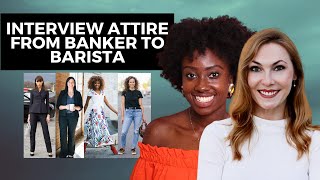
Melina Owusu, a diversity advisor at Fairy God Boss, breaks down four levels of workplace formality and what women should wear to interviews. Key advice: research the company, dress slightly more formal than the norm, cover visible tattoos for initial interviews, and ask employees or check LinkedIn if you're unsure.
Chapters
Hey, everyone. This is Self Made Millennial. I'm Madeline Mann, and today you will learn how to dress for an interview if you identify as a woman for different professions, all the way from barista to banker and everything in between. Newsflash. You are exceptional, and I want to make sure you're adding value to the world in a way that lights you up. So make sure you subscribe to this channel and hit the bell to get a new career advice video every. Every Thursday. You know, it only takes a few seconds to leave a first impression on an interviewer, so it is absolutely critical that you are not too dressed up or too dressed down or too dressed sideways to give off the wrong impression. And we have a very special guest today to help us out with this. Melina Awusu is here, and she is the diversity advisor at Fairy God Boss, which is the largest career community for women. They have so many free resources like job listings, career content, company reviews, and lots more to help women throughout their careers. It's incredible. So you better believe that Melina knows a thing or two about this. Let's jump in. Hi, Melina. Welcome to Self Made Millennial.
Thank you for having me. Maileen. Pleasure to be here. Yes.
And so I know that you said that there are about four different levels of workplace formality. What are those for?
So those four, I mean, I think nowadays there's kind of a blur between, you know, what that four is, but kind of how I've identified it is business professional, business formal, business casual, and most recently, casual.
Very nice. And so as we kind of walk through, maybe should we start with the first one? Right. So business professional, what does that entail?
So kind of like that business professional is more like really corporate environments such as, like, finance, law, banking, those type of sectors where, you know, you know, you'll see people dressed up in terms of, you know, wearing more suits and, you know, women are wearing heels and, you know, men are dressed up in suits, shirts, and ties. That's kind of my thought process. When we think of when we look at business professional, those are the environments that you typically tend to see that type of attire.
Got it. And so if I was to. So if I was to show up at a bank or something for an interview, what would be some of the things that I should definitely make sure to wear or to look like?
Yeah, for sure. So you definitely want to keep your colors a little bit toned down. So I recommend even, like, if you're a woman, I recommend either a black suit or navy blue suit, white shirt, typically either you can wear a suit with pants or it's like a blazer with a skirt, some nice black heels. Whether the heels is a black heel or whether it's, you know, a pencil heel shoe that's really dependent on you. I wouldn't wear, I would stay away from, stay away from open toed shoes. Something that's closed, light accessories, nothing too crazy. Nice earrings. Whether it be a drop down or a nice small little stud is fine. Terms of makeup too, Something, you know, settled, nothing, you know, nice mascara, a little bit of blush. Look neat and professional is the look I would want to go for.
Got it, Got it. It's not the moment to stand out. Right. And be bold.
I mean, if you want to stand out, definitely want to stand in terms of the context of your, you know, your back background. Right. But not necessarily your look. You want your look to still look good, you want to look sharp, but you want it to be toned down.
Got it, Got it. So if then we were thinking, if we were to move into more of the business formal stage, what are some of the types of companies, industries that look for business formal?
Yeah, business formal is still like a little bit of business professional mixed in there. But that one, you could get a little creative so you can wear pants and maybe wear like a nice top. You might not necessarily have to wear a blazer per se, but something like a really nice top either. Like a silky blouse, a nice button down shirt. You can kind of play around with the colors a little bit. Nothing still too crazy, you know, nice settled colors in terms of your pants or your skirt, but you can get a little bit creative when it comes to that type of attire. And you know, these are typical, typical industries, like more general office, like, you know, teachers, like.
You know, things of that nature. So you can kind of get a little creative, but you still want to still be mindful and still look professional.
Got it, Got it. Office jobs, hospitals, teachers. Okay, got it. We're now moving into a little bit more casual stages, business casual. So what are some of those jobs that would fit into that category?
Yeah, so when I think about business casual, I think more retail, I think restaurants, I think, you know, more like you're going for like nanny positions, you know, those type of fields where, you know, you, you can play around with the patterns a little bit now. It's kind of where, you know, you could start thinking outside the box in terms of your look. Right. Whether that be, you know, wearing skirt with patterns, whether that be, you know, a top that has patterns and Maybe you want to pair that down with something that's more simple on the bottom, depending on where you want the highlight to be. So you can kind of start thinking outside the box with that. And even, you know, in the retail space, even when we talk about makeup, right. You could start, you know, playing around with colors a little bit. Right. Where you could feel free to wear maybe a nice fun eyeshadow or a nice color lipstick, where you don't have to. It doesn't necessarily have to be on a neutral side, but you could do like a purple or a pink, all depending on where you're going. Of course, you always want to still be mindful, but unconscious. But you could start thinking about playing around with the patterns a little bit.
Got it. So retail, restaurants, probably even tech. The tech industry as well, right?
For sure, the tech industry. I mean, you know, based on, like, you know, my experience in corporate America, the tech side definitely is really, really casual. Where I've seen, I've seen shorts, I've seen shorts. I've seen, you know, women, you know, dress down in jeans and maybe a nice top or even a T shirt. You know, you know, for me, I don't pass any judgment in terms of how anyone dresses, but all I, in my personal opinion is about looking neat and looking still being mindful that you're in a professional setting and just making sure that you look neat and put together.
Right. And so the fourth one is casual, and I kind of want to talk about casual. And also for those jobs that we just talked about, like, is it possible to go too casual to that interview?
I mean, you definitely. I'd rather you dress a little up than dress down, per se. Of course, all of it stems from doing your research up front and kind of understanding the industry and what the industry is about and kind of, you know, sometimes you can, you know, you have websites like Fairy God Boss, right, where we showcase, you know, certain role models in the company where you can kind of see their attire and you can see how people are dressing in this environment. So that can give you some insight and some intel in terms of, you know, how you. How you should look when you're going in an interview.
I know that working in the tech industry, it's interesting to that it can work both ways, right? Like, if you are really dressed down for an interview, it might, like, for example, dress down might be like ripped jeans and maybe a T shirt. While you might wear that to work, it feels like a little bit maybe you're not taking it as seriously as.
Other Candidates, yes, for sure. I completely agree with you 100%. I definitely wouldn't wear ripped jeans to an interview. Maybe after you got the job and some time has passed and feel free to. But going on to interview, you want to be taken seriously. You don't want to be just based on your appearance. So you want to make sure that you look sharp and that you're being talked about based on your background and the skill set that you have to bring to the table for the. For the type of role you're going for. Yes.
And I love what you said about researching the company, because I think even though. Even though we just said, step it up, you know, look nice, there is a risk of going too nice. Right. Overdressed, and they think they're not one of us.
Right, right. You definitely don't want to do that. So first and foremost, do your research. Trying to connect with people on LinkedIn, you know, see where employees at that company, you know, you can feel free to ask. I mean, in this day and age that we live in right now, you don't necessarily have to know someone, per se, to ask them a question. Right. We have all these great tools that are out there, you know, LinkedIn being one of them. We have sites like Fairy God Blast, where you can, you know, we have so much career connections where you can connect with people. Just ask.
Yeah. And, you know, I work in HR and recruiting, and if someone ever asks me, hey, I'm coming in for the interview, any tips on what I should. We. That's a totally normal question to ask.
It's a normal question. It's a normal question. I think sometimes people are a little bit intimidated by asking that question because they don't want it sound like they don't know what they're doing. But I would rather you have the information beforehand than to assume and then go in, and then it's kind of a done deal after that. So I'd rather you get the intel beforehand.
Basically, the theme I'm hearing is figure out which of these four levels the company is and then take it a slight step higher.
Right. I agree. I agree. Yeah. And I think also too, you know, sometimes people have the whole idea in your head, like, oh, you know, maybe they might have tattoos or something of that sort, where they're like, okay, how do I go about this? Right. I'm going for a job interview and maybe I have a sleeve. Right. So how do I. Do I show it or do I cover that up? And for me, I would say to, you know, definitely you want to cover that up, at least for the initial stages of the interview. After you've gotten the job, then you. You can feel free to kind of show that off. But, you know, in the meantime, where, you know, you're still going on an interview where, again, you want to be taken seriously for your skill set, not judged based on your look, I would definitely say to, you know, definitely cover that up.
Got it. So covering it up, even if it's a more creative industry, like maybe a video game company or something like that.
Yeah. I mean, if you think about, like, you're going, you're going for a job interview as a makeup artist. Right. Makeup artists. It's in a creative space. Right. So that is where you want to show that type of creativity that you have. Right. So again, you have to do your research. You have to know, you know, where. What industry you're applying for a role for and what is kind of the norm there.
Right, Yes. I think what I'm hearing is that if you're ever unsure if it is the right thing or isn't, go for as neutral as possible. Right. Because your appearance shouldn't be the thing that gets you the job or doesn't get you the job. So go for more neutral when in doubt, and make sure they fall in love with other things about you, and then you can really show them more of your fashion sense. Right.
And when in doubt, ask. It's better to ask than to assume.
Amazing. Well, Melinda, this has been so helpful. Thank you so much for coming on Self made Millennial and letting us know all about the stuff about interview outfits.
Yes, yes, for sure. It was a pleasure being a part of the conversation.
Yes. So I'm going to give you a wi Fi high five.
More from Clegg

The #1 Skill Gen Z Needs | Simon Sinek + Esther Perel | A Bit of Optimism Podcast







AI Won't Tell You the Full Truth | Arthur Brooks + Simon Sinek | A Bit of Optimism Podcast



How To Make the Best Decision | Arthur Brooks and Simon Sinek | A Bit of Optimism