Invention is Reinvention with entrepreneur Eric Ryan | A Bit of Optimism Podcast
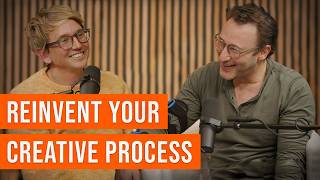
Eric Ryan, founder of Method and Ollie, talks with Simon Sinek about building products from scratch. He explains why his teardrop hand wash worked, how 10x concentrated detergent changed laundry, and why naivete and joy matter more than expertise when you're starting something new.
Chapters
What is innovation?
Creative thinking applied to business? It's a fancy word for just like thinking creatively. Therefore you can charge more to do it or take greater credit than what you really did. If it's hard, it's probably wrong. If it flows really fast and easy, then I know it's right.
Yeah.
When I look back at my career, when something failed, it was the same pattern over and over of like it was really hard and we kind of forced our way through it. I know if I have a really good idea or if it's going to win, if it's so painfully obvious that it scares me.
Like you can't believe that nobody else knows.
Cannot believe. At the end of the day, it's about great people and great products and being a good steward of capital. If you can do those three things, your chances of getting lucky enough to have a successful company matters.
The reason I really wanted to have you come, come in is you are beyond your spectacular energy and optimism and joy of life. You are like the entrepreneur's entrepreneur. You're like the patron saint of entrepreneurs. And I think that's a great place to start, which is what is an entrepreneur? Because I've always made the distinction that small business owners own small businesses. Entrepreneurs solve problems. Because you can find entrepreneurs inside large corporations.
Yeah. Right.
They don't necessarily have to start a small business. And some small business owners are entrepreneurs, but not all of them.
Yes.
And so, you know, A, how does that sit and B, how do you define entrepreneur? Because you define yourself as an entrepreneur.
Yeah. No, it's definitely like who I see as part of my identity. And I think to your point of like a small business owner is kind of more of an. You're doing something a little bit more independent.
Right.
And I think an entrepreneur is really about inspiring a lot of people. Whether you're doing it inside a company or you're creating something independent from scratch. And to create change, you need to inspire people and bring people along with you.
Yeah.
And I think, I think that's, that's a big difference versus somebody who's just working independently as a, whether it's a small business owner or a contractor or.
Like so when you meet a young entrepreneur, at least self defined entrepreneur, and they say, Eric, you know, I've got this amazing idea, I've got this amazing idea for a business, I want you to invest in me. What are the things you're looking for in their personalities? I mean, I buy into their ability to inspire, but that doesn't seem my.
First company method the soap company. We were fundraising, and I noticed a huge difference when I would sit across somebody who was an entrepreneur and then was investing. There was two notable, notable individuals. Jim McCain, who started 1-800-Flowers, and Howard Schultz, who started Starbucks. They were so less interested in my plan and my, like, fictional numbers. They were so much more interested in me as an individual. And, like, regardless of what your plan is, if I give you money, can I bet on you? And then I would sit with, like, funds and professional money managers, and they would dive so deep into the detail of that plan that I knew was fiction. And that was, like, the first lesson I really learned of, like, they really understood. At the end of the day, like, ideas are easy. Execution's hard. Are you somebody who's gonna run through walls and have to your point, that belief, that work ethic, whatever it takes to make whatever your idea is successful.
So this raises an interesting question, which is, you know, should we ever. Should entrepreneurs, especially for their first go, ever try and raise money from.
Numbers wonks from. From money people?
I mean, it's kind of a necessary evil depending on where you are. I mean, that's why, like, they're called angels in the beginning, because they're people who save you from business death. And so those first investors are people who fundamentally don't believe potentially in your idea, but they believe in you.
Yeah. Yeah.
And that's why they're. They're called Friends and family rounds. Because you need your friend. You know, people who love you. Exactly.
Like, look, I think you're an idiot, but I love. Here's $10,000. Good luck with that. I never expect to see that money again.
And then in us other cycle, the beauty of taking money from friends and family people you love is, like, that puts a lot of pressure on you. You don't want to show up at that dinner table telling, grandma, I'm sorry I lost your money.
People may not know your name, but they definitely know your products. Method being, as you said, your first and I think probably your most successful, your biggest, Your biggest one.
I mean, yeah, I think Ali's getting there. I think Ali and Method are about the same guys. Yes, I am in your homes.
Yes. But Method. I remember when Method came out.
All.
Those years ago and it took the world by storm because nobody had ever thought to make the hand soap that sits next to the sink, the dish soap that sits next to the sink. Like, these things that are out in our homes, they're part of the landscape of the kitchen or the bathroom. No one ever Thought to make them nice. And that's fundamentally where it started. Right. You just made the packaging beautiful.
Yeah. I mean, you look at a dish soap more than you use it. Yeah. And nobody thought about these products as a form of self expression, a form of, you know, decor lifestyling of your home. And this is back in, you know, 2000, I was working the business plan and like home and garden TV was just taking off. Mtv Rock the Crib, like. Yeah. So for the first time IKEA was arriving in America. It was like the first time that people are really starting to think about their home as a form of self expression. And the products just felt like. So, you know, they were products that said, buy me, not live with me. And we wanted to create something that said live with me. But the problem was when Adam and I started creating it and we, you know, we create these, this beautiful packaging and then we dug in. We're like, cleaning is like a really dirty industry. You pollute when you clean. You have to use poison to make your home healthier. So we're like, great. If we're successful, we're going to leave pretty little bottles of poison on everybody's countertop. So we had to solve another problem, which is like, how do we make sure these products are non toxic, know, healthy for you, healthy for the planet.
Yeah. I mean, it's, it's very similar to what Jobs did. Right. Because there was a, a gray box that was the early personal computer and nobody wants a gray box on the living room, so they put it in the basement. And you know, Jobs and his infinite genius says, if I want this to become an integrated part of our lives, then if I make it pretty, you put it in the living room. And it's, it's a very similar mentality.
Yeah. I mean, it's product placement.
Right, Product placement.
And I think people forget like the, the importance of aesthetics and how it does contribute to, to functionality. So you just said pretty. Like I always, like, I have a hard time when people look at something through just the vanity of like pretty. I'm like, no, no, no. Like, you know, design always has a purpose.
I want to know where the inspiration for method came from. But then I also want to know like the actual slog of making it happen. You said Howard SCHULTZ and the 100 Flowers guy, you know, they, they invested in the person, the people on your partner who they believed would run through a brick wall and we'll get to the brick.
And by the way, neither of them invested in me.
Oh, they didn't no, they both. They both said no.
No, they both said, actually, no, Mav. So Mavron, Howard Schultz's fund, they did invest, and we ended up going with Tim Kugel, who is another individual who believed in us. At the time he was running Yahoo. Is employee number six. They're a CEO. Okay. But we ended up going with somebody else over. Over them.
Oh, good. That's very interesting.
Yeah.
Can I ask why interesting?
They. Their first term. So their first term sheet came in at a really low valuation, and when we said something about it, they doubled the valuation overnight. And it didn't feel like a great way to start off a marriage. It was like you tried to.
They were bullshitting you out of the gate to see if you would take it.
Yeah. Yeah.
Oh, that's. Yeah.
Yeah. And it didn't. Like, at the end of the day, like, these are people, like, they're gonna be your true partners. And I just. I adored Tim and just thought the guy was just built of, like, incredible integrity.
Yeah.
And, you know, character mattered more than anything else.
Oh, this is such a great segue to a bigger conversation, which is how to choose a partner. Right. And, like, I get this question all the time. I'm sure you get. Which is the number of times I've had entrepreneurs who literally, their investors are forcing them to make decisions that are bad for their companies, that they know are bad for their companies. And I've seen friends who've been fired.
From their own company, you know, creating anything from scratch. It's an iterative process.
Yeah.
And it's not linear. And I think a lot of times, too, when you, you, you make decisions about partners, there are often very linear thinkers. And to your point of, like, you're going to fight, there's going to be tension, because ultimately you're going to do something that is this iterative, you know, launch, learn, optimize, launch, learn, optimize. And to be able to kind of work through that, that process, you need somebody who fundamentally, you know, going back to believes in you, but also has the flexibility to work through you.
Yeah.
When things go really wrong, which they always do when you're creating something from scratch. I'm sure you've been there. Many times.
Many times.
It's the game.
The game.
And when they're in the trenches with you, like, can you work through it together? Yeah. Or do they look to dismiss you because their ego gets bigger than yours?
Yeah. So one of the reasons you're special, you're special to me, in the end, you're special in the entrepreneur world, there's many successful entrepreneurs, but they've done it once and, you know, was it their genius or did they win the lottery? And some of them go around giving speeches equivalent to, let me tell you the numbers I picked on my lottery ticket, and you, too, can win the lottery, you know, and I have so much respect for the entrepreneur that does it a second or third or fourth time. Tell me how that happens, because, you know, when you're young and hungry, it's a very different mentality than you've had your first. You know, you've sold your first business and you got. You're rich, and now you have to do it again. The hunger isn't quite there. The same way, like, what did you learn about what you did the first time? That you actually had to adapt for the second and third time that's made it still work.
Yeah. First of all, I was, like, going back to the journey of, like, why do this again? It's hard. It's really, really hard to start a company from scratch and try to scale it up. And after. So we sold Method to SC Johnson. For the first time in my life, I was like, I was a little grumpy, and I couldn't figure it out as I felt a little rudderless and grumpy. And, yeah, we'd find, you know, we had financial foundation now. And, like, it's kind of funny. It's like, entrepreneurship's the one thing, like, when you exit it or you finish it, you get congratulated. Like, you don't get congratulated for, like, exiting your first marriage. Like, it is all about in entrepreneurship. Like, when you exit it, that's, like, the celebration. And I realized, like, so much of my identity since I was a kid was this idea of being an entrepreneur. And I was no longer an entrepreneur. Like, I wasn't scared of work. I was still a method, but it was super comfortable. There was no risk anymore. And it wasn't until I decided to go do Ollie and create my second brand, like, I snapped out of it. I was like, all right, I'm back. Like, I'm an entrepreneur. I'm a founder again. Again. Yes, I'm scared. And it was. But I was also terrified, to your point. And the first one is like, am I. Did I just get lucky? Which, like, there's always luck in a success story without it, so you can never have an ego. Like, luck always plays a role. So when he goes. Started again, a lot of it was this idea of, like, okay, what? You know, trying to find A playbook. And I studied a lot of serial entrepreneurs like Richard Branson, and really understanding the ones who did it over and over again. There's got to be some key lessons or principles or, like you, it's like, I'd love to hear as you each time you go to write a new book, like there is start a playbook that you learn. And so I did. I was very conscious of, like, okay, I want to take what worked, but more importantly, all the lessons I learned of what didn't work and apply it again to Ali the second time around. For example, at the end of the day, it's about great people and great products and being a good steward of capital. If you can do those three things, your chances of getting lucky enough to have a successful company matters. So for me, I mean, I got, like, some really geeky ways that I think about it. And so, okay, geek out on branding. So I don't start with ideas. I start with categories or spaces so I look like. I was not passionate about cleaning. Like, when I started method, my mom was like, are you sure you're right when to do this? Like, I've never seen you make your own bed. And my nickname was Marvin for my roommates, for messy Marvin, because I, like, never did the dishes. I got the angriest email from a good friend of mine. So good friend, who is my roommate, Minneapolis. He's like, you motherfucker. He's like, I never once saw you do the dishes, and now you have a successful dish soap.
So I don't start from this place of passion.
But by the way, this is apocryphal. Like, because the belief has always been the sacred cow is, you know, you have to have a passion for the thing that you're making.
Totally.
In your case, no calling bullshit.
Not at all.
I hate pleading. I love it.
But what I did love was home decor and design, right? And so I found a way to find my passion through method, through design.
Okay, so there has to be a passion.
Yes, you can. You find it. Same thing with Ollie. Like, I never took vitamins Welly. Like, I rarely bleed. So. But what I do is I start with categories. So I, you know, I was literally looking at, you know, the sea of sameness of cleaning products in a grocery store, and that becomes, like, the clue of, like, dig here. Or in the case of Ollie, I just started looking at that vitamin aisle and saw people, like, literally stressing out, trying to choose something healthy for them. So that's a clue. Like, dig here. And then I break it Down I try to figure out, okay, what is like the big cultural shift this category missed. So in the case of method, we realized like, all right, lifestyle in the home. And sustainability with Ali was like millennials view health and wellness through the lens of a lifestyle pursuit. Like, so this is when Soul cycle was taking off. So I was like, okay, what if we reimagine the vitamin as a lifestyle product? And to a certain extent, I'm a bit of a thief, so I steal between categories. So if you look a lot of what method I stole from like housewares, like, I brought over like, you know, this idea of like vase, like making them look like little vases sitting your countertop. But then I also stole from personal care where it brought in like great fragrances, beautiful colors. Ali, I stole from the beauty aisle. Like, I tried to design something that would look at home in the beauty department and then bring that into the nutrition department, which was like a dog's breakfast of design before Holly arrived.
You know, the reason I find this so sophisticated as a thought is it, it directly answers the question why old brands or old categories miss. To your point, miss changes in society. So like, it's, it's embarrassing that Apple invented itunes and not the music industry.
Right.
It's embarrassing that Netflix pioneered streaming and not the television and movies industries. It's embarrassing that Amazon invented the E Reader, not the publishing industry. It's because they're so fixated on their model that pulls in whatever money it pulls in that they just have their heads down that they're just missing that the world is changing around them because every single one of them could have adapted but. But missed it. And here too, it's embarrassing that, you know, the, the traditional package of goods companies, they could have done this. There wasn't like some earth shattering innovation here. They just weren't looking.
That's right. I think that's why outsiders disrupt, because once you're comfortable in your business model. Yeah. And I think too, like, you have to be, you have to be a bit naive. Like you have to be able to look at a category or a product or a brand, like, and not realize how hard it's going to be. And it's like that beginner's eye of looking at a space through a fresh lens is so much easier than when you're like, yeah, you just. I always tell people when they come join us at work, I'm like, in the very beginning, make sure you get all of your ideas out to us while you've got fresh, a fresh Perspective before, you know, too much like the rest of us.
Yeah.
Orson Welles talks about this, which is he's applauded for his courage challenging the movie industry. He was very vocal. He says, no, no, no, no. I had no courage. What I had was naivete. I asked for things I didn't know that I could get. They said that I was courageous to stand up to Hollywood. I was just asking for things that I didn't know that they would say yes to. And there's something to be said for naivete. It's definitely been one of my. One of my superpowers, which is just stupid enough to think I can make the change that I can.
Well, you also just said you have such a talent at getting to the kernel of the truth of something or simplifying in a way that is just so. And then representing it back in a way that is just so powerful, like from a branding model. Like, I just admire your work and your ability to do that well.
And I think people give me too much credit, you know, going back to the naivete. So you repeated what worked from business to business. You found the creative underpinnings that worked and repeated them. That's not my method. It hasn't worked that way. So when I wrote my first book, when I wrote Start with why it's kind of a funny little journey, because nobody knew that I could write. I didn't know that I could write. The longest thing I ever wrote in my life.
Hearing her. Yeah, here I just love that I.
Ever wrote was like 10 pages. 15. I think I had this, like, if There was a 10 page paper, I could write it in six. It was a 30 page paper, I could write it in six. You know, like, I was really good at six pages. I was sort of like, that's your. So for me to write like 15 pages, that was like real work. But I'd never written anything long form. I didn't do a thesis or anything like that. And so when I got my first book deal, I cleared my calendar. I was already doing the speaking thing. And I was like. Emptied out my calendars, like, all right, I'm gonna have to write a book. And I was struggling. And then the few gigs that I had to say yes to because I had to pay bills, I would bring my computer on the plane with me. And this was pre Internet on the plane and pre plugs on the plane. And so I had a battery that would last.
That was the golden era, was it? That actually just disappear on a flight.
So I would have a You know, a battery on my laptop that would last, you know, if I was lucky, three or four hours. And I'd sit down and I'd start writing. And my most productive times were on these flowers.
Yeah, right.
And so I was. And it sort of dawned on me that this was the thing. I called Delta Airlines, and I got on the phone with the agent, like, okay, here's what I need. I need to be in the sky for three and a half hours minimum. I don't care where I go. I need a flight that has light loads so that my status, because I flew so much for. For work, my status will get me a free upgrade. So I can pay, like, a couple hundred bucks for a ticket and hopefully, you know, get an upgrade. And I don't care where I go. And the. The agent was amazing and helped me plot all these flights. I went to Orlando for the day. I went to Arizona for the day. I even flew from New York to Los Angeles and right back again. Like, I went for the day, and I would show up at the airport with my laptop under my arm and nothing else. And those. My most productive writing days, I'd wrote. I wrote 2,500 words in a flight.
So that helped me write this book. Okay, Flash forward, second book, deal. Leaders eat last. Okay. I started booking flights to nowhere. You know, gonna repeat the whole system. And what I'd failed to recognize is that I'd been on the speaking circuit for so long that, like, getting on planes is, like. It's exhausting. And I remember I booked my first flight for my first writing trip. I was going to the airport. I had my laptop. I was sitting in the back of a taxi, and I was literally, my heart was pounding, and I was having dread, dread. And I told the taxi driver, turn around. And I turned the cab around and went back home and missed my flight. But the problem is now how am I going to write a book? And so each book that I've written, I've actually had to reinvent the creative process that would work because the system that worked for the prior book never worked for the next book.
But is there a common thread of, like, finding a state of flow, or is it what.
I mean, of course. I mean, I mean, of course finding a state of flow is always the thing, but. But. And I always will try the thing.
That worked before, and it doesn't.
And it hadn't worked. And so I, I. And so this is where I learned the lesson.
That's so fat. But why do you think that is? Like, why can't you replicate that? Create your creative.
Why? I says this is why I think what you do is fascinating, which is your ability to repeat. Because I think that as you go through life and as, you know, you sort of learn things. You know, I'm not the person I was then that I am now. And each stage, I'm a different person. I have matured differently. I've learned new things. I have different tolerances. Like, I don't want to be on a plane flying nowhere anymore. You know, unless I have somewhere to go, I don't want to be on a plane at all. You know, So I have different tolerances. I think this is why a lot of company. This. Going back to the original analogy, which is why publishing missed the E reader or why music industry missed itunes, is because they were repeating. These executives who'd made their way up the ranks been doing the same thing for 20 or 30 years. They're simply repeating what worked the first time. And so they're unable to reinvent themselves or their categories.
Right. I don't know about you, but I find, I think part of my creative process is kind of going back to that. I don't start with ideas. I start with looking for the outcome.
Which I love, by the way. I start with a space rather than ideas. So sophisticated.
Cause I find, like, if it's hard, it's probably wrong. And so I open lots of little doors and windows, and then once I kind of find that little nugget, if it flows really fast and easy, then I know it's right. When I look back at my career, when something failed, it was the same pattern over and over of, like, it was really hard, and we kind of forced our way through.
Can we give an example of one of your spectacular failures?
Oh, so we just launched this b. So I've had this. I wanted to go after the pharmacy industry, and I think when you go shop those categories of nyquil, Tylenol, like, it's just dated, it's confused, it's unnecessarily confusing. And I love, like, part of my formula is kind of what you said before, but taking, like, an inner child approach to a category that takes itself too seriously and therefore just most things most. And then therefore overly complicates it as well.
Right.
And that's where I get kind of the greatest joy if I can break that down. And so we launched this, you know, big pharmacy OTC line, and my whole goal was, like, really simplify it, make it more delightful. And the consumer didn't respond. They're just so on autopilot of their choices. But every part of it was hard. The design was so hard. Trying to create these child resistant caps but they were still beautiful and functional was hard. Getting the pharmaceutical vendors to work with us was like every part of it was like moving water uphill and in the end like flat. It was beyond flat. And I mean I love our team and we all gave it our best shot and worked so hard on it. Where I'm about to launch a new product in here. Coming up pretty quickly. I we were on vacation in Greece last summer within a couple days. Like I concepted the entire thing, took it back, talked to a couple partners, put it in front of Target. Very high concept. They're like great, we love it. Can you launch it? I know if I have a really good idea or it's going to win. If it's so painfully obvious that it.
Scares like you can't believe that nobody else cannot believe.
And that's like with method I was like this is like, you know like not only the world's first but largest multinationals like dominate these categories. They have 150 year head start. This is before E commerce. So barriers to entry were brutal. Getting into you know, grocery stores and mass retailers. And the thing I struggled the most with is like this is so painfully obvious why of all these companies with resources, back to your point before, have not done it. And so I created, I, so I put it together as a concept. I gave it to the 20 smartest people I know and I told them go shoot holes in this, tell me why this is going to fail. And everybody came back with the same answer. Like the only reason is because no one else has done it. So therefore it must be a bad idea.
Okay, new line of questioning.
Yes.
What is innovation? Every company says they're innovative, which clearly is bullshit.
It's creative thinking applied to business.
It's a fancy word thinking applied to business. Say more.
I think innovation is often used as like a fancy word for just like thinking creatively.
But why is, why do companies think that adding product and features, adding features and benefits is innovation, which you and I know it isn't.
Because innovation sounds like as a word it sounds like it's harder than it really needs to be. Therefore you can charge more to do it or take greater credit than what you really did.
So let me give you an example of what I think is innovation and call bullshit if you think it deserves it. Right? So like it's such a loaded. So we, we often confuse innovation of adding a motor or a flat screen to something. Look how innovative it is. And like, you just got rid of the switches and the dials and made it a screen. Like, that's not innovative.
Yep.
So, for example, the. The. There used to be a time when you and I, we can remember this, where they had a screen in the conference room and there's a little string hanging from the ceiling. And you pulled on the string and screen came down.
Yep.
And when you pulled on the string again, the screen went up and somebody decided in their infinite wisdom to put a motor in. And I don't remember a conference room where that motor ever worked. It was always broken down or broken up. Right.
Or halfway.
Or halfway. And.
Like, there was no need to put a motor in. It wasn't broken. Now, if it's a home and it's an aesthetic thing, you don't want a string hanging from the ceiling. Add the motor, add the button instead of a light switch. Love it. Right. But in an office, it literally solved no problems.
Yep.
Right.
In fact, took longer than just grabbing that hammer. Exactly.
And most of the time was broken anyway. And I always tell people, if you want to see innovation, go to bed, Bath and beyond when it was a thing, and go to a department store and go to the toaster aisle, and they have all the toasters out for you to see. And just go down the toaster aisle and push up on the buttons, and you'll see only about 30% of the toasters do the buttons actually go up. That's innovation that somebody figured out how to help you get your toast out of the toaster, that you don't have to stick a knife in the toaster. And most toasters don't do that.
I think saying too innovation should be making things easier. But often innovation just makes things harder.
I think the. I think fake innovation, like innovation in cars, quote, unquote, putting flat screens on everything. So you're following the GPS and a phone call comes in, and now you lose the GPS because the damn. Like, the whole screen disappears. Or you have to completely get rid of the GPS to turn the air conditioning.
Right.
Like, what was wrong with switches and dials and knobs? Nothing. They worked every single time. And by the way, I want the volume between five and six. But if you gave me a dial, I could get it. But the buttons, I can't get it. Anyway, I'm sorry. I'm just. I'm angry at the world.
No, because I think it goes back to the idea of, like, it's often Overthinking. And, and again, it's such a loaded word of like, oh, we gotta, we gotta really split Adams here.
It's technology for technology's sake for sure.
And I think, I think a lot about soft innovation. And it's like what we did with like, with Method, like just creating a product that worked just as well as a conventional cleaner but was non toxic, wasn't hard. It just took, it took more care to want to solve that problem or a bottle that like looked beautiful out.
So let's think about that for a second. The innovation. The innovation, the problem that you were solving was recognizing that our homes are our sanctuaries. We choose furniture to look nice, we choose art to look nice. We even choose large appliances to look nice.
Right.
There are beautifully designed mixers. You know, KitchenAids are these magical beautiful pieces of industrial design and they come in, you know, 30 different colors. Because you choose one that esthetically you like, that bright red mixer becomes a.
Form of self expression.
Form of self expression. But we have no choice for the soap dispenser, the dish liquid dispenser. Go down the list and you simply to your point, the innovation was everything out matters. If it's in a cupboard, who cares? But everything out matters. At least that's where it starts.
That's right. And then when I really try to push harder, innovation. So I think probably the proudest thing I've ever created at Method, we did a 10x concentrated laundry detergent. None of you ever saw it so well concentrated that we were able to get rid of the cap altogether and just do a pre measured pump. And it was like this cone shape. So it was like the size of a shampoo.
I do remember it.
Would you do like 30 loads of laundry out of something the size of a shampoo bottle?
Yeah.
And it was so clean, you just like you do two squirts. Three squirts. It was like, I think the greatest innovation of all time in laundry. And it was so hard to get people to buy it. Where then we went back to like a traditional 3x because it was overcoming the hurdle of like, oh, it's so little. Laundry detergents are really going to work.
Ah, they didn't believe, they didn't believe the promise that we'd been conditioned that a whole cup got to have a job. Detergent.
More is more.
Get your clothes clean. So one tiny little pump clearly couldn't work.
So it went back to a 3. It's a 3X. We actually moved the entire laundry industry to shrink down because of us, because then everybody would put pressure on them. But then we went back to just a 3x, which is a. You know, much larger, and did some really beautiful fragrances and way outsold. Are incredibly innovative.
This speaks so beautifully to understanding people's psychology. Right. Do you know the old thing about, like, Duncan Hines and Betty Crocker, like, the cake mix. Do you know the story of this?
Oh, would you like. They added the egg bag, right? Yes.
So when the original so cake. I don't know, was in the 40s or the 50s, when the cake mix was first invented, literally, you just added water to the mix and you could make a cake and nobody bought it because they were ashamed. They were embarrassed that they didn't make the cake.
Yep.
And so they changed the formula that you.
You.
You had to add the oil and the egg. And so people were making cakes all. Because now they could say, I baked a cake. Because by adding an egg and mixing it up and adding the oil, I made the cake.
It goes. I think it's like genius. It's like that law of, like, it's not.
So you want to make it easy, just not too easy.
Totally. But it's like one iteration. Like, whenever you iterate two off of something, like, the innovation often fails. It's like you put one. You know that I think if you see really what works for us is you take something that is. Is very familiar and you put one spin on it that gives a little novelty, but too much. It's like that intersection of familiar and novel. Yeah. Or the. I think the intersection of altruism and narcissism. So the cake mix, like the nurses. I'm like, this was really easy, but you still want the altruism of like, I bake like a great mom.
Yeah. Okay, change. Change the subject here. Tell me something you've worked on in your career. Whether it was commercially successful or not. I don't care that if every project went like this one, you'd be the happiest person alive.
I think the thing I'm probably most famous for that could be on my gravestone someday is the teardrop hand wash. That was.
That was like our third product. It was actually Target's idea. They came to us and said, we think there's an opportunity. Because they were all like, the hand washers were like, really, really bad design diet. You know, think dial soft soap. And so I saw this. It was in Vogue Living Australia. Yes. I'm the type of guy who would read Vogue Living Australia. And it was this photo shoot of this bathroom, and it had this beautiful teardrop vase with a flower in it sitting on it. And we were working with Kieran Machid, who's like, you know, incredibly famous, talented designer. And this was his second product he was designing for us, and he kept coming up with these, like, ridiculously, very elaborate, over the top designs. And I knew I wanted to do this, this. This design, but I couldn't. I had to make it his idea. And so I said, sitting with him at a cafe, and I was just like, what about a two? Like. And he finally got annoyed with the project. He, like, sketches the teardrop, gives it to me. We go back, I come back the next day, get the little. The model is like, all right, Karen, like, press calls you. This is your top 10 of favorite items. No, it's like he did not like it at all. It went on to be his most produced item of all time. But the second that landed on shelf, it just blew. And it's just been like an icon ever since. We've done it in ocean plastic. We've done different design collaborations on it. That's like, my favorite project. And it does. What I think for me is the ultimate form of success is creating an everlasting gobstopper. Meaning the product is iconic, but yet you can constantly refresh it. And every time you do, it reinforces back to the icon.
And of all the amazing success you've had, the most, all these incredible products that you've developed and invented, what specifically was it about the teardrop hand wash that stands out from all the others that you want to talk about it now?
I think it was convincing, this incredibly powerful, intimidating designer at the top of his game to do something he didn't want to do because I believed in it.
And doing it in a way where he's very. Karen's very proud of it. I think overcoming that creative process with somebody who I was humbled to be around.
I think was one of my. Yeah. And I don't. I don't know if Method would have been as successful if we didn't do that to her.
Up. What? Tell me an early, specific childhood memory, something I can relive with you.
All right. It's Detroit in the 70s. You know, I love. My favorite thing to do is building ice rinks in the backyard.
Ice rinks?
Yeah. So I build these rinks every year. And would you take a hose in.
The backyard kind of thing?
Yeah. So you build out, like, you put out these two by fours. You fill it with plastic, and I Got the idea to fill it with blue dye. And the next. It had snowed that night. So in the morning, my parents look outside and it was like a cartoon where all the fresh white snow, but it fallen, like, while it was freezing in this, like, incredibly beautiful blue slab of ice, this radiating blue ice in the middle of the backyard. My parents are like, I think this goes back to the aesthetic of, like, I couldn't just create an ice rink. I had to create the most beautiful ice rink I could possibly do with, like two by fours, water, plastic, and some coloring, food dye.
And of all the amazing things you did in your happy childhood, what was it about this making this blue ice rink that stands out from everything else?
I think it was just like, it was just so satisfying to look at it, like, just visually. I think it's like if you look at everything I do, there's a sensory element to it. Like, I try to design sensory experience, even a vitamin. Like, the taste of it, the touch of it, the way the jar opens. I think it's. And it's like the sport of sailing is like my passion too. And it's something about, like, when there's a real sensory element to it in both its visual appearance, its feel, it's like it creates an experience. And that. That stupid little ice rink in the backyard felt like an experience.
I mean, there seems to be, like, the desire to bring joy to every thing you do, you know, and like, you talked about it before. Like, you know, you talked about the responsibility of a leader and entrepreneurs to inspire people around you to want to come and do this with you, you know, which is not how most people would define entrepreneur. From the very beginning, you said the definition of entrepreneur is somebody who inspires others, you know, so, Karen, like.
You know, there was an inspiration component there as well, you know, where you sort of inspired him to.
To.
To see something that couldn't be seen or do something that hadn't been done. And super simple and super beautiful and elegant. And it seems like there's this desire to inspire and this desire to just bring a little bit of happiness and joy and make people smile in everything you do. And it goes to what you said, which is if it flows, it's right. And if it's too difficult, you're not smiling doing it. And it seems like there's just the bringing of joy to the world in the people you come in contact with, the products you make, the way you want to be inspired yourself by your own ideas. It's like if it's joyful it's good. If it's not joyful, don't do it.
Yeah, I bring like an inner child approach. These categories that take themselves so serious.
Yeah, there is. There's a. There's a.
That's the formula.
Childlike, but not childish. It's childlike wonder. That's what it is.
That's right.
It's childlike wonder. You bring childlike wonder to the things that you do and your success. Always. The benefit that we get from your products is childlike wonder.
That's right.
It makes us smile.
That's right.
It's. It's really pretty simple.
Wait till you see the candy brand. I'm watching. I'm going to be. I'm going to be really, really, really Willy Wonka.
Eric, you make me smile. Thank you so much. I could talk to you forever. I think we take stuff too seriously.
You know, especially now.
Especially now. And there's. We've forgotten that underlying joy, underlying childlike wonder.
And, you know, even when we're starting businesses, we take ourselves too seriously. We take the products too seriously. We take the things. And at the end of the day, most products that we make aren't saving lives. Most of us aren't looking for the cure for cancer, you know.
So if we can't bring a little bit of childlike joy to the world, you know, because we lose it as we get older. Right. We had it when we're young.
That's right.
We find wonder in everything. We find wonder in making a blue ice rink. And at some point we realize that that's silly. Just make an ice rink and ice rink and you want to go back to making all their ice rinks blue. And we're a better off because of it.
Thank you for having me.
Love.
An absolute pleasure.
Love. If you enjoyed this podcast and would like to hear more, please subscribe wherever you like to listen to podcasts. And if you'd like even more optimism, check out my website, SimonSinek.com for classes, videos, and more. Until then, take care of yourself, take care of each other.
More from Clegg

The #1 Skill Gen Z Needs | Simon Sinek + Esther Perel | A Bit of Optimism Podcast







AI Won't Tell You the Full Truth | Arthur Brooks + Simon Sinek | A Bit of Optimism Podcast



How To Make the Best Decision | Arthur Brooks and Simon Sinek | A Bit of Optimism