LIVE in Studio - HR Behind the Scenes Secrets for the Job Search
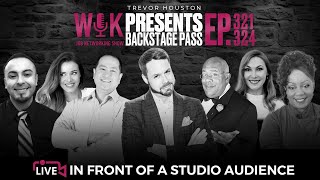
Madeline Mann and Omar Rodriguez share what HR actually looks for in resumes and interviews, plus networking tactics that work. The show covers ATS myths, how to answer tough interview questions, and low-volume job search strategies with real success stories from the audience.
Chapters
Moves to make instead I ain't scared, I'm prepared Big idea inside my head I'm going to make them manifest and I'm dressed for success I left right, left, right Order my steps network I ain't got to do it by myself who you know show me who you knew better let them know we about to blow it's time to go, go.
Want to show you what I'm worth Daily I'm stay on my ground yeah have a little faith and go to work.
Yeah yeah yeah yeah yeah yeah yeah yeah yeah yeah Go to work.
Yeah yeah yeah yeah yeah yeah yeah yeah yeah yeah I'm around like every day cuz I want everything I can do anything Check my resume there people against you they see what you've been through but look in the mirror Tap into your spirit is power within you like LinkedIn I'm locked in get the job done When I clock in I wait out my options Put the work in that's action no lacking just stacking big dreams I'm attracting no accidents that's fake Just go in and have a little faith Faith without works is dead I don't want to die so soon I got moves to make them scared I ain't scared, I'm prepared Big ideas inside my head I'm going to make them manifest and I'm dressed for success I left, right, left right Order my steps network brain Got to do it by myself who you know show me who you know better let them know we about to blow it's time to go, go go Go to work Go to work, get to work yeah Go to work yeah Go to work go to work Go to work Go to work get to work, yeah Go to work yeah, yeah, yeah Y.
I ain't trying to trade my time, yeah Simply want to show you what I'm worth yeah Daily I'mma stay on my ground have a little faith and go to work.
Yeah yeah, yeah yeah yeah yeah yeah yeah yeah yeah Go to work, go to work.
Okay, okay, okay. Now. Donuts, donuts, donuts. Donuts.
Donuts.
Donuts.
Donuts, donuts, donuts, donuts. Donuts. Donuts, donuts, donuts, donuts.
Hey there. I'm Trevor Houston, the creator of the who you know Summit. And I'd like to welcome you to the who you know job Networking show.
On our program, we'd like to show you a job search like you've never seen.
Everything from getting noticed by employers, how to properly format your resume, and how to network effectively using LinkedIn to drive recruiters to your profile.
We even take suggestions from our amazing community.
So if you want to learn all things job search, go ahead and subscribe now.
Focus. It's all about the job search. So if you want to learn how to land that next success, you heard them. All you got to do is subscribe and ring that bell so you don't miss out on a thing.
Welcome to the who you know job networking show, where what yout know is important, but who you know. But who you know can make all the difference in your career, your business relationships, and definitely in your life. My name's Trevor Houston, and I'm super excited to bring you another special edition of who you know presents, Backstage pass, and a very warm welcome for our live studio audience.
All right, where my job seekers at? Raise your hand. Give me a who you know.
Who you know.
All right.
All right.
Now, where are the alumni?
Any alumni?
There probably is a lot of them.
We got a few.
We got a few. All right, how about coaches, recruiters, hiring managers? Raise your hand, look at who you know.
Let's go. All right, well, on behalf of the show, we just want to say we appreciate each and every one of you coming out. You could have been anywhere today, and you chose to come out here and hang out with us. So we really appreciate it. And with gas prices, oh, my God.
Listen.
So listen, we just appreciate you spending some time with us today. But we always, always, always like to kick this thing off with a prayer for the audience. So foster, will you do us right?
Okay, let's go to the father. You guys, we're looking for something, right? Father God, we thank you for another day. And you know what? We are looking. You know it. We're looking for that right opportunity, that right career job. Please help us get us there and help us understand along the way. And we pray all these things in Jesus name. Amen.
Amen.
Amen.
All right, now we gotta celebrate some landings. Mark, who do we got who's recently landed?
We got some landings. One in this room, actually. But I want to give a shout out to Mikayla Gilman.
Get your money.
Get your money. Guns ready.
Tom Bliss. Congratulations.
Tom Martin.
Mario Martinez Jr. Congrats, Mario. Darren Hodes. And Keith Palmer. And we have our special guest, Omar.
Omar.
Omar.
Congratulations, everyone. Remember, when you have landed, don't ghost the network. Right? Stay connected. You never know when you're gonna need to tap into that network again. So pay it forward as well. If your company is hiring where you landed, let other people know, right? Other people that are searching for A job. Let them know what positions you're hiring for, the company's hiring for.
Absolutely. You gotta pay it forward, y'. All. Pay it forward. Well, let me tell you, I know somebody. She's up here with us today. She has helped thousands and thousands and thousands of job seekers. Get back to this right here. Okay? That's what this is all about. It's about getting back to your cash flow. So let me give you a warm introduction for a expert career coach and the CEO of Self Made Millennial. Warm. Who, you know, welcome for Madeline Mann.
So good to be here.
I'm so excited to hear you. All the way from California.
Yes.
Los Angeles.
Well, tell us about your background because I know you made a trip from being in the HR industry in tech.
Yes.
Is that right? To now being like full time career coach, YouTube star. You've got like hundreds of thousands of followers on YouTube and millions of views. You're just crushing it. Helping a lot of people, serving. But how did you make that journey? Like, what caused you to do that?
So I was reading HR at a tech company and I was seeing all behind the scenes of who was landing the job, who was getting promoted. And I saw there's very distinct patterns of things that certain people were doing to be successful in their career versus others who completely deserved it but kept missing those opportunities. So I started replying to applications with feedback. I thought I was going to be a hero. Right? Doesn't everyone want feedback on their application? It was a disaster. Turns out people do not like unsolicited feedback to myself. And I started a YouTube channel for anyone who actually wanted the feedback. And. And it was just a passion project for a couple of years until it just started exploding. I started getting clients. It was just their success stories were unbelievable.
And so I'm gonna switch out your mic here.
Thank you so much. And so about a year ago, I went completely full time into the business. And since then I've been featured on abc, New York Times, Bloomberg Business Insider, and it's just been fantastic. And who you know and who you know.
All right. Yeah, that's a mic drop right there.
All right.
So it started. You were just serving. You were like literally giving back and you were solving a problem. You were like, hey, let me give some feedback.
Yes.
Right. And job seekers. Are y' all getting feedback? Are y' all getting feedback? No.
Right.
Crickets.
So it's funny because they should have been appreciative of that feedback. Right, but you said they weren't appreciative.
So some People were appreciative, but it ended up being so many emails. It was like, okay, let's hop on a call. I've revised my resume here. Let's, let's, let's. Game plan. I'm like, oh, my gosh, my inbox just exploded. So there were good people who were ready for it. But then I realized, okay, there's a reason why this doesn't happen. But, yeah. And truly, my passion for my career in HR was what made me really want to help other people, because I found my dream job. I loved every day going to work. I felt it was meaningful. It was playing to my strengths in line with my values. And a lot of people don't say that about their 9 to 5. And I was like, no, you can do this too.
I love that. All right, so working in hr, I'm sure you, you got to see the behind the scenes. What is some of the secrets behind the scenes of hr?
Yes. So one of the probably most devastating things that I realized was the most talented person does not land the job. It's the person who articulates their value the best. And so if you are good at your job, that does not mean you're good at job searching.
And that's why we have things like who you know and all these things, because it's a completely different skill set. And so, so many of us are sitting in the bottle and we can't read the label. We're so close to our own experience that when it comes to doing these interviews or writing our resume, it all kind of comes up very cloudy. And so that's my mission, is to help people find the glory in their story and land these career defining jobs.
I love that. I love that. Round of applause, guys.
Yeah.
Can you say, hold on, I should have given you another mic drop?
Sitting. Sitting in the bottle and can't read the label.
Can't read the label.
Yeah.
That's a mic drop. That's a mic drop. All right, so your YouTube channel is known for interview tips, right? And guys, y' all need to go check out her YouTube channel. It's phenomenal. You've got millions of followers per year or millions of visitors per year that look at your, your content. Thousands of success stories in the comments, right? People are telling you about how they've got back to their cash flow. What are some of the best tips for interviewing?
Okay, so I was internal in companies training these interviewers how to interview. And here's another devastating fact is whether These people had 10 weeks of interview experience. Or 10 years. A lot of people are not very good at interviewing candidates. So the odds that your interviewer hasn't well prepared for your interview, hasn't thought through a bad okay and great answer for the questions they're asking and all these different things, they haven't fully clarified the criteria with the hiring manager. Those odds are very high. So what's so important is that we need to go into the interview. And this is the most important thing I teach my clients when it comes to interviews, is you need to learn how to control the interview. Make sure whatever narrative you want to get across gets across. Because we cannot wait for them to ask the right questions. You need to kind of. And it's funny because people, when I tell them this, they're like, madeline, I don't know about this. Like, they're going to. They're going to think that I'm trying to control the interview. But they don't even know you're doing this. You just start to curve the conversation in the right way. And they walk out of that interview saying, that was the best interview I've had all day. We need to hire this person. And it works for career changers. It works for all across the board. But you need to go in with that plan.
So what a great segue because Trevor cued you up perfectly, which is my question. Let's talk about interview question. Right? You said a lot of times the interviewers aren't prepared. So how would you answer maybe like one or two of these questions, like, why would we hire you? Where do you see yourself in five years? Maybe what's your greatest weakness?
Let's start with the first one.
Yeah, why would we hire you?
Okay. So I imagine when you get this question, why should we hire you? You're just thinking, you invited me to this interview.
Just you tell me, right?
And so it's a very frustrating question.
That's a good one. Like, you brought me here.
Like, what?
I had to throw one in on that one.
So I think a lot of people get a bit defensive when they get this question. But really, this is one of those questions where you. It is a mic drop moment for you. Like, they are basically throwing you the softest ball for you to hit out of the park. That's the way I want you to think about it. So when they ask you, why should we hire you? Essentially they're saying, do my work for me. Analyze your candidacy for me so I don't have to think. That's all they're saying. Give me a good reason. To tell the hiring manager, we're done looking. I don't have to do any more interviews. This is the person. So what I want you to do is I want you to go over what you know about the role and the job description. So you say, you know, I noticed this role really focuses on X, Y and Z. And based on that and based on my experience, I've done X, Y and Z. You know, in relation to that, is that the way you see me as role? Or did I miss any key factors about this position?
And they're like, oop, Yep. And then if you did miss something, they tell you, and then you can address it right there on the spot. So you're really addressing. You're showing that you really listened and understood the role, and you're making it more of a conversation.
Yes. Yeah. And it may even bring them to be like, okay, no more questions. Right, right. You've answered it.
I was gonna say, what about the five year question?
The five year question. Okay, so does anyone actually know where you're going to be in five years?
I don't think we do. I don't think any of us thought we were gonna be here five years ago. So. But this is actually, I would say one of the. When I was working in hr, this was probably one of the top three questions that would immediately get people disqualified based on their answer. So it's crucial that you answer this one correctly. And it's also asked like, what are your future plans? What do you want for your career? Those. Are those the same question? So what you want to do is they are just wanting to make sure that this isn't a career experiment, essentially that you're not taking this job because it's a job, because you haven't really figured out what you want to do yet, because you're just thinking, maybe I want to work in product management and this is my chance to try it. They are terrified of that because they do not want to train you and struggle to retain you because you haven't done the work on your own to figure out if this is the right next step. So your answer needs to be clear about what you want to do next. Perfectly in line with the role, but not mentioning role titles. Now, this is very difficult. We typically say, I want your job. I want the next job title.
That's what I say. Yeah, I want your job.
Yes, yes, I want to be CEO. Or the worst is saying something completely separate of like, I want to start my own coffee shop. And they're like, whoa, that's like total. But people say it all the time because they think it makes them sound ambitious. But what you want to say is if you were to get your boss's job, what would that take? So it might say I want to become the go to person in my function where people are going to me like and I'm an expert at X, whatever is the field. And then you might talk about landing on bigger projects. What would bigger projects mean? I want to work on bigger productions or whatnot. I want to mentor others. Maybe say that instead of manage others if it's not a managerial role. So that you're not like asking for a title but you're saying this is how I'm looking to expand. Maybe certain skill sets you want to build. And what that's all saying that's all pure value to the business because if you do all those things you will get that next job. But you're understanding what they're getting and what you're working towards versus a title.
I love that. I have a question though. I want to throw a little curveball. What if it's is a gap job that you are like this isn't my forever home. I really don't want to, you know, move up in this company. I just need to get some cash flow and that's about it.
You can keep it kind of open ended. Right? So, so you, you can say something about here's so, so for my next move, here's why I'm so interested in this role. And then what comes after that? I mean five years is a long time. So we'll see what comes after that. But I'm really interested in the next move, you know, to have my job be this next job because I want to learn XYZ skills. And like that's also a very fair answer. But you have to make sure that whatever you say is directly in line with the job you're getting. Even if it's, even if it's shorter term, don't say short term. But just as the next job. I want this because that is an auto rejection if you do say something else.
Yeah, love that. What about the last question was about your weakness? Right? Because I know that's kind of a, that's an interesting one. That's like tell me about your weakness. Okay, how do you answer that?
You just say you're a perfectionist. No, I'm just kidding.
Don't say that. Okay. That's what everyone says. No instead. And so just to fully underline that that is the most common answer and so let's move away from that. So what you want to do is you. They're looking for several things. They're looking for that you are a self aware candidate which is one of the most desirable traits as for someone to manage. And the second thing they're looking for is if I was to hire you. I know every single person has strengths and weaknesses. Let me direct you towards your strengths and maybe manage you away from your weaknesses or help you train up on that. So there is an essence of empathy. And then the third thing is, is your weakness going to be an Achilles heel and we're not going to give you their job? So knowing that there's also that booby trap there that we need to avoid, you cannot say anything in this answer that is a core function of the role. You will get disqualified. But I still think you should tell an honest answer. So I'll give you actually an example that I used once in a human resources, I think like a director of human resources interview. So they asked me, what is your greatest weakness? And I said the thing that I have been working on the most is actually my approach to sales. And I know that sounds a little bit strange for a human resources person, but what I found is I have a lot of position. I have. I don't have the positional power in human resources to make people do things, but I have to have influential power. And so I found that so much of my role is internally selling programs. And I don't think, I think I'm more of like a workhorse. Like I build things and I hope that people come, but I have been working on building that. That ability to get buy in. And so the things I've been doing have been X, Y and Z. And so then I walked through how I have been in the past and then I showed how I was working on it. Like I named certain books that I was reading and classes I was taking. And so you want to show that you have a weakness but that you're also working on it and give concrete examples of how you're working on it. You don't have to have arrived at I am now perfect at something. But you want to show that you're that person who there's areas for growth. And I'm working on it.
Yeah, that's. I'm gonna drop the mic on that.
So what, consistently, what do you see? Job seekers. What, what kind of mistakes you see job seekers making? Consistently?
I think probably the number one thing I'm seeing right now is they're thinking the wider I go with my search, the more opportunities I will get.
Oh, spray and.
Yeah. And that could not be farther from the truth. I teach my clients a low volume job search, which, like I'll take for example, my client Nestor. He, before I worked with him, he applied to 500 jobs. Now if the job search.
Hold on, I gotta ask anybody in the audience. Done that. Just be honest.
Raise your hand.
It's okay. I know, I know people do that. It's okay. I get it. I get those messages all the time where they beat down. They're like, they get beat down and they say, I applied for 5,000 and I. Nothing.
Rejection.
Right, Right.
Yes. And if, if the job search was a numbers game, anyone who knows anything about statistics, he would have gotten an offer.
Yeah.
That's a fact. But he didn't. And so he ended up doing a low volume job search for every three companies he pursued. He got one to two interviews. Okay, this is the same human, just a couple months apart. And he was a career transitioner, but he also had a master's degree. He had great, great experience, but he wanted to transition to corporate. So he went from research to training and development in a corporate world. But what is so important here is to make sure that you're clear on your next step before you dive in. Because I always tell my clients, like, I can help anyone land a job, but they have to know what that job is. Right. And of course there's, there's a process to go about that and there's, there's so much we can talk about there. But, but yes, I think that that going broad is, is never going to serve you.
And like Trevor said, I mean, each unanswered. If you don't, even if you don't get the no, it's still rejection. So that rejection just stacks.
Yeah. Over time. Yeah, it just beats you down. After 500 applications.
We don't need to apply for things that we know we're not going to get a call on. Guys, we're wasting our time. We want to focus on those things. I'm a recruiter. We want to focus on those things that we know we have the experience and we can prove it if they ask us about those main three things that Madeline was talking about. The beginning.
So I have a question and I'd like your feedback on it because it hit me on the last show and I thought it was a pretty good idea. So I think a way that we can solve this problem of everybody spraying and praying and also stop the problem of Employers ghosting.
Right.
Yeah.
Because the problem is, is when the Internet came along, everybody just applies online. It's too easy now. It's too easy. You know, even with LinkedIn, it's just one button, right? You can apply for jobs. So you got people applying for jobs they know they shouldn't apply for. Well, what if there was a system and I don't know what the right system is, but what if there was a system where it costs money to apply?
Right?
And maybe it's Credits, like maybe LinkedIn had a subscription.
Right.
Where you can only apply for so many jobs.
Right.
And it's a credit based system. And on the same token, if the candidate gets to the interview stage and they don't hire that person, they've got to pay them.
Right?
So on one end, it keeps people from applying for jobs that they shouldn't apply for because they have to think twice about it. Does it cost money? And on the other end, the companies that don't hire after 12 rounds of interviews, like we've seen that 12 rounds of interview, and then they don't hire you. They should pay you for your time.
Yeah. Right.
What are your thoughts on that?
It's really interesting. I do think that the online applications are one of the worst things to ever happen to the job market.
Amen. Amen to that.
Yeah. Just to put it into perspective, and I know y' all have seen this is I, when I was working in hr, I tracked how many job applications were qualified, moderately qualified, or also completely unqualified.
Right.
Do you want to guess how many people were completely unqualified?
Oh, yeah.
Do you guys want to guess? Anyone want to guess?
80%. Do y' all follow me?
Yes.
It was 80%. That's spot on. That is the issue. So your, your resume is buried under 80% of these, of these folks where, you know, to be honest, most, most people who, who work in recruiting hr, if there are a thousand applications and they've already found all the people they need to interview, they're not going to, you know, read the last 300 where maybe yours was, but it's all buried so much. So, yes, I think that some sort of, I don't know if it's a barrier to entry or some sort of process that would help the right people be seen, but unfortunately that is now been replaced with things like referrals and basically getting into, I call it job search parkour, where you try to get into the building. These are like, like, because it's so messed up, I teach people to basically you know, if you know parkour, it's like a. It's an urban, like, sport where you get to a place in an unconventional way. You hop on a, you know, a bridge, and then you jump onto a ledge and you pull up onto a roof. And so you can do that in order to get into a company instead of walk. Trying to walk through the front door where there's a line, you know, around the block. So, yes, we. You either need to find a different way or the system of applications needs to change.
I love that. Okay, so you teach people on your channel multiple things. I mean, you've got resume tips, interview tips, you got LinkedIn. I mean, the whole gamut. Networking. What's your favorite subject to talk about? And what is actually the subject that you teach that gets the most engagement? Like, what are people really leaning on for you?
So people love to talk about the Applicant Tracking System, the ats, and that is not your enemy. So that's been really interesting is people think that there's, like, robots scanning your resumes. Most of the recruiters I know, they're reading them. And so there's more there that we like to kind of blame these robots, but there's a lot more there. What's funny is every time I put out content about networking, it kind of, you know, tanks when who, you know is everything. So it's just so important. But people, they hear the word networking and they. They have an allergic reaction.
Why do you think that is?
Why is that?
What's your definition of networking?
Relationship building?
Well, I want to take.
But I'm going to take it a step further than that. It's figuring out how you can serve the other person. Because oftentimes people go into a networking scenario and they're like, let me tell you what I need.
Yes.
Let me tell you what I do and what I need. And no, no, that's the opposite the way that you should do it. You want to get to know the other person so you can figure out how you can serve them. Can I connect a dot? Can I make an introduction? What can I do to help this person get whatever they want?
Right?
Because I think Zig Ziglar said it, if you help people get what they want, right, you can have anything you want.
Right?
And so that, to me, is networking. What do you think?
The one word that so many of my clients use when they talk about networking is inauthentic. And that they feel inauthentic when they network, and that's why they stop, because they feel spammy. They feel like they're takers when really people want to help you. You just need to give them a path to help you. And you're spot on. You also want to be generous in your conversation. People love to tell their stories. So, you know, I think that giving people an opportunity to share their stories is really important. But also asking key questions in the conversation, questions I love to ask in networking conversations, is like, Trevor, what are you excited about lately? Like, what do you, what is it? And so it might be a vacation, it might be something you're working on, but whatever it is, I, in my little brain, I'm gonna think about, oh, he's taking the family to Disney World. Okay, well, what, what, what tips can I give him? How can I help him with that? Or do I have a friend who works there who gave them like a special tour or something like that? Or, or if it's something business wise, I try to think of something. Just something little. It might even just be, oh, you have an event, you know, next month, I'll make sure to share it on my LinkedIn. And let's say I have 200 followers. It doesn't matter. I'm sure y' all would still appreciate it.
It's the fact that you try.
Yes.
It doesn't matter that you actually can do whatever that you're trying to help them with. It's just that you're trying, like, are you trying to help people? A lot of times I find people all the time, they're like, well, I don't know how to help them. Did you try? Did you ask.
Yes.
Did you ask questions, figure out what their challenges are, what their problems are? Did you try? If you didn't try, well, then you didn't try.
Well, and there's two other things, networking. One is we network all the time. Right. You guys network all the time with your friends and your family, etc. But it's not forced. Right. And so it's kind of like doing the thing that you love and then doing the thing that you love for work. Right? Right. Like, I love to play pool, but I don't think I would love being a professional pool player. Right. So I think that that's the difference is that a lot of people, they don't like to professionally network because it's forced.
Well, if you're a giver, if you're a giver and you have that spirit.
Right, Right.
It shouldn't, it shouldn't feel awkward. It shouldn't feel like. But maybe you're not. Maybe either you're just a taker. Maybe you're that kind of person.
Well, that was the other thing.
That was the other thing. The other comment is there's givers and there's takers. I've met those people where seriously, you're talking to them and you're trying to give and like pour out on them and they're just take, take, take, take, take. And it's like, man, you know, you build those relationships.
Yeah, that's true.
You build those relationships, guys, by showing interest. Like Madeline saying, showing interest in that person. Because it's not about us really, is it? It's about that person. And then we reap what we sow. Right?
So real quick, while we have a few more minutes in here, you have a resume revamp masterclass and this is a free master class, is that right?
Yes.
Dang you. Even the free $99, you've given all the secrets. Talk to us about this masterclass and where can the audience find it?
So you can go to standoutresume.com and you can get this free. It's like an hour long masterclass, give you kind of a preview of the formula I created to make sure that you are making your resume a sales page instead of a Wikipedia page. So I walk through the glory formula and so you can see and this is, this is the type of things like when I talked about Nesta earlier, you know, he did the glory formula. He was started really translating his skills to what companies were looking for. And that's, that's really key. StandoutResume.com.
What was it again?
StandoutResume.com.
Let'S go.
But put the www.free99 to y'.
All.
Just so you know. Alright, so as you know, it's who you know, it's all about relationships, connecting, you know, all of that good stuff. So who do you know that you think would make a good fit for this show to sit in that chair?
Oh, my gosh. Well, my great friend Austin Belsack.
Austin, yeah, he's the man. Austin's been on this show, but I want him in person.
Yes.
Will you give him a call? I will give him a call and tell him what's up. All right, you tell him what's up. See there, that's how it's done. All right, guys, do me a big favor right now. Get your phones out. Everybody get your phones out. I want you to take a picture right now. I want you to take a picture and I want you to post this all over social media. Tell Madeline I want you to tag her on the on the post and I want you to tell her, you know, what was your biggest takeaway? What was the mic drop moment that, you know, spoke to you the most and just blow her up. I want her notifications going bonkers. You know what I'm saying?
Already are.
What's your preferred wave that people reach out and connect with you?
Yeah. Follow me on LinkedIn. Check out the YouTube channel Self Made Millennial. And of course there's also my website, madelineman.com guys, round of applause.
Madeline. Man.
We gotta go to a real quick commercial break, but don't go anywhere because when we come back, we got Omar Rodriguez. We'll be right back.
If any.
A realtor or you are looking to get your real estate license, it's a very low cost entry. $300 to take your real estate course online. Inexpensive compared to like a College exp is $150 to join and it's like $84 a month. So relatively speaking, these are very inexpensive costs. If you are interested in that and you want to work with me as a realtor, I'd love to have you join my team. And you want to hear about the model, then go to join10xempire.com and I do this opportunity call every Tuesday. Would love to answer your questions and tell you more about what I'm doing. If anyone out there is interested in working with me.
You know you have something unique to offer your next employer. Whether it's your experience or your work.
Ethic or your passion or your personality. But how do you stand out from.
The crowd when you're stuck sending plain.
Text emails that lack personality, lack humanity, and worst of all, look like every other email in the inbox.
Job seekers, just like you, are discovering.
How easy it is to put their humanity back into their communication and back into their job search.
With BombBomb video, visit bombbomb.com to start.
A free trial today and rehumanize your job search.
Welcome back to the who you know job networking show, where what you know is important, but who you know, you know who you know can make all the difference in your career, your business relationships, and your life. Guys, I'm super excited to introduce you to the man, the legend, the quality specialist seeking a new opportunity. A warm welcome for Omar Rodriguez.
I like the intro.
You like that?
Yeah.
That's my man right there.
I like how you rolled your R's too.
Trevor rolled his R's, dude.
What's going on?
Hey. So at the last backstage event, Things got real. And today is going to. Gonna get. It's gonna get more real.
Real real?
Yeah, real real. It's gonna get real. So my. My goal here today is that we're gonna get vulnerable. We're just gonna put ourselves out there. We're gonna rip the bandaid, right? Let. Let the wound heal.
Okay.
We're gonna let it air out and heal. Is that cool?
Yeah, that's cool. And I just want to. Can I start off as to why I wanted to be here and. Yeah, so the reason why I'm here is really to help other job seekers out. Basically. What happened. I was in a situation where I moved back to Texas, you know, starting over from scratch. And with this last position that I was supposed to get, I was supposed to be a leasing consultant. I won't name the company, but to make a long story short, it took about three weeks to. Three and a half weeks to. From start to finish, to figure out what was going on with the position.
Needless to say, I got the position. It came with an apartment. It came with a 40% discount as well. So for myself, this was huge. Nowhere to live, no job, and I'm a single dad of three. So this position was like.
That was a lifeline.
Oh, my God. It was level me up times 1000. Like, the stress was insane. I was. I'm, you know, about to lose custody of my little one. All the real stuff that a parent could go through was about to get fixed like that. So after getting the position, even looking at my apartment, I was. I was supposed to get apartment 1033. That's how real it was. I was already assigned an apartment.
There ended up being a hiccup on my tax papers.
The company needed to verify what I made for 20, 21. And I was like, okay, let me get that and figure it out. But they were like, we can't give you the position until we verify that. So I'm scramble mode because I'm about to lose everything that is going to help me tremendously, tremendously. And so my stepdad, who's in Oregon, we're trying to figure it out. We do some, you know, H R block stuff. We do taxes. Before that. I was thinking, you know, doing some janky paperwork, like, do whatever I got to do, right? To, you know, make something up on Microsoft Word, you know, but, you know, hold up.
Yeah, you know, I want you to put yourself in this shit. Yeah, same thing.
Yeah. That's how real it was, because do.
What you got to do.
It was like everything was A go until it was a no go. So I'm freaking out. Get taxes done. Official taxes done. So, you know, don't send anyone looking for me. Official taxes. Send it. Send it back. Hey, good to go. I sent it back. Ready? Nothing. Okay, I'll check tomorrow. Tomorrow comes. Nothing. Hey, just following up. Is everything good? Nothing. I'll check tomorrow. Check again. Hey, sorry, I've been out of the office for a couple days. I've been sick. Nothing to finally. One more time. I try one more time. Hey, I'll check tomorrow when I get there. Nothing. So I ended up getting completely ghosted. Completely ghosted.
That sucks. Yeah, that sucks.
So you were on.
Very, very. Right. Short notice as far as that job goes. You had. Had all these plans. Now you find yourself. You're back in your car.
I'm in my car.
Right. You're back in your car and there were some help. Right. I mean, so what people? The community, the network, you had to.
Go fund me, so I'm already getting choked up. Hey. Anyway, so.
I'm big on networking and I'm big on relationships. I genuinely love networking and meeting new people and. And. And creating those relationships. And like, you know, what was mentioned a little bit ago is I like to be genuine, and I want to do it with authenticity. But at the same time, my. My story can be overwhelming for some people because they don't. They don't. They want to help, but they just don't know what to do. They don't. They feel like, dang, dude. Like, it's so.
Well, I want to say something real quick. I want to commend you because at the last event, you know, I could tell your frustration. I can tell you things were emotional. It was at a crucial time, and you were vulnerable and you actually spoke out.
Right? Right.
And that's the reason why you're here today.
Right.
And you know what I'm saying? And you were able to put your story out there, and a lot of people that hold it in.
Right? Right.
And they won't let people see the wound. Right. But when you. When you let people see the wound, people want to help. They just. It's in us to go. To go serve and try to heal someone's problems. Right. It's just. We just want to. But if you hold it in.
Right.
So I just want to commend you. I want to give Omar a round of applause.
Yeah.
Thanks for being vulnerable, guys. Last month was mental health awareness month.
Right? Right. I was aware. I was very aware of my.
Wow.
Silence is the real killer.
Yeah.
Silence is the real killer. And it's so like, people.
It's hard.
Like, talk to us about that. That last event, you were here, like, what was going through your mind? I could tell you were tearing up things.
Like. So I think the. The other side of job searching, what people don't know is that there's a lot of things that are happening in people's lives personally that prevent them from even job searching. And the problem is, is when you talk about mental health, you ought to talk about everything, because you don't know what's going on at home with the wife or the husband or the daughter.
Right.
That.
That'll really, really screw somebody up and not even be able to, like, you know, say hi to the neighbor or let alone go to networking events and. And job search. So there's a lot behind the scenes that can really, really. What's the word I'm looking for? That just. I don't know what the word I'm looking for. Just freezes you up. Yeah. But gives you.
It gives you, like, dehypad. Yeah. They're like, paralyzed.
Paralyzed. Mental paralysis.
Yeah, you freeze up.
You freeze up.
So fear does that, too.
Yeah, Fear, nervousness, shame, embarrassment. You know, like, even the last event that I came, like, it was a forced. Omar, you need to just get there. Because my subconsciously. My mind.
At a subconscious level.
Yeah, yeah.
When you're in isolation for long periods of time, that's real easy. But to put yourself at a networking event, man, like, I was. There was so many times on the way here that I just wanted to exit and go back home.
Oh.
That'S the enemy getting in your ear, telling you all the reasons why not.
Constant battle.
Yep. And again. But you showed up.
Showed up.
Showing up's half the battle, you guys.
That is.
I mean, it's more than half, actually. I would say it's like. Like 80% is like, just show up.
Get out there and allow the magic to happen.
The whole catalyst for this. Right. For the who, you know, and really what drove us and what made us so passionate about it is we lost a good friend.
Yeah.
Early on.
The show.
But you bring up a great point, which is. And this is for everybody. Right. This is for everybody. When you were out there and, you know, what's the question? Oh, how are you doing? Right. And what's the typical answer?
I'm fine.
Fine.
Right.
Don't put that mask on. Right. You need to have that vulnerability exposed in order for people to be able to help you. Because if you're fine. What is anybody going to do?
Yeah.
Right.
And the enemy wants to tell you that it's weakness.
Right.
To be vulnerable. It's not weakness. That is a super strength.
Yes.
Look at where you're at today. Another round of applause. It's a super strength.
Yeah.
Like, vulnerability is a strength, in my opinion. And you said something about shame, feeling shame.
Oh, your show. Yeah, man.
So I did a show a couple weeks ago where I told a little bit about my backstory, and there's a lot of shame in my backstory. I had a rough upbringing, and I got in a lot of trouble, and I'd made a lot of mistakes and did a lot of stuff. Stupid stuff, and. But, you know, the way that you get rid of your shame is you got to shine light on it.
Yeah, Right.
Shine light on it. So that the enemy doesn't own the story. You do.
Right.
You have control over it.
Right, Right.
I'm coming with one.
Yeah. I wanted to shine the light. Shine the light on it, so to speak. For many reasons, especially my kids, I want to make them proud. That's what matters most. You know, I want them to look up at me and be like, you know, that dude went through some. Ish. He went through some major. But he came out. Yeah. Like, look what he overcame by himself. Yeah, I'm in here. I'm here in Texas by myself. There is no resources. There's no family. There's whatever.
Well, that's where you're wrong.
You're wrong. Yeah. I stand corrected. Resources, like who? You know. You know, these guys have been.
And you are not alone.
Yeah.
You're never alone.
You're not alone. And in the. In the sense that, you know, if you're in that room or wherever you're at, if. If you allow yourself to be alone, you will be.
Yeah.
You allow yourself to step out and like Trevor says, you know, shine that flashlight on. On whatever hour you got. If it's everything, people will come out. And I'm doing this really for two reasons. To let others know, like recruiters or hiring managers that, you know, you may have a ton of candidates out there or one that you really like, but you don't. There may be something that's. That's holding him back. And, you know, sometimes you got to dig a little bit deeper, you know, to figure out what's going on. But, yeah, can we all do.
Do me a favor on both sides, both job seekers and anybody on the hiring side, the recruiters, the hiring managers. Like, can we just Stop the ghosting for a minute. Stop ghosting each other. Right. I understand there's all these people and all these applications, but, like, the ghosting, it's a rejection.
Oh, man.
Right. That just beats you down.
I have no idea why I Now I have no idea why I didn't get the job. I mean, it was from recruiter. It was from interviewing from the recruiter to the vice president of the company in a matter of three days, they all were like, dude, dude, pass them on. Dude, pass them on. They were super impressed. For me, that confidence, man, I was, like, on cloud nine.
Yeah.
I actually felt worthy for, you know, that I hadn't felt worthy in a long time. So that was huge. And I was like, man, I was like, you know, had a little pep in my step, you know, felt good to then just complete ghosting.
Oh, well, I know why you didn't get that job. I know why you didn't get that job.
Tell me.
There's something better for you.
That's the truth.
Yeah. Well, that's the truth. Yeah. And I believe that.
And what did I tell you yesterday? Wait on the Lord. And he shall renew thy strength.
Right? Yeah.
And you should mount up with.
On wings of eagles.
Wings of. And sore with eagles.
Right. Yeah.
There's a. There's a reason for this season. There's a reason for that. Pause.
Okay.
And there's something better for you.
Yeah, I believe that.
And don't forget to take up the full armor of God.
Yeah. Yeah.
That's what's gonna sustain.
I believe that. And I do have. I do believe in God, and I don't want to get too religious, but, you know, my faith has been all over the place. But I do think that anyone out there, if you're just going through a really hard time.
It starts with reaching out to Mark or Trevor or the job out of here. There you go. You know, just reach out to me. You know, it's. You guys made it feel. Y' all made it feel safe. Y' all made it feel okay to, like, be somebody that's down here and to, like, hey, can I talk for a minute? And that's what. I genuinely appreciate the. The openness for that to happen.
Well, you did that, Omar. You did that by showing your wound. I can't watch somebody hurting and struggling and going through a hard time and just turn away. You understand me? You did that. You showed your wound. If you never would have spoked up, you could have been like, somebody in this audience right now who may be going through A similar situation. And you're just sitting there quiet.
You had an opportunity to be quiet, and you chose to speak out. And so I saw it and I ran to it.
Yeah.
A message to hiring managers. A lot of you guys that are watching, and there's a couple of you in the audience. Guys, listen, if we take the time to interview somebody, and we take that time, whether it's online, whatever it is, you're taking that person's time. You gonna interview them for a job. Come on, now. Come on, son. Shouldn't you give that. Forget the ghost. You should let that person know something, right?
Yeah.
Even if it's not a fit, right? Yeah.
And, Omar, what are you looking for? I'm a recruiter. You know how I am.
Well, yeah.
What are you searching for?
My ultimate goal is being, like, a customer success manager or client relations. You know, I love people. I love relationships. You know, I spent 12 years as a personal trainer, so my ability to, like, net connect with anyone, that's, like, easy, you know, it doesn't matter.
Yeah.
Your background, what you do, you know, I'm really good at taking vulnerability and bringing it over here and replacing it with, you know, belief.
Okay.
And leveling people up. So I'm good at that. I love team building. I love culture. I love all that stuff. You know, most of my professional background has been sales and business development, account management. So, you know, things where you have to interact with the customers and clients, and that's my jam.
That makes sense, bro.
Damage control. Especially damage control. If somebody screwed something up, send me and I'll fix it.
I love that. I'm gonna tell you something. As you were talking, I was watching the audience, and I see the wheels turning in the audience right now. And that's another thing that I think is super important, is that you need to. As a job seeker, you need to be constantly telling people what you need. What are you looking for? What are you searching for? Like, the way you just did that. I love that. And so often is it just job seekers just apply, apply, apply. They're not talking to a human. They're not telling people what they need. They're just, apply, apply, apply, apply, apply. Like Madeline was talking about 500 applications. That's not actually telling people what you need. This is telling people what you need.
And a lot of the times, your personal challenges and all the adversity that's happening personally could actually be a benefit to your job search. You can develop skills like adapting different challenges like that. It's not just the job skills. That you get on the job, your personal life also help you get that.
Well, and there's also something that you, you, your specific situation can grow from and that's empathy. Right. Because now you, with your story and what you've gone through, you can share that with others and be empathetic to others that are coming.
Right.
Not only that, but think about hiring managers, recruiters, people that are interviewing you. Like how many of you have had a bad interview? Right. Bad interview or the interviewer was bad or not.
Oh, that definitely.
Or terse.
Exactly what you said before. Like the job seekers going through so much that you may not see below the surface. Right. The interviewer also could be going through that. So keep that in mind as well and show empathy for them.
Empathy? Yeah. Put yourself in the other person's shoes. I always do that when I'm teaching job seekers. It's like put yourself in the recruiter and the hiring manager shoes. What are they going through on a day to day? And just find commonality and find ways that you can connect. I think that's really, really important. Okay, what do you think, Omar? What is one of your qualities.
That is being overlooked in your job search? Like one of your highest, best qualities that's being overlooked. People aren't seeing it.
Oh.
You told us.
Yeah.
That my little gerbil's like, you know, he's going, one of my best qualities.
Well, patience.
Ah, patience. That is a good one because go.
I think for what, for what I'm wanting to do. You have to be patient with, with one another. We're all human. We're all different, but we're all human, you know, And I think right now there's a lot of situations where there is no patience, you know? You know, you and I talked about this yesterday. Everything's on us. Want it now, now, now, now. But at a human level, you know, we have to be patient with one another. And that's something that being, you know, single dad of three kids and then being a trainer, you know, imagine if I was a trainer that had no patience for my client. Oh, come on, hurry up, Frank. You should already be it, you know, 10 push ups by now. And it's like, that's not how it works. And I've learned that just being, you know, empathetic to one another and allows.
That patience, patience is another superpower. It's one that I struggle with all the time. And you know, it's life. You just want things and especially the way the world is. Like you said, everything's now on demand, Amazon, Netflix. Right. It's just. You want it now. But again I mentioned earlier, wait on the Lord, right? Wait. Patience. You have to have patience. So I love. That's a super strength. So communicate that more.
Yeah, I do. I do need to communicate that more. I'm still working on just kind of getting out of my shell, so to speak. It's really challenging to go from like no network, not talking to anyone really to, to this. But I'm trying. So if you see that's all you gotta do. Yeah. So if you, if you see a lot of the. Thank you.
The best you can do. What are. And speaking of trying, what. What is gonna help you accomplish that? Right? Like, like if you had three wishes, what would those be resource wise? What do you need right now?
Oh man. Well, to be straight up, I'm still in my car right now, so that sucks. Especially in the summertime and it's not even hot yet.
Yeah.
So yeah, this is real. I just spent five days in a row in the car, so that's real. Yeah, I got a hotel room last night.
Okay.
Courtesy to my dad. I was like, dude, I'm about to be on a podcast tomorrow, like for real. You know, I was looking like Chewbacca. You know, I was just feeling rough, you know, I needed. I was like, you know, I had a shave this morning, but you know that's. But the living situation is real rough right now. That's a major beat down on, on anything. Even getting something to eat, gas money, you know, just all the little things. All the little things that I guess maybe other people take for granted. Oh man, it would be a huge psychological boost for me because I wouldn't have to worry about where I'm going to eat, where I'm going to sleep, how money, how am I get to the who you know, network show or to work?
Because you're working. You're working.
Yeah.
Right now.
Yeah, I got a temp position where, you know, in Carrollton, you know, so that's something. But even still, just gotta wait on that check, huh? Gotta wait on that first check. And you know, you other cpv, you see other people eating and you're like.
Well, you know, you know this show is all about cash flow, right? That's what this is all about, you know, gotta help you get back to your cash flow. And so we got a page. You had a GoFundMe page put together, right?
Yeah, I did set one up and I did update it I believe a week and a half ago and Good.
Well we want to help you with that. So that's what we're gonna do here today for the audience. If you feel led, any amount is appreciated.
Any amount.
Any amount is appreciated. You can find the link, the QR code that you scanned when you walked in, or if you just go to my LinkedIn profile, the top link, you're gonna find it there. The link in my bio. But let's. Let's get you some cash flow, man.
Let's get you out of that.
Yeah, I really appreciate it.
Yeah.
And I believe it's on the who you know page as well in LinkedIn too.
Yeah, yeah, I would. Anything would be super appreciative. It really would, you know, and I guess I don't want to get too greedy on this, but I haven't been able to get my 8 year old a birthday gift, so a little something for him so I can get him a birthday gift, you know?
Well, I'm feeling a little bit crazy, so here's what I'm gonna do. I'm feeling, like, just a little crazy right now. I'm just feeling a little crazy, so here's what I'm gonna do.
Okay?
So whatever we get put into that account today, at the end of the day, I'm gonna match it.
Oh, wow.
So whenever we get put in.
Wow.
Right?
I'm just. We're gonna match it.
All right? Okay.
All right, so I'm asking y'. All.
Yeah. Make it hard for Trevor.
Y' all.
Take my money.
Take my money. All right, so thank you so much. I really appreciate you coming up here. And, guys, round of applause for Omar. And before you go, if you can do me a big favor, get your phones out again, start taking the pictures. Okay? I want you to post this thing all over social media. Take your pictures now. Post it all over social media and tag Omar and tell them, you know what, what was one of the mic drop moments that inspired you the most? All right, I want his notifications going off the hook, and I want that GoFundMe going off the hook.
Yeah.
Thank you guys so much. And, you know, it's not just about me. It's about. About my kids too. So just think about the kids and, you know, whatever helps me helps them out. So. And I'd really appreciate that.
Absolutely. Guys, we gotta go to a real quick commercial break. Don't go anywhere, because when we come back, we've got Zondra Evans in the house. Let's go.
Hey, guys, come work for the most innovative company in the world, 10x incubator. We're launching 10,000.
Listen to me.
10,000 tech companies in 10 years. If you're a coder, what?
We got programs, we got graphic designers.
We got copywriters, digital marketers, biz, dev, you name it. You guys want to be in tech?
Okay. We don't actually require that you get.
The jab here either.
So, you know, like, if you want it, good.
If you don't want it, no problem.
We are hiring.
We want you.
If you're good at your job, if.
You'Re disciplined, if you want to be paid well, if you want to be.
Taken care of, if you want to.
Be in a 10x environment, click the link below. Give us your resume and a short video, 30 second video. Just tell us who you are. Tell us what you do.
We want you.
We want you. We want you.
It's hard to turn on the TV or unlock your phone and not see the bad of the world on your screen. Well, there is good out there and you need to see it. Zondra TV Network is the breath of fresh air that you've been needing. Success stories, business ventures and walks of faith.
Visit the home of positive and inspirational programming, Zondra tv.
Faith without works is dead. I don't want to die so soon I got moves to make instead I ain't scared, I'm prepared Big ideas inside my head I'm going to make them manifest and I'm dressed for success I left, right, left, right Order my steps network I ain't got to do it by myself who you know show me who you know better Let them know we about to blow it's time to go go go.
Work Go to work go to work get to work, yeah Go to work yeah, yeah, yeah, yeah I ain't trying to drain my time Simply want to show you what I'm worth.
Have a little faith and go to.
Work.
Yeah, yeah, yeah, yeah, yeah Go to work.
Every day.
Check my resume there people against you they see what you've been through but look in the mirror Tap into your spirit it's power within you like LinkedIn I'm locked in in get the job done When I clock in I wait out my options Put the work in that's action no lacking Just stacking big dreams I'm attracting no accidents that's fake Just go in and have a little faith Faith when all works is dead I don't want to die so soon I got moves to make instead I ain't scared, I'm prepared I got this inside my head I'm Going to make a manifest, and I'm just.
Oh, job networking show where what you know is important, but who you know, who you know can make all the difference in your career, business relationships, and your life. I'm super excited to introduce you to the CEO of Zondra TV Network. If I can get a warm who you know, welcome for Zondra Evans.
Trev, man, thank you. Thank you for having me. I'm glad to be here. How y' all doing today?
Welcome. Sandra.
Good.
This is you. You've been with us before. And I remember, actually I did an interview on your show, Biz Talk.
Right.
And we talked about. We had a conversation on that show, and I want to kind of go back to that. If we can go back in time. Is that cool with you?
Let's go back in time.
Let's go back in time.
I had a problem with.
So we had. We had a conversation about how before you started the Zondra TV network and all of this flash you got going right now. Right? You got the golden handshake after 40 years in corporate America.
Yeah, I did.
Well, let's talk about that.
Let's talk about it. Let's talk about it. Because you know what? I. I'm a corporate vet. Been a corporate vet all my life. 40 years. I'm extremely loyal. Only two jobs.
Wow.
In 40 years, ain't nobody doing that no more.
God is good.
You know, I. One job was in technology. I worked for intel for 25 years, and then. And I left there because I was like, I need to go. I'm gonna go do my own thing.
Okay.
You know, I'm gonna retire early, but you get back in the job search. But I got hired by a healthcare company, and I should have known that they. When they said, we don't care where you live, because I told them I'm moving back to Texas, and they said, we don't care where you live. Well, that was true, because when they hired me on the spot, by the way, I was on the road for seven straight years, three weeks out of the month. So again, I'm loyal to that company. I worked there 15 years, and one day I came in and they gave me the golden handshake, which is a layoff. And I had never been laid off from a job. So I was like, oh.
Hell, no. It's okay. You can say it.
I was like, are you kidding me? Well, you know, other people got laid off, too. They were crying. I was passing out the tissues, but yet I was skipping the hallway, and I said, Whoa, whoa, whoa, hold on. No, I said there's something wrong with me. It's something wrong with me.
Well, let's talk about that. You mentioned on the show that you had an exit strategy.
That's it. Now that I look at my rear view mirror, because we always have to, you know, look in our rear view mirror sometime and see I had an exit strategy, so I knew what I was going to do. I just started implementing. I. I took it out, blew the dust off of it, and start implementing. But here's the thing about an exit strategy, guys. I got to tell you this. You build an exit strategy in good times. Not when you get laid off from a job, not when you quit a job. You build the exit strategy and start. Implement that while you still start implementing money.
Okay?
Yeah. I mean, when things are good, you. You want to just, you know, spend money, go on cruise, whatever you know you want to.
You're just on autopilot.
Coast.
Yep, coast.
Right.
But, you know, in good times, you have more options available to you, and so you're able to think broader. You're able to really do that blue sky moment for yourself and dream because you don't have no worries. I'm getting a paycheck and another week.
Yeah.
And I worried about nothing. So let me go ahead and dream. But I think the key thing is implementing some of that exit strategy, creating and setting the foundation before you.
So how long had you been preparing for that?
Five years.
Oh, okay.
Okay.
Five years. Five years. Not thinking that I was going to lose a job. But you never know what's going to happen. I think we listen because you know what?
Either.
Either they're going to pull the trigger or you are. So you have to decide who gonna pull the trigger.
They.
Sometimes they pull it on you, and sometimes you want to pull it on them. Either way, if you got a good, solid exit strategy, you're in good hands.
Love that. Well, what steps did you do to prepare? What were some of the things. Five years? Like, what were. You were laying that foundation? So that way, boom, you. You're ready to roll.
Yeah.
You know, I'm a certified coach, but I have to tell you the story about this. That was not my corporate. I was the vice president of sales and marketing, so that was not my job. But I convinced my company to pay $15,000 for me to get certified as a coach.
Why not?
Well, here's the thing.
Because you know what? I started coaching their people on the side, and. And they were saying, oh, my God. So I'm Just a great coach. And I was like, look at all the coaching you've got gotten for free. I believe you owe me that. And they paid for it.
Dang.
Now that.
Yeah, that's amazing.
Oh, yeah.
Gotta ask for it.
So. So when, when you got that golden handshake, you had your coaching, you're ready to rock and roll, right? Was there any fear or anything? Start, you know, right that day, that day that you got that pink slip.
I'm gonna tell you, you said you were skipping, I was skipping the hallway.
No fear.
I'm gonna tell you why it wasn't.
No fear though, okay?
I had an exit strategy and they promised to pay me for 13 months my salary every two weeks.
So I was giving a hug because I was like, I've always felt like corporate was my umbrella of protection.
Yeah.
Why? Because there's benefits and there's, you know, your salary and their employees can become, you know, part of your lab as you're, you know, learning how to coach and things like that. So they have always. It's my number one gremlin. The umbrella of protection for from corporate was a gremlin for me. And. But the mere fact that they paid me, God knows. See, this is the thing. God knows each of one of us individually. And God knew I wasn't finna walk away from them seven figures just to me, God.
Deuces.
No, I wanted that money. So. So he made a way. He made a way and he always made. 13 months.
You had a built in angel investor in your new coach.
There you go. Exactly. Exactly. Exactly.
So, okay, what would you say to someone? Because we meet a lot of job seekers who are starting over in the later stages of their career.
Right.
What would you say to someone like that who's having to reinvent and start over.
Now, Trevor, you know, they hired me when I was nine, so I know I said 40 years.
Y' all know, I had to be funny. I have to lighten it up. But here's the thing. It's. You're, it's never too late. I mean, here's the thing. And I, you know, I had to look at you all and tell y', all, here I am owning a TV network and I always say I am a baby boomer with millennial tendencies in the world. I mean, what in who?
So I don't think it's never too late. It's about mindset. And if your mindset is in alignment and right, you, you can do anything through Christ who spent us.
Absolutely. Absolutely. Well, you do have this this energy about you, right?
Oh, yeah.
That you. I mean, you do.
You just.
I mean, you're captivating. You have this energy about you. And I think that's one of the things that would help someone to combat ageism. If they feel like they're getting that as they're applying and things. I mean, if you're slow and you're.
Kind of, you know, why we gotta be slow?
Get some Geritan. Hey, listen. Get some Geritan.
Cause listen, I talked to Slow.
No, put Conway on Carol Burnett Show.
But hey, we're getting real. Cause I've seen it.
Here's the thing. Do you understand that?
Where do you get your energy from Jesus.
I get it from Jesus, and I tell you where it get from. But here's the thing. You have to be relevant till you die now. You gotta be relevant till you die. Till you die. And so that's the thing. Being relevant. Being relevant, you know, not getting into the mindset, oh, I don't know how to computer. I don't know what to do. Come on now. Like I said, I'm a baby boomer with millennial tendencies. I what do I know about streaming technology? But God taught me.
This is not where I started. My exit strategy was not to own a TV network. And that's the thing that people think, oh, you left corporate to have this TV network? No, I left corporate to do what I love to do. A mic in my hand in front of thousand.
Let's go.
Okay, so tell us about that. Talk to me about Zondra TV network. How are you? Well, start. Talk to about when you first started it. And then how are you. Like, you're getting these shows on Roku and Amazon Fire and Apple tv and like, you're taking it to a whole nother level.
Tell us about it.
Well, you know, like I said I did. My exit strategy was not to do this. Trevor and team. It really wasn't. My exit strategy was. Was to do motivational, inspirational speaking, because that's what I am. I give me a mic in my hand in front of a thousand people, and there would be no fear because that's what I love to do. But. But God saw fit to put a mic around my neck in front of millions versus a mic in my hand in front of thousands. You have to accept the call on your life. So I accepted the call over five years ago.
But.
But at the end of the day, y' all in these mics. But at the end of the day, when I think about five, six years ago, when I started you know, people were smiling at me, but they was looking at me like, girl, go get a job.
Exactly.
Hold on. Your smile right there was priceless. She said.
You know, go get a job, because nobody's gonna be watching TV on their phone or on their, you know, iPad or. And. And I was like, yes, they are. Yes, they are. Yes, they are. And think about that was. That was just five years ago. Our mindset was like, we always gonna look at a TV on the wall. We still do, but really, it's. Anytime anywhere is really the name of the game. And I saw that five and a half years ago, and I was like, I don't care what they say. This is the way it's gonna be. Oh, and created Zondra.
A vision in your head. How you saw it come.
I don't know that I saw it coming, but Jesus did.
That's the thing. So if we go there and we use what Jesus gave us, the doors will just kind of magically open up. Omar, you ain't got no worry none at all.
So how do you get shows onto the streaming channels, Roku and Amazon and all that stuff? How do you get them? Like, is there a process? Is there like a vetting process and then funding and, like, how does that work? Like, someone that doesn't have any idea. They're like, okay, I've got. I do live streams or whatever. What. How do I get it up to that next level?
On.
On streaming?
Yeah, you know, I gotta give a little history. So, Trevor, I bought my first Roku channel and I had two shows. And I was like, this is kind of crazy. Ain't nobody coming over here to watch it. What kind of binge watching is that gonna be? You know, I mean, binge me. I mean, you know, and so I had two shows, but. But. But God told me to buy it. So I did buy the channel and then started developing. The long of the skinny is that's what got. Catapulted us into Comcast cable regionally. It catapulted us into multiple Roku, Amazon and Apple channels. And then in 2019, I heard a voice that said, build the network and build. Build a training academy. Teach people what I taught you. And I said, okay, that sounds like an incubator. And so we built it in August of 19. And you know what happened in 2020? But it was. It was our explosive growth.
Yeah, I can only imagine it was.
Our explosive growth year. We ran our first academy. I had a zoom meeting and I had seven people that had said earlier, in 2019. I want to be on your network. And I was like, I ain't got one. You know, But I was like, okay. And so I called those seven people in the room. Five of them joined immediately. In 30 days, I had 12 entrepreneurs that were going to pivot and become TV producers on Roku, Amazon and Apple.
Oh, my goodness.
Wow, that's wild.
Okay, so I'll talk about that for a second. So for the audience, maybe it's a vision that you've had. Maybe you want to speak on stages. Maybe you want to have your own show or something. Something like that, right?
Yeah.
Does it have to be lights, camera? Does it have to be studio quality? Can they do. Tell me about that. Do you have shows on your network that are. I'm sure you got this. I know you got this. Right, but you have. Do you have maybe a lower quality or where do people start?
No, because I don't believe in nothing lower quality. Because God requires me to operate an example.
Okay.
So I can't go lower. There's no lower quality. So you gotta know, I didn't emptied it out. You gotta know what you're doing now. I also, you know, made room for podcasters because I knew that podcasts with audio and video would need distribution sooner or later on tv, So I made room for that. But I still require that people go through the academics because the. The Media and TV Academy teaches you how to posture in the media and how to be effective the lighting that you do need. We want good quality. Most of my producers actually produce in house. We're full production company. We did everything. We're development, production, and distribution.
Do you have any examples of a show that maybe didn't start out with all of the. The production, but yet was able to be successful and then launch into that?
Absolutely. Lead Hership Global is on my network leadership. Lead Hership Global, Linda Fisk. It's a podcast, and she has fairly, you know, good. Really good lighting. And she does it out of her office, and it's all good. So she's on our network and we are streaming like 50 shows of hers.
Wow, great. Okay.
That's amazing.
And she just does it kind of on her own.
She does it on her own and then she uploads it, and we go in and drop in a couple of commercials and put her out there on tv.
Okay, so you just led right on in there. So commercials.
Yeah.
Right.
Sponsors, right, Because a lot of this stuff. So how does someone go about. You have tips on.
Of course I do.
Like, I need to get A sponsor, you know.
Need some. You need some of that. Do any sponsors out there just, you know.
Exactly. Here's the thing. I think when you're making this pivot to come into tv, this is. This is new territory for. For most people, right? I mean, we could have a podcast, you know, and that's great, but when you really start talking about being on TV and what that does for you and the gravitas.
Because everybody's got a level.
Everybody got Everybody Zoom. If you have a Zoom account, you.
Have a podcast, right?
Everybody got a podcast.
Everybody got a podcast.
Everybody.
So this right here, what you're doing is awesome, but you need distribution on tv. So here's what the thing about sponsors. When we built it, we built it with integrated commercial bank, okay? Which means that you come on as a producer, we don't expect you to go out and get your sponsors on day one because you got to learn the business. It's a business thing. So we have a commercial bank. And when you film your shows, we then go and place commercials in your content to legitimize you out the gate. So when you tell people, I'm on tv, go check out my show, they're going to see a commercial break. And the belief is somebody paid for that.
So does.
And they did.
Hold on. No, no. And I love what you're saying. So when I first started this show, okay, I went to my power partners in the community because I didn't have sponsors, and I went to them and I said, these are relationships I already had formed. And I said, hey, listen, I want to give you a commercial on my show to create that perception that I had sponsors, right? And I said, I want to give you this right until I can replace it, and then I will give you an opportunity, if you would like to. You could buy it if you want to, but.
Right.
But yeah, you have to create that perception. You like that?
You're a genius. Because that's the way we built it. To me, that is the winning factor because it legitimizes you and socializes your content. On another level, everything we do, we are ready for any level of TV distribution, which is why we can, you know, spread our wings and. And be distributed in Australia and London and because we've already built it in a way that it's undeniable.
Well, that was. That was part of my question, which is you have the TV side of it, but then you also probably have a media advertising side of it then, too, right?
We do. We're full service digital marketing and Advertisement. Company. Company. And so we teach you how to go get those advertisers. And. And so, you know, everybody's, you know, used to talking about white label. So, you know, we do a lot of white label. We white label the contents of the package, and then you can layer your brand on top of it. We have a base price, but you can set your price based on your content. So we really. I mean, the goal of Zondra TV network work is to really be that place for. For business entrepreneurs to pivot into TV and start making that money. Because ain't nobody making no money on YouTube for real now. I mean, I don't know. You getting some? I ain't getting nothing, but.
But you probably getting some.
But it's.
It's one in 75 people in the room, you know, one. I would. I want to create more winners than that. Just one. And so the way you do that is on TV and having sponsors and advertisers, but we teach you how to do that and how to go after your avatar because yours is different from mine.
I love that. So you've got all those packages ready to go so that people can step in and go sell that package?
Yeah.
Where do they. Okay, so I got this package. I sign up, I'm ready to rock and roll. How do I find my target audience, audience to go sell it to so that I can grab those sponsors?
Well, we in the incubator, we go through and talk about your target audience, but also what comes with the incubator? I get to do my business coaching. I. Every producer that's in the academy gets an hour and a half of my time once a month. Oh, for us to do business strategy and planning, because every single person is different. So I take the floodlight approach once a month for two hours, and then I do the flashlight approach one on one with each of the producers so we can build their business strategy.
Well, and I love that. So you're giving them your time. Your time is your money. And here's the deal. I'm sure, because you've been doing this, like, you've been through a lot. I'm sure there's been some ups, some downs, and talk to me.
Look for the exit. Like what? What? Talk to us about some of those challenging times that you had starting this business because it's exploding and you're just doing amazing things, and I love it. What were some of the dark moments that you had?
You know, and I think I. You know, I've never really talked about this a whole Bunch. But, you know, I sold my house for this vision.
Oh.
Oh.
Yeah.
That's awesome.
I went all in for this vision. And I really thought, because I heard, you know, you're going to be a lender, not a borrower. That I was to take that money and invest it into my business.
And that's what I did. Because I didn't want to owe nobody. I'm not. I'm going to be the lender. Well, now that I look back over the years, I mean. And, you know, money gone. You know, money gone. And I think about it, really, what God was telling me at the time is that you will be the lender of money to small business entrepreneurs to make their dreams come true on tv.
I love it. I love it.
So that's our business model.
Yeah, I hear Stepping out on Faith, Happening.
That's. That's our business model. Everybody that comes to Zandra TV network is 20% down. And then monthly payments over $0.03, 612 months at 0% interest rate in order for your dream to come true. Because people don't walk out here with like, I got sponsors with all this money. Throw some money in there for me, you know? How do you know.
And vet one of your shows, Right? Like, obviously it's a business, so you don't want to really turn that many people away if you don't have to. But some clearly aren't.
Some people.
Oh, yeah. I've had to turn a few you folks away because, you know, the content. I mean, we've coined ourselves as the home of positive programming.
Okay.
So there's just certain things can't be on my channel.
Sure. Okay.
And I don't. Look, I don't have no problem going like, you know what? All that is great.
Yeah.
You know, let me turn you on. Or maybe somebody else that might be willing to do that. But I. I won't compromise on that. I just will not compromise.
Let them on and be plenty gone.
Right? Yeah, exactly.
So I'd like to do something right now. Who in the audience has a dream? Does anybody. Raise your hand if you've got a dream. I got one. I got a. Oh, man. We got a. But we got a bunch of them. Okay. You got a dream, Right? Okay, I got a bunch of hands going up. So what I would like. If you'd. If you'd like to share with us what your dream is, that we can maybe build a TV show around your dream and, like, get it out there to millions of people, just raise your hand real quick. You got a dream. You'd like to share?
All right.
Hope, can you bring the. Bring the mic, please? Just one, please.
How's it going? My name is Darrell Holloway, and I've had a nonprofit called Acts of joy since 2015. I lived in Indonesia for a year, and I got to see what a third world country looked like. And then when I came back to the United States, I was like, man, I'm grateful to be in the United States because of the things we have. And I know we have problems, but I saw different problems when I was in Indonesia. So my dream is always to build this program or this nonprofit up to things to give back to people. And Acts of Joy basically is what I would do. And I do this every depends on the time frame. Last year, I gave 386 pairs of socks to the homeless. I've bought meals at Walmart. I've done things like that. I've given Starbucks to other people just out of the blue. So it's a dream that started pretty well, and then it's kind of dwindled because I was a schoolteacher, and then, you know, the time wasn't there. And now, you know, now I'm a realtor. I just resigned from being a teacher this May, and it's always in the back of my mind to bring Acts of Joys back to basically give and spread joy, because happiness is easy. Everyone could be happy tomorrow, but they also can be sad the next day. But if you could be joyful in your heart, which, you know, we all learned from going to church and being religious and believing in God, that's really what matters, and that's why Acts of Joy to me is a big passion, and I'd love to take that off the ground and for it to be what I do. You know, I love recruiting people to the part of giving back and building relationships, and that's part of the reason why I've been a teacher, because it was all about the kids.
So love it.
Love it.
Hey, Zondra, can I do something real quick? All right, so.
We got.
You know, hey, we got this, you know, fish bowl and stuff, but we're gonna do this later, actually. I know you wanted to give an hour coaching session to the audience, so I'd like to give it to that guy, the guy that. Yeah, I'd like you to do that for him.
Give me my card.
Thank you. It's on. Demi will give you my card, and you just make an appointment, and I'd love to sit down and talk to you about your goals and strategies. And then figure out how we can make some of that come to reality.
Love that. Love that.
Boom.
Coming soon to a network near you. You better know it. Let's go.
You better know it.
What is the best way for the audience to connect with you?
You know, it's so simple. Be on ZTV.com that that's B E O N Z TV dot com.
Love that. Guys, if you can, do me a favor. Take your pictures now. Get your pictures. Post that on social media. Do you have a hashtag or anything that you use?
Hashtag Zondra TVNetwork.
There you go.
Hashtag Zondra TV Network. And, you know, tell her, you know, what was one of these mic drop moments that make meant something to you. And I want her notifications going crazy. Y' all. Guys, warm welcome for.
You.
Thank you. Thank you.
Let's go.
Guys. We gotta go to a real quick break, but do not go anywhere because when we come back, we got Sarah delaine in the house.
It's time to pay it forward. Who you know, next nation. Check it out. I got an idea. It's actually not my idea. It's not really original, but the movie pay it forward where he's talking about helping three people. And if those three people help three people and then those three people help three people, right? It starts to create impact and change. And that's what I'm all about. I've been doing our summit and everything with the who you know, show now for years. Everything is free to the community. We've got been giving, giving, giving for years. And it's always been about impact for me. And so I'm going to ask you for a favor. I'm going to ask you to pay it forward. It's something we always talk about. If we've ever provided you any value, I want you to share it to three job seekers, three people who are looking for their next successful opportunity. Or the other thing you could do would be to share the link to our summit online. You can literally just do it in a social post. You could post it out there. But if we do this, think about it. We can cause change. We can actually make an impact, and you can be part of that. And I want you to be part of that. We appreciate you. Hope you have a phenomenal, blessed day, and let's. Let's go make some change out there in the world.
All right.
Thanks.
Sam.
Welcome back to the who you know job networking show where what you know is important, but who you know, who you know can make all the difference. In your business, your career, your relationships, and your life. Guys, I'm super excited to introduce you. Someone who has gone from Hollywood to transformational leadership, business, brand, and a marketing strategist. If I can get a warm who you know, welcome for Sarah Vilay.
What a fun show.
Yeah, this is awesome.
I've been on the edge of my seat, like, all day, and just amazing speakers, amazing information. You guys are getting awesome value.
This is great. Well, I'm super excited you're here. So Amberly Lago introduced us.
I was gonna say I'm here because of who you know. It's really like, who you know.
Yeah.
And so I want to. I want to know about your journey, your story, because from Hollywood, right?
Like, you've.
You've been on a lot of films like Wild Things, American Pie, Two Mermaids, Roswell. Like, you've been in a lot of stuff. Like, you talk about. We were just talking about tv, right? You're on the tv. So you went from.
I did my career backwards.
You did it backwards.
Everybody's, like, trying to get into more of, like, whatever status. I'm like, okay, I've been there. Now let me let, like, mess that up and then start over from the beginning and build something on my own.
I do a lot of things backwards.
Yeah, yeah.
Ain't nothing wrong with that.
Nothing wrong with that.
Well, tell us about the.
Starts with vision, and then you work it backwards.
Well, talk to us about it. Well, tell me about Hollywood, right? And why you got into transformational leadership.
Right? How.
Yeah, What? Yeah. What led you there?
Massive bridge over to that. So, yes, I started at 13, so really, really young child star, if you will. I mean, doing the whole lifestyle that most people are, like, celebrity parties and red carpets and all the things that are like glitz and glamour, it is not what it is cracked up to be. Let me just tell you.
And because of just the scene, the industry, I mean, that's networking. You got to be a personal brand. You have to get your own work. You have to go without work for a long time. You know, Madeline was even talking about how, you know, really wanting feedback. Like, we ask for feedback. We want feedback. Like, that is a big thing in the industry. Like after a audition or something, you're like, what could I have done differently? So it's a completely different world.
Do they give you feedback?
No, not always.
No.
No. Sometimes they're like, we just went another direction.
Or if they do. If they do, are they like, are they harsh? Are they like, what's the guy from American Idol.
Yeah.
Simon Cowell.
Are they like, no, it's not. No, That's a little dramatic. That's tv.
Tv.
But no, it is. It feels a little bit like. I don't want to say it feels like ghosting, but you don't always get the feedback. You don't always get to know how to adjust yourself to make yourself better. And you have an agent in between. So you're always, like, calling. You're like, okay, like, what? What could I have done? And they're like, just wasn't the right look. And then you take it upon yourself, right? Because that's the. Now it's rejection on you or you or how you performed as a character. So there's a lot of rejection. You'll be rejected three times a day. Three or four.
Well, I want to talk about that.
Okay.
All right.
You wanted to know how I got into transformational leadership.
Our audience gets rejected three times a day.
Right.
I mean, it just happens. The job seekers are applying online, and they're getting those canned emails. So talk to us about rejection. How do you overcome rejection? How do you overcome that feeling of, like, imposter syndrome or whatever? Like, you know, you just feel empty.
You know what I mean?
Yeah, we don't like labels, do we? Nobody wants to be like, yeah, I got imposter syndrome. One of the biggest things. And now I teach this to my clients because, yes, there's imposter syndrome, But I actually think. And I'll say it this way, so follow for a second, because I do a lot of the internal work, right? So there's personal branding, there's personal development. So in the personal development, like, getting out of your own way, getting out of your head, imposter syndrome, I look at it this way. It's a resistance to the version of you that you would ideally need to become for whatever that level of success is. So if we act like the highest version of you, the best version of you, the most authentic version of you, right. I call it your identity of success. Sometimes it's your future self, right? Like, I start playing with. The different parts of your personality are, like, characters, and some of them are either in alignment together, some of them are either, like, on the same team, or maybe you've got, like, Patricia, and she's a perfectionist. And then maybe you've got, like, Debbie Downer.
Right?
Like, on the bad days, and if they're arguing, it's like two kids in the backseat, and they're, like, not on the same team for your level of success. That you want to get to. And it's also not something. Because there's that whole principle of, like, fake it till you make it, like, get out of imposter syndrome. I do not agree with that. No, completely do not agree with that for this point. Exactly. If you're gonna tap into a version of you, everybody's heard the. For every next level, you're gonna need to be a new version of yourself or find or discover that version of yourself. Anybody heard that? So it's not something you fabricate. You don't go shopping for your future self. You don't go shopping for your, like, identity of success.
Who do I want to be today?
You're gonna find it somewhere within. So it always comes from authentic place. It is not something that's fake. It's not something that's falsified.
Right.
It is something that you are tapping, tapping into deep within, and then you are embodying it. An actor's job, if you will, is not to act. Their job is to embody an authentic characteristic, an authentic personality. So if you tap into playing that game. Thank you.
That was dramatic.
He wants to be on a soap opera too.
Well, it was kind of like the solo clap, you know, the clap that's like. You're like, yeah, I had to help him out.
I appreciate that.
Well, I've got a question about that, because. So you've got. You've got Hollywood. You've got rejection, constant rejection. You've got zero feedback. You've got all of the mental health issues that go along with that. Right.
This is why I got into transformational leadership.
Exactly right. Because when you don't give feedback, you. You start to have self doubt. Right. In self worth.
No, not at all.
You can.
Not at all. I've never experienced that one bit.
And maybe, maybe some of the other people that you've seen be most successful at overcoming that. Like, what have you done to address that? Or how did you overcome it?
I dove into personal development.
Like, head first. But I was also going through a really deep spiritual experience in my life, a really deep journey. There was a lot of things that I was not doing in Hollywood that I shouldn't have been doing in Hollywood. Right. So I got into a lot of. Got into a lot of things. I mean, you start young. I was running through a lot of personal stuff, that personal healing that I hadn't yet addressed for a long time. I was using characters to escape. But on one level, that had me not really know who the authentic version of me was. And so I suffered because of that. Got into a lot of drugs and alcohol, did all of that. I don't recommend that as a life lesson.
There's many other ways to learn lessons in life than to go that direct and then almost die.
It's just.
It's not. It's not a good plan. But that put me on, you know, talk about a calling and really shifting your calling. I woke up to really recognizing that I wasn't in touch with an authentic version of me. And I didn't know what that was. And that scared the out of me. The other thing that was happening is the industry changed. So actors, directors, writers, everybody went on strike. I couldn't get hired. It was a massive time in the entertainment industry, and any industry will go through shifts, as we all well know, even the last couple years. So I'm sitting here now, I've started at 13, I've been rejected. Right. So you get used to that to a certain extent, and it gets numb. So to answer your question, you're like, okay, you have to just find how it's not you. And you just show up and you do better. You just show up and you're like, okay, let's do better. But also at that time, I couldn't get hired. Nobody. Like, it was offer only. It was like you send in your resume and they're like, we already have an offer, but we're gonna take your resume anyway. That's just so imagine that's kinda messed up.
Yeah, we already hired this person, but you can go ahead and apply.
But when things are happening, like, you can't hate on it. When things are happening in an industry, everybody's trying to hedge their bets with making money and doing things that's going to be best for an industry. That all being said, I had started so young that I also tested out of high school at 15. So I didn't go to college, so I didn't have traditional education.
I had life skills. I knew I had a personal brand. I knew how to connect with people. I knew how to build relationships. I knew how to be a brand. I knew I was the product.
Well, let's go into that. Let's talk about that. Okay, okay. Because you are a personal brand expert. You talk about a personal brand is not a maybe, but it's a must.
For success now especially.
Yeah, yeah. Well, talk to us about that.
Everybody went digital the last couple years. So not only that, everybody's checking everybody else on social media, whether it's YouTube, Instagram, LinkedIn, doesn't matter. So Whether you know it or not, everybody has a personal brand. I just like to identify. Are you doing things and strategizing in a way that would make your personal brand profitable?
So are you just like, posting about cats or are you like, you know.
That could work for you if you're selling something for cats.
But no, don't hate on anybody's dream. Just like, what are you.
Well, I talk about that too, because, you know, we see with these job seekers sometimes. You know, if I was a hiring manager and I'm looking at two candidates and they both have the.
Are you checking their social media?
That's right. And then I go to one and I see nothing, and I see pictures of cats or whatever it is, and then I go to the other, and it's like they're telling me the problem they solve, who they solve it for, why they're the expert, why they're the authority in that space. They're the expert. Like, I'm gonna go, oh, okay, that's an easy choice.
It's an easy choice. And it's also because we also got into a little bit of the space of everybody on social media, and then there's false things and fake things and fabricated lifestyle. Right. And all of that stuff. Exactly.
So that being said, the key that I want to just make sure. And this, this goes to whether you're, you know, going in for a job interview or whether you're posting something on social media, the most important thing is to be your authentic self. And who was talking about, like, having self awareness as being like one? I don't know if that was Madeline, but. Right. Like, so that is having self awareness of who you are is step one. And even just the full transformation of just really knowing yourself, it's also phase one in when I do my profitable personal brand, it's like really understanding your Persona. Who are you? Who, like, who are you truly? What do you care about? What do you want to talk about that. That you're passionate about? Put that on social media, Educate people or share or inspire somebody with something that means a lot to you. And then make it look good because then just brand it. Make it look like. Make it look nice.
Well, okay, on that note.
Okay, Brandy, it's not all visual, but let's just.
Well, okay, so like, Instagram is your, like, highlight reel. Like, it's all, you know, picture perfect in this kind of of stuff.
I built my business on Instagram.
But when you're saying authentic.
Right.
I'm hearing that word. You know, life is not an Instagram reel. So what do you think people should do? Do you recommend only put the good or should I? Like, because I had a day the other day, I'm not even gonna put. I put some personal stuff out there, right? And that's just me. I put it out there. What do you. What is your recommendation on that? Do you think people should. To show the full picture or just give you the highlight reel?
That's such a good point because we, we all. Everybody wants to feel like, oh, this is my highlight reel. I have a lot of highlight reels, and I have a lot of stuff that I messed up.
Low light reels, Low light reels.
We got highlight reels and we got low light reels. So here's the difference, though.
My graph of fast.
There you go.
That's good.
If you have a low light reel, well, everybody's got one, right? But if you want to share your low light reel, the key is then don't. Don't share it mid low light, because that's just not what you're in the experience. You have no awareness. You're in it. You have no awareness of, like 2020 being hindsight. Like, you have no understanding of what's the lesson in this? How did this benefit me? How could this benefit somebody else?
Right?
We all want to give support or anything to somebody else. You can't give support if you're in the middle of it. So share your low light reel. Share the experience. Share the lessons that you've learned after you came out on the other side. You don't have to be like, oh, I'm crying, and show how I'm vulnerable. You can be vulnerable and share an experience authentically with, like, it.
You know, I want to, I want to add to that.
Okay.
I want to add to that. So one of the things that I think people should do is when they're having an emotional moment when something's, you know, maybe they're angry, maybe they're sad. Whatever's going on in their world, they're having this moment. Okay. I do think it's important. Pull that camera out. No.
Yep.
Pull that camera out and capture it. Okay. Now, that doesn't mean you got to post it.
Okay.
Okay. So to your point.
But I want to say something.
Okay, go ahead.
Because if you're in a moment with yourself and you're taking a hot second to be like, oh, my God, let me shoot this. This is a great moment, then you may miss the moment of your lesson for yourself.
Yeah.
Just.
So, like, be in it.
Be okay.
With being in it. Then break the camera out.
Then break the camera out. Okay.
Or journal about it. But like, I mean, and this, this is such an actor thing too, because whenever we would have a crying moment, you're like, oh, my God, this is so good. Let me like log this in my crying so the next scene that I can actually like tap in and use it. So I get what you're saying, but then you're pulling yourself out of the experience. You just are.
Okay, okay, here comes the job father out of me.
Yeah, let me. Let me hear from Foster.
Now. You guys hear me talk all the time. My number one word is relationship.
Can we talk about that?
What we're talking about right now, that brand. Well, you will have an affinity. A lot of people will come to you. A lot of those people have. You can see that maybe God brought some of these people to you. Right? So I like the way you talk about relationships. Kind of like being in a dating situation. Explain that to us.
So, and this will go perfect with even networking, right? Because anybody that's like, I don't know how you feel about networking. How do you feel about dating?
Even. Even if you're in a relationship, Right. I could get a lot of people in trouble right now.
I look at it like this. Marketing. Whether you are marketing yourself, your product, whatever, on social media, locally, or if you're marketing yourself to go into a job, whatever that is, marketing is like dating. Branding your brand, your personal brand or your product brand, the tool for that. Excuse me. That is about building trust. So that's how marketing and branding are different. Sales, it's buying is intimacy.
Mm.
Tell me more about that.
Which part?
You said buying is intimacy.
Yes, I say it a little bit differently, but maybe not camera appropriate.
Understood. Okay, gotcha, gotcha.
Go ahead, be authentic. Yeah.
Wow.
Well, we've just.
I lost my sensor a long time.
We've just come out of Mental health awareness month, right?
Yes, we did.
Can you tell us a little bit more about your. Your self mastery and your leadership formula?
Yeah, right.
How that works?
So I call it the self aligned leadership strategy. They're a series of techniques, or behavioral shifting techniques, if you will. So it's all rooted in. I mean, you're gonna make me nerd out, like NLP and hypnosis and all the like expert speak stuff. But what it really is to me is really going through these series of transformational techniques. If there is something, if you can look at yourself authentically and be like, okay, maybe this I need to change or Maybe I do have. Maybe you're okay with saying I've got perfectionitis, right? Or perfectionitis. I call mine Patricia. I love her. I adore her. I name them. She's needed. She is my level of excellence. When she starts acting up, I'm like, okay, girl. Like, you gotta sit down, because this is like, we're not. We're not being productive.
That's my sister's name, Patricia.
I'm so sorry.
That makes sense. Yeah.
So first it's identifying the parts of you, the ones that you like, the ones that maybe are in an argument.
With the other ones that would lead.
You to your success. So it's really going through self awareness, self acceptance. That's where you get to have compassion on yourself. You get to love yourself. All the parts, the shadow, the light, all of those parts. And then you get to be in alignment. And the alignment piece is. What are those strategies? What are those techniques that I need to continuously do that will put my behaviors, my mind, my emotional state, my spiritual state, if you will, everything to be in alignment with that future version of you, that highest self, that best, most authentic self that has the dreams that you do and wants to achieve them, whatever version of that, that it is for you, tap into that and then realize the gap that's in between. So all we're doing is a series so that we can actually shift the conscious and the subconscious. So then it becomes natural. So that then procrastination, perfectionism, all those things are a small conversation rather than something you have to, like, fight through.
Yes. Okay.
So that's in the transformational leadership sort.
Of techniques, and your program leads people through that process, then.
Yes.
So after doing thousands of sessions, I recognized a certain pattern that each person was experiencing at every certain level. So once I just started tracking those patterns, like, I'm not good at math, but I'll do things backwards. So I'll just. I'm like, where do you want to be? And then seeing all the patterns that they were experiencing. And so I just naturally, knowing the techniques and the education, the certifications that I have, I would implement these very specific strategized techniques, and then it would just shift.
Well, I like what you said because you said the backwards.
Right.
That's like reverse engineering it, right? You want to. If you. If this is your goal, right. It may seem like it's a mountain, how am I gonna get there?
Right?
But working backwards, it really does work.
Done that so many times when I was in. So I homeschooled myself at 15 before I tested out of high school.
Wow.
I was working.
Yeah.
But I didn't have a teacher, so I didn't have the answer book of any problem. So I got the answer book, and some of you might be like, oh, okay, she could have cheated there. But I didn't. I'd like to have a little integrity. So I used the answer book, and I had to take what the answer was and then work the actual problem backwards to then understand the formula. So if we put those same principles to ourselves, what is your dream? What is your goal? What is the answer that you want to achieve? Work those problems backwards and then understand whatever. One plus two plus plus five times three divided by six, whatever you got to do to get to that answer, then that's just. That's how our minds work. We're not as complicated, but we just kind of get ourselves in our own way. And then when we don't have that clarity and we don't have that awareness and we don't have the tools, like, nobody's really like, thank you.
We get in our own way.
We get in our own way.
So I look at it as. I needed tools for myself. That was my. That was my first mission. I wanted to get out of my own way.
So you built this system, this. This whole thing for yourself.
I learned. And then I found the system. And then out of that, the other thing that I knew that I had was a personal brand. And then social media was only just popping off. Like, I think YouTube was still. I mean, 2010. Like, it was still a little bit, like, building. Yeah, just building. And I'm like. Like, I can't get hired. I don't know how to do anything else. I know personal branding. I know psychology. I know emotional mastery. I understand people and relationships. But I also still took myself through. I started a business in 2011, and then I took myself through seminars, coaches, mentors, anybody that I could find that understood actual business. Branding, marketing, anything I could get my hands on, I became seminar junkie. I was just like, give it to me. Nlp, Personal development. So I just combined everything, and I did a lot of work around relationships for a long time. And so shifting that into everybody's like, you built a business. Can you show us how to do that? And I was like, well, it's pretty much just the same thing. Marketing is dating. Branding is trust and sales.
Buying is into business.
We'll leave sales be.
All right.
I'll tell you after the show.
Yeah, yeah, tell me, Sir.
So the three Ps, you have this thing called the three Ps of a profitable personal brand.
Yes. Because everybody has one. But are you strategizing to make it profitable?
Leveraging. Yeah. Yeah.
Cause I mean, that's kind of brand. How do you make it profitable?
Number one.
But tell us the three P's.
Persona, presence, profitability. So your Persona again, I'm gonna geek out because I get really into like Jungian archetypes, but more specifically his four primary archetypes, which is your Persona, the animus, anima, like all of that nerdy stuff. So it's really understanding self. I'm not gonna get too, like, complicated with it, but it's like, know yourself. Have such self awareness and self mastery. Learn the skills for you that nothing will get in your way. Or if it does, you've got the skill. It's like going to the gym. You're like, okay, I'm gonna continuously go to the gym. I'm gonna build these muscles. But you have the solutions to get yourself there. That's in Persona. So really understanding self presence is the external. That's the, like, fun. That what everybody thinks is branding, the fashion and the colors and the pretty stuff, but it's your. It's your message, it's your story. It's. How are you presenting yourself to the world on social media, in a job interview, on LinkedIn, like, wherever it is, whatever you have a desire to put out into the world, how are you doing that? That fits all the congruent strategies for you achieving what it is that you want to achieve. And then the final one is profitability. So what does that look like? Are you selling a brand? Are you selling a product? Do you want to just get hired? Not just, but like, do you want to up level into a job? Like, what is that profitability that you're looking to achieve?
I love that. That's. That's a lot. I mean, there were so many mic drops in there, I don't know where to begin.
It's only entrepreneurship and success. That's all we're talking about.
That's it. So you also have a. A podcast.
Yes.
Talk to us about your podcast. And what do you think?
Well, actually, who do you think would be one of your most inspirational interviews that you've had so far?
So, because I only started the podcast a couple months ago, so I've been. Our dear friend, Amberly Lagout, she was one, so she'll be on soon.
It's called Lead like her. And the principle is to really the her is the highest version of females who want to really step into those levels of. Levels of leadership. Right, so who is that highest version for you? Right, so I'm big on supporting female leaders. I love working with everyone, but it's definitely like a soft spot in me because. Right. Women, we still need to, you know, we still need to balance out how many female leaders are really supported in the entrepreneurial world as well as in the career and corporate structures? So that's a big passion of mine. And here, because I moved here about a year ago, still feels like yesterday. So we're doing networking events, putting those together as well. But who else would be? I mean, it's women who don't. Who honor and appreciate collaboration over competition. That's a big conversation that we are very much still in alignment with. Shifting that conversation for women.
Hold on. So you're saying there's like, you know, there's a little head button going on instead of lifting each other up? Is that what you're saying?
Do you have that as men?
Okay.
I think we all do.
Yeah.
It's just, where are we shifting? So if we're talking about relationships, where are we going to shift the relationships to being collaborative over competition? If you have. If you are super competitive, clear on your personal brand, which by definition is identifying how you are uniquely an expert in what you do, whatever that is, however you do that, that doesn't always mean the skills that you learned, but you are a unique individual. So that, by definition makes you completely. Like there's no competition for you.
Yeah, that's true.
Well, I think. I think there's a difference, too, between, you know, when you're talking about competition, competition can be a healthy thing. Iron sharpens iron. But it doesn't need to be crabs in a bucket, where you put, you know, the crabs in a bucket, pulling each other down, that does not need to be competition.
Well, we're talking about anything on a. On a polarizing scale. Anything that's too much is not always a good thing. Anything that's not good is not.
Like, I think of sports, you know, in competition, and I think, you know, hey, they're going against the other team. And, you know, there's a healthy competition where people, you know, like I said, iron sharpens iron. But then I've seen it the other way too, where it's like cutthroat, you know, just straight cutthroat. Anything and everything I can do to tear this person down and get to the top. Politics, right?
Politics.
Politics, politics.
Crabs in a bucket.
Crabs in a bucket. Even Hollywood, I wasn't gonna say it.
But we all said it.
I mean, that's one of the reasons why I'm passionate about that, is because, you know, it's a environment. It's an industry that doesn't always support women coming together. It's like it's the most cutthroat, competitive industry in the world.
Right.
So you get to choose which side you want to be on, what type of person that you want to be. But I think. I think that goes across any industry. You get to choose how you get a job. You get to choose what kind of job, the people that you want to work with. That, again, goes back to relationships. So maybe we should date a little longer and determine, like, what is truly of quality for us. Who do we really want to be surrounding ourselves with? And what does that look like? It's all. It's all. It's always relationships. We have literally relationships with everything.
That's it. That's why this show. It's all about who you know. It's all about relationships and connecting and how you brand yourself and how you brand yourself. You're absolutely right. So you're all about transformational leadership. So does anybody here in the audience want to maybe transform? There's some. There's a higher version that you're trying.
To go some or shift their personal brand. Anything on social media or anything on their LinkedIn. Anything, like, external as well. I just want to.
All right, I got a hand over here, so if we can get this guy the mic I'd like to hear from. Tell us your name, if you would, Stan. Tell us your name.
Buddy.
I'm Buddy Boland.
What is it?
Yes, Buddy Boland.
Buddy Ballin. Nice to meet you.
It's nice to meet you.
Tell us where you're trying to go. You said you want to transform that next level, that. That next best success.
I'm definitely trying to get to the next level of myself, the better version of myself from where I've been in my life and my career.
Career.
And.
And what can make me a better person? What can give me the things in my life to. To make me happy, you know, make me feel.
What's his name?
Alone in a room.
What's his name?
Whose name?
The highest version of you, your future self.
It's Buddy.
It's Buddy.
It's. It's Buddy.
Okay.
And I'm not saying that it's anything different than you.
No, no, I understand.
Okay, absolutely. So what is then the version of you now that is wanting to shift into?
I think I've held myself back a lot. You know, I have. You know, I'm stuck in the corporate world. You know, I have things that I want to do, things that I want to see, you know, a person, myself that I want to be. But I feel like I'm stuck because I have things that I have to do. You know, I have a family to take care of. You know, I have a house to take care of. And if I go off just doing what I want to do, all of those things are going to be gone.
So that sentence right there is what's keeping you from doing that. Yeah, because those are real. Yeah, those are real things. Those are tangible. Like, I have family, I have kids, I have people, I have responsibilities.
Yes.
And that will get into the voice of your head of like, well, you have responsibility, so you should stay here continuously doing.
Absolutely.
And I. Yeah. And what if there was an and.
What if you could do that? And.
And I do.
Okay.
And I do.
I do.
Absolutely do. And I'm trying to. And I'm trying to do more of it. And I just, I just feel like, though, that I'm. I get to a point where you get to an impasse and you hit a wall and you're just like, how do I get through that wall? How do I get through that wall? You know, how do I do more of it? Or how do I just.
Sarah, I haven't really break that shell.
I just want to break down the wall, like right now.
I know, I know. She just wants to shatter that wall. But here's what we're gonna do. So you want to give away a 90 minute personal brand. You call it a breakthrough call. Right? We're gonna break those walls down.
Right.
Perfect match, buddy. Can we give you the buddy?
Is that what we're gonna do? Yeah, let's do it.
Let's do it.
All right, ready?
You'll get to spend some time with Sarah and, you know, hopefully we can break those walls down and see that transformation and get you the next stage.
All right, let's go. Love that.
Sarah, where's the best place for the audience to connect with you?
So you can check out my website if you would like. I'm actually doing a quiz right now. What's your profitable personal brand personality? That's@sarahdelaine.com and S E R A H D L A I N E. And at the same time, I'm also very personable. I like to connect with people a little bit more intimately. So find me on LinkedIn, find me on Instagram. Shoot me a DM.
Love that. Okay. LinkedIn in person. Get in there.
Relationship.
As you know, it's who you know. The show's all about relationships, connection. Who do you know that you think could make an impact in that chair?
That's a great question. I'm meeting a lot of people here. You put me on the spot. I've only been here like a year, but I've definitely been networking.
They don't have to be here. Oh, they don't have to be here.
That's a good point.
Yeah. They could be remote. We'll pull them up on the scene.
Crossed your pathway.
Yeah.
Made an impact.
Well, I'll let you think about.
Think about that. Think about that, because I got some people in mind.
But, yeah, somebody. That's what we like to call world changers. We like to bring people up here that are making an impact, shaking things up. You're helping people transform. Just like you're a world changer, so you're helping people transform. We need people like that, and we're always looking.
Love it. All right, I'll send you a list.
Love it.
Guys, take your pictures right now. I want you to take your pictures. Blow her up all over social media. Tag her and tell her what was something that you learned from today's episode. Guys, that's the show. It's all about who you know.
Trevor Houston here, and I want to thank you for tuning in to the who you know job networking show. We hope you've been inspired, encouraged, educated, and entertained all at the same time. For information on our different events, workshops, partners, or partnership opportunities available, check out who you know show for more details and be on the lookout for our new mobile app. You never know how this show could help someone you know, you know. And if we've made an impact or put a smile on your face today, don't forget to hit that share button on your way out. Until next week, it's all about who you know. Bye.
Okay, now. Donuts, donuts, donuts, donuts, donuts, donuts, donuts, donuts, donuts, donuts, donuts, donuts, donuts, donuts, donuts.
More from Clegg

The #1 Skill Gen Z Needs | Simon Sinek + Esther Perel | A Bit of Optimism Podcast







AI Won't Tell You the Full Truth | Arthur Brooks + Simon Sinek | A Bit of Optimism Podcast



How To Make the Best Decision | Arthur Brooks and Simon Sinek | A Bit of Optimism