Meet the Man Who Achieved His 10 Year Goal in 60 Days (And How He Did It)
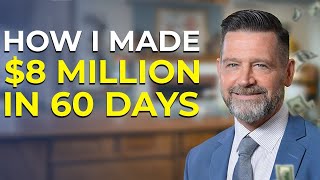
Greg Cini, a 56-year-old developer of Alzheimer's care centers, went from planning to grow his business to three properties over 10 years to acquiring seven properties in 2023. After reading Benjamin Hardy's "10x is Easier than 2x," he reset his goal and bought two properties in 60 days, showing how a bigger, faster target forces different decisions.
Questions this video answers
56 years old
About 90 beds
Own three large properties (10+ million) over 10 years
By his 60th birthday (September 15, 2026, as stated)
Early August 2023
Chapters
So I'm going to share with you a really interesting story. This is a story about a guy named Greg Cini. Greg is a 56 year old man who is a beautiful family man and he's someone who develops community living centers for people who are older people with Alzheimer's and things like that. In this video, I'm actually going to share my screen and share a conversation I had with Greg and I'm going to commentate on it. So Greg read my book 10x is easier than 2x. This is my book with Dan Sullivan that we wrote together, came out a few months ago. And this book fundamentally changed Greg's life. And I'm not really showing this video to you for a testimonial. I'm showing this to you because it's a really interesting story and it's going to have some really powerful applications if you can understand what Greg did. Basically he's had his company for five years. They had one big property, one amazing community property. I think it had like 90 beds at the time. And so this was earlier in this year at age 56. His goal, his 10 year plan was to basically develop two more properties. So his objective was to have three large properties, 10 million plus properties, and his goal was to sell those in 10 years, get a big windfall and then do his next thing. Well, he read this book, 10x is easier than 2x and ultimately changed his goal. Rather than going for having three properties in 10 years, he actually shifted it to having 10 properties in the next four years. And so he's about to explain to you what happened when he changed his goal and when he got super committed to it ultimately. Quick punchline. In the last few months, he's already acquired two new properties and also he's got another potential four on the way. So he might end up finishing the year with seven properties just by changing his goal and his strategy, which is what this book teaches. And so I'm going to, let's just go ahead and go into this conversation. I'm going to have you listen a little bit to what he says and then I'm going to provide some commentary. What was your tenure plan? So from age 56 to about 66 or 65.
Yeah, if I, if I ended up with three communities here in central Ohio when I turned 66 and then I was able to kind of package that and then sell that, you know, office of portfolio, you get a windfall and that's kind of how business works, you know, and that would be not so much my retirement Plan, but kind of, okay, then what after that? Because I don't, I'm not retiring at 66. I'm, I'm just going to change what I do when I started. And conceptually I love the idea that 10 times is easier than two times. It makes total sense, right? Because you're right to grow 20%. There's a million things you could do, right? Whereas if I thought, okay, if, let's just go with this, let's say by the time I'm 60, which is four years from now, September 15th of 2026, I have, instead of three buildings, I have 10 buildings. That's changes everything, right? So then I had to say, okay, now I'm struggling to do development. So so basically I set my gaze on that, right? I'm going to do that.
So he already had one building. He had one building and he just had a 10 year goal, which was that he wanted to have three buildings and then sell it. And later in this conversation he actually said that he was planning on having about $3 million windfall come to him. Like, obviously there was a combination of he had partners and stuff like that. But after he read this book, he realized that small goals don't change your strategy, they don't change your focus. And so he's created a much shorter timeline. And so he's got like the next four years because he just decided to set it to his 60th birthday rather than his 65th birthday and he decided to have 10 buildings rather than three. So much shorter timeline, much higher goal. He said it just changed everything. One of the things you will find and you'll quickly see that it changed is it changed his strategy. He was overly fixated on the fact that he had to develop the buildings himself. And that came from a philosophy. Often our strategy and even our goals come from our philosophy. And a big part of his philosophy and his wife's philosophy, who's an interior designer, is that space matters. Like the space that you have, the environment matters. And so because of that philosophy, he believed that he had to develop those spaces. And as he explained, because of COVID and the difficulties of construction and things like that, the cost of developing buildings ultimately went up almost 2x. And it just made it very difficult. And he was not even on a path to achieving his 10 year goal. But then he ultimately changed his goal to 10 properties in like three and a half, four years. And now he had to become open to new strategies. And that's one of the key components of 10x thinking is, is that when you make the goal much higher, honestly, seemingly impossible, and then you make the timeline really short, then that forces you into necessities, the mother of invention. It forces you into thinking in new and creative ways, new and innovative ways, and finding pathways and strategies that you would not have found before. And so he's about to explain what happened and how he ultimately was able to acquire two buildings in a very short period of time, literally less than two months. After reading the book and changing his goal, he actually had two additional buildings and they were profitable. And so he achieved his 10 year goal in essentially two months. So I'm just going to jump back in. Was there anything difficult about committing to doing that or was it just like, I'm just going to go for it?
You know, I don't think there was anything difficult because I know how this business works. And after I started thinking about it more, I was like, you know, a 10 portfolio, 10 building portfolio is way more in demand than a 3. There really wasn't a big shift there outside of me going, I have no idea how I'm going to do this. And I would say now that I, I can't believe that this has only been four months of my life. I feel like I've been doing this for 10 years already.
I guess I call it stretching time.
Yeah, right. So at first I was like, okay, how do I lead 10 communities and am I in? And I think I had one. So you had, yeah, I had one.
So you have one. So this is four months ago. You have one. I had your goal. You switch your goal from acquiring two new buildings in the next 10 years to essentially getting to having 10 buildings in the next four and you have no clue what you're doing. So, yeah, how do you, where do you move forward from there?
Okay, so I'm driving to Michigan with my wife and I just turned down my last kind of land deal because the guy wanted like $2 million for the piece of property plus ownership. And I'm like, we don't need that. And it was a good site and all that, but I was just like, no, I don't, we don't need that. And I'm, and I'm literally talking to Lisa. I'm frustrated. We're heading to a wedding and I'm like, you know what, maybe I just grow through acquisition. I never wanted to do that because I wanted purpose built dementia kitters because space matters and how buildings are built matters, especially with a disease like dementia. And the building should be supporting care. And I didn't Want to take somebody else's ideas and force my ideas in their architecture. But I said to myself, well, actually, Lisa helped me come to that discovery and. And she's like, yeah, there's a lot of good buildings out there. There's a lot of great opportunities, There's a lot of good operators. Why don't you do that? And that second, I literally called one of my buddies that I knew had just purchased two buildings here in Ohio. And I said, hey, do you know of any buildings in central Ohio that I. We could purchase? And he said, yeah, I passed up too, because I. I wouldn't. I wasn't going to be able to finance them. I'm like, oh, my God, are you serious? And he told me the two markets they're in, and they were the exact markets I wanted to be in. I was like, are you kidding me? And he's like, yeah. And I'm like, well, how long after.
Your chat with Lisa did you make this call?
It was a split second.
It was on the same drive. It was on the same drive. He tells you that there are two properties exactly what you want.
Yes. Within minutes of us deciding that we're going to grow through acquisition, I had two opportunities on the table, so. And two opportunities in some of the most affluent areas of central Ohio.
He ultimately ended up getting a different opportunity, which was even better than this one, and ultimately ended up getting it. The challenge with the next opportunity, which was even a better deal than these two was, is that he had to actually get it done in 45 days and that there was all sorts of impossibilities. He truly had to move mountains. He had to make the impossible possible to achieve the goal in those 45 days, back to the point of necessity as a mother of invention, because he really wanted. Because the upside was so high. And this actually fits with conversations I've had with Dr. Alan Bernard. Dr. Alan Bernard is one of the leading experts in decision making. I also interviewed him for 10x is easier than 2x. But one of the things that Dr. Bernard said is, is that when it comes to making decisions, you want the upside to be so high that, like, you feel like you gotta have it or it's gotta be like, so painful, like the downside's gotta be so bad that, like, you really want to avoid it. And obviously the goal is that you're moving towards things you want rather than things you don't. In a psychology stance that's having approach mindset rather than avoid mindset. But often, if the stakes are really High. And if, like, the consequences are really high, you, you will do it. And so that's why necessity is the mother of invention. But he ultimately ended up moving mountains. He ended up getting the properties 45 days later, less than 45 days later. So from reading the book and changing his goal and changing his timeline and then becoming open to new pathways, this is a key aspect of, of decision making, of, of psychological flexibility, of having motivation and hope, is being willing to change your strategy. Often when you make the goal massively higher and also make the timeline really short, it forces you into the most effective pathways. Again, Greg was on a 10 year trajectory to get two more buildings. He read the book, changed his goal, and then acquired two buildings less than 60 days later. And so this is right about the time when I actually met Greg. So I actually met Greg not too long ago. Just a. Honestly, it's been a week, a week and a half since I met Greg. And I asked him a question, he told me this story. He said, ben, I read your book. This is what happened. I achieved my 10 year goal in like two months. And then after that I asked him a question. And this is, I think, where he's about to bring it up. But I asked him the question, I said, okay, well, what's your impossible goal before the end of this year? And so then he took that seriously. This is one of the great things about Greg is that he actually ponders these things and takes them seriously. And so by pondering it, he actually wrote a list of impossible goals that he wanted to achieve before the end of the year. And now he's on a path to getting another four buildings before the end of this year. So he's going to actually go from one to seven buildings, likely in 2023, when his goal was to go from one to three buildings over 10 years just by simply pursuing a much higher, seemingly impossible goal, finding the few paths that really matter, and then putting all the energy and effort into those pathways. So let me go ahead and share this part.
So you have me write this impossible goal by the end of this year. Okay. So literally I scripted it on Monday.
And this was two weeks ago I met you two weeks ago. This was. Yeah, so I scripted the end of end of July. End of July, or was it even early August?
It was early August.
So yeah, this was early August 2023. And I say, what's your possible goal for the end of the year now that you've acquired these two buildings?
Yeah, so the impossible goal was I want to acquire 50 beds would be a good number. And then I have other things, personal stuff, writing books and different things that I'm going to do, but related to this.
And here's the thing that is just. I don't get it. And I don't know if this is a higher power thing or when you just ask the universe, it gives. So I literally forward. It's a list. I wrote this list. It's hanging on my wall. I forward it, copied it, so.
More from Clegg

The #1 Skill Gen Z Needs | Simon Sinek + Esther Perel | A Bit of Optimism Podcast







AI Won't Tell You the Full Truth | Arthur Brooks + Simon Sinek | A Bit of Optimism Podcast



How To Make the Best Decision | Arthur Brooks and Simon Sinek | A Bit of Optimism