Mother Nature Teaches AI How To Go Viral On Social
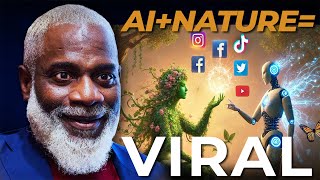
Myron Golden explains how he used AI (ChatGPT) to study the ecological concept of "perturbation" (how pollen spreads) and mapped those natural mechanisms to social-media processes to intentionally replicate virality. He lists six perturbation mechanisms — wind, insects, animals, water, explosive mechanisms, and mechanical disturbances — and gives social metaphors: wind→social media/virality, insects→word-of-mouth, animals→influencers/leadership, water→community engagement/events, explosive→memes/viral trends, mechanical→controversy/disruption. He illustrates the framework with a recent anecdote: a 2–3 minute interview sparked ~50 million cross-platform views in three days and produced large follower gains (≈80,000 Instagram followers in three days; ≈20–30,000 on TikTok), and draws lessons about preparedness and intentional replication.
Chapters
Your time is going to come whether you prepare yourself or not. If you're prepared, when your time comes, it will reveal you. If you're not prepared, it will expose you.
I'm going to share with you guys today how I learned from nature how to go viral using AI and social media. Like, when I first came out, I was like, I don't know. I don't, I don't know. I don't know how many y' all were like, I don't know. And, but, and I didn't jump into, I jumped into learning a little bit about it right away, but I didn't start using it because I didn't really understand how to use. And I think most people don't understand how to use AI at all. They use it to think for themselves instead of using it to do research for them about the things they think. And so I used it to figure out how to go viral. Now, I'm going to tell you this at the beginning of this video right now.
Not only did I discover this, but these exact principles that I'm about to show you helped me gain an extra.
80,000 followers on Instagram in three days.
20 to 30,000 on Twitter. Tick tock. And I just don't know because I didn't look at it before it got started and how it caused our YouTube views to go up on the weekends when they usually go down on the weekends. So this is, this is not some little idea. This is big. Okay, so.
There'S a concept in nature called perturbation. Perturbation means that it's. Perturbation is how.
Pollen is the, it's the mechanism by which pollen spreads to reproduce plant life in nature and animals and humans reproduce in a very different way than plants reproduce. And plants reproduce by spreading pollen. But plants don't have any ability to spread the pollen themselves. So there are some mechanisms in nature that cause plants to reproduce exponentially. Why is that important? Well, because we as human beings, we humans and animals breathe in oxygen and exhale carbon dioxide, and plants take in carbon dioxide and breathe and, and put off oxygen. So if there were no plant life, there could be no human life, there could be no animal life. So, so plants existing are absolutely essential to our existence. So this, this is a very, very, very life sustaining, existential necessity in nature that pollen spreads. So as I was thinking about perturbation one day.
And yes, I was thinking about perturbation. As I was thinking about perturbation, I got this idea to do a, to like get ChatGPT to help me study the mechanisms of perturbation could help content go viral on the Internet. And I thought. So I typed in this question.
What are the. What are the sources of perturbation in nature that cause pollen to spread? So that was my. That's where the whole question began. What are the sources of perturbation in nature that cause pollen to spread? And it gave me this long dissertation. I'm not going to give you the long dissertation. I'm just going to give you the elements. In fact, I'm going to go draw them on the board.
To the best of my ability, and I'm going to draw a representation of these perturbation mechanisms on the board, and then we're going to look at how each of these mechanisms can be replicated for ideas that we like, we'd like to go viral in the marketplace. Does that make sense, everybody? Are you all tracking? If so, say yes. Okay, cool. All right, here we go. So.
So the first one.
The first one was wind.
So wind. Okay, so that's how they illustrate wind on cartoons. So I figured that's how I'll illustrate. So the first one is wind. Okay. The second one. The second one is insects. So in fact, I'm going to draw. Going to draw a bee. Right? Well, that didn't work.
Okay.
Okay, insects. The next one is animals.
I gotta. What animal am I gonna draw? Okay.
It could be a cat, it could be a dog. It can be whatever animal y' all like it to be. Okay, so animals. Okay, animals and.
Explosive mechanisms. So explosive mechanisms. You're like, what explosive mechanisms are there in nature? Well, there's lightning. So we could use. We could do that. We could do. We could do.
Add to portrait.
So lightning.
Okay, so lightning. So that's an explosive mechanism. Lightning strikes a tree, the tree falls down, it disturbs. Are you all tracking? Okay, cool. So, and then.
Animals, mechanical disturbances. Mechanical disturbances. Okay, so lightning would be an explosive disturbance. And then we'll say a tree. We'll say a tree falling down. A tree falling down. And the forest is a mechanical disturbance. So.
Okay, so the tree fell down, so it's not going up. Okay, so now you're saying what does this have to do with going viral? Well, this is how pollen spreads. Okay. And so then I. After I asked Chatgpt that question, I ask it another question. I said, what could. What could be some metaphors for the perturbation mechanisms of wind, insects, animals, water. Explosive mechanisms and mechanical disturbances that could affect the spread of ideas socially, similar to how pollen is spread ecologically. So What I'm asking ChatGPT is to show me some things. And why did I even. Why did I even do, like, who. Who thinks about weird stuff like this? Weird people like me. And so. So the reason I thought of this is because of a conversation that I had on a plane a long, long time ago. I'm talking about probably, maybe even 20 years ago with a young man named Austin who lived in Boston, and he was a physicist, and we talked about physics from San Diego, California, all the way to Baltimore, Maryland. So for five hours, I'm talking to a physicist about physics. Said, so what do you do for a living? He said, I'm a physicist. I said, wow, that's really, really cool. And I said, so, what's your favorite physics principle? And he said that all principles are microcosms of each other. I said, ooh, that's so good. But instead of me thinking, I know what you mean, tell me what you mean. So when I'm sharing this with people that I can tell them what you said instead of what I thought you said? He said, okay, here's what I mean. He said, if you take a principle from one domain or discipline and you apply it to another domain or discipline, and it still works the same way, I'm like, oh, that's so good. And so that's what caused me to think about this. And so it told me. It told me. I said, so what are the. What are the metaphors?
What are some social metaphors of perturbation mechanisms like wind, water, insects, animals, explosive mechanisms, mechanical disturbances that could affect the spread of ideas socially, similar to how pollen is spread ecologically? And then chatgpt said, drawing parallels between ecological perturbation mechanisms that spread pollen and social processes that disseminate ideas can provide insight, insightful social metaphors. Here are some of the potential social metaphors for each perturbation mechanism. So he said, or chat GPT said, said for wind, wind would be like social media.
So social media, virality.
Well, and here's what he said. Here's what it said. It said, just as wind can carry pollen over long over vast distances, social media platforms have the power to rapidly spread ideas across communities and even continents. A single post or tweet can be shared wildly, reaching diverse audiences and influencing public discourse. So now I'm gonna. I've got a confession to make. Like, I did this research months, like maybe eight months ago, and then proceeded to know it, but not do anything about it. But something happened that reminded me of this. And what happened was I got interviewed by this young man, I pull up to Eddie B's and this kid comes over to me, says, I'm getting out of my car, I'm putting my jacket on. Excuse me, sir, is that your Rolls Royce? And the smart aleck in me wanted to say something like, no, I borrowed it from my daughter. Right? Or something. Something, right. The smart aleck in me just wanted to say something smart alecky, but I didn't. I said, yeah. And he started asking me these questions. Well, this interview that he did with me that lasted maybe all of three minutes, it went viral. Like how viral? It's gotten over 50 million video views in three days, like on, at different platforms. And he hasn't even released it on YouTube yet. So now I know you are going to think that Myon is the slowest draw in the west. Good thing he's not a gunfighter. When I tell you this, okay, and what I mean by that is like, I didn't know a video could get. I didn't know something could get 50 million views in three days. I didn't know that was like a thing that happened. And I know you're probably thinking, this guy's really not that sharp. He didn't know that YouTube paid people for 14 years. He didn't know videos. Yeah, I didn't know because I didn't have a reason. I didn't have weight enough. Anyway, so. So social media. On Instagram we gained 80,000 followers since last Friday. On TikTok, 20 to 30,000. Our YouTube videos are going up and he hasn't even posted it on YouTube yet. Right? It's got. And then I called him, I'm like, is this normal? He said, this is the best performing video he's ever had on his channel. A three, like a three minute conversation. It's just, it's crazy town. Okay, so let's get back into the perturbation mechanisms. Okay, so insects are like word of mouth. So, and here's what he said. Similar, similar to insects transferring pollen between flowers as they move. Word of mouth serves as a natural mechanism for spreading ideas among individuals in social networks. Conversations, recommendations, informal discussions can lead to the propagation of ideas within communities. So I looked on TikTok this morning. I said, well, so I wanted to see what, how this was spreading on TikTok and people were taking the conversation and applying it to their own videos. People were having reaction videos to it. I mean, and I'm just scrolling and it's just hundreds and hundreds of people repurposing this three minute interview in three Days though, my mind was blown. Okay, so, so that ins, like insects are like word of mouth, people are telling other people and sharing on their social network. So it's like insects are now amplifying the mechanism of the social media wins. Does that make sense? And so then animals, leadership. So animals are like leadership and influencers in social groups. Influential individuals or leaders can be likened unto animals that facilitate the spread of ideas through their actions, endorsements, advocacy. Like animals carrying pollen on their bodies, influential figures can disseminate ideas as they interact with their followers or community members. So what does that, what does that tell me about this whole experience I've had? Well, this, this young man that interviewed me, he's got.
Like, I think he's got like 7 or 800,000 subscribers on YouTube, but he's got 3.7 million followers on Instagram and 2.7 million followers on TikTok. And so because he influences those people and he asked me questions in front of his audience, a lot of his audience migrated over to follow me on social media platforms. It's just, it's mind blowing how fast this happened. And the reason I'm sharing this with those of you on YouTube and those of you in this room is because you can take these very same principles when you first get started. You don't have to wait until you've been on social media for 15 or 16 years before you apply these principles to your social media so that you can gain traction and attract an audience. Now, you have to be prepared when the moment comes, right? Because when he, fortunately, he asked me questions I knew the answer to, right? What if he had asked me questions that I've been like.
Right, so.
Animals. So animals, influencers and leaders. Okay, Water, Community engagement and events. Just as water transports pollen between aquatic plants, community events, gatherings and forums serve as channels for exchanging ideas and perspectives among participants. Ideas flow and mingle as people engage and discuss collaborative ideas. So when people get together and they start talking about something they've seen, like an event, this is a gathering. So on YouTube it's social media, but in this room, it's like people, we are connected to each other, right? And who knows, maybe because you were in this room today, you'll go home and have a conversation with your spouse or with your kids, or maybe you'll talk to co workers at work tomorrow about some of these ideas because you were here in the. And so that's the, that's the implication of water. When people gather together, ideas flow between them and then explosive mechanisms. So viral trends and Memes, explosive mechanisms and social context can be compared to viral trends or memes that rapidly capture public attention and spread across platforms. These trends often originate from a single instance or event and quickly proliferate, generating widespread discussion and imitation. And that's exactly what happened. All these people on TikTok, right? All these people on TikTok. So, so this, this, this video of this young man talking to me for like, maybe it might have lasted three minutes, it might not, might have been two and a half. I'm going to go time it now just because it wasn't very long.
It's turned into a meme that people are putting their own spin on. It's kind of. It's mind blowing to me. Oh, I was supposed to. I was supposed to. This is. This is word of mouth. I forgot to do this word. Word of mouth.
This is influencers.
Explosive mechanisms. This is memes.
Memes. I didn't spell that right.
Memes.
And I forgot. Water. Water.
Gatherings.
And mechanical disturbances, controversy and disruption. Similar to how mechanical disturbances release pollen from plants, conflicts and disruptive events can prompt the release and dissemination of new ideas and perspectives within society. These disruptions can challenge the existing norms or provoke debate that stimulates innovation. So the mechanical disturbance is controversy and conflict. So you have controversy.
And conflict.
And this didn't really have any controversy or conflict other than the fact that this young man asked me the question. He said, he said, do you believe in God? That's one of the questions he asked me. And I said, I more than believe in God, I trust God. And he asked me how important is my faith in, to me in my life. I said, it's the most important thing in my life. Well, that, that's, that's kind of controversial when you have people that believe all kinds of different things. In fact, how controversial is it? So, like, people have been sending me messages on Instagram like crazy. So one person sent me a message because he asked me the question about how important is my faith. And I said, I received Christ when I was 16 years old and the Bible is the foundation of my life, et cetera, et cetera. And so I got. So just to illustrate, this is what I mean when I say controversy. Somebody sent me a message on Instagram, I saw it this morning. They said, I didn't usually send messages like this put. But I'm going to send this message to you this time. And here's what he said. Consider Islam, right? So that, that's what I mean when I say it's controversial, right? But I've already considered Islam, and Islam is a religion, and I don't practice religion. Right. God is my king. Jesus Christ is the king of kings. He's a governmental figure, not a religious figure. Anyway, so that's controversial. Even that statement is a controversial statement. I saw one of my videos where I taught on this, where I was speaking at a church on this. And then this guy.
Who disagreed with me.
Who has zero, I went to his YouTube page because I was like, when people have, like, I want to see what you're teaching. Right? Right. So this Guy's been on YouTube for 10 years. He has zero videos and four subscribers. But he disagrees with me on my platform, as if he thinks the people who came to hear me care about his opinion. Right. And he said this is false doctrine. Okay. Just because you're confused doesn't make it. Here's what's fascinating. Just because somebody does not have the ability or capacity to understand something doesn't mean the thing that was taught was wrong.
So. So controversy. Now, what's my greatest lesson in all this?
My greatest lesson is this happened to happen. I did not orchestrate it. Right. I didn't. I didn't. I didn't make this happen. I had no idea what questions this young man was going to ask me. No idea. Right. Which tells me several things. Here are the lessons in this. Besides the things that I just shared with you that hopefully are valuable lessons. Right? Here are the lessons that I learned in this. Number one.
Abraham Lincoln said, I will prepare myself and perhaps my time will come. Myron golden says, your time's going to come whether you prepare yourself or not. If you're prepared, when your time comes, it will reveal you. If you're not prepared, it will expose you. The question all of us have to answer is this. Am I going to prepare so my life can become.
A.
Grand reveal, or am I going to remain unprepared and let it become an expose? So fortunately, I. When he asked me the questions, the questions he asked me to answer to were questions that I had already contemplated in my life. These are things I've already thought about. That's number one. The second thing is this happened to happen.
And the reality is I can literally make it happen now that it's happened. Fortunately, I did this research on this whole perturbation mechanism thing before it happened, so that when it happened, I had something to relate it to that I could go back and say, this equals that, this equals this, this equals that. And so if I desire to replicate and duplicate this experience to Spread to, To attract a wider, A larger audience to impact. Impact a greater segment of the world, then I can now do it intentionally because I had the awareness when the experience happened, gives me the ability to go do it again. And so the reason I'm sharing this with you is because any one of us can post our ideas on social media. That is, if we're not so fragile that somebody disagreeing with our ideas doesn't cause us to go sit on the bathroom floor and cry. Right? All of us can reach out to people who have the same amount of influence as us, or maybe a little more influence than us, and see if they would be willing to have a conversation about our ideas in front of their audience.
So I'm going to tell you something. I learned this a long time ago when I used to be on radio and television fairly often and get interviewed for magazines and newspapers. Here's what I discovered. You know what's harder than getting on television or getting on a radio or in today? Getting on a podcast or getting interviewed by somebody who has a platform. You know what's harder than that? Finding somebody interesting to talk to.
It's way harder to find an interesting guest than it is to get on a show that has an audience. It's way harder. And so, so this happened to happen, but I can make it happen. And I've made it happen some in the past. I've made it happen, but not at this level. Right, but it doesn't always have to be at this level. Like when I first, when I first, my very first experience of this and I didn't have this perturbation mechanism point of reference to even realize what had happened was when I got interviewed on David Chan Social Social Proof podcast, and it aired in, I think 2020 or maybe 2019, and it doubled my YouTube subscribers in a couple of months. Wow. Now you think, wow, double. Maybe I should go get on more podcasts. Right? So all I'm saying is this. We can all benefit from just learning how things work in life and then figuring out how we can duplicate what God has created in nature to produce outcomes that are desirable for us and beneficial for other people. So hopefully this whole conversation about, like, natural virality using AI and social media helps you grow your brand and attract your audience so that you can impact the lives of others. In the meantime, in between time, stay blessed by the best and we'll see you on the next video.
More from Clegg

The #1 Skill Gen Z Needs | Simon Sinek + Esther Perel | A Bit of Optimism Podcast







AI Won't Tell You the Full Truth | Arthur Brooks + Simon Sinek | A Bit of Optimism Podcast



How To Make the Best Decision | Arthur Brooks and Simon Sinek | A Bit of Optimism