Myron Golden In Your Corner Interview
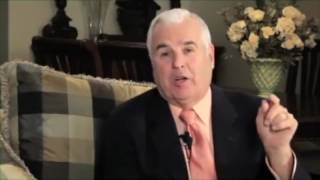
Myron Golden talks about going from poverty to wealth, starting with polio as a child and working trash collection at $6.25 an hour. He credits self-education, a home business he started around 1985, and applying biblical principles to finances for becoming a millionaire.
Questions this video answers
1961
$6.25 an hour
1985
Series 6 and Series 63 (and insurance license)
717-3884-2907-1788-4290
Chapters
If you're going through financial difficulty now or you have a friend that's going through financial difficulty, I want you to get on the phone and have them watch this program. Because Myron went from the $6.25 an hour man to becoming a millionaire. And he's going to teach you biblically how you can get out of the financial problems that you're facing today. Myron used to be a trash man, made $6.25 an hour. He learned some interesting techniques and became a millionaire. And he's going to tell you how you can do it, too. I want to welcome Myron golden to the program. Myron, so good to see you.
Good to see you, Carrie. Thanks for having me on the show. I really appreciate it.
Well, it's an honor and a delight. Listen, let's go back and talk about your struggles, how you came out of the ghetto in Harrisburg, Pennsylvania, and, and how you struggled for years and you were broke and then somehow you had a breakthrough and became a millionaire. Tell us a little bit about your background.
Well, I was born the second of seven children to hard working parents who loved us. Thank God for that, right? And we didn't know a lot about money. We didn't grow up learning about financial principles or the rule of 72 or how money works, or that your money could even work for you. We learned that you work hard for your money.
So I grew up poor, and we did what poor people did. We bought inexpensive cars and lived in inexpensive houses. And we just thought that struggle was the way it was supposed to be because that was our lot in life. And I contracted polio. I was born in Tampa, Florida and contracted polio. I was born in a segregated hospital in 1961, and my parents moved to Pennsylvania before I was a year old. Got diagnosed, treated for that. So I've walked with a brace, a metal brace on my leg my whole life. And while my brothers were playing basketball and football and stuff, I wasn't able to do that, at least not to the same degree. I played some sports, but not to the same degree because I couldn't run. And I had a leg stretch operation. This is an amazing concept. I had a leg stretch operation when I was 13 years old. The doctors came to my parents, said, Mr. And Mrs. Golden, we've got an operation that can help your son. We can stretch his leg two inches. Now you gotta. I'm 13 years old. I've got a vivid imagination. And, you know, I didn't want to mess with the doctor. He's an adult. I'm a kid, but I almost said, doc, Bones ain't made out of rubber, you know? And he said, what we're going to do is we're going to break the tibia, which is the big bone in the middle of your shin. It'll break the tibia in the middle. We're going to break the fibula at the top and the bottom, and we're going to put these four screws through his leg, and we're going to put it on this metal rack and turn these knobs every day. And at the end of 30 days, that tibia will be stretched 2 inches. And I tell you that story because I want you to understand and I want your viewers to understand that there's a principle there. That's not just my story. That's everybody's story. If those doctors had put those screws through my leg, but they wouldn't have broken it first, my leg wouldn't have stretched at all. And what we learned from that scenario is that seldom in life can we be stretched to our full potential unless we're first broken. So we got to go through some stuff to get to our stuff. There's no destiny without difficulty. There's no strength without struggle. There's no advancement without adversity. And we got too many people in the world that want to get to the mountaintop, but they don't want to climb the mountain.
They don't want to go through the struggle.
They don't want to go through the struggle. And you've got to go through the difficulty. It's the thing that makes you strong enough to be there when you get there. So that's kind of my story. That's my story. Growing up till the time I was 13, one of those kids, you know, you got a lot of people that do really well in school. Well, I did really well in school all the way through the third grade, and it went downhill from there. Okay. In fact, I tell people I like the 10th grade so much, I took it twice. And that's not the real reason, but I did finally pull myself together my last couple years in high school and worked really, really hard, managed to graduate salutatorian in my class. I graduated second in my class.
Wow.
Now, my little brother was a valedictorian, and it was a class of two. And now you know the rest of the story. I graduated from a small Christian school in Harrisburg, Pennsylvania, graduating Class 2. My younger brother Mike was a valedictorian. I was a salutatorian. That was the class.
So Education, the educational system was not my strong suit. So you can imagine, you're growing up, you're this kid, and you got six brothers. And so athletics are not really your thing. Academics are not really your thing. What's your thing?
Yeah, I mean, what are you going to do to get out of the circumstances that you're in?
Exactly. But fortunately for me, when I was really, really young, my mom and my dad, they told me all the time, you can do anything you want to do. You can be anything you want to be. And I think they were doing that because they didn't want me going through life feeling like I was a victim. Because there are so many people who go through life acting like. Feeling like verbalizing the fact that I'm a victim. I don't have anything. I can't do anything because my life is hard. But the fact is, everybody's life is hard. We just have it hard in different ways. And what we have to learn to do is we have to learn to embrace our assignment. And everybody has a different assignment. But we have to trust that God knows what that assignment is, and then we've got to embrace it.
Right. He gifted us all differently, didn't he? Put us all here for a specific purpose.
Absolutely. You know, it's interesting that you say that, because if you go back to Matthew chapter 25, it tells us that the Lord called his servants unto him. He called three servants, one, he gave five talents, one, he gave two, and to another he gave one. But then it says, he gave to every man according to his several ability. See, he didn't give everybody the same thing, but he gave everybody something. And see, everybody says, well, we're all equal. We're not all equal. Now, we're all equally valuable. But that's not the same as all being equal. Because some people can read better than other people, and some people can sing better than other people. And some people can hit a golf ball better than other people. And because some people can shoot a basketball better than other people. So we're not all equal, but we're all equally valuable.
Right?
And there's a big difference between being equal and being equally valuable, you know?
And I found that so many people feel like they have so little worth. They've been told all of their lives, you can't do this. You're no good. You can never amount to anything. And you were fortunate enough that your parents said, you can do anything you want.
And you're right, I was fortunate enough. Because I feel like the parents that I had were the best possible parents for me in this world. If I could go and trade parents, I wouldn't trade parents with anybody in the world because my parents got me and my seven brothers ready for the life that we were going to live. And I thank God for that.
So take us back. I mean, here you were, you got out of high school, you got married and you know, and got out of high school.
You forgot one word, barely.
But when you got out of high school, what did you think your purpose in life was at that time?
Well, I got saved when I was 16 years old.
Yeah.
So when I got saved 16 years old, I had never read a book other than a comic book up to that time. I got saved. I started reading the Bible. I was shocked. I was blown away. I said, and this is my iPad. My Bible's on my iPad. And so when I started reading the Bible, I had no idea what to expect. I had no idea what to expect because I had never read the Bible before. I had never read anything. So reading the Bible, I'm like, that's in the Bible. And every time, I mean, it's almost like on every page. Wow, that's in the Bible. Wow, that's in the Bible. And I found out that the Bible is more about practical, everyday living than it is about religion. And I was. Practical everyday living works in practice.
Let's go to a break for just a moment, then we want to come back. Folks who want to come back and hear Myron's amazing story, we'll be back in just a moment, so stay tuned.
Carrie, you know what? I've got a free gift that I'd like to give to all of your viewers right now, if that's okay.
Sure.
I've got a video of me preaching at a church in Baltimore, Maryland, and I was teaching on how to have a financial turnaround, A step by step system from Second Kings, chapter 4. For a woman who literally was more destitute than anybody watching this show right now. And the man of God gave her a step by step formula to turn her life around. So I'd like to give that to all your viewers. And all they have to do is either text or phone their name and email address to the phone number I'm about to give you. So they have to make sure the only thing they put in the text or the phone message is their first name and their email address. So the number is 717-3884-2907-1788-4290. If they text their name and email address to that number. Or call and leave their email address@myronyrongolden.com or whatever their email address is. Then they'll get the free video and I promise you they will absolutely love it.
So there you have it, folks. The numbers on the screen. Just text Myron your name and your email address right now. And they'll get the free gift.
They'll get the free. They'll get it back in a couple of seconds.
Wow.
What a deal.
We'll be back in just a moment, folks.
Okay, friend, we're back with Myron golden and I want to tell you if you're going through financial difficulty now or you have a friend that's going through financial difficulty, I want you to get on the phone and have them watch this program because Myron went from the $6.25 an hour man to becoming a millionaire. And he's going to teach you biblically how you can get out of the financial problems that you're facing today. Myron, pick up with, you know, what you were talking about before we went to the break.
Okay. So I think what's really important, yeah, I can tell people my story and I can tell them how I made all this money, but really what they want to know is what, how can I make this much money? They want to know how they can make their lives better. So what I want to do is I think about a good friend of mine who's a pastor in Texas and we shared some of these principles with him and he's built a multi million dollar business. I think about another gentleman who's an accountant in Houston, and we shared this information with him and he literally made six figures, multiple six figures part time within 12 months because God has all the answers. I read in a book one time, and I don't remember which book it was, but it said God knows where the gold is.
Yes.
And if you will spend time with him, he'll show you, he'll reveal it to you.
Wow.
Isn't that amazing?
That is amazing. But you know, you said something that I think was very interesting before the break. You said you started studying the Bible and you found that those principles were practical. And practical means they work in practice. So they work for anybody who will practice them. Yeah.
See, here's the problem. I think a lot of people and unfortunately a lot of preachers. And I'm a pastor. I've been in the ministry since I was 17 years old and I'm 51. So I've been in ministry a long time. Unfortunately, A lot of pastors, when we preach about the answers that God gives us, we preach about them as if God's going to do the whole thing. But here's what I found out from the word of God, that we can't do God's part and he won't do our part. So there are two parts. God put the garden in Eden, but He put the man there to dress it and keep it. So God's not going to dress and keep the garden. But we can't create a garden. We can plant one, but we can't create one. And God created one. So what we have to do is make sure that we're doing our part, not just waiting for God to do his part.
Wow. And then, not only that, God gave us a planet full of resources.
Oh, my goodness.
And it's our responsibility, like you said, to manage those things and to keep them going.
Do you know what the greatest resource that God gave us is? He made us in his image. What's the first thing God tells us about Himself? You think God has all these great attributes. He's omnipotent, he's immutable, he's omniscient, he's omnipresent. He has all these great attributes. But the very first thing that God told us about Himself is in Genesis, chapter one, verse one. In the beginning, God created the heaven and the earth. Why did he do that? When I read that verse, God doesn't need someplace to sit down. He doesn't need food. He doesn't need people. He doesn't need anything. He doesn't need a heaven, he doesn't need an earth. Why would he create them? Because he is creative, and therefore it is his nature to create. The first thing God tells us about Himself is that he's creative. What's the first thing God tells us about us? He created us in his image, which means he created us to be creative.
Right?
And so I teach people all over the world when I travel and speak in churches or at businesses. Your purpose in life is to live in your creative space and make the world a better place. And unfortunately, we got too many people going through life attempting to be in somebody else's creative space, trying to be somebody they're not. I read in a book recently, imitation is limitation. You can't be who you're not. You can only be who you are. So the greatest resource that God gave us is the fact that he made us in his image, which means he created us to be. Be creative.
We are supposed to be creative. And if you don't believe that, I have often told people, look around you, look at all of the beautiful buildings, look at all of the highways, the vehicles and who create, I mean, man didn't create them, but man built those things. And the only difference in them and us is that they exercise their creativity.
Absolutely. Absolutely. You know what is really interesting? The difference between and I want all of your viewers to get this. The difference between where you are right now and where you want to be is exactly the same as the difference between what you know and what you haven't learned yet. I want you to think about that. The difference between where any of us are and where we want to be is exactly the same as the difference between what we want to know or what we know and what we haven't learned yet. So the key then is learning. Isn't it interesting that there was a time that Bill Gates was one idea away from from Microsoft. There was a time when Steve Jobs was one idea away from Apple or from iPhone or from iPad. There was a time when Sam Walton was one idea away from Walmart where Michael Dell was one idea away from Dell Computers. Everybody watching this show right now is just one idea away from cracking their code to receiving all of the abundance and blessings that God has for them.
Yeah, so true. Well, you know, take us back to the time when you were making $6.25 an hour and walk us through the process and let us know how you escaped the poverty and how others can do it as well.
When I was driving a trash truck for $6.25 an hour, the first job I got after I got married, it was the first job I had after I got married, driving a garbage truck, $6.25 an hour. And I didn't drive the route, I would take the trucks to the dump and empty them after they were full. So I'd take four or five trucks a day and my shift was over. But when I was on break, I was reading books, I was reading my bible, but I was also reading other books, I was listening to audio programs. I got started in a home based business back in 1985. That's when I drove a trash truck. Got started in a home based business. I was selling insurance and investments on the side. Now that was really a really critical focal point for me, a transformational point because in selling insurance and investments, I had to get licensed, I had to take an insurance license, I had to get series 6, series 63 license so I could understand how investments work. And so in so doing I began to learn how the principles of money work, how compound interest worked, how the rule of 72 works. Exactly. So I start applying these principles to my life, and all of a sudden things start turning around. But I'm going to tell you what really, really helped me. I learned how to do something that is absolutely amazing. And we'll go into way more detail when we come back from break. But I learned how to sell. And selling is a critical skill. And it's something that I believe God intended for his children to do. And I know a lot of people say, I don't want to sell anything. Well, the Bible, truly the Bible, the richest man who ever lived and the wisest man who ever lived. Here's what he said. If I've got something good, I've got a moral obligation to sell it to as many people as possible.
Wow. Folks, you want to stay tuned and you want to call your friends and neighbor and tell them to come watch this program. When we come back, Myron is going to tell you how he escaped poverty and working from $6.25 an hour to becoming a millionaire. So stay tuned and come back in just a moment. We'll pick up on the rest of this in a moment. So, Myron, before, before the break, you were talking about a concept that most people hate, and that's the concept of selling. Explain that a little more.
Well, I said the richest, wisest man who ever lived said, if we've got something good, we have a moral obligation to sell it to as many people as possible. And here is what it says in Proverbs, chapter 14, verse. I'm sorry, Proverbs, chapter 11, verse 26. It says, he that withholdeth the corn, the people shall curse him. But blessing shall be upon the head of him that selleth it. We tend to think that there's something wrong with selling, but the fact is the Jewish people understand this concept. The Jewish population of the world is 2% of the world's population. They control 40% of the world's wealth. Why? Because they understand that it is their moral obligation, their moral responsibility to start a business and sell goods and services to as many people as possible. If you think about Joseph, Joseph was the number one type of Christ in the Old Testament. And what it tells us about Joseph, after he became the prime minister, he became the greatest man in the world. How did he do that? Well, there were a couple of things. He interpreted the vision. He became the prime minister. But it says that Joseph sold to all the people in the land and Joseph sold To all the people in the world. Now here's the amazing thing about that story though. The people came to Joseph and said, Joseph, you know, we need some food. He said, well bring me your money, I'll give you some food. Joseph didn't say, well here, here's, I'll give you, I'll just give you some food. He said bring me the money, I will give you some food. They brought him the money, he gave him some food. The famine lasted seven years.
After they spent all their money on food, they didn't have any money left. They said, Joseph, we don't have any money left.
What do you do?
He said, well just give me your animals, I'll give you some food. So now he's got all the money and all the animals. They ate all the food their animals could buy. When they come back, they're still hungry. Joseph, we're still hungry. We don't have any animals, we don't have any money. What do we do? He said, eh, just give me your land. After he had all the money, all the animals and all the land, they came back to him again. They said, Joseph, why don't we just sell ourselves to you and we will become your slaves and just feed us, take care of us. Joseph said, I'll take it. That's a good deal. So Joseph had them pay with their money, their land, their animals and their lives for food. He was not ashamed to sell it to them. He didn't feel like he was doing something wrong by selling to the people. He didn't feel like he had to give it to them just because he had it. The fact is we have a tendency in modern day Christianity to think that something is wrong with self interest. If we didn't have self interest, we wouldn't brush our teeth, we wouldn't take a bath, we wouldn't comb our hair. Self interest, as long as it's not gone overboard, is a good thing. You have to take care of yourself. It's really interesting, you know, David killed Goliath and a lot of people think that David killed Goliath just because, you know, he didn't want him blaspheming God's name. Well that's true, but there's another part to that story that people don't think about. David killed Goliath for three, three other reasons that are overlooked by most preachers. Do you want to know what they are?
Yeah, I think I remember what Saul offered.
The money, the girl and the tax freedom.
So David said, sign me up for that program. He Said the king said that whoever kills Goliath, he will give him his daughter to wife. He'll enrich him with great riches out of the king's treasury, and his father's house will be free in Israel, which means he'd have tax freedom. So he said, whoever kills Goliath will get the money, the girl and the tax freedom. Pretty good deal. That's a pretty good deal. And people say, well, David didn't care about that. But if David didn't care about that, why did he ask them? He said, so tell me again what they're going to, what the man's going to get that kills this giant. And they told him again. And then he asked them a third time, tell me again what the man gets that kills this Philistine. And they said, they get the money to grow and tax free. James said, let me add him. You talk about in your corner, let me add him.
I want him.
So the fact is, we should have enough drive, desire, ambitions and aspirations to live like the king's kids that we are, right?
Isn't that an awesome concept? The king of the universe is our father and he want. There's nobody that's going to convince me that he wants us walking around in rags and riches. However, I am not one of these preachers who is going to turn the Bible into a magic book and tell you, if you just sow a seed into my field, God's going to bless you. The fact is, God can bless you for sowing a seed into other people's lives. But the one thing that God promised to do for sure, in addition to tithing, I understand that, but you also before God, when God brought the children of Israel into the Garden of Eden, he gave them all their own plot of land and they were supposed to sow a seed into their own field. That's what God promised to bless. And if you don't have a field, if you don't have your own business, that's what their field was. If you don't have a field, then the only thing God can bless is Potiphar's house. For your sake, right? Pharaoh's kingdom. For your sake, you've got to get your own business. I really believe that God wants his children to be entrepreneurs, to be business owners, to be shakers and movers, to be lights that are set on a hill, to be a city that's set on a hill that can't be moved, a candle that's sitting on top of a table, not under the bushel of work, not under the bed of rest, but on a table. So we give light to everybody in the house.
Well, you know, I read in one of your books, and I've read several of your books where you talked about when you were poor. Somebody came to you and said, you know, I'm really struggling. And all you could do was say.
I'll pray for you.
I'll pray for you.
Not that that's a bad thing. Yeah, but, man, but what does James chapter two say? If somebody comes in among you who is destitute, void of their daily needs, and you say, depart in peace. Be ye warmed and filled. What good have you done?
Right. You haven't got that need.
You haven't met that need. We're supposed to be able to do something to help people, not just. Not just say, I'll pray for you.
So your contention is that God wants people to have things so that they. In fact, it says in the Bible, it says, work with your own hands so that you can meet your needs and meet the needs of others.
It does. It does say that. Indeed. But not only that, Carrie. You know, we think that somehow there's this.
Righteousness around poverty, but, you know.
There can be. But they're not necessarily the same thing. The Bible says tells a story in the book of Ecclesiastes about a city that was surrounded by a great king. And they went to this poor, wise man, and this poor, poor wise man delivered the city from this great and mighty king. And you know what it says right after that? It says, and no one remembered that same poor, wise man because a poor man's wisdom is despised. I submit that sometimes our children don't want to hear what we have to say just because we're not demonstrating that we know what we're talking about. If a poor man's wisdom is despised, what if our neighbor is despising our wisdom because we're poor? What if our children are despising our wisdom because we're poor? What if our Sunday school class. What if our. What if the members of our church that we're pastoring are despising our wisdom because we're poor? God has given us business sense. You know, it's really interesting. The Bible tells us In Luke, chapter 16, verse number eight, it says that the Lord commended the unjust steward. And here's what he said. The children of this world are wiser than in their own generation, than the children of light. That should never be our story.
No, it shouldn't be.
The children of this world are wiser than us. And We've got the scripture, We've got the book that was written by the one who owns Wisdom.
Yeah, you're right, brother. We've only got, like, 30 seconds left. But I think you told me you wanted to give a gift to you.
I have a free gift for everybody watching. It's a video called how to have a Financial Turnaround.
And.
And all they have to do is either call or text their name and email address, only the only thing in the text or the phone message is their name and email address to the number 7173-8842-9071-7388-4290. And I'll email you a free video from Second Kings, chapter four on how to have a financial turnaround. It will absolutely knock your socks off.
More from Clegg

The #1 Skill Gen Z Needs | Simon Sinek + Esther Perel | A Bit of Optimism Podcast







AI Won't Tell You the Full Truth | Arthur Brooks + Simon Sinek | A Bit of Optimism Podcast



How To Make the Best Decision | Arthur Brooks and Simon Sinek | A Bit of Optimism