Powerful Words, Prosperous Business
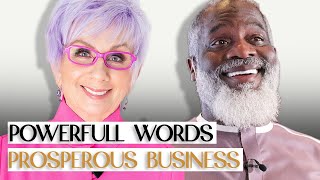
Myron Golden and Tina Lorenz discuss copywriting and selling. Tina walks through concrete techniques like open loops and long-form sales letters, plus client results. Myron covers how language shapes business, the power of I AM affirmations, and selling high-ticket offers.
Chapters
We're live. We're live.
Tina, we're live.
What's up? What's happening? YouTube, what's happening here with one of my closest compadres, amigas, friends, Partner in crime. Partner in crime. Oh, I like that. Partner in crime. But we don't really do any crime. We don't really do any crimes. That's just a figure of speech.
It's a crime against poverty.
Oh, I saw what you did there. This is why I'm talking to her today. A crime against poverty. But we're here to talk to you today about powerful words and prosperous business and how to turn your words into wealth, really? And show you how to take your life to the next level. I want to tell you who Tina is, but I would rather Tina tell you who she is. She's one of the best copywriters I know. She's brilliant at copywriting. She's brilliant at teaching copywriting. And when she says stuff, I get it. And I think when she says stuff, you'll get it. So, Tina, tell everybody who you are and. And what you do and how you help people.
Sure. Well, first of all, thanks for having me here today because I think this is such an honor and really fun. I know we're going.
We always have fun.
But I'm a direct response copywriter since 2004. I call myself a mindset shifter and a transformational business coach as well, and now copywriting mentor. And I started from absolute scratch with no experience. And so part of the message I like to bring is that you don't have to start early, you don't have to have a bunch of experience. You don't have to have a degree. I didn't have any of those things going for me. And I was on my own when I was 17 years old. And so I don't even know if you know some of this stuff, but.
I'm about to learn it.
Making my way in Seattle, and then in my 40s, I went through a domestic violence event before I met my amazing husband Ron, and had to start all over again. And started from absolute scratch. So I didn't get started till I was past 50, but I hardly ever tell anybody.
You mean you're past 50?
Don't do the. Yeah, that's why I'm here. And I always say, don't do the math on that. But I didn't have any experience. I'd never written anything for anyone ever, a day in my life, unless you count working in an office writing a memo, which I hated doing. And I Just made a decision. You know, I made a decision when I learned about copywriting, that I'm. I'm gonna do this.
So you say when you learned about copywriting, like, what. What was that, like, thing that caused you? Like, how does somebody learn about copywriting? I mean, you said, when I learned about copywriting. What does that mean? Maybe a lot of people watching right now don't even know.
They don't even know what it is. I didn't know what it was.
Right.
And so. And copywriting is actually all the words that you see, you know, your emails, your. Your video scripts, your webpages, things that might get in your mailbox, all the things that are helping to attract and promote and persuade and inform and even rappel. That's a whole other topic.
Yes.
People from your audience about what you have to offer for them. I mean, churches use copywriting to bring memberships in. I mean, it's using everything. And I consider it to be the most valuable marketing skill. Really?
For sure. For sure. So let's. Before we even dive in deep, let's just say hi to some of these people on YouTube.
Hello, Christine and Nancy, Chauncey, Janice, Denise, Shanice and Denise. All right, Nancy, Chris, Angela. Hey, Angela.
Good to see you. Julius weaves.
I promised people we were going to wave at them.
Hey, y'.
All.
What's up, my peeps?
Denise, Denise, Erica Mitchell, feel fabulous nutrition with Pat Cordova. And she says she's one of my Sherpas. We call my students Celestial Sherpas. There's a whole story with that, too.
Okay. Okay.
Good to see you.
So met Methesa Greg, Minister Alzada, Alzeta per year. Wow. We got a bunch of folks here.
Cunningham.
What's up, my peach?
We're watching the LED screen going by here, so.
And it's scrolling.
So now it's going fast.
And now it's going fast. People. Everybody's saying hi.
Okay?
So we wanted to say hi to y' all because people think that, you know, they'll see. They'll see two people like us talking, because talking is what we do, and they'll say, this isn't live. This is a recording. Right? So.
So it's live.
It's live. If you're watching it right now while these. While we're talking to you, it's live, and eventually it'll be recorded. So make sure that if you like this conversation you like, you comment and you subscribe to our channel. You like, like. And when you like it, like, if you leave a comment and or you like it, and you leave a comment, tell us what you liked about it so we can create more content like that. Tina, you have a YouTube channel too, don't you?
I do.
What is your YouTube channel?
Tina Lorenz, copywriter.
Tina Lorenzo, copywriter. Who knew? Who knew?
Convenient.
Indeed. Convenient and easy to remember.
Easy to remember.
Easy to remember. So you learned about copywriting.
I was reading an article, actually. Ron and I had been. My husband, Ron and I had been doing all kinds of stuff to try and earn a living. Neither one of us had 2 cents to rub together when we met each other. And I was thinking, ron happens to be legally blind. And I was like, okay, I've got to do something to continue to bring in revenue. And so I was searching online, like many of us do, and I found an article about copywriting. I was copywriting with a W, not copyright, which is intellectual property. A lot of people get those mixed up.
Yes.
And I'd never heard of it. I didn't know what it was. I read the article, and I literally broke out in a sweat. It was just like, I can do this.
So who wrote the article?
I don't even remember.
Wow. Wow. So. But whoever it was, they wrote a good enough copywriting letter about copywriting that it made you break out into a sweat.
I did.
And then. And then what happened? You just said, I'm gonna do this.
I went out into the other room, said, ron, I think I found the thing that. That I want to do. I think I could do this. I think I can do it. And so we did what any rational person would do so would have some kind of money to get started. We sold our place. I sold our house. We were living in an old mobile home. I mean, think green shag carpeting, plastic sinks, the whole bit, right? In Arizona. Yuma, Arizona. And Ron was just so supportive and believed in me. And so I went down to, like, the thrifty nickel or whatever the free newspaper thing was. And somehow I knew we weren't really gonna have a run on people wanting to buy our place for green shag carpeting. So I took a picture of the view, and we had the saguaro cactus in the view, the one with the arms. And that's why we had gotten the place. It had this fabulous view of the foothills and cactus. And so I took a picture of it, and I went down and said, okay, I want to run an ad. I want to sell my house. Here's the photo I want. It was only black and white picture. It wasn't Color or anything. And they were like, don't you want to say three bedrooms, two bathrooms? Nope, nope, nope. Selling the view. And we sold the view. And this is an important lesson about copywriting. Somehow I knew to do this, I sold the view instead of the mobile home. And we sold it to the first person that looked at it for cash. And we had someone else sitting at the end of the driveway waiting, hoping.
Hoping that that other person wouldn't buy.
That social proof element also put on the urgency that made the people in the driveway say, well, I'll take it.
Right.
And that's how we started so much.
In that story you just told. It's so crazy, it's so interesting. So you read a story, by the way, let me say this, guys, action takers are money makers. She read a letter, she read an article about sales copywriting. C O P Y W R I T I N G. Copywriting. Writing sales copy. The words that you see on a commercial, that's the copy. The words that you read in an ad, that's the copy. The words that they say on an infomercial, that's the copy. Right. And so copywriting is. It's called. I don't even know why it's called copywriting. Do you know why it's called copywriting?
No.
Okay.
Okay. What do you think?
I don't know. I just thought about that for the first time. So the words that you use cause people to focus on. On an aspect of a win. And see, I think the problem most of you have if you're having a hard time making sales or you're having or your webinars not converting or your ads to your webinars aren't converting, or you have products and you've invented a great product but nobody wants to buy it is because you want them to focus on what it costs you in time, effort, energy, expertise, or money to make that or create that thing instead of wanting them to focus on what they get out of the fact that they are going to take advantage of this.
Exactly.
Are you tracking. Does that make sense?
Yeah. It's really about the result they are looking for. Not like what we want them to do exactly. For us. Better life.
Because you wanted to sell your motorhome.
Yeah.
But they didn't care about you selling your motorhome. Mobile home. I'm sorry? Mobile home. They didn't care about you selling your mobile home. They cared about the view. So you advertise, you talked to them about what they cared about, not what you cared about. And then they bought it.
And I knew my audience because there were a lot of snowbirds there in the winter. And so they was like, we're gonna sit on the patio, we're gonna have our margaritas. It's happy hour. It's five o' clock somewhere. And so I sold that constant.
So I think one. So she said I understood. What did you say you understood? The market?
I understood the audience.
The audience. She understood the audience and she knew what they wanted, and so she talked to their desire. And instead of talking about her desire, like. Like, if you get that, it'll change your life. So tell me what happened. So. So now you sold your mobile home to get money. So I've got two questions.
I have a little bit to run to go on so I can start making some.
Okay, so you had some money to live on while you were writing. Because you can't write. I mean, you generally don't write a copy, a sales letter. That's, by the way, like, if you see on a website this long, all this long text, and then they say, push this button to buy, that's called a sales letter.
Right?
And they mail them out, too. I mean, companies mail them out and they. You see them on the Internet. But. So you don't generally write one of those in a day? Generally. Well, I mean, you could.
Yeah, you can.
You can. You can. I have. And you have.
I didn't have any customers, but you.
Didn'T have any customers.
I didn't have any clients. And so what? I'd been working with a life coach, just a couple of appointments, and. And she was having an event in Maine, and she had told me, if you can get to Maine, because I told her a little bit of my story of, you know, I went through quite a thing when my 40s have reduced down to nothing, right? And she said, if you can get here, I'll give you five minutes to talk to my audience. And I was like, we need to go, and I don't have any money to get there. That's part of how we sold the place so we could go to Maine. We had this old rv, this old decrepit rv. So I drove us across country to Maine, and I went and did my five minutes. And people really responded. They were literally, like, surging around me afterwards, like, this is so amazing. And. And there was one person at this event who said, I've been trying to sell out. I'm going to have an event in Las Vegas. And I had to cancel it because I haven't sold any tickets. Would you try writing a sales message for me? And I said, okay. And I think I charged like $250 or something, really a small amount, because I didn't really know what I was doing. But I had an idea. And so I wrote her a sales letter that went online.
And she paid you $250?
Gave me $250. And she sold out her event.
She sold out. How many tickets did she sell?
I'm not even sure. I think it was maybe 100. You know, it wasn't like a huge.
Okay, but she sold 100 tickets, and if she sold them for $100 a piece, that's $10,000. And she paid you 250.
There's a return on investment for the client, which is what we need to keep in mind when we set our copywriting fees of what it's going to mean for them, what they're going to make them. Right.
So you're. You exist for the purpose of making them money. Which brings me to a question. I see just scrolled up. Can you scroll up and back down, Zach? So Kepler asked this question. He said. He said, question a buyer for a high ticket offer 2.5 million is hesitant to sign. How do I proceed? So I have an answer. But you want, you want to give your answer first. You want me to go first. So, so if, if, if, if I want to. If I had an offer for $2.5 million, what I would do is I would figure out how that offer is going to make them $25 million, and I would show them how this 200. How you're going to 10x your investment, your outlay on this. Because here's the, here's the reality. When we're buying anything, the, the most important aspect of it is not the what we. The payout, but the most important aspect is the payoff. So if the payoff is ten times greater than the payout, payout being what they pay, then they're happy to pay that money. So that's what, that's what I would. That's what I would say. Figure out how you can show them clearly and in a way that they can believe it, that they're going to get a $25 million result. They'll have no problem spending the $2.5 million. What would you say?
I would add to that to create more like an experience for them with what that looks like for them. And so this is.
So they feel it.
Right. So we get into more like the persuasion aspect of what would it mean to you to Be able to do X, Y and Z. Right. And so how much longer do you want to wait to do X, Y and Z? Right. And so these are various types of sort of persuasive questions, but. But also what I call seven layers deep. Like, we go beyond the obvious. There's something more. There's a bigger reason.
It's so interesting that you say that. Go ahead. I'll tell you why in a minute.
I'm waiting. But there's always another reason beyond the obvious. And that's one of the things I teach, is where you're not selling the obvious. You're going deeper than that of what does it really mean to them. You can go through even an interview with them or a conversation. Conversation where you're going to find out what does that mean to you? And what would it mean to you to do that? And what would it mean to you to do that? And sometimes we get to things like legacy and creating an empire for your children and making a bigger impact on the people you serve. And then that needs to go into the actual messaging of you're kind of talking the copy when you're making this connection with that client.
That's so good towards that. So. So when you were saying that, like, we just had our Make More Offers challenge last week.
Yeah.
Monday through set, Monday through Friday. And then we did an extra day on Saturday. But one of the things that I shared with somebody, I don't even remember if it was a coaching call, if I shared it on the challenge, I said, if you really want to have. If you really want to learn how to think from the marketplace, you need to learn how to ask a very, very important question. It may take you a little while to memory that will rise. This question, though, like, so you got a pen handy? Okay, here's. Here's the question. Why I want to make more money? Why? So I can buy a new car. Why? Because my old car is about to break down. Okay. And so your old car is about to break down, but why do you need it? Why do you need a car? And then they tell you those reasons. And so whatever it is, just keep asking why? And so I love the fact that you said, and what would that mean to you? And what would that mean to you? What would that mean to you? People do things for their reasons, not yours. So stop talking to them about your reasons.
You know, it's really. I mean, I've had the experience of speaking to a client before and doing this process with them. I've had clients literally start to cry.
As they get deeper into 100% real reason. 100%.
And so then when you can reflect that back to them. So what I hear you saying is, and what would that mean to you? Then you end up with people saying, okay, let's do it. What do we need to do next? Then you also are building that into your marketing messaging of what the real. Because their audience may have. You'll find this out by talking to them. They may have those reasons why for their audience.
So good. So good. So I see a question up here.
Oh, good.
Joe Slack says I have a bachelor's degree in journalism and a master's in fictional writing and fiction writing. Is sales copywriting a whole new thought process?
Kinda. Kinda. Right.
That's exactly. That's so weird. That was my exact.
That's. We're mind melding.
That's what we're doing.
But what I would say to this, and I'm interested to hear what you have to say is I'd say you're gonna have to unlearn some stuff there.
100.
Right, 100. Because you're gonna start sentences with the word and. Or. But you're gonna have short sentences, you're gonna have short paragraphs. You're gonna break a lot of rules and you're gonna loosen.
Break a lot of grammar.
Loosen up, loosen up, loosen. I always talk about shaking the starch out. I mean it's a great bonus to have that education, but you have to.
Sort of unlearn some stuff because you're not writing a sales letter to get a grade from your 9th grade grammar teacher, English teacher.
It's not a dissertation.
It's not a dissertation.
It's not a sales proposal.
It's not a sales proposal. It literally what a sales letter is.
It'S a word painting that helps them to see themselves living their best life. That painting.
Well, I love that because you're going to use the kind of words that create those mental pictures. I'm a really visual thinker.
Me too.
So then that. Sure.
No, duh, Myron.
And so the word picture, I love that because that's. It's a word picture and it's a soul and spirit feeling.
Right. And that's the whole purpose. Like what does art do? It makes you feel something. What does music do? It makes you feel something. When you look at a beautiful painting, what is. It's like. Ah, even, even, even.
Like I was talking, I was talking. No, I'm just, I'm seeing. I'm having too many words. I'm not at a loss for words. I have too many. I don't know which one to let out first. Right.
So I was talking to my friend Josh Latimer yesterday. He said there is no scientific reason. There's no biological. That's what he said. There's no biological reason for beauty to exist. Right. There's no biological reason. And he was saying that is proof that there is a God. Well, if you think about it like there isn't a biological reason, but there is an emotional reason. Okay, so here's what's really cool.
Oh, yeah, that was subtle. That was. Yeah.
So.
So if you're getting value because I read slow and let me do it, they keep putting signs.
If you're getting value from this, smash that, like, button. Hit that thing so other people will see this too. There is that. Okay.
Remember we talked about read faster. You read faster. Okay, so Tina reads faster than me. Okay. I listen faster, though. I listen. I listen to audiobooks on two times speed. But that's a different conversation for a different day.
A whole other thing. That's an open loop.
That is an open loop.
That's another story.
So. So. But what's. What's really interesting is people want to feel good. People chase good feelings. That's why you have people who are addicted to drugs. That's why you have people who are addicted to. Who are addicted to alcohol. That's why you have people who are addicted to sex. They're chasing a feeling. Now, here's what's really cool. Here's what's really cool about. I want you to think about what I just said. Chasing a feeling. Right?
When you use words, if you use them right, you cause the person's brain to release dopamine, oxytocin, serotonin, and endorphins. And if you take the first letters of those words. I Learned this from Dr. Grace Lee. It spells the word dose. So what you're doing when you write good sales copy is you literally. I mean, you literally are doing this. This is gonna be kind of a half not cool example, but it's super clear. You're literally turning the person's brain into a drug dealer for your content.
Interesting way to say it, right?
But. But you're getting them addicted to your content. And think about it. When you watch. When you watch somebody, when you read a book that you love, what's the first thing you do? I wonder if this person has any more books. If you watch a movie that. I wonder if there's another movie this person was in. And so when we like somebody's content or we hear a song, I wonder what else they sing, we literally, we get. We addict. We initially look for an addiction. We look for a place to plug in because we like that feeling so much.
Well, it's interesting you say that, because when I first started writing longer, they call long form sales letters. The ones that. And a lot of people say, oh, no one reads that, but they do, especially if they're written in a certain way. But I used to get fan mail when I first started with my first long letter saying, I never read long form sales letters until I read yours. I couldn't stop. I couldn't stop. And so that's where some of the things about formatting and. And connecting points and subheads, things like that, that go into your copy, keep that person moving on a smooth flow to the finish line. We want them to stay with us, right?
100%. 100%. And it's. It's like. It's like. It's like when I was a kid, we used to watch Batman, right?
The corny one, right? Batman, bam, pow, wham, boom. Right? Okay. And with. I don't even remember the guy's name who played Adam West. Adam West. Yeah. So. And we used to watch that, and we'd be watching it, and the Joker's getting ready to cut Robin and Batman in half. And then it would go off and say, well, if you want to see how the Caped crusaders make it out of this, out of this situation, tune in tomorrow. Same bat time, same Bat channel. And in regular writing, paragraphs are pretty much the end of a thought. But in writing sales copy, a paragraph should end with an open loop that draws them into the next paragraph.
Yeah, that's what an open loop is. It's like the suspense. It's like, tune in next week. It's like, I did this once with a sales letter that sometimes you break the rules, too, because I know you were involved in network marketing and mlm, and I've written some things for that over the years. And there's one in particular that because we had so many segments, I took the letter and I just turned it on its side and I called it a sideways sales letter. And I broke a rule, right? And so they made, like, these open loops through the sections because there was so much content for this particular organization that. And I ended up hearing some other folks online that are influencers talking about their sideways sales concept.
And you invented it.
So sometimes you end up breaking the rules if you know your audience Right. And how their brains might work as they move through your copy.
She is the real OG by the way. That stands for original genius when it comes to copywriting. Okay. Don't get it twisted. So, so can. So you got started, you sold your mobile home, you wrote a sales letter, you made $250. Then you got to go speak at this conference.
I talked to the folks, got this. And then the one I wrote the letter for said, why didn't you come to Las Vegas? And I went to her conference and I got my next client at that one. And so then I kind of got it together like, okay, networking, creating content, creating value for the people that I'm around, learning about what it is they need and offering up some helpful hints and solutions brought me my next client. Can I tell you my grand slam with that though?
Please.
Only like five months in. And there's a great. One of the greatest living copywriters in my opinion, Gary Bensivenga. And he had been online one of.
The greatest living copywriters now or then or both.
Well, he's retired, but at that point, one of the funny things was we were a similar agent. He was having his retirement party and I was just getting started. Started, Right. Go figure.
Copywriting can do that for you.
Yes, it can. I mean, it's an ageless thing. It really is if you stay current. And so he was doing this event in New York City at the St. Regis Hotel. The rooms are like $700 a night. Each floor is a concierge. We had no money, right. And it was $5,000 for two days. And he didn't take credit cards. And so I had to start adjusting my mindset for what I was going to be charging. And I raised my fees. I had little post it notes everywhere saying, I'm Gary Bensavinga's. I have the $5,000. I got it together. I sent the check, I went to New York City, I'm at the event, and it was like first class all the way. Right. And I knew there were going to be a lot of great copywriters and a list folks like Boardroom and Agora.
Were going to be there. Wow.
And so I went with the thought. I didn't even have a website yet. I wrote like a one page thing, kind of like a LinkedIn profile, you know, that I did like. And I took it with me in a bag. Right. And I knew that on paper. Yeah, yeah, yeah, it was on paper. And I knew Gary Halbert was going to be there. If you're Familiar with Gary Halbert, one.
Of the greatest of all times, the.
Prince of print, unfortunately passed away just a few years later, way too soon. And he's just an amazing character and just prolific talent with copywriting. Well, he was at the event with John Carlton, another great copywriter. And I had written a two page letter using a style that Gary Halbert had called the dollar letter, where he clipped a dollar on the letter and you sent it off. And it was a certain format, it was just two pages long. I'd written one for a guy here in Florida. It was Lehigh Acres. I always forget the name of the area, but it was called Lehigh Acres.
I've been to Lehigh Acres.
And at the time there was. At that time, there were no houses there. And so it had been sold as vacation property. And so people all over the world had these contracts for this low amount of money for this property. And the developers wanted it. And so this guy was up against boiler rooms of people like 50 people like, we want your contract. Can we buy your property? And. And he had $400,000 to invest to pick up property. And he asked me to write this two page letter that he was sending out all over the world. We had like a 10% response rate to this cold audience, to this one guy. He needed $4 million to take care of all the contracts that came pouring in. He had to get other people involved. And he ended up making a million dollar profit in 30 days. Scared the living heck out of him, actually, because he was so not ready for it. So I had the letter and I went up to Gary Halbert and instead of saying, can I have a picture? And you know, all this, I said, can I? Thank you. Can I show you something I did with your idea and how I used it to.
You're so brilliant. You're hurting my. You're breaking my brain.
And so I showed him the letter. I got it out of my bag and I showed him the letter. And he's like. He looks at John Carlton, hands it to him. John Carlton's like. They look at each other, they look at me, they say, you should license this. And I said, I don't know what that means.
That is the greatest thing I've ever heard.
Then Gary Halbert said, I'm having an event in Miami. I think it was the Fusion Seminar. I would like to give this letter to my attendees as a bonus. Would you like to come to my event as my guest? Guess what I said? I said, yes.
Let me think about it.
Sure. Yeah. So I went to Miami he gave the letter out, he put me in his newsletter. I have a sample of it on one of my websites. He didn't name me, but he said this lady came up to me and it was me. And I got more clients at that. And so then I knew I was really onto something because Gary Ben Savanga is also. I ended up closing about $100,000 in projects by just saying to people, hey, where'd you travel from? How are you enjoying the event? What is it that you do? And then just talking about what their challenges might be, giving them some tips. And I had one guy go drag his business partner, say wait a minute, wait a minute, she gets it. Tell him what you just told me. And they became a client. Right. And so it's really just being helpful and listening. And listening. I call it listening between the lines. What are they not saying?
You got all these cool little sayings that you have learned.
Some of that I learned from Frank Kern too. I mean, give stuff a cool name, right?
But I do feel like give stuff a cool name.
It's just email, but it's, you know, mass control. I wrote his last mass control sales.
Letter, by the way. Wow. I'm sure that did well.
That's. Yeah, that's how it all started coming together. And it just did multiple six figures my first year.
You did multiple six figures your first year as a copywriter? I know some of you are thinking with no website, right?
Not for a while, but I didn't have one.
Right, you didn't have one for a while. So guys, if you are thinking about like what is it, what is a good career path? Writings. There are people who have made millions of dollars as for a living as a copywriter. That's not an exaggerate like million.
Yeah.
In fact one of the, one of the, the most, maybe the most profitable information marketing company that exists is a company that sells sales letters. They are news. They sell, they sell newsletters. They write sales letters to sell newsletters. It's called Agora Publishing and they are a billion dollar company. A newsletter company. Wait, what? Yes. Like paper. They mail out paper. I know, I get several of their newsletters. Right. So like I'm, I'm a subscriber and they charge like some of them they're $100 a year, some of them are $250 a year. But they sell them to millions of people. It's mind blowing.
Yeah. Like Rob Report, they have a newsletter that's like all for high end kinds of stuff and it's like A$400 a year subscription online.
Wow.
Not even coming in the mailbox. Right.
Wow.
And so, I mean, that's just one dimension.
And I used to subscribe to Robert Rob, Rob Report magazine and their magazine. See.
Again the flood of thoughts. Right, right. So, yeah, Rob Report is a magazine for high net wor. And they advertise all of this high end stuff. High end watches, high end cars, high end lifestyle stuff. Right. And so they're making a fortune. And from their advertisers, number one. And then they sell the. Well, back in the day, I don't even know how much they sell it for now. Back in the day, back in the 90s, they were selling Rob Report magazine for $10. A magazine for $10. Who pays $10 for a magazine that's gonna last a month? And then all of these ads and I mean, like, anyway, so there are so many ways to make money. In fact, I tell people, Tina, you tell me what you think about this. It's easier to create wealth now for average people than it's ever been in the history of the world. But it just doesn't feel like it.
I would agree with that. I would agree with that. And that gets into the whole mindset aspect of how we are thinking about things. Because when the first housing, I don't know if it was the first, but the one. I remember the housing crunch of 2008, 2009, that's when the Lehigh, you know, Lehigh Acres was built up by then and people were losing their homes, you know, I mean, with the shift. But I was so busy writing for clients because the marketers needed more copy. They needed different kinds of copy, like we've seen in the last couple years, where things had to change and how things were being talked about, how they're being promoted. And I used to apologize when I talk about that time, saying, gosh, I didn't really pay attention. And it was almost like I was sorry. And one day it just hit me, like, what are you talking about? What I did was shift my focus to what I could do with my business and what my clients needed. And I was not paying attention, not focusing on lack. Not focusing on what everybody was telling me I should be panicking about. I was not. And so I kept apologizing for it instead, said, yay, team.
Go, let's go, let's go.
Because I had like huge, huge months, like, you know, 80, $90,000 months writing copy for clients who also weren't worrying about that aspect.
Right.
It's not our responsibility to carry the weight of the world on every single thing that's happening. It's our responsibility to help those that can move forward and create a business and create legacy and create profitability.
So you're trying to get me started now? She wants me on my soapbox. She wants me on my soapbox. Y'. All. You can see that. Y'. All. Y' all saw what she did. So I've got. I don't know how many people are watching. People watching.
I think we're missing questions.
I got 220 witnesses that y' all saw. She pushed my buttons. I was sitting here minding my own business, behaving, and here she comes. Right, Right.
Behave very long.
So. So you said I was focused on. I was focused on. I wasn't focused on lack. I was focused on helping people like. Like, keep their business moving and booming. So it's interesting to me. I was. I was just spoke at a conference with 2,000 women yesterday in. Somewhere. Wherever I was. Where was I? Dallas. Yeah, I was in Dallas.
I got back last.
It's Monday. We're in Tampa.
You were in Tampa. Yes, we are in Tampa. I do know that. I have. I have traveled so much in the past, though, I'd wake up and not have any idea.
I know that feeling. Yeah.
So that. But. So I was talking to these. It was at a real estate conference, real estate investing conference. And I share with these ladies. I said, look, here's the deal. The number one common denominator that people who succeed have in common, and the number one common denominator of failures is remarkable. So if Y' all on YouTube would like me to share with you the number one common. The greatest common denominator of all people who succeed in any arena of life. It doesn't matter if it's sports, if it's entertainment, if it's business like this video, subscribe and make a comment right now, and I'm gonna tell you and Zach, you can tell me if they're doing it, because I can, you know, and I'll be able to see it, too.
I can see what you're doing.
We can see what you're doing.
There's a slight delay. Slight delay. So I'm gonna trust. I'm gonna trust you. Yeah, we see. We see what y' all did 15 seconds ago. Okay, so.
So I'm going to tell you. I'm going to trust that you're going to do the right thing. We're having way too much fun. I'm going to trust that you're going to do the right thing. And I am going to tell you. Oh, there they go.
Okay. Yeah, yeah. Go team. Go team. YouTube. Okay, so here's the number one common denominator from people who succeed in all arenas, they focus on intention and ignore distraction. And people who struggle focus on distraction and ignore intention. And I'm going to define those words, okay? First, when I say focus, that is what you are paying attention to, right? And then once you give attention to it, then you give intention to it. So that's what I mean when I say focus. When I say, when you, when I say focus on intention. By intention I mean something that you have already predetermined will move the needle in your favor. Something that you have already predetermined will move the needle in your favor. And people who succeed focus on that. And so for people in sports, it's working out every day. It's having the mindset of a winner, it's seeing themselves crossing the finish line, it's seeing themselves sink that 50 foot putt. For golfers, it's seeing themselves like running 100 yard touchdown or whatever it's called, 100 yard carry. I don't watch football, so I don't really know what it's called. It's seeing yourself dunk on the best basketball players in the world. Like they focus on things that they have predetermined. When they do those things, it will move the needle and they ignore. By distraction, I mean anything that they have predetermined does not move the needle in their favor. They just totally ignore it. And people who fail focus on things that they cannot. When I say they can't control and ignore things, they can, right? And they focus on distractions by distractions. I mean if, if you even gather the information, you watch the news, you know who's at war, you know how many people got murdered, you know how many buildings burnt down, you know how many people are sick, you know how terrible the market is and how high gas prices are. You can't change any of those things. And people who fail in life focus on all of those things. They focus on all the junk that's going on in the world that they can't do anything about and then ignore all the junk going on in the world that they could turn into treasure that they could do something about. What would you say that?
I would say absolutely spot on. So good. And it's, you know, I saw a woman in a UPS store the other day and she had tattooed on her arm, life is hard. And I was just like, oh, my gosh. This person's literally written this on their body in indelible ink to remind themselves every single day of how hard life is. And you were talking about. I heard you over the weekends and the shirt. You know, the struggle is real.
Right. And the struggle is not real. It's a magic.
This is a joke. But it's not, because it's where you're taking your brain. It's how your brain works. This is all about the neuroplasticity and of how our minds work. Because you know what? Everything. All amazing stuff you just said what it started with. Making a decision.
Decision.
Making a decision.
One hundo.
And then you have a choice. You have a choice. Am I going to focus on this or am I going to focus on that? And so, you know, you've talked about this. I talk about it, my challenge as well, that we, so many people defend to literally the death, their limitations. They defend why they're angry, why they can't do something, why they're failing. It's almost like I'm going to prove to you why my life is so darn hard that I can't do the thing. And I heard you talking this week about excuses.
Yes.
Right.
And if you fight for your limitations, congratulations, you get to keep them. Yeah.
You win right there. I talk about it like a tower that people build around themselves of self limitation. I've heard you talk about the bricks. Mine are made out of adobe, you know, because I'm from Tucson. We build the tower. They build the tower. They're so busy building the tower. They're down on the bottom like a little tiny person with this big, giant tower. And all they had to do was build in a door. Just build in a door on the first floor of that tower and go through it into what the potential is for you. And we're all born with that. We're all born with potential.
100. 100. So. Wow. Alice Kreider. What's up, sis? How you doing?
Hi, Alice.
That's crazy.
Struggle is imaginary.
Indeed.
Hi, Alice.
Indeed.
Who else? We must have some questions. Stop defending your limitations. Wow. This is so good. Minister Elzado saying, make a decision. Where will you focus? Exactly? 100%. We're getting some good love here. Good love. Brenda Young.
Good. Hopefully y' all can feel that we're sending good love, too.
Comments. Absolutely.
Absolutely.
And that's one of the things I just love about you and learning from you and working with you, because I know how truly you care about everyone that you serve.
I Do that.
You come from that. The servant's mindset of what can I do to help people move forward. That's all I've ever seen from you.
Wow. Well, now she's trying to make me cry in front of people on camera.
I feel like, wait a minute, am I getting beat up by a girl again? Right. I got beat up by a girl in the sixth grade. That's a different story for a different day. And now another girl is trying to make me Cry on YouTube in front of people. So, yeah, I answer, Julie says we.
Need to take this show on the road.
I like it. You already answered that question, Lauren. Yeah. Fortune 500. Oh, maybe I didn't. It's highlighted in blue. Can you read that long?
I'm a business consultant for Fortune 10 clients and I'm shifting to coach for small to medium businesses and online programs. How would you suggest I re message my services? And this is from Julius Weems. So going from being a business consultant for Fortune 10 clients to coach for small, well, you're going to leverage all that experience for one thing. So what would you say to that, Myra?
Well, first of all, I would. As you mentioned Frank Kern earlier, one of my favorite business quotes is by Frank Kern. He says if you want to, one of the things you have to do is you have to prove to people that you can help them by actually helping them. And one of the ways you can help people is show them some people that you've already helped. Because one of the things people want to know is this person for real, right? Is this person for real? And then the other thing is figure out what outcome they desire and the fastest path to get them there. One of the biggest challenges I see with most coaches, most, I'm not saying some, I'm saying most. One of the biggest problems I see with most coaches is most people in the coaching space, they put too much junk in their coaching programs. And when I say junk stuff to make it seem like they're over delivering, but they're not over delivering. They're overwhelming. And so when it comes to coaching, if you're going to help somebody get from point A to point Z, more stuff is not better. More is not better. Faster is better. So the faster you can get somebody the result they're seeking, the better you have served them well.
And you're doing that all over the place. I'm in your inner circle and I was saying to you the other day, I have never seen so many people with so much success in such a.
Short period of time. They come in and they're just like, boom, boom, boom.
Yeah, it's like compressing time. Like we're compressing that song. If I could save time in a bottle. But the other thing I wanted to say something about how you just delivered that message because it's a little copywriting lesson. Did you notice that Myron said most coaches? He didn't say all coaches. He said most. And why you leave that tiny little window, that tiny little doorway of not everybody, but most people identify more to themselves. Instead of saying all coaches do this, where it's like, no, I don't.
Right. But if you say most and then they can say, am I one of those coaches?
That's what we want to have happen.
I didn't even know I was doing that. I didn't even do that on purpose.
Yeah, well, you did do that.
I know I did it, but I didn't know why. I didn't know why I was doing it until you told me.
That's funny.
Are we having a lull?
No, we're not having a lull. We're having. We're having fun. We're having fun.
I want to see if there's another question. I hope that helped. We already lost this question, so. Things are moving so fast here, but. Oh, where'd it go? Julia?
Comments are going. Yeah, comments are going fast. Yeah. The question about the 10something consultant.
Let's see.
It's all good.
Says, we really flow well together. And Pat says kiss. Sounds appropriate here. Like, keep it simple, silly. Loving the great energy. There's definitely a compliment between the two of you. Oh, that's Dr. Marlene Ellis. Dr. Marlene just came over to the US from the UK. She's in my program and she went from being college professor and former law enforcement to she's a copywriter now.
Yay.
I've got six times her revenue.
Let's go. Let's go.
Welcome, Dr. Marlene. I'm so glad you're here.
And by the way, that is a tribute to Dr. Marlene, because I'm going to tell you something. Like you were talking to the person who has the degree in journalism and fiction. You have to unlearn some things. Like, I've coached a lot of people and sometimes I did it again, didn't I?
Not all.
Sometimes. Sometimes I've like. And oftentimes I've noticed that people who join my coaching program, sometimes the hardest people who struggle the most are the people who have the most education from the higher institutions of higher learning. Because it's not because they're not smart. Obviously they're smart, but it's because you spent most of your life memorizing what somebody else told you are wrong. Right answers so that you didn't mess up. And they're afraid of making a mistake. And so, because here's what happens unconsciously, a lot of times people allow their education and what they've learned to keep them from learning what they don't know.
And not only that, that, that right there, that right there, that right there. But also that I think that extends into the bigger world of all the other messages we've received in the time we were little. You know, that we're just programming into this is what you're supposed to do. I've had someone tell me, oh, it must be hard to be a freelancer, you know, like. Like they felt sorry for me.
Yeah.
Okay, you feel sorry. I'll do me you to you. But it's like so many of us have been conditioned to think a certain way that we're afraid to think outside that box and take the path of, you know, if you feel that pull. And I really believe. And this can probably set you off on a whole other lesson about divine assignment. I teach that we have a divine assignment 100%. And that if we will just step into that and embrace it. If you feel that pull, pull towards something that you pay attention. Because to me, the ultimate business partner in your business and life is God, 100%. And I'm not afraid to say it's God.
Right?
It's.
Yeah. And so. Right. 100%. What's really fascinating. So I was talking to. I told you yesterday, I was talking to my friend, and he was talking about there's no biological reason for beauty to exist. And one of the things I was telling him is, if you think about it, if you look at. If you look. I teach business from the Bible. For those of you who don't know who I am, I teach business based on biblical principles. And the stuff I do works. And I'm not trying to get people to believe the Bible. I'm just being me in front of people. And even if they don't want my way of being, they want the results that we're getting. So it is what it is. And so if you look at the biblical account of how everything got started, God created everything out of nothing, and then he put a man and a woman in the Garden of Eden to dress it and to keep it. So dress means to cultivate, keep means to protect. Well, what's fascinating is God made Man of the dust of the ground. When I say man, I'm talking about men and women. Men and women from the. He made them from the dust of the ground. He made the woman from the man's rib. But they were both came from the same clay. Right. So here's what's interesting. The first thing God said to man, be fruitful and multiply, replenish the earth and subdue it. Now the word fruitful means to produce a fruit is a living organism whose seed is in itself. So fruitful means producing the outside based on what God put on the inside. So I'm supposed to make the potential that God put inside of me show up on the outside of me as productivity. Okay, so what does that have to do with anything? Well, if you look at the potential that God put inside of all of us as a seed, he literally planted the seed of an aspect of his creativity inside of the ground. The clay, the dirt that is me. And then I am the ground that when I receive the hydration, the hydration from the rain and the snow of the word of God and I let it come down in my life, it produces, I'm going to call it truth. When God's truth I let rain down in my life and permeate my being, then that is the thing that causes all of that potential to sprout and grow and produce and multiply.
That is so perfect and so beautiful. And another great word picture saying something I can't even say because you have that tremendous background as far as the biblical teaching and the principles. And I heard you saying that the other day, that the fruitfulness of. And some of us, it happens way later.
Okay, Exactly.
Some of us, it just takes a while for us to really hear between the lines, hear that message. It's meant for us. And I was getting, I call them downloads, you know, as far as our divine DMs, right. Of that inspiration that we're supposed to be divine DMs.
That's good. It took me a minute. I'm like, DM, DM. Oh, direct message.
Yeah, come on, keep up, keep up, keep up.
It took me a minute.
But I was getting all this stuff like about eight or nine years ago about what I was supposed to do with my business. And I was like, who me? I'm not. How am I equipped to do this? I'm not the one that's supposed to do this. And I felt like I was getting these little like, bing, bing. Until finally it was like kind of a two by four to the head. Spiritually speaking of, either you do this now, or I'm moving on to somebody that will. Oh, snap. And that's when I started talking about.
That's scary. Yeah. It's so interesting. You said, I am. You said I am something. You said, I am. Who? Me. I'm.
Who am I to do this? I'm worthy.
I'm not worthy. So when you said that, it gave me chills. So I was talking to these ladies yesterday at this conference, this real estate conference, and I was sharing with them. So in time, and you've heard me say this before, in time, there's no such thing as the present. As soon as I say now, it becomes then, right? And so now turns the then so fast, I don't ever get to be in the now. People say be in the now. It sounds good, but what you really have to do is you have to be being in the now because then you can do it. But there's no such thing as be in the now because soon as I say now, it becomes them, right? So in time, there's no such thing as the present. There's only the past and the future. But in eternity, there's no such thing as the past or the future. There's only the present. Like eternity is the forever now. That's why it talks about God knowing the end from the beginning to what's a moving picture to us is a snapshot to God. He knows the end from the beginning because it's all one big picture. Well, what's fascinating is when you think about identity. That's why God is the I am that I am. He's not the I was that I was, or the I will be that I will be, but he's the I am that I am. And that used to confuse me when I was younger, a lot younger, I was like, what does that even mean? Right? And what it means is I am pretty much says everything. In fact, it says so much that I can't even tell you who I am until I tell you who he is. He's the ultimate identity. If I say I am. Myron, I introduced you to God before I introduced you to me right now. Okay? Exactly.
Right.
And so. So here's where I was going with that. This is why I was talking about intention and distraction earlier. This is why it's absolutely imperative that we are very intentional with any words we say after we say the words I am. Because when I say I am, and then I said whatever I say after that, I'm literally taking the power of Eternity.
The I am the power of the I am, which is God's identity, the ultimate infinite power. And I'm infusing the next thing I say. That's why I can't say I'm not, I am not worthy, I am not good enough. I am stupid, I am an idiot. I can't say that. I have to say, I am created in the image of God. I am able to do this. I am capable. I am powerful. I am, I am blessed and becoming more blessed. I. And so what happens when you start talking to yourself in the present? And I used to hear people say that, like when they, when you, when you do quote your affirmations, and by the way, affirmations are not magic, okay. Affirmations are science. And when I say affirmations, I'm not talking about. Okay, I'm just gonna, I'm just gonna name it and claim it. Yeah, I'm gonna speak it in. Yeah, yeah, exactly. I'm gonna name it and claim it and blab it and grab it and speak it into existence. Well, you're not gonna speak it into existence in a minute. More on that later. But what you are going to do, what you are going to do, like when you use words. King Solomon, wisest, wealthiest man who ever lived, he said, death and life are in the power of the tongue. And they that love it shall eat the fruit thereof. Now you're going to love this one. You ready for this?
I'm ready.
King Solomon said, a man shall eat good by the fruit of his mouth. In other words, the words that come out of our mouth are fruit. They're seeds that produce fruit. And so, and so when I speak words, when I'm, when I'm using words, words are so powerful. They are the exact tool and material that God used to create everything out of nothing. That's how powerful words are. That's why every word. Not only should we be intentional with the words that come after I am, we should be intentional with every word that comes out of our mouth. We shouldn't let any lazy language come out of our mouth. We have to be intentional, we have to be on purpose. And so what happens is when you begin to say, I used to hear people say, well, when you do your affirmations, you have to speak about them in the present. Don't say, I'm going to be such and such and such and such. I remember the first person who ever told me this is a good friend of mine, Ben Ginder. He was my upline in a multi level marketing company, he was making $90,000 a month, and he would say, myron, what you have to do is you have to say, I am so happy and grateful that it is now December 25, 2022, and I am a successful copywriter who's made X amount of dollars in copywriting. So you always speak the I am into the thing that you are infusing into your being. Isn't that powerful?
It is powerful. I know. I'm having the brain exposure.
We do that, teacher. So here's what we're going to do. We're going to talk for 10 more minutes, because this is where I feel like we've been talking for five minutes.
We're going to have to talk faster than we're already talking.
But we're also going to have to talk again.
Okay.
Okay.
How many of you want us to talk again?
How many. I want us to talk again.
Value. Hit the like button so more people see this and let us know in the comments if you'd like us to do this again.
Yeah, maybe. Yeah, I'd like to.
15 seconds.
Whether we turn on the camera or not, me and Tina are going to be talking again. Y' all can participate or not. Indeed. So. So go ahead. So what your brain was.
I might almost have forgotten what I was going to say.
Okay.
But no, the intentionality of the words. And so, like, I teach, I have a thing in my program I call 60 second sprints. And they. But they're short, little IM, and they're connected to what you wish, to the reflection of the divine in you. Right. And so really, when you think about this, it's like an insult to that, how we were made to reject it and say, I'm done.
Yeah. We're saying you made a mistake.
Yeah. And so, you know, there's a book actually called you can't afford the luxury of a negative thought.
I know. Wow, You've read that, too? We read the same stuff. Let's go.
And so. And when you think about it at a higher level, though, when you think about it in your connection to the divine. Right. Then that makes it even more important. And this all filters into how you write copy, believe it or not. And so I teach a thing called. I call it Words of the Third Power, because it's the words we say and receive for ourselves from our higher source, from God. The words we then put into how we work with our clients or our own programs, and then the words that are then said to the audience of. So words to the third.
So good words to the third.
That's so. That's the impact that our words have and why they're so.
Wow. See? So you call it words. We talk about some of the same things and we come up with our own names for it. That's so funny because I talk about internal communication. There's internal communication. External communication. Internal communication. It comes inside of us. I guess it goes two directions. It's a positive and negative. But our external communication goes in two directions too. It goes horizontally to the people around us. It goes vertically between us and God.
And then what we receive.
And what we receive. Exactly. So good. Tina, you are. Yeah. Like, yeah, I could talk. I could talk. I could talk about business to you all day.
Me too. I mean, I love marketing. I love the words that we put together. And there's so much to talk about, whether we don't even have time today.
Yeah. And it's so interesting. A person could get good at writing copy and.
Make a lot of money. Well, make way more money part time as a copywriter than they ever made full time having a job.
Oh, absolutely. Like I talked about, right your way to 100k, you know. Oh, that's so good.
You might be a copywriter, you might be a copywriter. If.
What would it mean to you to be able to.
If everything you say sounds like a sound bite, you might be a copywriter. If people are. If every time you talk, people pick up a pen, you might be a copyright. Maybe we should do like a comedy special. Get like Jeff Foxworthy does. He might be a copywriter.
Yeah, exactly. Anyway, Angie's saying 60 second sprints are powerful. So good. Such wisdom. Yeah. Yay. Love this. Yay. Bring her back. Yeah, bring me back.
Yeah, bring you back, baby. Yeah, indeed. So tell people again your YouTube channel, first of all, because I think everybody should go. Everybody who's watching this, you should go subscribe to Tina's channel.
You can find me at Tina Lorenz, copywriter almost everywhere on all social media, LinkedIn, YouTube, all of the places. Right. I have a challenge too. Just like.
Yes, you do. I was going to tell people about that. So. So you do a challenge, and it's a copywriting challenge where you teach people how to write sales copy.
And we talk about. It's called a cash flow copywriting challenge because I want them to understand the difference that it can make in their business and just whether they have their own business or they want to write for clients. So we talk about mindset, we talk about what the heck's a funnel and how do I write for one, so.
I kind of break that down so good.
A lot of people don't get it. I talk about words to the third power. I talk about eight ways to empower your copy, like immediately, like same day. If you already have existing copy stuff, you can do it like right now.
Let's go. Let's go.
And have a 12 point persuasion platform that lays out the progression. That's a whole other topic. The progression through the copy of what comes first, second, third, fourth in a pattern.
You are so smart.
Well, I hang out with smart people.
Ooh, well played. Well played, well played. I don't know if y' all can tell. Tina and I have a mutual admiration for society.
We do. We do. We like each other.
So where can they go to sign up for challenge? What's the URL?
Cash flow. Copywritingchallenge.com Cashflow.
Copywritingchallenge.com Starts next Monday. Starts next Monday, the 16th.
Oh, week after that?
Week after week. Not next month. Two weeks from now. Yeah, two weeks from now starts and I have a challenge called the make more offers challenge. We have. We. I do mine every month. She does hers every month. Here's what I'm going to say. Go to Tina's first.
Oh, wow.
No, I'm serious.
Kind of guy he is.
Well, if. If you don't get the words right, the rest of it don't matter. Like, just. It don't. I mean, let's like you, the words make all the difference. How much, how much difference do they make? Let me see. If I were to ask God, how much difference do words make? He would say something like this. In the beginning was the word, and the word was God. And the word was with God. And the same was in the beginning with God. All things were made by him. Without him was not anything made that was made the word. Learn to use words. Here's what's beautiful. Humans, Adam, Aleph, dala bim, which is the word for men and women. That word Adam means man. God called their name Adam. God didn't call his name Adam. And her name Eve. God called their name Adam. Adam later called her name Eve. A lot of people don't know that. So God called their name Adam. And Adam means. It's spelled in Hebrew. Aleph dalad mem. So Aleph is the letter that represents God. Dalek mem in Hebrew spells the word blood. We know that the life of the flesh is in the blood. So what is a man? What is a woman? We are a godlike creature with flesh and blood, which is very different than what animals are, because an animal is a bahema. Bahema means in it is what it is. And in the theme song of Mr. Ed, a horse is a horse is a horse. Of course. Right? I know you did. You and I were the only ones that thought that was funny.
Exactly. We were both laughing. Yeah, we got it. We had our own little inside track there. But.
Behemoth means in it is what it is, which means an animal can only do what an animal could do. The first day an Animal got here 6,000 years ago. People can do so much more than we used to do because God created people to be progressively productive because he gave us an infinite part and a finite part. And the infinite part is the part of us that's like him. And the finite part is the part that's flesh and blood. And we should be infusing the finite part of us with the infinite part of us. We should be letting our spirit drive our existence instead of letting our flesh and blood drive our existence. And then yield the flesh and blood part of us to the God part of us and then yield the God part of us to God. And I'm telling you, if you will do that.
I'm not talking about. I'm not talking about religion. I'm talking about the experience of life, of your life. It'll change everything for you.
I have learned so much from you about that because I didn't grow up in a family that really studied. What does the Bible say? You know? And so I'm a late bloomer on that, too. My theme seems to be late to the party, but I get there better late.
Hey, where you're at is far more, far more important than how long it took you to get there.
And I've just learned so much from you. I love the way you infuse all of that into everything that you do with your teaching. And it just. It means a lot to me. And it's so. It's so reinforcing and encouraging and inspiring. I'm glad.
That was what?
Tricolon.
Tricolon, yeah. That was one that was literally tricolon for us. That was one of those secret sauces we have within copywriting and writing we.
Didn'T have a chance to talk about.
We didn't even have a chance to talk about. But that's okay. I think we gave y' all a bunch of stuff to work on. And the worst case scenario.
Like.
Like. No, not worst case scenario. First case scenario. First case scenario, go to cashflowcopywritingchallenge.com and join Tina's challenge. That's what I would do.
Thank you so much.
I mean, I'm a fairly good copywriter. I will tell you this, so this will probably make you laugh. So I remember when I wrote my first online sales letter. It was for a network marketing training series that I had called Bigger, Better, Faster Network Marketing. And so I created a word picture in my mind to write the sales letter. So the vision that I had, here's what I said. I want to write this. I want the sales letter to be so good.
I envision people reading the sales letter and ripping the back pocket off of their pants to get their wallet out so they could take their credit card out and cram it through the computer screen. That was the vision I had for writing my first sales letter.
It worked.
And it worked. It worked. It was the ugliest website you've ever seen in your life. It was so. Oh, my goodness. I think about how ugly because I'm colorblind, and I just wanted, like, colors have to be really vivid for me to see them. Right? Yeah. You have purple hair. You have purple hair. I know because you told me.
You told me.
You can see it.
Come on.
I can see it. I'm just kidding. I can see it. It's such a beautiful purple. Even I can see it. You see what I did there? Okay. And so. And so what happened was this ugly sales letter. Like these ugly yellow boxes with this words in it. White, black, black writing, bright yellow. Bright yellow highlights, like ugly fluorescent blue banners. And that sales letter made me hundreds of thousands of dollars. In fact, when I wrote it, I was hoping to make just. And I'm going to end on this. And I'll let you end on whatever you want to end on. This is going to be the last thing I'm going to say, and then we'll let Tina close this out. But I remember when I was learning how to make this build a website, because I didn't know how to build a website. And I built my first website in Microsoft front page. I knew how to write the sales copy part. So my brother Duane told me about this video series we had in our church library, which was so weird to me about. Professor teaches Microsoft front page. How do you build a website? So I went through this thing. It took me a month to build this one page sales letter, right? And then I was hoping to make $400 my first month with a sales letter. And I figured if I make $700, I'm going to Be the king of Internet marketing mountain. I made $6,700 my first month selling information online. It was four cassettes for $67. Isn't that crazy?
Cassettes. Remember those?
Yeah, Cassettes.
That is so awesome.
That was. That was before DVDs. I mean, before CDs, y'.
All. Before funnel.
Before funnels, before all that.
The intent was there, and you were thinking about what you wanted your audience to feel.
And people do something because they feel like it 100%.
So I'm just honored to be here with you today. It's been so much fun. I hope you have all had a bunch of fun, too. And I hope you've learned something and inspired you in some way and know that what Myron has for you is just riches beyond your imagination as far as what you are capable of doing. So listen to what Myron says, and, you know, you talk about a thing of. Find yourself a mentor who's already doing what you want to do successfully. Invest whatever it takes to work with them and do everything they tell you to do.
Indeed so. Indeed so. Yeah. So my granddaughter's here. Is it okay if she comes on camera? Come over here, baby. So my granddaughter's here. She wanted. She wanted me to come play with her, but I'm gonna let her come play with me. Come here, baby. So come on, babe. Come on. You're on camera. Say hi to everybody. Wave at the camera. Wave at the camera. Okay. And she is already a brilliant business person. She knows how to close the deal. I would say to her, I'd go over to her house, she'd say, my pop, Come on, let's go. She calls me my pop. My pop. Come on, let's go. I'm like, I can't right now. She'd say, but you have.
So I'm going to end it with my granddaughter. Ari's words. When it comes to copywriting, you have to.
More from Clegg

The #1 Skill Gen Z Needs | Simon Sinek + Esther Perel | A Bit of Optimism Podcast







AI Won't Tell You the Full Truth | Arthur Brooks + Simon Sinek | A Bit of Optimism Podcast



How To Make the Best Decision | Arthur Brooks and Simon Sinek | A Bit of Optimism