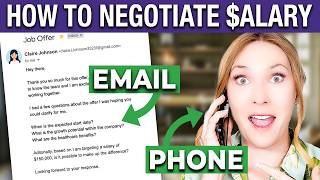
Madeline Mann, an HR leader, walks through salary negotiation after a job offer. Start with gratitude, ask about level and equity, then make one clear ask backed by market data. Avoid personal expenses, aim higher than your minimum, and be ready to negotiate benefits or other pay elements if they won't budge on salary.
Chapters
Here is how to negotiate salary after the job offer with an example conversation and email. And stay to the end because I'll also share the exact thing you can say if you already talked about salary earlier in the process and now you want to ask for more money. And you are in good company because this channel is responsible for thousands of negotiation success stories amounting to millions of dollars in salary increases. So let's turn that bread into a whole bakery, my friend. If you're new I'm Madeline Mann. I am a human resources leader and job search strategist who turns job seekers into job shoppers. You may recognize me for being a top job search instructor on Spotify and LinkedIn learning, or you may have seen me on ABC, Bloomberg, New York Times, and more. Subscribe because what's the best that could happen? Do you land more job offers and get the best salaries of your career? When negotiating salary after you get an offer, there's a few important key things to to keep in mind that could be the difference between dramatically increasing your salary or completely low balling yourself. First, know that you have the most negotiation power with this company at this moment than any other time with them. So let's make the most of it. There's so much terrible advice out there about negotiation and one of them is to ask for salary based on your personal expenses.
And so when you go to negotiate, you go, hey, I really would like to make $75,000, not 70. And they're like, okay, I inst would say something like this my significant other and I will have to make some changes. So I've really sort of agreed upon the next rule with him because I'm going to pour so much of myself into it. I need to make at least $75,000 for our next step as a couple. And so I've kind of gone back and forth with him on that. And so for that reason I really need the $75,000.
Don't do this. I have been on the employer side of thousands of negotiations and I can't tell you how many people have been shot down with this type of strategy where they talk about their car payments or their childcare salary should reflect your value, not your expenses. I want you to reference what other companies are paying in the space, other offers you've received, or simply state your target salary. My clients consistently are able to pit multiple companies against each other and have a bidding war because they use job shopping strategies to land multiple offers. For more on those strategies, I will link a free class below. Let's Begin the example conversation. The first thing you start with is gratitude. It sounds something like thank you so much for this offer. It has been so great getting to know the team and I'm excited by the idea of potentially working together. If you skip this part, they are so much less likely to increase your salary. Full stop. We are here to inflate your paycheck, not your ego. So even if it's a low offer, showing gratitude and interest makes them more collaborative and confirms that you are the right person to choose. I once had someone open with I'm disappointed by the offer, which is a low value trigger way of conducting a negotiation. Let's remove the negative emotions from the conversation. The next thing you'll say is ask any clarifying questions you need to understand before you counter. This could be something like I saw this offer was made as a senior manager instead of director level. What is the difference between those two levels for this role? I see there's a performance bonus. What percentage is that and how is performance determined? I see I get stock options. Could you explain the strike price vesting schedule and what percent they are of the whole pool? So you want to be negotiating from a place of truly understanding the offer you're getting? Then make the ask. It's time to add some green to this deal. Hold the veggies, Just cash. This will sound like based on blank. I am targeting a salary of blank. Is it possible to make up the difference? So whatever it's based on your amount of experience, the salaries you're seeing out in the market, your other offers, so on, say that and then zip it. I hear too many people negotiate against themselves where they say something like sorry, is there any way we could actually increase the salary to 160,000? But if not, that's okay, I understand we could also do less. No? If you're going to ask, ask. Usually you won't get an answer in the moment. They will hang up and then call you back with a revised offer. And when you do get the revised offer, they sweeten the deal even a little bit. I want you to think thank them for their flexibility. Remember gratitude. If they still are too far away from your salary request, though, you need to keep in mind that they will almost never give you exactly the number you asked for, but instead a number in between what you asked for in their initial offer. So don't ask for your minimum salary amount go higher. So like I was saying, if they don't get to your number, you can either decline the offer because you two are way too far off or negotiate other ways to make up the difference. I'll link a video below with eight ideas of what additionally you can negotiate for and then let's say you already agreed to a salary range earlier in the interview process and want to renegotiate. I will give you what to say, though I will preface that you really should have high integrity when negotiating with a company. If they were upfront about compensation and you led them to believe that that compensation was suitable, you really shouldn't yank the employer around the same as if they told you it would be one salary and then they offer you something lower. What' best to do is to come into the interview process with a clear and confident approach to discussing salary and I will link a video below that will teach you how to do that. That being said, I once heard a candidate frame it well and honestly, he said. I know I agreed to a target salary when we first started interviewing, but after interviewing with other companies and getting a better sense of my value, I have seen that I should be aiming for X salary. Now you can take all of this, I said, and pop it into email form. Easy peasy. But if you want me to write it out for you, no problem. I actually put this email in a document that you can download easily for free. I do recommend that you save that email for the rest of your career and future job searches. I am hugely rooting for you for this offer. If you got any value from this video, be sure that you hit a like on this video and subscribe to this channel. You've got this wi fi high five.