Science Of Sin & Success - Bible Success Secrets
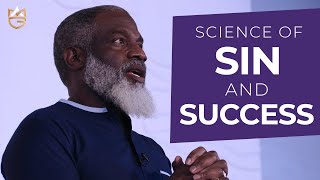
Live YouTube Bible study by Myron Golden teaching on James chapter 1. Golden emphasizes identity (James as "a servant of God"), the ethic "swift to hear, slow to speak, slow to wrath," and the call to "lay apart all filthiness" and "receive with meekness the engrafted word." He repeatedly parallels biblical teaching (Psalms 1, Deuteronomy 6, Isaiah 55) with scientific principles (conservation of energy, entropy, inertia/momentum) and a tree metaphor (gravitropic roots vs phototropic fruit) to argue that doing good requires intention while evil/decay requires none; he concludes with a practical definition of success: discover God's will, develop for it, deploy to do it.
Chapters
Be just as good, maybe even better. Who knows. So welcome, welcome to Bible study Wednesday morning. How many y' all like the idea that we're starting later now? And suppose of 7:30, we're going at 10 o', clock, is that helpful for some of y'? All? Okay, it's helpful for me because I don't, I mean I, I said I don't have to get up as early but this morning I was up at 3:30, so I just couldn't go back to sleep. So what are you gonna do? Some days you're sleepy head and other days not so much. Right. So. And we're getting ready to go live on YouTube here in a few minutes. We're live on YouTube. Okay. And these are YouTube comments. I can see over here. Okay. Yeah, I see Nancy. Nancy Daniels. Is that what it says? Dennis, Nancy, Dennis. The screen is really far away from me, but welcome, welcome Nancy. Glad to have you here. Build with Kepler. Good to see you Kepler. And Talisha. Is that what that says? Felicia, what's happening my peeps? So believe it or not, believe it or not, last week we got. I got accused. I got accused of this being a recording and I was live. That's not fair, man. Like I was live. Okay. I'm live right now. Okay? Yes, you say. Myron, you sound like you're offended that we thought you were recording. That's like me answering the phone saying, hey, what's up my people? And somebody said, is this a recording? No, it's not recording, it's me. Anyway, anyway, I'm live here. Oh, Instagram. What's up? Inst. Inst. IG my peeps. Wow. We got people everywhere. Got IG people over here, we got YouTube people over here, we got zoom people. There's so many people here. Yeah, really looking forward to Bible study, Samuel. I can win all the way over in the uk Driving on the other side of the road. What's up? Yeah, let's go, let's go. So I am going to, I am going to get started here with Bible study right now. So last week we were talking about. We were in James chapter one. We're still in James chapter one. And man, it's amazing how much the Bible has to say about all of this stuff. And we got so many people join us on YouTube. We got Lydia and we got, we got Stanley, we got Liz and, and I'm just reading the names I can see from here. Cynthia Brown and, and Tanya. And then we got a bunch of people on Instagram that I can't see what's up, Instagram peeps. I can't see y', all, but, I mean, I can see y', all, but I can't see y'. All. So. So we're. We're. We're. We're talking about James Chapter one. And. And one of the things I really hope you guys get is the Bible's not a book about religion. That's not what it's about. It contains religion, but that's not what it's about. The Bible is a book about a king, a kingdom, a royal family, and the culturalization of a foreign land. That foreign land is called Earth. Right? So that's what the Bible is about. And God is a king who wants to make you a king. If you're a man, he wants to make you a king. If you're a woman, he wants to make you a queen. If I'm on YouTube, I want to ask you to like and comment and subscribe. That's funny. So Zach just hung a sign for me because I was like, I forget, like, this is social media for me. It's just doing Bible study. And so I got to be reminded, like, ask people to subscribe and to comment and to share and all that. What's it called? Social media stuff. Do all the social media stuff that they don't do on those social media things, right? And. And those. For those of you who are on Instagram, if you go over to YouTube, like, that'll be really cool because you'll be able to watch the whole thing. You'll be able to see my whiteboard and everything, because I've really learned a lot of really cool stuff in the last week that I can't wait to share with y'. All. So we've been in James Chapter one, and. And it's really interesting. James. James. A lot of people don't realize this about James. As a side note, James was the half brother of Christ. Same mother, different father. Right? So, so. So James, he was the senior pastor at the church at Jerusalem. But. But that, in his mind, that was not what was valuable about him to him. Right. What was valuable to James about. About him was the fact that. That he was a servant of God and of the Lord Jesus Christ. It's so interesting when he starts writing his book. So many people. I think one of the biggest problems people have is they have way too much to prove. They're always trying to prove something. Like, you don't have to prove anything. Who you are is enough like God made you to be. You're enough. Right. So you don't have to try to prove anything to another human being that you're worthy of. Like you're here. If God thinks you're worthy, who cares what another person thinks? I love what it says in Philippians, chapter two. It says, let this mind be in you, which was also in Christ Jesus, who, being in the form of God, thought it not robbery to be equal with God. So he knew who he was.
He thought it not robbery to be equal with God, but he made himself with no reputation. What does that mean? That means he wasn't trying to make sure everybody knew who he was. I want people to respect me. Why? Who cares? Like, do your assignment. Right. And he said, let this mind be in you, which was also in Christ Jesus, who, being in the form of God, thought it not robbery to be equal with God, but made himself of no reputation and took upon him the form of a servant. And he was made in the likeness of men, so he took upon them the form of a servant. So he had nothing to prove, and he was in the form of a servant. He was made in the likeness of men, and being found in fashion as a man, he humbled himself and became obedient unto death and even the death of the cross. There's so many things like, let that mind be in you, the mind that has nothing to prove, the mind that knows who you are, the mind that's willing to serve, the mind that's willing to be obedient. Right. Which really doesn't have anything to do with what I'm talking about. Except I thought of it while I was talking about the other stuff in the Book of James. James, chapter one starts out James, a servant of God and of the Lord Jesus Christ, to the twelve tribes which are scattered abroad. Greeting. So when he wrote his letter, he didn't say, James, a half brother, the half brother of the Lord. He didn't say, James, the senior pastor at the Church of Jerusalem. Oftentimes, we want our pedigree to be our significance, don't we? Right. We want. We want the family that we come from or the group that we belong to. We want our pedigree to be our significance. But our pedigree is not our significance. Or if it is, you're getting your significance from the wrong place. Some people want their position to be their significance. Right? I'm the senior pastor at the Church of Jerusalem. Right? I'm Dr. Myron Golden. Dude. I'm Myron Golden. I mean, yeah, I'm Dr. Myron golden, but I'm just. I'm Myron Golden. Like, if somebody didn't call me Dr. Myron Golden, I am not the least bit offended. Just call me Myron. Okay, so we're gonna. We're Gonna shut down IG right now. So if you're on IG watching, go over to YouTube and watch. You'll be glad you did because this Bible study is about to get lit. Okay, so just James, a servant of God and Lord Jesus Christ. The reason I want to bring this up is because far too often people are getting their sense of significance and their primary identifying factors from the wrong place. If your primary identifying factor isn't coming from where James came from, I mean, talk about a claim to fame. The half brother of the half brother of Jesus and the senior pastor at the First Church.
Right? That's pretty significant. That's not what he said, though. He said, james, a servant of God and the Lord Jesus Christ. So if your primary identifying factor is the fact that you are a man or that you are a woman, or that you are black, or that you are white, or that you are Hispanic, or that you are Asian, or that you have a PhD or that you have. You're a part of some club, you're missing the point.
Anyway, that was free. That was a free.
Little review that we didn't talk about last week, but I thought about it just now because of where we're going. So last week we were talking about.
Verse 19, wherefore, my beloved brethren, let every man be, swift to hear, slow to speak, slow to wrath. How swift should we be to hear? We should hear twice as fast as we talk, right? What does that mean? Well, God gave us two ears, one mouth. Hey, maybe that's a clue, right? Maybe that's a clue. He gave us two ears, one mouth. He didn't give us two mouths and one ear. But so many people talk twice as much as they listen. I would recommend against that. I would recommend that you listen at least twice as much as you talk. You want to know how to get better at anything. Make your preparation time twice as long as your performance time. In any arena you want to be a good teacher, spend twice as much time learning as you spend teaching. Anyway, that was free.
Swift to hear, slow to speak, slow to wrath. For the wrath of man worketh not the righteousness of God. Wrath, by the way, is anger that bubbles up really, really quick and causes you to throw something, say something, do something that you regret later. Scripture says that does not work the righteousness of God. Like, we need to get Control like over our like attitudes, right? That bub, that boiling over of anger is not cannot serve you. And then it says, and then it says verse. That was verse 19. And then verse 20 says.
For the wrath of man, work not the righteousness of God. And then it says wherefore lay apart all filthiness and superfluity of naughtiness and receive with meekness the engrafted word which is able to save your souls. So lay apart all filthiness. That's just the just filthiness, right? Superfluity. That means excessive abundance. Super abundant naughtiness. Like lay it depraved depravity, evil, malice, trouble, naughtiness, wickedness. Lay it apart and receive with meekness the engrafted word, with humility the engrafted word which is able to save your souls. Now let's begin with prayer. Father, thank you for your word. Thank you that it's truth. I pray that you would help us to apply this truth to our lives. In the name of Yeshua. Amen. So he says wherefore? And remember what I said last week. Now when we are reading in scripture and we see the word wherefore, we see the word, therefore we have to refer to what came before, right? So he's saying wherefore because of all the things I just named. You want to know what they are? Go back and look at the past couple of weeks Bible studies, right? I'm not going to do another super long review. So because of all the things we just covered, lay apart all filthiness and superfluity of naughtiness and receive with meekness the engrafted word which is able to save your souls. Now I want you to notice that like so many other times in Scripture before he told us what to do, before God tells us what to do, he tells us what not to do. He tells us to don't the don'ts before he tells us to do the do's. He tells us to stop the things that are not good before he tells us to take on the things that are good. Why?
I think there are a couple reasons. One of them is named later on in James in James chapter three where it says out of the same fountain proceeds out of the same mouth proceedeth blessings and cursings. Out of the same fountain proceedeth sweet water and bitter. My brethren, these things ought not so to be so we need to get like. One of the reasons we need to get rid of the filthiness and the superfluity of naughtiness is so that we're not sending mixed messages of light and darkness to the people we're sent to be a light to.
This verse reminds me of Psalms, chapter one. It says in verse one, blessed is the man. Now, you'd think it's going to say that does this and this, and this, but it doesn't say that. It says, blessed is the man that doesn't do this, doesn't do this, doesn't do this, but he does that. Huh. Isn't that interesting? Blessed is the man that walketh not in the counsel of the ungodly.
Nor standeth in the way of sinners, nor sitteth in the seat of the scornful. Okay, so blessed is the man who doesn't do these three things, but does these. But his delight is in the law of the Lord, and as law that he meditate day and night, he shall be like a tree. So you say. Myron, what are you saying? I'm saying that when we focus on putting intention into not doing evil, put intention into stop sinning, to stop doing bad deeds. And here's what. Here's what I know. So I was thinking about this from a scientific perspective. So I'm going to go over to my whiteboard. I'm going to write on my whiteboard because I think. I think it would be. I think it will be helpful for us to get this. So if you think about the laws of physics, I love the fact that God established the laws of physics, the laws that govern our experience of life in one sentence. They govern our experience in time, space, and matter. Right? And God set that up in Genesis chapter one, in the beginning, Boom, there's time. God created the heavens. Boom, there's space and the earth. Boom, boom, there's matter, right? So God set up the laws of physics in a sentence. And then human beings have been writing volumes and creating courses around those seven Hebrew words, 10 English words, for millennia. Well, here's what's really interesting. If you look at the laws of physics, if you look at the first law of energy, it's everything, okay? And my whiteboard wants to get goofy on me. So the first law is that everything is energy. So I'm going to. I'm going to restart this.
Let me see. How can I do that? So everything is energy. I'm going to say it first. I'll come back and write it in a minute. So everything is energy. Energy is neither created nor destroyed. It just changes form. Right. I'm going to turn this back on here in a second. So everything is energy. Energy is neither created. Or destroyed. It just changes form. Now, if we understand that law, that means. That means that energy.
Okay, so. Yep, yep, yep. Sorry about that, guys. Of course, technology wants to act goofy when you need it to act, right? Right. Okay, so I'm connected. It says.
Oh, hey, guys. Yeah, while we're. While I'm doing this. Thank you. Like the video. If you like it, comment on it, subscribe. And I don't know what I'm supposed to do here. I'm going to just go. I put network settings and put it up, but it's not working, so I'm going to go offline mode. I just went to offline mode, so it's fine. So understand everything is energy. Energy is neither created or destroyed. It just changes form. I want you to think about that because, like, we are always converting our energy into something.
From something we have into something that we'd like to have, right? We go to work so we can convert our work, our time, into money. That's how most people work, right? They sell their time for however many dollars an hour. So we convert our time into money. So we're taking one form of energy time, and we're converting it into another form of energy money. So the first law is everything.
Seriously.
Okay, hit exit at the top. Okay. Okay, we should be good. It's connecting now. Enjoy. Okay, so.
This whiteboard, okay, does not want me to do Bible study, but that's okay because I'm going to do it anyway. I'm going to. Okay, so everything is energy. I should have it now. Now, for those of you who are wondering if this is live, I bet you know now it's live, don't you? Okay, cool. So everything is energy. Everything is energy. And since everything is energy, and energy is neither created nor destroyed, it just changes form, we have to be very intentional about the energy that we put out because we're going to turn it into something else. Now, here's what I. So that's the first law. The first law is every. Is the law of energy. This is called the law of Energy, the sec, or the Law of Conservation of Energy, for those of you who are like detailed scientists and you want me to say the whole thing. The law of conservation of energy is everything is energy. Energy is neither created nor destroyed, just changes form. Which means I can plant a seed in the ground and the seed transforms into the energy of a tree. And then I chop down the tree and I throw it in the fireplace, and the wood turns into the energy of fire. And then the fire turns the wood into the energy of ash. And then I put the ash in the ground. Then it turns into the energy of fertilizer, and the whole thing just starts all over again. Right? Everything's energy. Nothing goes away. It just moves into something different. Okay, now, the second law of energy is the law of entropy. I was thinking about this this week. And so the law of entropy states that anything left to itself tends to move more and more towards disorder. Now, when you think about. When you think about entropy from a spiritual perspective, the thing that we have to realize is this.
Evil does not require intention on our part.
Did you hear what I said? I don't have to intend to do evil. Like, I can accidentally do evil. How do I accidentally do evil? By not intending to do good. See, good requires intention. Evil requires no intention because we live in a world that is constantly deteriorating. If I plant a garden, I don't have to intend to destroy the garden. All I have to do is not intentionally pull the weeds.
Like, if I've got this body, and I've got this body, I don't have to intend to make this body deteriorate, wear down and wear out early. All I have to do is not intentionally make it move. Movement is medicine. Motion is lotion. So if I don't move my body, it stops working for me. Right? It develops. Entropy creates atrophy. Right? And so here's why I'm talking about this. Because so many people think that because they didn't mean to hurt somebody that they should be excused. Well, I got news for you. Until you intend to do good to people, not just don't intend to hurt them, but you have to intend to do good to people. And until you do, like, it's like people. It's like people. And I'm gonna talk more about this when we get to James, chapter three. If we make it all the way to James, chapter three. So people. Well, I wasn't trying to hurt their feelings. I was just saying what I was saying. No, it's not about you not trying to hurt their feelings. You have to try not to hurt their feelings.
That's not what I meant. It's not my fault you took it that way. It is your fault that you took it that way. Cause you didn't. You didn't. The Bible says that our word, our words, should be with grace seasoned with salt. What does that mean? Let our words be with grace seasoned with salt. What is grace? Grace is a gift. What do you do when you have a gift for somebody? What do you do? What do you do. When you have a gift for somebody, you wrap it in a package, right? So when you get ready to say some words and you're like, well, this person just needs to know this, well, they may need to know it, but they may not be willing to receive your gift if you don't put it in a pretty package. Just because you're right doesn't mean you're right. You can be right wrongfully, and you can be right wrong. You be wrong rightfully. You can be right wrongfully. You have to intentionally, like, you have to put energy into making sure that you file all the edges off of those words before they come out of your mouth. Because my words, when you hear my words, they should be intentionally designed to build you up. When I hear your words, your words should be intentionally designed to build me up. Hmm. Isn't it interesting that a couple verses earlier it was saying, let every man be swift to hear, slow to speak, slow to wrath. Maybe the reason we're supposed to be slow to speak is because before those words come out of our mouth, we're supposed to take our time and wrap them up in a pretty little package so somebody doesn't get the wrong idea and miss the point completely.
It is the job of the teacher to cause the student to learn. It's not my fault they didn't get it. If you are the teacher and they didn't get it, it is your fault.
That too tough. That too tough. I'm in Florida. We can handle it in Florida. We tough down here.
So you. Hey, all I'm saying, all I'm saying is, like, to do good requires intention. To hurt somebody's feelings doesn't require intention. And you say, well, it's not my fault their feelings got hurt. I wasn't trying to hurt their feelings. But you didn't try not to hurt their feelings.
So, hey, brother, I got news for you. Your wife is mad at you right now because you hurt her feelings. And you weren't trying to, but she mad at you. Hey, you did not hurt her feelings. So you did it before you let the words come out of your mouth that you're speaking to your children, that you're speaking to your co workers, that you're speaking to your employees, that you're speaking to your students, that you're speaking to your teachers, friends, spouses, parents, everybody. Wrap them up in a pretty little package and make the words that you speak like a gift.
Because it requires intention to do good. It requires no intention to do evil. If I step on your foot Because I didn't see your foot. I still owe you an apology. Are y' all tracking? See, we thought not having the evil intention. Well, that's not what I meant to do. That's their problem. No, no, no, no. It's your problem, too.
That's why Jesus said, if your brother has ought against you, it didn't say, if you have ought against your brother. If your brother has ought, which means anything against you, then you don't go. Don't go. No, don't, don't. You can't put in an offering and make that go away. You, like, leave your gift at the altar, but you go make it right with your brother, then come back and give your gift. See, here's the problem. We want to treat people bad and then pretend we're treating God good. But here's what Jesus said. When you've done it unto the least of these, you've done it also unto me. I'm going to tell you how you can tell your real character. You can tell your real character by how you treat people who have nothing to give you. Don't be talking down to the server at the restaurant. Don't talk down to the person at the gas station. Don't talk down to the person at the convenience store. Don't act like you're better than the person who's at the dry cleaners. You're not. There's not a human being on Earth better than another human being on earth. And we have to apply some intention to treating people good. Because how we treat people is how we treat God. You say you love God whom you've not seen, but you hate your brother whom you have seen. You're only deceiving yourself, okay? Wherefore lay apart all filthiness. So I was thinking about. I was thinking about the law of entropy, right? Then I was thinking about. Now I was thinking about after the Law of Energy. I was thinking about the law of entropy. And then I was thinking about the law of inertia, right? And so. And I know you're probably. I know what you're thinking. I thought this was Bible study. This is science class. It's both, okay? Because the Bible. The Bible is a book about science and math and language and everything and treating people good. So, by the way, if y' all like this, like it. Comment, subscribe, right? Hit like, subscribe, comment. All that stuff. They keep reminding me to say that y' all, like, I want to teach the Bible. And my team's like, ask them to subscribe. Please subscribe so Zach doesn't beat me up. Okay. All right. So. So inertia. So inertia. And Zach knows I'm only kidding. I. This is. I. I work for him. So inertia. So inertia is. Inertia is. An object at rest will remain at rest until. Unless it's act upon by an outside force. Right. That's inertia. And then there's the law of momentum. Right. And momentum is. An object in motion will continue in motion until. Unless it's acted upon by an outside force. And here's the problem. See, what's going to happen is we're going to either apply the law of inertia to energy and momentum to entropy, or we're going to apply inertia to entropy and momentum to energy.
What? What just happened? I think my head just exploded. Wait, what am I saying? I'm saying, so the law of entropy. Anything left to the law of inertia, Anything left to itself. I mean, an object at rest will remain at rest until. Unless it's acted upon by an outside force. So.
If somebody is perfectly happy.
They will remain perfectly happy until and unless they're acted upon by an outside force, that outside force might be you. If somebody's perfectly miserable, they've got inertia in misery, and they're stuck like Chuck in a pickup truck on the highway of misery. And you come along and have the opportunity to brighten their day, and you don't do it. Like, you can use the energy of momentum to overcome the inertia of their entropy and help them get out of that fog with an encouraging word. Anybody can be encouraging. It requires no special talent, no special skills. But you have to intend to do it. Like, you have to set your day. Like you have to set up in your. Like, I used to be in this network marketing company that sold insurance and investments called Al Williams, now Primerica. But there was the guy who started. His name was Art Williams. Art Williams was a high school football coach who started selling insurance part time and investments part time. And Art Williams used to say, I want to pretend I got a flashing sign on. I mean, he said, no, you got to pretend you got a flashing sign that everybody you meet has got a flashing sign on their chest that says, say something good to me. Make me feel special. I want to be somebody. What if that was your motto? You pretended everybody you meet had a flashing sign on their chest that says, say something good to me. Make me feel special. I want to be somebody. They don't have the flashing sign, but I promise you that's what most people are feeling.
And so what we have to do is we have to make sure we're very intentional to do good. That's why he said, wherefore lay apart all filthiness and superfluity of naughtiness, and receive with meekness the engrafted word with which is able to save your souls. And it says, receive with meekness the engrafted word. Receive with humility, the engrafted word. Engrafting.
Is an interesting term. Receive with meekness the engrafted word. And it's really. Engrafting is like when you take something from one tree, and then it's almost like a skin graft. You take something from one tree and then what you do is you. You make the insides touch, and you. You wrap them up with some wire or some tape or some rope or something until they start growing into each other. And so what we're supposed to do is we're supposed to make this word. We're supposed to make this word engrafted into our lives so it becomes a part of our being, Right? And again, so I'm parallel. I'm paralleling two passages. I hope you can see what I'm doing here. So from James, chapter one, saying, wherefore lay apart all filthiness and superfluity of naughtiness, and receive with meekness the engrafted word which is able to save your souls. Souls over. In Psalms, chapter one, it says. It says, blessed is the man that walketh not in the counsel of the ungodly. What does that mean? That means I should not get my direction. I should not get direction from people who are ungodly.
I remember when. And some of y' all disagree with this, but I don't. That's like, I'm not necessarily running for office. So I am not politically correct at all. But I can remember when it was time for my children to go to college. And they're like, dad, I don't want to go to a Christian college. I want to go to a real school. You can go to any school you want to if you pay for it. But I'm not going to pay some heathen to unteach you everything I spent your whole life teaching you. I'm not going to pay some heathen to teach you God ain't real. That ain't happening. You say, marion shouldn't say heathen. I already said it. And they don't mind being called heathen. They know they're heathen. They are not surprised. They don't believe in God. Like, I'm not going to pay somebody who doesn't believe what we believe. And I'm going to pay them to unteach what I spent 18, 19 years of your life teaching you. I ain't that interested in you getting a piece of paper to hang on the wall. Hey. And we can say what we want to about the children of Israel. But one thing they didn't do, they never paid the Philistines to educate their children not to believe in their God. Oh, snap. Did he say that? He said it. And so, interestingly enough.
It says.
Blessed is the man that walketh not. You don't get your direction from ungodly people, nor standeth in the way of sinners. You don't just loiter hanging around with people who have evil intent. Why? Because their intent is going to rub off on you. Like, when you're hanging around a bunch of sinners, you need to look so out of place they don't even approach you with any of their stuff.
Then it says, nor sitteth in the seat of the scornful. Here's what happens if you walk.
If you get your direction from ungodly people and you hang around people to whom sin is their fun, eventually you will sit in the seat of a mocker, and you will mock the things that your ancestry believed. Well, it says, but his delight is in the law of the Lord. Now, I'm gonna tell you something, y'. All. I'm gonna tell you something like the. Like I do, like the success I have in my life. I know where it comes from. I am not confused. I don't think I'm a genius. I am a genius. But so are you. I'm no more genius than you are. The success in my life comes from the fact that I learned this passage of scripture when I was 17 years old, and I asked myself this question. What if it's true? What if his delight is in the law of the Lord and his law, that he meditate day and night? That word, law. It's the teaching and instruction of God. And his law that he meditate day and night. He. He shall be like a tree planted by the rivers of waters. Now, I want you to think about this. He'll be like a tree planted by the rivers of water. Don't you want to be like a tree?
Like, planted like a tree, Right? Don't you want to be like a tree planted by the rivers of water? You're solid. You're planted. But not only that, by rivers of water. You're pliable. Don't you want to be pliable like a tree? You're planted by the rivers of water. When the wind blows, you don't break. You just bend with the wind, but you don't break.
Planted by the rivers of waters that bringeth fort his bringeth forth his fruit in the season you'll be. Don't you want to be productive like a tree? I'm telling you, the word of God doesn't. And I shared this last week, I think. Or the week before, the week before that, but we can't say it enough times. Isn't it fascinating? Well, it's fascinating to me. It may not be fascinating to you. I'm easily fascinated. And I know some of y' all probably think this guy's more fascinated than a third grader. I am. So just deal with it. Okay? But isn't it fascinating that.
The first thing that God ever said to a human being was be fruitful and multiply, replenish the earth and subdue it and have dominion. So when you think about fruit, what is the fruit? Well, Genesis chapter one tells us a fruit is a living organism whose seed is in itself. So God, when he said to man, be fruitful, he's saying you produce on the outside based on what I put on the inside of you, Right? Well, if we look at another passage of scripture, In Isaiah, chapter 55, it says, as the rain cometh down and the snow from heaven, and it watereth the earth and maketh it bring forth in bud, that it may give bread to the eater and seed to the sower, and bread to the eater. So shall my word be that goeth forth out of my mouth. And it shall. It shall accomplish that which I please, and it will prosper in the thing whereunto I sent. This is Isaiah, chapter 55, I think. It's like verse 10, 11, and 12. Well, what's fascinating about that is God said that the word of God is like the rain and the snow that comes from heaven. When it waters the earth, it makes the earth bring forth, and bud, it makes the earth productive. Isn't that interesting? Why? Because we as human beings are made from the dust of the earth. We're made of earth. God put a seed inside of us that we're supposed to use to produce something on the outside of us. How do we do that? We let the word of God rain down in our lives and bring nourishment to the seed of potential that God put inside of us so that it can be fruitful and Multiply or increase like, this is so amazing. You see how it all keeps coming back and saying the same thing over and over and over again. And God is just reconfirming and reconfirming and reconfirming with what he's already said. So it says he should be like a tree planted by the rivers of waters, bringeth forth his fruit in the season. Don't you want to be planted like a tree? Don't you want to be pliable like a tree? Don't you want to be productive like a tree? His leaf also shall not wither. Oh. Don't you want to be pretty like a tree? And protective like leaves protect people from the sun? Don't you want to be protective like a tree?
His leaf also shall not wither. Now watch this, y'. All. Whatsoever he do, it shall prosper. Don't you want to be prosperous like a tree? I am here to tell you your best chance of living your best life is to apply the word of God to every aspect of your life. You want to be a better parent. Parent. How? The word of God tells you to parent. You want to be a better husband. Husband. Like the word of God tells you to. Husband. You want to be a better wife. Wife. Like the word of God tells you to. Wife. You want to be a better entrepreneur. Entrepreneur. Like the Bible tells you to. Entrepreneur. I am telling you, like, people think that I just say this because I don't. I don't. I don't even know what they think. I'm just like, I don't. I ran out of something to say. I might as well tell people to go, like, build their life based on a Bible. No, this is like, I am telling you, this is what I have been doing for over 40 years.
Like 44 years. I have been building my life on these principles that are like. That are come from the word of God. And I am telling you all of the success. And. And by the way, let me define success. Success is discovering the will of God for my life, developing myself for that purpose, and then deploying myself to do that, fulfill that purpose. That is success. The money is a byproduct. It's a good byproduct. I like the byproduct, but it is a byproduct. It's the gravy on the potatoes. It's the icing on the cake. Wherefore lay apart all filthiness and superfluity of naughtiness and receive with meekness and grafted word which is able to save your souls. That Word souls that's talking about it's able to save your life.
Now, here's what's interesting. Here's what's interesting. That so many times in scripture, the scripture, Deuteronomy, chapter six, these words which I commanded this day, so be in thine heart, and thou shalt teach them diligently unto thy children, and thou shalt talk of them when thou sittest in thine house, and when thou walkest by the way, and when thou liest down, when thou risest up, and thou shalt bind them for a sign upon thine hands, and they shall be as frontlets between thine eyes, and thou shalt write them upon the post of thine house and on thy gates. What am I saying? I'm saying the word of God should be every aspect of your life. You really want to build some momentum, Start applying the word of God to every aspect of your life. It's like Jesus said to the believing Jews that lean on him in John, chapter eight. It says, if you continue in my words that are you my disciples indeed? And ye shall know the truth, and the truth shall make you free. Didn't say set you free, make you free. Which means, like, it is my job to apply, actively apply the truth to my life. It's the truth's job to make me free. Any area of my life in which I am not free is an area of my life in which I am not actively applying the truth. Like, I. So, guys, this Bible study is like, every Wednesday. I really am live. I mean, I see all these people. I see. I see Stacy and I see Tamika, and I see. I can't read all the names because I'm far, far enough away that the print's not that big. But I see all y'. All. And hi, I see the hundreds and the hearts and the fire emojis, all that. But it's the word of God. So this is live. I got accused last week of being a recording. I'm not a recording. So if you like what you hear, if you like this, like it. Comment, subscribe, like, subscribe to our channel. Share this video with other people. Like, if you. If we will do this, it will change our life. And I know. I know it's already been 30 minutes, but y' all mind if I go a little bit long? Because I have one more thing I want to show you, and they want you to. Somebody want you to go over those success. Hit those three points again. Which three points? The success points.
The success points. Hit the three success points again. I will. I don't remember what they were, though. So just if you can figure out what they were and remind me. I'm not listening to me, y'. All. I'm. It's your job to listen.
I said a lot of stuff. Oh. Oh. The definition of success. Okay, the definition of success. Discover the will of God for my life. So in other words, I discover the purpose for which I was created, right? Then I develop myself to fulfill that purpose, and then I deploy myself into the marketplace to do that purpose. Then and only then am I successful. I might make a lot of money doing something for which I was not created. I cannot consider I might be rich, but I'm not successful. Right. If I do the thing that I was created for and I don't make a lot of money, I might not be rich, but at least I'm successful. I mean, both is good, right? And one generally leads to the other. So here's what's really interesting. When I said, don't you want to be like a tree? Here's some interesting scientific principles about a tree. And some people are like, why are you combining the Bible and science? Because the Bible created science, created everything by faith. We understand that the worlds were framed by the word of God, so that things which are seen were not made of things which do appear. Like everything. Like everything that we see is made out of invisible molecules, right? We know that that's like, a scientific fact, but it was in the Bible thousands of years ago. So anyway, before they ever discovered a microscope, God told us in the Bible, so things which are seen were not made of things which do appear. Hmm. Isn't that fascinating? Okay, now here's what's really interesting about a tree. A tree is both.
I'm going to write the word down. Here is both gravitropic.
And phototropic. Photo tropic, phototropic. Okay? So trees are both gravitropic and phototropic. So if this is the ground.
Gravitropic means it grows away from light. So it grows in the direction of gravity, right? So it grows away from light. Phototropic means it grows towards the light, right? So? So it grows towards the light. So here's what's really interesting. You can only be as phototropic. See, everybody wants to be phototropic. Everybody wants to be seen. Everybody wants everybody to see their leaves and to see their fruit and to see their success. But you can never be more phototropic than you are gravitropic and have it last. If you're more phototropic, than gravitropic. What's going to happen is eventually something's going to come. If you're. If you're not planted deeply by the rivers of water, what's going to happen is some storm is going to come. It's going to blow your tree over. So what you got to do is you got to make sure that you are intentionally gravitropic. You're doing, by the way, this is under the ground. No one sees it. And if you're diligent about the stuff that nobody sees, then it will become evident what you've done when everybody sees it.
So many people are trying to have phototropic success without having gravitopic roots. This is what the Bible means when it says he should be like a tree planted by the rivers of waters. This is a principle, y'. All. In nature, before anything can go up, it has to go down. It goes down precedes up. You gotta go down deep into the word of God before your life can come forth and shine like a star. You got to do the work in the dark at night when nobody's watching, when nobody can see you. And then when you show up on the scene, people are like, oh, my goodness. I never heard anybody talk like that before. Oh, I never seen anybody. Oh, I never saw.
If you take care of the gravitropic part of your life, God in the Word will take care of the phototropic part of your life. There's no effort. It feels effortless. Why? The effort is in the intention of being gravitropic. The effort is in the intention of getting rid of all the evil, entropy, the sin, the entropy of sin in our lives. Sin and wickedness and abomination. Getting rid of all those things. That's where the. That's. That's the work. The work isn't making every make it. I'm going to go make a lot of. That's not the work. That's just. That's the byproduct. So wherefore lay apart all filthiness and superfluity of naughtiness and receive with meekness the engrafted word which is able to save your souls. So I ranted like I have a tendency to do from time to time. Hopefully it's going to help somebody. If you like this video, please share it with somebody.
Like it. Comment, subscribe, like comment and subscribe. And we'll be back next Wednesday to do this again.
What's that? And I do see that. I see the comments. Yeah, I read it. I'll read all the comments, and I will respond to as many of them as I can, because this is a lot of people. So how many. How many people we got on their lives at 250 people live. I promise I'll comment on as many as I can. So I appreciate y'. All. If you have any questions, ask them on here on the YouTube, and I'll do my best to answer them. Or if there's a passage of scripture you want me to teach on eventually, well, I'd love to do that, too. All right, in the meantime, in between time, I look forward to seeing you all next Wednesday. Peace out, Cub Scouts. I'll talk to you all soon.
More from Clegg

The #1 Skill Gen Z Needs | Simon Sinek + Esther Perel | A Bit of Optimism Podcast







AI Won't Tell You the Full Truth | Arthur Brooks + Simon Sinek | A Bit of Optimism Podcast



How To Make the Best Decision | Arthur Brooks and Simon Sinek | A Bit of Optimism