Simon Sinek on Leadership, Storytelling, and Resilience: Answering Some of Your FAQs
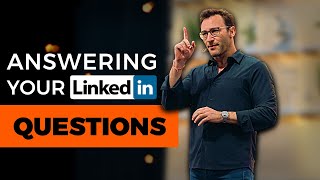
A single-speaker YouTube Q&A in which Simon Sinek answers audience questions about leadership (how to repair culture without formal authority; balancing kindness with accountability), storytelling ("speak it as if it's a movie"), personal practice and resilience (regaining confidence after burnout, dealing with sleeplessness, fostering relationships to prevent loneliness and suicide), and his current interest in researching power dynamics. He offers pragmatic, relationship-centered advice (be the leader you wish you had; build strong personal relationships; hold people accountable) and storytelling guidance (use vivid sensory detail).
Chapters
Hey there. I thought that I would take a moment just to answer some of the most common questions that I get on LinkedIn. So let's jump right in. Steve T. Asks, how do you repair a broken work culture where you are not the one at the top? This may be the most common question I get, which is how to have a positive impact on the organization you work for when you aren't in a position of formal authority. The answer is, be the leader you wish you had. The answer is work to have impact in the sphere of influence you can. You may not be able to impact the whole organization, but you can have impact on the people with whom you work. Those to the side of you, those who may be below you in the hierarchy. And believe it or not, even those above you in the hierarchy, they're human beings, too. So all the things that you've been studying about what it takes to be a great leader, empathy, listening, all of these good things, you do it and what ends up happening is these. These little bubbles form of magic. And then somebody moves and goes to another group, and then they take everything they've learned, all the positivity and joy from that little group and they start to bring it over there, and before you know it, the ripples spread. Now, you have to have a bit of an infinite mindset because depending on the size of the organization, it can take more time than you'd expect. But believe it or not, you can have a very, very positive impact in an organization without being the person in charge. I've seen it happen many times. The tail can wag the dog. So be the leader you wish you had. Okay, I have a question here from Jasmine. How do you find the right balance between having a leadership style that is more soft, friendly, and motivating and about building meaningful relationships than having to have hard conversations and set firm expectations with your team? Well, Jasmine, I got some good news and bad news. The good news is I love that you're that kind of leader. The hard news is you're also going to have to learn the skills to sometimes have difficult conversations with members of your team and hold them accountable. I've seen it happen many, many times where somebody's a good leader, a kind leader, sweet motivating, all those things, but without the ability to hold people accountable, have difficult conversations, or give difficult feedback, what starts to happen is the team starts to be sort of like a hippie commune where everybody gets along but nothing really gets done and deadlines start to flip, slide by and there's no mechanism to hold people accountable. Think about you, think about children. Like, we want our kids to be happy and we want our kids to be joyous, but at the same time, they have to eat their vegetables and they've got to clean their bedrooms right there. There are mechanisms of accountability. So as you go on your leadership journey, you have to learn how to do these things. You're just gonna have to. Likewise, if somebody were really good at hard conversations and really good at accountability, but not so good at the more human stuff that you're good at, they're gonna have to learn those skills too. You wanna be a complete leader? Hayes asks, if you could be a superhero, which one would you want to be? You know, over the years, I have to be honest, I've gone through different ones. When I was younger, I wanted to be the Flash. I think that's because I was a fast runner as a little kid and so went. Well, you know, I kind of went through a Batman phase because he's just a normal human being. I mean, normal meaning he wasn't born with any superpowers or comes from another planet. He's just a guy with a gadget. And I kind of like that. Then there's always Spider man, because, I mean, it's Spider man, but I guess I don't know. What phase am I going through right now? I'm sort of in a Batman y Spider Man y kind of phase. Yeah, yeah, I'll stick with that. Lana asks, storytelling is a powerful skill. What's your favorite tip for crafting a compelling and memorable story? Okay, top tip, how to tell a compelling story. Speak it as if it's a movie. So when I'd like to tell a story, I like to give more detail than people expect. I wouldn't just say, so this guy walks into a bar and he's talking to the bartender. I'd say it's like a dark and stormy night. And this guy, he's been like, you know, walking for miles. He's exhausted. It comes across a bar, and it's one of those old fashioned bars where, like the wood is all rickety and it's like the neon sign reads this Miller Light. And I'm painting a picture of something that I may have seen or maybe really did actually happen that other people can put themselves in my story. In other words, I want it to be like a movie for them. So top tip for telling a good story, Tell it as if it's a movie. Tell it as if you're trying to explain to somebody what you experienced when you were there, even if there was a story about someone else. Hope that helps. Vicky See asks what's next. Great question, Vicki. I've actually been in an intense sort of idea searching mode and not like sort of in a lost sort of, you know, without my glasses on the ground sort of way.
What happens is when I get an idea for something, I become sort of a little bit obsessive with that idea and I want to explore more. And right now I'm really sort of interested in concepts of power. If you look at some of the challenges that business is facing, our society is facing and politics are facing, all these sorts of power struggles, we're seeing it play out in all different ways. And I'm sort of really fascinated what it's like to have power, claim power, feel like you've lost it, feel like you don't have it, what it means to find it, all of these things and how that affects not only the organizations we work in, but how it affects our own well being. So whether it becomes a book or a talk, who knows? Stay tuned. But right now I'm going down the rabbit hole of the research and I'm finding it really fascinating. Over the course of the next few months, I'm sure I'll dribble out some things as I have some insights because I always like sharing them and getting your feedback. Davey M. Asks, what, if anything, keeps you up at night? Many things keep me up at night. I have one of those brains that never shuts off, so there are many sleepless nights. Not because anything bad's going on, it's just because my, my brain never shuts down. But the things that often keep me up at night are I. I'll replay the events of the day or the week and if there's a problem I haven't solved, I'll roll around with it. The hard part is if it keeps me up at night. Sometimes I have to like, convince myself, you know, deal with this tomorrow again. It's not always bad things, but I always sort of, I replay things. I'm in a constant state of learning and improvement. And so I always, I'm, I'm always sort of double checking how I showed up in the situation. What could I have done better? You know, am I happy with what I said? Am I happy with how I performed? Again, not in a stressful way, but always in a state of constant improvement. So that sometimes keeps me up at night? Genevieve asks. Suicide is the biggest killer of people aged 18 to 25. This deeply troubles me. Recognizing a hopeful Future is vitally important for those who are vulnerable. How can the work of optimism be used to facilitate hope and promote wellness? Thank you in advance for considering my question. Genevieve, I share your concern and the way I understand it, one of the biggest challenges we face, if you think about sort of the roots of suicide, the roots of suicide come from loneliness. They come from feeling out of control. And one of the best ways that we can guard against those feelings is relationships, the quality of our relationships. I've talked about it many times before, like, yes, phones are great, social media is fun. But when it gets out of whack, when we're on our phones, we're out for dinner with our friends, when we're on our phones, when we're sitting watching TV with somebody, as opposed to having a shared experience. And the whole point is about sharing experience. Arthur Brooks talks about this quite a lot, which is the difference between happiness and enjoyment. You can do something that makes you happy. Pleasure. Pleasure. He talks about pleasure, right? They don't seem pleasures. You can do it by yourself. Yes. Wherever your imagination goes, the answer is yes. All those kinds of pleasures that you can derive for social media, games, whatever, but enjoyment only happens when you share the pleasure with someone, when you have a shared experience, when you actually engage with somebody, even if you're just sitting on the couch watching TV with someone, you're with them, not on your phone. So for me, please, please, please, please, please foster your personal relationships. And one of the hardest things and best things to do in fostering personal relationship is calling someone when you are struggling, not just when you're having fun. Right? When you are in a bad place, instead of sitting by yourself, call somebody and say, I am struggling, will you? I need your help. And giving someone the honor to sit in mud with you and hold space with you when you're struggling and to be able to say to them, I don't need you to fix anything right now. Can you just. Can you just listen to me for a little bit? That's what I need. That's what fosters real trust. We don't actually build trust with people by offering help. We build trust by asking for it. So I think the best way we can protect ourselves and our mental health is focus on building personal relationships. Eve asks, do you put into practice all the great advice you give? The simple answer is, I really try to. I don't get everything right, that's for sure. I make bad decisions, I act badly, say stupid things, the same as anybody else. But what I try and work really Hard on is how I react after the fact that I do work really hard at all stuff, all the stuff that I write about. I practice. I start with why I believe leaders eat last. And I maintain an infinite mindset and all the practices that are in there. I do work really hard to hold myself and my team accountable, and I have to serve as an example. My team knows that I screw things up and get things wrong, but they always see me take accountability and try to get things right and practice what I preach. So the simple answer is yes, it is a journey. Like everybody else. Bruce M Asks, if you have crashed through illness or burnout at a peak in your career, how do you regain your confidence to get back out there without the fear of it happening again? Great, great, great question. So, couple of different answers. Number one is find someone who's going through the same thing as you. Believe it or not, service is one of the best ways to guard against things happening again and to actually help us improve the lungs that we have been dealt. So find somebody who's going through the same thing and take care of them, coach them, work with them, guide them. That's the amazing thing. You know, Alcoholics Anonymous, I've talked about this before. There's 12 steps to beating the disease of alcoholism. Many of us are familiar with the first step, admitting you have a disease, admitting you are an alcoholic. But it's the 12th step that is so significant. Alcoholics Anonymous knows that if you master the first 11 steps, but not the 12th, you're more likely to succumb to the disease. But if you master the 12th, you're more likely to beat it. So what is the 12th step? Service? It's the. It's the requirement to help another alcoholic. That's what it is. And so find someone that you can go on the journey with by helping them. That's number one. The other one is, is. Is accepting these things. I mean, I've, I've. Everything you've talked about, I've had. I've crashed, I've got, I've burned out. I've hit the bottom. I've done all of these things. And the amazing thing is, once you've been there, you just accept that it happens and you survived and you're okay. And believe it or not, just accepting it builds a. Builds the calluses, builds the strength that you made it through it once. As much as you don't want to go through it again, you can go through it again. Usually, I think the fear that we get is fear of the unknown and once it's known, it's a little less scary, even if we don't want it. That's what got me on my path with start with why I hit rock bottom. Never want to go through that again. But I got through it, Covid. None of us want to go through some of the madness that we went through at work with that, but we got through it. We could have forced that. Should build confidence. Anyway, I hope that helps. Please continue to write in your questions because I really love answering these Take care of yourself. Take care of each other.
More from Clegg

The #1 Skill Gen Z Needs | Simon Sinek + Esther Perel | A Bit of Optimism Podcast







AI Won't Tell You the Full Truth | Arthur Brooks + Simon Sinek | A Bit of Optimism Podcast



How To Make the Best Decision | Arthur Brooks and Simon Sinek | A Bit of Optimism