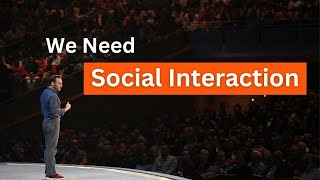
Simon Sinek argues that hybrid work requires balancing the differing needs of introverts and extroverts. He frames coming into the office sometimes as an "act of service," warns that fully distributed work can harm young workers' "mental fitness," and recommends flexible, mixed approaches (in-person time, off-sites) for team wellbeing and development.
Chapters
We know that in person, work really favored the extrovert. We know that, right. And we know that a lot of introverts suffered at work. And then when we all were sent home, the introverts were like, this is the best, right? And all the extroverts really suffered. And so when we're saying, hey, everybody, come back to work. All the introverts are going, nope, no, no, I. I work better at home, right? And the answer is great, except for the fact that there's other people here as well. And you have to do it as an act of service, which is, yes, I do work better at home, but I'm going to come to the office now and then because I know that it's the right thing to do for those who work differently than me. And the extroverts have to say, I know that I want everybody to come back to work because I like it, but I recognize that some people need space to get their work done separately. And so I'm going to allow for flexibility at work. And so I think as an act of service to each other, we all have to let go a little bit of what we want. There's the combined problem of young people who started their careers or early in their careers, tasted work from home, and they think it's the world's greatest thing, except for the fact that they're suffering serious mental fitness challenges. I don't use the term mental health. I don't like the term mental health, because mental health sounds like a standard that you have to reach. And most of us are feeling like you either have it or you don't. I believe in mental fitness, which is something you have to constantly work on. And they're suffering serious mental fitness challenges, right? And the anxiety is getting worse. They come to work, they freak out, and they say, you see, I can't ever come to work. Not failing to recognize that it's the being at home that's creating the anxiety. And so I do think that we have to find mechanisms to bring people back to work or spend time with each other, do plenty of off sites, whatever it is, because I think 100% distributed work is bad for people. But I do think of it as an act of service. I think that we have to let go a little bit of what we want for the good of others and for the good of the team.