The Academy Of Scholars - Empowering Students For Academic Excellence
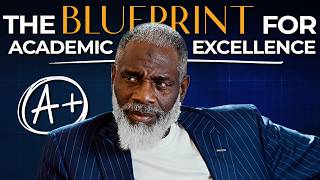
A recorded conversation (YouTube) featuring Myron Golden with Melvin Foote (founder) and Dr. Brian Bolden (principal) of the Academy of Scholars in Atlanta. Foote explains founding the Christian elementary school about 12 years ago after driving his daughter 26 miles to a preferred school; the school now serves ~400 students ages four through sixth grade and emphasizes a Fortune-500/Disney-like campus experience and maintenance culture. Dr. Bolden describes an outcomes-focused pedagogy that teaches children how to think, gets children reading as early as age four (Little Red Book of Reading), and aims to eradicate illiteracy. The video also promotes the Bright Futures Black Tie Scholarship Gala (Nov 16, 6:00 PM), a $500-per-plate, 176-seat fundraising/awareness event targeting entrepreneurs and Georgia businesses, presented as a hands-on opportunity to learn operational excellence and support the school's mission.
Questions this video answers
About 12 years ago.
26 miles one way (about 100 miles round trip per day).
Approximately 400 students.
Ages four through sixth grade.
November 16 at 6:00 PM.
Chapters
I am here with two of the finest gentlemen I've had the privilege of knowing, and they are on an incredible mission. And we are here to invite entrepreneurs to join us on this incredible mission. We are here with the founder and the principal of the Academy of Scholars in Atlanta, Georgia, the founder, Melvin Foote, and the principal, Dr. Brian Bolden. Good to have you guys here. So glad you are here. Yeah, man. I just love the work y' all are doing. It's amazing. I don't. I think people underestimate the importance of making sure children learn to think at a very young age. And one of the things I love about what you guys are doing is that you don't just tell the kids what to think, but at the Academy of Scholars, you teach them how to think. And I think that's pretty amazing. So, Melvin, you founded this school how long ago? Like, what causes a person to say, I'm gonna found a school that's gonna impact the future of our community, of our country and our world by educating children at the highest possible level and getting them started early with a good foundation in academics. Like, what motivated you to do that?
It was 12 years ago, and it was necessary for me to drive my daughter 26 miles one way to go to a school that I was happy with.
Wow.
So it was a great experience. It was a wonderful school. We're still in contact with them now. In fact, they consult with us now with our school.
Wow.
So.
And they consult with you to get consulting advice from you, not the other way around now? No, they consult with you, so you get a consulting advice from them because they were such an excellent school.
Right. And.
Okay, that makes sense.
They're 70 years old.
Oh, well. So they know some stuff.
Yeah, they know some.
They know some stuff. Okay. That makes sense.
In the state. Oh, wow. So we thought that there was a need for an excellent school on our side of town, because not everybody has the ability to drive 26 miles, even if you can pay for it. That's one way.
Wow.
So at the time, I was working out of my house, so it was 26 miles there, 26 miles back. So we did 100 miles a day to get her back and forth to school.
And this is not. We're not talking about college. We're talking about elementary school.
She was in the ninth grade when she.
Oh, she was in the ninth grade. Okay. She was in ninth grade when she started school. Okay, so. So you drove 26 miles. So the first thing I get from this, this conversation is, like, really excellent schools. Are hard to find. Right. Like, and maybe. I mean, for. In some communities, maybe even impossible.
Right, right.
But you said, okay, so I want to. I don't want other parents to have to go through what I had to go through to find a good place to educate their children. So I'm going to start a school. That's. That's the conclusion you came to.
And I thought that it was important that we start before the children were lost. In other words, if you have a good foundation and you learn to love learning, you can build on that, as opposed to us starting a school at maybe eighth grade and they're already behind. I wanted to be where we could make the most difference. We could get them a good start and allow them to be ready for the next level.
So basically, if you start the children, when you start working with the children, when they're behind, some of them may never catch up. But if you get them far enough ahead, then you don't have to worry, then they may never get behind. Oh, you heard me before I drove up. Yeah, that's what's up. That's such a beautiful thing. And.
The whole idea. So, like, when I hear the name the Academy of Scholars, when I see the campus, and that's a weird word for an elementary school, right? Campus. Because when you think of an elementary, when you think of a college, you think of a campus. Sometimes you think of a high school, you think of a campus. You think of, like, a big corporation, you can think of a campus, but you don't ever think the word campus when you're thinking elementary school until you drive on the campus of the Academy of Scholars. Right, right. And so, like, it's not just an elementary school. It's an experience.
Yes.
It's an experience when the parents drive onto the property. It's an experience when the children see the property. Somehow or another, you had this vision for an educational environment that's different. Talk about that.
So I thought that the education should look like it's funded by a Fortune 500 company so there are no shortages. They have everything that they need. Wow, that's different from a lot of places.
That's a really. It should look like it's funded by a Fortune 500 company.
Wow, that's so good.
And then the environment should look like it was provided by Disney because kids enjoy being at Disney.
So you wanted to make it a place that children would enjoy and parents would feel good about sending their children to. Right.
And so if the children want to be there, half the battle is won.
Real Talk. Because I'm going to tell you something now. When I went to elementary school, we didn't have a campus and I sure didn't want to be there.
I mean, I actually love school and did really well in school all the way through the third grade.
After that, it was. Whoo. It was, it was, it was the rough side of the mountain after that for me, bro. So. Wow. I love what you guys are doing over there.
Yeah. And then we wanted the curriculum to be that which was put together by a group of top notch doctors so they could learn what the doctors knew they needed to know. So we wanted to remove the bureaucracy, remove the red tape and let the educators do what they've been trained to.
Do instead of letting, instead of letting the bureaucrats dictate what the children could and could not learn and letting the bureaucrats dictate what the. What the educators could and could not teach. Man. So how, okay, so like, how does somebody come up with even that idea? Like, what made you think that?
I thought about the place that my daughter went to and what I liked about it. I also thought about, especially if I had a son, I only have a daughter, but if I had a son, the kinds of things that would make education conducive for him to want to learn. For example, I didn't want to be, I wouldn't, I don't think the three of us would have wanted to be sitting in a coat like this at school. That wouldn't be my idea.
Fun.
So I knew we wanted uniforms, but we needed comfortable uniforms. So instead of a button down shirt, ours is a polo shirt with a zipper.
Oh, nice.
Yeah, yeah. So you know those kinds of things.
Every nuanced little detail.
Yes.
Of the experience.
Right.
For the child.
And it starts the first time they drive onto campus. Because a parent and a child are not coming to your school to look at it if they don't think it's a possibility that they will be students and parents there.
Right. So they already. They're not coming to look at your school because they want to go somewhere else.
Right?
Exactly right.
So our motto is that they're already sold when they drive on the parking lot. The only thing that we can do is unsell them. So when they drive up, when you drive up, when anybody drives up, it should look like a special place. So we're in an industrial park, but it was zoned for school already before we opened the school there. But I believe that. And then if to say, if there's 300 buildings in the industrial Park. I believe that ours is the most aesthetically pleasing one by design. So when you drive up, the lines in the parking lot are painted, the curbs are painted. Of course, the building's painted, the grounds are kept, the grass is green. If we have to paint the grass to make sure it's green, that's what we do.
Wow. So good.
Yeah. So if the college football field can be green on Saturday, the children's school. The children. The school that the children attend, the grass can be green there Monday through Friday as well.
Let's go. Let's go.
Yeah.
And how many students do you have at your school?
We had spent 12 years and we've eclipsed 400 students.
400 students?
Yeah. And we go from four years old through sixth grade.
From four years old through sixth grade. And by the time those children get to the sixth grade, they have an advantage when they go into junior high school or middle school.
Yes. We've had a student say at their next school, this one happened to be a public school. And I'm certainly not saying that all public schools are like this. But as he was walking up to the school, he told his mom, this school wouldn't look like this if Mr. Melvin worked here. She thought enough to tell me that. And, you know, of course, that made me happy. Not that it didn't look the way he expected it to, but we established expectation in him while he was with us.
An expectation for excellence.
Exactly.
When you establish in children an expectation for excellence, then they begin to expect excellence from themselves.
Exactly. So we also had a.
County commissioner come to our school. I believe it was year two, and he was back again in year ten. And he says, this place still looks brand new. And it still looks brand new by design because we have a maintenance staff and they maintain and paint regularly. So if a car happens to hit the curb and there's a black. Well, not chip, but let's say a black mark on the curb because the. Somebody hit it. As you know, anybody can do.
Sure.
Our goal is to paint it in 24 hours.
Yeah. So our goal is that it should always look pristine. It should always look like a place that people want to be. And it does. It's not just in the front of the building, but if the UPS man goes to the loading dock at the back of the building, that's freshly painted as well. So. Because he may want to bring his child there too. So you don't want him say, oh, they keep the things that you can see pristine, but the stains that you can't oh, man. So you got to do it. It's got to be the culture.
Yeah. The culture of the entire school. And everybody's on point with that culture.
Right.
So you go to Disney and everything looks good all the time. Now, it may not have started that way, but it is that way now. So that's one of the things that we strive to do, is make it look good all the time so that the people that are there, the students that are there, we call them scholars. The scholars that are there and the people that work there, it's an environment that they want to be in.
I love the fact that you call your students scholars. So they begin to think of themselves as scholars, and they see themselves as scholarly, and so they behave in a scholarly manner, and they study like scholars, and they expect to make grades like scholars, and they expect to advance in lifelike scholars. And so if children start out with such a high expectation of their future, even if they don't land as high as they thought they would, they're gonna land higher than they would have. That's such a beautiful thing, bro. I'm loving what I'm hearing now. I get the whole concept of creating an environment that makes these young scholars feel like they're. They're on the launchpad of life. Right. And all of that's beautiful as far as external environment stuff is concerned, which is. You can't underestimate the value of that. Right. But let's talk about the educational aspect of the school. Right. You've got Dr. Brian Bolden as the principal. You've got teachers. You've got staff and faculty and all. Like.
How did you happen to find Dr. Bolden? Why Dr. Bolden? What's his mission?
Okay.
Yes.
So we'd been in existence for nine years when we met Dr. Bolden. So when he came onto campus for the first time, he experienced what I just told you. And I'll let him describe that for you.
Sure.
But we tried to set up an environment that he would want to work in free of red tape, free of bureaucracy. Students that want to learn, students that are ready to learn, and students that are on grade level. In fact, if the students happen to be walking in line and they're behind the student in front of them, they're gonna see on the back of that student's back, it says, trust me, I'm a scholar.
Mmm.
That is so fire. Yeah. Yeah, that is.
And I don't know if we touched on this other thing. It's a Christian school. That may be the most important thing yeah, yeah, that's.
Yeah. And, well, there's. It's a Christian school.
And.
Oftentimes when you have a Christian school or a private school that's even not a Christian school, their primary objective is cost savings. It sounds like your primary objective is excellence regardless of cost, right?
Yeah, we don't.
You don't start with cost and then backwards, extrapolate from there. You start with excellence and figure out, okay, what do we have to do to bring excellence to this environment?
Right. And when you're searching for excellence.
The environment learn allows you to find the Dr. Bolden and the Dr. Bolden to find you. When you're doing the search, the parents.
Are the first teachers of the scholars. So a lot of times we'll ask, you know, what'd you learn when you, you know, you came home from school today? So instead of saying, what'd you learn? Say, I want you to teach me what you were taught in school today. Because now that's a whole different level. Because what happens is this taught.
Oh, that's so good.
Because 5% of retention is lecture, 50% is discussion. But 90% retention, if I can teach what I was taught, now I have ownership of the information that was given. Because information without application leads to stagnation and total frustration. And so we can keep our scholars.
From being frustrated with application leads transformation. Come on now.
Oh, talk to me.
And so our vision is to take what we have because our students, our scholars score above and beyond the national average on standardized tests. So we have a system in place where our four year olds are reading. And it's very daunting if you just listen to what the statistics say, you know, if you listen to what television says. And that's why I'm very careful about listening to television. Because a television is. Someone wants to tell you a vision that's theirs and not yours. And so we create the vision that we expect to see. So if we can get our scholars reading at age 4, then why so many schools panicking to try to get our scholars reading by fourth grade? Because the research shows if they do not learn how to read by fourth grade, that shows the prison projection populations because they just fast forward and do the numbers. And so just like Cinderella couldn't let the clock strike 12 midnight, we can't let the clock strike fourth grade, and we cannot without learning how to read, because it can be devastating to them. 66% of the students that can't read by fourth grade end up either in prison, on welfare, or the combination of both. 66 66%. And right now, you're looking at national trend data. 85% of students are below grade level in reading, primarily African American, Hispanic students. And so here's something that is just hard to believe. If you can imagine a hundred passenger, 100 buses of 55 passenger seating capacity that will pull up and line up one by one, that is the dropout rate. Every day in America. 2.1 million students drop out annually. In the United States, 25% of them drop out in ninth grade. And the biggest change that we see is when students enter fourth grade, they're no longer learning how to read. They're reading to learn. But if they didn't get the foundation in place, then they don't like to read. They don't. And so when they get to ninth grade, the academic rigor becomes so strong, they regress from that challenge. And so our mission is to eradicate illiteracy, to wipe it out. We want to give our children not just a shot at victory, we want them to just drive victory at a high level to help other scholars around the nation. It is a passionate appeal because we're running out of time if we don't act. And the time is. The time to act is now.
Man, I just. There's so many things I love about what you are doing. So fortunately for me, God had a plan.
But.
I learned to read when I was in elementary school. I didn't learn to love to read until I was in my 20s. I didn't read my first book, like real book, until I was 17 years old. And I'm telling you, of all the things that I've done in my life, very few things have impacted my life. As an entrepreneur who's had some relatively magnanimous success and impacted the lives of other entrepreneurs, one of the things that have impacted my life the most is the hundreds and hundreds and hundreds and hundreds of books that I've read, right? And so, like, I get it, because when you start reading books, you get children reading books, you open up a whole new world to them of possibilities, of probabilities, of perspectives, paradigms. Just because.
When.
You learn how to read, you see that the world is so much bigger than you thought it was. Somebody takes 20 years of their life learning something, a skill, a lesson, a perspective. They take two years of their life putting it in a book. And I can sit down and get that 20 years plus that two years in two hours.
I believe books are the ultimate leverage. In fact, I think you'll appreciate this. I was 21 years old when I read a narrative in the life of Frederick Douglass, his autobiography, the thing in that book that struck me the most was the fact that Frederick Douglass, who was instrumental in the abolition of slavery, said when he was about six years old, his master's wife was teaching him how to read. His master came in, caught his wife teaching him and other slave children how to read, and he absolutely flipped out. And he said, woman, don't you ever, ever teach a slave how to read.
He said, if you teach these slaves how to read, they will start reading books and they will realize that the world is so much bigger than the world they live in now. They will never be content to be a slave again. And whatever you do, don't ever let a slave read the Bible.
Frederick Douglass, at six years old, had a download from God or the insight as a six year old slave to say, if the man who owns me and could kill me and not be prosecuted, sell me away from my mother or my mother away from me. If he's that dead set against me, learning how to read, it is the most and important thing I must learn how to do. And since he worked in the big house, he would take scraps from the master's table, exchange it to poor white children in the neighborhood in exchange for them teaching him how to understand letters. And every time he found something with some writing on it, he put it in his pocket and he would take it back to his slave quarters and by moonlight, he would practice his reading. The man became so eloquent as an orator from the things that he had read that when I was 21 years old, in college, graduated from high school, there were words that he used in his book about his life that I had to look up in the dictionary before I could go any further. That's the magnitude of reading. He learned a skill because he could read. He learned the skill of carpentry. He bought his freedom, had it stolen from him, bought it again, had it stolen from me, bought it again, and finally he was free. The man became so eloquent because of reading that he gained an audience with the President of the United States and the Queen of England and was instrumental in the abolition of slavery in the United States of America.
Books open up the doors to all kinds of truth that we are currently unfamiliar with. And y' all are giving these young people such a great head start in the academy of scholars, teaching them how to read. And not just teaching them how to read, but teaching them to. To learn to love to read. It's a beautiful thing.
And Marvin, you know what's interesting? If you look at the Book of Mark, chapter 9, verse 23, and if Jesus said it, it's probably a strong possibility, something we need to make a note of.
He might be on to something.
He might be onto something. And this particular verse has been in there for some time, and it has been just foundational to me personally as a school leader and also the academy. And this is Jesus speaking. He says all things are possible.
He that believeth all things are possible to him that believeth. Now, it didn't say. He didn't say most things are possible. He didn't say almost every other thing is possible. He says all things are possible. And you brought up a very good point. Reading is that key that can just unlock doors that were never designed to be open. And so we can get our scholars to continue to just fall in love with reading because they can see that it can. Reading is a passport. It can take you to places that you may not necessarily have the money to go right now. But one thing about it, you're limited. Your imagination is limitless when it comes to being able to explore and to engage at a high level. And so we see that every day at the Academy of Scholars. Our kids have a genuine love to read. You know, we walk into the classroom, and before you can even ask the question, I need somebody. Every hand is up in the air because there's such an excitement.
They're locked and loaded.
Such an excitement to read and to share, because reading creates an environment where learning has no limits.
Mm. So good. So good. I'm. I'm one of the things that I want. I like when I. I knew when I met you that I wanted to do something with y', all, I knew that I knew I wanted to do something with the Academy of Scholars and help these young people and have an impact, like, make a difference in their lives. And.
I, as an entrepreneur, I make very decent income. And my consulting firm, we charge $40,000 an hour for business consulting. And we have clients who pay us upwards of 50,000, 350,000, a million dollars a year for coaching and consulting. And I'm thinking to myself, what can I do to have an impact on the lives of these young scholars in Atlanta, Georgia?
And.
When I go and speak somebody, well, I want you to come speak a very, very famous entrepreneur. They reached out to me. Well, what are your requirements? My requirements are you pay for my jet fee, which is $11,000 an hour. You pay for my speaking fee, which is $250,000 to come speak for an hour and.
I'll come and like, tell me, let me know what your objective is and then I'll pay for all my expenses, etc. Etc. But what I want to do for the Academy of Scholars is I want to do an event at your, on your campus, in your facility, where I teach entrepreneurs some of the business lessons that I've learned and they don't have to pay $40,000 an hour. I want to come in and unlock some of the most amazing business secrets I've learned in my life. And I've got, so I've got clients who have had just insane amounts of revenue transformations in their business. Many of them, you know, many of them, you know, many of them live in the city of Atlanta, right? And I am going to ask all of them that are watching this to come to this event. I'm going to ask business owners from all over Atlanta to come to this event. I'm going to spill the beans on some of the most mind blowingly impactful business lessons I've learned in my entire career. I've been an entrepreneur for 47 years. So if you can't learn something in 47 years, you can't learn it, right? And so what I want to do is I want us to put on a scholarship gala where we're going to invite people to come to dinner. Entrepreneurs, business owners, people who are running businesses, especially have businesses that do business in the state of Georgia. I want to invite them to come to this scholarship gala and learn from me for an hour or more. Some of the most mind blowing, game changing business lessons I've learned. Without them having to pay $40,000 an hour, without them having to pay $11,000 an hour for jet fee, without them having to pay.
$250,000 to hear me speak, without your school having to pay $250,000 to have me come speak. I'm going to come and help bring awareness to the excellence with which the Academy of Scholars operates. One of the reasons I believe businesses that are in the state of Georgia would benefit greatly from coming to this is not just because they're going to hear from me, but they're going to see for the first time in a long time, maybe for the first time ever, what excellence of operations and implementation looks like. So if you are a business, if you are a business owner and you do business in the state of Georgia, it doesn't matter if your business does a million dollars a year or $100 million a year, or $700 billion a year. If your business does business in the state of Georgia, I'm going to invite you to come to this experience. It is going to impact your business. You are going to get ideas for your business, making your business better, serving your clients at a higher level, just by driving on the campus before the gala even starts. And then we're gonna have a nice dinner and I'm gonna stand up and share some of the most game changing business ideas that I've learned in my life at this gala. Melvin, I want you to tell everybody. What is this gala called? What is it about? And by the way, when you come as a business owner, we're not inviting you because we're going to ask you to give some money. We're not going to ask you to give any money.
The gala is going to be $500 a plate. This is not for the parents of the scholars. This is not for parents who want their children to come and be scholars. This is for business owners who want to learn operational excellence and have an impact on the lives of students.
Who are scholars who in the future maybe running some division of your company. Melvin, talk to us about this wonderful gala that we're about to have that's going to change the game in Atlanta, Georgia.
I think we should call it the Bright Futures Black Tie Scholarship Gala.
The Bright Futures Black Tie Scholarship Gala. That means a couple of things. When you come to this gala, your future is going to be brighter. When you come to this gala, the future of these scholars is going to be brighter. It's a black tie event. It's going to be on the level of a red carpet black tie event the likes of which you've never seen. I'm inviting you to come. I'm inviting you to be impacted. And we're going to show you how you can have a greater impact in your business and how your business can have an impact on the lives of these scholars without you having to write a check.
I'm excited.
I'm looking forward to. I'm so jacked out of my mind, I can hardly stand it.
There are two words I love in the dictionary.
Talk to me, brother. One's impossible.
One is impossible, and the other one is victory. And that's what I see coming. I see coming. I see victory coming at such a high level. You know, we have a entrepreneurship program at our school and one of the things that we talked about was one day being on Shark Tank. We said, no, that's too easy. Anybody can be on Shark Tank. What about becoming Shark's own Shark Tank. That's the level that I see getting ready to happen here. So we are so thankful to have this opportunity to just take it even higher, you know, and anything is possible. I was a child that was going to the principal's office and then I became the principal in office. So I'm pretty sure there are some entrepreneurs and some other future principals and business leaders out there that are truly going to be impacted at such little red book of reading that we developed, we developed in a huge, huge arena to really be a game changer and make a big difference in the lives.
Of this is fire. I'm loving everything about this conversation. I'm loving everything about this conversation because I know as a 63 year old man, I know how much fun learning can be. But unfortunately, when I got to the fourth grade, I lost my love of learning. When I got to the fourth grade.
School became unfun. I had a teacher that didn't like me and the feeling was mutual, right? And it just kind of went downhill for me if I would have had the opportunity to go to the Academy of Scholars and to become one of the students of your environment.
Where I am right now probably pales in comparison to where I could be. So I'm just, I'm honored to partner with y' all on this event. I'm honored to be able to share.
The value that I bring into the marketplace to help make the lives of these young scholars better. And we want to invite all the entrepreneurs who do business in the state of Georgia. If you are an entrepreneur in the city of Atlanta and you've got elementary school age children and they're not going to this school, where are they going? I promise you that will be the question you'll be asking yourself when you leave. If you're an entrepreneur in the state of, in the city of Atlanta and you've got grandchildren who live in that city who are at elementary school age 4 to 6th grade, 4 years old to 6th grade, and they're not going to the Academy of Scholars. I challenge you to come to this gala. I challenge you to have your mind just absolutely blown by the experience and also expanded by the transformational mechanisms and the transformational information that we're going to provide. I challenge you to come there and not realize that this is the only place your child or grandchild should be educated. It's going to be a game changer. I'm looking forward to it. It's going to be. What are the dates again? It's going to be November 16th, November 16th at 6:00pm Black Tide Gala. It's going to be next level. It's going to be at a Christian school. But it is going to be a level of excellence that you've not yet experienced.
I guarantee it. Dr. Bolden, Melvin, give us some last words to the folks who are thinking about wanting to come to the A gala who are thinking about wanting their business to go to the next level. Give us like say something that is going to be impactful for them. Like I already know. I already know that they would rather miss their next birthday party.
Than miss this gala. It's going to be on that level.
Well, Myron, you and I have known each other for a number of years now.
Yes, we have.
We've flown out of the country together. We've flown all around the country together and we've discussed and implemented a lot of exciting things, a lot of which we learned while we were in the air together. Because we've had more time to talk in those instances where the phone's not ringing and.
Yeah.
There's no interruptions.
There's no interruptions.
Yeah. And you can get in flow.
Right? Yeah. So all of that. And so I know the kind of wisdom that these entrepreneurs can expect to experience when they're with you. And I've also seen firsthand many of the entrepreneurs that you've worked with, many of which are friends of mine. And I've seen how their lives have changed and how their businesses have changed and how it's not only worked for them and their families and their children, but even the people that work with them have benefited from the things that they've learned from you. Their lives and their organizations are completely different than they were before they met you. And you have a level of knowledge that is going to be game changing for them.
100 and we're gonna bring it. We don't bring the heat on the 16th of November.
Yes, we are.
Absolutely. I just would like to say if you could imagine experiencing the omnipresence of God, that's what this event will give you to a degree. Let me explain. Can I explain?
You're going to be able to see the past, the present and the future all at the same time. The past poor performance of how scholars could not learn, how they could not be successful schools that are facing a myriad of challenges. That's the past.
The present will be when Myron Goldin takes the stage. Because your presence will create some presence in the lives of all those that will be there. So their lives will change immediately at that moment and in the future, the results that they get from the present and that experience that will transform not only the lives of our scholars at the Academy of Scholars, but other scholars across the nation that they may not be able to come and step foot on our campus. But the program that we have, the Little Red Book of Reading.
That can go into many school districts across the nation, that can make a huge impact in their lives. And then the entrepreneurs that will be there and business owners.
10X we talking about hundredx. Because you're going to be in an environment of like minded individuals with a common passion to not only be a difference, but make more than a difference in the lives of so many people, starting with their own, you know.
So I think I'm going to end. Melvin, you got something you want to add?
Just one more thing.
Please do.
It's not by accident that our brands align. We're a Christian school and you only teach business from a biblical perspective. There you go. So this was destined to happen?
Oh yeah. It was by divine design. Exactly, yeah. 100%. I didn't realize until we are wrapping up this conversation what I'm about to say. I do not see this as.
A YouTube video.
Slap it on YouTube and people see it. I don't see this gala as, oh, we're gonna have a big party, we're gonna raise a bunch of money. What I see at the culmination of this conversation that we've just had, this is the beginning of a movement to impact the excellence in education in the United States of America like this country has never seen.
That's what I see.
Let's touch and agree.
Touch and agree.
Thank you. So good. So good, guys. If you have a business that does business in the state of Georgia, you owe it to yourself. You owe it to the people that you serve. You owe it to the people that you work with to make sure you are at this gala. And we only have how many seats available?
176.
176 seats. It will be a sold out event. The question is, are you gonna be there.
Or are you gonna let somebody else take your seat? We'll look forward to seeing you on the 16th of November. Bye.
More from Clegg

The #1 Skill Gen Z Needs | Simon Sinek + Esther Perel | A Bit of Optimism Podcast







AI Won't Tell You the Full Truth | Arthur Brooks + Simon Sinek | A Bit of Optimism Podcast



How To Make the Best Decision | Arthur Brooks and Simon Sinek | A Bit of Optimism