The Business Case for Good Manners with etiquette coach William Hanson | A Bit of Optimism Podcast
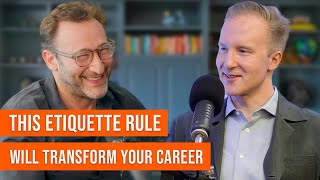
Etiquette coach William Hanson explains why manners matter in business and life: they make others feel valued. He covers practical fixes like saying please and thank you, asking follow-up questions, and silencing phones, plus how companies train executives to avoid costly diplomatic errors.
Chapters
What are some of the specific things that you have seen that a lot of people get wrong?
When you are having a conversation, networking event, cocktail party, whatever it is, a lot of people sort of. You'll be doing a story about a skiing accident, for example, that you've had. You were on hospital, you were skiing 10 years ago, you had some accident. And most people seem to listen to that and will be thinking, what story do I have about an accident I've had on holiday?
Right.
Rather than. Let me ask you a follow up question, let you have that moment. Whereas people are obsessed with trying to match or beat the story and it becomes competitive because we have become so insecure. I think generally people feel that they need, or they feel they need again to bond. Oh, to bond. I've got to say that I've gone through the same process as you. It's very tiring.
It is said that manners maketh the man. That was said in the 14th century. So 600 years later, do our manners really say something about who we are? According to William Hanson, our manners absolutely say something about who we are, but not for the reasons most people might think.
How to eat a pain au chocolat.
William is an etiquette coach from England and the executive director of the English Manor, an etiquette and protocol coaching company. And his latest book, Just Good Manners, is now available in the us. He knows a thing or two about how to use our cutlery and a lot more.
What's the difference between an arrival time for a social occasion and a business occasion?
Where most people think that good manners is about showing off or trying to look or sound upper class, in reality, good manners are about making other people feel like they matter, which is a very good reason why we should all practice good manners. This is a bit of optimism.
This episode is brought to you by True Classic. I'm so proud that True Classic is a sponsor because I really like their company and I really like their CEO and I really love their clothes as well. I've been wearing their T shirts long before they became a sponsor. Do check them out. We should talk about etiquette.
Yes.
I am fascinated that I don't know how to put this politely. I'm fascinated that you have a career.
Thank you. Well, my family is stunned.
I have a career.
Not because there's no need for etiquette. It's because it's less, it seems less of a thing in our modern day. Like the Victorians talking about etiquette and commenting on someone's etiquette.
Yeah.
And Making sure that you have. Etiquette was a thing.
Yeah, it was very big for them.
And we are a more informal time. We're in a more informal time where. And I live in America, where. And I. I was raised with a proper English upbringing, you know, where I got in trouble for, you know, elbows on the table, and I learned to use a knife and a fork with, you know, fork in my left hand, cut with the right hand and showing up in America, and I see people stabbing their steak and cutting it and switching hands, and I was incensed. The Englishman in me was incensed.
And have you started doing that?
No, no, no, no, no, no, no, no, I eat properly.
Phew.
No, no, no, no.
We can continue with this interview.
No, no, no, I still eat properly. I do put my elbows on the table occasionally. But not to eat.
No. I would say it's impossible.
Anyway, so how. How, in this modern day and age, like, how did it begin? Like, how did you announce, how did you show up that I'm gonna teach etiquette and people will actually, like, you know what, you come here, I'm going to give you money for that.
Well, it was. Yeah, it wasn't. I didn't wake up one day and go, well, this is what I'm gonna do. I. I was. This will come as a shock to you, Simon. I was quite a precocious child. And my grandmother gave me a book of etiquette when I was 12 for grand Christmas. And I, to be honest, didn't sort of leap at the chance to read it. But she used to stay with us and would keep saying, have I read any of it? So I thought, right, I will go and find it. I will open it up in the middle, read a bit, and then I can tell her I've read it. And actually, I read the whole thing quite quickly. It was very interesting, but it posed lots of questions. I wanted to know why we had to do certain things. And so I bought more books, more like the history. Like the history. Like, how did we end up here? Or what is the logic behind doing this? It was all very well to give me a rule, but I wanted to know, well, what's the justification for doing the rule? You can't have a rule for no apparent reason, otherwise it makes no sense. And so I bought more books. Didn't really make a thing out of it. And then when I was at school when I was 16, my one of the teachers came up to me and said, oh, could you teach the young years how to set a table? We need. We need them to learn for various reasons. Would you do it on Tuesday? And I said, what does that mean? I don't need to do rugby? And they said, yes. And I said, sign me up. And basically my career now, 18 years into it, has just been one long excuse to not do any sport and nobody's stopped me. I wanted at that time to be either Archbishop of Canterbury or a spy. Those were my options. I could do both, maybe.
That would be really good, actually.
Exactly. That's a novel. But anyway, not particularly for any religious reasons, but just I like the robes and I thought that looked fun. And I thought, how many people want to be Archbishop of Canterbury as well? Yeah, well, yeah, two. Two.
The guy right before the Archbishop Canterbury.
And you and me, anyway, Lambeth palace are thrilled that I'm not Archbishop of Canterbury or in, in running for it. So I went off to university, read English and got some press coverage quite by accident in between school and university and the company I now run the English manor run by a lovely lady called Alexandra. At the time, he used to be from the. That worked for the royal household, wrote to me and said, well, look, if you're going to do this, I've read, read about you doing this. If you can do it, come and do it for us, please. So for the royal household. No, for, for the English manner. She was ex royal household. She set up this sort of modern day finishing school etiquette consultancy. So I thought all right. And I, I read English at university so I wasn't rushed off my feet.
Which for Americans that means studied.
Yes, I studied English and thank you for interpreting in this by, by language. Po.
Yeah. And I was delighted that she sort of saw something in.
So who goes to the English manor? Who pays to learn etiquette?
We work with corporates, we work with individuals, we work with royal households elsewhere all over the world.
And when you say corporates, is it more like executives learning how to use. Go to a dinner party and not offend anybody when you have 10 knives and forks?
No. Well, we have done that.
Well, I'm very proud. I know how to do that. It's very easy. Just work from the outside in.
Exactly. Yes, that's it.
Start on the outside and go in, I would say.
I mean with the corporate work we do sometimes do C suite level training with sort of people that need a bit of polish. We had someone who basically they wanted to make their CFO.
But was terrible at entertaining and conversation, could work themselves around a spreadsheet nicely, could do the deal just had really bad table manners and bad interpersonal skills. They don't anymore with NMC effect.
So how did this person what were considered bad table manners that were so noise egregious that he was turning people off, that he was actually putting his career in jeopardy.
Noise meaning we can hear it the.
Way he was eating.
Yes. Yeah. Mouth open, food flying everywhere. Not poor like, you know, glass of water or wine, whatever they're drinking and just pouring for themselves rather than pouring for other people putting themselves first. And that's really what manners are about. It's just putting other people first before you. It's very selfless and I think it's an excellent.
Habit to get into.
This is good because this is. I think when we hear the word etiquette, you think prim and proper, you know, little finger out when you're drinking tea.
Well, no. Well, you do think that, but the little finger out. Supposedly there's a little bit of historical evidence to show that that was a sign in Louis XIV's court to tell someone that you had syphilis. So it's got absolutely nothing to with being posh necessarily. It was the posh people that were doing it.
Because they all had syphilis.
Because they all had syphilis and it wasn't polite to sleep with someone without letting them know you had an sti. I believe we still have the same rule today. And so it's a sort of a silent code. Whilst they were drinking their tea at the end of a, end of a sort of a large dinner at Versailles, for example, they would flirt and if they stuck their finger out, it was me just politely, non verbally letting you know, well, I've got syphilis. And if you stuck your little finger out, great. Well, because we can't get it twice. And off we went.
I have to say that, that if nothing else, this is the most valuable thing you've shared because from now on, anybody who thinks they're being posh and sticks their finger, I'm going to ask them if they have syphilis.
Exactly. Yes. Get the anti back wipe sounds, wipe them down.
So, so, so you helped this guy and it's. I have to. You have to use your skills of etiquette to tell somebody. Yeah, it's pretty awful sitting across a table from you.
Yes.
Because I, I mean I've sat across some people who. I'm thinking of somebody right now and he's extremely successful and I can't sit at a table with him because is.
And how.
So how do you even Broach the subject. I guess it's been broached by them sending off. Sending him off to the school.
Yes. I mean, it's. And we have. Regardless of who is coming through our doors or we go to sea. At the English Manor, you have those that sort of have paid the invoice themselves, who want to be there. Right. Easy. And then you've got those, you know, if we're going into a bank and.
We can't understand why they've been made.
Exactly. Or it's a group of graduates and we're having to train them who. You know, there is a bit of reluctance for the first 10 to 15 minutes because they would rather be somewhere else. So, yes, it is. It is a delicate art and it's not one that we practice when we're not working. I don't sit in front of my friends and tell them.
Right.
Though that's a bit noisy.
But you do notice things.
Of course, the official. The official answer is. And of course, when I'm not working, of course I don't notice I'm not working. The unofficial answer is, yes, I've noticed.
Does the world offend you?
The world doesn't offend me. The world annoys me.
There's a lot to be annoyed about. That's so basic. And people. I just want the best for people, basically. So.
I get offended. I think it's probably because, again, I had a pretty standard English upbringing, you know, And I remember when I first moved to America and I'd go to, like, a coffee shop or something. Yeah. And the person standing in the. In the line in front of me would go to the barista and say, you know, espresso. You know, I was like, please.
Yeah.
And then they would be handed in and they just walk away. And I would say thank you. And. And I, you know, I'm less pedantic about it, but it does register.
Like, it goes in my head, like.
Simple pleases and thank yous. It's not. It's not. It's not pompous. And it's just. I think it's being nice to another person. I guess you're right. It's a selflessness.
Right? Yeah.
It's acknowledging that somebody is doing something for you and that they have done something for you.
And it's taken no extra effort to tag on a please or a thank you onto a sentence. Cost anything. It takes no extra time. It's. It's. It's. It's a bad habit that people have fallen into and probably because no one's pulled them up on it.
So if we're polite, we'd say that the world has become more casual. If we're impolite, we can say the world has become ruder. So.
A, is that true or is it just an old person thing?
And B, if it is true, why is that happening?
There is a passage from some monk in the year 45 ABC that has been transcribed that my friend of a friend has on their walls. That basically translates as the younger generations are getting ruder and ruder. So I think that is sort of always going to be around. And if they were thinking that however many years ago, we're always going to think that. I actually have. I'm not Gen Z, I'm millennial, but I have great optimism in Gen Z. The Gen Z who come and up to me and say hello on the street are so lovely compared to the slightly more entitled millennials. Now. I don't know whether when Gen Z get into the age that millennials are now, I don't know whether that will change. Could be a confidence or lack of confidence thing. But I think Gen Z are more aware of their actions and the actions of others. And really that is all that etiquette and manners are. It's just an awareness that you are not the center of the universe and that there are lots of.
And also not assuming that you are the most important person.
And we also have to remember that these standards of etiquette, they change from.
Culture to culture totally and they change within culture.
Because we're talking about English etiquette predominantly.
Yeah.
Which is different than American etiquette.
Well, it's more uptight.
It is much more uptight generally.
And what I write in my book or say on Instagram or in my lessons, I would hope that in 20 years time, I'd hope at least half of it's completely irrelevant because etiquette has got to in evolve and adapt and reflect the society that is around us. It would be ridiculous if I was still talking to you about the. I mean, I was just talking to you about the etiquette of Louis xiv, but only with a historical context. But if I was saying, well, in the court of Louis XIV you had to wear a ruffled sleeve, Simon, why are you not in a ruffled sleeve today? Be ridiculous. And that's why I think etiquette gets a bad name because sometimes people sort of hold on to these rules and don't.
Don'T allow them to adapt.
It's associated with your grandmother.
Yes.
And fuddy duddy yeah. And when I. When I was a young person, I had to do this. You will do this. Even though that was 60 years ago.
Yeah. And they may be right in some instances. I'm not saying they're always going to be wrong, but I think it has to evolve.
Yeah.
It has to adapt.
And the same with language. Right. Language changes and evolves and the oed, the dictionary is a living, breathing animal.
Yeah.
Great book, by the way, called Word by Word, if you're into the. How Dictionaries Are Written. It's really a fun read, but. And How Language Evolves. And there's a group of people who actually decide what goes in and out of dictionaries. But.
What are some of the things that you have seen adapt for the modern day that used to be unacceptable, that are now acceptable? Even in the past, call it decade.
I would say we've probably softened in our. Or changed in our approach to. Well. Well, there are two. Two answers come to mind. One, certainly in Britain, and I would imagine in America as well, we are eating so much more different cuisines than ever before. We're very lucky. British food, obviously the butt of many sort of 80s and 90s American sitcom jokes, but actually British food now, particularly in London, is probably the best in the world. You can get anything. Yeah, it's great and it's. And it's a very good quality and it doesn't have to cost the Earth either.
Right.
So we're eating so many more different types of cuisine now. You can't transpose our sort of quite stiff dining etiquette for Western slash British food onto ramen, for example.
You're going to make a mess.
Just not going to work.
Right.
And so we are having to change how we eat and what we eat and sort of have these different sort of toolkits to use and to apply, depending on what we are, what we are eating. So certainly our food has. Has improved and our table manners have, in some instances got worse, but also in others got better. But also the way we approach matters of gender with social etiquette, I would say we are predominantly now more business etiquette focused in terms of introductions. For example, if I had Granny and annie, granny is 80, Annie is 18. I would, in a social setting, give precedence to granny because she's 80. So I would say Granny may introduce Annie. The most important person's name goes first. If I was sitting here Talking to you 20 years ago, I would also say we would look at gender, so a woman would be given precedence over a man. So I would say Mrs. Smith may introduce Mr. Jones.
For example.
In a business environment, someone's age, someone's gender, completely irrelevant. And so we. We just don't look at it. We go on rank. So CEO may introduce, return. I would say socially, we're moving more towards that, where we're looking at sort of position raw. We do look at age still, but position rather than gender.
So age is becoming less of a factor for the social hierarchy.
I think if there is a dramatic age difference. Granny and Annie. 18. 18, then. Yes. But generally, if we're all sort of in our 30s, we might go alphabetically. Adam. And reduce.
That's so interesting, because when I'm thinking, I'm thinking like, how I introduce people, and I think, well, at least you.
Do, Simon, because so many people do things.
Okay, well, I have this. I don't know if it's a disease or I don't know what it is, but I sometimes forget the names of the people I'm with.
Yeah.
And I. I always tell my friends.
And sometimes I forget names. I forget names a lot. I tell my friends when we go to social situations or even if it's work, I say, I will always introduce you to somebody. If I don't, please introduce yourself. Because it's. I don't. Because I don't remember somebody's name. Because I'm trying to avoid somebody saying to me, aren't you going to introduce a Simon?
Yeah.
And then I'm screwed because I don't know the names.
Yes.
So. And the worst is when there's like six people and I know I remember five names and not one. I can't introduce anybody. So I. I sometimes make no introductions.
Yeah.
Out of fear of getting a name wrong.
Yeah.
Because that's worse, right?
Yes. And our name is so personal. It's the only sort of thing that really belongs to us, massively. And so if someone gets it wrong, we can get. Some people get quite peeved.
I mean.
Yeah, yeah. Because. Especially if we've said it.
But I'm just trying to think, like, when I do make introductions.
Assuming I remember all the names.
I'm trying to think if there's a hierarchy in how I do it. Sometimes I just go in order, just like, from left to right.
Lovely. You know, Very fair.
And if there's a. If there's. If I'm bringing somebody that I want to like, this person's amazing. You should all know this person. I'll start with them.
Yes.
But I guess that's some sort of hierarchy.
Well, exactly. And you have. And maybe it's their guest of honor, you're hosting a birthday party for them or it's some book launch or whatever, then. Yes. There's a logic to it. One of the English. I wasn't working for the company at the time, but one of the English manor's very first clients, that Alexandra, when it was just her running the company, she went into pitch for business. She'd had a bit of an in at a friend of a friend at a very well known American bank, but it was the London office and she went into picture etiquette training and they had sort of rather patronizingly sort of listened to her, but sort of. Yeah. Well, it sounds lovely. Thanks very much. We'll keep your details on file type thing. And they had then gone over to Osaka in Japan to negotiate some deal for a client. On first day of the.
Negotiations, the business itself, Japanese walk in, Americans walk in, and the head of the American delegation from the London bank goes to shake hands with the number two from Japan before the number one. And they all walked out. And that was the end of negotiations. Yeah. Cost them millions. Then she got a phone call. Oh, yeah, we'll have that training now.
Yeah.
And it's. And it's always the way with etiquette training that we do. It's always most of the corporates that we work with, something's happened. Yeah. They won't take a proactive approach and nip it in the bud. Some. Some disaster.
You're like therapy.
Yes. Has to. Has.
You're like therapy. Which is the relationship has to fall apart first.
Exactly.
Then we should go learn how to communicate with each other.
It'll affect their bottom line. And then, and then. But it's like, well, you know, the tractor, what the training back in 2001 would have been when that was. But how much would it have cost? But it would have been absolutely nothing compared to losing that business.
That's really interesting. What about. So I also know that the world, as the world changes, it changes. The standards of World War II in the UK really affected the class structure. It broke the class structure down quite a lot.
Yeah.
And we know even the way the Queen spoke before and after the war profoundly changed.
Yeah.
It became more once egalitarian, but it did soften the divide between. Between the classes.
Yeah.
Covid. Have you seen etiquette changes as a result of COVID Because we know we were all insanely casual.
Yes.
You know, we would show up on calls, unshaven, hair a mess, everybody in, you know, Athleisure I went. I mean, and I was thinking to myself, this is the best. I'll never wear jeans again for the rest of my life. I like wearing sweatpants way too much.
Well, I'm pleased to say that Simon is sitting here in jeans. I am in jeans. Yeah.
They're stretchy, though.
They're stretchy, but that's fine. Yeah.
Yeah. I think we're. I think we've Covid was interesting from an etiquette point of view, as you say. I think we reassessed who we. When we then were able to socialize we with each other in real life. We were certainly in Britain. You can tell me what it was like in America. We considered who we were greeting and how we were greeting them. Because I think in pre Covid, we had got quite, particularly in London, overly tactile with people that we didn't really know. And we sort of default pulled them in for a hug. And it was the first time we'd met them. Why? Why the chickens are we hugging them?
Yeah.
If you're going to hug them on the first time, what are you doing the second time you meet them? Doesn't leave anywhere to go. So I think when with the more consciousness of germs and our personal space and distancing, I think we're like, okay, maybe a handshake or even not even a handshake, but maybe just. Well, we've only just met, so let's build up some affection. And then maybe when we say goodbye or the second time we greet, we'll do a slightly more genuine.
Okay, real etiquette question. Now then, okay, people will come up to me.
And I will shake their hand. And this is like in every context, social, business, everything, Right. And I'll put my hand out to meet them, to shake their hand, and they will say, I'm a hugger.
Oh, hate it. Okay.
And there's no choice. If you're a handshaker, you are now caught in a hug. And I don't know when it became why. It's not rock paper scissors. It's not like hug beats handshake.
Yeah.
And if I say, well, I'm a handshaker, I'm a. I'm rude. So look, I mean, look, in reality, I don't really care, you know, But I do find it funny.
Yeah. That the hugger, they can say that.
Is like, well, I'm a hugger. Well, like, well, then I guess we're hugging. There's no. There's no.
The trouble is, I think people it's those.
I know it's warm. It's done with warmth.
Well, yes, yes, but. But they think it's. They think it's warm, but the trouble is where we are. And I'm glad you. Because it winds me up as well. And I did actually once say to someone, well, I'm not. When they said I'm a hugger and I hate. Very poetic. They sort of. They laugh. I sort of said it with a smile and I got away with it. But the, the. Those sort of People think it's the same as, for example, if I suddenly. We've only just met today. If I was calling you Sigh, for example. Now, I don't know whether you like being.
No, I'll correct you or not.
Yeah, quite. But people think, oh, I can. What I'll do in order to bond with someone, I'll just cut out some steps and we'll jump straight to the hug. I'll jump straight to calling us Will and Sigh, for example, rather than earning that affection or building up the rapport, I'll just jump straight in. Yeah. And it, it. Familiarity breeds content. It pushes apart. It doesn't. Doesn't draw you together.
I know a guy who's a germaphobe and he hugs everybody so he doesn't have to shake their hand.
Well, I mean, look, genius, I'm not, Not a microbiologist, but I would say you're probably. No, no, because you can.
You can go past someone's head and not breathe in their face. You can hug and he doesn't want to because germs are primarily transferred. Not primarily, but are very often transferred by our hands, you know, door handles and things. So he doesn't. And it's too rude to do a fist bump anymore or an elbow bump anymore.
I mean, it's not rude. It's just ridiculous. It's just ridiculous.
It was a time and a place. And so, yeah, he's a germaphobe, so he hugs everybody.
Okay.
So everybody thinks he's really warm, but really just doesn't want to shake your hand. Genius.
Okay, Well, I still think he's perhaps going to get some germs, so it's maybe reducing the number of germs.
So let's take this into practical land, Right? Which is. I think that. So I've told this story before, but I'll tell you, because I think you'll appreciate it, of how I think about etiquette.
Right.
And some of the things that you're talking about in a professional context, especially in the early days of Disneyland. The imagineers who build Disneyland had built what they thought was the perfect animatronic bird. It looked like a bird, it moved like a bird, Perfect bird. And so they couldn't wait to show Walt Disney. They bring him in, they do the demo, it flaps, it moves its head and they're like, eh? And Walt goes, nope, no one will believe it. And they're like, what are you talking about? It's absolutely perfect. And he said, it's not breathing. And they said, no one will notice. And he said, people can feel perfection. And he's right. People will look at him and be like, I don't know what it is, but there's something wrong with that bird. It's not real. Right? And I think etiquette is the same thing, which is they're very subtle. Sometimes it's the pleases and thank yous, for example. It's very small, but for some reason it will elevate the way people think about you, the way they regard you, even though they may not be able to say the reason why. And I think that for me is the reason to learn some of the things that you talk about, and especially in a professional context, is because if it's a job interview, especially, or if you are meeting somebody very senior for the first time in a large corporation, you will stand out for these little things that they won't be able to put their fingers on. What are some of the specific things that you have seen that a lot of people get wrong, that are so easy to correct and get right, that will have this impact? That will, that will be the breath of the bird that will make you stand out. Even though, you know, nobody could actually say the reasons why. Pleases and thank yous amongst them.
Please and thank yous take it. Yeah, that, that's, that's a, that's, that's an easy one, really. Ask in, in conversations, when you are having a conversation, networking event, cocktail party, whatever it is. Certainly, and it probably is the case in America still as well. But in Britain a lot of people sort of. You'll be doing a story about a skiing accident, for example, that you've had. You were on, you were skiing 10 years ago, you had some accident. And most people seem to listen to that and will be thinking, what story do I have about an accident I've had on holiday?
Right.
Rather than. Let me ask you a follow up question. Let me. You have that moment. Whereas people are obsessed with trying to match or beat the story and it becomes competitive because we have become so insecure. I think generally people feel that they need or they feel they need again to bond. Oh, to bond. I've got to say that I've gone through the same process as you. That's very tiring. Ask a follow up question. So focus on also, I mean I don't love talking about myself. I like finding out about other people. So ask about the other person. Ask a follow up question. And it's particularly if you've got a client, client's not massively that fast what you did at the weekend. But the client would love to talk about what they did at the weekend. So just ask them questions.
You, you, I wish you were around many years ago because you basically described why my dating failed for most of my 20s.
Yeah.
And maybe 30s is I did the opposite, which is somebody told me about something they did and I wanted to match it to show look, we're the same.
Yeah.
So the intention was still, I'm trying to create common experience. I'm trying to show you that. So it was good intention.
Good intention.
I wasn't trying to, I wasn't competitive, I wasn't trying to one up. It wasn't like, well, you did that, I did this. It wasn't that at all, but it was, it was. Hear about your experience. Tell you about my similar experience.
Yes.
And I've only learned now, many years later that that's awful. And though well intentioned, it was completely wrong. So I think what you're saying is very valuable in a professional context, even more valuable in a dating context and especially when you're a little socially awkward or insecure and we don't know. And I think this is such good advice, which is be the journalist, be curious. And I think it goes back to what you said before, which is etiquette is a simple. Being polite and demonstrating good etiquette is just remembering to put the other person first. That if they're telling you a story, let's put the spotlight on them and their story for a while. And since I've learned that maybe a year ago, since I've learned that, here's what's happened. I'm now investigative and asking questions and asking follow ups to the point where they say I've been talking about myself for far too long, tell me. And now they want to know about me rather than me trying to tell them about me.
I'm so this is lovely. It's lovely that what happens when both.
People are trying to be polite. Stalemate.
Look, you can talk about yourself. You absolutely can talk about yourself. It would be ridiculous to never share anything. And actually you do want to share a bit because otherwise you come across as a little bit closed and a bit we might suspicious. Yeah, yeah. Why are they not saying anything about themselves? But as long as you have.
Because they're a spy in their exhibition of cantab. That's why.
Exactly. But as long as you have sort of focused on them for 80% of the time, I think it's. It's okay.
This episode is brought to you by True Classic. And this ad won't sound like regular ads because it's not. Instead, I sat down with Ryan and had an hour long conversation with him and we pulled out some of the best clips so that their ad is real content. I hope you enjoy.
We have a basically an unlimited budget for surprise and delight for people.
Well, give me some examples.
So a guy in New England, I found out he was a big Tom Brady guy. He had a terrible experience. I got on the phone with him, I worked it out and I went on Amazon and found a signed Tom Brady poster. It was easy. I could mail it to him and it meant so much to him.
This is genius. You have a customer has a bad experience.
Yeah.
You get on the phone to personally apologize. In the course of that conversation, you learn he's a huge Tom Brady fan.
Yes.
You don't just send him like what most companies will do. Like, hey, I'm really sorry you had a bad experience. Here's a bunch of our product.
Yeah.
You go and find what he actually likes and send him what he actually likes. Yes. Nothing to do with your company or your product. Not just to say, we screwed up. I'm sorry. Here's something I know you want.
Yeah.
Because like, this is how you got to show up for people. You got to go way overboard. You know, Even if they never buy us again, it's got an amazing ripple effect.
And the other, my other sort of number one rule for people in relationships and something that I had to tell my husband to do is that, you know, obviously you're spending your life with them. You probably have heard the anecdote a thousand times before. Yeah. When somebody goes to tell the anecdote at a party. Well, I've got a fantastic anecdote about this. What the husband, wife, spouse, partner should not do is go, oh, this one again out loud. They might be thinking that. Absolutely.
You've described my whole career just repeating the same six stories.
Yeah, yeah. But we're all, you know, it would be, it would be Rude for your friends, anyone you're in a relationship with, to go, oh, this one again. Because it already sets it up like you're flagging to everyone else that is about to hear it. It's not a good story or it's not new or in your teenage.
Because I'm very good at telling stories to sound like I'm telling them for the first time.
You've never told that Walt Disney bird story before?
Thousands of times.
No, I know.
And I'm very good at telling the stories make it sound like the first time. So if somebody ruins the trick, it's like revealing how the card trick is done. I know there's a trick behind the card trick, but the joy is that I don't know the magic.
Yes.
Let me think that it's a. It's a miraculous feat of, you know.
Or the other thing I think partners do. I mean, thankfully, my husband does not do this, but jump in with the punchline. Just ruin it for you. No, I'm, I'm. Or I might have done a. I'm. I'm workshopping a new punchline or I've finessed it.
What are some other common mistakes that you see? Again, going practical? I think the, the, the. The. I won't call it competitive, but the, the story matching. Yeah, I think is a really, really good one professionally and definitely personally. What are some other common ones that you see that. That we can easily fix?
Well, it literally, I mean. Well, this is not professional. Although, I mean, I guess it has a professional context to it. The happened on the. On the Elizabeth line getting here today. The London Underground. Speaker phone calls.
Oh, God.
Pandemic everywhere you go. Even on the New York subway when I did. I was on it once earlier this year. It. It. People just seem to think that just because we have this technology and that we can make a speakerphone call.
My pet peeve, I have many. One of them is people that keep ringers on in public places.
Yeah.
So like.
You'Re sitting on a plane waiting to take off where you've just landed, and the ringers are on. So you hear bloop, bing, bloop, bing, bloop, bing. And like just the little thing on the side, just flick.
A phone should make no noise.
A phone should make no noise unless you need it to make noise because you have a babysitter and they're calling and you gotta take the call. I get it. But the. And I think it's an age thing. I've noticed slightly older seem to be oblivious that their Phones make noise.
Broadway. I was watching Death Becomes Her a few weeks ago. And person sitting behind me, older woman, not old, but older woman than the lady I was with, her smartwatch kept pinging because she had a text. Yeah. And I was sort of turning around, but she wasn't getting it. And the distance was quite high between the seats. So in the interval, I turned around and said, oh, hello. Hope you're enjoying the show. Could I just ask. Could you please silence your smartwatch because it's making a noise every time you get a text. Yeah. And she genuinely. She looked completely as if I. She was like, oh, oh, right. Okay.
Like, didn't even realize that was not a thing. The people that you were with didn't.
Go, mum, or whoever it was. Could you just like, stop that?
Yeah. So let's get into this because I think one of the reasons that we don't tell people, you know, we sit and seethe about behaviors that other people are doing, that. Whether it's chewing loudly or their phone pinging or whatever it is. What I think one of the reasons is we don't know how to politely interrupt these things without offending someone or creating a situation.
Yeah.
So how do we tell someone? Can you silence your phone? Can you talk softer? You're on the phone in a restaurant. Can you maybe turn the ringer off in a restaurant? You know, like, how. How do. Can you.
How.
How do we broach the subject? Because usually what we do is just lean over to the person next to us and talk about it. We hate that person.
Yeah. And it's hard. It's hard to control the behavior of others. And I would say all we can probably do is control our own behavior.
Right. But how do we politely ask for somebody to be aware that they're creating an interruption and maybe ruining an experience for more people?
Yeah. And I think a show, a concert, that sort of thing is maybe more permissible to say something than maybe you're sitting in a cafe.
Cause like, in airplanes, we see it go haywire. Right. Somebody puts their seat back too far, and I mean, you know, madness ensues because we don't know how to say terribly sorry. Could you just put your seat back up, please?
Yes. You know, could you wait till the meal service is over before you put your.
Yeah. So how do we politely broach some of these subjects?
I think as long as you are polite, if you. The danger is that you sink, you let your frustration take hold and that you are a bit tart and rude with it.
Right.
And I Think actually if you just say, please, could I ask you to put your seat forward? I'm still eating my.
Oh, See, if you did that to me, that would rub me the wrong way.
Hopefully you wouldn't do that.
No, I wouldn't do it. I put my seat back very slowly.
Yeah.
I do very slow movements as not to catch. But the, The. But if somebody just said to me, that's very English to say, could you please do that? I think the English probably respond to that better than the Americans.
So why. But why would it annoy you?
It would come across as.
I need.
I need a preamble. I need a. I know it's not your fault. I need. I know it's like, I'm sure you're not aware. I was like, I'm terribly sorry to. To interrupt. Just give me some sort of contrition, you know, awareness that this is an uncomfortable situation. You don't know how to broach this, but you're going to broach this. Because I think the. Excuse me, can you put your seat up, please?
No, but I wouldn't say with that tone.
Yeah, so say it again.
Oh, please pass. You just to put your seat back until I've finished the meal. Service, please.
I guess it's okay. Trying to think.
And I'd say it with a lovely smile. And look, you might say, no. I also think with cabin crew, go to the restaurant.
You're at a restaurant and the person sitting next to you either has their ringer going the whole time or they're talking on speakerphone.
Yes.
How do you do that one? In a restaurant.
I would probably look over at them several times.
So you give a couple of glances like, are you aware? So hopefully they'll get the hint, but they don't.
And then what happens?
And now you can't help, but that's the only thing you can focus on.
I did say to someone the other day, someone I vaguely knew, and maybe I should start doing this with people in public. Not to say that they would know or have seen any of my videos, but I did start something with. Because I quite like being passive aggressive. It's a key cornerstone of British etiquette. But I started with, listen, who am I to lecture you on courtesy? However. And then I went in with it and that. That, that worked.
But you can get away with it because you have. Because I'm me terribly toughy accent.
Yeah. How dare you. It's a compliment, isn't it? Is it a toffee accent?
It's very posh.
Okay. Is it. Are we talking like queen? Where, where in Her Majesty.
No, it's not. It's not Her Majesty level.
No. Okay, good.
But it might be, you know, member.
Of court member, of course. Wow. Okay. Yeah, it's good. Okay, well, thank you.
Don't you think you know this?
Yes, I think.
I'm not telling you anything you don't know.
No, to me. It's just. This is how I've always said. No, of course.
But you are fully aware that amongst English accents.
Yes, this is yours. This is not a little more. This is not a typical.
No, this is.
You're not. You're not. No, no. Alas.
Wouldn'T life be nicer if it was terribly dull?
But that's. That's an etiquette thing too, isn't it? Like accents have changed.
Oh, yes. And I think you can have whatever accent you want in life as long as you can be understood. As long as you have clear speech. I don't care what accent you have. But if you're using too much slang or you're using too many abbreviations, or Gen Z speak, for example, if people can't understand you.
Yeah.
That's when it's an issue.
Yeah.
As long as you can be understood.
We do a thing in our company where I won't allow acronyms unless there are standard acronyms. And by standard I mean like asap, rsvp, Those are fine because everybody knows what they are.
Yeah.
But when we start abbreviating the names of products and things and the reason I. I won't allow them is because I don't want somebody to feel dumb because there might be one person in the room who doesn't know what we're talking about. And that's unfair and it's bad. Just call it what it is.
Yes.
Right now, again. Or we start using them externally because they become so ingrained in our culture that we start just referring to them willy nilly. And so. And it's all. And because I've sat in meetings like I've sat in meetings with military people and they speak in acronyms and I can only ask a couple of times, what do you mean by that one? Because it gets the point of ridiculous, but I've been, I felt completely left out of conversations before and being left out, not good manners and feeling left out, not good manners.
It all boils down. Manners are just how we interact with other people. Etiquette is sort of how we. In terms of the mechanics of it, the suggested rules and guidelines. 90% of the time are correct, sometimes they're not. But the ultimate goal is just to have good manners.
I think it's good, I think, working on our manners. But maybe that's. Is it because I'm English, is it because I'm English that I think manners? No, because maketh the man.
There are lots of Americans who would also agree. I don't think it's a particular. I don't think the English.
But manners is not a thing. Like, like, like I would get in trouble for not saying please and thank you as a kid. You know, I would get in trouble for having my elbows on the table. And I think a lot of Americans think that's funny.
And so where, you know, how do we inspire parents to want to teach their kids good manners and good etiquette? Not because it's about being, it's not about pomp and circumstance, it's not about being prim and proper. But as you said, it's a mechanism, it's a system to offer some guidelines to make others feel included, seen, heard and all the rest of it. Maybe that's enough. Maybe that's all we have to say.
I think that, yeah, you can lead a horse to water, you can't make it through.
But using your knife and fork properly doesn't do anything for anyone else at the table.
It keeps the food on your plate and going from plate to mouth without it flying off onto the table. Is that the history Ish. I mean, there's the elbows.
Didn't the Tudors eat with their hands?
The Tudors did, yeah, absolutely. The sort of fingers the Tudors would.
Be Henry viii, Henry Mary, Elizabeth I. The last Tudor was Elizabeth.
Yes, but yeah, fingers going down the eating implements, elbows tucked in, cut, stab, bring up to mouth with fork. It's a nice. You also, there's a practicality and I think this is where British and American dining slightly differs. British dining generally and European dining, we favour long, straight edge tables. Nice sort of think about the Downton Abbey dining room. It's that nice sort of rectangle they've got. In fact, the day that we are speaking, we have the state visit of France to Britain. It's the first state visit they will be doing at windsor Castle since 2014. I assume it's the first one the King has done at Windsor Castle. As king, I assume it is going to be in St. George's Hall. The dinner on a really long table that seats about 160. I mean it's really quite a knockout shot when they release that. This is typical that he'll do round tables tonight just to annoy me after saying this. But my point is he's not a traditionalist. He's not a traditionalist. No. And that's. Which is good. But he. Sorry. We have these sort of straight edge tables and you're jam packed next to each other, so you have to keep your elbows in. Because if we were all doing this, Buckingham palace, which is going through refurbishment work, but Buckingham palace in the state ballroom, you have 18cm of space between the center of your plate and the centre of someone else's plate.
You are, like I said, 18 centimeters.
18 centimeters. 18 inches. I was going to say 18 inches. Yes.
18 centimeters would be half six inches.
Yeah, 18 inches. It's not a lot. Now, the cutlery in the crockery, it's all smaller because it's older. It's not sort of modern stuff. But still you are round.
Just to give people a sense of what 18 inches is between the center of one plate to the center of another plate. The standard coach seat is 17 inches and that's plate to plate. Yeah, So I get it. So when you're cutting sort of American style, stabbing the steak and.
Yeah, if we were all doing it, you'd be able to destroy.
So the English way of cutting. Like this. I don't put my fingers down the. No, I. I hold them like this. I don't do fingers down. I find. No, this. I might like this. Not like this. I can't do that. It's uncomfortable and it's silly.
Really.
Yeah, it's old fashioned.
No.
Yeah. My grandmother.
Is there a knife and fork available? I feel I need to see this.
You could be in the stuff. No, no, like this. I cut like this. I don't cut like this.
But I don't understand where the cutlery is going.
The fork, knife.
Oh, I see. Okay. Well, it's. Look if you can do it.
No. And it looks fine. And it looks like everybody else. Nobody puts their fingers on the top.
Yes, they do. We all do.
Do you make sure the fork is face down?
No. Yes.
Come on. I mean, I won't use my fork. I will use my fork. A spoon. Which I know is not etiquette, but.
No, it's not British etiquette.
Fine. Yes. But I mean, how else are you supposed to eat peas? I mean, I know you put steak, you put them, shove the peas on the top, but they always fall off.
No, you eat peas by pushing the. Pushing them. I mean, peas again, are not, as I once said in an interview with no sense of irony. And I appreciate what I'm about to say is ridiculous. Peas are not a formal vegetable. So you are not going to eat peas at a state banquet, but you would spear the peas individually or in clusters onto the tines of your fork, using the back of your knife to push them on and then transfer it.
Yeah. Too much work.
It's not too much work. It's easier to do that. I can poke one pea at a.
Time on each time.
Yes, you can. There is a video on my Instagram where I do. Exactly. You teach it.
Peas are the exception.
No, no. But if you.
My grandmother was always a fork down person. I like your grandmother and I'm a fork up person.
Okay.
Not always, but.
But if you are eating peas, if you're using a knife to push them onto the underside of your fork, that I would say it's more challenging to get these little peas without them falling off.
How do we politely disagree with each other like this?
Maybe this is part of the evolution of manners, which is maybe.
Maybe just don't hold a pea.
It's like. It's like octopuses and octopi. The correct one is either.
Yeah.
They are both acceptable.
They are both.
So perhaps just because as long as modern day and age, as long as they fork up a fork downer, both.
Fall off your fork however you want to put them in your peas are difficult. Rice, very tricky.
How do you do rice when it's not sticky rice?
Well, obviously rice, I mean, rice is not a. It's not a food native to Britain. Traditionally we've imported it. So there in cultures where it is more sort of part of the stable diet, you would use your hands or you use your bread, your naan. Yeah. Chopsticks, it's part of a sushi roll, for example, or something like that. So that's a lot easier. But in Britain, yes. If we were having a chicken tikka masala, for example, with rice, it would be. If you were doing it, you either don't use the knife and then you hold the fork upturned in your dominant hand. That is fine.
Really.
But if you're using it with a knife, then the time's first step.
So my understanding was if there's a knife that has to be used, you will always use your fork in the left hand. If it is not a knife meal. A meal that requires no knife. Yeah, you can use your fork.
Yeah. Risotto pasta.
Right, Exactly. So that's it. That's a fork in right hand.
Yeah.
But if you have A chicken tikka masala. You've got spit of chicken and you've got rice. How do you eat the rice? With your fork down.
Fork down. Put the chicken onto the fork and you've eaten all the chicken sauce. And then you just push some rice onto the chicken and it sticks.
And then I bet you've used a fork face up as a spoon with rice.
No. I mean, I probably have once, but. Moment of weakness. If I was having an Indian jet lag, if I was having an Indian takeaway, for example, I would use both. Or I use my nan.
Or you use your nan. Not your grandmother.
Your branny. Yeah, my. Yes, exactly right. Yeah. Not granny.
What you're talking about is no different.
Than.
Dressing a little nicer to go on a first date, being a little more polite. When you show up for an interview, we all on a first interview say please and thank you. And we wait to sit down and we don't put our feet on the desk. And of a first interview. Now, once you're part of the company and you're friends with everybody and you sit in their office, you might put your feet up. Nobody will care. As you said, you earn. You earn these.
Informalities.
Yes.
So if everybody acknowledges that it's okay to be a little more polite, a little more formal for a first interview, why would we not agree that some of these etiquette things fall in line the same way?
I think it's an excellent point.
I could teach etiquette.
You could. Do you want a job?
I would love to teach etiquette. When we encounter someone rude or we are disagreeing with them, how do we use our manners to signal our discomfort or.
You know, find a way to move on?
We've reached. We've reached a stage in life when we meet or interact with people who have different opinions from us where we can't leave that conversation until they have come round to our way of thinking.
Yeah.
And I would say that's because we're probably so insecure in our own opinions and our own point of view that we thus have to sort of make sure that that other person is on our way of thinking. And life would be so dull if everyone had the same opinions and had the same. Was wired the same way. I know. As long as they don't make speakerphone calls in public, then sure. Other than that, that's the exception.
Playing the harp on a speakerphone.
Precisely. Yes.
But actually, just. You don't need. Someone can say something that. Okay, if it's an ist or an. Ism you know, it's bigoted, it's racist, etc. Sexist. Fine, I do get it. You can call them out on it. But if they just say something like okay, well I clearly don't, I don't think, no way do I agree with you either. You can ask them a, quite again asking them a follow up question, go into it, be curious as to how they are thinking that or you just go well how interesting and ask them another question. You don't have to comment on everything. You don't have to have a reaction to everyone else's reactions. You also cannot know. People ask me my opinions on all sorts of things all the time. And my honest answer is I don't know. It's not, it's not my area. It's. I'm not, I'm not, I don't know, I don't know how to feel.
I find to add levity to a situation, what I mean is instead of taking something super seriously like scowling and like okay, let the, let the fight begin.
Yeah.
Rather I try and have a sense of humor about things.
Yes. Find the funny.
Like I'm, like I would, I would say, well, I'm completely different. I would. And I if anything mock myself.
Yeah.
You know, but.
And again, earning familiarity. I, I think this, I've made this mistake many times as well where I've, you know, especially in a social situation where I've, I'm, I, because I like somebody, I project familiarity and so I try, I act too familiar too soon because I feel comfortable and I want to create the comfort. But do you. I think the idea that you, we earn familiarity and it's a dance and it might go quicker sometimes and slower other times depending on the people and depending on the chemistry. But I think this idea that etiquette is actually much simpler than we, than, than, than people make it out to be. It's not fuddy duddy, it can be. But for the most part, as you've said, it's making other people feel like they're the center of the tension. That you're considering the existence of other people in the world and, and that you're, you're, you earn familiarity and you just sort of go through the motions until you, until you can relax them. And then once you're familiar, a lot of the etiquette can fall away.
Yes, absolutely.
Because we are not victorious.
Yes. You can dial it up, dial it down depending on the context. And etiquette is not meant to be a restrictive straitjacket where we're trying to repress people and control people. It as. The analogy I give is like driving a car. Do you drive? I do, yeah. Can you remember the first time you got in a car to learn?
I do.
We probably weren't brilliant at it. Compared to how good you are now.
Maybe so good now.
Okay. We were all, you know, we were all so focused on keeping that car on the road, not crashing into anyone. Right. Not stalling, just keeping it going in a straight line and not too fast and not too slowly. And then once we actually learned to drive and got a bit of confidence. Now when we get in the car, you know, we change the radio, we're checking our hair in the mirror, we're chatting to the person next to us, and the driving sort of happens naturally.
And it's still safe.
Yeah. And it's still safe. Yeah. That is what etiquette is meant to be. The more you do it and the more you practice it, it's just meant to be a muscle memory. And it just happens. And it just happens. And you just interact with the other people.
Volvo did a study many years ago that drivers who are hyper attentive, in other words, meaning like hands on the wheel, fixed out the window, never doing anything, versus the driver who's like, few seconds out the windscreen, change the radio. Few seconds out the windscreen, change the window. Few seconds out the windscreen, talk to your friend. Few seconds out the windscreen, change the station again. That they're actually better drivers. That there are fewer accidents. Because with all of your eyes moving local. Because you're actually see everything.
You actually see everything.
You take the world in.
Yeah.
And so there's something to be said for learning and practicing hyper attentively. And when you get more casual, you actually become, dare I say, more polite.
Yes.
Because you are naturally.
Yeah.
Making somebody else feel seen or heard.
Yes, precisely. And we don't. We don't. We don't want it to be stiff.
Yeah.
And robust.
And I think that's where I think you get a bad rap, which is people think that you're stiff.
The word etiquette is so preloaded with, which is why it's got too many.
T's in it, which is.
Got too many. It sounds posh. It's an old French word. And it's why it appears nowhere on my. On the. On the book. The book's called Just Good Manners, not Just Good Etiquette.
Yeah.
Because people just have so many opinions on it. I'm very much. When the publisher said, no, let's not put etiquette on the book. I was almost slightly offended. Yes. I was like, it's etiquette. Everyone knows what etiquette is. Just lean into it. Like, I'm fine with it. I don't have a hang up with it. But I do understand that manners are soft. They are right. I have told them that. But manners are a softer, more accessible word.
William, thank you so much.
It's been lovely.
This is lovely.
Yeah.
Even if you do hold your knife and fork slightly weirdly.
William, thanks for coming on. Such a joy. A Bit of Optimism is brought to you by the Optimism Company and is lovingly produced by our team, Lindsey Garbinius, David Jha and Devin Johnson. If I was able to give you any kind of insight or some inspiration or made you smile, please subscribe wherever you enjoy listening to podcasts for more and more. If you're trying to get answers to a problem at work or want to advance a dream, maybe I can help. Simply go to SimonSinek.com until then, take care of yourself. Take care of each other.
More from Clegg

The #1 Skill Gen Z Needs | Simon Sinek + Esther Perel | A Bit of Optimism Podcast







AI Won't Tell You the Full Truth | Arthur Brooks + Simon Sinek | A Bit of Optimism Podcast



How To Make the Best Decision | Arthur Brooks and Simon Sinek | A Bit of Optimism