The Cheat Code To Wealth And Prosperity
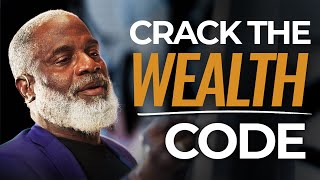
Talk by Myron Golden (YouTube) explaining that wealth equals the willingness and ability to provide value to others. He demonstrates the cost of not knowing (an "ignorance tax") with an audience illustration, defines wealth and a "wealth code" (systematic principles to discover and deliver value), and gives examples (perceived past voids, present virtues, future visions, and using real estate/tax strategies). He also emphasizes clear communication, empathy, and systematically assessing, addressing, and announcing value to create wealth.
Chapters
There are very few things that you will pay for in your life that cost you more than the things you don't know. In fact, I submit to you, the difference between where you are and where you'd like to be is exactly the same as the difference between what you know and what you haven't learned and implemented yet. In fact, the difference between the amount of money you make right now and the amount of money you could make is exactly the same as the difference between what you know and what you haven't learned and implemented yet. And see, every time life asks you a question and you don't know the answer, you have to pay. And what I'm going to do is I'm going going to illustrate that for you today because I have some cash with me. So I'm going to illustrate the fact that life, it cost you in life when you don't know the answer. On this video entitled Cracking the Wealth Code. On this video, I'm going to show you, to the best of my ability, how to crack the wealth Code. So I'm going to go over to my trusty blackboard. I'm going to ask for some help from somebody in the audience to start. And what I'm going to do, it's going to be somebody who's never been here before, so. Who's never been here before. Somebody's never been here before. Okay, can you come up and help me? This is your first time ever here. And if you can, grab that mic.
All right. And my name is Myron. And you are?
Jaque.
Jaque. How do you spell that?
J, A Q, U, A Y.
That's a cool name. What does it mean?
I have no idea.
Okay, what would you like it to mean? Okay, we can talk about that later. So. So here's what I'm going to do. Jaque and I have never met. I've never even seen him before today. Have you ever. I mean, other than on YouTube, have you ever seen me in real life before today? Yes. Okay. In real life you have. Okay, cool. So. So I guess I've seen you maybe, but I just don't remember. Sorry. Perhaps. Okay, all right, cool. So. So here's what we're gonna do. Here's what we're gonna do.
I'm gonna get Jaque to ask me some questions that I apparently know the answer to. So ask me a question that I. That you know I know the answer to. It could be as simple as what is my name? Or what color is my beard? I mean, simple that I would know the answer to. Just ask me a question that I know the answer to.
What color is the sky?
Blue. Okay, give me another one that I know.
What color is the jacket you're wearing black.
He's asking me color questions. I'm colorblind, so there's a chance. There's a chance. There's a chance that I don't know. Okay? And don't y' all make fun of people just because they colorblind. Okay, so now ask me a question that I won't know the answer to. Like, just make something up that I won't know the answer to. And if I don't know the answer, by the way, if he asks me a question and I don't know the answer, I'm going to pay him some amount of money.
What is my mom's name?
Jackie.
Incorrect.
Okay, that's because I didn't know your mom's name. Okay, ask me another question. You're welcome. Ask me another question I don't know the answer to. And by the way, he gets to keep that money. It's not a fortune, but, like, I had to pay because I didn't know. Okay, ask me another question.
What brand is the shirt I'm wearing?
What brand is the shirt I'm wearing? Who?
No, that's close, but incorrect.
That's close, but incorrect. He has an owl on his shirt, so I said who. Okay, so what is the brand?
Drake. October, very own.
Okay, yeah. O, B, O, O, B, O. Nope, didn't know that. Are you making fun of me because I'm old? Okay, Hashtag. Just guessing.
Okay, that also is for you. Okay, so ask me another question I don't know the answer to.
What college did I go to?
What college did you go to?
Penn State.
Incorrect.
What college did you go to?
The College of William and Mary.
The college of what?
William and Mary.
Is that real or you're making that up?
That's real.
That's real.
Not where I want it to go, but that's where I ended up.
Okay, ask me one more that I know that you know I would know.
One plus one.
Two.
Correct.
All right, give it up for Jaque, y'. All Give it up for Jaque now. Thank you, sir. Appreciate that. Appreciate your help with that. Now, what I was attempting to do with my. We're going to go somewhere else with this because we're going to finish this later. So what I was attempting to do was to show you every time life asks you a question that you don't know the answer to, you have to pay an ignorance tax.
So if it's in the area of health, your ignorance tax is paid in the form of medical bills.
If it's in the form of relationships, then your ignorance tax is paid sometimes in the form of divorce attorneys.
Right. And that costs at least half.
Right.
Of what? Everything.
But if.
When life asks you questions about wealth, when you don't know the answer, it costs you in the area of your bottom line.
Now, we all have potential. How many of you realize that you're not maximizing your potential? Hold your hands up and say, me. Okay, so what is potential? Potential is the difference. Potential is.
Potential is the difference between where I am, who I am and where I could be and who I could be. Potential is the difference.
Between.
What I do and what I could be doing. Potential is the difference between.
Who I'm being, who I could be being, what I'm doing, what I could be doing.
And what I have and what I could be having. That's your potential. So the potential means you have the ability and the capability to become more. The ability and the capability to do more. The ability and the capability to have more. But you don't. And so, like, what do you. Somebody tell me, financially, what do you think your potential is? Somebody tell me. Okay, a billion. Like. Like legit now. Legit. Give it to me because I'm about to ask you all some questions. 50 million. Okay, we got a billion. 50 million. Okay, 100. What? 100 million. Okay. Okay, so now give me the one that you're working towards right now. 10 million. Okay, so Erica from America said 10 million.
Here's what we're going to do.
We're going to write 10 million on a board.
And here's what you do. We're going to write 10 million. We're going to erase some stuff, okay? Because this marker gets excited or starts erasing when I get excited. Who knows? Okay, so.
$10 million. How many of y' all would like to make $10 million? Okay, so right now I'm 10 million. And then under the 10 million, write down how much you made last year. Let's just give you the benefit of the doubt, okay? Let's just say, Erica from America, let's say you made 200,000 last year.
So if you subtract 200,000 from 10 million, it's 9 million.
I'm sorry, it's 9 million, 800,000.
That's how much you paid life last year for not knowing how to make a million. That was your ignorance tax. And when I say ignorance, you're obviously a very intelligent person, but that's the tax you paid for not knowing.
Like, let's take a million. Is there anybody here who's not at a million yet but you believe you, like, you have that potential? Anybody believes you're at a million? Okay, well, here's the deal. You take 1 million.
Write it on your paper. Don't just watch me write it, write it on your paper because I don't even know how much you made last year. You do write 1 million on your paper and then write down the amount you made last year. Let's call it 120,000.
It's less than that. It's less than that. And then you subtract that. Now we're at 880,000.
That's how much you paid last year for not knowing how to make a million. And the reality is, regardless of how much money you make, if you're not maxing out your potential, you are paying a very high ignorance tax. You're paying a tax for not knowing. You're paying a tax for not being. You're paying a tax for not doing. You're paying a tax for not having. Why? Because you haven't learned how to crack the wealth code. Now, when I say cracking the wealth code, the first thing we're going to have to do, we're going to crack the wealth code. The first thing we're going to have to do is we're going to have to define. We're going to have to define.
Wealth. So what is wealth by its definition? Now, a lot of people would say wealth is money. Some people say wealth is abundance. And people would attempt to give one word definitions. I don't like one word definitions because all you're doing is swapping one word for another word. So a lot of times people think they're given a definition, all they're doing is giving a synonym kind of.
Right?
So I'm going to give you what I believe actually is wealth. Now you can believe it's something else if you want to. You don't have to take the Myron golden definition. You may not even have a Myron golden dictionary in your house. Okay? But I believe that wealth is my willingness and ability to provide value for someone other than myself. And generally that's going to be a lot of someones. Wealth is my ability. You think about it, all of the money that you have right now, the reason you have it is because you did something for someone other than yourself and they valued what you did so much that they gave you Money in exchange for doing that thing. So what is wealth? Wealth is my willingness and ability to provide value for someone other than myself. So the better I get at perceiving what other people value and the better I get at producing what other people perceive as valuable. And the better I get at presenting what other people perceive as valuable, then the wealthier I become. Now here's the problem. The problem is I think other people are me. And I think other people are like me, to state it more accurately. So I think other people are going to value what I value because I value these things. Well, clearly they're valuable. No, clearly they're valuable to you. There's a difference. And so you have to have a high enough level of sympathy and a high enough level of empathy to perceive what other people think is valuable. And until you have that high level of sympathy, a high level of empathy, you're not going to perceive what other people perceive as valuable. And if you don't perceive what other people perceive as valuable, you're not going to be able to produce what other people perceive as valuable. And therefore your ability to create wealth is going to be as limited as your inability to perceive what people value.
Is what I'm saying making some sense? Yes. Okay, so then the question becomes what?
How do I perceive what other people perceive as valuable? Like, how can I perceive what you perceive as valuable? Well, there's a really an ancient formula for this and it's mind blowingly simple. Here's what you do. Ask them. Oh, I took my jacket off, which unclipped the my clip. Now my microphone's gonna start making noise. But I got hot. And so I was like, I can't think. I'm so hot, I'm so hot. Okay, so.
How do I get to the bottom of what people perceive as valuable? And here's what you can ask, or you can just pay attention to the clues.
Now, value leaves clues. Like what people value leaves clues. So cool.
So you've probably heard me talk about it before, but I'm going to talk about it again. Like, how do I define value? Value is my ability to. My willingness and ability to create value for someone other than myself. Because wealth, wealth is what I receive in exchange for value that I've created. Right? Isn't that right? In exchange for value that I produce. But in order for me to produce value, I have to perceive value. So how do I perceive value? Well, I have to know where values come from. So a. Values come from past.
Perceived.
I spelled that. Why do you always spell perceive? Wrong. Perceived voids. What does that mean? Things that were missing in the past or things that I value in the present? The people that you're talking to, things that they were missing in the past are things they value in the present. It's so simple. It seems like surely it can't be that easy. It's that easy.
My whole life, Since I was 17 years old, the car of my dreams was a 1968 Pontiac GTF.
Every time I see you get it, don't you, Attila? I'm like, this is the car. This is the car of car. I mean, 67's nice, too. 69, the Judge. All of those are great. But the 68, I don't know, it just had a special place in my heart.
And so I was always looking at them until finally one day I found one. And not only was it a candy apple red automatic transmission, because what old guy wants to shift gears? That's a young man's game, right?
And automatic transmission, 400 engine, convertible with a white top. Let's go.
I'm on it. I bought this car, and I'm so happy it doesn't have air conditioning. I live in Florida. Who needs air conditioning? You have a 68 Pontiac GTO convertible. The top's down. And plus, you're the coolest guy on the road because you're driving a 68 Pontiac convertible GTO convertible. So you're already cool. What do you need air conditioner for? And so I'm driving this car down the road.
After driving my Mercedes or my Rolls or some car that's got so much comfort in it, you don't even remember you're in a car. And then you're in this car from 1968 with a steering wheel this big, and you're. It's like, yeah, I'm in my 68, right? That's bouncing all over the road. The steering's all loosey goosey. Y' all remember that? Some of y' all old enough to remember that. But why did I want this car so desperately that I paid way more for it than it sold for brand new? Like, way more. Why? Because it was a past perceived void.
And past perceived voids create present perceived values. Like, the reason people want a nicer car is because they haven't had the nicer car in the past. That's one of the reasons, the reason people want to live in a nicer house in a nicer neighborhood, because they haven't had that in the past. So the things that we're missing in our Past, we will pay to make sure they are not missing in the present and in the future. Does that make sense? Are y' all tracking. And so if I can have a conversation with somebody and figure out what they've been missing. Oh, by the way, a lot of the things that I've been missing are the same things other people have been missing. So when I'm actually doing a sales presidency, like, for instance, I'm starting a real estate fund. Just like, not f u n fun, F u n d. I'm starting a real estate fund to invest in multifamily real estate, right? And on the low end, we're going to let people invest $100,000. At the high end, a million. No less than 100,000. No more than a million. At least right now that's where we're going to start. And it's like, okay, so why would people not want to invest in my real estate fund? Well, Myron, what do you know about a real estate fund? I know what. The person who's teaching me how to invest in a real estate fund, I know that. But here's what else I know. I know why.
People like me who have made a lot of money and are making a lot of money don't invest in real estate funds. I know why they don't, because I know why I didn't. Right? And so if I can address the reasons why, I've known for at least 20 years that real estate's a great place to invest in if you want to save some money on taxes, Right? I knew that for 20 years, but I didn't realize how much money until last year.
When I took advantage for the first time of the real estate that I own. And I don't own a ton of real estate last year, at the time I took advantage, I only owned about $4 million worth of real estate, which sounds like a lot, and it is a lot compared to none, but it's not a lot compared to a lot. And so. And so. But I. But I had the real estate for a while. Like, all the real estate that we're talking about, I've had for years. But I never took advantage, full advantage, of the benefits of that and just that little bit of real estate that I already owned. I owned it in 2023. I owned it in 2022, but I didn't take advantage of these advantages of owning it in 2022 and 2023 because I didn't know how until my tax strategist came along and he showed me how. And like every high level entrepreneur has five very painful dates every year. Yeah. January 15th, April 15th, June 15th, September 15th, and October 31st. Like, what are those dates? Well, the first four are quarterly tax payments. But if you're an entrepreneur and you make a lot of money, you don't pay your taxes until October of the following year. And October 31st, the extension, the amount you owe is due. Well, October 31st of last year, the amount that I owed that was due was for 2023. The amount that I owed. The amount that I owed in October of 2024 for my 2023 taxes, even though I'd already paid. You got to get this now. In 2023, I had already paid hundreds of thousands of dollars a quarter. January 15th, I paid hundreds of thousands of dollars. 2022, I mean, 2023. In 2023, I paid hundreds of thousands of dollars on January 20th, January 15th. On April 15th, I paid hundreds of Thousands more. On June 15th, I paid hundreds of THOUSANDS more. On September 15th, I paid hundreds of thousands more. And then I paid in October hundreds of thousands of more dollars for the 2022 taxes that I hadn't yet paid because the estimated taxes that we paid weren't enough because we blew up in the third quarter or whatever the reason was. It doesn't matter. We still owed money. Okay. Well, the same thing was about to happen last year. And the amount that I had to pay, and I had my accountant knows to let me know this a couple months in advance just so I can get myself mentally and emotionally prepared.
Was $534,000. That's how much was due after having four quarters the previous year where I had already paid them hundreds of thousands of dollars a quarter. And this was the check that I was getting ready to write. My new tax strategist said, some of my favorite words I've ever heard in my life.
Don'T write that check. Now, they weren't favorite words. Then I was like, what do you mean, don't write that check?
He's like, yeah, don't write that check. And then he says something that made even less sense. He said, I think I might be able to get you a refund. No, no, no, no.
Time out. Say that in my good ear.
He said, I think I might be able to get you a refund. No, but you don't understand. A refund would mean you're wiping out this plus getting me more back.
So I'm thinking, how much could a refund be? $100, $500, $600? But as long as I don't have to pay this, it could be 50 cents and I'm cool. How many are tracking right? I already paid the rest of it. That pain is already gone. The pain of that has already moderately subsided.
So because of cost segregation and cost segregation studies and bonus depreciation and, and, and, and, and all the benefits of real estate, guess what? He was able to wipe this out.
Now y' all ready for this? And, and by the way, I didn't own that much real estate. And all of the money that I paid in, in 2023, I got that back on a tax ref.
I'm like, oh, oh, oh.
Time out, baby. Are you telling me that if I buy the same amount of real estate I own right now, we can do this again? He said, no, I'm telling you if you buy less real estate than you own right now, we can do this again. So I bought less real estate. I bought one house at the end of last year and I am getting back all the money I paid on my quarterly taxes for last year. Now you say, myron, why are you telling me this? Because when I talk to high level individuals about this real estate fund, I'm not going to be talking to them about you got to learn a bunch of stuff about real estate because you don't.
I'm not going to be talking to them about cost segregation and bonus depreciation because they don't even know what that means. What I'm going to talk to them about is the fact that I discovered if you own enough real estate, if you buy enough real estate every year, you can wipe out your tax liability. Why? Because the government wants people who have money to invest in places for other people to live.
Which means now instead of taking the hundreds of thousands of dollars a quarter that I was paying to the irs, I can take that hundreds of thousands of dollars a quarter, put it in my real estate fund, let other people take their hundreds of thousands of dollars a quarter, put it in that real estate fund, and then we all get our taxes back at the end of the year and make money on the money we invested in funds. See, that's, see, what am I doing? I'm speaking to past perceived voids. My past perceived void was I thought I had to know something about real estate to benefit from real estate. But I realized through experience that I don't have to know anything about real estate to make money in real estate. Now you say, well, Myron, how are you going to start a fund if you don't know anything about Real estate. I have a coach who owns billions of dollars worth of real estate, and he's teaching me what to do. So it's not like I'm just going out there and winging it, right? And then my tax strategist is the financial person for my fund. Okay, cool. Y' all get it. So past perceived voids. Let's get to the next one.
Past perceived voids create present perceived values. But also present.
Present.
Present.
Perceived. I. E. Present perceived virtues. Virtues.
Virtues create present perceived values. So, present pursued values. So if I'm pursuing something valuable, if I'm pursuing something that's valuable right now, it's either because it was missing in the past, or I think of it as being good in the present. So present perceived virtues create present pursued values. All of us are looking for a better what, pretty much everything, right? If I can have whatever I have now, if I can have a better version of that thing, sign me up, right? And so present perceived virtues. So the things that are valuable to me right now or I perceive as virtuous in the present, those are the things that I value. So if I can help somebody get more of what was missing in the past or more of what they think is good in the present, like, I'm delivering value to them that they'll give me wealth in exchange for. They'll give me money in exchange for. They will pay me in exchange for that. But my problem is I think the thing that I'm selling is the value. The thing that I'm selling is not the value. The answer that it is for them is the value. So when I'm selling somebody a product, I don't talk about the product. I talk about how it solves their problem.
I talk about how it fills their past void. I talk about how it helps them achieve their present virtues or c, future.
Perceived.
Visions. In other words, things that I perceive as this is going to be worth it in the future. Like, we invest money in things. Well, it's going to be worth it in the future, right? The reason people invest in cryptocurrency is because they believe it's gonna be worth more in the future. The reason people invest in real it's gonna be worth more in the future. The reason people buy art and antiques, that's gonna be worth more in the future. So present. I mean, future perceived visions. Okay, like, when I bought this building, When I bought this building, it was a duplex office building, right? And it had, like, four offices right along this wall right here where I'm standing right Now, But I had a vision for what we see right now. And so my future vision of what the studio is going to look like with the LED wall here and the monitors everywhere and the lights and the camera and the action. Okay, maybe there's not that much action, but my vision of that caused me to pay a contractor sixty something thousand dollars to rip all that stuff out and put all this stuff in and to pay and to buy these LED panels that have lights in them that look like stars, even though you can't see them when these lights are on because these lights are too bright. And like, I had this vision that I was willing to pay for in the present because in the future I knew it would make, like, the quality of our video and the experience of the people in the studio better.
This is what I'm talking about, cracking the wealth code. Is what I'm saying making sense. So when I define wealth as my willingness and ability to create value for someone other than myself, then I know what I have to do. In order for me to acquire wealth, I have to be willing and able to provide more and more value for more and more people. And the more I do that, the more wealthy I become. As opposed to thinking that I gotta get a bigger piece of the pie. Like there's some pie somewhere. I don't even like pie. Cake, okay. Pie, not so much. Okay. All right, so. So we understand, we talk about defining value, so let's talk about defining a code. What is like when I say cracking the wealth code? What's a code? A code is a system of rules, patterns, or mechanisms that, once understood, provide special access.
So why is it that some people, it seems like they create wealth effortlessly while other people struggle to eke out a meager existence? Because the people who create wealth effortlessly have cracked the code on how to deliver value to people other than themselves.
It's so fascinating. I was sharing with the folks in Studio this morning.
There'S a divergence of objectives. I didn't use that terminology, but there's a divergence of objectives. When you start as an entrepreneur, you start out with this idea that I'm going to solve this problem for these people, right? And then they're going to pay me. And then as soon as you realize they're going to pay you, or maybe as soon as the first person pays you, now you shift your focus off of the value that you desire to create for them, off of getting more people to pay you. And when you shift your focus off of them and onto you, that's when Your sales start to go downhill because now you want to make it happen instead of letting it happen. And so we have to get to the point where, where we crack this code. And it's literally like, it's like a combination to a safe. It's a code. It's like a special code on a piece of paper. It's like something that you know that other people don't know. So again, a code is a system of rules, patterns, or mechanism that, once understood, provide special access advantages or understanding. It's a metaphorical expression suggesting that there is a secret formula or solution that, once decoded, unlock success. Once it's decoded, this is the decoder. Like, this is the decoder ring for value. Like wealth is a value exchange. Money is just a store of value, isn't it? Like, that's why we have money. So the work that I did, I don't have to carry the work around. Like, if I, if I build something, I don't have to carry the thing around and prove to people that I build it. Like, I can carry money that somebody paid me. And it represents the value that I've created for other people. So wealth is a store and transfer. I mean, money is a store and transfer of value. So if money is a store and transfer of value, then.
My wealth is going to be in direct proportion to my willingness and ability to deliver value to someone other than myself. And the more someones that is like, is it easier to get $20 from 1,000 people or $20,000 from one? Well, it's easier to get $20 from 1,001 people, depending on who the person who's going to pay you 20,000 is. So the answer is it depends. Because there are people who would rather pay you 20,000 for a $20,000 solution than $20 for a $20 solution. Because a $20 solution. I was thinking about this this morning, like, well, I mean, price and value are on opposite ends of the spectrum. Oftentimes the more something costs, the less something costs, the less value the person delivering that thing for you can put into it.
Right? So one of the reasons it's a good idea, if you have the ability to create great value for somebody, one of the reasons it's a good idea to charge a decent amount of money for that value is so that you can afford to keep creating the value. Right? And so it's a code. So the code in this context represents a hidden knowledge or insight not obvious to most people. So when I talk about cracking the wealth code, like, wealth is a code. That is hidden. It's like hidden knowledge or a hidden secret that most people don't get, I think. It's not that they can't get it, it's that some believe they can't get it so they never ask how to get it, right? Others, when they even hear how to get it, they believe that can't be the real answer, right? And so like, because it would seem if you have to work like your fingers to the bone to make 50,000, you got to work your fingers and toes to the bone to make 100,000, right? Doesn't that seem to make sense? So I only have so many bones, so what am I going to like? I don't have much stuff. I got much stuff left that I can work to the bone. And if I want to make 200,000. But the reality is the people who crack the wealth code understand that not only is it not twice as hard to make 100,000 as to make 50, it's actually twice as easy. And it's 10 times as easy to make a million dollars as it is to make 100,000 if you can discover what other people value to the tune of a million dollars, whatever number of people that you desire to serve. See, it's not about this whole idea. One of the reasons it's hard for us to perceive the wealth code is because we've been programmed our whole life. Like working hard is the formula for success. It is the formula for success. If you're working on the right thing, if you're working on something that nobody cares about, it's not the formula for success. You can work it really, really hard at something that nobody cares about. You're not going to get, not only are you not going to get rich, you're not going to get paid at all. If you don't believe me, go out in the desert and dig a big hole. You'll work really, really hard. You'll sweat a lot. You'll be really, really tired. You dig a swimming pool sized hole in the desert with a shovel, you're going to work really, really hard. And guess what? Nobody's going to pay you. Why? Because nobody wants a hole in the desert. So what's the thing that makes the work you do valuable? The fact that provides past perceived voids for somebody. Present perceived virtues for somebody, future perceived visions for somebody. That's what makes the work that you're doing now valuable. And if you can't put yourself in their shoes long enough to know what they perceive as missing in the past or virtuous in the present or a vision for their future, then you don't have the ability to convey to them what value.
You have to offer. Okay, great. So it's a system. So a code is a system of principles that governs the success in a particular field. It's the underlying logic or pattern behind seemingly random events. Like. Like if you didn't understand principles, everything would seem random. That's why I always talk about principles, because principles are God's automation. If I drop this pen, I can expect it to fall. What if there are principles that can create wealth for you, that are as dependable as dropping something and letting it fall to the ground? Because they are. Okay, so underlying. So a secret or secret methodology that produces consistent results, that's a code. Or the last thing is fundamental understanding that transform complexity into simplicity. All of those things are code. That's what I mean when I say cracking the wealth code. So we're taking something that we used to perceive as hard. Like when I was broke, making money felt hard. When I learned the code, making money feels easy. Like how much money? It doesn't matter. The more money I make, the easier it is. Like this year we will acquire hundreds of millions of dollars worth of real estate. There's no doubt in my mind. By the grace like hundreds of millions, you say, myron, you have hundreds of millions of dollars? Nope. I mean, I get millions, but I don't have hundreds of millions. But I don't need hundreds of millions. Why? Because I've got a code.
Like. Like for the. Like, I get to sell something to people where when they pay the money, they're not even paying me, they're paying themselves. It's like the easiest offer ever. Okay, you get it? So it's a code. Okay, now, so what we do is we combined. I mean, we defined wealth, we defined code. Now we're going to combine wealth and code. This is where we get rich. You ready? We have to systematically assess value. What does that mean? That means we have to have a way, whether it be asking people questions, whether it be paying attention to people's energy. And when I say their energy, I'm talking about the conversations they're having. What are the things they're talking about? So I assess their value systematically. One of the things I do, like if I'm going to speak at an event, I know what the past perceived voids are, and I know what the present perceived virtues are, and I know what the future perceived visions are. How do I know? All I have to do is look at the name of the event and what the event's about. So I go to an event, and the event is about how to sell stuff online. I know the people there want to learn how to sell stuff online. So I know what they value. How do I know they value it? Because they paid money to come here. So if you look at what people have paid for in the past, it tells you what they value in the present. Right. But, like, we're so hungry to get people to say yes to our offer that we don't even evaluate where they are, when where they are is the most important critical factor to getting them to where they want to go. Why you say, well, I want to go to California. Which direction do I go? Depends. Where are you starting?
Right. And if you like, if you go to an event and you're speaking at an event and you know what the event's about, you already know something about the past perceived voids, present perceived virtues, or future perceived visions. You already know something about that just based on what the event's about and who the other speakers are. Like, all of that stuff gives you information. So you have to systematically assess the value that people are seeking. Does that make sense? If you have an opt in funnel and somebody gives you their name, email address, and phone number because you promised to give them. You promised to show them the 7 biggest mistakes people make when they're attempting to build a business that causes their business to go bankrupt. You know, they don't want to make the mistakes that cause their business to go bankrupt. So you know what to talk to them about, because they have already told you, just by giving you their information in exchange for that information, they told you what they value. Is what I'm saying making sense? Okay, cool. So you systematically assess value. Then you systematically address the value that you've assessed. How do I address the value that I've assessed? So here's where a lot of people make a big mistake. I did a challenge recently. There was a guy on there who was talking about an offer that he wanted to make. And every time he explained it to me, I'm a relatively intelligent individual most days, but every time this guy described it to me, I was just like a deer in headlamps in headlights. I was like, I have no idea what this guy's talking about. So eventually I told him, I said, okay, here's what you do. You make a video. Make a video describing exactly what you're saying. Send it to Rebecca. Rebecca is the lady who moderates our calls. She will send it to me. I will watch it. I'll answer you on the Facebook post. He made the video, sent it to Rebecca, Rebecca sent it to me. I watched the video. It made less sense on a five minute video than it did him asking me in like three minutes. And I was like, why do I hate this? This is what I was thinking, why do I hate this so much? Why is this so terrible? And I realized it came to me like, when I asked myself that question, why do I hate this so much?
That is what I asked myself.
The answer came to me. Oh, because he's making an erroneous assumption. What's the erroneous assumption this man made that made his offer so terrible he assumed people already knew what he was talking about.
My daughter says the biggest mistake in communication is thinking that it happened. Like, I'm going to tell you something that has really enhanced my communication at a level that is just otherworldly. When I'm talking to people, instead of assuming that they understand what I mean, I always assume that they don't. So I define and clarify. Everything changes the game. So that when I say something, that's why I'm giving you my definition of wealth, so we can all be talking about the same thing. So you're not thinking about a new car or a new house while I'm talking to you about your willingness and ability.
To create, to produce and then like perceive and produce value for other people. You see what I'm saying? So we all get on the same page when I define something, right? And so what happened was this guy was addressing, he was talking to people as if they already knew what he meant. And he was talking about these new terms like, I'm fairly well read. Like he was talking about stuff that I heard the words, but they were just words, they were just soundbites. They didn't mean anything. And so I said, here's the problem with your offer. You are talking about your offer as if everybody knows what you mean. And because it makes sense to you now, you're assuming that it ought to make sense to other people. But instead, if you would go back and remember how it didn't make sense to you the first time you heard it and why it didn't make sense and what about it didn't make sense. And you tell people that aspect of your offer and go back and start at the beginning. Well, when I first heard this, it sounded as crazy to me as it's going to sound to you. And I thought the person that was talking to me about it, I Thought like they were a few, like tons short of a full load. And so it didn't make sense to me. And so when I start talking to you about this, it's not going to make sense to you until it does.
But in the beginning, it's going to sound like I'm speaking a foreign language, because that's how it felt to me until this, this, and this happened. And when you tell them this, this, and this, now you're showing them the bridge that you crossed to get from it not making sense to you, to all of a sudden it being the most important thing in the world to you. And if you skip that part, if you skip what they call your origin story, if you skip that part, you're going to be talking to a bunch of people who have no earthly idea what you're talking about, about. You have to take them back to when you were them.
Show them that you were them, tell them you were them, show them why you were them and why you were where they are now and they don't have to be there anymore. And then you bring them across the bridge. Then and only then can they perceive the value. So, jaquei, I need you to get some more questions ready for me because we're going to play this game again. So you systematically assess value, then you systematically address the value. So I go fix it, I go figure out a way to solve the problem. And then you systematically announce the value. Now, when I say announce the value, I'm not talking about just going out there and screaming and hollering and telling everybody what you have. I'm talking about talking to people in a way that makes it easier for them to hear you. So when I'm talking to you, if I don't get it, if I don't understand, like high level communication when I'm talking to you, my objective is to get you to hear and understand me. But if I'm a higher level communicator, my objective is to get you to understand that I hear and understand you first. And when you know that I hear and understand you, then and only then will you start speaking my language because you understand that I speak and appreciate yours.
I see people sometimes they'll be talking to somebody who may be from another country and has a different name. And you say, so what's your name? And let's just. I'll make it simple. Well, my name's Maria. And then they say something stupid like, oh, I'll just call you Mary.
How many of y' all have seen that happen? I'm like, that's. You're dumb as a box of rock. That is the stupidest thing I've ever heard. Like, if I can speak a little bit of somebody's language, then I'm going to do it. Like, my cleaning lady, she comes to the house, and she speaks English some, but she speaks Spanish as her first language. And I say, olivia, como esta torre bien la familia. La que esta familia? And she starts talking to me in Spanish. Why? And when I leave, I don't say, okay, Olivia, see you later. I say, hasta luego. She says, hasta luego. Why? It's because I'm showing her that she's valuable to me, because her language is valuable to me. So I'm going to talk to you in your language because you care about it.
Like, when I go to the dentist office, there's a couple of Brazilian ladies that work there, and I say, como vu se esta? And they say, ah. And they say, turoben obergado. You know, I'm like, okay, turoben. So I don't know a lot of Brazilian. I don't know a lot of Portuguese, but I know enough to show people that I care. I heard somebody say one time, people don't care how much you know until they know how much you care about them.
I heard Robert Allen say it this way. He said, when I meet people, I become like them, so they like me, and then I make them like me.
Ain't that good?
So.
Cracking the wealth code is all about creating and delivering value to other people. If you and I've said this a quadrillion and a half times.
You say, like, what did I say? A quadrillion and a half times, if you will. Obsess over other people's problems more than they do.
And prove to them that you can help them by actually helping them. Your right audience will beat a path to your door.
Credit card in hand, cash in hand, happy to pay you, because they know you have their best interest in mind. Jaque, come on up here and help me one more time, brother. You got any more questions for me?
Absolutely.
Okay, so ask me a question that I don't know the answer to, and it's gonna cost me.
What is the most impactful book that.
Ever read that you've ever read? The most impactful book that you ever read? The Bible.
That should be the answer. But the answer that was in my mind is selling you by Napoleon Hill.
Selling you by Napoleon Hill. I've not read that one so here's what I'm going to do. I'm going to give you any amount of this money that you would like. What amount would you like?
All of it.
Give it up for Jaque, y'. All one more time for helping me with my illustration. Thank you, brother. Appreciate you, man. Thank you. All right.
So, so by the way, you have a great voice. I don't know if you have a podcast or not but if not podcast speaking something, it's in your future. I can feel it. So, so, so, so, so let me, let me say this. Let me challenge you. Let me challenge you. Go figure out what other people value. Be willing and able to deliver it and you will have cracked the wealth code for you. Thanks for watching and we'll see you on the next video. Bye for now.
That you've ever read the most impactful book that you ever read, the Bible.
More from Clegg

The #1 Skill Gen Z Needs | Simon Sinek + Esther Perel | A Bit of Optimism Podcast







AI Won't Tell You the Full Truth | Arthur Brooks + Simon Sinek | A Bit of Optimism Podcast



How To Make the Best Decision | Arthur Brooks and Simon Sinek | A Bit of Optimism