The Financial Statement Of Jesus Christ Pt.1
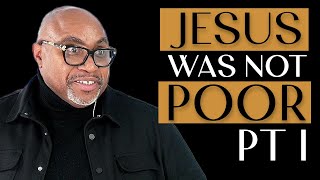
Speaker (Clegg) presents a lecture tying theology and psychology into a "Spiritual Intelligence for Entrepreneurs" framework. He frames humans as spirit-soul-body, emphasizes that entrepreneurial success depends on locating and leveraging a preinstalled "spiritual intelligence" (manifesting as entrepreneurial instincts), and argues that conflict between conscious beliefs and subconscious beliefs (the "double-minded" person) blocks access to divine wisdom. The speaker intends to extract subconscious misinformation about money and faith—announcing a segment called "The Financial Statement of Jesus Christ" to examine whether Jesus was rich or poor and to resolve faith/finance paradoxes. Key textual anchor: James 1:5–8 (ask in faith, without doubting).
Chapters
One of the things that struck me was that the philosophies of success that were being taught by, by the success classics were typically a fusion of theology and psychology to produce a philosophy of success.
And I liked it because there was theology in it, all right? God was in the philosophy of success. They don't matter which book I read. When I read the Power of Positive Thinking, it was a book about prayer, okay? And when I read Think and Grow Rich, it was a book about faith. And so there was theology in it. Then over the years, I guess there was an attempt to hijack our stuff and to systematically remove God from the success from the philosophy of success. So I think it part of my mission, okay, to reclaim some territory that has always been ours, always been part of the anthology of truth and the history of the kingdom. It's always been ours. And so I'm going to put a lot of God back into the philosophy of success, a lot of Bible into the philosophy of success. And this is one of the reasons why I have been so attracted to the work of Myron Golden. And I think we can all say amen to that.
So what I've done is I've written a book called Spiritual Intelligence for Entrepreneurs. And I guess what I'm doing over these nights is I'm going to give some context to the concept of spiritual intelligence and how it is the ultimate form of leverage for an entrepreneur. I think of it as the critical success factor and the ultimate advantage that you have in business and it is to locate.
Listen to and leverage your spiritual intelligence. All right, so I spoke a little bit about the three part man, or the trichotomy of a man. The fact that a human being exists in parts that we are fundamentally spirit beings.
Our essence is spiritual. We're really not human beings having spiritual experiences. We are spiritual beings having human experiences because we are fundamentally spiritual in essence. We have a soul and we live in a body. These are three parts to us, but each part is itself a center of consciousness. Because with the body, we are world conscious. Through our five senses, we connect to the physical world. And without the senses, we cannot connect to the physical world. Okay, we have to see something, hear something, taste something, smell something, touch something in order to relate to the physical world. And thankfully, the physical world is not all that exists. And so we have other parts of us that are centers of consciousness that allow us to connect with other realities that are not physical. That makes sense. Alright, so with the soul, we, we are self conscious. With the soul, we are self conscious because the soul really is the mind, the mind. And when it comes to your mind, you have a conscious mind and you have a subconscious mind. It is with the conscious mind that we think conscious thoughts. And we can have conversations with ourselves. We can even think about what we are thinking about. This is an internal world, and we connect to it through the mind or through the soul, which is itself a center of consciousness, the subconscious. Now that's a big issue. Because your subconscious mind is a thought storage system. A thought storage system. So that everything you've ever learned, ever experienced, any environment you've ever been exposed to, it is all stored systematically in your subconscious mind. And what we call a bad memory is usually poor methods of recalling. And if we change our method of recalling, we can recall virtually anything, because it is all there. There's a problem with that because what we've learned, what we've experienced and environments we've been exposed to haven't all been good or helpful or productive. Some of it's been toxic and some of it has been dangerous. And we've still got all that in our mind. So that's where the battle is. Okay? There's a battle going on in the mind, typically at a subconscious level. I'm going to unpack that a little more tonight when we get into our subject. Right. Because I'm going to help you to figure out what's actually going on in your mind at a subconscious level. But thankfully, there is another part to the human being, and that is the spiritual essence that we are. The spirit being that we fundamentally are. That part of you was made by God, from God, and for God. It has the God gene, divine DNA. It is that part of you that is Godlike. So let us make man in our image after our likeness. The image and the likeness of God cannot be seen in your biology. And it definitely cannot be seen in the soulish part of a man that is already somewhat polluted by misinformation and other forms of indoctrination. If you want to see the image, the likeness, the reflection of God, you're going to see it in your spiritual essence, which is great news, because it means that there's a part of me that fears nothing.
There's a part of me that is very wise and courageous enough to follow through on a smart choice and a wise decision. It means that there is a part of me that is strong enough, that is resilient, that will bounce back from a setback. In fact, that part of me won't even call a problem a problem.
That part of me will look at a problem and call it an opportunity.
It is constantly reframing my experience in ways that benefit me. That part of me says this setback is really a set up for a breakthrough. And we all periodically tap into that side of us and we appear very powerful, very determined, very focused, very energetic. But we are really tapping into a part of us that is that way. There's another part of us that's terrified. There's another part of us that doesn't want to do the work. There's parts of us that are struggling. So we exist in these parts. I think there are lots of things we're trying to create that we really shouldn't be creating because they're created already and pre installed within us. So the idea is not that you create energy, you locate energy that makes sense. The idea is not that you go about trying to create a magnificent obsession that you can commit to, but that you locate the magnificent obsession that was already pre installed in your spiritual essence when you came into the world. Because we came into the world with knowledge. Yeah, at a spiritual level, we did. But that knowledge expresses itself fundamentally through instinct.
So that babies know things that they haven't been taught in a school, and they instinctively do things. If you blow on a baby's face, the baby's going to respond. If you put your finger in the baby's hand, the baby's going to hold onto it. These things are instinctive responses. And then as we grow, our spiritual intelligence expresses itself through other instincts. And if you were to ask me what is the big difference between those who are doing well in business and those who are not, the answer is what I call entrepreneurial instincts.
See, because tools are only as good as the technician that is using them. So that if you put first class tools in the hands of a poor technician, they cannot get a good result. But you put substandard tools in the hands of a great technician and they'll still get outstanding results. That makes sense. Why? Because they are instinctively doing things that others who whose instincts are not strong and their entrepreneurial senses are not sharp. They are not doing those things. And then you find yourself having to.
Teach people things that you think they should already know. And that's one of the big problems with the current success movement, is there's a lot of assumption about where people actually are. So I discovered through a lot of biblical study and a lot of interrogating interrogation of my own clients that.
The entrepreneurial instinct is a manifestation of spiritual intelligence and that you don't have to go about creating the instinct, you have to go about locating it. And so locating that part of you that is godlike, learning to listen to that part of you that is godlike and then leveraging from that part of you is the critical success factor and ultimate advantage for an entrepreneur in business today. Does that sound all right? Cool. So.
What I'm going to do today. So that was all introduction, by the way. I never, you know, I never preach a long sermon, right? It's the introduction that takes all the time. Okay? So we are now part way through the introduction, which is really cool. Some of you heard that, some of you did not. But we are part way through the introduction, and that's really cool. So today I'm really gonna operate somewhat. Okay, A little bit of therapy, a little bit of surgery tonight. Because today.
I'm going to go into our subconscious mind.
In order to eradicate some misinformation.
That is holding us back in business because of the internal conflict that it creates, all right? And we're going to identify it and we're going to extract it, and we're going to replace it with some truth.
It's going to get deep in here. So the last time I did this, the stage got rushed and I had to step back. Back a little. Please do not rush the stage. Okay? Please.
So what I'm going to talk about tonight.
Is the financial statement of Jesus Christ.
And I'm going to answer the question, was Jesus rich or poor?
Now, why is it important? It's important because the character of your Christianity emanates from your concept of Christ.
And it is very difficult for you to say, I'm a follower of Jesus.
And I'm an entrepreneur making money. If in. If at a subconscious level, at least you believe that Jesus was poor.
Okay, that's called conflict. And of course I'm going to do this. But it's going to have applications to virtually every area and aspect of our lives. So let me start with some context to that. Would that be exciting if we could do that? Okay.
I'm going to read from James, right? James, chapter one, verse five to eight. Listen carefully. It says, if any of you lacks wisdom, let him ask God who. Who gives generously to all without reproach, and it will be given to him. Any doubts there? There is no doubt if you ask God, he gives generously to all, and it will be given to you if you lack wisdom. But let him ask in faith with no doubting. Everyone say, no doubting.
For the one who doubts is like a wave of the sea that is driven and tossed by the wind. For that person must not suppose that he will receive anything from the Lord. Wow. So there's a lot to consider there. First of all, if anyone lacks wisdom. So what is wisdom? Okay, I guess in this context, if you don't know what to do in order to get the result you desire, then what you are in need of is wisdom. All right? Because wisdom is going to show you how to get the result that you desire. This passage says you can ask God for it, and God will give it to you generously and he won't withhold it from anyone. However, you must ask in faith, without doubting. It says that the double minded man is unstable in all his ways.
So that's what I want to talk about to start with is the double mind. Okay, now, if you cannot read my writing.
Okay, join the club.
We have something in common. The double minded man. That's what I want to talk about. The double minded man. I used to think that the double mind.
Was someone who kept changing their mind.
But when you understand that you have a conscious and a subconscious mind.
Then it becomes clear that the double minded man is really the man who believes one thing with his conscious mind.
And something else at a subconscious level.
The person believes one thing consciously, but something else subconsciously. That man is conflicted. And according to this passage, access to infinite intelligence is denied. Think about it now. Access to infinite intelligence is always granted to the person who is congruent in their conscious and subconscious belief. But if there is conflict between what you believe consciously and what you believe subconsciously, then access is denied when it comes to the infinite intelligence, the omniscience and the wisdom of God. And that person must not suppose or assume that they will receive anything from God. In other words, you're on your own. So long as you are conflicted in your conscious and subconscious beliefs, you're going to have to find your own way to do it.
But if you can become congruent.
Consistent and unconflicted at a conscious and subconscious level, then access is granted to this warehouse of omniscience, infinite intelligence, strategies, solutions, innovations, everything you could possibly. You know. God knows exactly how to scale your business.
Come on now. But you don't know just yet. But he would give that to you if you asked him. Without doubt.
So I'm going to explain.
The difference between conscious beliefs and subconscious beliefs. You all ready for this? Okay.
What you believe consciously, you are able to articulate.
You can tell me what you believe consciously. You can say this is what I believe.
But what you believe subconsciously, you can only show me by what you do.
It's your behavior that reveals your subconscious beliefs, not your rhetoric. So that if there is a discrepancy between what you are saying and what you are doing, you are conflicted and you are a double minded man.
Okay?
Think about it. It's deep.
So.
Conscious and subconscious.
Conflict.
Yeah, that's exactly what it says.
Conscious and subconscious conflict. So I'm going to expose, I'm going to expose.
Subconscious conflicts right now. Okay, so how many of you have ever heard the saying.
All the preacher wants is your money?
Ever heard that before? Now you can't say where you heard it or when you heard it, but it sits with you at a subconscious level. And it shows up whenever you see a preacher sporting money. It shows up whenever a preacher says, we're going to take up an offering right now. It shows up whenever a minister of the gospel says, okay, I have an offer for you.
It shows up because it's sitting there at a subconscious level. You've never said it consciously, but at a subconscious level it's there. That, right? That's why when I said it, you all instinctively went, yeah, yeah, yeah, yeah. Relates that, right? Okay, so let me, let me try this one. How many of you have ever heard the saying, all Kellogg's Corn Flakes wants is your money?
Never. It's never crossed your mind, right? It's never crossed your mind? It's never come up in a conversation? You've never thought about it, Right? But let's test the two theories, okay? Let's test the two theories. So what you do to test the first one is go to church, right? Go to a church, turn up.
Ushers, stewards are going to greet you. Welcome, welcome to our church. They're going to seat you and you should sit there, listen to the music.
Enjoy the music, listen to the preaching. Enjoy the preaching. You should go to the little fellowship afterwards. Eat the sandwiches, drink the beverages, and then at the end just turn around and walk out, okay? Just walk out. And as you walk out the door, look back, you're going to notice no one is following you.
Come back the next week, do it again. Come back for 12 weeks straight and do it again, okay? No one's following you.
Now, on the other hand.
Go to the supermarket.
Okay? Go to the supermarket and look for the cereals.
You're gonna then find Kellogg's Cornflakes. And what you should do is lift the box of Corn Flakes off the shelf, turn around and Start walking towards the door. Okay, when you get to the door, walk out the door with the cornflakes, straight past the checkout, and walk straight as you possibly can towards your car. Now, here's what's going to happen. You're going to look around and a security.
Is going to be following you. They'll apprehend you, bring you back to the store. And once they have got you back in the store, you will suddenly realize.
That all Kellogg's Corn Flakes ever wanted was your money.
Isn't it amazing how you can put plant a seed in someone's subconscious mind that actually thwarts and derails and distorts their decisions for life, even though there's no justification for it.
That however you test it, it's wrong. But it's a seed. It's been planted there and it is now shaping what you do. Not so much what you say, but what you do. So we go to the grocery store and we fully expect to pay for whatever we want to purchase. And we never think for one minute that all these companies here, all they want is my money.
But you meet a preacher.
Somehow you think all this person wants is your money. Seeds sown at a subconscious level.
So what I'm about to address.
Is some seeds that have been sown into us at a subconscious level. When it comes to the relationship between.
Faith and finance.
Okay, it's almost like faith is over here, money is over here. You pull them together, you're doing something wrong.
We've inherited these paradoxes.
More from Clegg

The #1 Skill Gen Z Needs | Simon Sinek + Esther Perel | A Bit of Optimism Podcast







AI Won't Tell You the Full Truth | Arthur Brooks + Simon Sinek | A Bit of Optimism Podcast



How To Make the Best Decision | Arthur Brooks and Simon Sinek | A Bit of Optimism