The Greater The Risk The Greater The Return
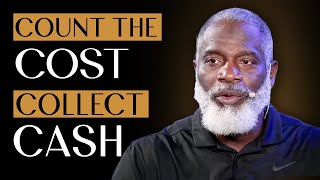
Myron Golden uses biblical passages to argue that managing risk, not avoiding it, builds wealth. He cites Ecclesiastes on casting bread upon waters as delayed investment, warns that one income stream is dangerous, and shares how lending $4,000 monthly for two years helped a client reach $2M/month revenue.
Questions this video answers
Ecclesiastes 11:1 ("Cast thy bread upon the waters, for thou shalt find it after many days.")
$4,000 per month for two years.
Approximately $2,000,000 per month (stated, later corrected in the talk).
He said they paid $1,000,000 for a house and sold it for $600,000 during the downturn.
One thousand burnt offerings (speaker's description of Solomon's initial devotion).
Chapters
Warning. No risk, no reward. Big risk, Big reward.
Little risk, little reward. But even though the bigger the risk, the bigger the reward, some risks just aren't worth taking. So unfortunately, most people, what they do is they go through life and they seek to avoid risk. Can I challenge you? Is it okay if I challenge you? If that's okay, say that's okay. Okay, so is it okay if I challenge you to, instead of seeking to avoid risk, seek to manage the risk in your life. What does manage the risk mean? It means weigh the consequences of failure according to this risk, but also weigh the benefits of success.
If the benefits of success are greater than the consequences of failure, then oftentimes the risk is worth it. Now, I'm going to say something that's going to sound so counterintuitive.
And that is.
The less a person has to lose, the greater the risk they should be willing to take in order to gain.
The more a person has to lose, the less the risk they should be willing to take.
In order to succeed. Okay? So the greater the risk, the more protection you should put around what you have. The less you have to lose, the more you should be all in on a risk that has a great reward. So that's, that's the premise before I start reading. So here's what it says. Ecclesiastes, by the way, was written by King Solomon at the end of his life after he came back to his senses and he came back to the truth of God's principles. That's in Ecclesiastes. He's warning us that if you. The whole theme of the book of Ecclesiastes is if you live your life for life under the sun, you've wasted your life and tortured yourself. So if you want to understand what it means when it keeps saying all is vanity and vexation of spirit, this also is vanity and vexation of spirit. This also is vanity. Vexation. This also is vanity means you've wasted your life. This is a waste. Vexation of spirit means you've tortured yourself. Right? And so the whole theme of the book of Ecclesiastes is if you live your life only for this life, then you've wasted your life. You and tortured yourself. But that's a picture. That's a picture of the concept of time and eternity. Before I even get into that, see, I told you all my brain was racing this morning. So it's like it's going to be, it's going to be going down. A lot of we might get some end up with some Rabbit pelts laying around the room. So, so, so, so, so the so, the greater the risk. At the beginning of his life, he was completely yielded. In fact, he was so yielded that he offered a thousand burnt offerings unto the Lord. And a burnt offering is a picture of total sacrifice. What's sacrifice? Sacrifice is letting go of something of a lower nature. So you can take a hold of something of a higher nature because you can't hold both, right? And so, so Solomon was willing to do that at the beginning of his life, at the beginning of his what we would call his career, right? He was willing to do that in the middle of his life or in the middle of his career. He became so successful that he began to believe his own press. And he began to believe that he was who he was because of himself, instead of realizing that he was who he was in spite of himself. When he got started, he realized that if he had any hope at all, it would be in spite of himself. And after he became successful and received the blessings of following the principles he followed, he thought it was because of himself. And then he began to disregard the word of God. And if you go read the book of Deuteronomy, chapter 17, it tells that the responsibility of the king was to study the word of God and to write it out, to read it and to write it, which, by the way, is. That's called a clue. Two of the things that you can do that will increase your cognitive ability, your ability to think, are reading and writing. Three things. Reading, writing, and communicating. Read more, write more, speak more, read more, write more, speak more. Right? Those things will enhance your cognitive ability. Because what will happen is you'll write something down that you think was clear, you'll go back and read it three days later, you're like, wow, that was a word salad, right? And then you'll go fix it, and then it'll get better.
And so, so, so King Solomon is writing this at the end of his life. And, and so his. The whole theme of Ecclesiastes is this. If you live your life for life under the sun, you've wasted your life and you've tortured yourself. And then he says, let us hear the conclusion of the whole matter. Last two verses of the book of Ecclesiastes. Let us hear the conclusion of the whole matter. Fear God, keep his commandments, for this is the whole duty of man. For God will bring every work into judgment and every secret thing. So I'm supposed to live my life like it matters. Okay? So in the light of time and eternity, so when I sacrifice the present on the altar of the future, that's what I do. When I'm taking a risk right now for a future gain, I'm sacrificing current pleasure on the altar of future benefit, right? I'm sacrificing now on the altar of the future. When I sacrifice my future on the altar of now, I waste my life. You know, when I'm. When I'm getting blasted, getting drunk and getting high and, you know, having sex with anybody who will lay down with me. When I'm living my life like that, what I'm doing is I'm sacrificing my future on the altar of my present. And there's no way that ends well. Are y' all tracking? Okay, so.
So let's read. Here's what it says. Ecclesiastes 11:1, Cast thy bread upon the waters, for thou shalt find it after many days.
Sometimes it makes sense to invest in things that we don't have control over.
When I understand that every.
Thought is a seed, every word is a seed, every deed is a seed that I'm sowing into the garden of my future. So if someone were to ask you, what kind of harvest would you like to reap in your life? Would you like to reap a good, abundant harvest or a terrible, detracting harvest? Which one? Which one would you rather, the first one or the last one? First one. So then, if I'm going to reap a future, abundant harvest, I have to make sure I'm sowing present, abundant, good seeds. I have to make sure that I'm the seeds that I'm sowing as thoughts in the garden of my mind are good seeds. That's why it's so important to read. I have to make sure that the seeds that I'm sowing as words that I'm speaking to the people that I'm communicating with are good seeds. So I don't cuss, I don't like, I don't curse, I don't swear. I don't cuss people out. My son is 33, I think, and my daughter's 32. They've never heard me use profanity in their lives, and I know they haven't because I haven't heard me use it in their lives. Now, before they were born, when I was a teenager, before I came to Christ, ooh, some whole, whole lot of bad seeds came out, right? But not anymore. Why? Because how I talk should change how I behave, should change how I think, should change how I respond, should Change. In fact, I should change from reacting to responding. And there's a difference. So cast your bread upon the water so it will return after many days. There are investments that I make that produce. In fact, I better check this trade right now. There are investments that I make that produce a harvest based on the seed that I've sown. And you too, whether you think you're investing or not, you are. You're either investing in a future that's going to be bright or you're investing in a future that's going to be dark. Even inaction is an investment in your future. Like not doing anything is an investment. It's an investment of nothing. Which means you get to reap what. Since everything reproduced after its own kind, you get to reap nothing. Right? Cast your bread upon the waters and it will return after many days. So a couple things we see about this. Sometimes. Sometimes we have to let go in order to grow. That's one thing. That's one of the principles we see in this verse, right? We cast upon the waters. I don't have control over the waters, and I only have control over the bread before I cast.
Didn't say it might return after many days. It will return after many days. Now, I love the fact that it said it will return after many days. It doesn't return tomorrow. Which is showing us we have to abandon our affinity for immediate gratification.
Sometimes the best thing to do is to say no to the thing we desire to do.
Okay, Then it says, give a portion to seven and also to eight, for thou knowest not what evil shall be upon the earth. What's that talking about? I believe that what that's showing us, it's showing us. In the words of.
Art Williams, he used to say, you gotta pretend everybody's got a flashing sign on their chest that says, say something good to me. Make me feel special. I want to be somebody. Or this pastor at this church I used to go to in Indiana, he used to say at the end of his broadcast every morning, he'd say, and remember, be good to everybody because everybody's having a tough time. Or as I read in a book, and I don't remember what book, or I would tell you what book it was, but I don't remember. You got to be very, very good to people on your way up. Because you're going to meet those same people on your way down.
So when it says, give a portion to seven and also to eight, for thou knowest not what evil shall be upon the earth, it's saying, I get it, you got it going on right now, but don't make the mistake of thinking that tomorrow's going to look just like today. So you be good to people on your way up and they will be good to you on the way down. And it reminds me. It reminds me of a particular experience that I had in my life when I was going through some pretty major tragedy and back in 2000, I mean, built a business, was really successful, made millions of dollars, and then proceeded to make some unmanaged risk decisions that caused us to basically flush it all down the toilet. It's all gone. Like, all the millions are gone. The million dollar house is gone. And we paid a million and sold it for 600, 000. The Mercedes S550, they didn't have to repo it because I mepoed it. You know what meepo is, don't you? That's when I was like, you don't have to come get it. I'm gonna bring it back to you. Right? I mepo'd it, okay? Took that, took the car back and basically went broke. And I lived on borrowed money for two years. I had a friend, I have a friend, I have a friend who loaned me $4,000 a month for two years to live while I was figuring out how to bounce back. Why would somebody do that? Because when he was on his tough times, my family was a blessing to his family, but he had been a blessing to me before that. And it just keeps going around and coming around. And he said to me one day, he said, you know, he said, I'm glad that when I was down, the Lord let you be up. And when you were down, the Lord let me be up. He said, one of these days we're both going to be up at the same time.
Right? Okay, I'm going to keep reading. Okay. It says, if the clouds be full of rain, they empty themselves upon the earth. And if a tree fall toward the south or toward the north, the place where the tree falleth, there it shall be. You know what that means? You are not going to discover the reason for everything. Some things just are. See, and what happens is, like you're going through a difficult time. You say, where? Oh, I got to find the place I messed up. Well, sometimes you got to find the place you messed up because sometimes you just messed up, right? But that's not always the case. I got a call from a friend of mine recently. One of my clients, one of my past clients, he's like, Myron.
And I Won't mention his name because I don't have permission to do that. But he's like, you know, our business was doing really, really well. This is a guy who basically watched our Bible study for a couple years and made his entire team listen to our Bible study. And they grew their business to, like, $2 million a week in revenue. Now, obviously, they had expenses with that, but $2 million a week for a medical business is a lot of money. Oh, no, it wasn't $2 million a week. I'm sorry. It was $2 million a month. $2 million a month. That's $24 million a year. That's significant. But his dad was a physician. Was the physician. He was just. He and his brother were the marketers. And his dad was killed in a car accident. He's like, myron, I hate to bother you, but I don't know who else to call. Do you have anything that. Any ideas that can help us? Right, because, like.
Our business is hemorrhaging money. We got about two months worth of cash left, and a bunch of people who bought programs from us want refunds because my dad was the face of the business, and he's gone. And I said, well, you know what? I've got a friend who's a doctor. He's the smartest doctor I know, and he's also one of the most brilliant marketers I know, and he may be interested in partnering with you. He may not. I'll text him and see if he is. I texted him. The doctor's like, oh, wow. It just so happens we're going through X, Y, and Z right now. And we were looking for something that was going to replace because this other business partner took advantage of us and took all this money, blah, blah, blah. So I connected them, and now they're working together, and it's probably going to be bigger than either one of them could have ever done by themselves. But, you know, a lot of times you might say, well, why did his dad die in an accident? Sometimes things just are what they are, right? Sometimes. Sometimes you are not. You are not the cause of every effect in your life. I mean, really, you really thought you were all that? No. You're not the cause of every. Where the tree falleth, there it shall be.
I love that. Okay. And then it says, he that observeth, the wind shall not so. And he that regardeth the clouds shall not reap. In other words, if you are waiting for a perfect time to change your life, to do the thing that's going to make your Life better in the future. You're never going to do it because there are no perfect times.
How many are tracking? There are no perfect times.
As thou knowest not the way of the spirit, nor the bones, or nor how the bones do grow in the womb of her that is with child. Even so thou knowest not the works of God who maketh all. Like, we can sometimes know what God is doing. Why? Because he gave us a bunch of conditional promises. Right? And a bunch of conditional principles. We can't know all that God is doing. I'm going to talk more about that a little bit later on. So then it says.
Because of all these things I just named, like, cast your bread upon the waters. Sacrifice now on the altar of the future. Because you need to be good to people on the way up and on the way down. And because sometimes things are just what they are.
And because you shouldn't wait for perfect circumstances. And because you don't know how God works. In the morning sow your seed, and in the evening, withhold not thine hand, for thou knowest not whether shall prosper either this or that, or whether they both shall be a light good.
In the morning sow thy seed, and in the evening withhold not thine hand. Like, we could just go right there and just park.
Because here's what's going to happen. If you're an entrepreneur.
Get ready to be misunderstood. Get ready for the people who see you to judge your motives as less than. Because your priorities are not their priorities.
But here's the scripture says, in the morning, sow the seed. In the evening, withdraw. All you do is work. You're so obsessed, right? How many have heard that? Right? You're so out of balance. Out of balance.
I know some people are not. I know some people are gonna like what I'm about to say. But if you're broke, you do not deserve balance.
What does that mean? If you're broke, you don't deserve balance. By the way, if you're out of shape, you don't deserve balance.
What? You don't deserve it. What do I mean you don't deserve it? Balance is not the objective of life. It is a season in life.
And it's never winter and summer in the same place at the same time. It's either when it's winter, it ain't summer. Huh? How's that for a philosophy? And I got another one for you. When it's summer, it ain't winter.
But watch this.
Balance is a season. What's the opposite? Season of balance? Focus.
Focus is a season, and balance is a season.
And when you're in focus, you're out of balance. When you're in balance, you're out of focus.
Are y' all tracking? I mean, the very idea of focus. You take a camera and you. And you focus. You focus it on an object. It makes everything it's not focused on out of focus. It makes it blurry. Why? Because focus distorts balance.
It eliminates balance, and balance eliminates focus. And so here's why I said if you're broke or you're out of shape, you don't deserve focus. I mean, you don't deserve balance because you should be focused on fixing that. And you should be focused on fixing it until it gets fixed. And once it gets fixed, then you've earned some balance. Focus is the price that we pay to reap the reward of balance.
And if I am unwilling to pay the price of focus, I do not deserve the reward of balance.
Focus is intense. You can throw it. Focus is intense. Focus is. Focus is intentional.
Focus looks like obsession to people who are. Who are out of focus.
You broke and watching the game with your kids. If I was one of your kids, I'd be wondering why you wasn't working to make us not broke. Why are we watching somebody else win when we losing?
But, Myron, don't you want to see the game? I don't want to see the game. I want to be the game.
Don't you want to see them win? I don't want to see them when I want to be them win.
But my team's playing. The only team I care about winning is the ones that got golden on the back of their jersey. And once we win, then I can go help some other folk win. But if we don't win, I don't care who wins. I don't care if the Cowboys win. I don't care if the Bulls win. I don't care if the Tampa Bay Buccaneers, the lightning.
We've all seen it. Grown men fighting other grown men over a team. None of the players whom know either of their names. That's insane.
I don't have any opinions. If I did, I'd never voice them publicly.
Do you understand? It is our focus. It's the sowing the seed in the morning.
But, Myron, I need to play with my kids. I'm gonna tell you something that will do your children much greater good than you playing with them. Let them work with you.
I'm so glad my parents played with us some, but they took us to work with them a whole lot more.
Why? Because they knew we would enter into the world that they are in, and they would never enter back into the world that we were in. And the job of a parent is to prepare a child to become a responsible adult. Responsible, compound, word, respond. Able to respond with ability. And the reason we have so many. The reason we have. The reason we have grown people in their 20s, in their 30s, in their 40s even. I've seen them online throwing tantrums when they don't get their way. And they start. And they start screaming because they're afraid to hear. The reason we have that is because they don't know how to respond. So the only thing they have left is to react. And they react like an infant with infantile behavior.
It's ridiculous.
Here's the reality. Here's the question we all have to answer for ourselves. Is my future worth sacrificing now for? Is my family worth sacrificing now? Is my child going to be better off when I can give them a good head start in life than they would be if I played this baseball game with them today, if I threw this ball? I'm not saying don't play with your children, play with them. But don't sacrifice the work that needs to be done on the altar of watching your children play or playing with them. In the morning, sow thy seed. And in the evening, withhold not, withdraw not, withhold not thine hand. For you know not what shall bring what the day will bring forth. What? I'm going to read it again because I forgot. I got all. I got all excited and forgot.
In. In the morning, sow thy seed. In the evening, withhold not thine hand, for thou knowest not whether that shall prosper, either this or that, or whether they both shall be a like good.
By the way, I'm going to end with this. The most dangerous number in business is one. What does that mean? You only have one client. You only have one offer. You only make one sale a month. You only have one lead. The most dangerous number in the world is one. In the morning, sow thy seed. In the evening, withhold not thine hand, for thou knowest not whether shall prosper. Either this or that. See, you got to have a this or that. Get great. Here. Here's what you do. Go to work at your job all day. But when you come home, don't. Don't plop down on the couch, start watching tv. If you're broke, if you're. If your boss ain't going to pay you enough money to take care of your family, then come home and build a business at night that'll make you a fortune, and go to work in the daytime to make a living, to stay alive, to exist. And then come home and build a fortune that will take care of your family for generations.
Because you know not which one shall prosper, either this or that, or whether they both shall be alike. Good. I am so thankful that these principles are in the word of God, so that we can apply them to our lives, because the greater the risk, the greater the reward. I'm going to have to call this part one, because I had a whole bunch of other stuff I wanted to go into, but we'll do it on a different video. All right. Peace out, my people. Stay blessed by the best.
More from Clegg

The #1 Skill Gen Z Needs | Simon Sinek + Esther Perel | A Bit of Optimism Podcast







AI Won't Tell You the Full Truth | Arthur Brooks + Simon Sinek | A Bit of Optimism Podcast



How To Make the Best Decision | Arthur Brooks and Simon Sinek | A Bit of Optimism