The Origins Of Wealth And Poverty
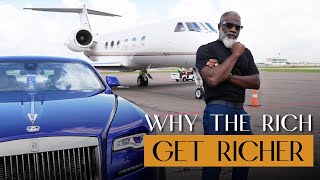
This is a transcript of a March 28, 2024 YouTube talk by Myron Golden ("The Origins Of Wealth And Poverty"). Golden argues that wealth and poverty stem primarily from attention and intention: focusing on abundance produces growth while focusing on lack produces decline. He frames the argument with biblical texts (Genesis, Matthew), laws/analogies (thermodynamics, polarity), and personal anecdotes to show a practical formula—decision → attention → intention → production—for achieving financial and life improvement.
Chapters
Three, two. We've all heard the phrase that the rich get richer and the poor get poorer. But I think, unfortunately, we've come to think that means that the poor are getting poorer because the rich are getting richer. In other words, the rich getting richer has something to do with what they're doing to the poor. The poor getting poorer has something to do with what's been done to them by the rich. And I submit to you there is a biblical, scientifical, and I know it's scientific, Biblical, scientific.
Psychological reason that the rich get richer and the poor get poorer. And that's what I'm going to talk to you about today. I want to read a couple of verses to you from a couple of different passages.
And we're going to look at this whole idea of why the rich get richer. Because the reality is. The reality is, like, there was a time in my life when I was on the poor get poorer side of that equation, right? And it felt like. Like that was it, right. This is the way it is. I'm gonna work for it not to be the way it is. But in the meantime, in between time, this is the way it is. Well, now I'm on the rich get richer side of that equation, at least for the time being. And Lord willing, I don't foresee an end to it. Realizing, though. Let me say this. Let me say this in the context of what I'm talking about. I'm talking about in general, but I'm also talking about specifically in the arena of personal finance, okay? And business finance. And we have to have an awareness of the fact that business is a good idea because business is a God idea. There are rich people who get richer at the expense of poor people because of their willingness to obliterate everything in their path. Those are not the people I'm here to talk about this morning. The rich who get richer at the expense of someone else. That is the exception, not the rule. Okay, so let me read it to you. Here's what it says in Matthew, Matthew, chapter 13, which Jesus gives a bunch of different parables about the kingdom of heaven. And he gave the parable about the soil, the soil that fell on the wayside, stony ground and thorny ground and good ground, the four different types of ground. And then he gets done. And he says, who hath ears to hear, let him hear. And his disciples came to him in verse 10 and said unto him, why speakest thou unto them in parables? And he answered and said unto them, because it is given unto you to know the mysteries of the kingdom of heaven. But to them it is not given. Then he says something really odd. For whomsoever hath to him shall be given, and he shall have more abundance. But whosoever hath not from him shall be taken away, even that which he hath. What just happened? Has anybody else ever read that and been confused, or is it just me? Maybe I'm just easily confused. Well, there's another one that's equally confusing. In Matthew, chapter 25, when he tells the story about the parable about the talents and the boss, the Lord small l called his servants to him, divided unto him as good. To one he gave one talent, to another he gave two, to another he gave five. When he comes back, the one who had five turned it into five, more gave him back 10. The one who got two turned into two more gave him back four. The one that had one went and buried it in the dirt, came back here. Well, I was afraid I might lose it. Here's what's yours. Matthew 25:26. His Lord answered and said unto him, thou wicked and slothful servant, Thou knewest that I reap why sowed not, and I gather where I have not strawed. He said, in other words, you testified against yourself. You knew that I am a man who uses leverage, but you took my money, and instead of leveraging it, you hid it. You testified against yourself. He says.
Thou oughtest therefore have put my money to the exchangers, and then at my coming, I should have received mine own with usury or with interest. Take therefore the talent from him, and give it unto him which hath ten talents. Boy, ain't that the opposite of how we want to do it in America today? We want to take from the haves and give to the have nots. God said, take it from the one who has one, give it to the one who has 10.
What kind of logic is that? What kind of social justice is that? Social justice. Wow.
Figured I'd use the 2024 word.
Now I'm going to read two more passages, one in Genesis, and then we're going to get into why the rich get richer. Genesis, chapter 2, verse 16, 17. And the Lord God commanded the man, saying, of every tree of the garden, thou mayest freely eat. But of the tree of the knowledge of good and evil, thou shalt not eat it. For the day thou eatest thereof, thou shalt surely die. For the Lord God commanded the man, saying, of every tree freely eat every tree. Which tree? Every tree. Which tree? Every tree freely eat. Eat how freely? Every freely Sounds like pretty much like abundance to me. Okay, Genesis, chapter three one through seven. Now, the serpent was more subtle than any beast of the field which the Lord God had made. And he sent him to a woman. Yea, hath God said, ye shall not eat of every tree of the garden. The woman said, we may eat of the fruit of the trees of the garden, but of the tree that's in the midst of the garden.
God has said, ye shall not eat of it, neither shall ye touch it, lest ye die. Well, God never said that. But anyway, that's a different conversation for another day. And the serpent said unto the woman, ye shall not surely die, for God doth know that the day that ye eat thereof, then your eyes will be open, and ye shall be as gods, knowing good and evil. And when the woman saw that the tree was good for food, really, you're going to die. And now it's good for food.
And it was pleasant to the eyes. And a tree to be desired, to make one wise. She took of the fruit thereof and did eat, gave also unto her husband with her, and he did eat. And the eyes of them both were opened, and they knew that they were naked, and they sewed fig leaves together and made themselves aprons. So we're going to talk about abundance and lack. We're going to talk about wealth and poverty. It's interesting that the Bible only uses the word poverty 15 times. Now use the word poor. But the word Poverty is used 15 times, once in the Book of Genesis.
Once in the Book of Revelation.
Twice in the book of Second Corinthians, and 11 times in the Book of Proverbs. We can learn a lot about poverty and why and how it exists just by looking at it in the Bible. Right. Okay. So.
The first thing that we see is. Let's talk about. Let's talk about the Advent, the advent of abundance and lack. The Advent. What's that? The beginning. We see the beginning of abundance and lack in the Garden of Eden.
People have asked the question, so let's, let's, let's. Let's draw the Garden of Eden up here. People have asked the question.
If God didn't want man to eat off the fruit of the tree of the garden, the tree of knowledge, of good and evil, why did he put it there? Has anybody ever wondered that? Or no, you've never. Okay, okay, so we'll talk about that as well. Okay, so the first thing we see in Genesis 2, 16, 17, the Lord God commanded the man, saying, of every tree.
Freely, thou mayest freely eat. So these are our abundance words. Everybody got it? Abundance.
Every tree freely eat. Now, the word garden means enclosure. So the Garden of Eden is the protected place.
Protected. The word Eden means pleasure.
So it's the protected place of pleasure.
And the word and every abundance is provision. So it's God's protected place of pleasure and provision. That's God's. We know that this is God's ideal environment for man, the protected place of pleasure and provision. Everybody with me? Okay. God said, of every tree of the garden, that's peach trees and pear trees and plum trees and apple trees and orange trees and tangerine trees and almond trees and walnut trees. And you said palm trees. All the trees. All the trees. We got trees on top of trees and more trees. Because the Garden of Eden is a place that is plentiful with all these different trees. And God said, of every tree, thou mayest freely eat. And God said, the Lord God commanded the man saying, of every tree of the garden, thou mayest freely eat. And that's a lot of trees. Everybody say, every freely. Every freely. Every freely is a lot of trees. Now, in the middle of the garden, there were two other trees. There was the Tree of Life.
And there was the Tree of Knowledge of Good and Evil. This tree is the only tree that we're not allowed to eat off of. So the scripture says, the Lord God commanded the man, saying, of every tree of the garden, thou mayest freely eat. So you got Adam and Eve down here in the garden just, you know, doing gardening stuff.
And God said, of every tree, freely eat. This is the presence of abundance. But if you understand the nature of the universe in which we live, there are some laws. There's the law of energy conservation. That's the first law of thermodynamics. What does it state? Everything is energy. Energy is neither created nor destroyed. It just changes form, right? So you go down in the woods, you chop down a tree, you throw the wood in your fireplace. The energy of the wood becomes the energy of fire. The fire converts the wood into ash. We could throw the ash in the garden. It can fertilize the garden. And the energy of the ashes becomes the energy of fertilizer. And then it becomes food again. And it just keeps on going. It doesn't cease to exist. It just turns into something else. Are y' all tracking? So we also have. We also have the law of.
The law of polarity. The law of polarity is for every action, there's an equal and opposite reaction. For every negative, there's a positive for Every positive, there's a negative. Okay, so why would God put the garden, the tree of knowledge of good and evil, in the garden if he didn't want man to eat off of it? Well, because if there's no opportunity to do wrong, there's no opportunity to do right.
Right. If there's no opportunity to do wrong, then right is not right. Right is just the only choice you have. So therefore, it is default.
Right?
Like, if there were only one man in the world and you were a woman and he loved you, it wouldn't feel that special.
If there were only one woman in the world and. And you were the one only man and you, like, she loved you, it wouldn't feel that special. It's like, you all I got, bro. Let's go. Right, Right. That's it. Right? And so the fact that there's opportunity for otherwise is what makes the decision that we make have merit and value. Are y' all tracking now? Notice that before man sin, that abundance was abundant and lack was limited. So first thing we see is, we see both abundance and lack are in God's protected place of pleasure and provision. There's abundance there. There's also lack there. The abundance is abundance, but the lack is limited. And the Lord God commanded the man saying, of every tree of the garden, thou mayest freely eat. Okay, so that sounds pretty good. What if.
The same thing is true today, that abundance is more abundant than lack? But in most people's lives, in their experience of life, lack is more abundant than abundance. So then the question becomes, why then is lack more abundant than abundance in the lives of most people? That's a really good question. See, we want to act as if the effect of something is the cause of that thing. See, because the rich get richer, we think that the rich getting richer is the cause, but the rich getting richer is just the effect, and the poor getting poor is just the effect of the cause? What's the cause? Well, I'm going to show you what the cause is in a minute. So.
Then it says, the serpent was more sod on the beast of the field, which the Lord God had made. Both are present in the garden. Abundance and lack. Abundance is abundant. Lack is limited. What if. I'm not gonna say this is true yet, but let me ask you a question. What if in your life right now. Whose life? Everybody type yourself on the chest, say, my life. Even those of you watching on YouTube. Right? Okay. What if in your life right now, abundance is abundance and lack is limited? What if that were true? Like, if that were true, wouldn't you like to do something about it? Wouldn't you like to take an action that makes it show up like that in your life? Well.
So it says the serpent was more subtle than any beast of the field which the Lord God had made. And he said unto the woman, yea, hath God said, ye shall not eat of every tree of the garden. So in comes the serpent, starts slithering around, slithering around, talking to the woman. And some people say, well, how can a serpent talk? Okay.
We'Re assuming that because animals can't talk now that they could never talk. But watch this. Serpents could walk before the serpent tempted man to sin, but they can't walk. Now.
There'S a book written by, I don't remember the rabbi's name, but it's called the origin of Speeches. And the origin of speeches is a book that is. Was written, and it's probably four or five hundred pages was written to show, to prove that every language in the world is a derivative of ancient Hebrew, which the author calls Edenics. But he talks about nekkish, nekhesh, Nekesh is the word for serpent. Right? And he talks about the fact that a nechesh or a snake originally had language and originally had limbs. But because he tempted man to sin with his words.
God took from the highest creature and made him the lowest creature. And instead of a creature that was more intelligent than all the other creatures and also had legs, he made him the lowest of the creatures and took away his ability to walk and took away his ability to talk. And so now instead of being the highest of creatures, he becomes the lowest of creatures. Basically he becomes a tail with a face who can't talk, but can only hiss.
I don't know if that's true, but it's an interesting. It's an interesting theory. Right? So anyway, so the sermon comes. Yea, have God said ye shall not. Okay, so let's get rid of the word abundance up here just so we can have some room. So, yea, if God said, ye shall not eat of every tree of the garden, so what Satan did is he added the word not and he took out the word freely. Does that change the meaning? Yes. Why is it so important to Satan that he changes what God says? Because this is what changes your awareness. Before Eve, before the serpent started talking to Adam and Eve, they were more aware of their abundance than they were of their lack. What if our awareness of abundance and lack have everything to do with the voices we're listening to?
What?
And he changed What God said? Yeah, if God said, ye shall not eat of every tree of the garden. And then the woman, when she responded, she didn't say what God said. Hey, if you go read Matthew, chapter 4. When Jesus is being tempted by the devil in the wilderness, when he answered Satan, he quoted scripture verbatim.
But that's not what Eve did. The serpent said to the woman, yea, if God said, you shall not eat of every tree of the garden, the woman said, we may eat of the fruit of the trees of the garden. She took out the word every and the word freely. Isn't that what we do to keep from being offensive? We use the word's language on the world.
And we use the world's language on the word, but we don't use the word's language on the world. We call it what man calls it instead of calling it what God called it. Which, by the way, is one of the definitions of the word to confess. If we confess our sin, what does that word confess mean? He is faithful and just to forgive us our sins, to cleanse us from all unrighteous. What's the word confess mean? To call it the same thing. Why do I call it the same thing? I call it the same thing because I'm walking in agreement with the God who created everything. If I'm calling it something different, then I'm calling God a liar.
She said, we may eat of the fruit of the trees of the garden. That's why I don't refer to being to drunkenness as alcoholism. That's why I don't refer to.
Being a glutton to having a sweet tooth or I just love food. I'm a foodie. No, that's not what the scripture says. Scripture doesn't call it a foodie.
That's why I don't call adultery an affair. That's why I don't call homosexuality being gay. Because I'm not gonna use the world's language. I'm gonna use the word's language.
Are y' all tracking? And so.
We may eat the fruit of the trees of the garden. So when Satan started talking to her, she became aware of. She became aware of the lack. And she didn't just become aware of it. He became hyper aware of what she lacked. Let me ask you a question. What if. What if the reason you experience more lack than you do abundance is because you are more aware of the lack that's present than you are the abundance that's present in your life? See, the reality is.
The awareness of abundance and the Awareness of lack. The awareness of the presence of abundance and lack. She became aware of both. Once Satan started talking to her, she became aware of both. Then she became aware of the purpose. The awareness of the purpose of abundance. The purpose of abundance is for God's people.
Interestingly enough, there wasn't. There weren't just trees in the Garden of Eden. Go read Genesis, chapter 2, verse 11 and 12.
Because here's what it says.
And there's gold in that land. And the gold of that land is good. Wait a minute. Time out.
Time out.
How many people were in the Garden of Eden? Again, how many? Two. Okay, how much did food cost? It was free. How many stores were there? None. There were no stores. Two people, everything's free. Nothing could be bought. Nothing could be sold. And yet God put gold in the Garden of Eden. And he didn't just put it there, but he also made sure he told us it was there. Why? Because I believe God wanted us to know that opulence and abundance are natural resources in the environment for the children of the king.
We think the children of king are supposed to live in the booth in the back, in the corner, in the dark, and live their whole life in the station of lack. How many are tracking?
So.
Adam and Eve. Eve gets her attention on the things she lacked because the enemy started talking to her. She became aware.
Of the purpose of abundance. She believed Satan's lie that when she got what she lacked, she would become her best self.
She believed Satan had her believe. The serpent made her believe that if you do what God told you not to do.
It will make you more like God. Watch this. He got Eve's attention off of all of her abundance and got her focus on her lack. What if the reason the rich get richer is because they're focused on abundance? And what if the reason the poor get poorer is because they're focused on lack? If you're focused on what's missing.
You'Re going to operate your whole life based on what's missing. But if you're focused on what's there, you're going to operate your whole life based on what's there. And by the way, abundance and lack were both there. But as long as they were focused on abundance, lack had no negative impact on them. But as soon as they started focusing on lack, watch what happened when Adam and Eve focused on lack. So she took of the fruit thereof to eat, gave also unto her husband with her, and he did eat. They had to walk past all of their abundance and ignore all of this. They had to disregard all of this. They had to discount all of this to get to the one thing they lacked.
Just like you, Just like me. There's nothing new under the sun. We can so zone in on what's missing that we miss what's present.
And that's how most people live their lives. They live their lives so zoned in on what's missing that they miss what's there. So.
They took of the fruit thereof did eat, and she gave it to her husband with her, and he did eat. And so what happened was when Satan started talking to her, he changed the words. Why? Because he knew that when you change what you say, it changes what you see. Because words are not just a communication tool. Words are the window through which you see the world. Some of y' all heard me tell this story before, but I was listening to a Jim Rohn tape one time, and Jim Rohn said. He said they were doing some research on some inmates in a penitentiary, and they found something they weren't looking for. And here's what they found. They found that one thing that all of the inmates had in common was they had a very small vocabulary. Isn't that a fascinating thing to find out? They had a small vocabulary.
Because words are not just a communication tool. Words are the window through which we see the world.
And if your communication is small and restricted and constricted, then the world that you're going to live in is going to be very small and restricted and constricted.
Well.
He got her attention on what she lacked. She took what she lacked. And then it says that they got put out of the Garden of Eden. So her focus on lack cost her her abundance. Let me ask you a question. What if your focus on lack cost you your abundance? What if you're so focused on the question, what if it doesn't work? That the only answer you find is, what if it doesn't work?
That's the question you asked. Did you expect you were going to get another answer?
How's the weather? Oh, March 28th. It doesn't go together. That's not what I asked. Right. You go through life frustrated with the answers that you're getting, not realizing that you're the one that asked the question.
The advancement towards abundance and lack have to do with the attention to abundance. Here's what's interesting about the attention to abundance. God commanded them to pay attention to the abundance. It says, go read verse 16:17. And the Lord God commanded the man saying, of every tree of the garden, freely eat. That was a command. It was a command to live in abundance.
What happened? They disregarded the command towards abundance and paid attention to the call towards lack.
Isn't it. Is it. Isn't it in the Bible? I think it's in. I think it's in John, chapter 10.
It says, the thief cometh not, but for to steal, to kill, and to destroy. Isn't that what it says.
Now? Notice it says, the thief cometh not, but for to. That doesn't mean that's what he comes to do. It means he ain't coming unless he can do that. If I can't steal something, kill something, or destroy something, I ain't coming.
That, like, the fact that there's something to kill, steal, or destroy is Satan's invitation to come into a space. Well.
But Jesus said, I am come, that you might have life and that you might have it more abundantly. Huh?
How is it that we believe somehow that God has a desire for his people to live a life of lack? By the way, when I talk about abundance and lack, and I talk about money and I talk about being rich, that's not the objective, Just a byproduct of the objective. Just happens to be one of those things that goes with the territory. It's not the. Like, I'm not talking about being like, I'm just. I'm just gonna go get the money. The money's just the money.
But, man, it changes your life. You know what's amazing? I was thinking about this yesterday. This is gonna be. This is gonna sound weird to y'. All. I was thinking about this yesterday, man. It has been a long time since I had my electricity disconnected.
That's a blessing.
Maybe y' all never had your electricity disconnected. I've had my electricity disconnected, my water disconnected so many times in my life, like. And I'm thinking to myself, wow, I'm blessed. It's been a long time since I've had my electricity disconnected. And, like, I don't even have to think about it because it's all on autopay. And I was thinking, oh, Myron. And I literally had this thought yesterday. Well, why didn't you have your bills on auto pay before? Because they might have came and got some auto pay, and there wasn't no auto money in there to pay it with.
Right? It's a whole lot easier to put your bills on auto pay when your income's on auto pay. Can I get a witness? Anyway, I'm sorry. I was just, like, thanking God yesterday. It's been a long time since my electricity been Turned off in the middle of the afternoon.
What's wrong with the lights, dad? Nothing. This is how they work when you don't pay them. Okay, so anyway.
So.
Here'S. What's the formula then?
There's a command towards abundance. There's a call towards lack.
Being aware.
That intention always follows attention. Attention.
Where attention goes, intention follows. We have to become hyper intentional about what we pay attention to, because what we pay attention to is the thing that we are going to produce in our lives.
Which is why if you want a formula for why the rich get richer, and if you want to be one of those rich people who are getting richer.
You have to become hyper intentional about focusing on intention and ignoring distraction. You want the formula for the richer you get richer? Hyper focus on intention and ignore distraction.
Lack was so limited in the Garden of Eden that it could only qualify as a distraction until it became her focus. And when it became her focus. See, Eve was Adam's focus. So the serpent got the tree to be Eve's focus. And now they're both outside the garden, looking in, wishing they could get back home. But the reality is, we can all make a decision. It's interesting. Here's the formula.
Decision.
Decision about what? What to pay attention to.
And then we set our intention.
And then you add all these things together. Plus. Plus, when you add all these things together, here's what you get. You get production. This is what we produce. You're always producing something, even if what you're producing is lacking.
If you don't decide.
Ahead of time what you're going to pay attention to.
Like, you have to sit down. You have to sit down, evaluate everything and say, okay, I'm going to pay attention to these things. And if you don't sit down and decide what to pay attention to, you're just going to pay attention to whatever calls your name, just like Eve did. And so I'm going to decide. So, like when I was younger and poor and pitiful poor, when poor people used to feel sorry for me. And sometimes we get our electricity. Turns out, here's what we didn't have. Guess what we didn't have. We did not have a television. We did not have cable tv.
My daughter, who is the CEO of our company, she will tell you that we didn't have cable television in our house until she was 16 years old. Why? Because I'm not going to be broke as a joke and ready to choke watching other people live their dreams while I'm living a nightmare. It doesn't make sense.
I Had a level of hyper intention where a lot of people around me thought my intention was obsession.
But what they thought about me was not my business. And I didn't have time to work on it. I was too busy focusing on my intention.
An intention that I had based on decision, not an intention that I had based on a lack of decision or just going with the flow. I'm just gonna go where it leads me. I ain't going where it leads me. I'm gonna lead it.
And so what we have to do is we have to make a decision. Now, here's what a decision is not a decision is not a choice.
They're not the same thing. Choose means to pick one, and you'll pick one today, you'll pick one this morning, pick a different this afternoon, and then a different one tomorrow morning. But here's what decision means. I cut myself off from any other possibility. Let me ask you a question yet. Have you decided yet that you're gonna change your family's life? Have you decided that where you are today is not where you're gonna be a month from now, six months from now, a year from now, a decade from now? You're not gonna be in the same place? Have you made that decision yet? Like, come what may, I am gonna fight tooth and nail to the death if necessary to free my family from. From temporal bondage.
Or are you just okay with it? Well, I'd like to. I'd like to. It'd be nice if I. It'd be nice if I.
Hey, this life ain't everything. Money can't solve all your problems. But here's what it can do. It can solve all your money problems.
Money can solve your money problem. Hey, there are things money can't buy you. Money can't buy you eternal life, right? Can't buy you eternal life. Money, like, money, cannot save the life of a loved one. I'm not even talking about soul.
Death. And, like, what's it say the rich and poor meet together, and the Lord is maker of them all. Where do they meet? They meet at the hospital room. They meet at the graveyard.
So money don't fix all your problems, but it fixes the money problems. And see.
Some of y' all are gonna get your life all worked out when we all get to heaven. But what you gonna do in the meantime?
Cause you here.
You'Re responsible to be a light.
You're responsible.
I'm telling you right now. I did not want drug dealers and celebrities to have more of an influence on my children than I did. And I decided I am going to get rich. I know y'. All, a lot of people don't. I don't like the word rich. Okay, well, don't use it. I like it. It's one of them there Bible words.
I like them Bible words. The blessing of the Lord, it maketh rich. Yeah, I like the word rich.
The first person the Bible tells us was rich was Abram. And Abram, Genesis 13:2. And Abram was very rich in cattle and silver and gold. I like the word rich. And I decided rich like I rich don't fix all your problems, but it fixes all your money. It fixes your money problems.
Brings you some new money problems and some way bigger money problems. But, hey, it got rid of old ones. My electricity ain't been turned off in years.
See, we go through life. We go through life settling for what somebody else will leave us behind instead of making a decision on the front end to pay attention to something with hyper intention. Because the number one difference between rich people and poor people, between people who are hyper successful in any area, not just rich and poor people, but people who are physically fit and people who are out of shape. People who. It doesn't matter what the arena is. The difference between people who are hyper successful and people who are everybody else. People who are hyper successful, hyper focus on intention and ignore distraction almost to the point of obsession, and people who just muddle their way through life. Hyper focus on distraction and ignore intention. May I define those two words before we end? Here are the two words I'm going to define. I'm going to define the word intention. Hyper focus on intention. What does it mean to hyper focus on intention? It means you hyper focus on the things, all of the things that move the needle in your favor and in your family's favorite.
What does it mean to ignore distraction? What's a distraction? A distraction is anything I focus on that does not move the needle in my favor or does not move the needle in my family's favor. That's a distraction.
And so for me, I know that sometimes, like.
I'm working, that's just the way it is. Why I'm hyper focused on intention. Now, fortunately for me, my seasons of focus are about this big and my seasons of balance this big. But I had to work towards that for many decades.
But the reality is, like, if I were still stuck like Chuck in a pickup truck, my seasons of focus would be this big and my seasons of balance would be this big.
So hyper focus on intention, ignore distraction. I came back from trip that we went on to California in November, and I got on the scale.
And I was horrified.
I was back up to 190 pounds, which I used to be like 225. I'm like, oh, no, sir. This is going the wrong direction. Because here's what I found out.
The older we get.
The harder it is to stay in shape and even way more harder to get in shape. So I ain't gonna let this get you done. Gone. Far as you can go, It's a rat. Why? Because I made a decision. I don't care what it tastes like. I don't care what it looks like. I don't care what it smells like. If it ain't gonna help me get back down to 170, I ain't doing it. Now, that's my objective for me. But not just 170. 170 and.
Strong. 170 and not on medications. 170 and vibrant. 170 and full of energy.
If it ain't leaning towards that, I ain't eating. It ain't eating, it ain't drink. Now, I love just keeping it real. I love me some ginger beer with my food.
I've had one since November.
Why? Because it ain't helping me get to where I'm going.
I love bread. When the Bible said, bread is the staff of life, I said, amen.
Amen. Can I get a witness? But I don't eat it. Why? It ain't helping me go in the direction of my decision.
My hyper focus on intention. Now, I'm different than y'. All. Y' all love exercise. I hate it. I shouldn't say that, but I hate it. I don't like working out. I hate the assault bike.
I hate cardio. It's so dumb.
Other than the fact that my heart needs exercise, too, and it's kind of the most important muscle in the body, because if that one stops working, well, the rest of it ain't gonna do you no good, right? I don't like cardio. I don't like it. I still get on that assault bike, and it's like, okay, I'm Gonna listen to 10 songs. That'll be 30 minutes. Let's go. Then I get off of that. Then I go get on my tonal. I do my strength exercises. Why? Because it's easier to keep it than it is to get it back.
The same thing is true about wealth. But you have to have a season of hyper focus on intention.
And then you'll get to the place in Your life. I mean.
I don't know where your financial journey started. I remember when I first got married, man, we struggled so bad for so long. And I remember we moved from Gary, Indiana. My wife was eight months pregnant. We moved from Gary, Indiana to Harrisburg, Pennsylvania on a Greyhound bus. When my wife was eight months pregnant, my brother Rob drove the U Haul for us with a little bit of furniture. We had got us a little one bedroom apartment, second floor, first and second floor apartment. The bedroom was upstairs. And we were paying like $225 a month. And I was looking for a job. I found a job driving a trash truck, $6.25 an hour. And I remember saying to my wife, babe, if we can just. I'm going to get enough overtime, we can make $300 a week, we're going to be okay.
Guess what I did. I got enough overTime to make $300 a week take home. And we were okay. Are y' all seeing what's happening? It all flowed out of the decision, the attention and the intention. But something happened in me and I said, I am going to be rich. Everybody ain't gonna understand it. I ain't gonna understand it, but I'm gonna do it. And I decided to hyper focus on the things that would make my family's life better for generations so that when I die, I can leave an inheritance to my children's children and stand before God as a good man who left an inheritance to his children's children. Lay not up for yourself treasure upon the earth where Mouth describe right. I'm not laying up for myself treasure upon the earth. I'm laying up for AC and Dede and Ari and John and any other kids any of them might have. So while I'm gone, my kids don't have to start from scratch like I did. And I didn't really start from scratch because my parents gave us some skills, but they didn't give us any house and riches with the scripture says inheritance. I'm gonna leave them some real estate. I'm gonna leave them some money so they can spend their time and focus doing things that make the world better instead of just using all of their energy to exist until they die.
That's what I mean when I say this is why the rich get richer and the poor get poorer. The rich get richer because of intention. They intend, they set their intention. They focus on intention and ignore distraction. The poor get poorer primarily because they focus on distraction and ignore intention. I hope this blesses you. Hope it helps you make a decision. Today I'm not living like this anymore. Make that your decision. Come back and tell me in a year how it turned out. I promise you, it may not be where you'd like it to be, but it's going to be better than it is right now. Stay blessed by the best. We'll see you on the next video.
More from Clegg

The #1 Skill Gen Z Needs | Simon Sinek + Esther Perel | A Bit of Optimism Podcast







AI Won't Tell You the Full Truth | Arthur Brooks + Simon Sinek | A Bit of Optimism Podcast



How To Make the Best Decision | Arthur Brooks and Simon Sinek | A Bit of Optimism