The Privilege of Bad Experiences with NASA astronaut Jonny Kim | A Bit of Optimism Podcast
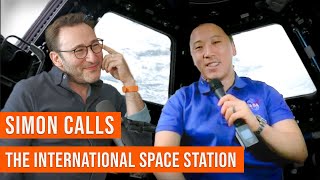
Jonny Kim went from a difficult childhood to becoming a Navy SEAL, doctor, and NASA astronaut. He talks with Simon Sinek about how hardship shaped him, what he learned serving on the International Space Station, and why he calls struggle a privilege.
Station, this is Houston. Are you ready for the event?
Houston Station, I am ready for the event.
Simon Sinek, this is Mission Control, Houston. Please call station for a voice check.
When I was 13 years old, I had a dream. It was to go to Space Camp in Huntsville, Alabama. I had just seen the movie Space Camp, and it sparked all my childhood dreams to be an astronaut one day. And so I figured the first step was to go to Space Camp. And that's exactly what I did. And I remember when I came back, I was so proud. I wore my flight suit to school the next day. Everyone made fun of me, this dorky kid in a public school walking around in a light blue NASA flight suit. But secretly, I knew everyone was jealous. And my love of space and the space program, NASA has never gone away. I've done every LEGO set that has a NASA logo on it. I've got NASA stickers on stuff that I own for no other reason. I think it's cool. So when I was offered the opportunity to talk to astronaut Johnny Kim on the podcast, of course I leapt at it. But it gets better than that. I talked to him while he's in space. He is currently on the International Space Station. And the wonderful, fantastic people at NASA hooked up a zoom call for us and allowed us to have a chat. What a thrill. What a thrill. Totally, totally nerded out. Johnny is someone remarkable and special. And if you think you've met an overachiever before, you haven't met Johnny Kim. He was a Navy SEAL with many combat tours. He was a combat medic. And it was the experiences he had in combat that inspired him to want to serve even more. So he decided to become a doctor. But of course he went to Harvard, but of course that was still not enough. And now he's an astronaut. This guy is amazing. He's also one of the most humble people I've ever talked to. He refuses to give himself a pat on the back. He refuses to say that it was about him. He has immense gratitude to the world, and in particular, immense gratitude for the bumpy life that he had growing up. Johnny was raised in a household with an alcoholic father and unfortunately, a lot of violence. And that is where this meek kid learned to stand up. But he wasn't just standing up against the violence. He was standing up to protect others, to protect those he loved. And it's this theme, the theme of love, that has continued to drive him to higher and higher levels. Literally. This is a bit of optimism. This episode is brought to you by true classic the way they became our sponsor is because I loved their T shirts. And so we just called them up and asked them if they wanted to work together, and they said yes. So check out their clothes@truclassic.com it's good to see you, Johnny. Thanks for taking the time to do this.
Oh, anytime. I've been looking forward to this, Simon. I think we're gonna have a great conversation.
I don't know if you know this, but there's an entire generation of Asian American kids, and particularly Korean American kids, who absolutely hate you. And that's because it's as if they don't have enough pressure on them from their parents to become doctors or go to an Ivy League school. But your existence is the thing that parents use to say. See, you can be like Johnny Kim.
I unfortunately have seen that meme and know what you're talking about. I think there's a lot of. I think it's very comical and funny. I do think, though, I sometimes worry about the healthy aspects of comparison, like that comment saying comparison is the thief of joy. But also, I also think the part of my journey that's been really important for me has been being the best version of yourself and fighting for what you believe in, regardless of what the scale of what that might be or what that looks like.
One of the things I find so fascinating about your childhood as well is it was not an easy one. And when we think about overcoming adversity and that adversity makes somebody stronger, it raises the question, this young generation, much is written about helicopter parents and over coddling, and it raises the question, how important has adversity been to your own journey? Journey, I mean, because what you've accomplished is amazing, but how much is it balanced off by the adversity that you. That you've experienced?
I'm a firm believer that all of us are the summation of our experiences, whether they're good or bad. You know, I think there's innate quality traits within us of how we interpret some of those experiences, whether they're good and bad, how we absorb them, and how that kind of shapes us into who we are. But I also think it's really important about the extrinsic factors, not just the intrinsic ones, of whether you had a good parent or a coach or a mentor or friend, someone in your life to kind of shape you or bump you when you were going a little bit off course. So to answer your question, I firmly believe I wouldn't be where I am today if it wasn't for A lot of the adversity and the challenges, both the good and the bad ones, and. But I'd say that it's like the right challenges and the right adversities came to me at a point in my life when I needed them. But I also had at least someone there or, or something at the end of the light working towards where it kind of kept me whole and kept me straight. And that's not to say I didn't bump off the path. I certainly have and. But I think that's part of that human experience that makes us who we are.
Who was that person for you?
It's taken the shape of different people over the course of my lifetime, really different phases of my life. I'd say the one that sticks out for me certainly in my adolescence was my mom. My mom gave up so much of her own life. I mean, she stayed in a situation that was really harmful for her, that was hard for her children. The unconditional love she had for her children, it stuck with me. And she's certainly the strongest person that I know of. And I've been really lucky to have people like my mom or other people in my life that were just there at the right time, see something in.
Us and invest so much in us. I think it's such an interesting thought, which is one of the reasons we want to do well and one of the reasons we don't want to be a screw up is because we don't want to let them down. We don't want to show that their investment in us and belief in us was in vain. I find that relationship, the desire to, to make someone proud, it's really fascinating to me that it's not just inner drive, but also it's the relationship of the person who invested in us.
So I think that is. Can be certainly a very powerful drive. I, and I would be lying to tell you if I didn't have that drive. Especially early in my life where a lot of my motivating factors were almost proving other people wrong or like for instance, becoming a seal. There were a lot of people that told me straight up that that was a bad idea, I wouldn't make it. And a part of me was proving to other people that I could do it, and also to myself proving that I could do it. But as I've gotten older and more mature, I really have shed those extrinsic factors of proving other people or doing things for other people, because I don't think that's a really sustainable way to a healthy life. A Healthy, whole life. And so I'm really careful about motivation and why you do things. And because the why you do things is the most important. I mean, Simon, I know you yourself know this very, very well. And doing something for someone else's approval is, I think, a surefire way to disappointment, to failure. It's not sustainable, in my opinion, but it is absolutely powerful in the right amount of doses at the right times in your life.
Yeah, but I think. I mean, this is interesting because I think there's a nuance. Right. I think there's a difference between doing something for someone's approval and wanting to make proud the person who invested in you. Like, when we go see our kids graduate and we sit in the audience, we feel proud. And the person graduating is proud, too, but also is grateful. I think that what I'm talking about is some sort of gratitude because we have these human connections. And this is what I find so interesting, which is how much of it is just us and our drive and our ambition. And because I know you're service oriented. I mean, I've read things you've said before, how driven you are to service, and sort of, you look at your own career path. It's sort of finding bigger and bolder ways to serve.
Yeah, I think it's a subtle difference, you're right. And that human connection is really important. I think human connection is one of the most important things we need to explore in our life. And that's actually what I find the most fascinating about the International Space Station, is how it connects so many different people from different walks of life and backgrounds. I mean, just earlier this week, we had a crew of four, the Axiom 4 crew. And so we had 11 people on board from six different countries and from 11 different backgrounds. Yet we were breaking bread together and sharing stories and realizing that we had so much more in common than differences.
Every astronaut I know has talked about this. It's not just the overview effect of looking down and saying, why can't we all get along? Because you don't see borders, but you experience it when the people come to visit, which is. It must be one of the most human experiences where you don't see each other based on, you know, our different divides, based on our nations. But you're all human beings and common experience and common risk, for that matter, too. I mean, you're in austere conditions up there.
Absolutely. And if we could find a way to relay these experiences down on Earth, you know, I think the world would be a lot better place if we had more empathy and understanding and a drive to find those commonalities amongst us.
Can you tell me a specific story? Something throughout your career? At any point, whether it was, you know, at any point, at any of the many jobs you've had that, you know, you look back at that one specific thing and you think, wow, that that was incredible. Whether it was successful or not, you know, whether it was a mission success or a mission failure is. It doesn't matter. But when you look back, you see that it was a defining moment in your life. Can you tell me a specific story of something you've gone through?
I have a few of those. I think the one that's probably the most true is probably just a little outside the scope of the conversation we have here today. But the one I will share with you was being unconfident in my abilities. I think insecurity is something that we've all dealt with and it's a part of our. It's a part of being human. And certainly I think a little tinge of healthy insecurity keeps the humility in check or keeps the ego in check. And one of the most formative experiences of my life was being able to serve overseas as a combat medic. And regardless of who the person was, when they were hurt, it was my job to save them. And having that ill opportunity in particular to try and save some of my friends left a really impact on me. I mean, it's what spurred me to kind of continue that level of service at a higher level for medicine. That's why I wanted to be a physician. Watching my friends get injured and doing my best to help. And I. That's something that's always stuck with me. It's that kind of privilege of experience. And I say that really carefully. Privilege, you know, privilege of just having bad experiences, but good experiences, formative experiences, challenging, worst day of your life type of experiences, if you can come out of that on the other end stronger and more compassionate and empathetic. It's a real superpower. And. And I think I've been very privileged to have had a lot of those unique type of experiences throughout my life. And that's shaped me into the person I am today. And so that's almost like a moral obligation, I find, to kind of share that empathy and that experience among. Amongst us so that we can make this world a better place.
The privilege of bad experience. I'm so taken by that phrase, you know, that bad experiences, though, they are awful in the moment. I think anyone who's been shaped by them looks back and say, I hated every moment of that, but I'm glad it happened.
Yeah. You know, I think it requires a lot of context, because off the face of it, if you heard the privilege of bad experience, you'd be like, what are you talking about? That's terrible. And I don't mean to diminish the kind of hurt people have from having bad experiences. I'm just talking about if you happen to be one of the lucky ones that can come out of a bad experience for whatever reason, maybe because you had the right mentor in your life or you had the right intrinsic perspective to reshape that for good, whatever it is, sublimation. But it is indeed a privilege, if you can come out of a bad experience with a new set of eyes, to do good. And I think those are stories really, really worth sharing.
What was the specific story when I asked you of something that you look back and you say that really was that really molded me or contributed to molding me into who the person I am today? What was the specific story that you were going to tell that you said was slightly to the side? Just because you're in space, I'm not going to let you off the hook.
You're tough. You're a tough one. Without getting into specifics, it was. It was just being really scared. And I think that's something everyone who listens or watches, who's lived a life can. Can. Can understand, you know, being scared, it's being a scared boy for me, and being able to stand up to someone that I had feared for a long period of time clicked something in my head and showed me that, you know, we're all a lot stronger than we give ourselves credit for. I mean, that it's hard to encapsulate, articulate how formative this experience was for me. But if you can imagine yourself and, you know, maybe most of your adolescence, you thought you weren't meant for big things or that you were scared. A scared little boy or scared little girl to do anything and not feeling of any worth or value, but being able to do the most courageous thing you never thought you could do, that changes you, and it changed me.
Where did you find the courage? If you went from having fear, what was it that made you rise up and overcome that fear?
I think it's the strongest emotion that we have, the most important emotion and the reason for why in everything we do. And that's love. For me, it was love of someone to care for them and protect them. And I think that love is the reason why, if you really pull away the layers of why we do so many things, it always comes down to love. I mean, look, right now, I mean, I'm up in space, but I've got a whole team of specialists, of engineers, of flight controllers and directors on the ground right now supporting this mission. They're not doing it for a paycheck. They're doing it because they love it. They love the public service, they love the work, they love the impact we're making, and most importantly, they love each other. We have a lot of love for each other, and that's what I find so, so inspiring about public service, is that it's. It goes beyond that, and you find a level of camaraderie and love for each other to keep doing the job.
You know, this word comes up a lot. I've spent time with Marines. I know you're a sailor. I mean, you're a sailor, technically, you're a seal. You're an astronaut. And I mean, you're a hardened warrior. You're a combat veteran with many tours, and you've seen and done things that, you know, are, you know, wonderful and awful at the same time. And this word keeps coming up, and I don't think that sort of private sector recognizes that to be a high performer, to accomplish more than others think possible, is not driven by the desire, as you said, to prove others wrong or to prove how strong you are. Whenever I talk to folks like you, it is love. And if you're going to be a role model to kids and parents, are going to push them to go to Harvard and become doctors, maybe become astronauts and SEALs, not only do they have to teach them math and work ethic, you know, how do we foster love in our kids? And how do we foster love, you know, on our teams with our employees and our teammates?
You practice it. You show love. You do. You do love. It's shown through your actions. It's shown through the words. It's shown through the I'm sorry, I made a mistake. How can we make this better? We're all human, and as humans, we just so naturally tend to cause harm to each other, even despite the best of intentions. But if you have love and empathy, I think there's really nothing you can solve. And, you know, I feel comfortable saying that. You know, I've said it to a team of seals. I was invited back for my old alma mater SEAL team's anniversary, and my speech hindered around love. And at the face of it, you're like, that's such A silly thing to talk about amongst a, you know, big group of burly, tough Navy SEALs. Well, you know what? That message came through loud and clear, and it was very, very impactful to the operators I talked to afterwards of how, yes, indeed, the number one trait of a warrior is love, Whether that's love for country, love for home, love for the ideals you believe in, but, of course, most importantly, love for each other. To keep going on, I had the.
Opportunity to do a why Discovery with the seals. And where we came to was that seals have a capacity to love each other more than others think possible. And what makes them special as Special Forces is this intense, intense love for each other as much as it is for the organization and the country. I was struck by that. Again, these hardened warriors where love was the underpinning. It was such a special event, and there were a lot of tears in the room. Again, hardened warriors.
You know, I think one of the most impactful pieces of scripture for me is greater love hath no man than he laid down his life for his friend. And I've seen that firsthand. And, you know, I have never had that opportunity to kind of. To show that. And I'd like to think that I would. I don't know if I'm courageous enough to do something like that, but I think that's the great, greatest measure of love, and it's certainly something I've seen, and that's one of those things that's changed me. You asked earlier some form of experiences, and that was certainly one of them.
Yeah. Just to end on a lighter note, how many miles away are you from the Earth?
Well, we just had a reboost, which means that we fired our thrusters to get a higher altitude. So we are currently 250 miles above the Earth.
And you're flying over. I think you just flew over South America.
I think we are currently over Africa.
Oh, you were. You were over South America when we started the call, and now you're over Africa.
Yes, we were. Yeah. That's what happens when you're traveling 17,500 miles an hour.
There you go, Johnny. I can't tell you what a thrill it is to talk to you. I was excited that you agreed to come on the podcast and even more excited when you offered to do it from the space station. Thank you so, so much, and I hope I get to meet you one day when you come back down.
Simon, thank you is an honor. Likewise. I hope to meet you one day. Take care and goodbye from the International Space Station.
Station, this is Houston acr. That concludes the event.
Thank you. Thank you to all participants. Station. We are now resuming operational audio communications.
We're trying something a little different. Instead of a traditional host red ad, I invited Ryan Bartlett, the founder of our sponsor, True Classic, to sit down for a conversation. And it turns out there's a lot more that we can learn from him beyond just how great his T shirts are. And his T shirts really are great. We call this an ad with authenticity.
I played poker for a living after I failed in music. Ended up failing in poker, too. It was a disaster. I went to Vegas, and even though I was decent at poker, I realized very quickly that even though I was the best of my friends, I was the worst as a professional in the big leagues. So I very quickly realized, like, this just is not gonna work out. And I didn't want to borrow money from people. Like, that's very common in that industry. So I got out of it and I just quit. Well, if I'm not gonna do this, the next thing is just to work in the nightclubs and wear those jackets and stand out in front of the clubs and do the bottle service. So I did that for, like, a year, and I just got completely burnt out. And I was just like, I gotta. I gotta go back to music. That was where my heart was. So then I went back to Florida again, got my bachelor's in music business, and I was on to get my master's as well.
So you went back to school?
Back to school after all that?
Wow.
So this is kind of more of.
A delay tactic rather than a strategy.
Yeah, I just thought, like, I can't give up on what my heart is telling me. I need to trust my gut here.
Yeah.
I need to go against the money grain, even though I need it. I need to just follow what I felt was true to myself. So I went back to school thinking that was the answer. And then from there, I went to la. So I showed up in LA with like, all right, let me work at a recording studio again. I couldn't really get a job. I couldn't figure it out. Played in a couple groups, but it just. Nothing really materialized. And I was just, like, trying to force it. And finally I was like, do I just want to do this forever? Do I just want to be like that guy? And I still know a lot of them, by the way, that are still in their 40s trying to do it, struggling, just barely getting by, living in LA and, like, no family, no nothing. And I didn't want that for my Life. I wanted more, I wanted kids, I wanted a wife, I wanted a house. And so that's what led me to digital marketing. And I had already acquired these skills over the years of just like, you know, building websites, doing graphic design. And so I got a job at an SEO company in like 2009. And they hired me as like a jack of all trades kind of guy. I could write, I could, I could do a bunch of things and I was, I was useful to them. But I started listening to the salespeople sell SEO and It was like 5,000amonth, 10,000amonth. And I'm like, what are they paying for SEO? This is insane. I got to learn this thing. So I went on this journey of learning SEO and working my way up to page one. So I started my own little company called SEO Direct. And I worked my way up all the way to number one for like SEO Los Angeles, like the hardest keywords in the world. And the leads just came flooding in and then I just kept stacking up the retainers one after the other and building an amazing service based business.
How did you learn it? Like, you weren't watching YouTube videos?
Listen, I come from the early, early days of Dreamweaver and Hardcore HTML and AOL and Prodigy and like those early, early Internet services. I was all in on that stuff.
But how did, what did you actually do to learn it?
I just learned it myself. I didn't learn it in school, that's for sure. They weren't teaching any of that.
Do friends, did friends teach you?
No, I would just get in there and tinker around and try to figure it out as I try and just like, how do I make this program work? Because YouTube wasn't really a thing back then either. There was a fair amount of like forums back then. Forums were like the only thing back then. This is really dating me. But like, it was all forums. So you could find bits of information through certain forums on how to build websites and things like that. But it was just a lot of playing around, even with like graphic design. I redid one of my buddy's report cards in high school.
Redid meaning his parents saw grades that.
Yeah, he was like, dude, I got an F, but I need you to give me a baby. And I had to like scan it, bring it up in Photoshop, edit it, print it out, make it look real.
And now he's in jail and now.
He'S banned by his parents for life. They disowned him and they hate him. It's all because of me. But I don't know. I just like, I was scrappy, really. I was an entrepreneur. I didn't know it at the time, but I really was just being scrappy, figuring stuff out.
Bit of Optimism is brought to you by the Optimism Company and is lovingly produced by our team, Lindsey Garbinius, David Jha and Devin Johnson. If I was able to give you any kind of insight or some inspiration or made you smile, please subscribe wherever you enjoy listening to podcasts for more. And if you're trying to get answers to a problem at work, or want to advance a dream, maybe I can help. Simply go to SimonSinek.com until then, take care of yourself, take care of each other.
More from Clegg

The #1 Skill Gen Z Needs | Simon Sinek + Esther Perel | A Bit of Optimism Podcast







AI Won't Tell You the Full Truth | Arthur Brooks + Simon Sinek | A Bit of Optimism Podcast



How To Make the Best Decision | Arthur Brooks and Simon Sinek | A Bit of Optimism