The Secret Science Of Creating Viral Videos
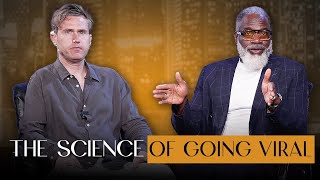
A recorded live session (YouTube, Apr 29, 2024) where Brendan Kane explains his model for creating viral social content and Myron Golden moderates and adds business/offer perspectives. Key claims: distinguish formats (repeatable structures) from fleeting trends; research high/average/low performers to identify contextual performance drivers (library ~200 drivers); master one format and the storytelling nuances within it (pacing, first 3 seconds, visual hierarchy, "Jenga theory"); prioritize retention as the algorithmic driver; use formats to monetize (offers, affiliate interviews, lead capture via DMs/AI). Includes multiple case studies (e.g., man‑on‑the‑street, leather craftsman "is it worth it?", Mark Rober, MrBeast), audience Q&A (topics: consistency, hiring, platform choice, monetization for niche communities).
Questions this video answers
April 29, 2024.
About 200 formats.
April 1, 2022.
About 10,500 subscribers.
Over 100,000 subscribers (reported).
Chapters
That format are going to be the biggest contributing factors.
Yes. The first place to start always is the format. So what is a format? The best way I like to kind of start out is defining a format versus a trend because there's a lot of concepts of trends being talked about. So if you think about a trend like the big one way back in the day was the ice bucket challenge. That is a trend. Now. Trends are very fleeting. You can't do the ice bucket challenge for every video and expect it to go viral.
Sure.
And this is why I kind of tend to tell people to stay away from trends. Because you're not learning the art of storytelling, because you're switching things up every time, versus a format is something that can consistently go viral over and over and over again. So we talked about man on the Street. There's another format in short form called we call two characters, one light bulb, where it's the same person that plays the expert and the novice. So they're playing two different characters and then they debunk a common myth about like finance or legal or any subject that can be content.
You talking about video, you talk about post, you talk about images, you talk about like all different kinds of content or predominantly video.
Well, the model that we created can work for any type of content, any type of platform. And it's one of the reasons that we built, you know, the model is to work with any change. So let's just say that every social media platform left tomorrow or a new content format came up tomorrow. Our model accounts for it. So we deal predominantly in video because this is a retention world in terms of what social media platforms are working for. But our process can be used for anything.
Oh, cool, Cool. So if you were going to lay out, like, if somebody's not ever created a video before on social and they want to build an audience or attract an audience and build a brand on social, what would be the most important things you tell them to do?
Do the first place. Even if you haven't created content or you have been creating content for years and you're struggling to break through, the first place to start is research. And what do I mean by research? Well, two of the biggest mistakes that people make with content is a they just keep looking at their own content and trying to kind of study their own content. And let's just say that you're stuck at a thousand views a video or 10,000 views a video. If you just keep looking at your own content, how can you find the clues and the answers to break through? You Won't. The second part is people are so focused on the numbers, the quantitative layer. And the quantitative layer is a great indicator of something worked or didn't work, but it doesn't uncover the why behind something worked or didn't work. So when we talk about research, when we work with our clients and we've actually built an entire research division within our company, we look at the larger social ecosystem. We're studying what content formats, what content structures, what content creators are going viral. And then we break down why we don't just look at the numbers. Because that's a big mistake that people will make is they'll look at a content creator and they'll see that they've generated 10 million views on a video. They're like, oh, I see what that person's doing. They've gone viral. But the challenge is that content creator may have only done it once. So that's not a recipe for looking at it. So what we do is we look for these content formats, these structures. We make sure that it's consistently gone viral for that content creator or that specific format. And then where we take a layer deep is we don't just look at the high performers. We look at the high performers against the average and the underperformers. And again, what we're looking at is the contextual elements that are causing the high performers to. To outperform the low performers. So we'll look at a video that has a format. Like before we started, we were talking about a man on the street format where you approach random strangers on the street and engage with them. So we would look at a high performer in that format. It could be 10 million views. But then we'll look at somebody using that format or in the same channel if somebody doing 10,000 views. And then we put them literally side by side and measure the difference of, like, what is happening in that storytelling. We actually did it for your YouTube channel, remember? We. I do took the high performers, the average performers and low performers, and identified what are the patterns that are occurring. So that's the best place to start.
Yeah. That's so good. So would you say that the format. The format and then the components inside.
So that's a format.
What do you call that again?
Two characters, one light bulb. Because there's a light bulb moment in the viral.
I get it. That's great.
But that's a format. So really getting started is identifying what is the format that you want to go after. And there's specific formats that work for specific platforms. And then Once you understand that format, then you dive in and really understand well what makes that format actually tick. So just like an analogy for people to think about is if you want to be a musician, what do you do? You first choose the musical instrument that you want to play, and then you pick certain songs that are known, that you learn those songs before you create your own. So it's the same as like a format, as like a musical instrument is you choose which one and then you practice and become an expert at that one. But most people, what they're doing is they're just not even thinking about format. They're just creating as much content as possible, not thinking about these structures out there, or they're chasing trends and not really learning the art of storytelling on this platform.
So.
What you say learning the art of storytelling versus just shooting a video. Like, what do you mean, the art of storytelling?
So let's talk about another format. And kind of where I started my career is I went to film school because I wanted to be a film producer. What do you do when you're in film school? You sit there and they make you watch, analyze films, class films, and break it down. You learn the art of dialogue, cinematography, lighting, directing, all these different elements. Same thing. They make you write a screenplay, even if you're not going to be a screenwriter, so that you can learn these elements. So when we talk about social media, it's a blessing and a curse because it's a blessing because anybody can pull out a phone, record something, and publish it to the entire world. It's completely democratized mass communication, sure. But it's a curse in that it's so easy. Nobody puts thought into it. And they expect just because I record something took the time and energy and effort that it's a care.
Yeah.
And then once it doesn't go viral, what they start doing is they blame the algorithms and they just say, oh, you have to pay to get reach all these different elements. So when I talk about the art of storytelling, what we do is when we do that breakdown of the high performers versus the low performers, again, we're not really paying attention to the content. We're paying attention to the context. So we look for these things called performance drivers. So there's upward performance drivers and downward performance drivers. We have a library of like 200 of these performance drivers when we look at content. So these things can be like pacing.
I'm loving this conversation so much. Sorry.
So it could be things like pacing, like the pacing of the video. It can be what happens in the first three seconds, it can be captions, title cards, facial expressions, body cues, all these different elements that contribute to the successful art of telling a story through a specific format.
And so are you saying that content is important, but context is even more important? Like how it's done is more important than the content?
Absolutely.
So a person would do better with.
A great format and great storytelling ability and an average story than they would with a great story and average storytelling ability and average context.
Yeah. And if you think about it, you see this in the real world is oftentimes it's not the smartest person that becomes famous or the politician that's the smartest that gets elected. It's the person that really can connect with an audience, that can really motivate the masses and engage them in a certain way. Now, I'm not sitting here and saying that the content shouldn't be there, because if you build this audience and you don't have value, then what are you building the audience for? It's going to fall flat eventually. Right?
It'll be like a house of cards.
Yeah.
Okay, so it's like the McDonald's phenomenon. Everybody can make a better hamburger than McDonald's, but they still sell the most.
Yep.
Wow. Cool.
Anyway, good stuff. So you said. You said.
There are different types of formats. How many different types of formats are.
There at this point? We've analyzed about 200.
200 different types of formats?
Yeah. It takes us about a week to do an analysis of a format, but there's more out there, and there's different variations, like man on the street format. We've done eight research projects of different variations of man on the Street. So there's so many out there. And I think when people hear the word format, they kind of feel like, oh, it's gonna constrain my creativity. But going back to, like, making a film, like where I started my career, every movie's used the same structure. It's called the 3x structure for, like, 70 or 80 years.
Wow.
And it's not, like, stuff Steven Spielberg or Quentin Tarantino sit there and be like, oh, my God, I gotta use the 3x structure again. It's gonna stifle my creativity. So these formats, there's so much creativity within them. Even, you know, two creators using the same format can feel distinctly different.
Wow.
Wow. So format, storytelling.
And when you said lighting and.
All.
Of that other stuff that you named, angles, camera angles, are you including that as part of the storytelling as well?
We look at it again, we analyze it as a performance driver so we look at it from the lens if we want to see if lighting is a performance driver. Like, take your videos, for example. If we wanted to determine lighting was the same example, we look at a high performer and low performer. We see the lighting is the same in both. We know the lighting is not the performance driver. It's kind of another analogy is like somebody's wearing a red hat in a viral video, and it goes viral. They're like, oh, I just need to wear a red hat every time I record a video. Well, the easiest way to kind of prove that theory is to look at underperformers. Have you worn a red hat? And it's gone that way. So all these elements can easily be validated by just looking at and comparing in the research. But I will say that people often overvalue production value as a performance driver. They think that they need to have fancy cameras, fancy setups, things of that nature. We can point to many different examples of content creators that just use their iPhone. So no matter where you're at, you don't have to start with a fancy setup and fancy camera necessarily in order to do it. Now, there's some formats that it can lend itself to that, sure, but it's not a requirement.
Wow. So if somebody's starting out and they don't have, like, they haven't Even started their YouTube channel yet, or their Instagram or whatever, and you're gonna coach them, you're gonna say, okay, you need to learn. Go learn formats, or you need to go learn storytelling. Like, what would you tell? What components would you tell them to go master and in what order?
Well, if you're gonna do this on your own, the first, simplest place that you can start is just use this knowledge to consciously consume content on social media. Because most people are just unconsciously consuming content. They're not kind of looking for the patterns. But now when you're consuming YouTube or Instagram or whatever platform you're focused on, just look for those formats, or look for a video that has 10 million views, then dig further into that creator's profile. Are they consistently doing it? Oh, well, what's the format they're using? And then ask yourself, is that a format that I would enjoy doing that works? Well, for me, that's the first place to start. Another big challenge that people run into is they think that their industry or subject matter is not sexy enough. They're like, oh, I'm a tax accountant. It can't go viral. Any subject matter can go viral. It's proven. Tax accountants Insurance, real estate, finance, anything can go viral, but it comes down to the context of it. And this is also going against like a traditional kind of.
Known thing about marketing is like you have to niche down with the message in the content. And that was designed before when it was just all based on targeted ads. But when we think about organic social media, we have to use what we call, and this is a performance driver called the generalist approach. How can you make your subject matter interesting to anybody? They may not know anything about you or anything about your subject matter. And the reason is virality is dictated by the algorithms. And there's a lot of myths about the algorithms. One is being that the algorithms will suppress your reach on purpose to get you to pay for reach. Well, if that was the case, then nobody would ever go viral without paying for content. And these teenage influencers and other people and you know from yourself, you're not paying for your views and you're, you're going viral. So if that's the case, then how does the algorithm determine what goes viral and what doesn't? And it comes down to one singular thing, and that's retention. Meaning the longer people spend on these platforms, the more ads they can serve, the more profit they generate. So what they're looking for is content that they can see to the widest possible audience and hold their attention for as long as humanly possible. So with that, as a content creator, you need to approach it from a generalist principle.
So does that mean that longer formats are going to retain people longer than shorter formats or. Not necessarily, no.
I mean, because how many people are producing long form content that are not getting views? And that's a big thing, is like what is the optimal length for content? How long does it take you to tell a compelling story, and how long can you hold their attention for? It's like when you go to choose a movie or watch a show on Netflix, are you watching the runtime of each episode or each movie to choose to watch that? No, no, people don't care.
People watch what they're interested in.
I mean, there was an interesting kind of case study in this. Jeffrey Katzenberg launched a short form content network called Quibi, invested a billion dollars, had the best filmmakers and storytellers in the world, and their hook was great stories in ten minutes or less. And it completely failed because people don't think about the content and the stories they want to watch based upon the length. They look at it from the content perspective. Now, if you're in YouTube, the retention needs to be A lot longer on a long form video than a traditional short form. But now YouTube has YouTube shorts as well. But really it just comes down to the ability to hold attention for as long as possible. But most content and content creators are holding attention for less than three seconds. People are just scrolling past it. So that's why you know, you're playing to the retention and then you get quickly get to the top 5 or 1%.
And that's why, like on YouTube, in a long form video, the percentage of people that are still watching after 30 seconds is so important, because if they watch for 30 seconds, they're likely to watch for at least a little longer than that.
Yeah, I mean, YouTube's a very powerful tool and amazing tool because you can look at two clear metrics that will delineate where your content's falling short in virality. One is the click through percentage on your thumbnail and headline, which a gives a good indicator of whether you're grabbing the attention by that click through percentage. Because most people think that YouTube content comes or YouTube views come off a search. When virality really comes off of suggested videos, meaning when you're watching a video and then there's suggested videos on the right or below, that's where most traffic comes from. So that click through percentage tells you how effective you are in grabbing their attention. And then YouTube has an amazing retention graph that shows you exactly where the audience is dipping off. So you can pinpoint the exact area that's losing your audience and then you can take that information and go back to that point in the video and see what did I do in that area that I can.
And then get rid of that on the next video and then you can retain their attention longer.
Yes.
Wow. Okay, because I was going to ask you that question. How, like, what are some of the best ways to retain audience views? Like when they're watching it, you got them to click, how can I keep them watching?
So there's one principle that we call the Jenga theory that a lot of top YouTubers use. So if you think about the game Jenga with the story blocks on a table. So in that game, what happens? So you have this on the table and each person is pulling out a block and then it goes to the next person. But what's happening really from a tension perspective, if somebody's pulling out that block and there's tension being built, there's tension being built, is it gonna fall? Is it gonna fall? Is it gonna fall? And then when it's pulled out and it doesn't fall, the tension's released and then it goes again and again. And that's a big part of long form content and it applies to short form. But it's like building the tension, building the tension, Building the tension, releasing the tension, Building the tension, Building the tension, releasing the tension. If it's monotone or flat, then it's just gonna feel stale and boring and the retention will dive off. But like an analogy is if you think about a horror movie, a horror movie is not like non stop tension building. Oftentimes they'll have like a comedic scene or comedic character to kind of break up that tension because it just, it's too much on the nervous system.
So, so if.
If the tension, what are some components that help build that tension and then release it is like an open loop and then you close the loop. Is it like you tell people you're going to tell them something but you, you don't tell them yet? Well, like what creates that tension and release?
To give you an example, like there's, there's a really. One of the top viral video creators on the planet, Mark Rober, former NASA, I know who he is, engineer. But he'll do a video like, like Veritasium. He's like Veritasium. So but what he'll do is, you know, he'll have like the hook will be I'm going to make a pool full of Jello. And that will be in the thumbnail and headline. But. And then he'll kind of reveal like a quick shot in the beginning. But what he's doing is he's doing little experiments on the journey to building the pool of Jello. So it's, he's not kind of, he's not, he is tricking you in a little bit of a subconscious, but he's, he's actually providing entertainment value along the way. It's the same in like a movie as like in Mission Impossible, Tom Cruise. He doesn't beat the bad guy in the, in the first five minutes. You know it's coming. But there's all these challenges and obstacles that happen in the movie to get to that end result. The same thing if you look at Mark Rober video is you do these little experiments on the journey to what it takes to actually build a, a pool full of Jello.
Wow. So cool. So what is the, what is the fastest that you've seen somebody like go crazy viral, build a crazy viral channel, not just a video, but like, and what, what would you say are the contributing factors to that?
Like from zero to a million subscribers.
On YouTube, for instance, I think I had a friend. I think I had a friend, Alex Stump, that did it in, I think, like two and a half months.
Wow.
Yeah. And he does a man on the street format where he is a photographer, where he approaches random strangers on the street and offers them professional photo shoots. But he was really piggybacking off the.
Popularity of YouTube shorts to build that audience. But what contributes, which I think is the more important question, is really mastering that format. Mastering the format and scaling off that. The back of that format. You look at Mr. Beast, who's the biggest influencer in the world right now. He's closing in on 300 million subscribers subscribers on his main channel across all channels. He's probably close to 4 or 500 million. But he took years to master all these nuances. Like, he. He talked about it on a podcast where when he first started out, you know, he couldn't figure it out. So he just got three other high school dropouts that were all YouTube nuts, and they just spent a thousand days straight getting on Skype for eight hours a day, breaking down every single element of storytelling. And that's where most people look at Mr. Beast and his success and, oh, he's lucky. Or he gives away a million dollars and that's the reason for his success. It's no. Because he's a master at these storytellers. But I mean, if you have your format dialed in on any of these platforms, I mean, you can scale really quick. I mean, you can hit a million followers in a few months, sometimes quicker than that. But it's the time really comes in and mastering the nuances of storytelling for a specific platform.
Wow. So good. So good. So for those of you who are watching, just so you know.
I don't. The reason I'm having this conversation with Brenda right now, like, I don't want you to make the same mistake I made. I enrolled on YouTube March 15, 2007 and proceeded to make videos haphazardly every now and then for 14 years. And I did not even know there was such a thing as YouTube monetization. Did not know it existed. So I had video. I had enough video views, I had enough subscribers, but I never turned on monetization. And I went to a mastermind and I heard a guy speak on YouTube and going viral and using YouTube to promote whatever you want to promote. I'm thinking to myself, what is he talking about? And then he's like, I helped 21 YouTubers get over a million subscribers and we have the fastest growing film series of all times. And we promoted it all on YouTube. And then when he said, and we sold $29 million worth of swag in three years, like, I'm like, what? $29 million worth of hats and towels and T shirts? What am I listening to right now? I was so confused. And I was like, I don't understand what's happening right now, but I do understand YouTube. Focus, like, be consistent, get good at it, and maybe you can have like a big audience and make a bunch of money. And so we did not start our consistency on YouTube until two years ago this month, April 1, 2022. That morning when I woke up, we had 10,500 subscribers, 500 and some odd subscribers April 1, two years ago. And I said, we are going to do a video every week.
For the next 10 years and see if we can get good at this. And.
I'm going to be honest with you, a video a week, to me in my head felt really overwhelming. Like, I'm gonna commit to this, but man, this is. I don't know, how do you do a video every week that's good enough to get people to watch it? I don't know, but I'm gonna like, I don't care how many views it gets. I don't care. I just want to get better at this YouTube thing. And so we started doing a video a week and our audience grew and our revenue grew. And then the next month it grew more, the next month it grew more, and the next month it grew more. And in less than six months, we had over 100,000 subscribers. I'm like, I don't understand what's happening here, but I like it. But when it started working the first month, we went to two videos a week. And then we found out about YouTube shorts and we started doing shorts on the off days, then three videos a week and shorts on the off days. And then we went back to 2 because 2 was working better than 3 because of the. Then I'll ask you a question about this too in a minute about new videos cannibalizing the views of old videos. And so.
I was like, okay, so now we've like landed on our sweet spot. We do three videos a week, we do two live videos a week, we do one recorded long form video a week. And then on the other days we do shorts and we're doing them like, and I study YouTube every day. All that stuff you were talking about studying, watching YouTube videos. I watch more YouTube videos than most people and I'M watching them to like, okay, what are they doing? And I'm just telling you, it's so worth it. The amount of revenue that we've generated from YouTube is less than, like, it's less than 10% of our company revenue. And in the last two years, it was. It was probably less than 5%. Actually, in the last two years, we've generated almost three quarters of a million dollars just in YouTube ad revenue. This conversation that we're having right now, if you will listen to what he is saying and you will apply it, it can change your life. And it might not change your life as fast as it did mine. It might not impact your business as quickly as it did mine. Our business revenue, Brendan, when we started on YouTube, like before, we were consistent on YouTube. The year before we started that, we did.
A little over $6 million in revenue, which is decent, right? And we were spending some money on ads, but we stopped doing ads only doing YouTube and other social platforms, and our business revenue more than doubled the next year. It was insane.
And we've kept that up. So the amount of revenue that our business generates with $0 spent on ads has been astronomical. And when we throw ads in the mix, it's going to go to, like, another stratosphere. So question. So I'm just having this conversation because, like, take this conversation seriously. Everything that falls out of this man's mouth when it comes to going viral is some of the best information that you will ever get in your life about going viral. So don't just listen to it, like, take it to heart. Do the work. So one of the things that I noticed is, like, when we post a new video, the new video gets a bunch of views, and then our other video that we did before that, it kind of slows down. Is that common for video, new videos to cannibalize older videos or just when you're still in the growth stage?
I think it's more so in the growth stage because if you look at the top content creators is like you look at Mr. Beast, for example, his fans will consume every video he does. You don't see a diminishing reaction return right on the older videos. So I think that over time that will kind of correct itself and it won't cannibalize, but it's really kind of looking at again, those high performers versus the low performers to see. Because when we work with a content creator or like helping you, for example, like, our goal is how do we, how do we cut the hit rate from like 1 out of 10 to, you know, like 1 out of 3 or 1 out of 2, because that's really where the power comes. So that every time you're sitting on.
The ground, it compounds faster.
Yeah. And it's your time and resources too. It's like imagine if you sat down here, every time you sat down here, you were getting a million views instead of every time you sat down here getting 30,000. Yeah, right. And that's the power of it. And I want to go back to something you were saying about the business side because I think it's really important to know. But like, a lot of people will come to us and say, well, what can my expected return on investment be for social media? How much money can I make? And the reality is it's as big as you can dream. Like, I know content creators that I've worked with that maybe make six figures a year. I know one content creator that was one of the first beauty influencers on YouTube that formed a billion dollar company.
Wow.
And there was other beauty influencers that had the same exact audience that were making six figures figures. So it's like, it's what is the business behind it? What are you going to turn that audience into? But the opportunity is massive if you spend the time and energy to do it. Because like any skill set, any discipline in life, it does take mastery. But once you master it, this skill set is going to be one of the most valuable things that you can ever learn.
Real talk. It's interesting.
Because when you said about when you can make your hit rate from 1 out of 10 to 1 out of 2, it causes everything to like grow exponentially off of that. The compounding effect of that is just insane. So. Wow. I just had a moment.
Okay, cool.
I think we're gonna get ready to have some audience members ask some questions.
Is social media a good platform for causing helping businesses grow that are in the arena of the make money space or any space? Because a lot of people, like you said beauty, like a lot of people have businesses that don't have anything to do with making money. Can social media help someone build a business that's say a lawyer or a chiropractor or a cosmetic surgeon or a.
Roofer, it can be used for anything. To give you an example, we were just.
Working with a law firm and we stepped in using our models and process and we're saving them a million dollars a month in client acquisition costs just using this method and process. You can think about a lawyer you can look up on YouTube, clear value tax, a lawyer on YouTube with 2 million subscribers. I'm mentoring a young kid out of the UK that builds terrariums. He's got a million followers building terrariums on Instagram and TikTok, and now he's building a terrarium business to sell these kits and things. There's another lawyer called Erica Kohlberg who's really big on Instagram and TikTok, and she's giving legal. She's reading the fine print and breaking these things down. So it doesn't matter. The industry that you're in, social media can benefit your business and grow any type of business.
And.
As far as return on investment of time and return on investment of money, like, I've been in business since 1985, so that's a decent amount of time.
I've not found anything even remotely close to the return on investment, investment of time and money to the time and money that I've invested into building a social media following. Would you agree with that or 100%, like, whatever's in second place. I can't even see it in a review mirror.
I agree, but I'm also not going to sit here and say social media is the only way to grow business. Well, it's not, definitely not the only way to build so many different ways to build a successful business, but the upside is massive. Now, again, going back to what we said in the beginning, social media, there's a blessing and a curse. It's a blessing that you can reach the masses. You don't have to go through a television station anymore, a radio station, a magazine, any of these things. It's literally at your fingertips. But the downside is it's so easy that you expect the results to be super easy. So the real aspect is 99.9% of people producing social media content are not doing what we're talking about today. So if you take these precious principles and actually put in the time, put in the effort, you will be ahead of the curve and you will see massive results in that return on investment. It may not happen in the first, you know, few months, but if you stick with it, that compounding effect will just. You'll beat out every other competitor in your market.
Yeah, when I, like I literally said, I don't care if we don't get any followers, I don't care what happens. I'm just going to do this for 10 years and work to get better because the 10 years is gonna go by anyway, so you might as well do something with it. So good stuff, good stuff. I'm Gonna open it up to the audience members who's got a question that they'd like to ask. Wow, we got hands popping up everywhere. So, Marima, you can decide who you're gonna give it to.
Okay, and what's your name? Hey, Larry, can you give me some?
So for those of you who are watching on YouTube, my peeps.
We'Ve got an audience full of folks here today in studio and they're going to be asking some questions. So state your name and your question, please. Your question's for Brendan, I hope. Okay, good. Off the hook. Okay.
Hi, my name is Ariel. You mentioned this a little bit earlier and I just wanted to speak about it. So you mentioned, you mentioned know, having a following or building a following but not having any value. It's going to eventually flatline. That's where I am right now. I built the largest real estate following on Meta, but there's no value, so it's not really making any money. So I wanted to know how you take these principles and then apply them to actually not just build a following, but build value and money behind it.
Well, well, one question is, when you say it's not building value, are you saying it's not building value for you, the business owner, or value for the audience?
The business owner.
And if I'm hearing you correctly, you've built a big audience. But I'm assuming that the content is flatlined in terms of performance.
No, it's still extremely active. It's very. It's the largest real estate group on Meta. But for me, there is no value behind, like I don't have anything to offer to sell, to grab those that following to utilize it to turn into dollars, you know what I mean? So following without funds, it's not really fun.
Yeah, so that's where I met.
There's a philosophy for you.
Yeah.
And so I'm really big on it. Got to the point because it was, it grew beyond me, beyond anything. I knew that, like it went, it was a thousand people joining a day. It got to the point where we had to basically stop, stop the growth because there's no systems, there's nothing in place to say, hey, okay, we've got this huge audience, this huge following. The content's great, you know, it, you know, consistently active. But where's the money? Where's the value to actually get these members and turn them into actually clients, you know what I mean? And dollars. Like I said, building a following without funds is not fun. So I still have the purpose there. It's still a very Purpose driven, passion project, but it's not making any money. And I just want to be able to take that and take the principles that you're speaking about and apply it and actually turn it into value. Where now it's actually a give and take type situation.
Well, to me that's more of a business issue than a social media issue. But at the same time, like I would use our process is what other groups, and it doesn't have to be in the same industry or sector, what are they doing to monetize? Because that's where the answers are going to be. It's just a, you need to find the offer. And obviously Myron's the master of all things offers, but that's the underlying issue. It's not that the social media group or following that you've built is not valuable. It is massively valuable. It's just what is offer.
Yeah, you haven't figured out how to monetize it yet. So if I may, may I coach you a little bit? Okay, so number one, whatever you did to slow down the growth, undo that.
Let's, let's start there, let's undo that. Number two, if you don't have an offer, partner with somebody who does have an offer and just interview them in front of your audience and then let them pay you an affiliate commission. How many people, how many members does this real estate group have?
It's 400. So it's 400. At this point it would have been a million, but it's 405,000.
You have 405,000 people in a real estate group. Is it real estate investors or real estate agents?
No, it's for first time home buyers. And I did what you're speaking about, but what I ran into is a lot of people can make money off of me, but not, you know what I mean?
So.
Yeah, but, but what? Do you partner with people who have affiliate programs who pay you for putting you, putting your audience in front of them? Okay, so I know people who will do that, present company included.
You don't know this. You, you don't know me yet, but you're already my mentor. You still don't know that.
Okay, so, so, so interview me in front of your 400,000 people and you will make a lot of money.
I will say, and I want to hog up everybody's time. That's, that's, that's amazing. And that's, you know, it's kind of what I've tried. The reason why we had to stop the growth, because, you know, I'm sure a lot of people in here want real estate clients. Right. And so when you don't have a system in place to be able to capture.
But that could be what our interview's about.
That's okay.
So you see. Yeah. Offers are the answer to everything.
Okay.
Are you coming to Offer Mastery Live?
Okay.
Do you know about Offer Mastery Live?
I do. I saw it on. I saw it on ig.
It'll change your life. Like offers. Offers are everything. Everything in my life, Everything in my life is paid for with offers.
Wow.
You have 400,000 people whose attention you have and you're not monetizing that. You're leaving a fortune on the table if you don't do anything but roll. Write a book on how to get your the house of your dreams without paying the price of your nightmares. Like if you don't do anything but that, you'll make a fortune, right?
Yeah.
Okay. So anyway, we'll talk about it.
By the way, for those of you who on YouTube who are not yet registered for Offer Mastery Live, it will be my last public facing event that I will do. So if you want to come hear me at my last public facing event, everything else I'll do from now on as far as live events is our concern is going to be just fulfillment for my clients. So if you want to come, it's coming up in a couple of weeks. So offer masterylive.com be there or beware. Okay. All right, Reuben, talk to me, brother. Awesome. Thank you so much. Thank you, Brandon, for being here and sharing with us. From the content and the context of what you've spoken about, what have. In the different formats, what have you found from your studies to be the best call to action to have at the end of a video?
I mean, it's, it depends on. So first off, it depends on the format because if you're talking about long form, you can do interstitials throughout the video and it just has to come naturally and authentically. You'll often see a lot of content creators that will kind of almost kind of do it a little bit as a funny thing, as like, hey, I. You guys know what I'm doing, but I'm doing it anyways, so just follow along because I need to monetize this video. So it just depends on your personality and the format. But I can just tell you that some of our best case studies, like for example, we worked with a leather craftsman, no social media experience, had 2,000 followers on TikTok, a few thousand followers on Instagram, and He had a niche subject matter which was leather goods. Like he was a leather craftsman, multi generational and sell leather goods like purses, hand wallets and things of that nature. So what we did with him is we helped him craft a format which it was called is it worth it? So what he'll do is he'll go buy a $500 Chanel handbag, deconstruct it on screen, and tell you whether it was worth the money that you were paying for it. If you go and watch his content. And now he's about to hit a million followers on TikTok, I think he's at like 6 or 700,000 followers on Instagram. Again, no social media experience with a single format. But if you look at his content, there is no call to action in any of that content. All he does is put a link in his bio. And the reason it works. And he was previously spending money on Google Ads. He was generating 10,000 visitors a month all through pay per click ads. And when this talk took off, he jumped to 100,000 visitors a month and sold out his inventory with no calls to action in his content. So what are we doing? Why is it working? Because he's getting people to know, like and trust him. And once people know, like and trust you, then they'll go wherever you want. So you don't necessarily need to master CTAs at this point. I would kind of look at that as like the last thing that you layer in. Because if you start layering in CTAs from the beginning, that could be detracting from your performance and you won't know. So focus on the context, focus on the storytelling. And then again the second, same way that we do with the formats, we break down cta. So we'll do a gold, silver, bronze, like the high performer, average performer, low performer of calls to actions to see, well, how are the top content creators doing it? So that you can then layer it in another great one. Like you look at Mr. Beast and when we talk about the highest end, his videos get so many videos that most sponsors can't afford it because of the value. So what did he do? He built a burger chain and the number one selling chocolate bar in the world because he knew he just capped out at his earning potential. And if you watch his CTAs, people love him, love his video, so they'll just go buy whatever he's selling because it's about him. It's not about the actual product at the end of the day. So when you focus on the storytelling, you focus on engaging the audience, getting them to know, like, and trust you. The CTAs are the easiest things to really layer in and just one layer onto that, because Myron and I are talking about. We're working with clients on this now and seeing a lot of success. Specifically on Instagram, there's integrations that you can do, AI integrations where if you. And if you go to my Instagram profile, you'll see it. Like, you watch a video, and I'll say, DM me the word viral below this video, and I will send you a link to our free guide to going viral. And through that, it adds it to a lead to our database. And we're signing up thousands and thousands of leads through this system, and they're organic. And then the ones that work, then you can feel paid behind it to scale even further. So we're taking people that typically have zero leads or struggling to get any leads off of organic social, and just kind of breaking their systems and breaking their calendars and their sales teams because of that integration. But I have to just definitively say it starts with the storytelling format. Like, you have to focus on that, because without that, I don't care how good your CTA is, it's just gonna.
Fall flat, 100% perfect.
Just like the story that you just told. And you had a CTA built in. Yep.
Awesome. Love it.
Yeah. And just to add, if anybody wants to get this information, we have it for free. If you go to guidetogoingviral.com you can get access to this information for free. Guide to goingviral.com and as Meyer mentioned, and I gave him early access, we're finishing up my third book, which is by the title, and if you sign up at that, we'll send you a free ebook as soon as it launches.
Wonderful. Thank you so much for being here. My question is. So I am an international professor, and I'm also a coach as well, but I notice when I go overseas and teach and do my TikTok videos, they always go viral. But when I check the audience, the audience that the videos are getting sent out to are here in the States. So I was just wondering, like, for example, the last time I was in Germany, a few months ago, all those TikToks went viral and on Instagram. So I was just wondering, do you see a correlation or why do you think, as an American, why my videos go viral when I'm international?
Are you filming them internationally?
Yeah, like in Germany.
Maybe it's something to do with Your energy over there, maybe it's shifted. Because I'll tell you definitely, like, people ask me these questions all the time. It doesn't make sense for TikTok or Instagram to seed your content to more people just because you're launching it in a different country.
And I thought about that too, because when I'm overseas, when I'm in Germany or if I'm in Spain, saying, I'm so happy, I feel so energetic. So maybe it's that energy that I'm taking.
But I would. The easy, and we do this with clients all the time, is if you have viral videos, you put on one side of the screen, your viral video on one side, the underperformer, and play them side by side. And if as long as you're honest with yourself or even, you know, bring a content expert or just somebody that you know and ask them, what is the difference between these two? Because I did a key note at Myron's event, and one of the exercises we did is we went through four different formats, and I put one video on one side of the screen, one video on the other side of the screen with the same format. And I would ask them which one performed better. And 90% of time, the content got it right. It's just the practical exercise of it. So if you really want to understand it, I would just take all of your high performers, all of your low performers, and then just watch them side by side. And I'm sure you'll start seeing the patterns and the different differences there.
Wow, thank you. That was wonderful. Thank you so much.
Right behind you, Daneska.
I'll stand up.
I'm super short.
Okay. My name is Daneska and my question is, you talked about context versus content and you said there's about 200 formats. Is there like a top five? Because I want to do some research and know how to identify. Identify what I'm looking for. So is there like a top five format to help your videos go viral?
I hesitate to say that there's a top five. I would kind of look at it from if you're just starting out, maybe ease of execution, ease of use, and going after. And I'll just name off a few of them. We talked about man on the street engaging with an individual on the street and doing some type of interaction. There's people that do kind of what we call walking listicles. Well, they'll walk around the street and kind of do through kind of a listicle thing, but they're just shooting on their iPhone.
What are some Other ones, the two character, one light bulb is pretty easy because you can film it yourself, but you're filming both characters. So you play the expert and the novice. You play, play the same character and you go back and forth.
Those are some easy ones. But I just. The big thing that I will say is that a lot of people will see man on the street, or they'll see walking listicles or two characters, one light bulb, and they see, oh, I know what that format is and I'm going to do it. And 98% of the people that try will fail with it. So the format is a driver, but you have to actually analyze the context of what drives it, because without understanding the context of what drives that format, that's where it will fall flat. So that's where. And you ask, like, how to identify these is just when you're using social media, just start looking for content that's gone viral and then dig into the creator's profile and see if they're replicating it. And even if you don't not interested in that format, it's still a good exercise to start training your brain to start looking, looking at content through that lens.
Thank you.
And wouldn't you say that the format, like, what format is going to be the best format is going to be determined by who's doing that format. Because like you said, format's like an instrument, right? So like you put a piano in front of a guitar player and they just look at it, right? So it has, like, the format has.
To match the content creator 100% even like your format. Most people can't pull off what you do here on stage. Like, it takes a specific personality and skill set to do it. So that is a big part of choosing a format is looking at the content creators or looking at the format and being honest with yourself is, can I pull this off? Do I want to pull this off? And if you can't, it's totally okay. There's a lot of formats that I will never attempt or pull off because it just doesn't fit who I am. So that is a really important part, is to find something that kind of naturally fits you.
Wow. Yeah. So.
When you say, like, every format doesn't fit every type of content creator, would you say that a person only needs to master maybe what, five, ten different formats?
All you have to master is one.
Okay, I was hoping you were going to say that. Good. You only have to master one type of format. Wrap your mind around that. There's 200 options, Master 1 of them. And you can have an audience that's ginormous. That blows my mind.
Good stuff that often catches people up is they're trying. Before they master one, they've moved on to, like, three or four different ones, and they're trying to balance all these, and it just. It just falls flat.
Yeah. Good stuff, man.
That's so good. Thank you for being here. To piggyback off of that, first, I do a lot of educational talking head reels.
Would you consider.
Or I should say videos and reels. Would you consider that a format? And if so, is there a way to make that more engaging? Because the content could be good, but the context of a talking head reel feels very dry.
Well, there's many formats for talking Head, so talking head itself is not a format. So you look at, for example, there's one called visual metaphor. Like, you look at Dr. Julie Smith, a clinical psychologist, and she's gone massively viral, and she's doing talking head, but she's explaining it through visual metaphors, where she's using visual objects to do it. There's another insurance agent that we just started working with called Chris Cobb, who breaks down insurance and finance using visual metaphors. So talking heads itself is not a format, but there's a lot of formats that you can leverage to consist of contextualize using that if that's the direction that you want to go, but you can definitely be successful in that direction. It's just identifying the format that works within that and just diving into the nuances that drive that performance.
Is that included in the free opt in that you said?
Yeah.
Okay.
And then again, also, you'll get the. The book, which is the guide. The guide to going viral. So if you just go to guidetogoingviral.com there's more information about these formats in there. Beautiful.
Thank you.
Cool.
I had a quick question about consistency.
What's your name?
I'm Travis.
Travis.
Yep.
Travis Doodles.
Travis Doodles. Yep.
So at one point on YouTube, I was growing over half a million subscribers per month, and I was putting out six shorts a week, so Monday through Saturday. And my ministry got extremely busy because I film and edit everything myself.
So I.
So I don't have a team. It's just me and my wife. And I got to the point where I was getting really busy off camera, and then I was putting out less content. And basically what was happening was I was noticing at one point, anything I put out was getting anywhere between a million to 150 million views. Everything was going crazy. And then as soon as I started backing down on the amount of content I was making, let's just say I was doing two, three videos a week, my numbers started going way down. And obviously they'd go down because I'm not putting out as much content.
Content.
But as far as per video, it was going under a million views per video. In your opinion, does, like the algorithm and the platform kind of penalize you for not putting out as much content because it was the same type of content. I felt like some of the stories were like stronger than what I was putting out before, but not being consistent. I felt like my numbers per video were going down.
And what year was this around?
This was probably about, I don't know, maybe four or five months ago is when I really started, like slowing down because for over a year straight, I was doing six videos every week.
So typically what we see is that frequency is not a driver of virality because again, we just look at it from like a business perspective in terms of the.
Sorry, I was looking him up. I'm like, all the stuff he said just blew my mind and I'm looking him up and then he started talking.
So we, we just look at it from the business aspect of kind of social media is they, you know, there was a time, don't get me wrong, you know, 10 years ago, where there's less content on the platform, less content creators, so that they would push more of the frequency because they wanted more content to retain users. But as things picked up and more content was on there, they just focused more on which content is actually driving retention. But if you're looking specifically at YouTube, you know, one of the things you can look at is where is the majority of your traffic coming from? One of the contributing factors could be, if it was a frequency issue, is if a lot of the views are coming from suggested videos of your own channel, your own content. But what we typically see with content creators is frequency isn't the key. And I typically kind of stray away from pushing people that down that direction because they haven't mastered the format yet. But you may be in a unique position where you've had so much success, where frequency can actually drive more of it. But before you make that assessment, what I would do is take the underperforming videos of recent and then just benchmark them against the high performers again, play them side by side and just see if anything potentially shifted. And incredibly, it can be something super subtle. Does something shift in your thumbnail and headline strategy? Did something shift in terms of the dynamics or the flow. Because sometimes as you get in the flow of creating content, doing two or three videos a week or a month, it's a different mindset than slowing down. Once you slow down, sometimes you kind of lose a little bit of that nuance in there, in that flow that could be contributing to it. So I look at those two factors and. But you're in a unique position. With most people that are starting out, I really push them away from focusing on the quantity because then they just think, oh, if I just put out more content, I'm just going to start going viral versus focusing on the quality and then moving up again. Going back to Mr. Beast is when he first started out, he was doing one video every four to six weeks. But now he has a massive infrastructure. How has all this knowledge, all this expertise. His goal for this year was to do a video every week. So it just kind of really depends on the situation. But for you specifically, I would look at those two factors and see if it drives any clues.
Okay, thank you. And then one more thing. The other weird thing was I look at other people in my genre and it seems that everyone's numbers are down at the same time. And then when I start shooting up, all the other top 10 people in that genre, they all shoot up as well. So I don't know if it's. It's just kind of weird to me.
There could be a cyclical nature to it as well.
I have a question though, for you, Travis, if you don't mind me asking. May I ask a question?
Why don't you have like a team?
That's a really good question, actually.
Oh, it's the first question that popped in my head when you said you do all the editing yourself.
Yeah, we're. We're getting there. And.
No, but I mean, what's the specific. If you can say. None of your business. If you want to, I'm good with that.
No, no, no, I'm fine with that.
What's the specific reason in your mind that you don't have somebody else that you're paying to edit those videos and shoot those videos?
That's a. That's a long conversation, but very short. It's. We're at that weird point where it's like, we're at. We're at the growth point where it's. I can't afford to have a full time editor, but I can't afford not to. Does that make sense?
Right. But you don't see, you added the word full time. Yeah.
Oh, well, yeah, part time would work as well.
It would change your life.
Yeah.
Part time, one day a week would change your life. You can afford to hire somebody, I'm feeling that.
Yeah.
Right. And if you hire them one day a week, they will save you so much time, energy and bandwidth. If they're good.
Yeah.
They will make you enough money to make. Bring them on full time.
Yeah, I agree.
So that's what. Anyway, you didn't ask me for that, but.
No, I agree.
That's a bonus for you.
Yeah.
Thank you.
My pleasure. Yes.
Donna, hello. Thank you so much. So, so very rich and interesting. Thank you for being here. Mastering the nuance of storytelling for a specific format you spoke of, does that vary by genre? I specialize in LinkedIn Women in leadership and I'd like to know what some of the key performance indicators that I need to focus on in order to go viral.
It's a great question and one of the things I will say is oftentimes when people focus on a specific niche, they just trying to look for other content creators in that niche to do the research on. And oftentimes if you're in a very specific niche, you won't find that reference. So oftentimes what we're doing is we're looking at formats that have gone successful in other industries or sectors and then figure out how we apply it to the client that we're working with. Because. Because again, it's less about the content and more about the context. So there'll be a lot of formats out there that you'll see apply to basically any subject matter out there. So we always start by asking our clients to identify, you know, do you have any competitors that are performing well? And if you do, you probably know them, but it's important to be kind of honest with their performance. Is like, are they just a little bit better or are they really mastering? So social from a perspective of their success rate is consistent on breakthrough performance? If it is, then you can do your research on that and understand what are the formats that they're using, what are the structures they're using and how to emulate it. If it's not there, then you just look at the larger social ecosystem on the specific channel you're focused on and look for other content creators that are not necessarily talking about your subject matter. But this catches up a lot of people where they're looking for an apples to apples comparison in terms of subject matter, but it's not necessarily there. Like as they talked about, they mastered man on the Street. Man on the street is used for basically Every industry and sector, like, you can mold it to what you're talking about. So that's the way I would approach is first start within your industry and then expand out to kind of see where you can find the formats that resonate best with what you're trying to achieve.
I love it. Thank you.
Good morning, Vernice Flagger Alarm. When you were brainstorming with the leather worker and you came up with, hey, let's deconstruct expensive purses. Like, there are over. We've talked about it here. Over 200 formats. Depends on context. Like, how did you go through the brainstorming process with that client to. To narrow down the format and context that you were going to use with him? For instance, if I'm brainstorming, okay, do I go this direction, that direction, and then how long do I work to master it before I decide, okay, that's not the one. And I just spent three years on it, and there are over 200 plus all the nuances. So.
So it's a great question. So I'll speak how we work with clients and then how. If you want to do it on your own. But, like, when we work with clients, we have.
You're hired.
But first off, 200 is the amount that we've done research on. There's more out there. I mean, we're doing research on probably four new ones every week. So there's so much to choose from. But typically, what we do with a client is we break it down to, like, three to five options. So we ask them, like, what are you really trying to achieve? And, like, what type of content do you want to be? What type of content platform do you want to be on? Then we give them three to five options and see what feels right. And then we typically have the client choose from there. If we don't, then we go back to the drawing board. But we're leveraging all of our kind of experience of doing all this research to kind of understand what's out there in terms of doing it yourself. Doing it internally is like, we have internal WhatsApp threads where we're always looking at viral content creators and sharing different formats. Oh, did you see what this person's doing? This is interesting. So that you kind of have this collaborative area that you could. And you could put it in Google Docs or whatever you want so that you can kind of get a gauge of what's interesting. But in terms of the latter question, which I think is a great one, is how long do you stick with a format? If it's not working. The first thing I would say is, do you still enjoy making that format? If you enjoy making that format, I would stick with it. As long as you have the research to support that, that format consistently breaks through. If the research is there and you follow the process of always benchmarking. So when you create a video, even if it doesn't perform using the model that we're talking about, there's no opportunity for learning loss. Because what you can always do is go back to the research, take a high performer that you identified from that format, play it next to your video and just spot the difference. What was it that I didn't master in that? And if you just replicate that over and over and over again, it won't take you three years. Some people hit it in the first 30 days, some people take six months, some people it'll take longer. But if you enjoy the format, stick with it. If you don't enjoy the format, even if it's in your first few videos, that then I say move on to something else. Because you don't want to be doing something that you enjoy or you don't enjoy. So that's the way that I kind of look at it. It's kind of just the analogy of my career as I started in the film industry, I wanted to produce movies. I got into it and I was just like, I just don't enjoy this, I don't want to do this. So I moved on from it. But it wasn't like, oh, this is too hard, I'm not getting the success I want. So moving on. But if you really enjoy that format, you have the research to back it up, stick with it and it will break through and it will work if you follow the process and are learning with each video.
Gotcha. And this is a good moment, like you're here. Right. So I show folks how to make money with their keynote with the 50k keynote formula. What in a keynote or speaker type of realm would you say could possibly be? Because I know there are a lot format, form for someone who does storytelling or keynoting to break through to people who are looking for that.
So you're looking for a format that works for a keynote speaker to teach.
Others how to monetize their message.
Yeah. So I'll just give you a reference. Like it's a long form YouTube reference, but Charisma on Command. It's a YouTube channel, wildly successful. I'm not saying you have to do that format, but look at it's all about communication and they do an amazing job of the generalist principle with that format. So I would just start looking at that channel because it's broad based communication and people sometimes get freaked out and be like, well, I just want to communicate to my specific audience. And the kind of the exercise I would do with them is like, let's just say your average video right now is generating 1,000 views a video and 90% of that is your core target audience. Would you rather have that or would you rather have a million views a video and, and 20% be your core target audience? And that's a mistake that people make is they're stuck in this old paradigm of thinking about how marketing used to be. When we're thinking about this is as you're building that much traffic and volume, even if 80% is not your core target and not gonna buy something, you're still, that 20% is gonna outweigh any other competitor that you have in the space and you're gonna blow people out of the water.
So good.
Thanks.
Appreciate you.
Hi, good morning. My name is Efin. I have a question about strategy. So I've seen a lot of influencers use a kind of strategy which is where they take, they create some type of content and they create, or they have a team that creates accounts on different platforms that are short term platform content and those team members just upload a bunch of content and they use that to grow their main channels or their own brands on social media. So I'm just curious to know if your team has done any research on that, if that strategy has any name and how successful it is and how sustainable it is in the long term.
So it's a tactic. It's not really. I mean you could call it a strategy. And can it work? Yes. Is it sustainable for the long term? I don't know. I would lean towards. No. I mean, can. Let me just put it this way. You can do that. But if you, you want to reach the highest levels of social media, if you don't focus on the underlying aspects of being a master storyteller, then you're ultimately going to get beat out by your own competition. I would need to. I know what strategy you're talking about. I haven't dug too far into it. They're just playing a complete volume play of it, of just seeding the market with thousands and thousands of videos and hopefully one out of 500 sticks and then they build traffic that way. But the reality is, what's the value of that audience is if you can't reach them, it's like, let's just say that you use that audience to build a massive amount of followers, but then your average number of views per video is 10,000. Like, how is that going to actually help you build that kind of trust and credibility and loyalty with that audience?
And when you say 10,000, you're talking about 10,000 is a low number, not 10,000 is a high number.
If you have like millions of followers.
Right, okay.
So it's like I never just steer people away from any direction. If it looks good to you and the finances and the ROI make sense, then test it out. But what I would say is from a long term perspective is becoming a master storyteller is going to outweigh any other kind of tactic out there in the market.
Would you say maybe doing some type of combination of being a master at creating content and then using other platforms to bring traffic to your main channels would be a better approach?
You can, but I'm just saying if you master the art of storytelling through a format, you're not going to need to do that.
Got it.
Thank you.
Because if all the top influencers that I know, content creators, aren't doing that and they're generating in some cases, hundreds of millions or billions of views. So again, I'm not steering away and saying don't do that. If it feels right to you, it makes business sense, go off and try it. But the underlying foundation of understanding how to really communicate on these platforms is the most invaluable asset that you can really get.
Good stuff. This gentleman right in front of you, then we're going to the other side.
Hey, this is great stuff. My name is Tommy. I'm actually pastor at a church here in Tampa called Crossover. And so our church, every Sunday we stream, we have multiple services. We stream on live. We have six or seven hundred people that watch, you know, live. Then we chop up some of the content, produce some, you know, shorter, you know, stuff from the message from worship. We do some shorts as well. So like Myron said earlier, you, you do like two long videos and then you do shorts on the other, other day. So what is the best practice? Maybe to use the different formats on YouTube?
So again, it's, I hesitate to say a best practice because it fits into the specific format that you want to go after. Even in the way that Myron does his content and we did a research project for him, is even though if you're doing it live and you're cutting it up into shorts, you still really want to understand the difference between the high Performers and low performers, because there can be adjustments that are made in terms of how the live content is created. Live content is 10 typically more difficult to go, like massively viral. I'm not saying you can't have success, but if you want to stick with the live strategy, you still need to. Whether you're doing shorts or the long form is make sure that you're doing an analysis of that content to understand what is the difference between something really working with long form versus not working and with the shorts, because that can shift the camera angles you use. Or maybe whoever, if you're the one that's speaking, you can see that in your head consciously and subconsciously of like talking in a specific way as well, that will drive that performance. But also you can look at it as maybe before or after you do the live, you carve out some time to really focus in on a format that isn't live driven. So that's the way that I would approach it in your situation.
How often do you think we should post, like a short versus a long form content or a shorter long form content?
I would only post if you have a hypothesis of why it would work.
If you don't, that was such a great answer.
If you don't think it's going to work, then why are you going to post it? And if you're not asking yourself why it's going to work, then you're not going to learn anything. Because I have that with my team. Sometimes it's. They'll say, I don't think this is gonna work. I was like, okay, let's not. Let's not post it.
That was really good. Yeah. That reminds me, like, we had. We recorded quite a few videos, and when I went back and watched them, I'm like, there's no way we're posting.
We were talking beforehand. You mentioned Stephen Bartlett. Like, I know Stephen Bartlett. He's. He has one of the biggest podcasts in the world. Joe Rogan does this too. Sometimes they'll have a podcast that they just don't feel good about and they. They won't post it.
Wow.
So they'll have an expert there and they're transparent with the guests beforehand. And if they just don't feel it, they. They won't. They won't post it.
Good stuff.
Hey, thank you.
So when you're speaking in regards to.
Storytelling, what are the primary components that.
You'Ve seen that have truly made a.
Difference in particular in content going forward? Viral? So there's so many of them. I'll just Kind of name a few big mistakes that people make that kind of hold back success. One is, especially with short form, is kind of having a visual hierarchy is you'll see people with a caption at the top, you know, or a meme card at the top, captions at the bottom, talking, moving, all these visual elements happening at the same time. And you've got to remember that you have less than a few seconds on short form to really grab and hold that attention. And a lot of the stuff that we're talking about is happening on the subconscious level. And what happens if you have too many things going on at the same time? You start to feel like you're getting left behind and the minute you feel like you're getting left behind, you move on to the next video. So it's making sure that you have a clear visual hierarchy. This goes with thumbnails and headlines too on YouTube. Making sure you have a visual, clear visual hierarchy hierarchy of like, what is the primary focus point, what is the secondary and third, if there is one. Because again, if you can't win those first few seconds, whether it's stopping the scroll in short form or clicking the thumbnail or headline on the long form, you've already lost no matter how good your message is. Also, pacing is another big one in terms of feeling left behind. Oftentimes people can speak too fast or speak too slow and again, it just throws off the kind of the performance of the video. So I would say those are two key elements as you're getting into as performance drivers to pay attention to.
Good stuff.
Thank you.
Tim Salmanson. I'm annoyed because I been pushing my personal, I mean, I've been pushing my organizational brand and my personal brand seems to be the only thing that gets noticed. And I'm wondering what your thoughts are on that. Whether I should be moving. I just never wanted to be building my personal brand. I always wanted to be building my organizational brand. But I just feel like I'm wondering why my personal brand is got more attention and I'm not putting an attention toward that.
Well, both can work. I would say there's more research and examples of personal brands outperforming, but that's because most companies can't get out of their own way in terms of content. They're so stuck in terms of like the guidelines of how they need to communicate in the world. But there's companies like Duolingo, the language learning app that just blows it out of the water and there's no personal brand towards it. So I would really I wouldn't point in the direction of that. It's your personal brand versus your corporate brand that's driving the success. I would look at what is the content that you're actually putting out through the corporate organization. And if you don't want to be the face of it or to do the personal side, then you've got to figure out how to make the organizational content better. But there's plenty of examples of that out there where you can make the organization drive the content. But again, it just comes down to the communication and the storytelling aspect of it. So there's not. It doesn't have to be the personal brand if you don't want it to be. Because the last thing I want to be is like, you don't want to produce content. You're just doing it for producing it. And you're not kind of moving forward and driving the success that you're looking for.
So when you say.
A lot of corporate brands can't get out of their own way, do you mean that they're so busy talking about themselves and what they think is important that they're not actually talking to their audience about what the audience thinks is valuable? Is that what you mean? Or something. Something else that.
And also, like as I, as we've talked about today, our, our viral content model that we've used in every industry or sector, we've generated about 60 billion views, 100 million followers, and a billion revenue. Its core basis is on research. That's where we start the process. If you look at the corporate structure, it starts with brand guidelines.
So it's brand guidelines, then coming up with ideas and then batch producing content, producing like 10, 20 videos at a time. And then, you know, that.
Promote the brand identity.
Yeah, and then reviewing the results. The reason that breaks down is where's the research and all that. Like, you're just using brand guidelines that were developed by people that are not social media experts. And when has anybody ever logged on to social media that says, I want to see a great branded piece of content?
Why do I want to see. When do people log on and see, oh, I want to see a product shot of a vitamin supplement bottle?
Right.
That's not like social media is not our website. Social media is a communication platform. And that's where people go wrong, is they're. They're not really understanding how to tell stories, stories through this. And they're just focusing on branding and focusing on talking about product versus entertaining. Again, going back to the leather craftsman, like before, he was just posting videos about his leather wallets and purses that he was creating. The minute we shifted the dynamic to let's tell these.
Entertaining stories about whether a $500 Chanel handbags worth it and deconstructing it, it completely changes the dynamic of the conversation with the potential consumer.
Wow, that's so good. So good. We have anybody else. Okay.
But you know what? Another example on that is Red Bull. You look at what Red Bull did versus every other energy, energy drink and supplement is they just created these amazing videos with athletes. And yes, there would be Red Bull, Red Bull logos and helmets and things, but it wasn't about Red Bull. It was about the amazing athletes and what they were doing.
Exactly. Yeah.
Good stuff right here.
Going back to formatting again, have you found that certain personality types favor certain formats over others? Yes. Like you have your introverts, your extroverts do.
I'm an extrovert, by the.
By the way. So I.
So what format would fit better for.
Me, you know, for me versus another type? Well, I mean, being an extrovert opens up a lot of opportunity. Again, it focuses. It's determining on kind of what is the subject matter you want to do. Do you want to focus on short form or long form content? What specific platform you want to focus on? Because there's different nuances in terms of even. Even taking a single format. There's different nuances and how to execute it. First, the different platforms. So really for you is. I would just start with like watching content, consuming content, doing the research, finding the formats you like. I'm doing on Instagram.
I was told that I could go.
Viral on TikTok quicker, but it hasn't happened on TikTok for me yet. You can go viral on any platform.
It just. I. I hesitate to choose a platform because of that. I choose a platform because, I mean, I typically recommend choosing a platform based on the platform you personally use because you need to become a student of that platform as a first. Because everything needs to start with what you enjoy. You need to enjoy the process. You need to like it 1000. If you do that and then you follow the process, then you'll have success. And if you become viral on just one platform, you'll have. Have more business than you know, you know what to do with. You don't need to become viral on every platform in order to be successful.
Gotcha. Thank you.
Good stuff. Right up here in front of you.
Good morning, gentlemen. My name is Hunter Boone and I've really enjoyed today's chat. I have a few kind of mind blowing revelations. So thank you very much. I've been in the film business. I've been a producer. I've been. I've read scripts and I've written scripts. Is there a book about storytelling or something around the art of storytelling that you have used or that you've enjoyed or that you'd recommend for us.
Specific.
To social media or storytelling in general?
Either one. They both kind of work together.
Well, I mean, my book Hook Point is all about storytelling on these platforms. In the new book Guide to Going Viral will be on that as well. But there's also interesting books like Contagious by Jonah Berger. He about talks. Talks more about virality in general and kind of the psychological principles behind that.
And then there's a book called Influence that's again more about kind of psychology of it. But there's not too many books that really focus on kind of the aspect of social media storytelling in terms of like, as you talked about with film is like you would read like learn how to craft a screenplay or things like that. A lot of the social media content and books out there are more about tactics and things that are kind of fleeting, like hashtags and frequency and things of that nature. So I would just start with probably the Hook Point book and then the guide to going viral should be out in probably a month.
That breaks down this process in depth.
Yeah. And I would say also thank you. The Hook Point book is fabulous. One million followers was fabulous. And your new book is fabulous as well. But a coup. Like there's another guy who's really, really brilliant at storytelling. His name is David JP Phillips. He's got a TEDx talk or TED talk on death by PowerPoint, which I think anybody who ever does a presentation would do themselves a favor if they watched it. One of my favorite storytelling teachers is a guy by the name of Michael Haig and he wrote a book called the Heroes two Journeys and he's also got a video series on that. And he consults with.
Like some famous script writers and actors on whether or not he thinks a film will be a box office based on the elements that he teaches in his storytelling. So those are really remarkable as well.
I have another question. You seem to be a kind of anomaly to me because you're a creative. You started to study film at the beginning because I get the sense you're a creative mind. But then you talk about the importance of analytics and those two worlds are hard for me to connect. What do you recommend for someone who's so right brained and you start looking at numbers and that kind of thing, it numbs your brains.
Well, we're just using numbers to guide us in the direction. Like, numbers are just going to tell you if something worked or didn't work. And typically people stop there, they just look, oh, this worked. This didn't work. What we're doing is that's like 5% of what we're doing is the number guides us to. To look at or guides us into identifying what are the ones that the high performers and what are the low performers. And then the creative part comes in of identifying, okay, why did this perform? Why didn't this perform? So you always have to kind of play both together. We're just kind of shifting the paradigm in terms of our approach and de emphasizing.
The value of numbers compared to the qualitative analysis of what's actually happening in the content.
I mean, so you have help.
We have a whole team of researchers that research for clients, because it's not just doing this for myself. We work with like 30 to 50 different clients each month and kind of through our research model and process.
And I'm going to say this, Tim.
Depending on what arena I'm in, some arenas I'm more of an artist. Other arenas, I'm more of a scientist, like, more of the numbers. I think an artist who knows the science behind his art will be a better artist. And a scientist who knows how to create feelings behind his research is going to become a better scientist. So I think it's beneficial for us, for all of us, to tap into both of those simultaneously. And it might require more intention at first. You might have to do it purposefully until you can do it passively, as my daughter would say. So I'm giving her credit because I know she's going to see this video, and I don't want to act like I came up with that.
So you want to do it. You may have to do it purposefully until you can do it passively. But a person who is focused on the numbers for the purpose of making their art better will make better art. Would you agree with that?
Absolutely.
So we got time for maybe one or two more, and then we gonna wrap it up.
Thank you, guys. This is absolutely amazing. So I had a question because you mentioned, like, the podcast people, they have experts on their teams. And then, like, for example, Mr. Beast has a team of people. Do you feel as though that the success of these, like, more known influencers and known podcasts is because of the teams that they have, that they've built to help them research and know, you know, what's gonna go viral. They've worked with the experts to be able to get there. Do you feel like there's more success there?
I mean, there's two different kind of buckets. There's the people that understood it and drove the success by themself and then hired a team and trained the team. And then there's other people that will hire the experts if they're starting out, getting their strategy going and then we'll hire the people. But the bottom line is I hesitate to tell anybody to hire somebody until they at least understand it. Because how are you going to understand whether the person that you're hiring actually understands what they're talking about, what your.
Objective for them is?
Yeah, going to be able to deliver. Because we see that with a lot of clients that come come to us is that they hired other social media experts in the past and it just hasn't panned out. And the reason is because they hired the wrong people. And they hired the wrong people because they didn't empower themselves with the knowledge of understanding first.
Right.
So even if you're starting out and you want to hire people is you've got to get that baseline understanding. And if it's not you, at least somebody key team member that you trust that's not going to leave to build that knowledge in house so that it carries over to the people that you employ to help you scale.
I love that. Thank you. That was a great gem.
And I think if I can add to that.
Hiring somebody to teach you and then hiring somebody to implement for you. There are two different objectives. Like when you hire a mentor, a coach or a guide, you're hiding them. You're hiring them for direction. Right. Because they know where to go. They can point you in the right direction. You're hiring them for direction and instruction so you can have better discernment. But when you hire a team member, you're hiring them for delegation and duplication. And so they're two totally different purposes. And I think both of them can speed up your results or at least speed feed up the, like shorten the feedback loop so you can find out why you got what results you got faster. Does that make sense?
So, but I've also seen that sometimes we'll have like a CMO hire us of an organization. The CMO doesn't go through the training or the process. It delegates to the, you know, the, the people that are going to be executing. Then the people start to try and execute and they get pushback from the CMO or the CEO because they're not educated on why these decisions are being made.
Real talk.
And then it's basically you're getting stuck in the same never ending cycle that you were in before. So it's just really important to kind of have that base level so that.
Everybody'S on the same page.
Exactly.
So that the management, the leadership is on the same page with the people who are doing the implementation. Yeah, 100% good stuff. Okay, Donna, you're the last one, sister.
All right, well, I'd like to have a little bit of fun, so if you could share with us about energy. For me doing a keynote, I turn on music, I start to pump it up so that my energy gets to where it needs to be. Could you share two fun facts or fun implementations that maybe some of your clients do to consistently have the energy that they need to succeed?
So it depends on the personality type of the person. We have certain clients that want to be very scripted, very prepared so that they know some clients will read off a teleprompter. Some people just really want to know the material before, ahead of time so that they can go in and then just execute. You know, they're just very logical and structured on how they like to go about it. And then there's other people that just, they just need to be comfortable. Like it needs to be the right environment, the right chair, the right clothes to make sure that they're comfortable and engaging in that, that way. And then you have other people that just, they want to know the kind of the basics of the format and then just want to riff off the top and be kind of directed. So I think it really depends on the personality type, the individual that you're dealing with. And I just always hesitate to just say the one thing that works for one person is going to work for other people. There's so many different ways of going about it.
And if I may add to that, I think there are different types of energy when you're creating content. There's performance energy, which doesn't have as much impact. In other words, what I call performance energy is when somebody's doing a thing to show people that they're doing the thing. Okay. And then there's connection energy. And that's when somebody's doing a thing to guide people into being able to get better at doing the thing. So if I'm doing a video, if, like if I'm creating a video to show you how smart I am, I might be performing very, very well. And at a very high level because I want everybody to look at me. But I'm going to create a disconnect if it feels like to you, as an audience member, I'm showing off as opposed to I'm there to serve you. And so like, like when I'm thinking about feedback, energy. I watch some people's mind videos and they're really smart and really engaging, but the energy that I get from watching the videos is, well, I'm smarter than everybody. And it's like that is a turn off, right? Yeah, you may be performing at a high level, but like it's not a turn off for everybody, clearly. But it would be a turn off for me. Right. Whereas somebody who's actually genuinely seeking to provide value to someone other than themselves and create like you've obsessed over somebody's problem.
You'Re energetic about solving their problem as opposed to energetic about having them know that you're the man or you're the woman. It's a very different kind of energy. And one's attract to me and to maybe to other people as well, to one has an attractor factor and the other one is repulsive. So.
And there's also a major difference, difference between speaking on stage and doing social media content.
One of the biggest mistakes people make, and I actually learned this very early on from Taylor Swift when I was working with her, but this is the reason that she's so successful. She understood early on that social media is a one to one platform, not a one to many platform.
So good.
Because when you're consuming content, you're on your phone by yourself, sitting on the couch. And when people try to consume, communicate one to many, oftentimes it falls flat because you don't feel that connection.
So good.
And that's why the big, the first wave of influencers really took off is you had these influencers sitting in their bedrooms on webcams back in like 2006, 2007. People couldn't understand how these people were getting bigger audiences and fandom than big movie stars is because they felt like they were your best friend, this person that was communicating directly to you. It's very different than speaking on stage or on film or on tv. And really understanding that dynamic will help in terms of creating social content.
So good.
Noted. Thank you.
So good. So good. How about it, y'?
All?
Was Brendan amazing or was he amazing?
So.
Just gonna make a quick announcement. Make sure first of all you get his books. And for those of you who don't know where to get them, you can go to. Well, maybe you got a website or do you want me to send them to Amazon? What do you want me to do?
They can get it from Amazon, I think on your wish list or.
Okay, yeah. So if you want all of my favorite books of my favorite books, if you want a list of that, you can go to myrongoldenamz.com, myrongoldenamz dot com but I'm telling you, the event that will change your life for the rest of your life is Offer Mastery Live. It starts it's May 21st, 22nd, 23rd.
You will definitely, you will be glad you were there. That's the best way I can say it. All right. Thanks for watching, guys. Brendan, thank you again, bro. That was fantastic. Appreciate it.
So good. So good. All right.
Oh, QR code. For those of you who want to get a ticket to Offer Mastery Live, there's.
More from Clegg

The #1 Skill Gen Z Needs | Simon Sinek + Esther Perel | A Bit of Optimism Podcast







AI Won't Tell You the Full Truth | Arthur Brooks + Simon Sinek | A Bit of Optimism Podcast



How To Make the Best Decision | Arthur Brooks and Simon Sinek | A Bit of Optimism